Saturday Species Spotlight: The Blue-Tongued Skink, a Lizard Built for the Floor
The blue-tongued skink is a lizard built for the floor. Short legs and a heavy body make it a slow forager, not a climber, and most of its care follows from that.
Who it is
Blue-tongues (Tiliqua) are the largest members of the skink family, according to the Australian Museum. An Eastern blue-tongue can reach almost 600 mm (about 2 ft) long. The young are born live, nourished by a placenta the museum compares to many mammals’.
That famous tongue is a bluff. A threatened blue-tongue gapes, flashes the blue, and may hiss. Pick up a frightened one and it may bite. Grab the tail and it can drop it.
Plan for a long relationship. The RSPCA care sheet gives 10 to 20+ years, and the museum notes captive animals living 20 years.
Build long, not tall
The RSPCA calls blue-tongues forest-floor lizards and recommends at least 120 × 60 × 60 cm (roughly 4 × 2 × 2 ft) for one adult. A veterinary client handout on Lafeber agrees that they aren’t good climbers, so floor space matters more than height. You’ll still see sheets, even from a large conservation charity, describing a tall 20-gallon tank with climbing vines. That’s the wrong shape.
The RSPCA suggests about 4 inches of diggable substrate, because blue-tongues burrow and like to bask half-buried., plus hides at both ends.
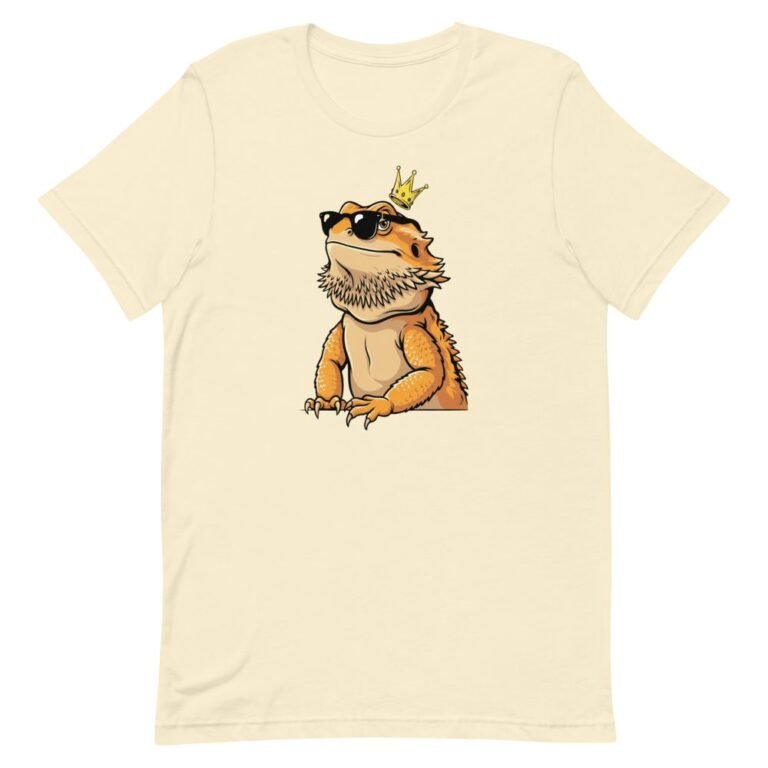
Wear the obsession
Bearded Dragon Crown Sunglasses King T-Shirt
Price range: $24.99 through $26.99
Shop this designThe weekly care guide
Get it right for your animal, every week
One email a week: new care guides, species deep-dives, and the safety answers keepers search for, written by our specialists. No spam. Unsubscribe anytime.
What keeps it well
- A mixed diet, and the sources split on the ratio. The RSPCA puts adults at about 50–60% animal matter. The vet handout says adults should eat more plants, with greens and vegetables at 45–60%. Both cap fruit at about 10%. Ask your reptile vet which way to lean, and weigh monthly, as the RSPCA advises, because captive skinks gain weight easily.
- Snails, but not from the garden. Wild blue-tongues crush snail shells with strong jaws. Buy feeder snails, because garden ones can carry pesticides or parasites. The museum warns that blue-tongues are poisoned by eating snails that have taken snail bait.
- One skink per enclosure. Wild blue-tongues live alone most of the year, and males fight in the breeding season. The vet handout says to always house them separately.
- Know exactly who you’re buying. Per WWF, most Indonesian blue-tongues in the trade are likely wild-caught. Species also differ in the humidity they need, so ask for a captive-bred animal with a confirmed species name.
Heat, UVB, and humidity targets vary by species, so confirm them with your vet. If your skink stops eating or loses weight, see a reptile vet. The ARAV directory can help you find one. For the basics every lizard shares, start with our reptile care guide, and skip the heat rock.
The takeaway: a blue-tongue lives on the ground, so give it floor space, deep substrate, and an enclosure of its own.
Before you go
Keep learning your animal
We publish a new guide every day. The best of them land in one short weekly email, so you never miss the one about your species.
Dr. Zoe Santos is a distinguished herpetologist and a revered expert in the care, conservation, and study of reptiles and amphibians. With a PhD in herpetology and over 18 years of field and academic experience, Zoe brings a depth of knowledge to her readers that is both rare and invaluable.