
Can Dogs Eat Crab? Real Crab, Crab Legs, and Imitation Crab, With the Sodium Math by Dog Size
Can dogs eat crab? Yes. Most healthy dogs can have a small taste of plain, fully cooked crab meat with every bit of shell removed. Crab isn’t toxic to dogs, and plenty of dogs will sit beautifully at the table on Christmas Eve hoping for some. The catch is what comes with it: the shell, the garlic butter, and the salt. That last one depends heavily on which crab is on your plate. Cooked king crab carries almost three times the sodium of cooked blue crab, and nobody on page one of Google puts a number on it.
So this guide does. Below you’ll find the sodium in every common crab (real and imitation), the math by dog size, what to do when a whole crab leg goes missing, and the small handful of dogs who should skip crab entirely.
Can dogs eat crab? The short answer
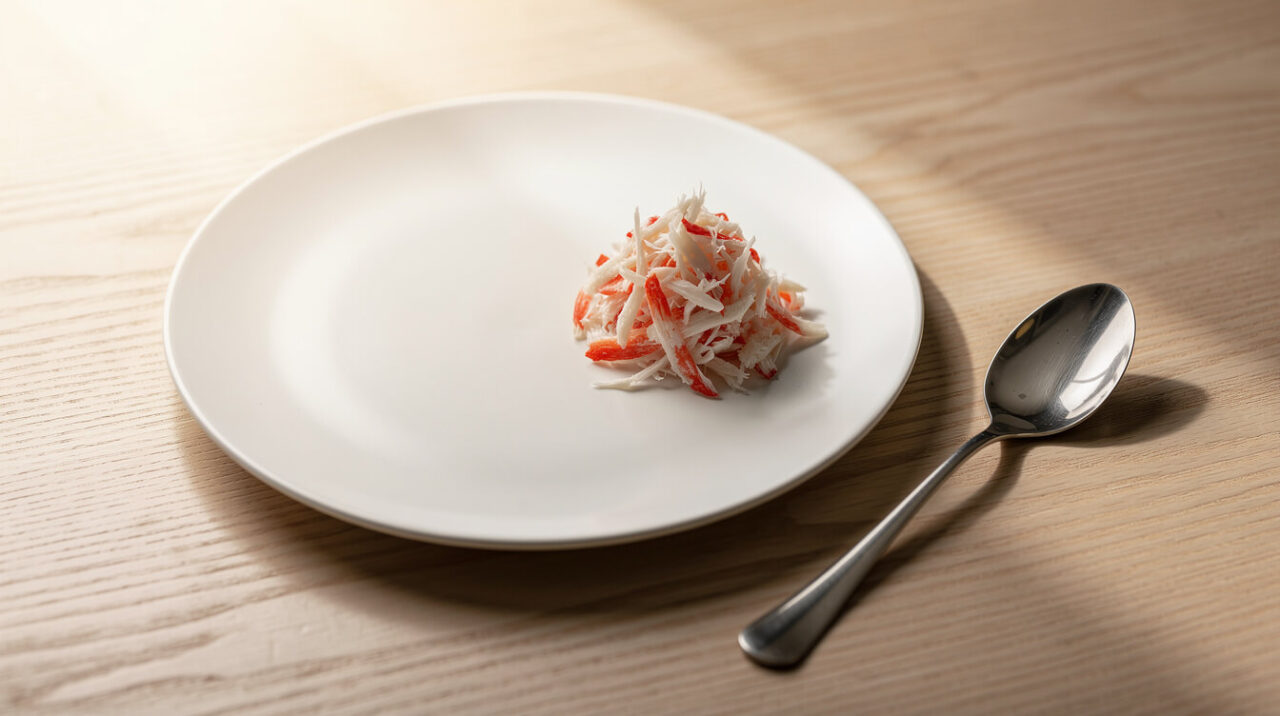
Yes, in small tastes, if it’s plain, cooked, and shell-free. Here’s the quick version:
- Fine for most healthy dogs: a few flakes of plain crab meat that was steamed or boiled, with no butter, garlic, onion, or seasoning, and every bit of shell picked out.
- Never: shells, legs, claws, or body pieces. They’re sharp and hard to digest, and that’s a mechanical problem, not a nutrition one.
- Never: raw crab, or crab and crayfish your dog finds on a beach or creek bank.
- Skip: crab cakes, crab dip, crab rangoon, bisque, and seafood-boil leftovers. The other ingredients are the problem.
- Skip on purpose, but don’t panic over a stolen one: imitation crab. It’s mostly fish paste, starch, and sugar (details below).
- Ask your vet first: dogs with heart disease, kidney disease, or high blood pressure, dogs on a prescription or low-sodium diet, and dogs in a food-allergy trial.
Crab is lean, high in protein, and low in fat, so as people food goes it’s one of the kinder options. But your dog doesn’t need it. At treat size it won’t move the needle on omega-3s or anything else, so think of it as a shared moment, not a supplement. If shellfish is a regular guest at your table, our guide to whether dogs can eat cooked shrimp covers crab’s most common cousin.
Not all crab is equal: sodium by crab type

When people ask whether dogs can eat crab, the type of crab changes the answer more than they expect. Most dog-food articles call crab “high in sodium” and stop there. Here’s what USDA FoodData Central actually measured in cooked crab, with roasted chicken breast (the classic “safe” dog protein) for comparison:
| Food (cooked unless noted) | Sodium per 100 g | Sodium per ounce | Sodium per 1,000 kcal |
|---|---|---|---|
| Alaska king crab | 1,070 mg | 303 mg | 11.0 g |
| Blue crab, canned | 563 mg | 160 mg | 6.8 g |
| Snow (queen) crab | 691 mg | 196 mg | 6.0 g |
| Imitation crab (surimi) | 529 mg | 150 mg | 5.6 g |
| Blue crab | 395 mg | 112 mg | 4.8 g |
| Dungeness crab | 378 mg | 107 mg | 3.4 g |
| Chicken breast, roasted | 74 mg | 21 mg | 0.45 g |
That last column is the one that matters for dogs, because dog nutrition is measured per calorie. Two reference points help:
- Typical adult dog foods contain about 0.5 to 2.5 g of sodium per 1,000 kcal, according to a Vet Times review of canine sodium needs.
- The National Research Council’s safe upper limit for a dog’s whole diet is 3.75 g of sodium per 1,000 kcal (NRC 2006, as cited in Chandler’s 2008 review of sodium in pet foods). Its recommended allowance is far lower, 0.2 g per 1,000 kcal.
Calorie for calorie, then, king crab is roughly three times saltier than the safe upper limit for a whole diet, and many times saltier than your dog’s kibble. Dungeness sits just under that limit and blue crab a little over it. Most frozen king crab legs sold in the US come already cooked and brine-frozen, according to seafood sellers, which helps explain why king crab tops the chart.
Two more “high in” claims you’ll see a lot, with the numbers attached:
- Cholesterol: cooked blue crab has 97 mg per 100 g and king crab 53 mg. Roasted chicken breast has 85 mg, so crab is in the same range as the protein most of us already feed.
- Iodine: only one crab in the USDA database has a measured iodine value (pasteurized blue swimming crab, 44.5 µg per 100 g). That’s about 3 µg in a tablespoon. The NRC puts a 33-lb dog’s daily iodine need at 220 µg, so a tablespoon supplies roughly 1.5%. A taste isn’t an iodine problem, but if your dog has thyroid disease, ask your vet before adding any seafood.
How much crab can dogs eat? The math by dog size

The usual rule for any treat is that extras should stay under 10% of your dog’s daily calories. Crab is so lean that 10% of the calories is a surprising amount of crab, so we ran the numbers to see whether the salt still works out. The calorie estimates use the standard resting-energy formula (70 × body weight in kg0.75) times 1.6, the usual factor for a neutered adult. Your dog’s real needs may differ.
| Dog | Daily calories | 10% treat budget | That budget as king crab | Sodium in a day of typical food | Sodium in a day of a low-sodium diet* |
|---|---|---|---|---|---|
| 10 lb | ~350 kcal | 35 kcal | 36 g (~1.3 oz), 385 mg Na | 175–870 mg | ~105 mg |
| 30 lb | ~795 kcal | 79 kcal | 82 g (~2.9 oz), 875 mg Na | 400–1,985 mg | ~240 mg |
| 60 lb | ~1,335 kcal | 133 kcal | 138 g (~4.9 oz), 1,470 mg Na | 670–3,340 mg | ~400 mg |
| 90 lb | ~1,810 kcal | 181 kcal | 186 g (~6.6 oz), 1,995 mg Na | 905–4,520 mg | ~545 mg |
What the numbers say for a healthy dog
This one surprised us. Even if a healthy dog’s entire 10% treat budget went to king crab, the saltiest kind, the whole day would average roughly 1.6 to 3.4 g of sodium per 1,000 kcal, which is still under the NRC’s safe upper limit. Healthy dogs also regulate sodium well. Chandler’s 2008 review found “no strong evidence that increased dietary sodium increases the risk of hypertension in dogs.” Merck adds that animals generally tolerate a lot of salt “if they have continuous access to fresh water.”
So for a healthy adult dog, a reasonable taste of plain crab is not a salt emergency, even if it’s king crab. We’d still keep it much smaller than the calorie budget allows. Rich new foods upset some stomachs, and there’s no nutritional reason to feed more. As a cautious guide (ours, not a veterinary standard):
- Small dogs (under 20 lb): about a teaspoon of flaked meat.
- Medium to large dogs: one to two tablespoons.
- How often: occasionally, not daily. A tablespoon of crab is only 6–7 kcal, so it barely touches the calorie budget.
- Which crab: blue or Dungeness when you have the choice. A tablespoon of king crab carries about 80 mg of sodium, and the same spoon of blue crab about 30 mg.
Who should skip the salty crabs
The math changes completely for a dog on a sodium-restricted diet. Look at the last column: a 10-lb dog on a low-sodium prescription food may get only about 105 mg of sodium all day. A single tablespoon of king crab (about 80 mg) adds roughly three-quarters of that again. Chandler’s review notes the ideal sodium intake for dogs with heart disease “has not been determined,” and urges caution about raising sodium in dogs with kidney disease.
So if your dog has heart disease, kidney disease, or high blood pressure, or eats a prescription diet, skip king crab, snow crab, canned crab, and imitation crab. Ask your vet whether a little plain blue crab fits the plan before offering any. Older dogs often fall into this group, and our guide to when a dog is considered a senior covers the checkups worth scheduling.
Crab legs on Christmas Eve: the meat and the shell are two different problems

For many families, crab legs are the main event of a Christmas Eve or Feast of the Seven Fishes dinner, and an unattended platter is a dog’s dream. If a crab leg goes missing, sort out two separate questions.
The meat: a big salt load for a small dog, not a poisoning
USDA lists the meat from one king crab leg at 134 g. That’s about 1,435 mg of sodium and 130 calories. For a 10-lb dog, that’s more than a third of a day’s calories and up to several times the sodium in a normal day of food. For perspective, Merck puts the dose where signs of salt poisoning can start in dogs at 2–3 g of salt per kg of body weight. For a 10-lb dog, that’s about 3,600–5,300 mg of sodium, or the meat from roughly two and a half to almost four king crab legs. One leg’s worth of meat isn’t in that range, but it’s plenty to cause thirst or an upset stomach.
What to do: make sure fresh water is always available, and keep an eye on your dog for the rest of the day. Call your vet if your dog vomits more than once, has diarrhea, seems weak or wobbly, or is a toy breed who ate a lot. Call right away if your dog has heart or kidney disease or is on a low-sodium diet.
The shell: call your vet
Crab shell is hard and sharp-edged, and dogs don’t digest it well. Fragments can cut the mouth or throat, cause choking, or get stuck in the stomach or intestines. Many small pieces do pass, but you can’t know from the outside which ones won’t, and a veterinarian answering a Petco reader notes that normal transit can take three to five days. If your dog swallowed shell, a claw, or a whole leg, call your vet now rather than waiting to see. Tell them the dog’s weight, roughly how much shell, and when.
Signs to report right away:
- Gagging, retching, pawing at the mouth, or drooling
- Vomiting, especially more than once
- A painful or bloated belly, or a hunched posture
- Not eating, straining, or not passing stool
- Blood in vomit or stool, or unusual lethargy
Don’t try to make your dog vomit at home, and don’t reach blindly down their throat. Sharp fragments can do more damage coming back up. Let your vet decide the next step.
The dip: garlic butter is its own problem
Crab legs usually come with melted butter, often with garlic, and seafood boils add onion and heavy seasoning. Butter is a lot of fat for a dog, and garlic and onion belong to the Allium family, which can damage a dog’s red blood cells. Our guide to whether dogs can eat stuffing explains the onion and garlic math in detail.
Keeping the dog and the crab apart
- Serve crab legs where the dog can’t reach. Use a pet gate or a closed door during the meal if your dog is a counter-surfer.
- Put shells straight into a lidded trash can. Better yet, bag them and take them outside. A bowl of discarded shells on the table is the most common way dogs get them.
- Ask guests not to slip the dog “just a little,” and give them a plain dog treat to offer instead.
The weekly care guide
Get it right for your animal, every week
One email a week: new care guides, species deep-dives, and the safety answers keepers search for, written by our specialists. No spam. Unsubscribe anytime.
Can dogs eat imitation crab?
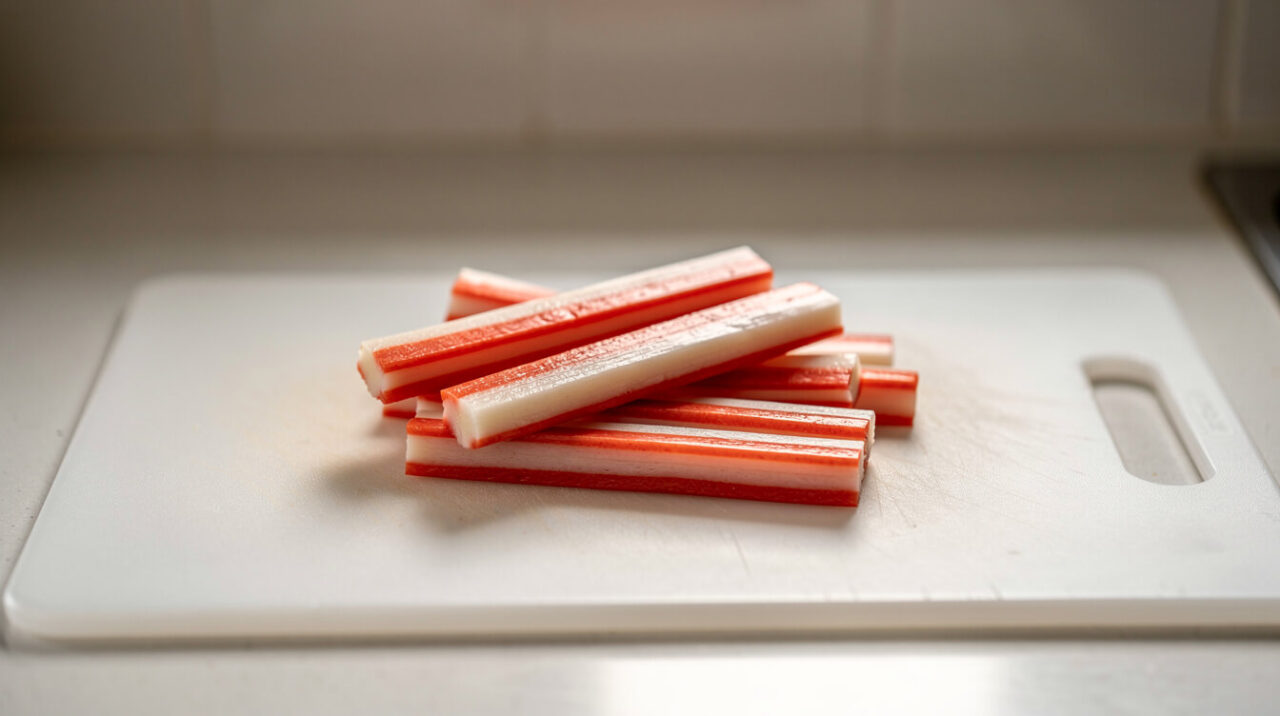
Imitation crab, also called surimi or crab sticks, isn’t crab. It’s white fish (often Alaska pollock) ground into a paste, mixed with starch, sugar, and binders, then shaped and colored to look like crab. A dog who snatches a crab stick from a sushi platter isn’t in danger, but it’s a poor treat to give on purpose.
Here’s what’s actually in it. USDA lists imitation crab at 15 g of carbohydrate and only 7.6 g of protein per 100 g, compared with 0 g of carbs and 19.4 g of protein in real king crab. We also read the ingredient lists of 39 imitation crab products on Open Food Facts (plain sticks, flakes, and legs, not salads or dips):
- Sugar: 39 of 39
- Starch: 39 of 39
- Salt: 38 of 39
- Sorbitol: 37 of 39
- Phosphate additives: 32 of 39
- Wheat: 15 of 39
- Onion or garlic: 0 of 39
- Xylitol: 0 of 39
“Sugar alcohol” doesn’t mean xylitol
If you’ve learned to read labels for xylitol, the sweetener that can crash a dog’s blood sugar and damage the liver, seeing “sorbitol” can be a jolt. It’s a different sugar alcohol. The Veterinary Poisons Information Service says sweeteners such as sorbitol, maltitol, and sucralose “are not hazardous to pets,” though some can cause vomiting and diarrhea, and “the only sweetener of concern is xylitol.” None of the 39 imitation crab labels we checked listed xylitol. It’s still worth a glance at any unfamiliar brand, just as you would for anything sugar-free.
The verdict on imitation crab
Its sodium (about 529 mg per 100 g) is actually lower than king crab’s, but higher than blue crab’s. USDA also lists 282 mg of phosphorus per 100 g, and most labels add phosphate. Both are reasons for dogs on a kidney diet to skip it. For everyone else, imitation crab is mostly starch and sugar with less than half the protein of the real thing. If your dog steals a stick, there’s no need to worry. Just don’t make it a habit.
How to share crab with your dog safely
If your dog is healthy and you’d like them to share in the feast, here’s how to do it well:
- Cook it plain. Steam or boil the crab in unsalted water, and set your dog’s portion aside before anything else is added. Don’t share meat pulled from a seasoned boil or a buttery pan, because rinsing won’t remove what’s soaked in.
- Cook it through. Cooked crab meat should be firm and opaque. Never share raw crab. Like other raw proteins, it can carry bacteria and parasites, and our guide to raw chicken for dogs explains why raw feeding carries extra risk.
- Pick every fragment. Spread the meat thin under good light and feel through it with your fingers. Crab meat hides thin, clear slivers of shell and cartilage.
- Start tiny. For the first taste, offer just a flake or two, then watch for 24 hours for vomiting, diarrhea, itching, or facial swelling. Don’t introduce any other new food the same day.
- Serve it simply. A few flakes scattered over your dog’s regular food, or a single flake as a reward, is plenty. Your dog will be thrilled with less than you’d think.

For the keeper at your holiday table
The Bearded Dragon Crown Sunglasses King T-Shirt: a crown, shades, and the unbothered confidence of a reptile who already claimed the best seat in the house. Zero sodium, no shells, and nothing for the dog to steal.
Never: raw crayfish and beach finds
Dogs who roam shorelines and creeks find their own seafood, and here the risk is real but specific. The one lung fluke documented in North American dogs, Paragonimus kellicotti, comes from raw freshwater crayfish, not ocean crabs. A 2023 review notes that animals become infected “only by ingesting metacercariae encysted in the heart of crayfish.” A 2023 Canadian Veterinary Journal report described three Ontario dogs whose lungs collapsed from this fluke, and it noted that routine deworming doesn’t prevent infection. So don’t let your dog eat raw crayfish, crawfish-boil leftovers, or dead crabs on the beach, which can also carry spoilage bacteria. If your dog does eat raw crayfish and later develops a cough or breathing trouble, tell your vet about the crayfish.
Holiday dinners are more fun when the whole household gets a little something. Plenty of dog homes also have a reptile or two, and our Bearded Dragon Crown Sunglasses King T-Shirt is a fun nod to the keeper at your table, while the dog waits politely for his one flake. And because crab is a sometimes-food, your dog’s complete diet does the real work. Our guide to giving your dog a balanced diet covers the basics.
Can dogs eat crab? Your questions answered

Is crab toxic to dogs?
No. Plain cooked crab meat isn’t toxic to dogs. The risks come from the shell (sharp pieces and blockages), raw crab (bacteria and parasites), the sauces and seasonings served with it, and the salt in some types, which matters most for dogs on low-sodium diets.
Can dogs be allergic to crab?
It’s possible, since any dog can react to a new protein. But crab isn’t among the common culprits. A 2016 review of food allergies in dogs found beef, dairy, chicken, and wheat were reported most often. Offer one flake the first time and watch for itching, hives, facial swelling, vomiting, or diarrhea. Call your vet if any appear. Get emergency care for swelling of the face or any trouble breathing. Skip crab entirely during an elimination diet.
Can dogs eat crab shells?
No. Shells, legs, and claws can cut, choke, or cause a blockage. If your dog swallowed shell, call your vet and don’t try to make your dog vomit at home.
Can dogs eat crab sticks or crab cakes?
Crab sticks (imitation crab) aren’t dangerous in a stolen bite, but they’re mostly starch and sugar, so skip them on purpose. Crab cakes, crab dip, crab rangoon, and bisque are a no. They’re made with onion, garlic, butter, cream, breading, or frying oil, and the crab is the least of the concerns.
Can dogs eat canned crab?
Canned blue crab has about 40% more sodium than freshly cooked blue crab (563 vs 395 mg per 100 g). It’s not dangerous in a taste for a healthy dog, but fresh plain crab is the better choice, and dogs on a low-sodium diet should skip canned crab.
Can dogs eat crab every day?
We wouldn’t. Crab adds nothing your dog’s complete food doesn’t already provide, and the salty kinds add up over a week. Keep it an occasional taste, a few times a month at most, and use plain dog treats for everyday rewards.
Can puppies eat crab?
There’s no reason to rush it. Puppies need their complete puppy food, their stomachs are easily upset, and their small size leaves little room for error with shell fragments. Wait until your dog is an adult, and ask your vet first.
What other holiday foods should I watch?
December tables are full of dog questions. Start with our guides to cranberry sauce and candy canes.
The bottom line
Can dogs eat crab? A healthy dog can enjoy a small taste of plain, cooked, shell-free crab, especially blue or Dungeness. Keep the shells, the garlic butter, and the raw stuff out of reach, and treat imitation crab as a skip rather than a crisis. If your dog has heart or kidney disease or eats a prescription diet, the salty crabs are off the menu until your vet says otherwise. A flake or two, a calm dog, and a gate between them and the crab-leg platter make a very good Christmas Eve.
Before you go
Keep learning your animal
We publish a new guide every day. The best of them land in one short weekly email, so you never miss the one about your species.

Meet Jake Harrington, your go-to guru for all things canine. With over 15 years of professional dog training experience, Jake has transformed the lives of thousands of dogs and their owners. His journey began in the bustling streets of a major city, where he discovered his natural affinity for understanding canine behaviors and communication.