Can Dogs Eat Cranberry Sauce? The Sugar Math, and the Add-Ins That Actually Matter
Can dogs eat cranberry sauce? A lick or a teaspoon of ordinary cranberry sauce won’t poison a dog, but it isn’t a treat worth sharing on purpose. Cranberries themselves are safe for dogs. The sauce is a different food: it’s mostly sugar. A handful of recipes also carry ingredients that really do matter. Those are xylitol in sugar-free versions, raisins in some homemade sauces and chutneys, and liquor stirred in near the end of cooking.
So the useful question isn’t “is cranberry sauce toxic?” It’s “which cranberry sauce, and how much did my dog get?” Below you’ll find what’s actually in the can, the pot, and the jar labeled chutney, the sugar math by dog size, the add-ins ranked by urgency, and a calm checklist for the moment you find the empty dish. If that moment is now, jump to what to do if your dog ate cranberry sauce.
Can dogs eat cranberry sauce? The short answer

Cranberries aren’t toxic to dogs. PetMD, the American Kennel Club, and Chewy’s veterinary writers all agree on that, and plain berries are a reasonable small treat for most dogs. Cranberry sauce is where they part ways a little. Chewy and PetMD put sauce on the “don’t feed” list because of the sugar. The AKC and Whole Dog Journal say a small taste of a plain recipe, one made with just cranberries, sugar, and water, is probably fine.
Both camps are right, and they’re answering slightly different questions. Should you serve your dog cranberry sauce? No. There’s nothing in it a dog needs that plain cranberries don’t give better. Is it a crisis if they got a lick of the plain stuff? Also no. For a healthy dog, the usual worst case from a little ordinary sauce is a mildly upset stomach.
There’s one piece of genuinely good news. Cranberry sauce is almost fat-free. USDA FoodData Central lists canned sauce at about 0.15 grams of fat per 100 grams. So unlike turkey skin, gravy, or buttered mashed potatoes, it isn’t one of the rich, fatty dishes that keep emergency vets busy after Thanksgiving. Its problem is sugar, and sometimes what got mixed in with it.
What this means in practice
- Don’t share it on purpose. If you want your dog to join in, a few plain cranberries are the better gift. We cover how many further down.
- Don’t panic over a lick. A taste of plain canned or classic homemade sauce in a healthy dog means watching at home, not rushing out the door.
- Do find out what was in it. Sugar-free, raisins, liquor, a small dog, a whole can, or a diabetic dog all change the answer. We’ll go through each one.
What’s in cranberry sauce? The can, the pot, and the jar
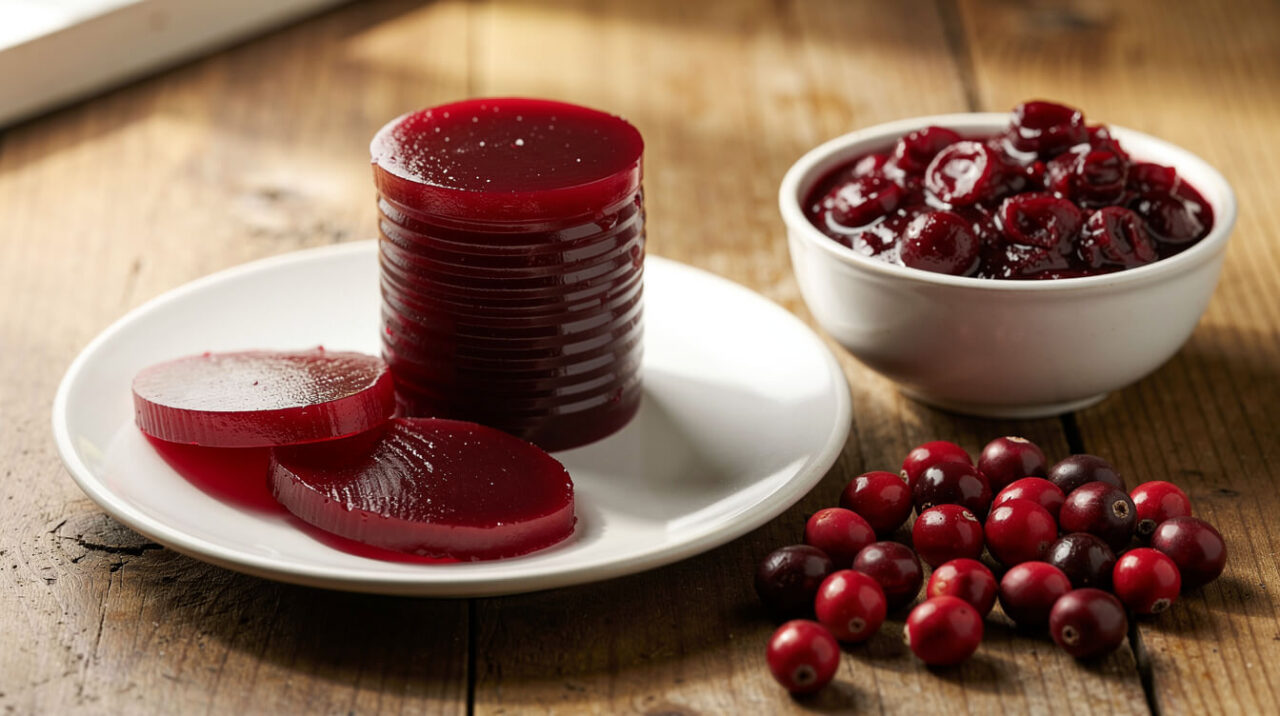
“Cranberry sauce” covers several quite different foods. Here’s what the common versions contain.
The canned log
The ridged, can-shaped classic is about as simple as a processed food gets. Ocean Spray’s jellied sauce lists four ingredients: cranberries, high fructose corn syrup, corn syrup, water. USDA FoodData Central puts canned sweetened cranberry sauce at about 159 calories and 32 grams of sugar per 100 grams. Raw cranberries have about 4 grams of sugar per 100 grams, so the sauce carries roughly seven times the sugar of the fruit it’s made from. USDA’s standard serving is a half-inch slice, about eight to a can and roughly 57 grams each. That works out to about 90 calories and 18 grams of sugar per slice. A whole 14-ounce can holds about 630 calories and over 120 grams of sugar.
The homemade pot
The recipe on the back of the cranberry bag is just as simple. Ocean Spray’s own homemade jellied sauce uses 1 cup of sugar, 1 cup of water, and one bag of fresh cranberries, boiled gently for 10 minutes. That’s the “plain recipe” the AKC and Whole Dog Journal mean. Its sugar load is similar to the canned version. Most store-brand sauces in the USDA database read the same way: cranberries, sugar or corn syrup, and water.
Then there are the homemade upgrades, which come with no label at all. Popular recipes add orange zest and juice, cinnamon sticks, brown sugar, maple syrup, port or bourbon, golden raisins, chopped pecans, or a sugar substitute. Unless you made it, you’ll have to ask whoever did.
The jar labeled chutney or relish
This is the version most likely to hold the ingredients that matter, and it often sits right next to the plain sauce on the table. Among the branded cranberry chutneys listed in USDA FoodData Central, one lists cranberries, sugar, onion, oranges, raisins, walnuts, cinnamon, ginger, nutmeg, salt, cayenne. Another lists raisins and walnuts, and a third lists onion and raisins. Cranberry relishes in the same database lean toward oranges, apples, and pineapple instead. The name on the jar is a clue, not a guarantee, so read the ingredients whenever you can.
The sugar math, by dog size
Here’s how one serving of plain sauce compares with what a typical dog eats in a day. Daily calories are estimated with the standard veterinary resting-energy formula, adjusted for an average neutered adult pet. Your own dog’s needs may run higher or lower, and your vet can give you a real number.
| Dog’s weight | Approx. calories per day | 10% treat budget | One half-inch slice (~90 cal) is | One tablespoon (~28 cal) is |
|---|---|---|---|---|
| 10 lb | ~350 | ~35 cal | about 26% of the whole day | about 8% of the day |
| 30 lb | ~795 | ~80 cal | about 11% of the day | about 3.5% of the day |
| 60 lb | ~1,335 | ~135 cal | about 7% of the day | about 2% of the day |
| 90 lb | ~1,810 | ~180 cal | about 5% of the day | about 1.5% of the day |
For a 60-pound dog, a slice that went missing off a plate is mostly a sugar spike. For a 10-pound dog, the same slice is a quarter of the day’s calories, delivered as almost pure sugar in one go. That’s when vomiting or loose stool becomes more likely. PetMD also flags that sugar is a much bigger deal for dogs with diabetes or other sugar-sensitive conditions. If your dog is one of them, skip even the lick, and call your vet if they got into the sauce.
The add-ins that change the answer, ranked
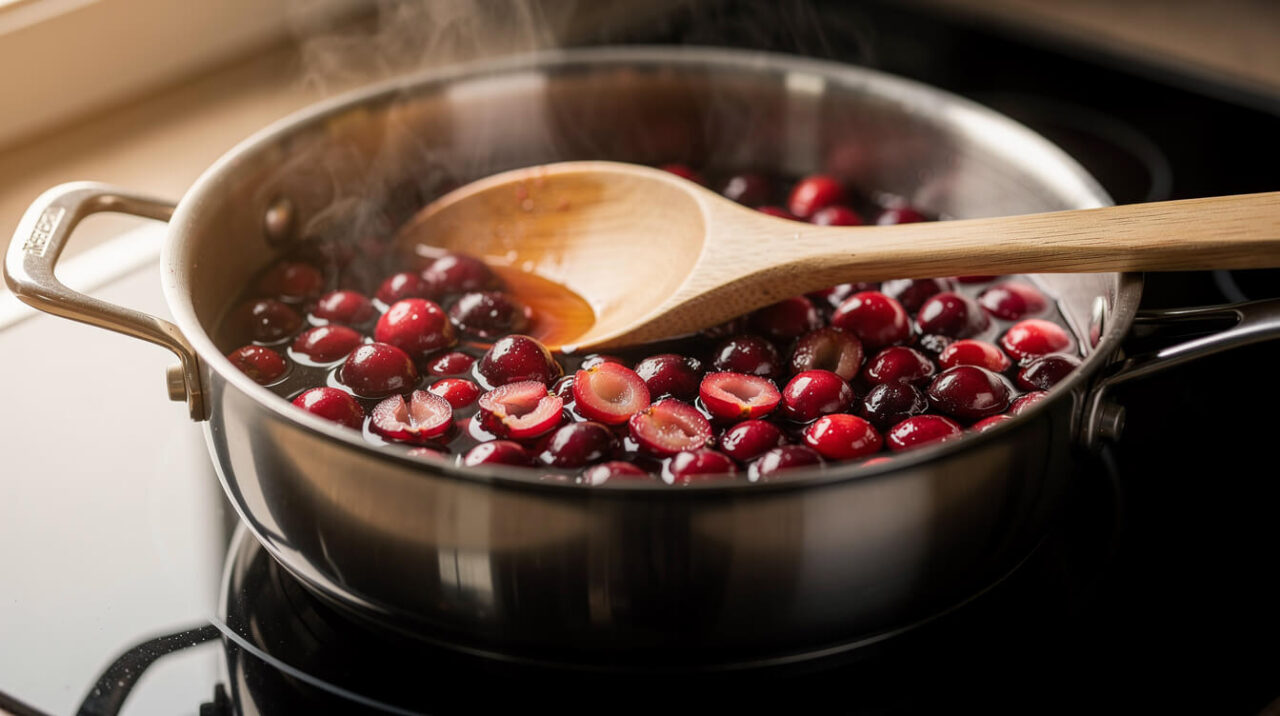
Most cranberry sauce is a sugar question. These are the ingredients that make it something more, in order of how fast you need to act.
1. Xylitol in a sugar-free or keto sauce: call now
Xylitol is a sugar substitute that’s harmless for people and dangerous for dogs. The Merck Veterinary Manual reports that doses above roughly 100 milligrams per kilogram of body weight have been linked to dangerously low blood sugar in dogs. Signs can start within 30 minutes. Doses above about 500 mg/kg can cause severe liver failure. The FDA notes that it may appear on labels as birch sugar or wood sugar.
Sugar-free cranberry sauce is a real thing at holiday tables. One popular low-carb recipe calls for a full cup of sweetener per 12-ounce bag of berries. Some recipes list xylitol as one of the sweetener options, and some use blends that contain it. Here’s a rough estimate of why that matters. A sauce sweetened cup-for-cup with xylitol could carry around 5 grams of it per tablespoon. Merck’s low-blood-sugar threshold for a 10-pound dog is less than half a gram. The exact numbers will vary with the recipe, but the gap is wide enough that a single spoonful can matter.
If the sauce was labeled sugar-free, low-sugar, keto, or diabetic-friendly, or someone made it “with a sugar substitute” and can’t tell you which one, treat it as urgent. Call your vet or a poison line right away, even if your dog seems completely fine. Don’t wait for symptoms.
2. Raisins and currants: call your vet
Grapes, raisins, and Zante currants (the small dried “currants” sold in most US grocery stores) can cause kidney failure in dogs. Merck’s current chapter names tartaric acid as a proposed toxin and notes that the amount varies from fruit to fruit. In general, it says, more than one grape or raisin per 10 pounds of body weight may be enough to pose a risk to the kidneys. Golden raisins are still raisins.
This isn’t a far-fetched add-in. One Allrecipes cranberry sauce cooks 1 cup of golden raisins into 24 servings, so every spoonful carries several. If your dog ate a sauce, chutney, or relish with raisins or currants in it, call your vet or a poison line now, while there’s still time for them to act early. Merck notes that vomiting or diarrhea usually shows up within 6 to 12 hours, and kidney failure can follow within 24 to 72 hours. A dog who seems fine at first can still be in trouble.
3. Port, bourbon, brandy, and other liquor
Boozy cranberry sauce is a holiday favorite. One popular orange-bourbon recipe uses 1 to 3 tablespoons of bourbon, and Food & Wine’s port version uses half a cup of ruby port. It’s tempting to assume the alcohol cooks off. It doesn’t, at least not all of it. The USDA’s nutrient retention table estimates that alcohol stirred into a dish and simmered for 15 minutes keeps about 40% of its alcohol, and 30 minutes still leaves 35%. Liquor stirred into a hot sauce after it comes off the stove keeps about 85%.
For a large dog who licked a serving spoon, that’s a very small amount. For a small dog who cleaned out a bowl of sauce finished with a generous splash, it’s worth a call. Alcohol affects dogs much the way it affects us, only at far smaller doses. Watch for wobbliness, vomiting, unusual sleepiness, or confusion.
4. Onion and spices in chutneys
Savory chutneys sometimes include onion. Onions can damage a dog’s red blood cells, and Merck reports signs after dogs ate 15 to 30 grams of raw onion per kilogram of body weight. A spoonful of chutney comes nowhere near that, so the onion isn’t the main reason to keep chutney away from your dog. The raisins it so often travels with are. The warm spices in sauces and chutneys, cinnamon, ginger, cloves, and a little nutmeg, are used in amounts that might upset a stomach at most. We did the spice arithmetic in our guides to pumpkin pie and gingerbread, and the same logic applies here. A pinch of cayenne may irritate a sensitive stomach.
5. Nuts, orange, and everything else
Chopped pecans and walnuts add fat and can be a choking or blockage risk for small dogs who swallow pieces whole. Orange zest and a little juice in recipe amounts aren’t a concern for most dogs. Our guide to whether dogs can eat oranges covers the fruit itself.
My dog ate cranberry sauce: what to do now

Take a breath. Most cranberry sauce accidents end with nothing worse than a gassy evening. Here’s how to work out which kind you have.
Step 1: Clear the scene and keep the evidence
Move your dog away from the table and pick up anything left over. Keep the can, the jar, or the recipe. If it’s an empty can, put it somewhere your dog can’t reach. The cut lid edge can injure a tongue that goes looking for the last of the sauce.
Step 2: Work out what it was and how much
- Plain canned or classic homemade sauce, a lick to a spoonful: watch at home. Offer water, and expect at most a mild stomach upset.
- Sugar-free, keto, or “made with a sweetener”: call now, even if your dog seems fine.
- Any raisins, golden raisins, or currants: call now, even if your dog seems fine.
- A boozy sauce: call if your dog is small or ate more than a lick.
- A large amount of plain sauce, especially a small dog: a quick call to your vet for advice is reasonable. A whole can in a 10-pound dog is nearly two days’ worth of calories, all of it sugar.
- A dog with diabetes: call your vet about any amount.
Step 3: Don’t treat it at home without advice
Don’t induce vomiting or give any human medication unless a veterinarian tells you to. Whether vomiting helps depends on what was eaten and when, and it isn’t risk-free. A vet or poison line can make that call with you.
Step 4: Watch over the next day or two
After an ordinary sauce snack, mild signs look like one or two bouts of vomiting, some loose stool, or a quieter-than-usual dog, settling within about a day. Call your veterinarian promptly if you see:
- Repeated vomiting, or vomiting that won’t stop
- Diarrhea that lasts past a day, or any blood in vomit or stool
- Refusing food, unusual tiredness, or weakness
- Drinking or urinating much more or much less than usual in the days after a raisin exposure
- Wobbliness, trembling, or confusion
- Seizures or collapse. This is an emergency: go to the nearest emergency vet now.
Who to call
Your own veterinarian knows your dog’s history. If they’re closed, call a 24-hour emergency clinic, or one of the two US animal poison lines, both staffed by veterinary toxicology professionals:
- ASPCA Animal Poison Control Center: (888) 426-4435
- Pet Poison Helpline: (855) 764-7661
Both charge a consultation fee. Have your dog’s weight, what was eaten, roughly how much, and when it happened ready before you dial. Keep the label or recipe in your hand while you talk.
The weekly care guide
Get it right for your animal, every week
One email a week: new care guides, species deep-dives, and the safety answers keepers search for, written by our specialists. No spam. Unsubscribe anytime.
Does cranberry help a dog’s urinary tract? What the evidence says

Many dog owners have heard that cranberries are good for the bladder. The idea comes from compounds called proanthocyanidins, or PACs. In the lab, they can make it harder for E. coli bacteria to stick to the lining of the urinary tract. Plenty of pet sites repeat it as a proven benefit. The evidence in dogs is thinner than that makes it sound.
The 2026 systematic review
In early 2026, a team led by a researcher at the Ontario Veterinary College published a systematic review of cranberry for urinary infections in dogs and cats. They found just three studies, covering 122 animals (106 dogs and 16 cats). None reported a statistically significant or even a numerical effect of cranberry. They rated the certainty of the evidence low to very low, and concluded that there’s too little data to say confidently whether cranberry helps.
The individual dog studies show why:
- A 2016 study gave 6 dogs with recurrent infections a cranberry extract and 6 an antibiotic for six months. No dog in either group developed an infection, which doesn’t separate the two. Urine from extract-fed dogs did reduce bacterial sticking in a lab test.
- A 2017 randomized trial in 94 dogs recovering from spinal disc surgery found bacteria in the urine 11 times in the cranberry group and 6 times in the placebo group. The authors said the trial showed no benefit, though it was too small to be conclusive.
- A 2023 study of 8 dogs on a cranberry-supplemented diet found reduced bacterial sticking in lab tests of urine from the four females, but not the males. That’s a lab measure, not a count of infections.
All of these used concentrated extracts. A spoonful of sauce, which is mostly corn syrup or sugar, isn’t a dose of anything useful.
The bladder stone question
The AKC quotes a veterinarian warning that large amounts of cranberry may contribute to calcium oxalate bladder stones. The research behind that concern comes from people, not dogs. A small 2001 study found that cranberry concentrate tablets raised urinary oxalate by an average of 43% in five volunteers. A 2019 trial in 15 people also saw oxalate rise. We couldn’t find a study measuring this in dogs. If your dog has had calcium oxalate stones or eats a prescription urinary diet, ask your vet before adding any cranberry product. Our guide to spinach and oxalates explains why those dogs get special handling.
Most important of all: if your dog is straining to pee, going often in small amounts, having accidents, or passing bloody or cloudy urine, that’s a vet visit, not a cranberry question. Urinary infections need a proper diagnosis and usually targeted treatment, and cranberry doesn’t treat an active infection. If your vet recommends a cranberry supplement as part of a prevention plan, use a veterinary product at the dose they give you.
A dog-safe way to share cranberries
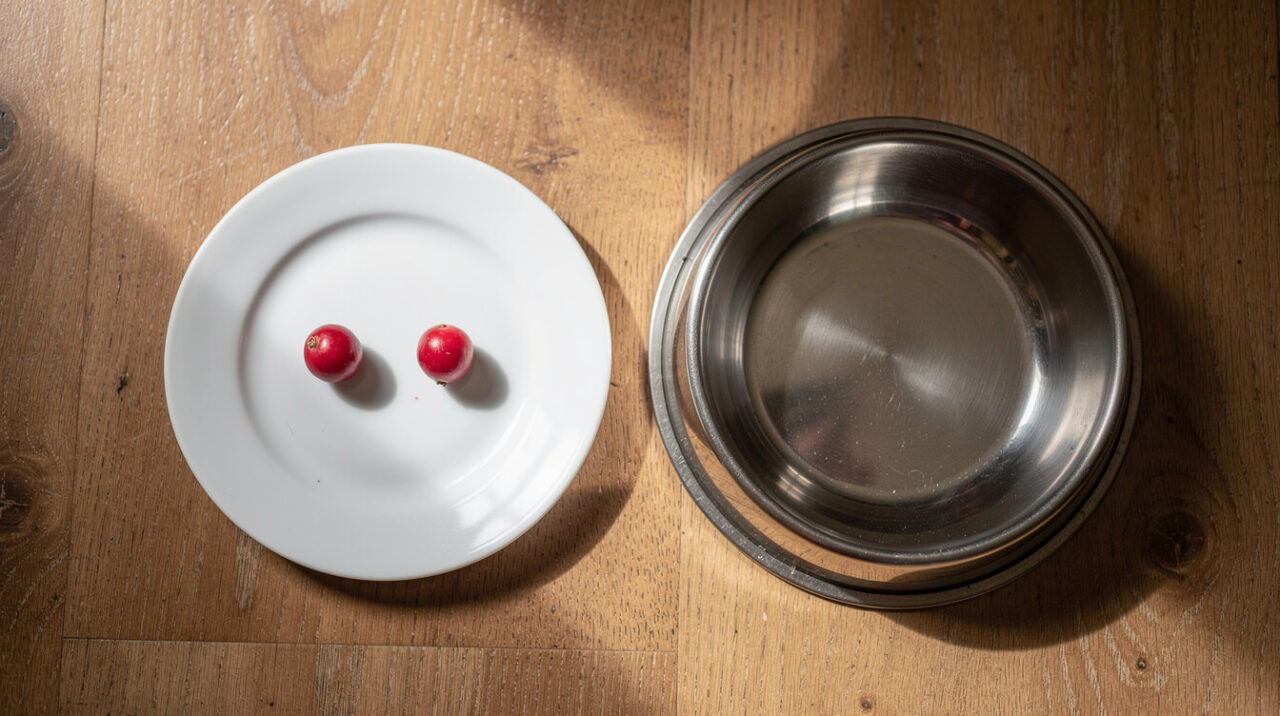
If your dog is eyeing the cranberry dish, the good news is that the berry itself is on the menu. Plain cranberries, fresh or thawed from frozen, are a fine occasional treat for most healthy dogs.
How many
Chewy’s cranberry guide suggests 1 to 2 cranberries for dogs up to 20 pounds, 2 to 3 for 21 to 30 pounds, 5 to 6 for 31 to 50 pounds, 8 to 10 for 51 to 90 pounds, and 10 to 15 for dogs over 90 pounds. USDA data puts a whole cup of raw cranberries at about 46 calories, so a few berries barely touch the treat budget. Start with one or two and watch how your dog’s stomach handles them. Plenty of dogs spit out the first one because of the tartness, and that’s a perfectly good answer too.
How to serve them
- Fresh: rinse, remove any stems, and halve them for small dogs so they’re easier to chew.
- Frozen: thaw first. Rock-hard frozen berries can be tough on teeth.
- A no-sugar “dog sauce”: simmer a handful of plain cranberries in water until they pop, cool completely, and stir a teaspoon or two into dinner. No sugar, no sweetener, no spices.
- Dried: only unsweetened ones, and only from a bag that holds nothing else. Mixed dried fruit is a classic way raisins end up in a dog.
If you’d rather skip the tartness, plain blueberries are another easy holiday fruit for dogs. And if the keeper in your life also has a reptile at home, our Bearded Dragon Crown Sunglasses King T-Shirt is a holiday gift with zero grams of sugar.

For the keeper with a beardie and a dog under the table
Our crowned, sunglasses-wearing bearded dragon tee, for reptile keepers whose holiday table also has a hopeful dog underneath it.
Prevention at the table
Set the sauce in the middle of the table, out of nose range, and keep the chutney even farther back. Put a lidded trash can in the kitchen for the empty can and plate scrapings. Ask guests, kindly, not to share from their plates. A pet gate across the dining room doorway during the meal solves most of it. Our guide to holiday mashed potatoes covers the next dish down the table.
Can dogs eat cranberry sauce? Frequently asked questions

Is canned cranberry sauce worse than homemade?
Not really. The classic canned and homemade versions carry a similar amount of sugar. The difference is that the can has a label. Homemade sauce is only as safe as the person who made it can confirm, so ask about sweeteners, raisins, and liquor.
Can dogs eat jellied cranberry sauce?
Jellied and whole-berry sauce are the same food in different textures. A lick won’t hurt a healthy dog, but a slice is a lot of sugar for a small one.
My dog ate a whole can of cranberry sauce. Is that an emergency?
Plain canned sauce isn’t toxic, so a whole can is usually a stomach problem rather than a poisoning. It’s still about 630 calories of sugar, so call your vet for advice, especially for a small dog, a puppy, or a dog with diabetes.
Can puppies have cranberry sauce?
Skip it. Puppies are smaller and have more sensitive stomachs, so the same spoonful is a bigger dose. If a puppy got into it, use the checklist above and call your vet sooner rather than later.
Can dogs drink cranberry juice?
PetMD says a small amount of 100% juice with no added sugar is okay, but cranberry juice cocktails and blends are a different product. They’re sweetened, and Chewy notes some juice mixes include grape juice. Water is the best drink for your dog.
The bottom line
So, can dogs eat cranberry sauce? It belongs on the people side of the table, but it isn’t the villain it’s sometimes made out to be. The berry is safe and the fat is close to zero. A lick of the plain stuff is usually a non-event. What deserves your attention is the sweetener, the raisins, the liquor, and the size of the serving compared with the size of your dog.
If you remember one thing, make it this: check for xylitol and raisins first, then do the size math, and call your vet whenever you’re unsure. Then set aside a couple of plain cranberries for your dog and let them join the holiday the safe way.
Before you go
Keep learning your animal
We publish a new guide every day. The best of them land in one short weekly email, so you never miss the one about your species.

Meet Jake Harrington, your go-to guru for all things canine. With over 15 years of professional dog training experience, Jake has transformed the lives of thousands of dogs and their owners. His journey began in the bustling streets of a major city, where he discovered his natural affinity for understanding canine behaviors and communication.