Can My Dog Eat Popcorn? Safe Portions by Weight and the Buttered-Bowl Problem
It is the most predictable moment of movie night. The bowl tips, a handful of popcorn scatters across the rug, and before you have finished saying the word “leave,” it is gone. So: can my dog eat popcorn? Plain, air-popped popcorn is not toxic to dogs, and a small amount is a perfectly reasonable occasional treat. The trouble is that almost nobody eats plain popcorn, and almost nobody is asking this question in advance — they are asking it at 9pm with a suspiciously pleased dog and an empty bowl.
So the honest answer to can my dog eat popcorn depends entirely on which popcorn, and how much. This guide answers both versions of the question. First, the planned one: exactly how much plain popcorn your dog can have, worked out by body weight, with the arithmetic shown so you can check it against your own dog’s food. Then the real one: what to actually do when your dog has hoovered up a pile of buttered, salted popcorn off the floor — including the part of that scenario that gets overlooked completely, which is the greasy bag it came in.
Can my dog eat popcorn? The short answer

Yes — with three conditions attached, and they matter more than the popcorn does.
- Plain. No butter, no oil, no salt, no cheese powder, no seasoning blend.
- Fully popped. Popped kernels only, with the hard unpopped ones picked out.
- A little. An occasional handful-sized treat, not a shared bowl and not a daily habit.
Popped corn on its own is genuinely unremarkable food for a dog. It is mostly air and starch, with small amounts of magnesium, phosphorus, manganese, and zinc, plus a fair bit of fiber. There is nothing in a plain popped kernel that is toxic to dogs, in the way that grapes, onions, or xylitol are toxic.
But “not toxic” and “good for them” are two different claims, and it is worth being honest about which one applies here. Plain popcorn has no meaningful nutritional benefit for a dog eating a complete, balanced diet. Your dog is already getting those minerals from their food. Popcorn is a low-calorie, crunchy, fun thing to share — and that is a completely legitimate reason to share it. It just is not health food, and any article telling you it is a good source of minerals for your dog is quietly ignoring how little of it a dog should actually eat.
The interesting question, then, is not whether popcorn is safe. It is how much, and that is where nearly every guide on this topic hands the job back to you.
How much popcorn is actually safe, by your dog’s weight
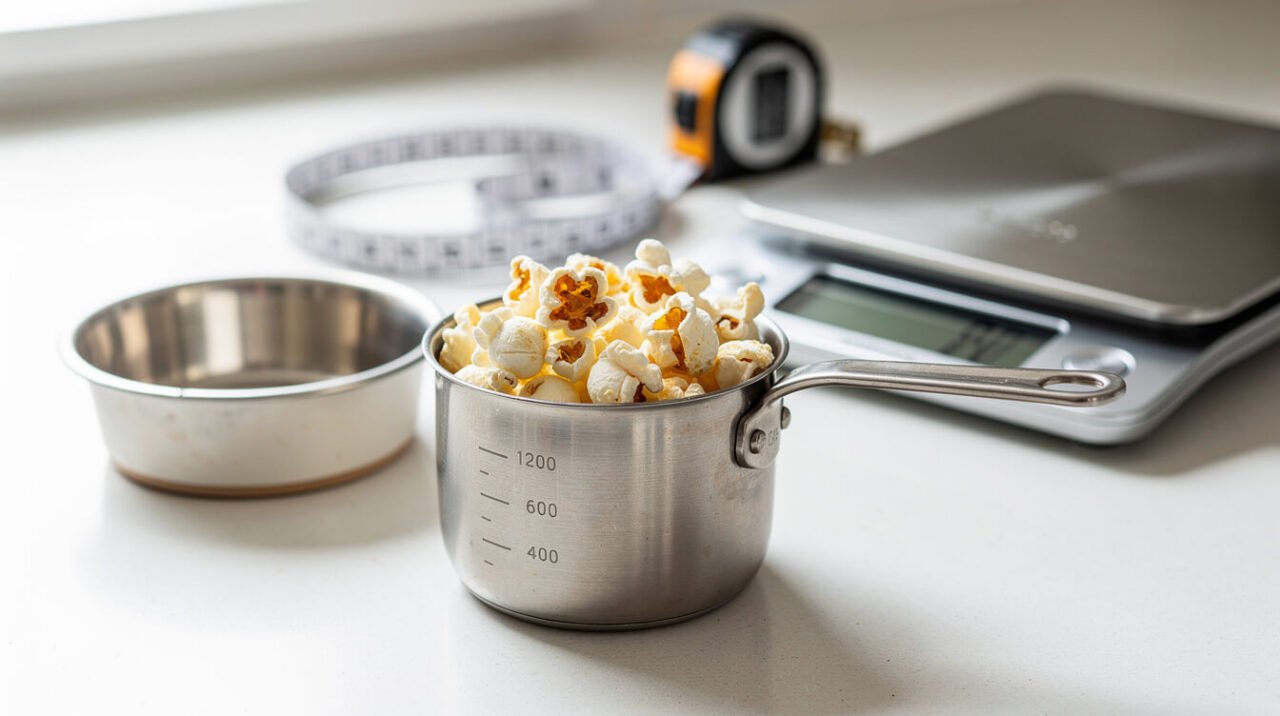
Every guide on this topic cites the same rule: treats should make up no more than about 10% of your dog’s daily calories. Then they stop. So let us actually do the math, because the answer is genuinely surprising and it changes how you should think about sharing the bowl.
Two numbers do the work. Plain, oil-free, air-popped popcorn runs roughly 31 calories per cup (a cup of it weighs only about 8 grams — it is mostly air). And a typical adult dog’s daily calorie needs can be estimated with the standard veterinary formula: resting energy requirement equals 70 × (body weight in kg)0.75, then multiplied by roughly 1.6 for an average neutered, moderately active adult pet dog.
Run those together and you get this:
| Your dog’s weight | Rough daily calories | 10% treat ceiling | That ceiling in popcorn | A sensible portion |
|---|---|---|---|---|
| 10 lb (4.5 kg) | ~350 kcal | ~35 kcal | ~1 cup | 3–4 popped pieces |
| 15 lb (6.8 kg) | ~470 kcal | ~47 kcal | ~1.5 cups | 2 tablespoons |
| 25 lb (11 kg) | ~690 kcal | ~69 kcal | ~2 cups | 1/4 cup |
| 50 lb (23 kg) | ~1,165 kcal | ~116 kcal | ~3.5 cups | 1/2 cup |
| 80 lb (36 kg) | ~1,655 kcal | ~166 kcal | ~5 cups | 3/4 cup |
Look at the gap between the last two columns. That is the whole point of this section.
For popcorn, calories are not the limiting factor. A 50 lb dog could eat three and a half cups of plain popcorn before touching their 10% treat ceiling. Nobody should give a dog three and a half cups of popcorn. The 10% rule is built for calorie-dense treats — cheese, jerky, biscuits — where the calories bite first. Popcorn is so light that you will run into two other limits long before you run into that one.
The first is fiber. Air-popped popcorn is roughly 15% dietary fiber by weight, so a cup carries somewhere around a gram of it. That is fine in small amounts. A sudden couple of cups in a dog not used to it is a recipe for gas, cramping, and loose, urgent stools the next morning. Nothing dangerous, usually — just genuinely unpleasant for everyone.
The second is displacement. Treats that crowd out balanced food do not just add calories, they subtract nutrition. A dog filling up on popcorn is a dog eating less of the complete diet that is actually keeping them healthy.
So the “sensible portion” column above sits at roughly 1% of daily calories rather than 10% — a real treat, shared, that leaves the rest of the diet completely undisturbed. If you would like to check this against your own dog rather than the average, the calorie number on your dog’s food bag is the place to start, and your veterinarian can give you a target that accounts for age, body condition, activity, and any health conditions. Puppies, pregnant or nursing dogs, and working dogs all have meaningfully different needs, and growing puppies in particular should be getting nearly all of their calories from a complete growth diet.
We use the same weight-based approach across this series — you will find it in our guides to whether dogs can eat quinoa and raw sweet potato by size, if you want to see how a calorie-dense food changes the arithmetic.
The real problem isn’t the popcorn — it’s what’s on it

Here is the honest framing that plain-popcorn advice tends to skip: the popcorn is basically a delivery vehicle. Everything that makes it worth eating is the part your dog should not have.
Butter and oil. A tablespoon of butter is around 100 calories of almost pure fat. On a movie-sized bowl, that adds up fast, and fat is the ingredient most likely to cause a problem. Mild cases look like an upset stomach and loose stools. In dogs predisposed to it, a sudden high-fat meal is a recognized trigger for pancreatitis, which is a genuinely serious illness and a veterinary matter, not a wait-and-see one. We go deeper into the fat question in our guide to dogs and olive oil.
Salt. Movie-theater popcorn is heavily salted, and dogs are much smaller than us. A few salty pieces are not an emergency for a healthy dog with water available. A small dog working through a large salted bowl is a different situation — excessive thirst, vomiting, and lethargy are the signs to watch for, and they warrant a call to your vet. Salt is also a real consideration for dogs with heart or kidney conditions, where sodium is already being managed.
Cheese powder and seasoning blends. This is the one that deserves more attention than it gets. Cheddar, ranch, “Cajun,” truffle, and sour-cream-and-onion popcorn seasonings very commonly contain onion powder and garlic powder. Alliums are toxic to dogs, they damage red blood cells, and dried powdered forms are far more concentrated by weight than the fresh vegetable. The seasoning is a bigger deal than the butter, and it is the ingredient most likely to be quietly present in a flavored bag.
Microwave bags. The bags are lined with grease-resistant coatings, and artificial butter flavoring contains diacetyl. Neither is something you want your dog eating regularly. Plain kernels in an air popper, or in a paper bag in the microwave with nothing added, sidestep all of it.
None of this means a dropped buttery piece is a crisis. It means the realistic version of “sharing popcorn” — reaching into your own seasoned bowl — is not the version that is safe, and the fix is simply to set aside a small plain portion before you season yours.
Unpopped kernels: choking, cracked teeth, and the bottom of the bowl
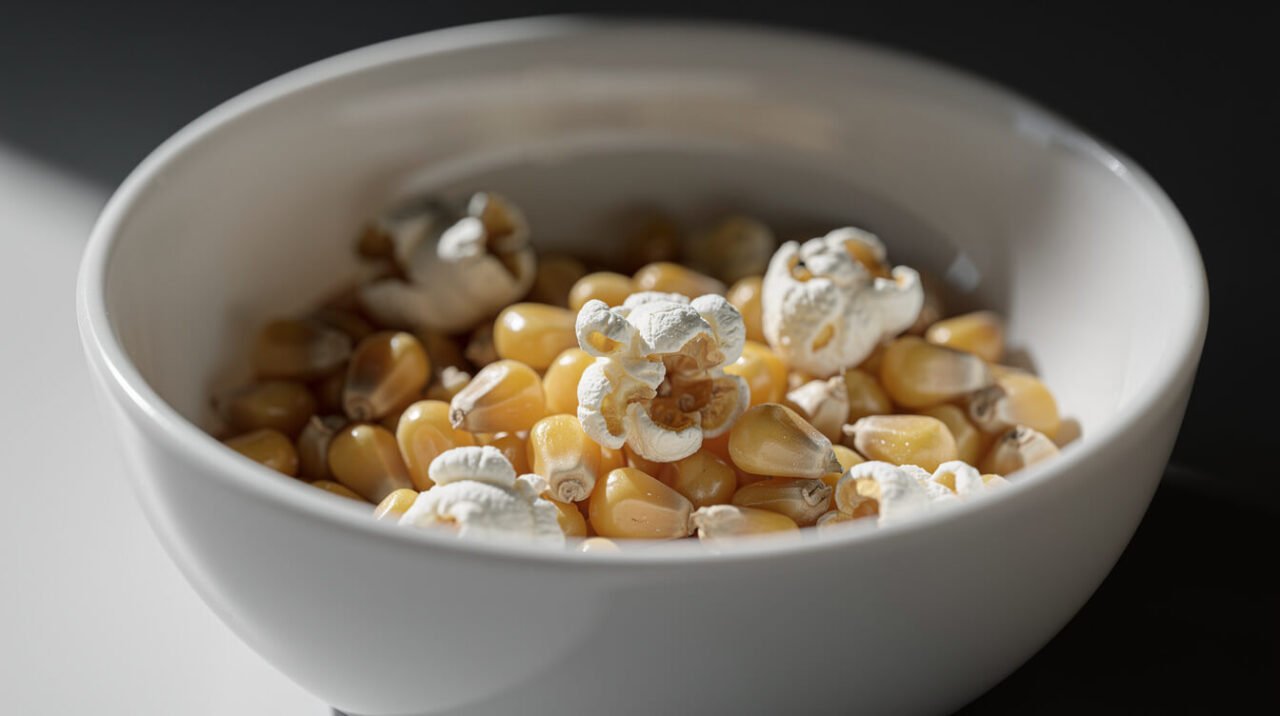
Every guide mentions unpopped kernels. Almost none of them mention where the kernels are, which is the part that actually matters.
They are at the bottom of the bowl. Popped corn is light and rides on top; the hard, dense, unpopped “old maids” sink. So the moment of maximum risk is precisely the moment people relax — the end of the night, when the bowl gets set down on the floor or the couch and the dog is invited to finish it. That last inch is disproportionately kernels.
Three distinct problems come with them:
- Dental damage. An unpopped kernel is small, round, and very hard. It belongs in the same hazard category as ice cubes, antlers, and hard nylon chews — the things that fracture teeth. The usual casualty in dogs is the upper fourth premolar, the big carnassial tooth they crunch with, and a slab fracture there is painful and typically needs veterinary treatment.
- Choking. Hard and round is the shape most likely to lodge in an airway, particularly in small dogs and in enthusiastic gulpers who inhale food rather than chewing it.
- Gum and tooth irritation. Kernel hulls are thin, sharp-edged, and superb at wedging between teeth and under the gum line, where they cause soreness and, left long enough, local infection. If your dog is pawing at their mouth, chewing on one side, or suddenly reluctant to have their face touched, that is worth a look and, if you cannot see or reach the cause, a vet visit.
The fix takes ten seconds: pour the finished popcorn into a second bowl and leave the kernels behind, or just tip the last inch into the bin rather than onto the floor. And store the jar of raw kernels where a determined nose cannot reach it — a dog who gets into an entire bag of unpopped corn has eaten a lot of very hard, very dry material, and that is a call-your-vet situation rather than a watch-and-wait one.
The weekly care guide
Get it right for your animal, every week
One email a week: new care guides, species deep-dives, and the safety answers keepers search for, written by our specialists. No spam. Unsubscribe anytime.
My dog ate buttered popcorn off the floor — what now?

This is the scenario most people are actually in when they search this question, so let us treat it properly. First: your dog is very probably fine, and you have not done anything wrong. Dogs eat things off floors. It is arguably their primary hobby.
Work through it in this order.
1. Figure out roughly how much, relative to your dog
A few pieces of buttered popcorn is a non-event for a healthy dog of any size. Half a bowl for a Labrador is a fatty snack that may produce a disappointing morning. Half a bowl for a 10 lb terrier is a much larger dose relative to body size and deserves closer attention. Size relative to the dog is the number that matters, not the absolute amount.
2. Check what was actually on it
Plain or lightly buttered is the mild case. Heavily salted, cheese-powdered, or seasoned with anything in the onion-and-garlic family moves it up a level — and if the popcorn was caramel, chocolate-drizzled, or labeled sugar-free, skip ahead to the next section and call your vet rather than waiting.
3. Account for the bag and the bowl
Here is the risk nobody writes about. A dog who has just eaten spilled popcorn will very often go on to lick, chew, and sometimes swallow the greasy bag it came from, because the bag smells better than the popcorn did. Paper and foil-lined microwave bags are not digestible, and a swallowed one is a genuine gastrointestinal obstruction risk — a far more serious problem than the popcorn. Count your bags. If one is missing or shredded, call your veterinarian now and say so specifically.
4. Offer water, skip the next meal top-up, and watch
Fresh water should be available, especially after salty food. There is no need to withhold their normal meal unless your vet advises it, but do not add extra treats on top of what they have already had. Then keep an eye on them for the next 24 to 48 hours.
5. Know which signs mean “call the vet”
Contact your veterinarian promptly — or an emergency clinic out of hours — if you see any of these:
- Repeated vomiting, or any vomiting that will not stop
- A hunched back, a “praying” stretch with the front end down and rear end up, a tense or painful-looking belly, or obvious restlessness
- Refusing food, marked lethargy, or weakness
- Diarrhea that is severe, bloody, or lasting beyond about a day
- Excessive thirst, unsteadiness, tremors, or disorientation
- Retching or trying to vomit without producing anything, coughing, gagging, or any difficulty breathing
- Any suspicion that packaging was swallowed
Those signs are not a diagnosis, and this article cannot give you one — they are the threshold at which the situation stops being a home-monitoring job and becomes a veterinary one. If you are worried, call. Vets would far rather answer a phone call about popcorn than see the same dog two days later. And if your dog has a known history of pancreatitis, or heart, kidney, or gastrointestinal disease, or is diabetic, lower that threshold and call sooner. The same logic applies to the richer human foods we cover in our guides to cooked shrimp and breakfast sausage.
Popcorn to never share: kettle corn, caramel corn, and anything sugar-free
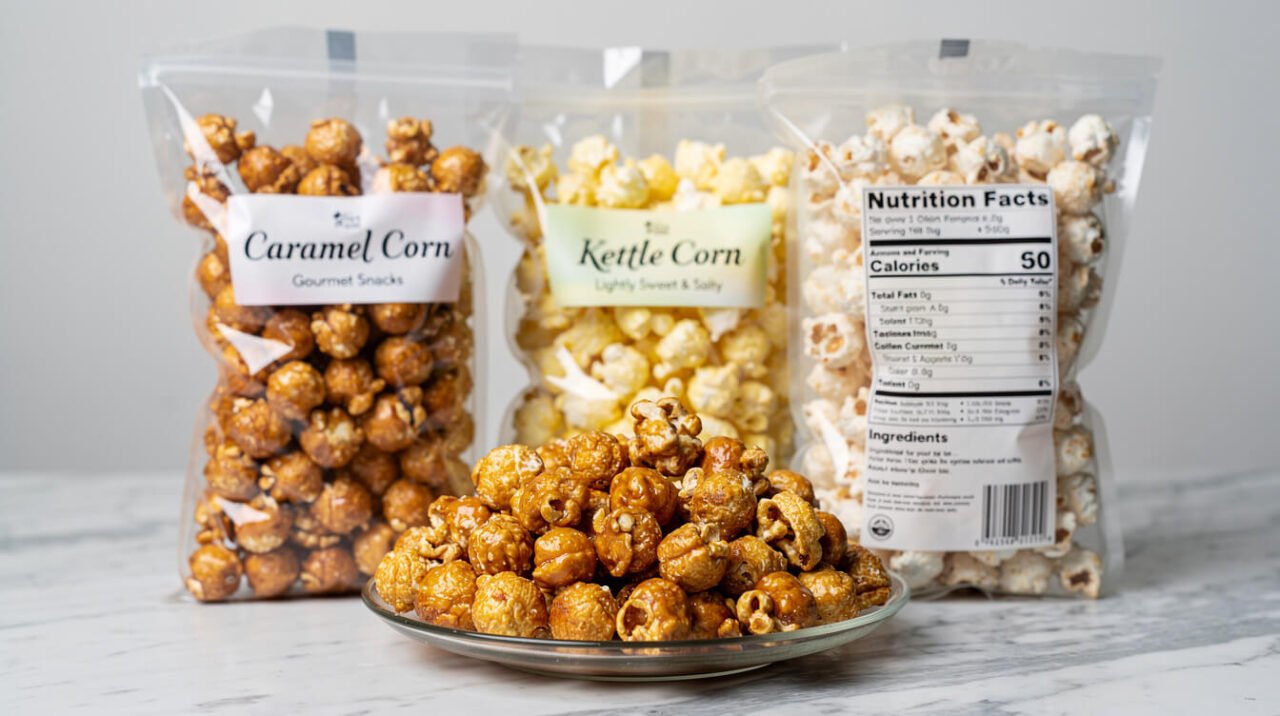
Some popcorn is not a portion-control question at all. It is simply off the list.
Caramel corn and kettle corn. Heavy sugar and sticky coatings that cling to teeth. Not acutely toxic, but a poor idea for any dog and a genuinely bad one for diabetic dogs or dogs being managed for weight.
Chocolate-drizzled or chocolate-coated popcorn. Chocolate is toxic to dogs. Treat this as a call-your-vet situation, with the type of chocolate, the rough amount, and your dog’s weight ready — those three numbers determine how concerned anyone needs to be. In the United States you can also reach the ASPCA Animal Poison Control Center on (888) 426-4435 or the Pet Poison Helpline on (855) 764-7661; both charge a consultation fee and both are open around the clock.
Anything sugar-free, “skinny,” or low-carb. This is the one with zero coverage in the popular guides on this topic, and it is worth thirty seconds of label-reading. Sweet coatings on reduced-sugar products are often built on sugar alcohols. Most of those are merely a laxative risk. Xylitol is not — it is seriously toxic to dogs even in small amounts, causing a dangerous drop in blood sugar and, at higher doses, liver injury. It also shows up on ingredient lists under the name birch sugar.
To be clear and not alarmist: most caramel and kettle corn is made with ordinary sugar, and xylitol in popcorn is uncommon. But sugar-free coated snacks are exactly the product category where it appears, the label is right there, and the consequences of guessing wrong are severe. Read it. If xylitol or birch sugar is on the list and your dog has eaten any, that is an emergency — call your veterinarian or a poison control line immediately, do not wait for symptoms, and do not try to make your dog vomit unless a veterinary professional has told you to.
Popcorn with nuts or trail-mix style mixes. Worth a quick check for macadamia nuts and raisins, both of which are toxic to dogs and both of which turn up in sweet-and-salty snack mixes.
Better crunchy treats if popcorn isn’t worth the fuss
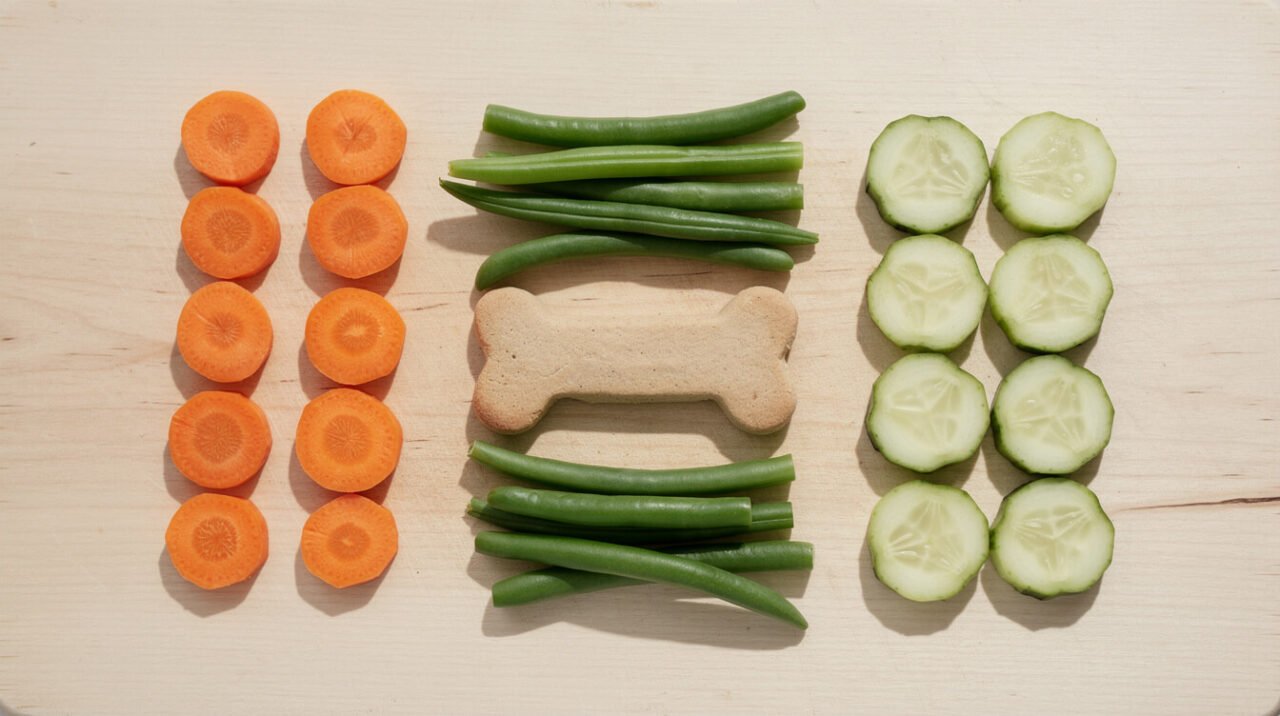
If the appeal of popcorn is the crunch and the ritual of sharing, several things do the job better, with no kernels to sort and no seasoning to worry about.
- Carrot coins. Sweet, crunchy, low in calories, and popular with most dogs. Cut them into rounds or sticks sized sensibly for your dog rather than handing over a whole carrot to a small one.
- Green beans. Plain, fresh or frozen, no salt and no seasoning. A long-standing recommendation for dogs on weight management plans because they are filling and very low in calories.
- Cucumber slices. Mostly water, refreshing, and reliably well received in warm weather.
- A portion of their own kibble, set aside. Unglamorous and extremely effective. Scoop a small amount out of their daily ration into a separate bowl to hand out during the film — all the ritual of sharing, zero extra calories, nothing new for their gut to negotiate.
Two general notes on all of these. Introduce anything new in small amounts and watch how your dog handles it, since individual tolerance varies more than any list can capture. And count them within that same treat allowance — the 10% ceiling covers everything, not just the things that look like treats. If you want a broader sense of which produce is worth sharing, our guide to dogs and oranges walks through the same trade-offs for fruit.
And if you are the kind of keeper who reads a calorie table before handing over a piece of popcorn, you are exactly who we make our merch for — the Bearded Dragon Crown Sunglasses King T-Shirt is from our “Wear the Obsession” line, for the reptile people among you.
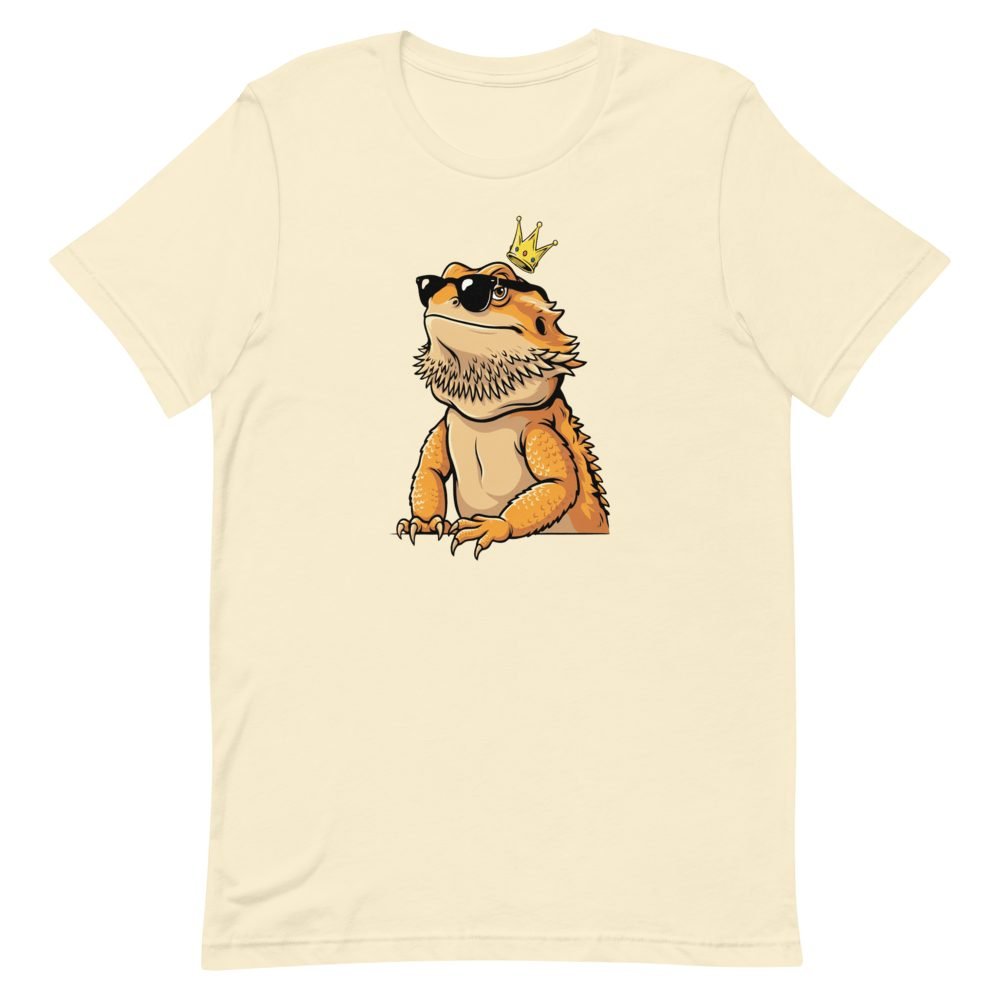
Wear the obsession
For the keepers who read the care sheet twice. The Bearded Dragon Crown Sunglasses King T-Shirt, from our line for people who love their animals enough to get it right.
Can my dog eat popcorn? Your questions, answered
Can puppies eat popcorn?
Better to wait. The choking and dental risks from stray kernels are higher in a small mouth, and growing puppies need nearly all of their calories to come from a complete growth diet. A few plain popped pieces are not dangerous for an older puppy, but there is no good reason to make it a habit at that stage.
How much popcorn is too much for a dog?
Practically speaking, more than a loose handful for a large dog or a few pieces for a small one, in one sitting. The calorie ceiling is generous — a few cups for a big dog — but fiber load and displaced nutrition become the real limits well before calories do. The table above gives sensible portions by weight.
Is corn bad for dogs?
No, despite its reputation. Corn is a normal, digestible carbohydrate source in a great many complete dog foods, and it carries useful nutrients. True corn allergy in dogs exists but is far less common than internet lore suggests; food allergies in dogs are most often to animal proteins such as beef, dairy, and chicken. If you suspect a food allergy, that is a conversation for your veterinarian rather than an ingredient to eliminate on a hunch.
What if my dog ate a whole bag of unpopped kernels?
Call your veterinarian. That is a large volume of hard, dry, indigestible material, and the risks of obstruction and dental damage are meaningfully higher than for a few stray kernels. It is worth a phone call even if your dog seems perfectly fine.
Can my dog eat popcorn every day?
We would not. Occasional is the right frequency for any treat with no nutritional role in the diet. Daily popcorn adds daily fiber and daily calories for no benefit, and it slowly normalizes feeding from the human bowl — which is the habit that makes the buttered, salted, seasoned accident more likely down the line.
My dog ate popcorn and seems completely fine. Do I need to do anything?
Probably not. If it was a modest amount of plain or lightly buttered popcorn, no packaging was swallowed, and your dog is bright, eating, and comfortable, normal monitoring is enough. Keep water available and skip any extra treats for the rest of the day.
Final thoughts
So, can my dog eat popcorn? Yes — and popcorn sits in a comfortable middle of the pet-food question: not dangerous, not beneficial, entirely fine in small plain amounts, and worth a little care around the edges. The things genuinely worth remembering are narrower than the internet suggests — the seasoning matters more than the corn, the kernels live at the bottom of the bowl, and the greasy bag is a bigger hazard than anything in it.
Set aside a small plain portion before you butter yours, pick out the old maids, keep the bag off the floor, and share a few pieces with a clear conscience. That is the whole of it. And if something ever does go sideways — the seasoned bowl, the sugar-free bag, the missing packaging — your veterinarian is the right call, and calling early is never the wrong move.
You went looking for a portion table before handing over a single piece, which tells us everything about how seriously you take getting this right. Your dog is lucky to have you.
Before you go
Keep learning your animal
We publish a new guide every day. The best of them land in one short weekly email, so you never miss the one about your species.

Meet Jake Harrington, your go-to guru for all things canine. With over 15 years of professional dog training experience, Jake has transformed the lives of thousands of dogs and their owners. His journey began in the bustling streets of a major city, where he discovered his natural affinity for understanding canine behaviors and communication.