Can Cats Eat Turkey? A Thanksgiving Guide to the Safe Bites (and the Twine, Bones, and Gravy That Aren’t)
Can cats eat turkey? Yes. A small piece of plain, fully cooked turkey with no skin, no bones, and no seasoning is a safe treat for most healthy cats. Turkey is lean animal protein, and your cat is an obligate carnivore, so it’s no surprise she’s staring at the platter. The meat itself is rarely the problem on Thanksgiving. The trouble is everything that comes with it: the onion in the stuffing, the garlic in the gravy, the fat-soaked string around the roast, and the carcass in the kitchen trash.
Below: which parts of the bird are fine, how much is actually treat-sized (we did the calorie math), the kitchen hazards that send cats to the emergency clinic in late November, and a plan for her own safe share.
Can cats eat turkey? The short answer
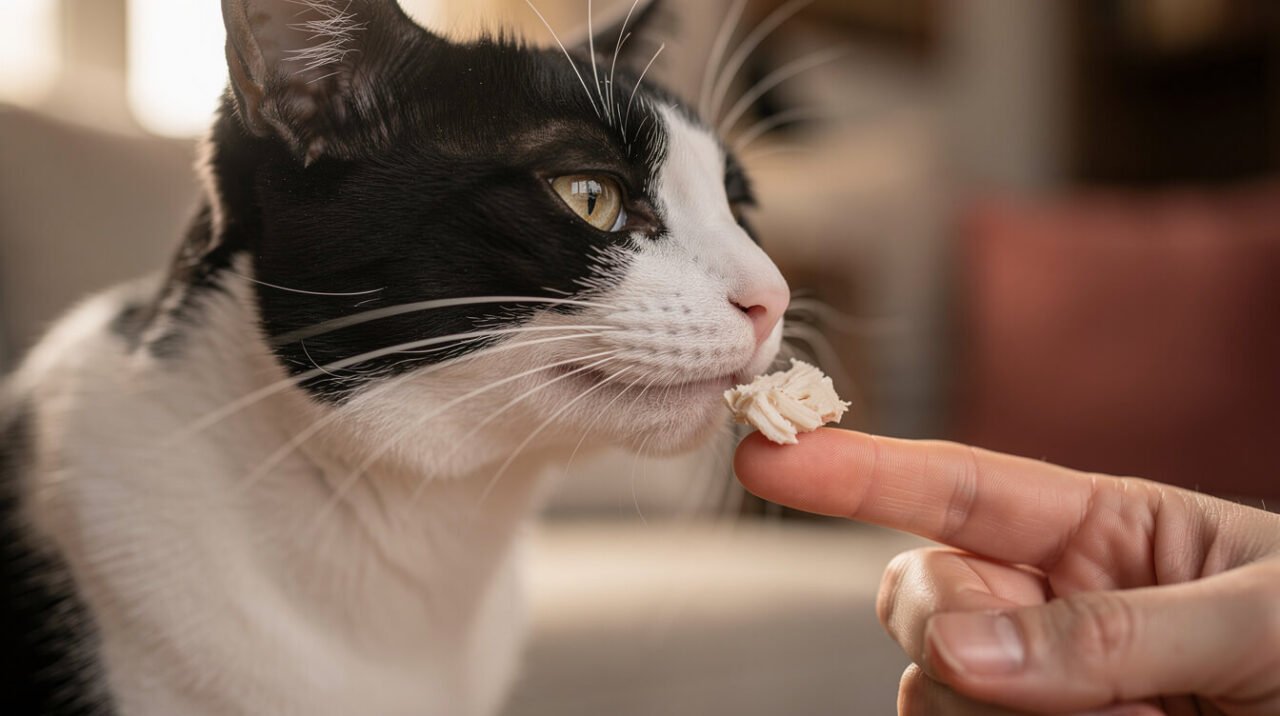
Plain cooked turkey is one of the safer human foods you can share with a cat, and the same lean poultry goes into many commercial cat foods. A thumb-tip-sized piece of roast breast meat is a reasonable treat for a healthy adult cat.
Four conditions make it safe:
- Cooked all the way through. Raw and undercooked poultry can carry Salmonella and other pathogens. More on raw turkey in the FAQ below.
- No bones. Cooked poultry bones splinter and can injure the mouth, throat, or gut.
- No skin. It’s very fatty, and it’s where the butter, salt, and seasoning rub sits.
- Nothing from the onion family. That means no stuffing, gravy, pan drippings, or seasoned crust. Onion and garlic are the real Thanksgiving poisons for cats, and we’ll explain why in a moment.
And if your cat is on a prescription diet (kidney, urinary, food allergy, or anything else), skip table food until your veterinarian okays it. A single bite can undo an elimination diet trial.
Turkey is a treat, not a meal. Her complete and balanced cat food already covers what she needs.
Which parts of the turkey: breast, dark meat, skin, giblets, and bones
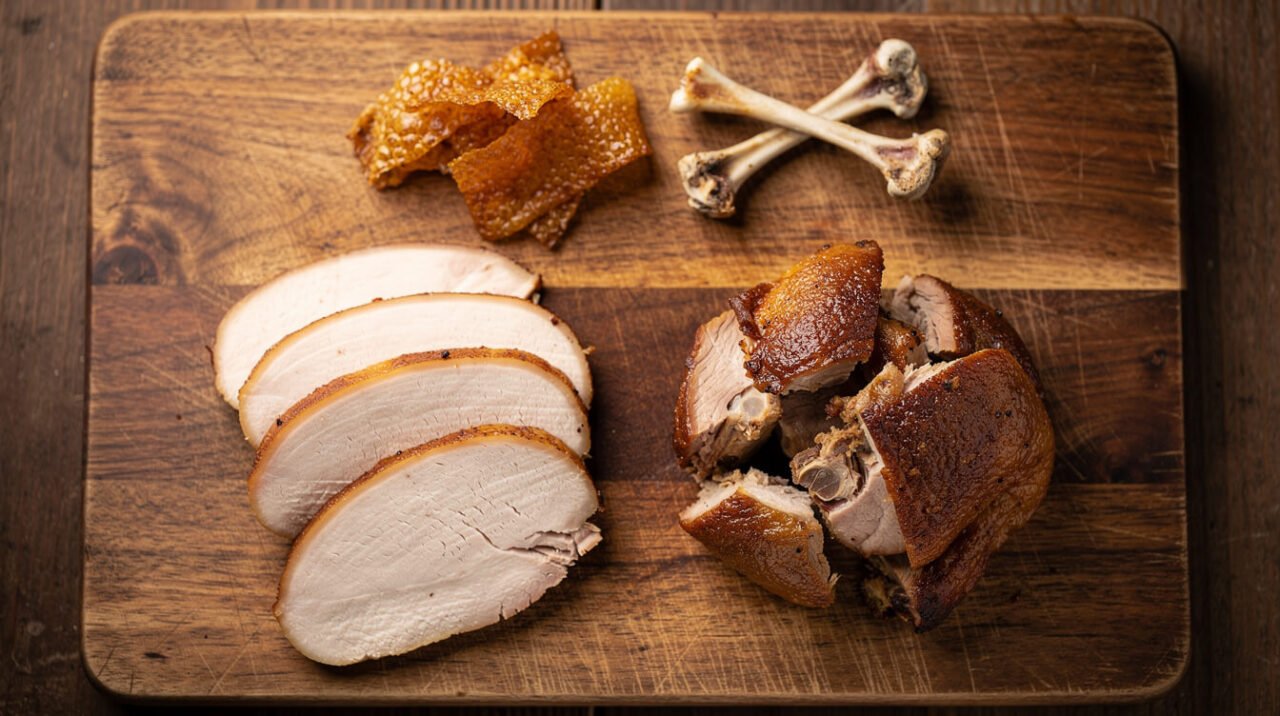
Breast meat: the safest choice
Skinless white breast meat is the leanest part of the bird: about 147 calories and 2 grams of fat per 100 grams roasted, according to USDA FoodData Central. Carve from the center, away from the skin and seasoned crust.
Dark meat: fine in small amounts, and here’s a surprise about taurine
Thigh and leg meat is fattier and higher in calories, so keep it smaller and rarer than breast. But you’ll often read that turkey is “high in taurine,” the amino acid cats must get from their diet for healthy hearts and eyes. That’s true, but it’s true of the dark meat. A taurine reference table compiled by UC Davis veterinary nutrition researchers (Spitze et al., 2003) lists roasted turkey dark meat at roughly 2,990 mg of taurine per kilogram and roasted light meat at roughly 110 mg per kilogram. That’s about 27 times more in the dark meat. The “306 mg per 100 g” figure you may see quoted elsewhere is raw dark meat.
The same study found that cooking method matters. Foods cooked surrounded by water, such as boiled meat, lost more taurine than baked or roasted meat. So if you’re cooking a plain piece just for your cat, roasting or baking it keeps more of the taurine than boiling does.
Keep it in perspective: a treat-sized bite isn’t how a cat meets her taurine needs. Complete cat foods cover that. Lean breast is still the better everyday treat.
Skin: skip it
Roasted turkey skin is about 39% fat by weight (USDA), and it’s where the butter, salt, and garlic rub end up. Rich, fatty food commonly triggers vomiting and diarrhea, and skin is extremely calorie-dense (see the math below).
Giblets and the neck
The neck is mostly small bones, so it’s a no. Giblets usually end up in gravy or stuffing with onion, which rules them out too. Liver, even plain, is best kept rare: it’s very rich in vitamin A, and cats fed a lot of liver over time can develop vitamin A excess.
Bones: never
Cooked bones splinter into sharp fragments that can cut the mouth, lodge in the throat, or damage the gut. Pick through any dark meat you share. If your cat gets hold of a bone, call your vet rather than waiting for signs.
The Thanksgiving table: stuffing, gravy, onion, and garlic
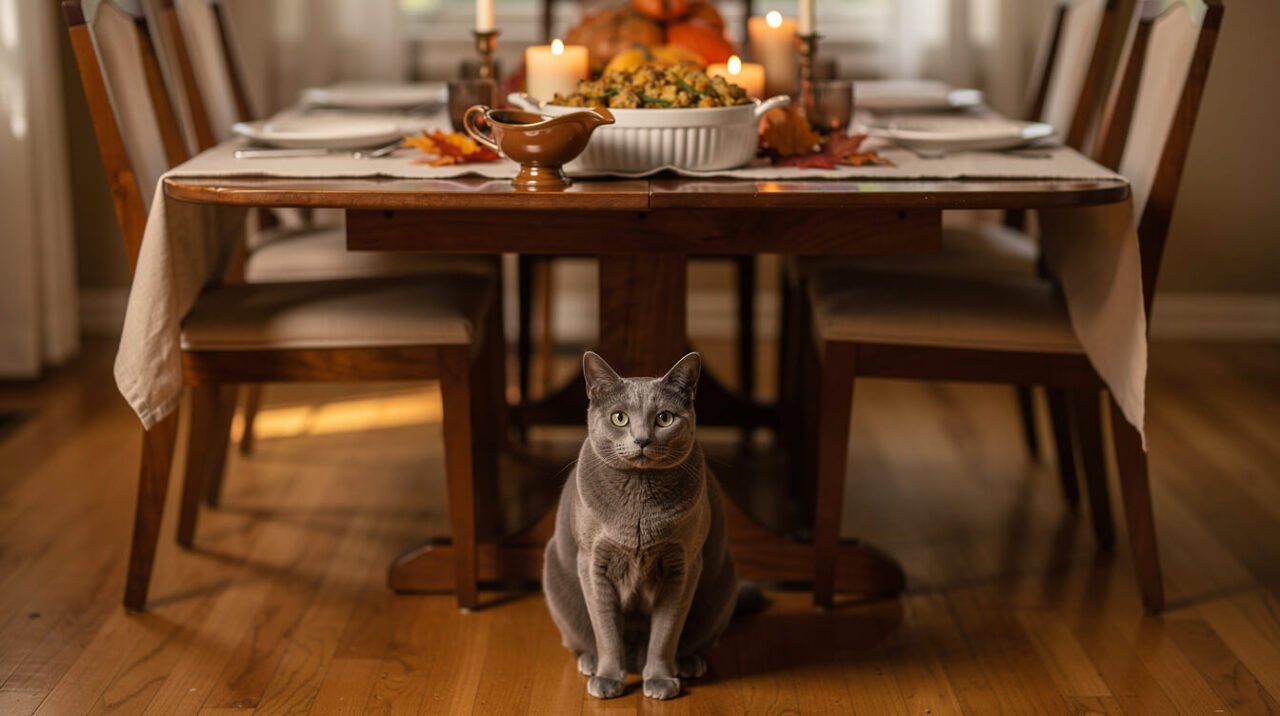
Most turkey guides list onion and garlic in passing, as “can be toxic.” For cats, that understates it. The Merck Veterinary Manual is blunt: “Cats are the most susceptible species.” Here’s what it reports:
- Toxicosis has been reported in cats after eating less than a teaspoon of cooked onions.
- Garlic is 3 to 5 times more toxic than onion.
- Poisoning in cats and dogs is most often linked to concentrated forms: onion or garlic powder, dehydrated flakes, and dry onion soup mixes.
- Chives and leeks are in the same Allium family.
Onion and garlic contain sulfur compounds that damage red blood cells and can lead to anemia. Now picture the holiday table. Stuffing is usually built on sautéed onion. Gravy and pan drippings collect onion, garlic, and the seasoning rub. Many rubs, brines, and gravy mixes are based on garlic and onion powder, the concentrated forms Merck flags. A spoonful of stuffing licked off a plate can hold more onion than a cat should ever eat.
“She seems fine” isn’t the all-clear
Onion and garlic poisoning is delayed. According to Merck, red blood cell damage begins within 24 hours, but visible signs often don’t show until several days later, once a lot of red blood cells have broken down. Watch for:
- tiredness, weakness, or hiding
- not eating
- fast breathing or a racing heart
- pale or yellow gums
- red or brown urine
If your cat ate stuffing, gravy, drippings, seasoned skin, or anything made with onion or garlic, call your veterinarian the same day, even if she seems completely normal. Treatment works best when it starts early. Your vet may want to see her right away or recheck her blood over the next few days. You can also call the ASPCA Animal Poison Control Center at (888) 426-4435 (a consultation fee may apply).
Also keep alcohol, raw bread dough, chocolate desserts, and buttery or creamy sides out of reach. Plain pumpkin is a different story (see can cats eat pumpkin, including why pie isn’t the same thing), and our guide to which vegetables cats can eat covers the plain sides.
How much turkey can a cat have? The 10% math
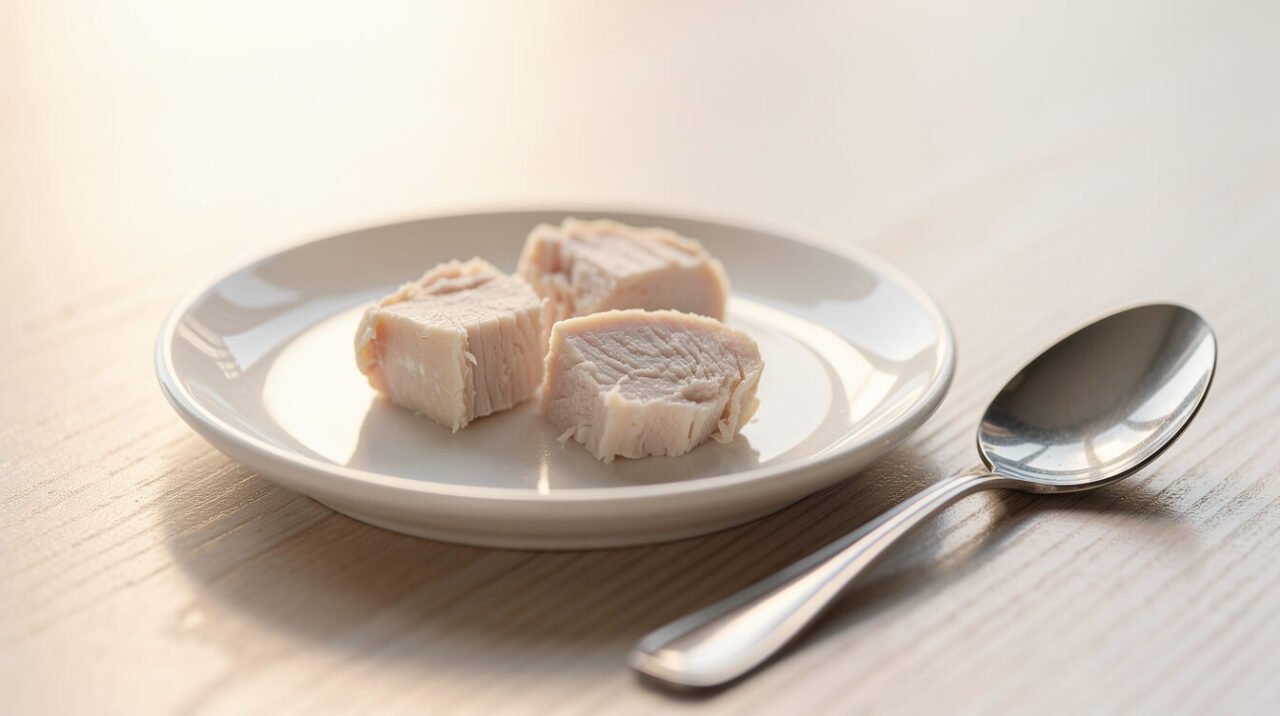
Vets commonly suggest that treats should make up no more than about 10% of a cat’s daily calories. That rule is easy to repeat and hard to picture, so here are the numbers.
Step 1: what a typical cat needs. The Merck Veterinary Manual estimates a cat’s resting energy requirement as 70 × (body weight in kg)0.75. Neutered adults need about 1.2 times that, and obesity-prone cats about 1.0 times. For a 10-pound (4.5 kg) cat, that works out to roughly 220 to 260 calories a day. Merck adds that any individual cat can need up to 30% more or less, so treat this as a starting point.
Step 2: the treat budget. 10% of 220 to 260 calories is about 22 to 26 calories, and that’s for all treats that day, not just turkey.
Step 3: turn it into turkey. At about 147 calories per 100 grams, skinless roast breast fills that budget at roughly 15 to 18 grams. That’s about half an ounce, or a few thumb-tip-sized pieces. PetMD’s veterinarian-written guide suggests a bite about the size of the tip of your thumb, which fits comfortably inside the budget.
Step 4: now add skin. Roast turkey skin has about 459 calories per 100 grams. Just 5 grams of skin, a strip smaller than a playing card, uses up the whole day’s treat allowance. That’s why “just a little skin” adds up so quickly, especially for indoor cats who are already a bit heavy.
Practical rules
- First time? Start with one small piece and watch for vomiting or loose stool over the next day.
- Small, senior, or overweight cat? Go smaller. Ask your vet for her actual daily calorie target. It’s often lower than people expect.
- Give less of her usual treats that day, so the turkey takes their place rather than adding to them.
- Don’t free-feed leftovers over the long weekend. One bite on the day is a treat. Four days of bites is a diet change.
The weekly care guide
Get it right for your animal, every week
One email a week: new care guides, species deep-dives, and the safety answers keepers search for, written by our specialists. No spam. Unsubscribe anytime.
The hazards that aren’t food: string, netting, timers, and the trash
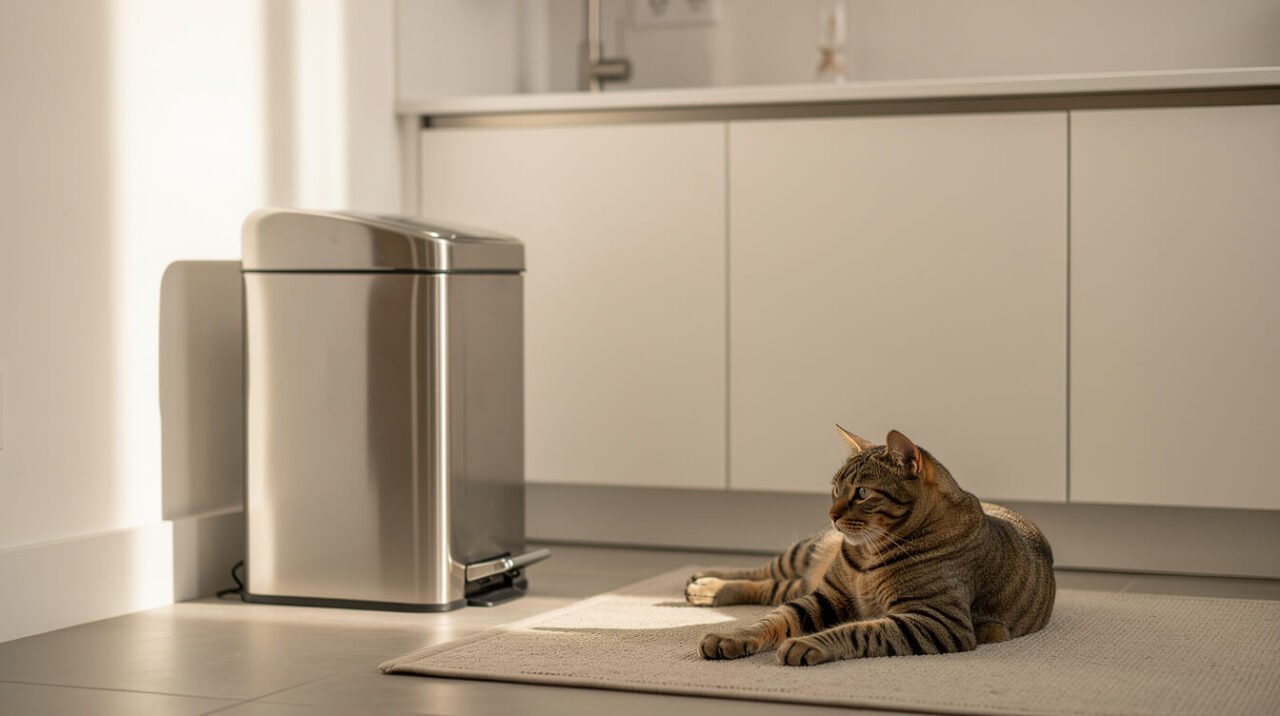
None of the top-ranking turkey guides we read mention this, yet for cats it may be the biggest Thanksgiving risk. Roasting a turkey produces a pile of things that smell like dinner and are dangerous to swallow:
- Kitchen twine used to truss the legs or tie a roast
- Elastic meat netting from boneless turkey breasts and roasts
- Plastic pop-up timers and leg clamps
- The giblet packet pulled from the cavity
- Foil, oven-bag ties, and paper towels soaked in drippings
- The carcass, full of cooked bones
Why string is so dangerous for cats
String, thread, and twine cause what vets call a linear foreign body. The danger isn’t the string blocking the gut like a lump. As Veterinary Partner explains, one end often gets anchored, commonly looped around the base of a cat’s tongue or stuck in the stomach, while the rest trails into the intestine. The intestine keeps trying to move the string along and bunches up on it like fabric on a drawstring. A taut string can eventually cut through the intestinal wall. VCA Animal Hospitals notes that these cases usually need surgery.
Turkey twine is especially tempting because it’s soaked in fat and meat juices. A cat who would ignore a ball of yarn may happily eat a string that smells like roast turkey.
If you see string, don’t pull it
If string or twine is hanging from your cat’s mouth or under her tail, do not pull it. If it’s anchored inside, pulling can seriously damage the intestines. Emergency vets, including East Metro Animal Emergency Clinic, are clear about this: never try to pull string from a cat’s mouth or anus. Keep her calm and call your vet or an emergency clinic right away.
Also call if you think she ate string, netting, or a timer. Signs include vomiting, not eating, lethargy, hiding, and a sore belly (VCA). String often doesn’t show on X-rays, so tell your vet exactly what went missing.
A carving-day routine that prevents most of this
- When the bird comes out of the oven, cut off the twine, netting, and timer and put them straight into a lidded bin, not on the counter “for a minute.”
- Bag the carcass and bones and take them to the outdoor bin the same evening. The ASPCA’s Thanksgiving advice also reminds hosts to empty the trash during the day, because it fills up with bones and onion-laced scraps.
- Use a trash can with a locking or pedal lid.
- Give your cat a quiet room during carving and dinner.
Deli turkey, turkey bacon, and brined birds
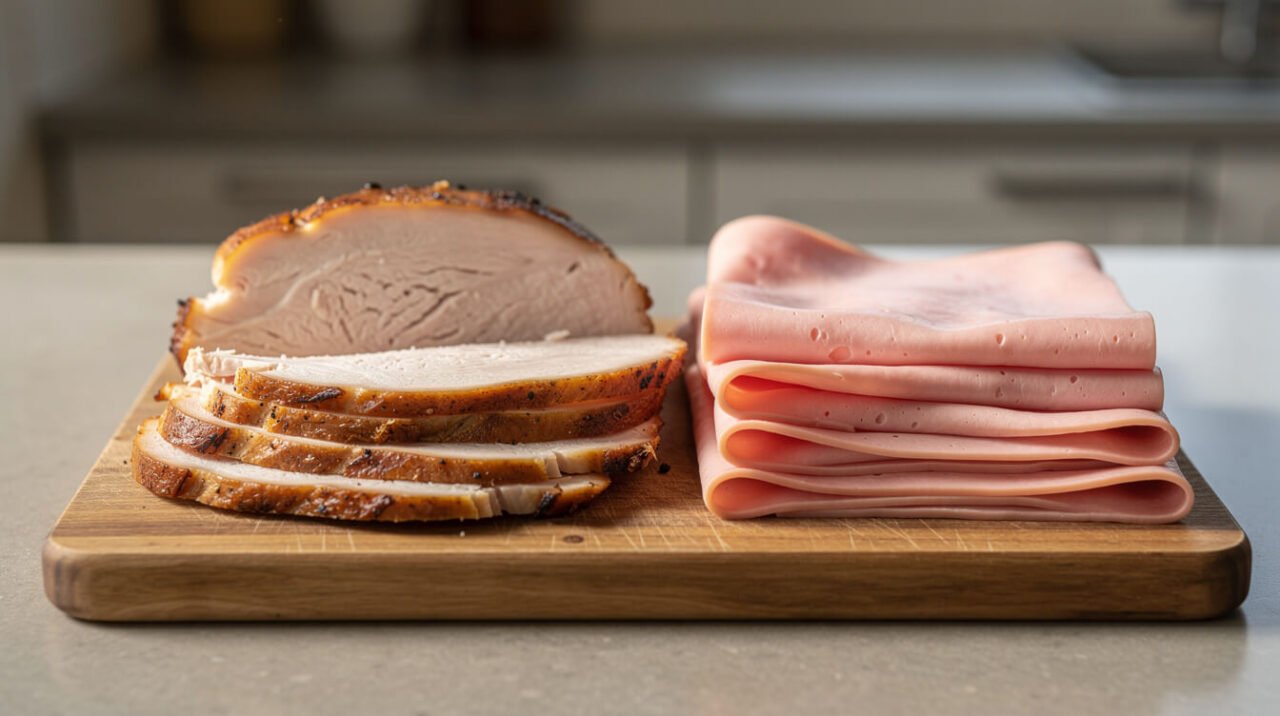
Deli turkey and lunch meat
Sources disagree here. Some cat-care sites say an occasional slice is fine; PetMD’s veterinarian-written guide says no, because lunch meat is usually high in sodium and may contain preservatives and seasoning. Our view: plain home-cooked turkey is always the better choice. If your cat steals a bite of your sandwich, a little plain deli turkey isn’t an emergency for a healthy cat, but check the label for onion or garlic powder, and call your vet if it’s there. Turkey bacon, sausage, and smoked turkey are cured, salty, and often seasoned. Skip them.
The brined-bird surprise
Here’s one that isn’t on the competitor pages we read: your “plain” roast turkey may not be low in salt. Many supermarket turkeys are injected with a salty solution before you ever buy them. Under USDA labeling rules, bone-in birds labeled “basted” or “self-basted” can carry approximately 3% added solution, and boneless products up to 8%. The label must state how much solution was added and what’s in it. Look for wording like “contains up to X% of a solution.”
USDA FoodData Central shows the difference. Roasted breast meat has about 99 mg of sodium per 100 g, but breast from a whole bird “with added solution” has about 238 mg per 100 g, roughly two and a half times as much.
Keep it in proportion: a thumb-tip bite from an enhanced bird is a small amount of sodium for a healthy cat. It matters more for cats with heart or kidney disease or on a prescription diet, so ask your vet first. The same goes for a turkey you brine yourself. A separately cooked plain piece (below) is the easy fix.
A cat-safe Thanksgiving plate
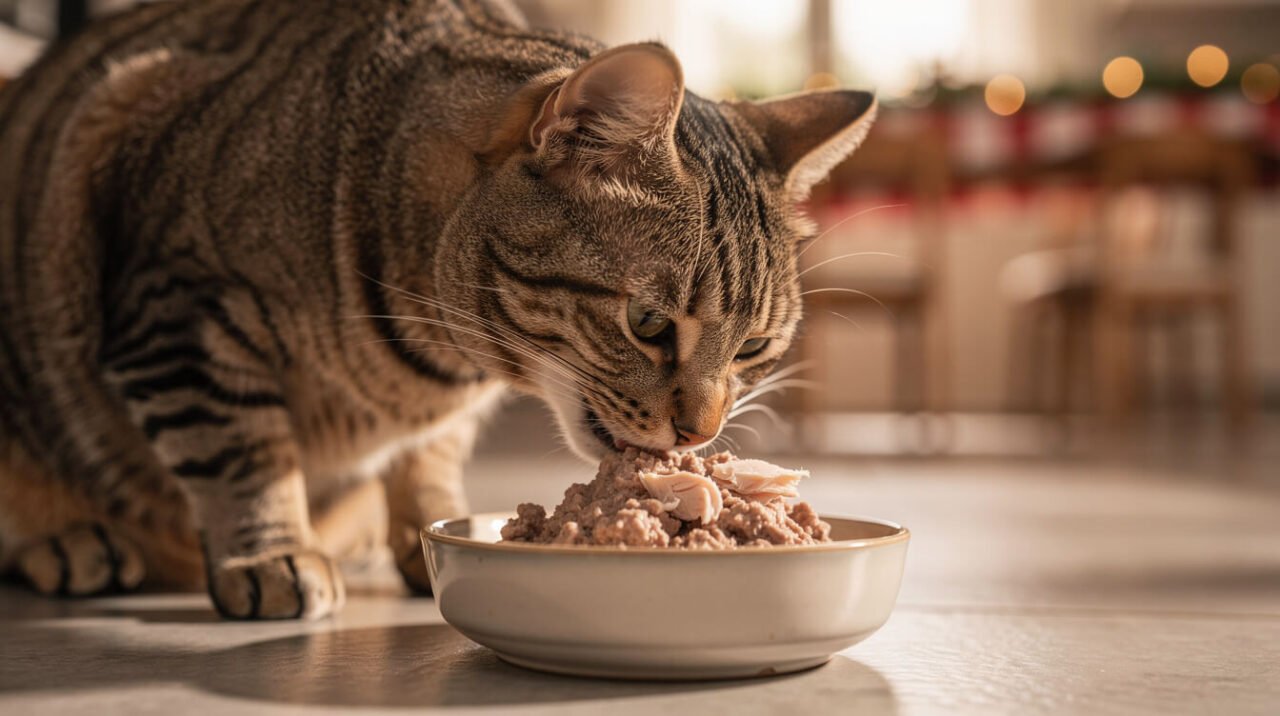
Your cat doesn’t need a feast. She needs her normal dinner, at her normal time, with a small, safe extra. The UK charity Cats Protection makes a good point that’s easy to forget during a busy holiday: keep her routine. Rich festive food can put a cat off her regular meals, and an upset stomach is the last thing you want with guests in the house.
How to set aside her share
- Cook her piece separately if you can. A small turkey breast cutlet baked plain, with no salt, oil, butter, or rub, is the safest option. Baking keeps more taurine than boiling. Let it cool, then cut it into small pieces.
- Or carve from the inside. If you’re sharing from the main bird, take a piece from the center of the breast, away from the skin, the seasoned crust, and the stuffed cavity. If the bird was injected or brined, keep the piece especially small.
- Weigh once, then eyeball. Half an ounce (about 15 g) is the full daily treat budget for a typical 10-pound cat. After you’ve seen what that looks like on a kitchen scale, you’ll know the size.
- Serve it her way. Stir a few pieces into her usual wet food, offer one from your fingertip, or hide pieces in a puzzle feeder so the treat takes a few minutes to find.
Thanksgiving is also a good time to think about the people at your table who love animals as much as you do. If one of them keeps a bearded dragon alongside the family cat, the Bearded Dragon Crown Sunglasses King T-Shirt is our small nod to multi-species households (our shop is small and reptile-first for now).

A holiday gift for the keeper at your table
Cat begging under the table, bearded dragon basking in the next room? The Bearded Dragon Crown Sunglasses King T-Shirt is a soft, everyday tee for keepers who are a little obsessed, in the best way.
Make the day easier on her
For many cats, the hardest part of Thanksgiving isn’t the food. It’s the doorbell and the strangers. A closed room with her bed, litter box, and water lets her opt out (our list of essential cat gear covers the basics). Ask guests not to slip her food, and tell children why. Sharing a home with a dog too? Start with our guide to pumpkin for dogs.
Can cats eat turkey? Your other questions, answered
Can cats eat raw turkey?
We don’t recommend it. Raw poultry can carry Salmonella and other bacteria that can make both cats and people sick. There’s a newer concern too: in December 2024, a batch of a raw frozen turkey cat food was recalled after an Oregon cat that ate it died of H5N1 avian influenza (AVMA). Cats are highly susceptible to this virus. Cook turkey fully before sharing.
Can kittens eat turkey?
Weaned kittens can have a tiny piece of plain cooked turkey, but growing kittens have specific nutrient needs that kitten food is designed to meet. Their stomachs are also more easily upset. Keep it to a taste, and if your kitten has had any tummy trouble, check with your vet first. Our FAQs for first-time kitten owners cover feeding basics.
Is turkey or chicken better for cats?
Plain, cooked, skinless turkey and chicken are similar lean poultry, and neither is clearly “better” as an occasional treat. Choose whichever your cat likes and tolerates. On an elimination diet for a suspected food allergy, give only what your vet approves.
What meat should you never feed a cat?
No single plain, cooked meat is toxic to cats. The danger is in how the meat is prepared. The meats to avoid are anything cooked with onion, garlic, chives, or leeks (including in gravy, stuffing, or a rub), raw or undercooked meat, meat with cooked bones, and cured or processed meats such as bacon, sausage, and ham.
My cat ate turkey skin or a bit of gravy. What now?
Plain skin usually means, at most, an upset stomach; call your vet if vomiting or diarrhea is severe or lasts beyond a day. Gravy, stuffing, and seasoned skin are different, because they may contain onion or garlic. Call your vet the same day, even if she seems fine (see the box above).
Final thoughts
So, can cats eat turkey? Yes. A small, plain, cooked, boneless, skinless piece is one of the nicest ways to include your cat in the holiday. The meat was never the main risk. The real Thanksgiving dangers for cats are the onion and garlic hidden in stuffing, gravy, and drippings, the fat-soaked twine and netting, and the carcass in the trash.
Keep her share separate, small, and plain. Clear the string and bones away as you carve. If she gets into something she shouldn’t have, call your vet promptly instead of waiting to see. The fact that you’re reading this before the big day says a lot about how well she’s cared for. Happy Thanksgiving to you both.
Before you go
Keep learning your animal
We publish a new guide every day. The best of them land in one short weekly email, so you never miss the one about your species.
Dr. Lila Monroe is a seasoned veterinarian with a passion for feline health and behavior, boasting over 20 years of experience in the field. With her extensive knowledge of cat medicine combined with a deep understanding of the nuanced dynamics of cat behavior, Lila offers readers invaluable insights into creating a nurturing environment for their feline friends.