Can Cats Eat Vegetables? A Vet-Informed Safety Guide
Your cat is staring at the cutting board again — this time it’s broccoli, or maybe a stray pea that rolled off the counter. Can cats eat vegetables, or is this just another thing you need to fend off at dinner time? The short answer: yes, most cats can eat a small amount of the right vegetables safely, but they don’t need them, and a few common ones are genuinely dangerous. Here’s what’s actually true, and how to do it right.
Can cats eat vegetables? The quick answer
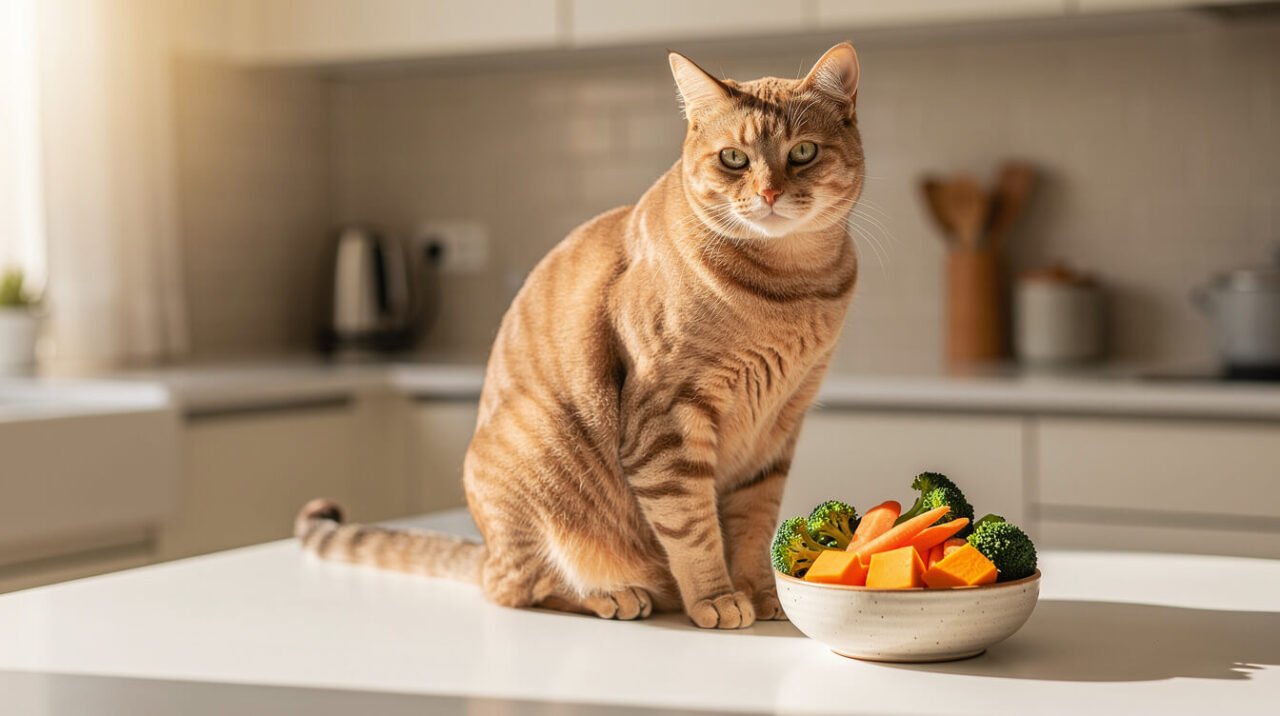
Yes — in small amounts, prepared simply, cats can eat a number of vegetables safely. Steamed broccoli, carrots, peas, pumpkin, spinach, green beans, and a handful of others are fine as an occasional addition to a cat’s diet. What vegetables can’t do is replace meat: cats are obligate carnivores, and their bodies are built to run on animal protein, not plant matter.
The line to watch isn’t “vegetable versus no vegetable” — it’s which vegetable. The allium family (onion, garlic, leek, chive, scallion, shallot) is toxic to cats even in small quantities, and a few others (raw potato, green tomato, rhubarb) carry real risk too. We’ll cover exactly which ones are safe, how much is a sensible amount, what to do for cats with health conditions, and which vegetables need to stay off the counter entirely.
Why cats are obligate carnivores — and what that means for veggies
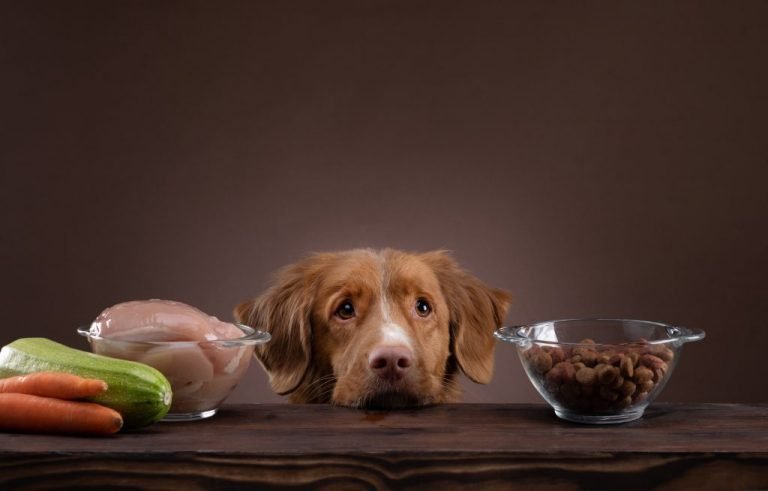
Dogs are omnivores — they can pull real nutrition out of plant matter, and a well-designed vegetable-inclusive diet can genuinely work for them. Cats are a different animal, biologically, and it’s worth understanding why before you decide how much vegetable belongs in the bowl.
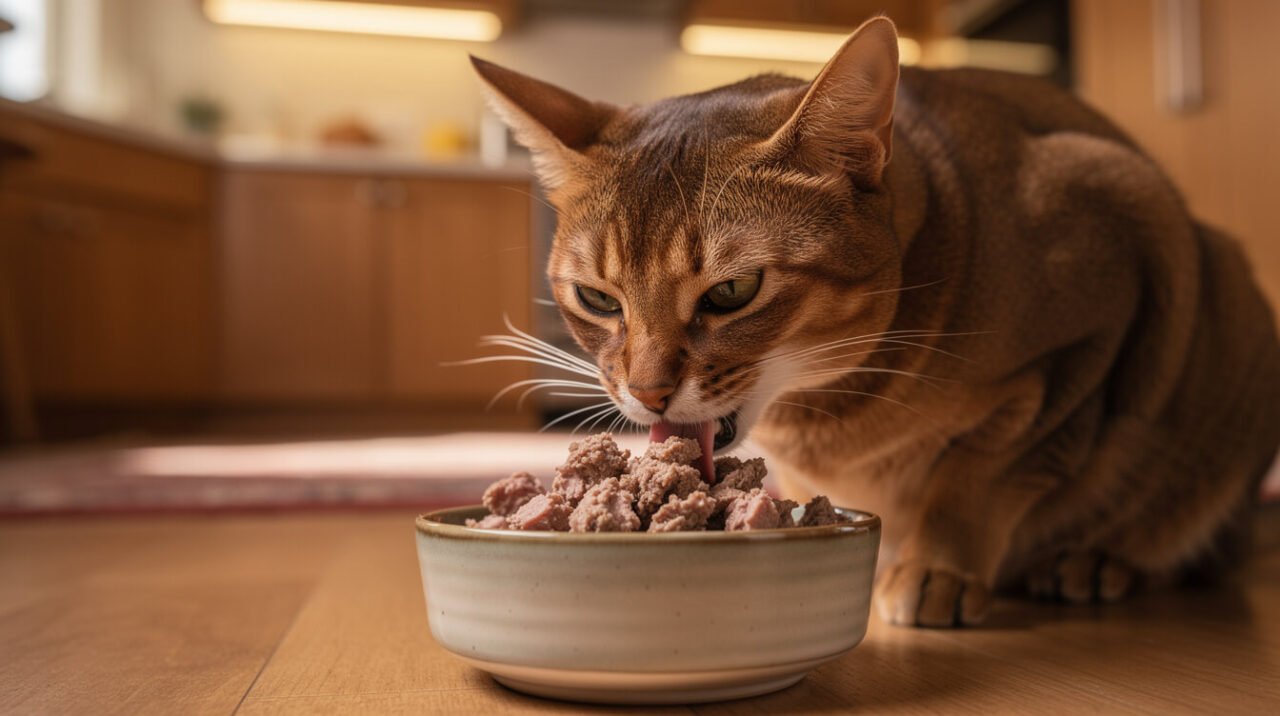
Wild and feral cats hunt small prey — rodents, birds, insects — and eat nearly the whole animal: muscle, organ, and a trace of stomach contents. That diet is dense in complete, highly bioavailable protein, taurine, arachidonic acid, and pre-formed vitamin A (retinol), all delivered in forms a cat’s metabolism is built to use directly. Millions of years of that evolutionary pressure shaped a digestive tract that’s short, efficient, and specialized for animal tissue — not a longer, fermentation-friendly gut built to extract nutrition from tough plant fiber the way a cow’s or even a dog’s can.
Taurine is the clearest example of why this matters. It’s an amino acid cats can’t synthesize in adequate amounts on their own, and it isn’t found in meaningful quantities in plant foods at all. A cat deprived of dietary taurine can develop serious heart disease and blindness over time — which is exactly why commercial cat foods are fortified with it, and exactly why a vegetable-heavy or vegetarian diet is never appropriate for a cat, however well-intentioned. Vitamin A works similarly: cats can’t efficiently convert the beta-carotene found in carrots and other orange vegetables into usable vitamin A the way humans and dogs can, so a carrot is a fiber-and-crunch treat for a cat, not a vitamin A source.
None of this means vegetables have zero place in a cat’s bowl — it means their place is small and supplementary. Fiber from a vegetable like pumpkin can genuinely help with digestion. The water content in cucumber or zucchini adds a little hydration, which matters more than you’d think for cats, since many don’t drink as much as they should on a dry-food diet. Some cats simply enjoy the crunch and the novelty, and there’s nothing wrong with occasionally indulging that curiosity as long as it stays a minor share of the day’s calories. The general guidance from veterinary nutrition sources is that treats and extras — vegetables included — should make up no more than about 10% of a cat’s daily caloric intake, with the other 90% coming from a complete, balanced commercial cat food formulated for feline needs. If you’re still working out what that complete diet should look like, our guide to choosing the best cat food is a good next stop, and our broader guide to taking care of your cat covers how diet fits into the bigger picture of feline care.
So the honest framing here isn’t “vegetables are healthy for cats” the way they’d be for a person or a dog. It’s “a few specific vegetables, in small amounts, are a safe and occasionally beneficial extra” — never a replacement for what a cat’s body actually needs.
Safe vegetables for cats
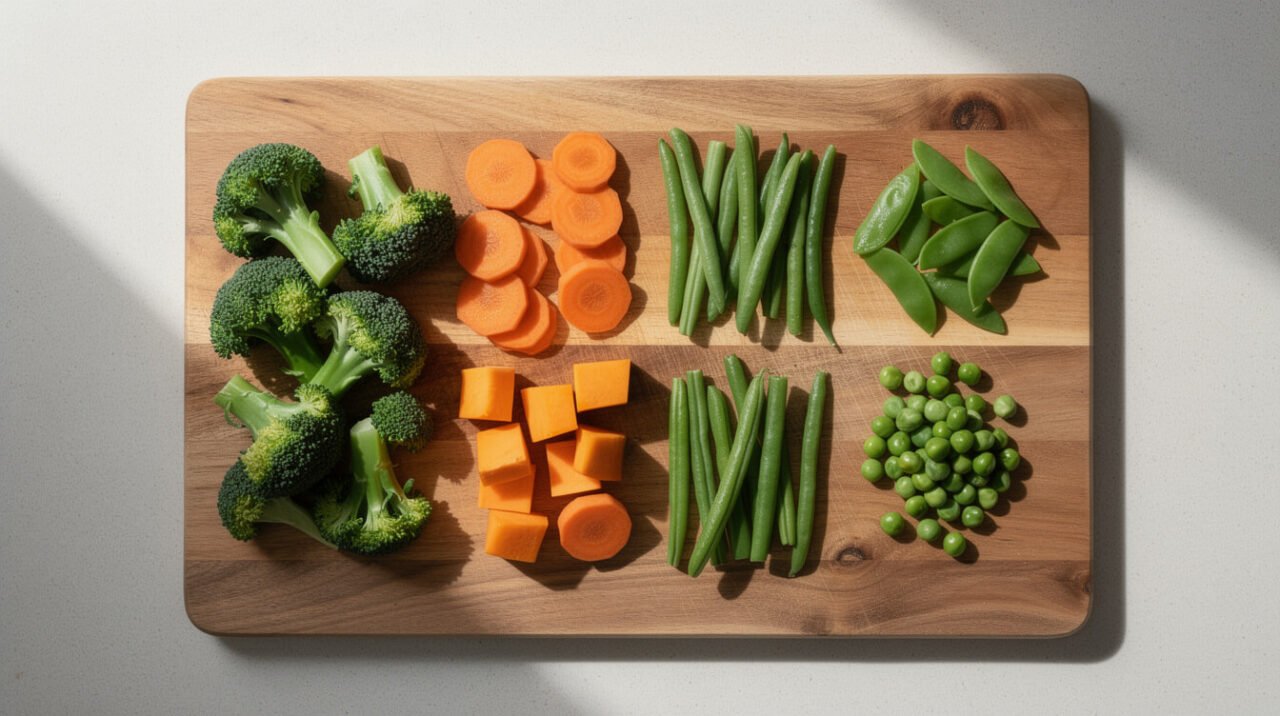
These are the vegetables most commonly recognized as safe for cats when served plain, in small pieces, and without seasoning, butter, oil, salt, or sauce. Health benefits are listed for context, but remember: none of these are nutritionally necessary for a cat.
- Pumpkin — a genuine favorite among vets for its fiber content; it can help with both mild diarrhea and constipation, and the lutein it contains supports eye health. Plain, cooked, and unsweetened only — never pie filling, which is loaded with sugar and spices that have no place in a cat’s diet.
- Cooked carrots — low-calorie, high in beta-carotene, and easy to cut into safe, soft bites once steamed or boiled until tender. Raw carrot chunks are a genuine choking hazard for cats and should be avoided.
- Steamed broccoli — rich in fiber, vitamin C, and vitamin K, best offered in tiny florets to avoid a choking hazard. A teaspoon’s worth once or twice a week is plenty.
- Green beans — a favorite low-calorie option for cats who could stand to lose a little weight; safe raw or lightly steamed, and the fiber content can help a cat feel satisfied on fewer calories.
- Peas — a small amount, fresh, frozen-and-thawed, or steamed, works well and most cats tolerate them easily. A few peas contain a useful bit of fiber, protein, and vitamin K.
- Spinach — nutrient-dense, contributing vitamin A, vitamin C, calcium, and folate, but skip it entirely for cats with a history of urinary crystals, bladder stones, or kidney issues, since it’s relatively high in oxalates that can worsen those conditions.
- Zucchini and cucumber — mild, hydrating, and low-calorie; good options for a hot day or a cat who needs a low-calorie crunchy treat instead of a higher-calorie commercial one.
- Butternut squash — cooked, mashed, and cooled, it’s a gentle source of fiber, potassium, and vitamin A, and its mild flavor is often well tolerated even by picky cats.
- Asparagus — cooked until soft and cut small; fine in very small amounts, offering a bit of folate and vitamin K.
- Cooked sweet potato — plain and mashed, in small quantities, providing fiber and potassium; skip the marshmallow-topped casserole version entirely, and skip raw sweet potato, which is harder to digest.
- Cooked, seeded bell pepper — a small amount of ripe (red, yellow, or orange) bell pepper flesh, seeds and stem removed, is generally considered safe and offers vitamin C, though many cats show little interest.
Notice the pattern: nothing here is raw and hard (a real choking and digestion risk), nothing is seasoned, and nothing is a substitute for your cat’s actual meals. Treat this list as “safe if your cat is curious,” not “add these to the food bowl daily.”
How to prepare and serve vegetables safely

Preparation matters more for cats than it does for us. A cat’s digestive tract is short and efficient, built for processing meat quickly — it isn’t well suited to breaking down tough plant fiber, and a badly prepared vegetable is more likely to cause an upset stomach or, worse, a choking incident than to deliver any benefit.
The basic rules
- Cook it, don’t season it. Steaming or boiling until soft is the safest route for most vegetables on this list. Skip butter, oil, garlic, onion powder, salt, and any sauce — all of which range from unnecessary to genuinely dangerous for a cat.
- Cut it small. Bite-size pieces, or mashed/pureed for cats who gulp their food. A whole raw carrot chunk is a real choking risk for an animal with a much smaller airway than yours.
- Start with a tiny amount. A teaspoon is plenty for a first try. Watch for 24 hours for any vomiting, diarrhea, or lethargy before offering it again.
- Keep it occasional. One to two servings a week, of one to two teaspoons each, is a reasonable ceiling for most of the vegetables above — this isn’t a daily side dish.
- Wash everything. Pesticide residue is a real, avoidable risk. Rinse thoroughly before cooking, even for vegetables you’ll peel.
- Cool it down. Cats can’t tell you a steamed vegetable is too hot before they bite into it. Let anything cooked come fully to room temperature.
Why some cats love vegetables and others won’t touch them
Cats lack the taste receptors for sweetness that humans and dogs have, so their interest in a vegetable is rarely about flavor the way ours would be — it’s usually about texture, temperature, or simple curiosity about what’s on your plate. Some cats will happily crunch through green beans or lick pureed pumpkin off a spoon; plenty of others will sniff a piece of broccoli once and walk away, uninterested, and that’s completely normal. There’s no need to coax a cat into eating vegetables they show no interest in — unlike a picky toddler, a cat that skips the veggie tray isn’t missing anything essential.
Vegetables and cats with health conditions
Some cats have medical reasons to be more careful with vegetables, not less. Cats with a history of urinary crystals, bladder stones, or kidney disease should generally avoid high-oxalate vegetables like spinach, since oxalates can contribute to crystal formation. Diabetic cats do best with vegetables that are lower in starch — a small amount of leafy greens or green beans is a better choice than starchy options like sweet potato or squash, which can affect blood sugar more. And any cat who’s losing weight unexpectedly, gaining weight steadily, or eating unusually little needs a veterinary visit before you start troubleshooting with diet changes at home — weight changes in cats are often a sign of an underlying condition rather than something diet alone will fix. Our guide on why cats lose weight walks through what’s worth watching for and when to call your vet. If you’re newer to cat ownership altogether, our FAQ guide for first-time kitten owners is a solid starting point for the broader basics.
The weekly care guide
Get it right for your animal, every week
One email a week: new care guides, species deep-dives, and the safety answers keepers search for, written by our specialists. No spam. Unsubscribe anytime.
Vegetables that are toxic to cats
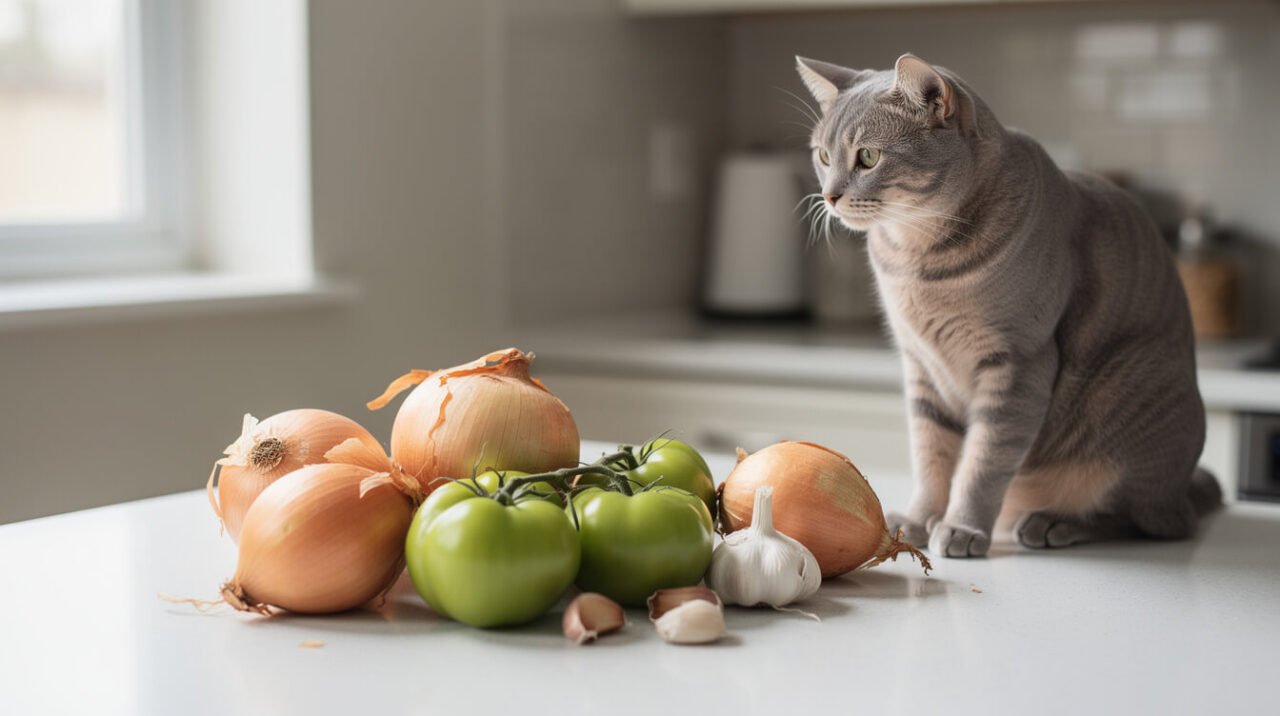
This is the section that matters most. A few vegetables that seem completely harmless to us are genuinely dangerous for cats, and the danger doesn’t require a large quantity — some of these can cause damage in surprisingly small amounts.
The allium family: onion, garlic, leek, chive, scallion, shallot
Every plant in the allium family contains sulfur compounds (organosulfoxides) that damage a cat’s red blood cells, leading to a form of anemia called hemolytic anemia. Garlic is especially concentrated — several times more toxic, gram for gram, than onion — and this holds true whether the allium is raw, cooked, powdered, dehydrated, or hiding in a broth, gravy, baby food, or leftover dish. Even a small taste of onion-seasoned food from your plate is worth watching closely; a meaningful amount warrants a call to your vet. Symptoms don’t always show up immediately — they can take a day or two to develop, which is exactly why “wait and see” isn’t the right response to a known exposure.
Raw potatoes and green (unripe) tomatoes
Both contain solanine, a compound that’s toxic in significant quantities and can cause vomiting, diarrhea, tremors, or worse. Ripe, fully red tomato flesh in a tiny amount is generally considered lower-risk, but raw potato, potato plants, and the green parts of a tomato plant (stems, leaves, unripe fruit) should be kept away from cats entirely. Cooking potatoes reduces the solanine content, but there’s little upside to feeding a cat potato in any form, so it’s simplest to just leave it off the menu.
Rhubarb
The leaves and stalks contain oxalate crystals that can cause drooling, tremors, and — in serious cases — kidney damage. There’s no safe amount here; it simply doesn’t belong on a cat’s plate, and it’s worth keeping rhubarb plants out of reach if you grow your own.
Wild mushrooms
Not technically a vegetable, but it belongs on this list: many wild mushroom species are toxic to cats, some severely, and there’s no reliable way to tell a dangerous one from a harmless one by looking. If your cat has access to a yard, treat any wild mushroom as off-limits and remove it before your cat can investigate. If your cat does eat one, take a photo of the cap, gills, and stem before you call for help — it makes identification much faster.
If your cat eats any of the vegetables above — even a small taste — call your veterinarian or an animal poison control line right away rather than waiting to see what happens. Fast action makes a real difference with allium and solanine toxicity in particular.
Signs of trouble, and when to call your vet
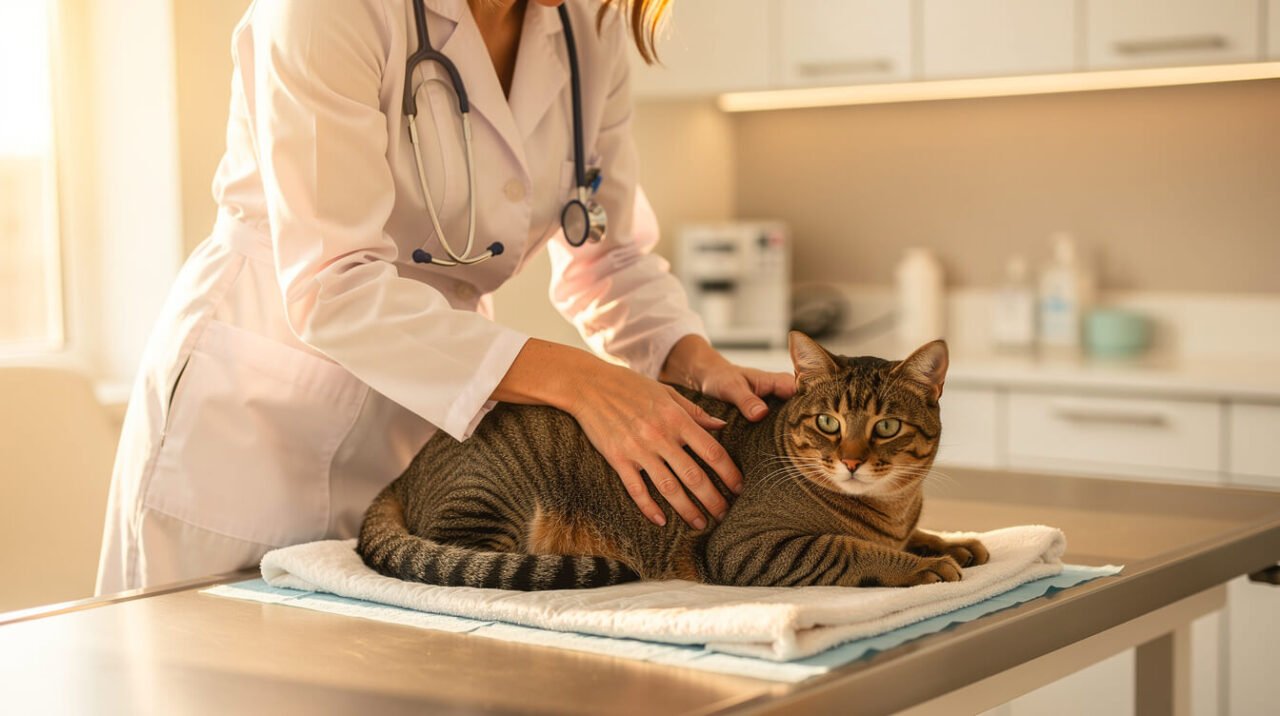
Even a vegetable that’s generally considered safe can occasionally cause trouble for an individual cat — sensitivities vary, and “safe for most cats” isn’t a guarantee for yours. After introducing any new vegetable, watch for:
- Vomiting or repeated retching
- Diarrhea or unusually soft stool
- Lethargy or noticeable disinterest in normal activity
- Drooling more than usual
- Pale or yellowish gums (a possible sign of the anemia caused by allium toxicity)
- Rapid or labored breathing
- Loss of appetite that continues beyond a single meal
Mild, short-lived digestive upset after a first try can sometimes just mean “that vegetable didn’t agree with this cat” — worth noting and avoiding going forward, but not automatically an emergency. Pale gums, tremors, labored breathing, repeated vomiting, or any symptom following a known allium, raw potato, green tomato, rhubarb, or mushroom exposure is different: that’s a call to your veterinarian, not a wait-and-see situation. We’re not able to diagnose what’s happening from a distance, and neither should you try to — a vet visit is always the right call when something seems genuinely wrong.
Can cats eat vegetables every day? And other frequently asked questions
Can cats eat vegetables every day?
In small amounts, some cats can have a bit of a safe vegetable most days without issue, as long as the total stays under roughly 10% of daily calories and the rest of the diet is a complete, balanced cat food. That said, there’s no requirement to offer vegetables daily — a couple of times a week is plenty for most cats.
Do cats need vegetables to be healthy?
No. A complete and balanced commercial cat food already supplies everything a cat needs nutritionally, including the taurine and vitamin A that vegetables can’t provide in a usable form. Vegetables are an optional extra, not a requirement.
Can kittens eat vegetables?
Kittens have higher, more specific nutritional needs during growth, and their digestive systems are more easily upset. It’s best to hold off on vegetable treats until a kitten is fully weaned onto solid food and check with your veterinarian before introducing anything outside their regular kitten food.
My cat ate a small piece of onion by accident. Should I panic?
Don’t panic, but don’t ignore it either. Call your veterinarian or a pet poison helpline, describe roughly how much and what form (raw, cooked, powder), and follow their guidance. Symptoms of allium toxicity can take a day or two to appear, so early advice matters even if your cat seems fine right now.
Are cooked vegetables safer than raw ones for cats?
For most of the vegetables on the safe list, yes — cooking softens the fiber, making digestion easier and reducing choking risk. A few, like peas and cucumber, are fine raw in small, appropriately sized pieces. When in doubt, steaming is the safest default.
What about cat grass — is that the same thing?
Not quite. Cat grass (usually wheat, oat, barley, or rye grass grown for pets) is a different category from vegetables — many cats nibble it instinctively, and it’s generally considered safe in small amounts, though it isn’t a nutritional necessity either. It’s worth keeping separate from actual houseplants, some of which are toxic to cats.
Can I feed my cat vegetable-based baby food?
Plain vegetable baby food without onion or garlic powder added is occasionally used by owners in small amounts, but always check the ingredient label carefully first — some brands include onion or garlic powder for flavor, which makes them unsafe for cats even in a tiny jar.

Wear the obsession
Bearded Dragon Crown Sunglasses King T-Shirt
Price range: $24.99 through $26.99
Shop this designFinal thoughts
Your cat’s curiosity about your dinner isn’t a problem to solve — it’s just a cat being a cat. The honest answer to “can cats eat vegetables” is a genuine yes for a specific, short list, served plain and in small amounts, and a firm no for the allium family and a handful of other plants that carry real risk. Keep the proportions right — vegetables as an occasional extra, a complete cat food as the actual meal — and you can let your cat enjoy the occasional bite of broccoli or pumpkin with a clear conscience. If you’re ever unsure whether something on your counter is safe, your veterinarian is always the right call before your cat’s curiosity gets there first.
Before you go
Keep learning your animal
We publish a new guide every day. The best of them land in one short weekly email, so you never miss the one about your species.
Dr. Lila Monroe is a seasoned veterinarian with a passion for feline health and behavior, boasting over 20 years of experience in the field. With her extensive knowledge of cat medicine combined with a deep understanding of the nuanced dynamics of cat behavior, Lila offers readers invaluable insights into creating a nurturing environment for their feline friends.