Is a Christmas Tree Safe for Cats? Real vs. Artificial, Tinsel, Tree Water, and a Cat-Proof Setup
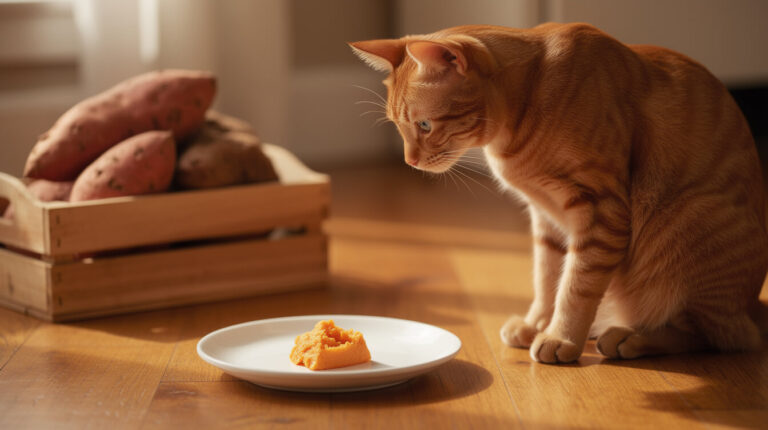
Is a Christmas tree safe for cats? For most cats, yes, as long as you set it up with your cat in mind. The tree itself is a mild risk. A few chewed needles usually mean drooling or a vomit, not an emergency. The real dangers hang on it, sit under it, and plug into it: tinsel and ribbon, the water in the stand, light cords, glass ornaments, and some snow globes. There’s one more hazard most guides miss. Some of the most popular “cat-proofing” tips online would put something toxic or stringy right where your cat walks.
Below, we’ll go through what each part of the tree actually does to a cat, what to do if something goes wrong, why your cat climbs the thing in the first place, and a setup that lets you both enjoy the season. If you’re reading this in October with a kitten asleep on your lap, you’re right on time.
Is a Christmas tree safe for cats? The short answer
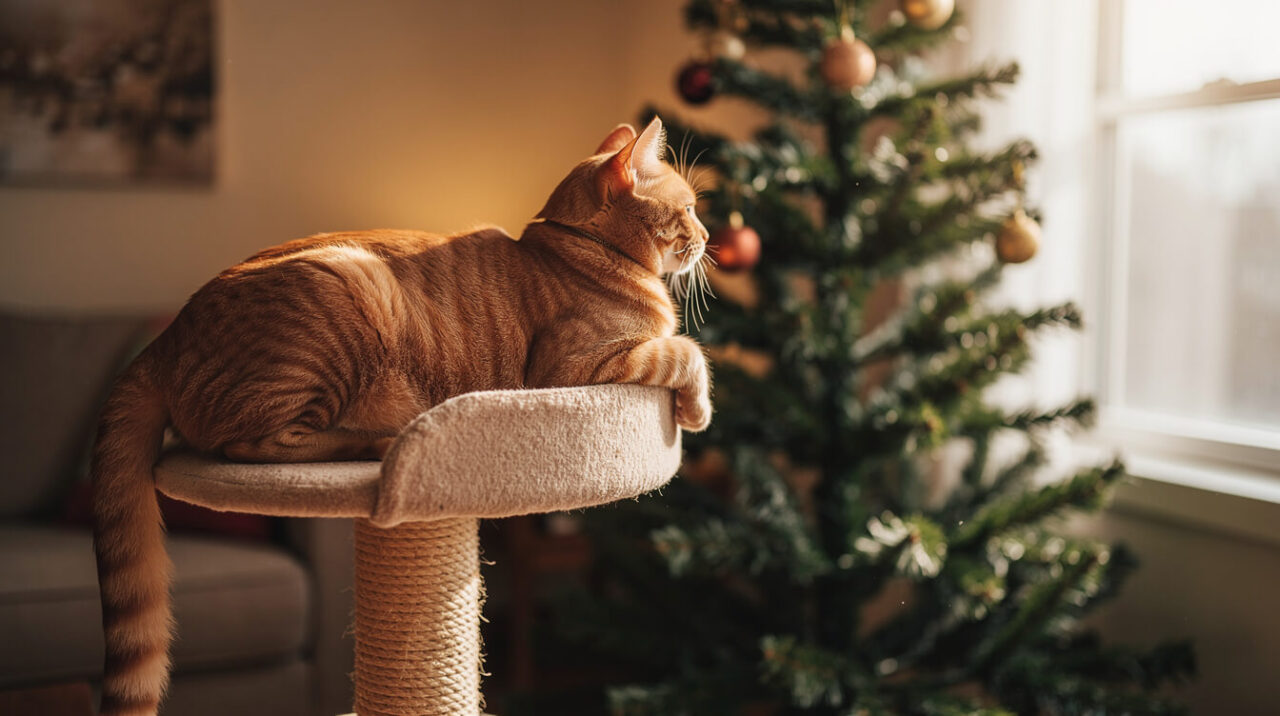
Here’s the honest picture, from least to most worrying.
- The tree itself: low risk. According to Pet Poison Helpline, eating the common Christmas trees (Douglas, balsam, and Fraser fir, pines, and cypress) usually causes “mild and self-limiting” drooling and vomiting from irritation. The essential oils in the tree are low in concentration and not expected to cause major toxicity.
- Tree water: low to moderate risk, depending on what’s in it. Plain water is the safe choice. Additives and stagnant water are where the trouble starts.
- Lights and cords: moderate risk, mostly for chewers and young cats.
- Tinsel, ribbon, and anything stringy: the big one. A swallowed string can cause a linear foreign body, an intestinal emergency that often needs surgery.
- The tree falling over: a real risk with climbers, both for your cat and for anything breakable on the branches.
Two groups need extra care. Kittens and young cats are the climbers, chewers, and string-swallowers. Cats with a history of eating non-food things (plastic, hair ties, yarn) are more likely to swallow decorations, so the safest Christmas tree setup for them may be a tree behind a closed door.
And one warning before we go further: a citrus spray, citrus oil diffuser, or bowl of orange peels under the tree is not a cat-safe deterrent, even though you’ll see it recommended. We’ll explain why in the deterrents section.
Real vs. artificial vs. flocked: what needles, sap, and fake snow actually do
Readers ask “which tree is safest for cats?” more than anything else. The answer depends on your cat.
Real trees: needles, sap, and the stand
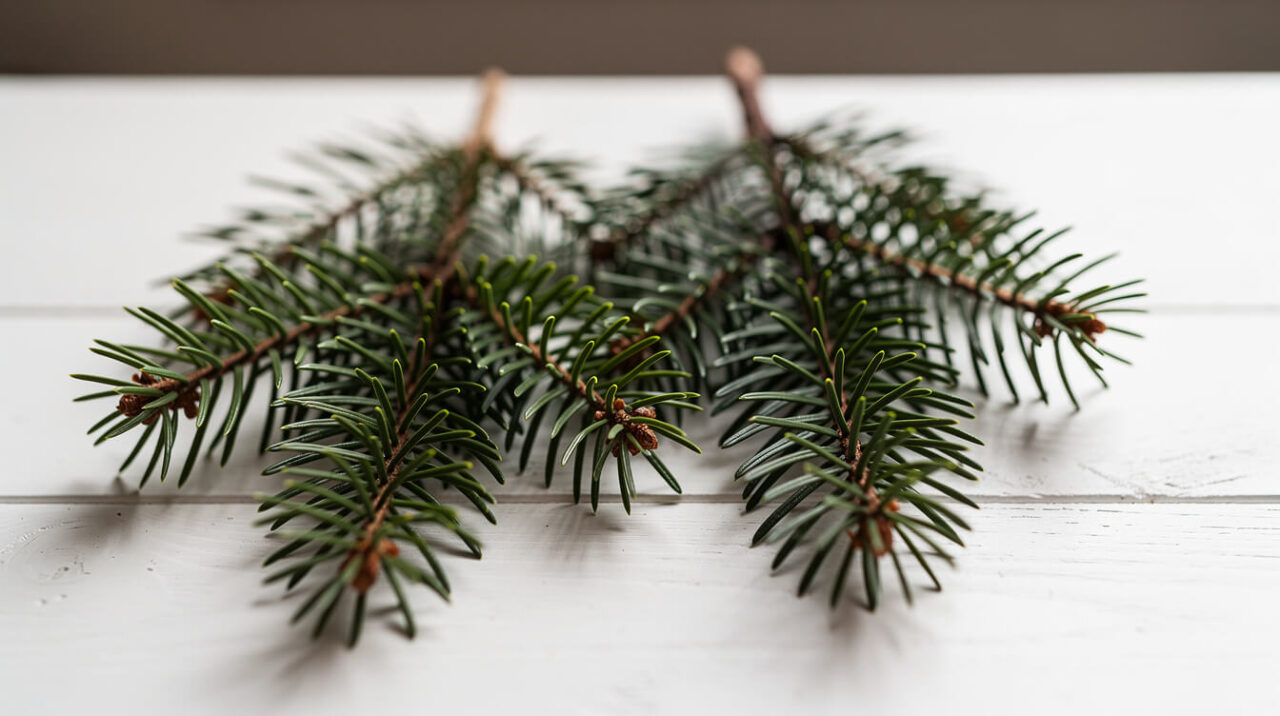
Fir, spruce, and pine needles are mildly irritating if chewed. The bigger concern is mechanical. Needles are sharp and don’t digest, so a cat that eats a lot of them can irritate or, rarely, injure the gut. PetMD’s vet-reviewed guide notes that fallen needles can obstruct or even puncture the digestive tract, which is why grazers deserve attention even though the needles aren’t very toxic.
Sap is the sneaky part. Pet Poison Helpline’s staff veterinarian Dr. Catherine Angle points out in their cat-specific tree guide that if you see or feel sap on your cat’s fur, wash it off right away, because otherwise your cat will groom it off and swallow it. A little dish soap on a damp cloth, rinsed well, is usually enough. Call your vet if the sap covers a large area or your cat seems irritated.
If you love a real tree, a low-shed variety such as a Nordmann fir helps. Just know that “non-drop” trees still drop some needles, especially as they dry out, so sweep under the tree every few days.
Artificial trees: safer for most cats, not risk-free
An artificial tree takes the sap, the needle litter, and the tree water out of the picture. That makes it the easier choice for most homes with cats. But a cat that chews plastic can still bite off PVC needles or tips, and pieces of plastic can irritate the mouth or, in larger amounts, cause a blockage. If your cat is a chewer, watch the first few days closely. If the lower branches start looking nibbled, put a barrier around the tree.
Flocked trees and fake snow
A flocked tree is one coated in artificial “snow,” and the only page-one answer to this question is a forum thread. Here’s what toxicology sources say. Once dry, flocking is generally not considered a poisoning hazard. An ASPCA spokesperson, after checking with ASPCA Poison Control’s senior director of toxicology, told Snopes that flocking material is typically plastic, so the main risks if a pet eats it are a foreign body and stomach upset. Spray-on snow is a different story while it’s wet. The California Poison Control System notes that many snow sprays contain solvents that can make people nauseated and lightheaded in a poorly ventilated room.
Our take: if you flock or spray at home, keep your cat in another room until it’s completely dry and the room is aired out. Skip flocked trees for kittens and known chewers, since flakes stick to paws and fur and get groomed off. If your cat eats a noticeable amount, call your vet or a pet poison line with the product name handy, because formulas vary.
Tinsel, ribbon, and anything stringy: the linear foreign body
If you change only one thing about your tree this year, make it this one: nothing long and thin within paw reach. That means tinsel, angel hair, garland, ribbon (including curling ribbon on gifts), popcorn or cranberry strings, ornament hanging string, and loose light strands.
Why string is so dangerous for cats
Cats’ tongues are covered in backward-facing barbs, so once a cat starts chewing a strand, it’s hard for them to spit it out. Veterinarian Wendy Brooks explains what happens next in Veterinary Partner’s guide to linear foreign bodies. One end gets anchored, often looped around the base of the tongue or lodged in the stomach, while the rest travels into the intestine. The gut keeps trying to move it along and bunches up on the string like fabric on a drawstring. Vets call this “plication.” Left alone, the taut string can cut through the intestine wall, which is life-threatening.
Dr. Brooks notes that cats are the classic tongue-loop patients and that vets check under the tongue when examining a vomiting cat. Pet Poison Helpline adds a detail that matters for owners: cats with a ribbon obstruction can keep eating and drinking for a while, so a normal appetite on day one doesn’t rule it out.
If you see string coming from your cat’s mouth or rear end
- Do not pull it. If the far end is anchored, pulling can cut or tear the intestine. That applies to string at the mouth and, by our standard, at the rear too. Some vets will talk an owner through a very gentle check if the cat is acting completely normal, but that’s a decision to make with your vet on the phone, not on your own.
- Don’t cut it yourself either unless your vet tells you to. Whether and where to cut is part of the vet’s exam.
- Call your vet or an emergency clinic now, even on Christmas Eve. Bring a piece of the same tinsel or ribbon if you can, so they know what they’re looking for.
Also call if you know or suspect your cat ate string, tinsel, or ribbon, or if your cat develops vomiting, a poor appetite, lethargy, or a sore belly over the holidays. These can start hours to days later. Strings are hard to see on X-rays, so tell the vet what’s on your tree.
The “safe swap” trap
Some cat-safety guides warn about tinsel and garland and then suggest a feather boa instead of garland, or bells hung from ribbon. A boa is a long, thin strand that sheds chewable feathers, and ribbon is ribbon. If a swap is long and thin, it’s the same hazard. The good alternatives are sturdy, chunky decorations attached so they can’t dangle: large wooden or felt ornaments, paper chains hung high, or a plain tree with lights. Our guide to cats and Thanksgiving turkey covers the same hazard in the kitchen, where roast twine is the string cats find.
Tree water, lights, ornaments, and snow globes
Here’s what to know about each of the other hazards.
Tree water: plain water, covered stand
A lot of cats treat the tree stand as their new favorite water bowl. What’s in it matters:
- Commercial tree preservatives typically contain fertilizer, sugar, and sometimes fungicides. According to Poison Control, the amounts cats usually drink aren’t expected to be poisonous, but stomach upset and vomiting can happen.
- Homemade “tree food” recipes are the bigger worry. They can contain aspirin, bleach, soda, corn syrup, or even whiskey. Aspirin isn’t safe for cats, and Poison Control warns that recipes combining bleach with vinegar or lemon juice can release chlorine gas.
- Stagnant water grows bacteria whatever you add, which can cause vomiting and diarrhea.
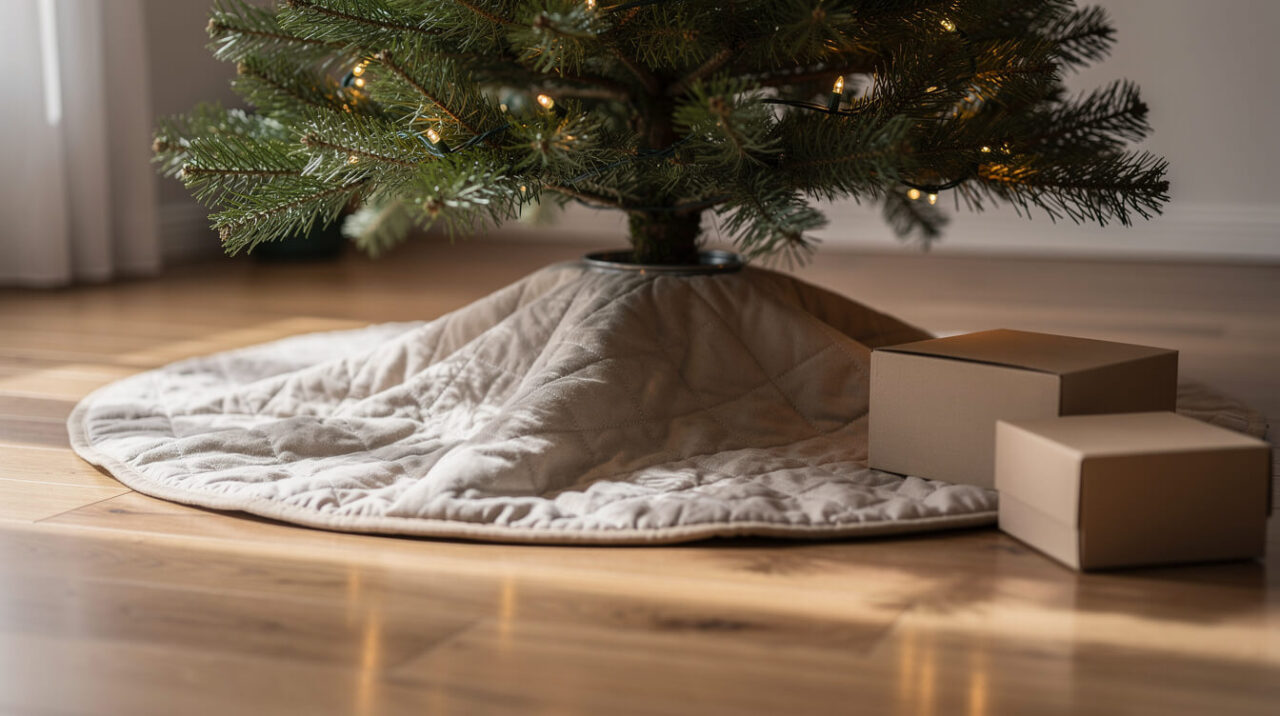
The fix is simple. The National Christmas Tree Association, the tree farmers’ own trade group, recommends plain water only. Top it up daily (fresh trees drink a lot), and cover the stand with a tight tree skirt, a stand cover, or a mesh lid so your cat can’t drink from it. Keep their own water bowl fresh and away from their food, which many cats prefer anyway.
Lights and cords
Chewed light cords can cause electrical burns to the mouth and breathing trouble. If you come home to a chewed cord, Pet Poison Helpline advises taking your cat to the vet right away, even if they seem fine. To prevent it:
- Use battery-powered LED lights, or run plug-in cords through hard cord protectors.
- Wrap strands snugly along the branches so nothing loops or dangles.
- Unplug or switch off the lights when you’re out or asleep.
- Skip vintage bubble lights in a house with a chewer. Pet Poison Helpline notes that the liquid inside contains methylene chloride, which can irritate the mouth, gut, skin, and eyes.
Ornaments
Glass ornaments can shatter into pieces that cut paws and mouths. Small ornaments can be swallowed, and wire hooks can be swallowed or snag a paw. Choose shatterproof, cat-head-sized or larger ornaments for anywhere your cat can reach. Pinch hooks closed around the branch, or tie ornaments on with short, snug loops. Keep edible ornaments such as salt dough, candy, and popcorn strings off the tree entirely.
Snow globes: the sources disagree, so treat them carefully
Several popular guides say flatly that snow globes “contain antifreeze.” The truth is more mixed. Pet Poison Helpline says certain imported snow globes have been found to contain ethylene glycol (antifreeze), and that small amounts of concentrated antifreeze can be fatal. The California Poison Control System describes typical snow globes as water or glycerin with non-toxic calcium carbonate “snow.” In other words, most globes probably aren’t dangerous, but you can’t tell by looking. Keep snow globes off any shelf your cat patrols. If one breaks and your cat may have licked the liquid, call your vet or a pet poison line immediately, before any signs appear, because antifreeze treatment works best early.
The weekly care guide
Get it right for your animal, every week
One email a week: new care guides, species deep-dives, and the safety answers keepers search for, written by our specialists. No spam. Unsubscribe anytime.
Why your cat climbs the tree, and deterrents that don’t backfire
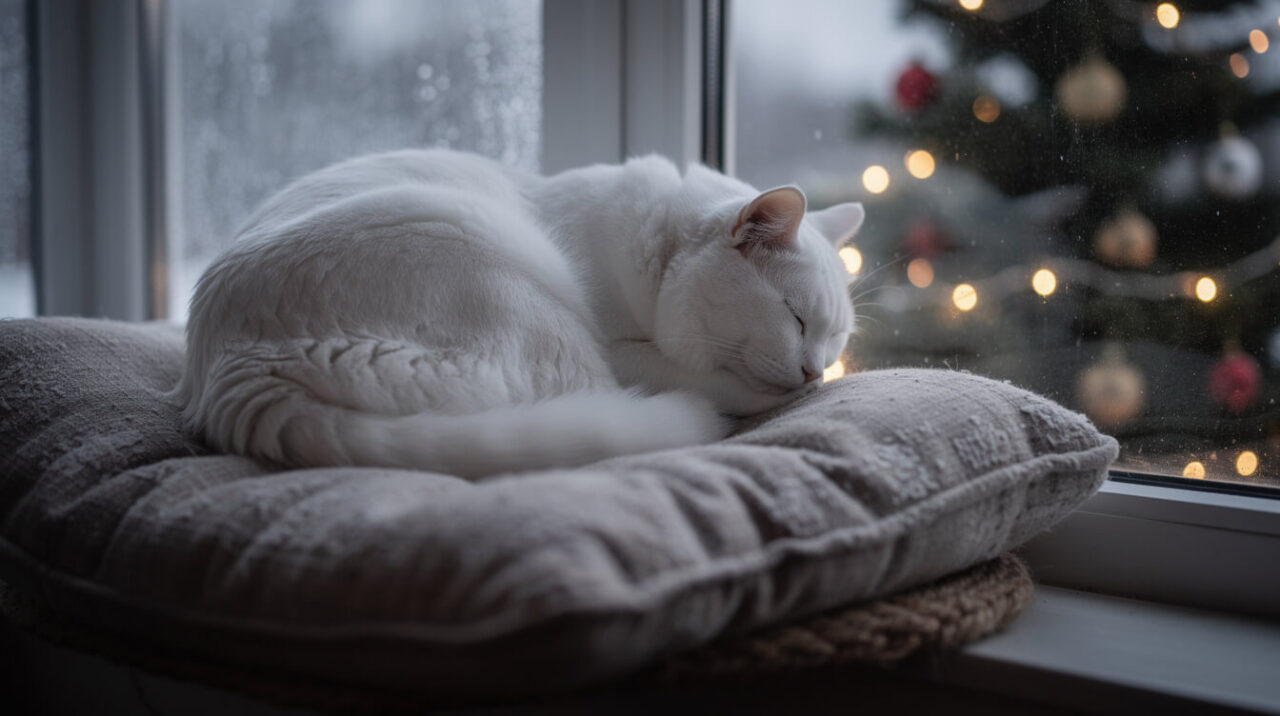
From your cat’s point of view, someone just brought a free-standing indoor forest into the living room. Cats love height because a high perch is a safe place to watch from. A new object smells interesting, and lights and dangling ornaments move like the toys they’re built to chase. Climbing the tree isn’t bad behavior. It’s normal cat behavior in an unusual setting. So the goal isn’t to punish your cat. It’s to make the tree boring and give them something better.
The citrus problem
Here’s the advice we’d most like to correct. Some of the most-read cat-proofing guides recommend orange or lemon peels under the tree skirt, a citrus-scented diffuser, or a citrus-based spray on the tree. One of those guides comes from a pet-food brand, one from a tree retailer, and one from a veterinary hospital’s blog. Cats often do dislike the smell. But:
- The ASPCA’s poison-control entry for lemon lists it as toxic to cats, with essential oils and psoralens as the toxic principles, and notes that the skins and plant material are the problem.
- Pet Poison Helpline lists citrus oil (d-limonene) among the essential oils known to poison cats. Cats lack a liver enzyme that other species use to clear these compounds. Pine oil is on the same list, so pine-scented sprays are out too.
- The same page explains that active diffusers (ultrasonic and nebulizing) release microdroplets of oil that can settle on a cat’s fur, which the cat then grooms off and swallows.
A spray on the branches or the floor around the tree puts oil exactly where your cat walks, sits, and grooms. That’s the wrong trade for a deterrent. Peels in a dish are a lower-dose risk than oils, but they’re still a toxic plant material placed at nose height. If you’ve been using citrus, you haven’t done anything terrible. Just put it away and watch for drooling, vomiting, or wobbliness. If you see any of those, call your vet.
Deterrents that actually work
- Remove the launch pads. Move the sofa, side tables, and shelves away from the tree so it can’t be reached in one jump.
- Make the base unpleasant to stand on. Many cats dislike sticky or crinkly surfaces. Double-sided tape on a mat or board around the stand, or a tree skirt over crinkly foil, works for many cats. The deterrent stays on the mat, not on your cat.
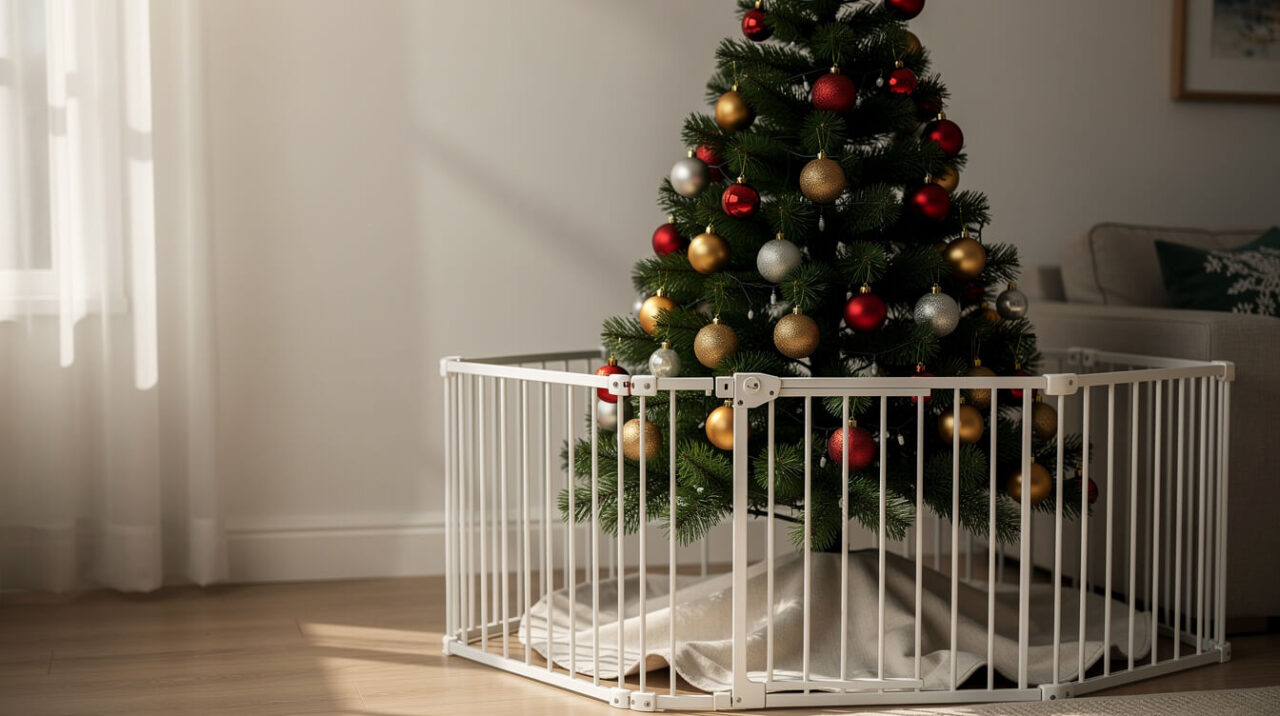
- Use a physical barrier. A freestanding pet playpen or a tall gate around the tree is the most reliable option, especially for kittens.
- If you buy a deterrent spray, read the label. Skip anything that lists essential oils, including citrus, pine, peppermint, eucalyptus, or tea tree.
- Give them a better tree. A tall cat tree or window perch near (not touching) the Christmas tree lets your cat watch the action from a safe height. Play with a wand toy there for 10 to 15 minutes a day, then put it away so there’s nothing left to chew. Our guide to why cats bite during play has more on channeling that energy.
- Never punish. Squirt bottles and scolding make a cat more stressed, not less curious, and they’re likely to try the tree again when you’re not around.
A cat-safe Christmas tree setup, step by step
Put this together and you get a tree that’s safe for your cat and still feels like Christmas.
- Pick the spot first. Choose a corner, away from furniture your cat can jump from, where a playpen or gate can go around the tree if needed. Ideally, it’s a room you can close off when you’re out.
- Use a wide, heavy stand. Add weight to the base if the stand feels light.
- Anchor it at the top as well as the bottom. Pet Poison Helpline recommends securing the tree at both ends. A wall or ceiling hook with a taut tie near the top of the tree keeps a climbing cat from bringing it down. Keep the anchor high and pulled tight so there’s nothing to swing or chew.
- Cover the water. Use plain water only, check it daily, and cover the stand with a skirt or lid.
- Put it up bare for a few days. Let your cat sniff, investigate, and get bored before anything shiny goes on it. Many cats lose interest once the novelty wears off.
- Light it safely. Use battery LEDs or protected cords, wrapped tight, and switch them off when you leave.
- Decorate in zones. Leave the bottom third bare or use only large, unbreakable ornaments that are firmly attached. Put glass and heirloom ornaments high and toward the trunk, and close the hooks.
- Skip the stringy and edible. No tinsel, no angel hair, no ribbon, no garland, and no food on the tree.
- Wrap gifts later. Keep ribbon-tied presents out of reach until the day, or wrap with paper and tape only.
- Close the door or the pen when you’re out, at least until you know how your cat behaves around the tree.
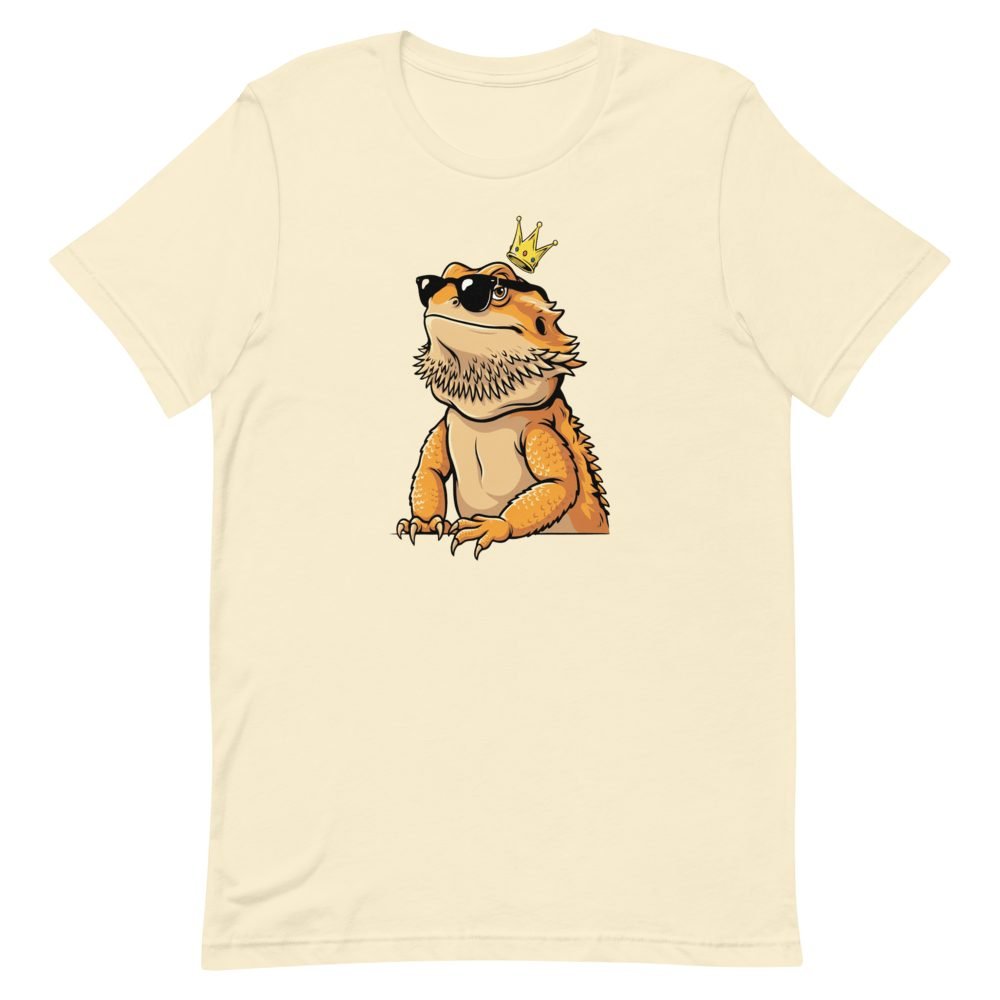
A cat who loves a tree enough to climb it deserves a keeper who loves them enough to plan for it, and you’re doing exactly that. If you’re shopping for a fellow animal lover this season, our Bearded Dragon Crown Sunglasses King T-Shirt makes a fun gift for the reptile keeper in your life. We don’t have a cat design yet, but plenty of homes have both a cat tree and a basking lamp.
For the reptile keeper on your gift list
Our crowned, sunglasses-wearing beardie, for the friend whose house has a basking lamp glowing next to the Christmas lights.
Other holiday hazards near the tree
A tree rarely comes alone. Keep holiday plants out of reach, and check each one before it comes home, because some seasonal plants are far more dangerous to cats than any tree. Keep candles out of reach of tails, and keep chocolate and other holiday food off the low tables. Our winter pet safety guide covers the cold-weather side, including antifreeze in the garage, which is the same chemical found in some snow globes.
Christmas tree safe for cats: frequently asked questions
Are artificial Christmas trees safer for cats than real ones?
For most cats, yes. An artificial tree removes the sap, the needles, and the tree water. It isn’t risk-free, though. Chewers can bite off plastic tips, and decorations and cords are just as risky on a fake tree as on a real one.
Is pine sap toxic to cats?
It’s mildly irritating rather than seriously toxic in the amounts a cat would get from a tree. The bigger risk is your cat grooming sap off their coat. Wash it off promptly, and call your vet if your cat drools, vomits, or the skin looks irritated.
Is it okay if my cat drinks the Christmas tree water?
Plain, fresh water is low-risk. Water with preservatives may cause stomach upset. Homemade additives like aspirin or bleach, or water that’s gone stagnant, are more concerning. Cover the stand. If your cat drank treated water and you know the product, call your vet or a pet poison line with the label handy.
My cat ate a few pine needles. Should I worry?
Usually not. Expect possible drooling or a single vomit. Call your vet if your cat keeps vomiting, stops eating, seems painful or lethargic, or ate a large amount.
Can I use citrus spray to keep my cat away from the tree?
We don’t recommend it. Citrus contains essential oils and psoralens that are toxic to cats, and sprays and diffusers deposit oil where your cat walks and grooms. Use physical deterrents and barriers instead.
Is a Christmas tree safe for kittens?
Kittens are the highest-risk group: they climb, chew, and swallow string more than adult cats. For a kitten’s first Christmas, consider a tabletop tree in a room they can’t get into, or a full-size tree inside a playpen with no ornaments on the lower half.
Should I keep my cat out of the room with the tree?
If your cat keeps climbing, chewing, or batting things down despite your setup, then yes, at least when you’re not there to supervise. It’s not a punishment. It’s the same thing you’d do with a toddler and a staircase.
Final thoughts
So, is a Christmas tree safe for cats? With a little planning, yes. The tree is the easy part. What needs your attention is everything on it, under it, and plugged into it, plus a few “safe” tips that aren’t. Plain water, a weighted and anchored stand, tight lights, nothing stringy, and no citrus near the tree. That covers most of the risk.
And if something does go wrong, especially string or tinsel showing at either end, don’t pull it, and call your vet. That one decision protects your cat more than any decoration choice.
Your cat doesn’t understand Christmas, but they understand you, their home, and the new thing in the corner that smells like a forest. Set it up with them in mind, and you can both enjoy it.
Before you go
Keep learning your animal
We publish a new guide every day. The best of them land in one short weekly email, so you never miss the one about your species.
Dr. Lila Monroe is a seasoned veterinarian with a passion for feline health and behavior, boasting over 20 years of experience in the field. With her extensive knowledge of cat medicine combined with a deep understanding of the nuanced dynamics of cat behavior, Lila offers readers invaluable insights into creating a nurturing environment for their feline friends.