Can Dogs Eat Yams? Real Yams vs. “Yams,” and the Candied-Yam Math
Can dogs eat yams? Yes. Plain, fully cooked yam is a safe treat for most dogs in small amounts, and that’s true of both kinds of “yam”: the true yams sold in African, Caribbean, and Asian markets, and the orange sweet potatoes most American stores label as yams. The vegetable isn’t the problem. The usual holiday dish is. A serving of classic candied yams carries about a stick’s worth of butter split six ways, plus brown sugar and sometimes marshmallows, pecans, or a splash of bourbon. That turns a 100-calorie vegetable into a dessert.
So this guide does three things the quick answers skip. First, it sorts out which yam you’re actually holding, because the two differ more than most people expect, in sugar and in calories. Second, it does the math on a real candied-yam recipe and ranks every add-in by how much it matters. Third, it gives you a portion table by weight, so you know what “a little” means for your dog.
Can dogs eat yams? The short answer
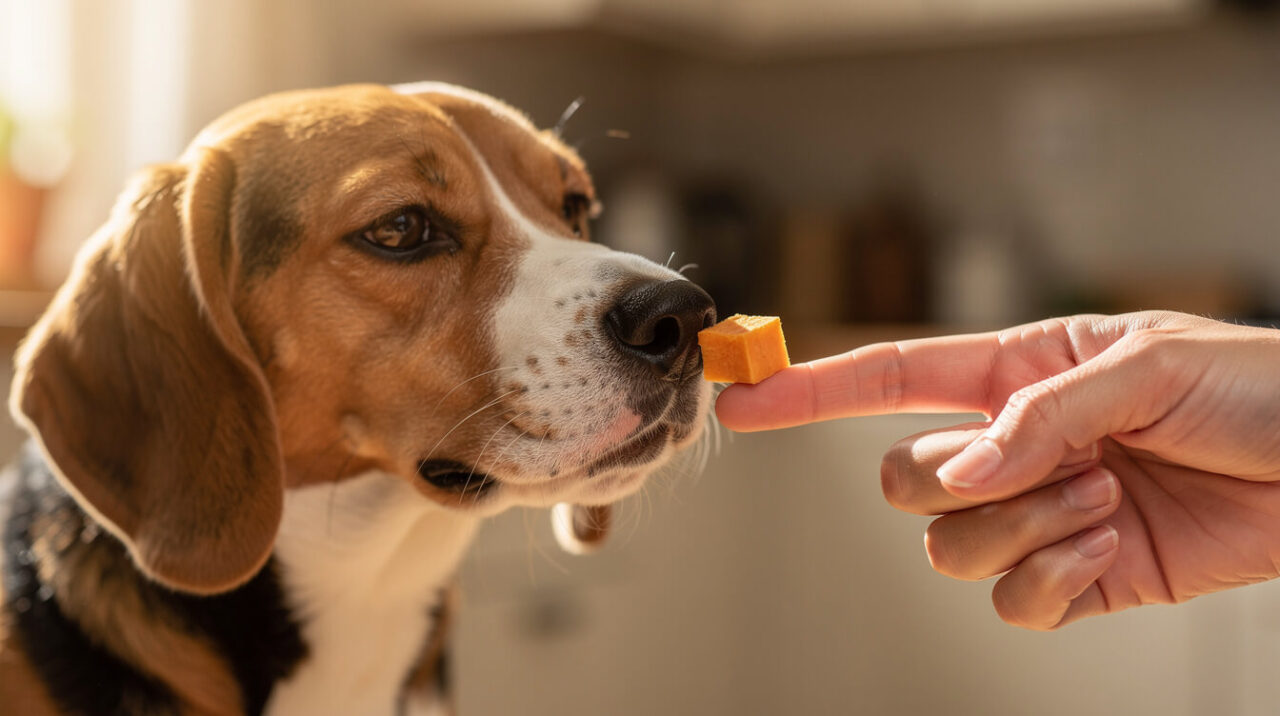
Plain cooked yam is fine. Cook it until it’s soft, peel it, and serve it with nothing on it, as an occasional treat sized to your dog (the table is further down). That covers baked, boiled, steamed, or mashed yam with no butter, sugar, salt, or spices.
Here’s the quick verdict on the versions that actually show up in a kitchen:
- Plain baked, boiled, or steamed yam or sweet potato: yes, in small portions.
- Candied yams or sweet potato casserole: not a food to share. A stolen spoonful is rarely an emergency, but a plateful can mean a rough couple of days.
- Canned yams in syrup: skip them. They’re safe ingredients in a sugar bath, and the regular ones don’t contain xylitol (more on that below).
- Anything labeled “sugar-free”: read the label. If xylitol (sometimes listed as birch sugar) is on it, call your vet or a pet poison line right away.
- Raw yam or raw sweet potato: no. It’s hard to chew and hard to digest, and chunks can choke or block a dog.
- Wild or ornamental yams (bitter yam, air potato): not food for anyone. If your dog chews one, call your vet.
If you only came for the answer, that’s it. If you want to know why your neighbor’s “yams” and the ones at the African grocer aren’t the same food, keep reading. It changes the numbers.
Which “yam” is on your plate? True yams vs. American sweet potatoes
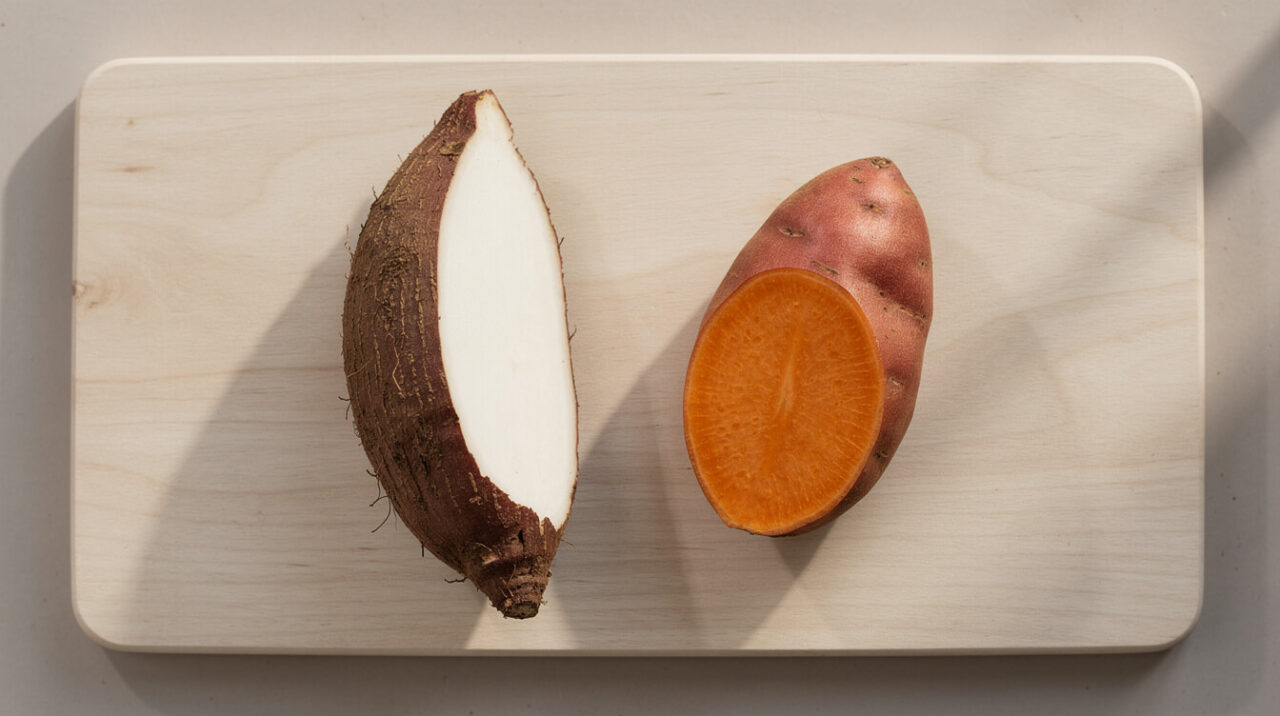
If you bought your “yams” at an ordinary US supermarket, you almost certainly bought sweet potatoes. The USDA’s own agricultural thesaurus puts it plainly: “Yams in the U.S. are actually sweet potatoes,” and the USDA requires that a “yam” label always be accompanied by “sweet potato.” Look at a can of yams and you’ll see it: the ingredient list says sweet potatoes.
True yams are a different plant entirely. They’re Dioscorea species: big, starchy tubers with rough, bark-like skin and white, cream, or purple flesh, grown mostly in West Africa, the Caribbean, and Asia. In the US you’ll find them in international markets, as frozen chunks, or as the yam flour used for pounded yam (iyan). Purple yam, or ube, is a true yam too.
Sweet potatoes (Ipomoea batatas) belong to the morning glory family. That matters for one myth you’ll see repeated online: that raw yams and sweet potatoes contain solanine “like potatoes.” Solanine is a nightshade compound. Neither the sweet potato nor the true yam is a nightshade. Raw yam has real issues (we’ll get to them), but potato-style solanine isn’t one.
The nutrition difference nobody mentions: less sugar, more calories
Here’s how the two compare per 100 grams cooked, using USDA FoodData Central (yam, cooked; sweet potato, baked):
| Per 100 g, cooked, plain | True yam | Sweet potato (US “yam”) |
|---|---|---|
| Calories | 116 kcal | 90 kcal |
| Sugars | 0.5 g | 6.5 g |
| Fiber | 3.9 g | 3.3 g |
| Vitamin A (RAE) | 6 µg | 961 µg |
| Potassium | 670 mg | 475 mg |
| Fat | 0.14 g | 0.15 g |
Two things jump out. True yam has about a thirteenth of the sugar of sweet potato, but about 30% more calories, because it’s denser in starch. So the claim you’ll see that yams are “low-calorie” and “great for weight management” gets it backwards for true yams. Lower sugar isn’t the same as lighter. Second, the beta-carotene and vitamin A story belongs almost entirely to the orange sweet potato. A true yam has close to none.
For a healthy dog eating a complete commercial food, none of this makes either one a “superfood.” Your dog’s food already supplies its vitamins. Yam is a treat, and the useful number for a treat is calories, which is why the portion table below uses them.
Candied yams: what’s actually in a serving
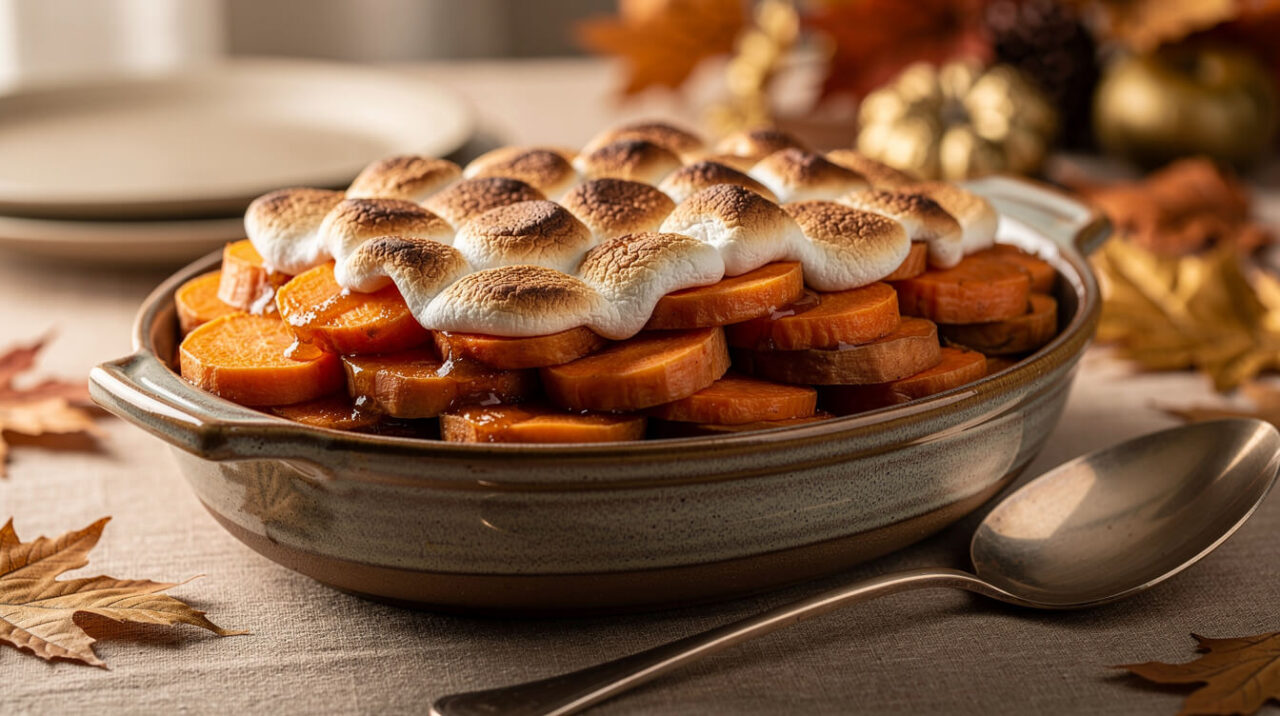
“Avoid candied yams” is the advice everywhere, and it’s right. But it helps to know why, and how much is too much, so let’s put numbers on a real recipe.
The Kitchn’s candied yams are a good, typical version. They use about 1½ pounds of sweet potatoes, ½ cup of packed dark brown sugar, a full stick (8 tablespoons) of salted butter, ¼ teaspoon of nutmeg, cinnamon, and vanilla, and the recipe serves six. By the recipe’s own nutrition panel, one serving is 277 calories, 15.4 g of fat, and 21.2 g of sugar. The same amount of plain baked sweet potato would be roughly 100 calories with well under a gram of fat. The butter and sugar nearly triple the calories and raise the fat by a factor of about 90.
Every add-in, ranked by how much it matters
- Butter (the fat). This is the one that sends dogs to the vet. The ASPCA lists fatty foods among the people foods to avoid because they can cause vomiting, diarrhea, and in some dogs pancreatitis. A rich holiday plate on top of a normal dinner is the classic setup, and small dogs get there fastest.
- Sugar. It isn’t toxic, but 21 grams of sugar plus 277 calories is a lot of dessert for a dog. Expect an upset stomach or loose stool if a dog eats a big helping.
- Marshmallows. Regular marshmallows are mostly sugar, about 58 g per 100 g by USDA’s numbers, plus gelatin. They’re not toxic in ordinary amounts, but they’re one more pile of sugar. A “sugar-free” bag is the exception, and you need to check its label for xylitol.
- Pecan or walnut topping. The ASPCA notes that pecans and walnuts are high in fat and can cause vomiting, diarrhea, and potentially pancreatitis. If a topping uses macadamia nuts, that’s a separate toxicity, so call your vet.
- Nutmeg. It has a real toxin, but recipe amounts are tiny. The Kitchn’s ¼ teaspoon across six servings works out to roughly a tenth of a gram per serving. We did the full nutmeg arithmetic in our gingerbread guide: trouble comes from jar-sized amounts or a whole nutmeg, not a serving of a side dish.
- Bourbon. Some recipes, like Delish’s, add 2 tablespoons of bourbon for eight servings, then simmer and bake for about an hour and a half or a little more. USDA’s alcohol retention tables put the alcohol remaining after 1.5 hours of baking at about 20%. That works out to around a fifth of a gram of alcohol per serving. The butter matters far more. The open bottle on the counter is the real alcohol risk.
Canned yams: sugar, yes; xylitol, almost certainly not
At least one top-ranking article warns that canned yams “often contain” xylitol. We checked. Searching “yams” in USDA’s branded-food database turns up 237 products, about 70 of them canned or candied yams. None listed xylitol. The canned ones read like a short list: sweet potatoes, water, and sugar or corn syrup. The candied versions add brown sugar, salt, cinnamon, and nutmeg. The one sugar-free canned line we found was sweetened with sucralose, not xylitol.
The real issue with canned yams is the syrup. USDA’s figures for sweet potato canned in syrup show about 15 g of sugar per 100 g when you count the liquid, versus under 6 g in the drained pieces. If a dog laps up a dropped can, the syrup is the part that upsets its stomach. Still, read the label on anything marked “sugar-free” or “no sugar added.” Xylitol is dangerous to dogs in small amounts, and it’s the one ingredient here that makes a phone call urgent.
If your dog got into the candied yams
Don’t panic. A lick or a spoonful usually means nothing more than a gassy evening. Work out roughly how much your dog ate and what was in the dish, then:
- Call your vet or a pet poison line now if the dish or any topping was sugar-free with xylitol, or if it contained macadamia nuts. The ASPCA Animal Poison Control Center is at (888) 426-4435, and the Pet Poison Helpline is at (855) 764-7661. Both may charge a consultation fee.
- Call your vet the same day if a small dog ate a large share of the pan, or if your dog has a history of pancreatitis.
- Watch for 24–48 hours in every other case. Repeated vomiting, diarrhea, a painful or tight belly, a hunched “praying” posture, or a dog who won’t eat and seems flat are all reasons to call your vet. Pancreatitis needs a veterinarian, not a wait-and-see.
This is the same pattern as the rest of the holiday table: the base food is fine and the extras are the issue. Our guides to mashed potatoes, cranberry sauce, and pumpkin pie work through the other side dishes the same way.
How much yam can dogs eat? A portion table with the math
Vets generally recommend keeping treats to no more than 10% of a dog’s daily calories, so the other 90% comes from a complete and balanced food. To turn that into spoonfuls, we estimated each dog’s daily needs with the standard resting-energy formula (70 × body weight in kg0.75, as used in the Merck Veterinary Manual) times 1.6, a typical multiplier for a neutered adult pet. Plain baked sweet potato comes to about 11 calories per level tablespoon (USDA: about 200 g per cup).
| Dog’s weight | Est. daily calories | 10% treat budget | Most plain sweet potato in a day (the whole budget) | A sensible serving | One candied-yam serving (277 kcal) as % of the day |
|---|---|---|---|---|---|
| 5 lb | ~210 | ~21 kcal | ~2 Tbsp | 1 Tbsp | ~134% |
| 10 lb | ~350 | ~35 kcal | ~3 Tbsp | 1 Tbsp | ~80% |
| 20 lb | ~585 | ~59 kcal | ~5 Tbsp | 1–2 Tbsp | ~47% |
| 40 lb | ~985 | ~98 kcal | ~9 Tbsp (about ½ cup) | 2–3 Tbsp | ~28% |
| 70 lb | ~1,500 | ~150 kcal | ~13 Tbsp (about ¾ cup) | 3 Tbsp | ~18% |
| 90 lb | ~1,810 | ~180 kcal | ~16 Tbsp (about 1 cup) | 3–4 Tbsp | ~15% |
How to read it:
- The “most in a day” column is a ceiling, not a target. It spends your dog’s entire treat budget on sweet potato. The “sensible serving” column follows PetMD’s weight-based guidance of a tablespoon or so for small dogs up to about 4 tablespoons for giant breeds, a few times a week. That leaves room for the training treats and dental chews your dog already gets.
- True yam runs about 30% higher in calories, so shave the amounts a little if that’s what you’re serving.
- Daily calorie needs vary a lot. Puppies, very active dogs, seniors, and dogs on a weight-loss plan differ from the estimate. Your vet can give you your own dog’s number.
- Look at the last column. One serving of candied yams is 80% of a 10-pound dog’s entire day, and more than a whole day for a 5-pound dog. That’s why “just a little from my plate” adds up so fast for small dogs.
Start at the low end the first time. Yam and sweet potato are fiber-rich, and a sudden big helping is a common cause of gas and soft stool even when it’s perfectly plain.
The weekly care guide
Get it right for your animal, every week
One email a week: new care guides, species deep-dives, and the safety answers keepers search for, written by our specialists. No spam. Unsubscribe anytime.
Raw yams, skins, and the yams that aren’t food
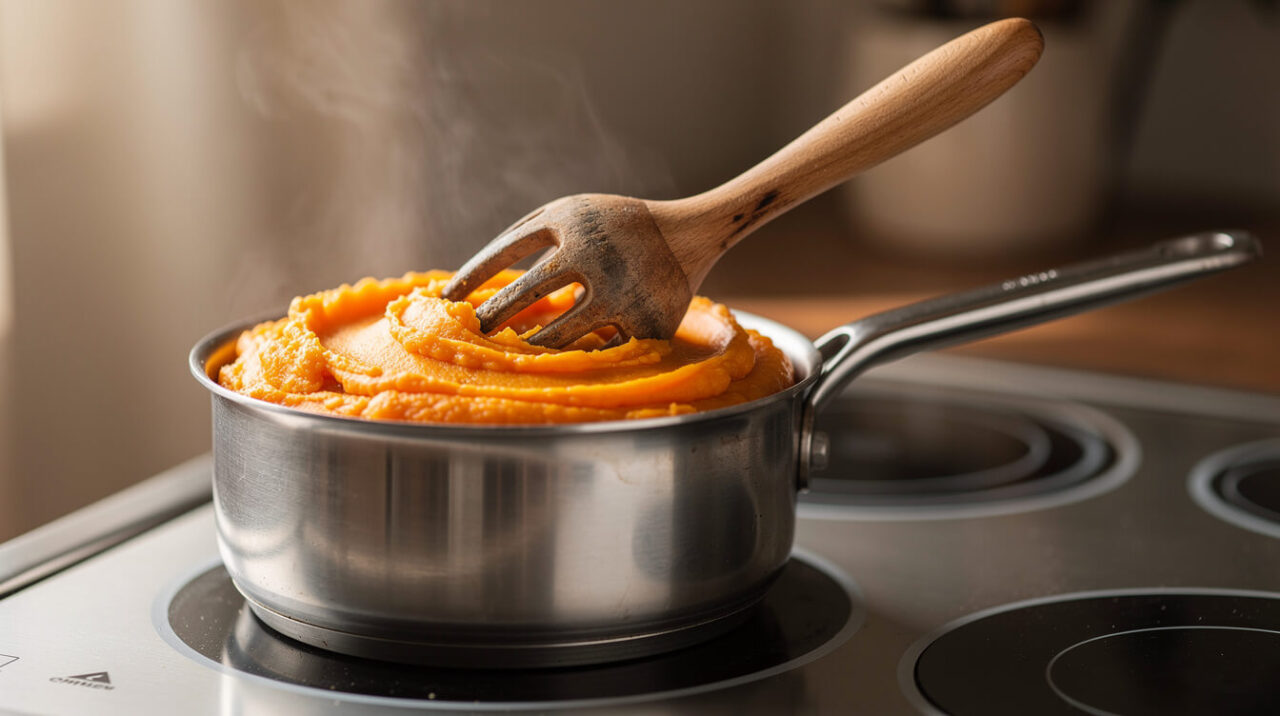
Raw sweet potato
Raw sweet potato isn’t poisonous, but it’s hard, fibrous, and tough to digest. A chunk can be a choking hazard or a blockage risk, especially for a dog that gulps. We cover it in detail, including what to watch for if your dog already grabbed a piece, in our guide to raw sweet potato. The fix is simple: cook it until a fork slides through.
Raw true yams
The Food and Agriculture Organization’s review of root crops states that the “edible, mature, cultivated yam does not contain any toxic principles”. The yams sold for cooking are food, not a hazard. But nobody eats them raw. They’re dense, very starchy, and traditionally boiled, roasted, or pounded. Many cooks also find that handling the raw peel makes their hands itch. Treat true yam exactly like sweet potato: peel it, cook it thoroughly, and serve it plain.
Bitter yams, wild yams, and air potato
The Dioscorea genus also includes species that aren’t safe to eat without special processing. The FAO review notes that wild forms of D. dumetorum, the bitter yam, carry a bitter alkaloid (dihydrodioscorine), and that a related alkaloid, dioscorine, is the toxin in the Malayan species D. hispida. Bitter yams are normally soaked or otherwise detoxified before anyone eats them. A 2025 case report from Nigeria described two adults who had seizures after eating undercooked bitter yam. Both recovered with hospital care.
The one most American dog owners could actually meet is air potato (Dioscorea bulbifera), a vine that drops potato-like bulbils on the ground and that UF/IFAS lists as a prohibited invasive in Florida. It also turns up elsewhere in the Southeast. The FAO says bitter forms of this species contain toxic compounds (including one called diosbulbin) and are only eaten after detoxifying. There’s little published data on dogs and air potato, so we won’t guess at a risk level. If your dog chews or swallows air potato bulbils or any wild yam, call your vet or a pet poison line and tell them the plant’s name. This isn’t a reason to worry about the yams in your kitchen. It’s a reason not to let a dog snack on a mystery vine.
Skins
Yam and sweet potato skins aren’t toxic, but they’re tough and fibrous. For small dogs and gulpers, peel first. For a big dog who chews, a little skin on soft-cooked mash is fine.
A dog-safe way to share yams this Thanksgiving
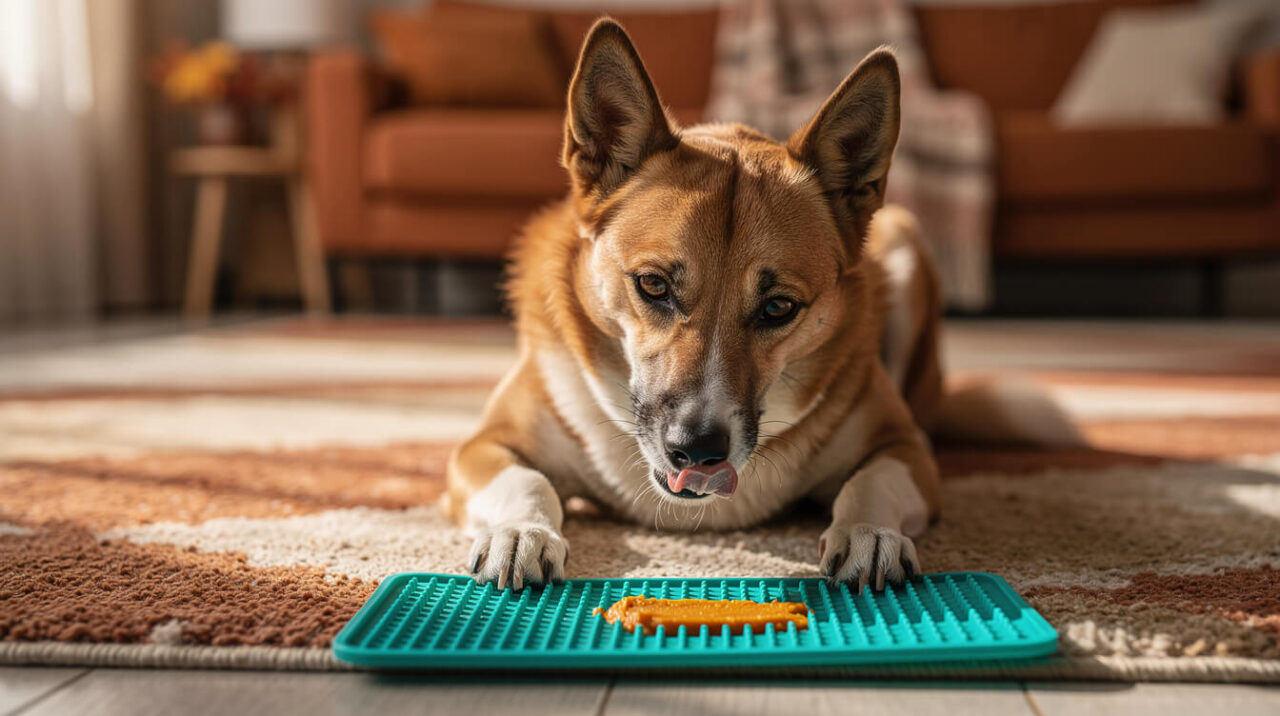
The easiest way to include your dog is to set some aside before the butter and sugar go in. When you boil or bake sweet potatoes for the casserole, pull out one plain piece for the dog first. That one habit solves almost every problem in this article.
- Peel and cook until soft. Bake, boil, or steam with no salt or oil.
- Mash it or cut it small. Cut pea-sized cubes for small dogs and bite-sized pieces for big ones, or just mash it.
- Let it cool. Hot mash holds heat longer than you’d think.
- Serve within the table above, and count it toward the day’s treats.
You don’t need a special recipe to make a dog happy, but you might want a reminder of who’s in the house. GeoZoo’s shop is small and reptile-first for now, so there’s no dog design yet. If there’s a bearded dragon in your home along with the dog, our Bearded Dragon Crown Sunglasses King T-Shirt is the one we’d point you to, and unlike the casserole, it has no brown sugar.
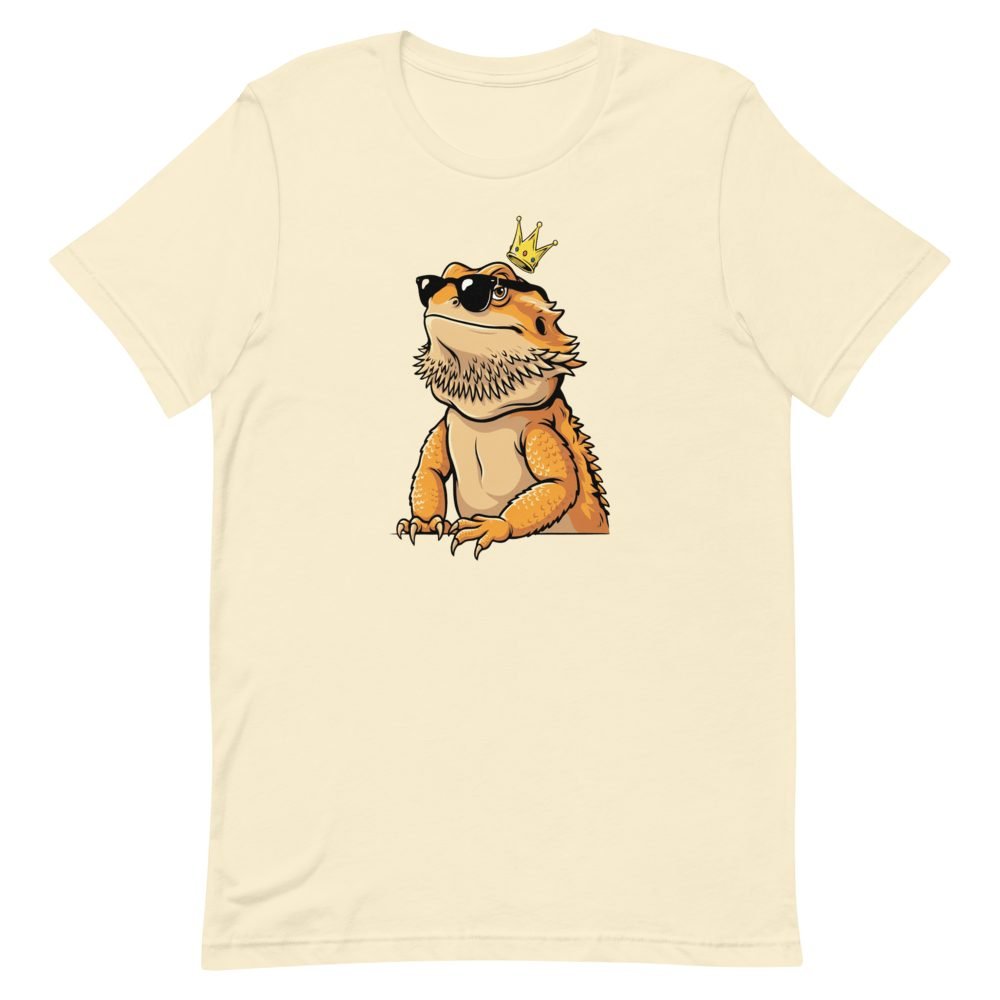
For the keeper with a beardie and a dog at the table
Our crowned, sunglasses-wearing bearded dragon tee, for reptile keepers whose holiday table also has a hopeful dog underneath it.
Three easy dog-safe yam ideas
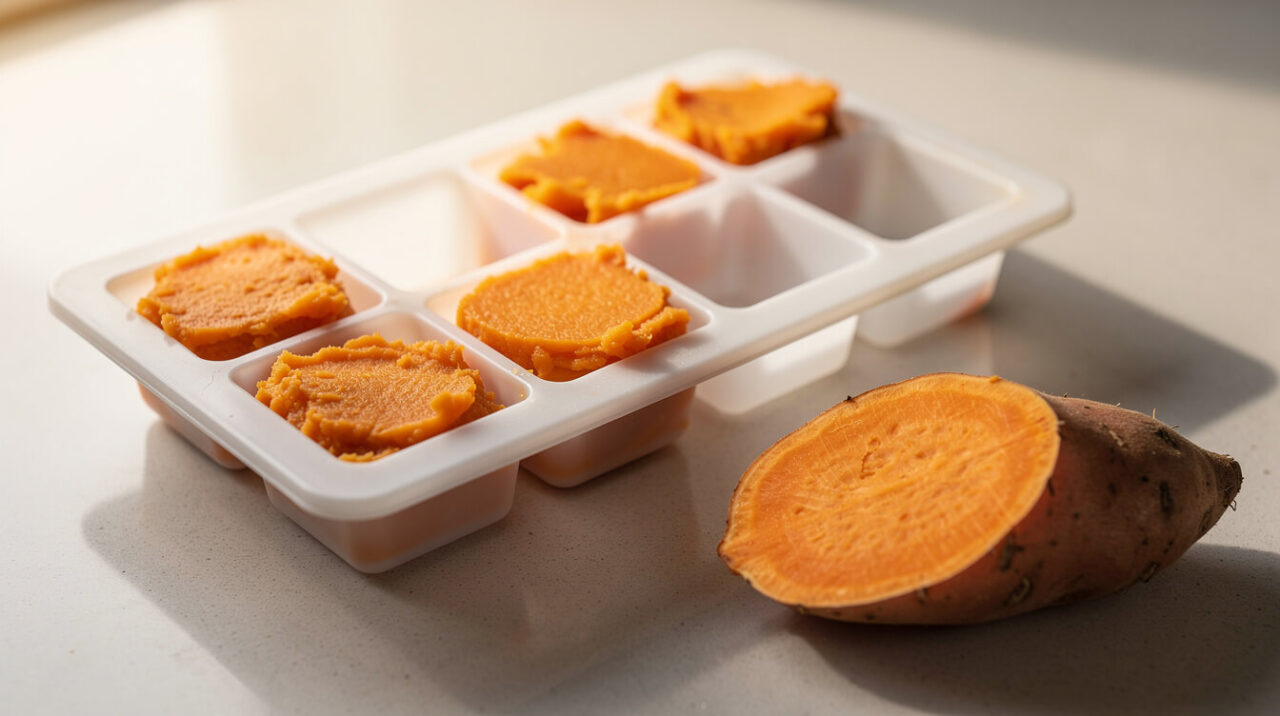
- Frozen mash cubes. Spoon plain mash into an ice-cube tray, freeze it, and pop out one cube as a cold treat. Each compartment is a premeasured portion, which makes the table easy to follow.
- A thin lick-mat smear. Spread a thin layer into the grooves of a lick mat. It takes a dog much longer to finish than a spoonful, and it’s a nice calm job during a busy holiday meal.
- A topper. Stir a spoonful into your dog’s regular dinner. If you do that, it replaces a treat that day rather than adding to it.
Pumpkin works the same way, and our dog pumpkin guide covers its portions and the “pumpkin fixes diarrhea” claim. If you share your home with a cat too, cats have different rules, and our cat sweet potato guide explains why the vitamin A pitch doesn’t apply to them.
Can dogs eat yams? Your other questions, answered

Can puppies eat yams?
Yes, in tiny amounts. A puppy needs its complete puppy food to grow properly, so keep any extras very small. A fingertip of plain mash is plenty. Introduce it on a quiet day so you can tell whether it agrees with your puppy’s stomach.
Can diabetic dogs eat yams?
Ask your vet first. Both yam and sweet potato are starchy, and any extra carbohydrate can affect blood sugar in a dog whose insulin dose is matched to a fixed diet. Plenty of diabetic dogs can have small, consistent treats. The key word is consistent, and your vet is the right person to fit it in.
What about dogs with kidney disease?
Check with your vet. Look at the potassium row in the table above: true yam has about 40% more potassium than sweet potato, and dogs with kidney disease often eat prescription diets that manage minerals carefully. Depending on bloodwork and medications, some kidney patients need more potassium and some need less, so this one is genuinely a vet question.
Can dogs eat sweet potato fries or yam fries?
Not really. Fries are cooked in oil and usually salted, which brings back the fat problem. A single fry dropped on the floor is no big deal. A basket of them isn’t a treat. Oven-baked plain wedges with no oil or salt are the dog-friendly version.
Can dogs eat ube (purple yam)?
Plain cooked ube is a true yam and follows the same rules: cooked, plain, and small. Ube desserts are another matter. Ube halaya, ube ice cream, and ube pastries are built on sugar, condensed milk, and butter, so they belong in the candied-yam category.
Is yam or sweet potato better for dogs?
Neither one wins outright. Sweet potato has more sugar but fewer calories and lots of beta-carotene. True yam has almost no sugar but more calories and more potassium. For a healthy dog on a complete diet, pick whichever you’re already cooking, and keep it plain and small.
Can dogs eat sweet potato pie or sweet potato casserole?
They’re cousins of candied yams, with sugar and butter plus eggs, evaporated milk, and pastry. A lick isn’t a crisis, and a slice isn’t a treat. Our pumpkin pie guide breaks down a slice ingredient by ingredient, and the same thinking applies here.
The bottom line
So, can dogs eat yams? Yes, and they’re one of the easier holiday foods to share well. Plain, peeled, cooked yam, whether it’s a true yam or the sweet potato your store calls one, is a safe treat for most dogs in the portions above. The trouble lives in the casserole dish: butter first, then sugar, then whatever’s on top. The nutmeg and a splash of bourbon matter much less than they sound, and regular canned yams don’t hide xylitol, though a “sugar-free” label is always worth reading.
If you take one thing from this guide, make it the habit: set aside a plain piece before you season the pan. Your dog gets something special, you get to stop worrying about the table, and nobody spends the day after Thanksgiving at the emergency vet. And if your dog ever eats something that worries you, whether it’s xylitol, a wild yam from the yard, or a whole pan of anything, call your veterinarian. That call is never an overreaction.
Before you go
Keep learning your animal
We publish a new guide every day. The best of them land in one short weekly email, so you never miss the one about your species.

Meet Jake Harrington, your go-to guru for all things canine. With over 15 years of professional dog training experience, Jake has transformed the lives of thousands of dogs and their owners. His journey began in the bustling streets of a major city, where he discovered his natural affinity for understanding canine behaviors and communication.