Can Cats Eat Shrimp? The Real Serving Size, and What 551 Store Labels Show
Can cats eat shrimp? Yes. Plain, cooked, peeled shrimp is a safe occasional treat for most healthy adult cats. It isn’t toxic, it’s mostly lean protein, and most cats go wild for it. The hard part isn’t whether cats can eat shrimp. It’s two things the usual answers skip: how much is really “a little”, and whether the shrimp in your freezer is as plain as you think.
For this guide, I did the calorie math by body weight using the Merck Veterinary Manual’s energy formulas. I also went through 551 store-bought shrimp ingredient labels in the USDA’s branded food database: 232 bags of ready-cooked shrimp and 319 bags of frozen raw shrimp. Nearly all of them add salt, phosphate, or both. That doesn’t make shrimp dangerous for a healthy cat. It does matter if your cat has kidney, heart, or thyroid disease, and it changes how you should shop.
Can cats eat shrimp? The short answer
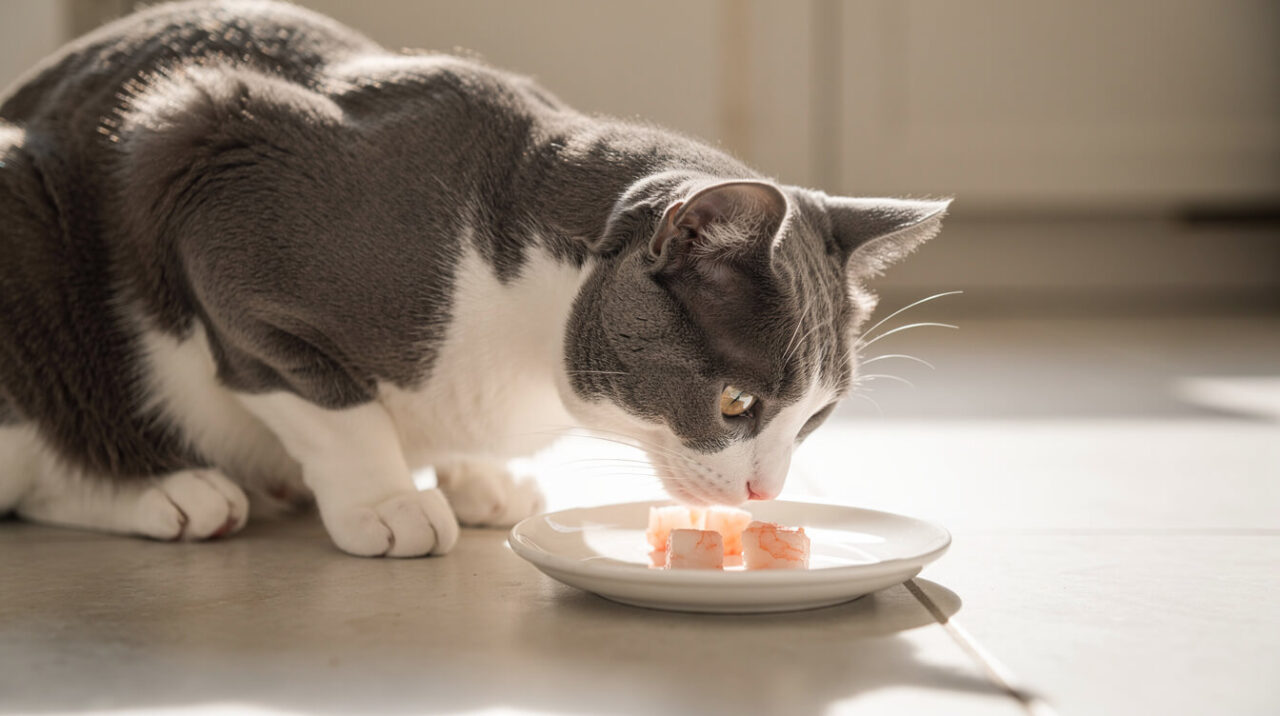
Shrimp is a reasonable treat for a cat as long as it’s:
- Cooked. Boiled or steamed until opaque all the way through. Raw shrimp can carry the same bacteria that make people sick.
- Plain. No garlic, onion, butter, oil, salt, cocktail sauce, breading, or spice rub.
- Peeled, with the tail and vein removed. Shells and tails are hard to chew and digest.
- Small. A few small pieces, not a plateful (the numbers are in the next section).
Nutritionally, plain cooked shrimp is close to pure protein. USDA data (FoodData Central entry 175180) puts it at 99 kcal, 24 g protein, and only 0.28 g fat per 100 g, so roughly 1 calorie per gram. That’s leaner than most meat treats. Cats are obligate carnivores, so a lean animal protein is about as natural a “people food” as you can offer.
Still, shrimp is a treat, not a meal. It isn’t complete and balanced, so it can’t replace your cat’s food. The 90/10 rule applies here like it does to turkey, sweet potato, and every other extra: at least 90% of your cat’s calories should come from a complete diet, and treats share the last 10%.
Sharing a house with a dog too? The dog version is a different guide with different portion math: can my dog eat cooked shrimp.
How much shrimp can a cat eat?
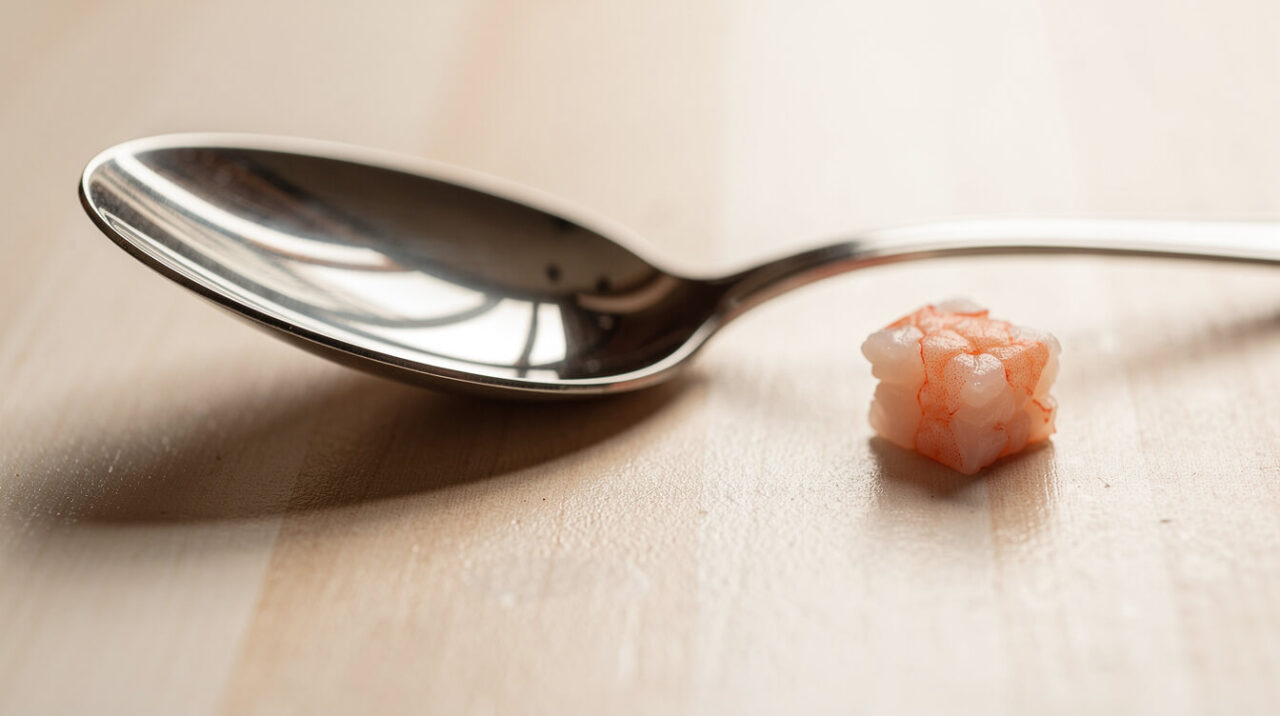
The most common advice online is half a shrimp for a small cat and one shrimp for a large cat, once or twice a week. That’s a good everyday rule, and the math below shows it’s a conservative one. The trouble is that “a shrimp” can weigh anywhere from 3 grams to more than 15, depending on the size you buy. So here are the numbers in grams.
The 10% ceiling by body weight
Merck’s formula for a cat’s resting energy is 70 × (body weight in kg)0.75. For daily needs, Merck multiplies that by 1.2 for a neutered adult cat and 1.0 for an obesity-prone cat. Ten percent of that is the most any treat should supply in a day. Plain cooked shrimp is about 1 kcal per gram, so the calorie ceiling and the gram ceiling come out nearly the same.
| Cat’s weight | Daily calories (1.0–1.2 × RER) | 10% treat ceiling | Plain cooked shrimp at the ceiling |
|---|---|---|---|
| 6 lb (2.7 kg) | 148–178 kcal | 15–18 kcal | about 15–18 g |
| 8 lb (3.6 kg) | 184–221 kcal | 18–22 kcal | about 19–22 g |
| 10 lb (4.5 kg) | 218–261 kcal | 22–26 kcal | about 22–26 g |
| 12 lb (5.4 kg) | 249–299 kcal | 25–30 kcal | about 25–30 g |
| 15 lb (6.8 kg) | 295–354 kcal | 29–35 kcal | about 30–36 g |
Treat these as ceilings, not targets. The ceiling assumes shrimp is the cat’s only treat that day, and that your cat’s weight is right where it should be. Every calorie spent on shrimp also has to come off somewhere else, or it adds up over weeks.
What “half a shrimp” actually is
USDA lists four large cooked shrimp at 22 g, so one USDA “large” shrimp is about 5.5 g, or about 5.5 kcal. Half of one is roughly 3 g and 3 kcal. For a 10-lb cat, that’s only about 1% of the day’s calories. The popular half-shrimp rule is gentle on the treat budget, which is why it works so well as a default.
Bigger shrimp change things. Shrimp bags are sold by “count,” the number of shrimp per pound. A 31/40 bag works out to roughly 11–15 g per shrimp as packed. Cooking and peeling make them lighter, but “one shrimp” from a jumbo bag can still be two or three times a USDA large. If you buy big shrimp, cut a piece rather than handing over a whole one. A kitchen scale makes this easy the first time, and then you’ll know what the right piece looks like.
How often
Once or twice a week is plenty, and it keeps shrimp special. The reason isn’t toxicity. A cat who gets shrimp every day learns to hold out for it, and daily extras are how treat calories creep up. If your cat is already on the heavy side, read our calorie math for whipped cream too. Small treats count more than most people expect in a 10-lb animal.
“Plain cooked shrimp” is harder to find than it sounds
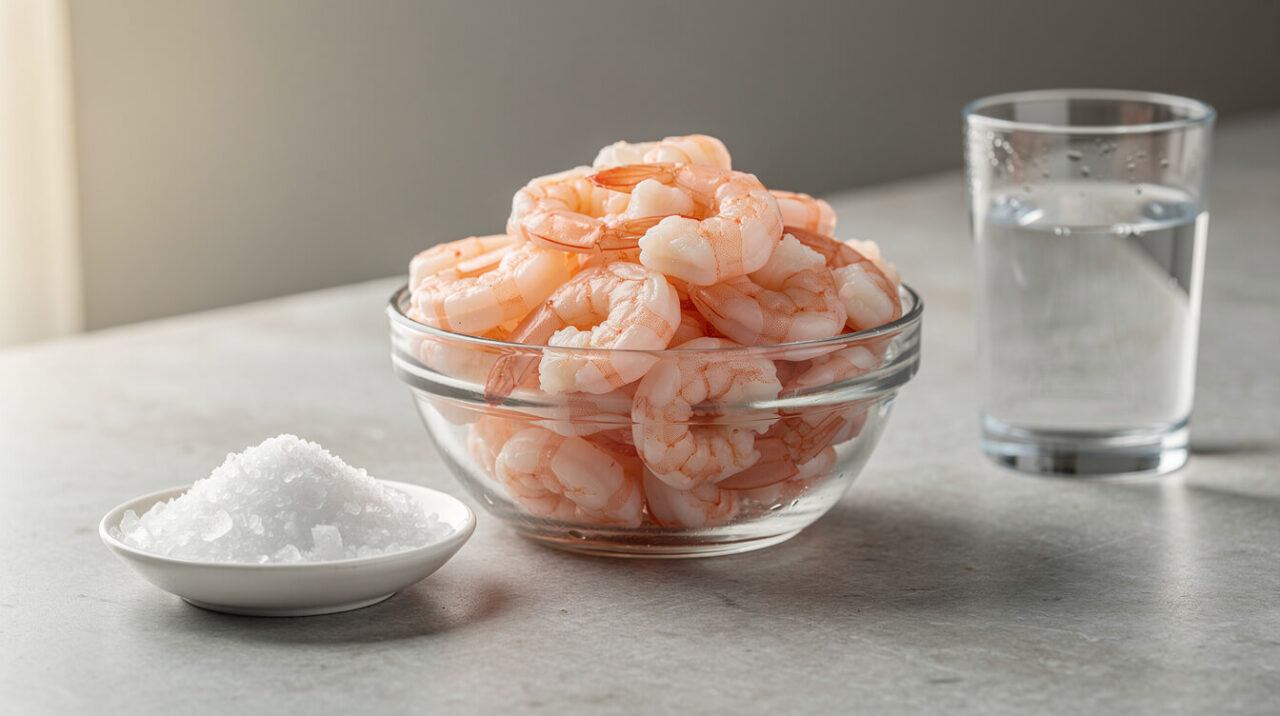
Almost every guide tells you to give your cat “plain cooked shrimp.” Most people take that to mean the bag of ready-cooked shrimp in the freezer, thawed and handed over. For most bags, that isn’t plain.
What 551 store labels show
I pulled every branded entry in USDA FoodData Central for cooked shrimp and raw shrimp, removed duplicate barcodes, and set aside anything with sauce, breading, seasoning, or a side dish. That left the bags people actually think of as plain shrimp.
- Ready-cooked shrimp (232 labels): 225 list salt, and 185 list a phosphate, usually sodium tripolyphosphate “to retain moisture.” Only 2 of 232 list nothing but shrimp.
- Frozen raw shrimp (319 labels): 268 list salt and 224 list a phosphate. Only 22 of 319 (about 7%) list nothing but shrimp (or shrimp and water). A few more skip salt and phosphate but add a preservative.
- Sodium: the median ready-cooked bag carries about 400 mg of sodium per 100 g (middle half: 298–536 mg). USDA’s plain cooked shrimp is 111 mg, so that’s about 3.6 times as much. USDA’s own reference entry for shrimp cooked with moisture-retaining additives is 947 mg, about 8.5 times plain.
So the honest shopping rule is: “plain” means the ingredient list says shrimp and nothing else (or shrimp and water). Turn the bag over before you assume. A 3-ounce serving of plain shrimp has only about 95 mg of sodium, so a label showing several hundred milligrams per serving tells you something was added.
Does this matter for a healthy cat?
For most healthy adult cats, honestly, not much. At treat size we’re talking about tens of milligrams of extra sodium, and a healthy cat with fresh water handles that easily. I’m not going to tell you a bite of shrimp ring will poison your cat. It won’t.
It matters for cats whose vets are managing sodium or phosphorus, which usually means cats with kidney disease or heart disease. Phosphate is the bigger issue for kidney cats:
- Shrimp is already phosphorus-rich before anything is added. USDA lists 237 mg per 100 g of plain cooked shrimp, about 2.4 g of phosphorus per 1,000 kcal. In a Waltham feeding study, the control diet for healthy cats supplied about 1.2–1.3 g per 1,000 kcal (Alexander and colleagues, 2019, PMID 30572965).
- Added phosphates are a different kind of phosphorus. A 2020 review in the Journal of Veterinary Internal Medicine notes that kidney injury has occurred in cats fed experimental diets supplemented with highly soluble phosphate salts, and that “limiting the use of highly soluble phosphates appears to be important” (Laflamme and colleagues, PMID 33159358). Those were whole diets, not a treat, so don’t read it as a shrimp warning for healthy cats. It’s the reason a phosphate-restricted kidney diet and a bag of phosphate-treated shrimp don’t mix.
One more label detail: 38 of the raw bags and 3 of the cooked bags list a sulfite preservative (sodium bisulfite or metabisulfite). Merck notes that sulfur dioxide treatment can destroy thiamine in food, “but deficiencies are rare.” At treat size it isn’t a concern. It’s one more reason to pick the bag that just says “shrimp.”
Raw shrimp, shells, tails, and the scampi problem
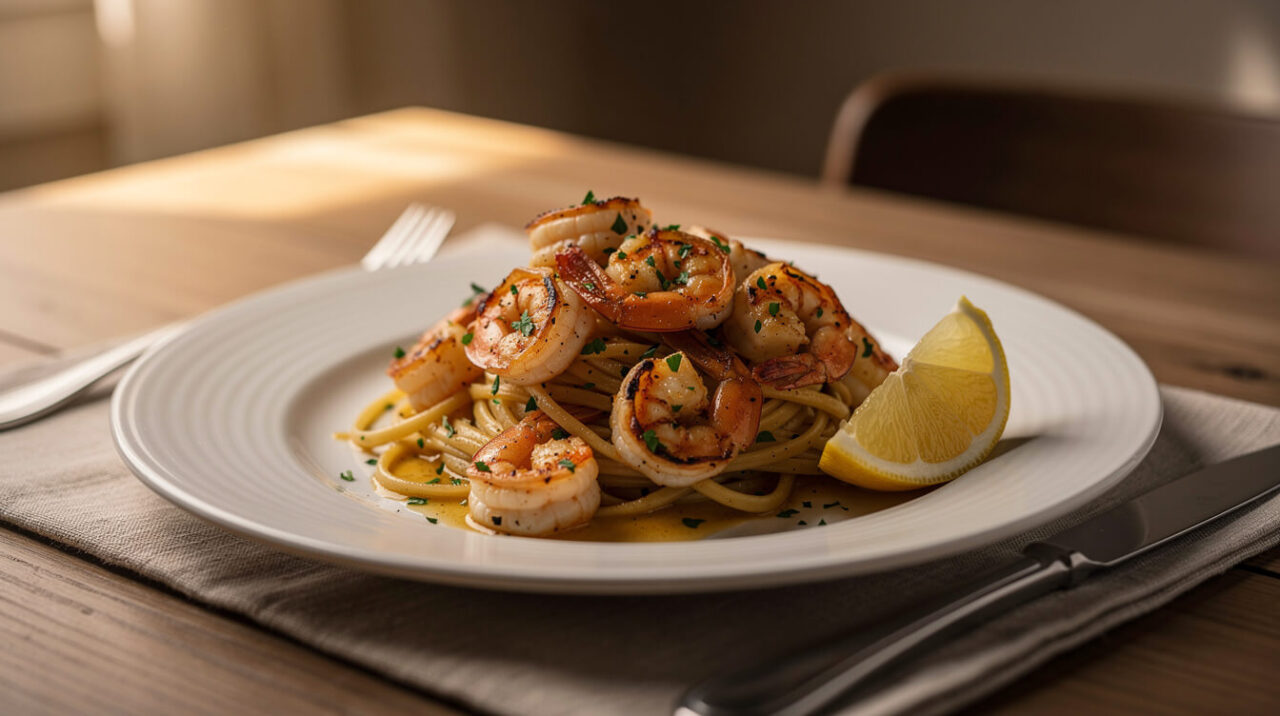
Most shrimp trouble in cats doesn’t come from the shrimp. It comes from how the shrimp arrived: raw, in the shell, or in a garlicky sauce.
Raw shrimp
Skip it. Raw shellfish can carry the same food-poisoning bacteria (such as Salmonella) that make people sick, and cats aren’t immune. Kittens, seniors, and cats with other illnesses are the most vulnerable.
You’ll also read that raw shrimp contains thiaminase, an enzyme that breaks down vitamin B1. The Merck Veterinary Manual is more specific: “Thiaminases are found in raw freshwater fish and clams”, and they’re destroyed by cooking. I couldn’t find research measuring thiaminase in shrimp, so it may or may not be an issue for shrimp in particular. It doesn’t change the advice: cook it, and the question goes away.
If your cat grabbed a raw shrimp off the counter, don’t panic. Watch for vomiting, diarrhea, or lethargy over the next day or two, and call your vet if anything shows up or your cat is very young, old, or already unwell.
Shells and tails
Shells and tails are tough and sharp, and a cat’s teeth are built for slicing, not grinding. They can cause gagging or an upset stomach, and a larger piece could get stuck. Peel every piece and pull off the tail before serving.
If your cat swallowed a shell or tail, most will pass it, but call your vet if you see repeated vomiting, retching, refusing food, a painful or tense belly, or no stool for a day or more. Those are the signs that something isn’t moving through.
Garlic, onion, and butter: the scampi problem
This is the one to take seriously. Shrimp scampi, garlic shrimp, and many shrimp dishes are built on garlic and butter. The Merck Veterinary Manual says “Cats are the most susceptible species” to onion and garlic poisoning. It also notes toxicosis “has been reported in cats after ingesting less than a teaspoon of cooked onions.” Merck also puts garlic at “3–5 times more toxic than onion,” and powdered or dehydrated forms are the most concentrated of all.
The tricky part is the timing. Merck notes that clinical signs “may take as long as several days to appear,” so a cat who seems fine the evening after licking the scampi plate isn’t proof that all is well. If your cat ate shrimp cooked with garlic or onion, or licked the sauce, call your vet or a poison line the same day rather than waiting for symptoms:
- ASPCA Animal Poison Control: (888) 426-4435
- Pet Poison Helpline: (855) 764-7661
Both lines may charge a consultation fee. Have a rough idea of what was in the dish and how much your cat got.
Butter and oil are less urgent, but rich, fatty food can still bring on vomiting or diarrhea. Breaded and fried shrimp is a different food altogether: USDA lists it at 242 kcal and 12.3 g fat per 100 g, against 99 kcal and 0.28 g for plain. Cocktail sauce is ketchup and horseradish, so keep it off too.
The weekly care guide
Get it right for your animal, every week
One email a week: new care guides, species deep-dives, and the safety answers keepers search for, written by our specialists. No spam. Unsubscribe anytime.
How to serve shrimp to your cat
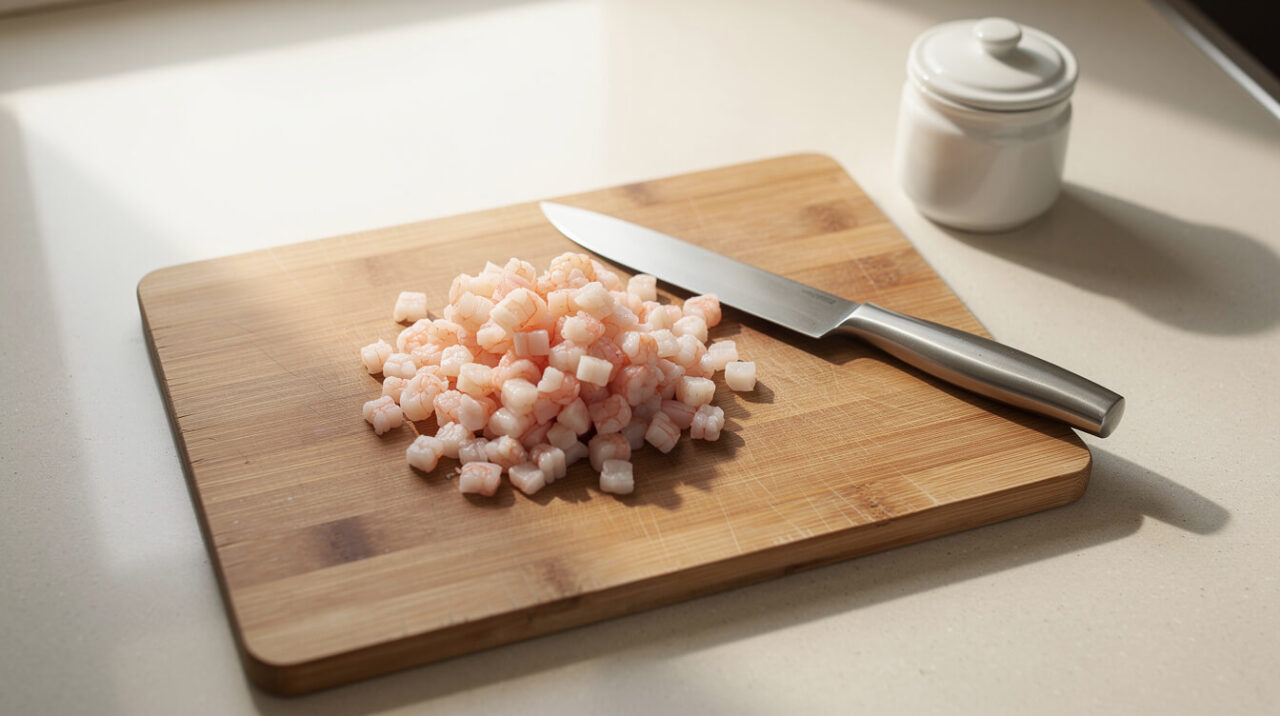
Now the good part. A cat-safe shrimp treat takes about five minutes and one pot of water.
- Buy the right bag. Fresh shrimp from the seafood counter, or frozen raw shrimp whose ingredient list says only “shrimp” (or “shrimp, water”). Skip the ready-cooked ring unless its label passes the same test.
- Cook it plain. Boil or steam in unsalted water until it’s pink and opaque all the way through, usually two to three minutes for medium shrimp. No salt in the water, no butter, no garlic.
- Cool, peel, and trim. Remove the shell, the legs, the tail, and the dark vein along the back.
- Dice small. Cut a cat’s portion into pea-and-smaller bits. Cats tend to bolt a whole piece, and small bits are easier to chew.
- Start with a taste. The first time, offer just a bite or two and watch for vomiting, diarrhea, or itching over the next day or two.
- Store the rest for yourself. Cooked shrimp keeps in the fridge for a few days. Your cat’s share for the week is tiny, so most of the batch is yours.
Good ways to use it: a few bits as a reward during nail trims or carrier practice, a sprinkle over the regular wet food for a picky eater, or a bite in a puzzle feeder. Food your cat really loves is the best training tool you have.
If you’re the kind of keeper who weighs a 3-gram shrimp treat, you’re also the kind of person who’d enjoy our Bearded Dragon Crown Sunglasses King T-Shirt. We don’t have a cat design yet, but it fits right in at a house where the animals are treated like royalty.

For keepers who treat their animals like royalty
The Bearded Dragon Crown Sunglasses King T-Shirt: a crown, shades, and the confidence of an animal who already knows the best spot in the house is theirs. Every cat owner will recognize the attitude.
Canned shrimp and shrimp-flavored cat food
Canned shrimp for people is usually packed with salt. USDA lists it at 870 mg sodium per 100 g, close to the additive-treated cooked shrimp. Rinsing helps a little but doesn’t make it plain. Shrimp-flavored cat foods and treats are different: they’re formulated for cats, and complete-and-balanced cat foods count as the diet, not the treat. Just check that a “shrimp” treat doesn’t push your cat’s treat total over the 10% line.
Cats who should skip shrimp
For some cats, the right amount of shrimp is none. None of these are about shrimp being bad. They’re about a diet that’s doing a job.
Cats on an iodine-restricted thyroid diet
Some hyperthyroid cats are managed with an iodine-restricted prescription food instead of medication or radioactive iodine. Those diets are studied as the only food the cat eats. In one study of cats fed one exclusively, thyroid levels normalized in 83% by 61–180 days (Hui and colleagues, 2015, PMID 26081922). So for these cats, any shrimp, or any other food or treat, works against the plan. Ask your vet before giving anything extra.
For the record, shrimp isn’t especially high in iodine. The NIH’s iodine fact sheet lists cooked shrimp at 13 mcg per 3 ounces, against 146 mcg for baked cod. The issue is that the prescription diet only works when it’s the whole menu. Cats treated with medication instead aren’t under the same restriction, but check with your vet anyway. If you’re still at the “why is my cat losing weight?” stage, start with our guide to unexplained weight loss in cats and a vet visit before changing any food.
Cats with kidney or heart disease
These are the cats the label section was really for. Kidney diets limit phosphorus, and some heart and kidney plans limit sodium. Even plain shrimp is phosphorus-dense, and treated shrimp adds both. Ask your vet whether shrimp fits and how much. If it does, the bag should say only “shrimp.” Many older cats fall into this group, which is one more reason to know when a cat is considered a senior and keep up with senior bloodwork.
Cats in a food trial, or with suspected food allergies
Fish is on the short list of the most common feline food allergens (with beef and chicken, per a 2016 review by Mueller, Olivry, and Prélaud, PMID 26753610). Shellfish isn’t, and I couldn’t find feline research showing shrimp allergy is common. Some articles claim it is, but I couldn’t find the evidence behind that. Any new protein can still cause a reaction, though. If your cat is on an elimination diet, no shrimp until the trial is over. And for any cat, stop if you see vomiting, diarrhea, or new itching after a shrimp treat.
Kittens
Kittens need every bite to count toward growth. There’s no evidence that a bit of cooked shrimp harms a kitten, but there’s no reason to add it either. Let them grow on a complete kitten food first.
Any cat on a prescription diet
If your vet prescribed the food, ask before adding anything, including shrimp. A quick “is shrimp okay, and how much?” call is all it takes.
Can cats eat shrimp? Quick answers
Can cats eat cooked shrimp?
Yes, if it’s plain, peeled, and tail-off, and the portion is small. Check the ingredient list of store-bought cooked shrimp, because nearly all of it is salted and most of it is phosphate-treated.
Can cats eat raw shrimp?
No. Cook it first. Cooking kills bacteria, and it removes any doubt about thiaminase.
Can cats eat shrimp tails or shells?
No. Peel every piece. If your cat swallowed one, watch for repeated vomiting, a sore belly, or no stool, and call your vet if you see them.
My cat licked the shrimp scampi plate. What now?
Call your vet or a pet poison line the same day. Garlic signs in cats can take several days to show up, so don’t wait for them.
Can cats eat shrimp every day?
A tiny piece daily would fit the 10% rule for a healthy cat if nothing else is in the treat budget. Once or twice a week keeps it special and keeps calories in check.
Is shrimp good for cats?
It’s a good treat: lean, high-protein, and very appealing. It isn’t a nutritional upgrade over a complete cat food, though, and your cat doesn’t need it.
The bottom line
So, can cats eat shrimp? Yes. A healthy adult cat can enjoy a few small bits of plain, cooked, peeled shrimp once or twice a week. Half a shrimp is a generous everyday serving, and the gram table above shows the ceiling for your cat’s size. The real catch is the bag. “Plain” means the label says shrimp and nothing else, and that’s less common than you’d think. If your cat is on a prescription diet or has kidney, heart, or thyroid disease, ask your vet first. Otherwise, cook a few, dice small, and enjoy the most enthusiastic audience in your kitchen.
Before you go
Keep learning your animal
We publish a new guide every day. The best of them land in one short weekly email, so you never miss the one about your species.
Dr. Lila Monroe is a seasoned veterinarian with a passion for feline health and behavior, boasting over 20 years of experience in the field. With her extensive knowledge of cat medicine combined with a deep understanding of the nuanced dynamics of cat behavior, Lila offers readers invaluable insights into creating a nurturing environment for their feline friends.