Can Cats Eat Whipped Cream? The Lactose Myth, the Real Calorie Math, and the Pup-Cup Problem
Can cats eat whipped cream? Yes. A lick of plain whipped cream isn’t toxic, and most healthy adult cats who sneak one will be fine. The catch isn’t the lick. It’s the habit. Whipped cream is mostly fat and air. A cat can’t taste the sugar in it, and the serving sizes people actually hand out (a spoonful off the pie, a coffee-shop “pup cup”) add up faster than most of us would guess.
Every page on this question says “cats are lactose intolerant, so be careful,” and then stops. We pulled the numbers instead: how much lactose is really in whipped cream compared with milk, how many calories a lick, a tablespoon, and a pup cup add to a 10-pound cat’s day, and which “whipped creams” aren’t cream at all. Here’s what’s actually true, and how to share (or not) without guessing.
Can cats eat whipped cream? The short answer
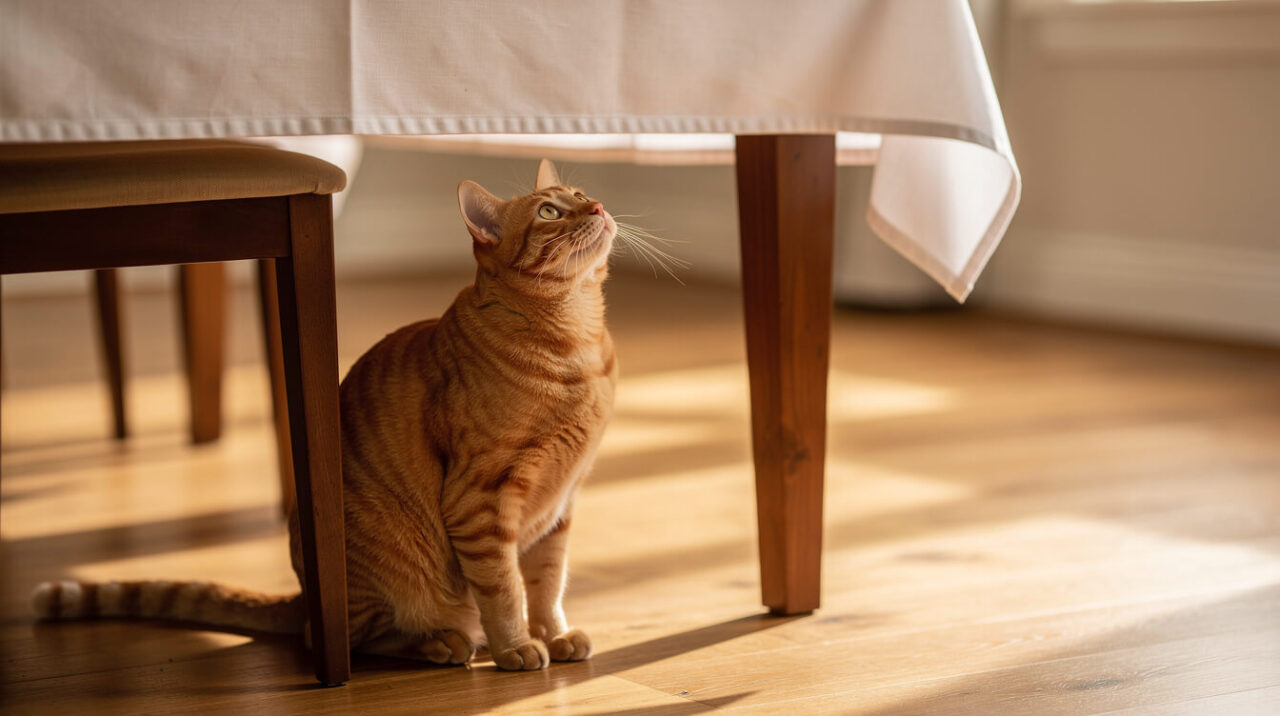
A small taste of plain, real whipped cream is safe for most healthy adult cats. It isn’t on any toxic-foods list, and it isn’t a poisoning emergency. If your cat licked the beater or stole a dab off your plate tonight, you don’t need to call anyone. Watch for a soft stool over the next day, and that’s usually the end of it.
What makes it a “sometimes, tiny” food rather than a regular treat comes down to three things:
- It’s dessert, not food. Cats are obligate carnivores. The Cornell Feline Health Center says treats shouldn’t go over 10 to 15 percent of a cat’s daily calories, because they aren’t complete nutrition. Whipped cream brings fat and calories and almost nothing a cat needs.
- Dairy tolerance varies. Many adult cats digest lactose poorly. Whipped cream carries less of it than you’d think (more on that below), but some cats still react.
- Not every can or tub is cream. Some popular toppings are mostly water, corn syrup, and hydrogenated oil. Those aren’t dangerous in a lick, but they’re a worse trade than the real thing.
Here’s a fun bit of biology that explains the begging. Cats can’t taste sweetness. Researchers at the Monell Chemical Senses Center found that the gene for one half of the mammalian sweet receptor is broken in cats (Li et al., 2005). So your cat isn’t after the sugar. They’re after the fat, and the smell of dairy fat is a powerful draw. That’s useful to know, because it means a cat who loves whipped cream will be just as happy with a treat that has no sugar and no dairy at all.
The lactose myth, measured
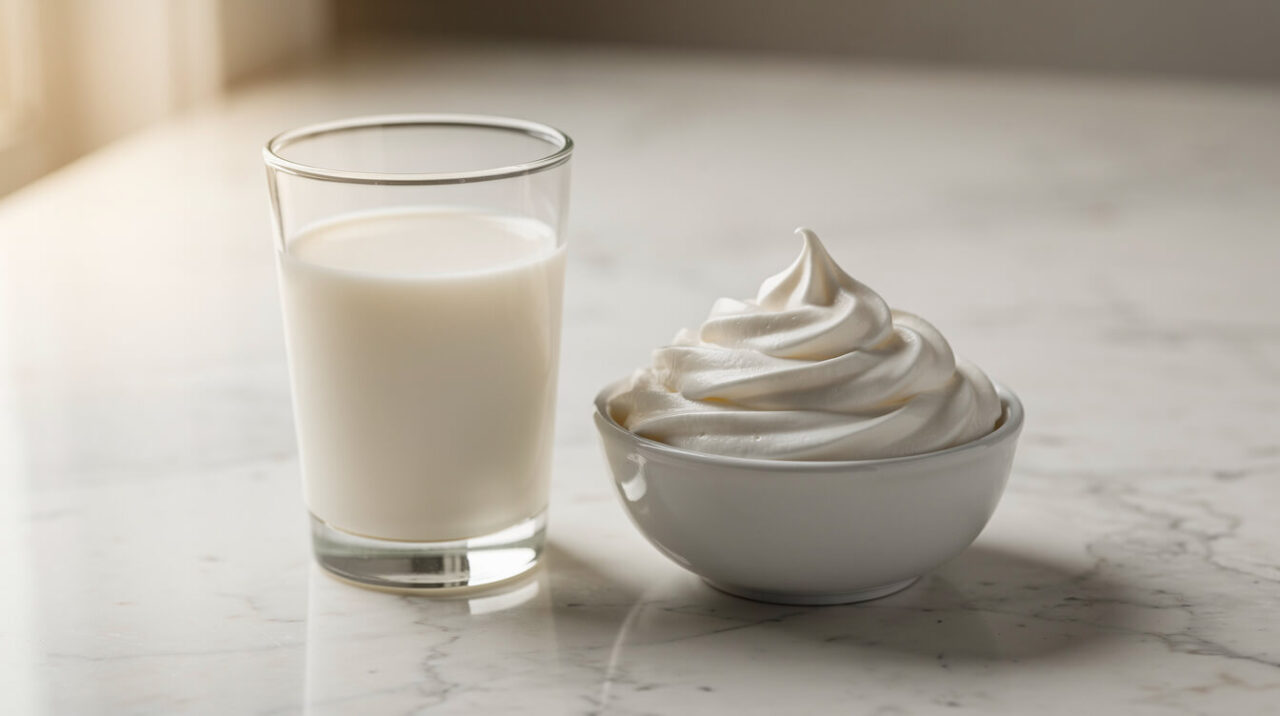
“Cats are lactose intolerant” is mostly true, and it’s also a little lazy, because it treats every dairy product as equal. They aren’t.
Why cats lose lactose tolerance
Kittens make plenty of lactase, the enzyme that splits milk sugar, because they live on their mother’s milk. After weaning, that changes. The Merck Veterinary Manual describes a “relative lactase deficiency” in cats: lactase activity declines after weaning, and they may become lactose intolerant. Lactose that isn’t digested travels on to the colon, pulls water in, and gets fermented. The result is gas, cramping, and loose stool.
Note the word relative. It’s a sliding scale, not a switch. Some adult cats handle a little dairy with no trouble. Others get diarrhea from a few laps of milk. You won’t know which one you have until you see the litter box.
Whipped cream carries far less lactose than milk
Here’s what the USDA’s FoodData Central numbers show. Heavy whipping cream contains 2.92 g of lactose per 100 g. Whole milk contains 5.05 g per 100 g. Cream has less because most of its weight is fat, and fat pushes the milk sugar out of the recipe.
Then the whipping adds air. A tablespoon of milk weighs about 15 g and carries about 0.76 g of lactose. A tablespoon of canned whipped cream weighs only about 3 g, and its total sugars (lactose plus any added sugar) come to about 0.24 g. Spoon for spoon, that’s roughly a third of the milk’s lactose, at most.
Measured per calorie, the gap is even bigger. Heavy cream has about a tenth of the lactose per calorie that whole milk does. Here’s why that matters: by the time a cat has eaten enough whipped cream to get a real lactose load, they’ve already eaten a lot of fat and calories. For whipped cream, lactose is the weaker reason to go easy. The calories run out first.
That said, low lactose isn’t zero lactose. A sensitive cat can still get a soft stool from a spoonful, and the fat itself can loosen stool in some cats. If your cat has diarrhea after any dairy, that’s your answer for that cat. Stop offering it.
The calorie math: a lick, a tablespoon, and a pup cup
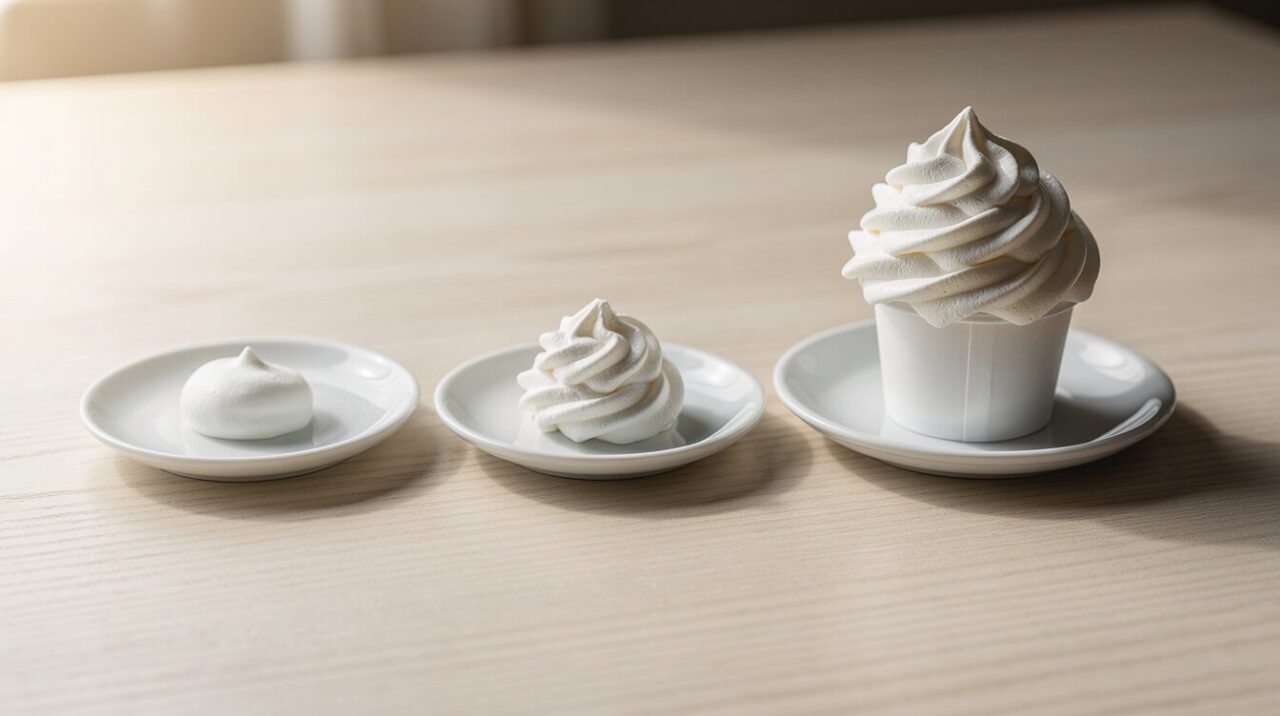
This is the part nobody puts numbers on, so here they are. We’ll use a typical 10-pound (4.5 kg) adult cat.
Your cat’s daily budget. The Merck Veterinary Manual starts from the resting energy requirement, 70 × body weight in kg0.75. For 4.5 kg that’s about 216 kcal. A neutered indoor adult usually needs somewhere between that (if weight-prone) and about 1.2× that, roughly 260 kcal a day. Your vet can narrow it for your cat.
The treat allowance. Cornell’s 10 to 15 percent rule gives that cat about 22 to 39 kcal a day for all extras combined. That covers every treat, every lick of tuna water, every bite of turkey.
What whipped cream costs. USDA puts pressurized whipped cream at about 2.57 kcal per gram, and a level cup of it weighs about 60 g.
| Serving | Approx. weight | Approx. calories | Share of a 10-lb cat’s day (216–260 kcal) |
|---|---|---|---|
| A lick (our estimate) | ~1 g | ~2.6 kcal | ~1% |
| 1 tablespoon, canned real cream | 3 g | ~7.7 kcal | ~3–3.6% |
| 2 tablespoons, canned (one label serving) | 5–6 g | ~15 kcal | ~6–7% |
| 2 tablespoons, tub-style topping | 9 g | ~25 kcal | ~10–12% |
| ¼ cup “pup cup” | ~15 g | ~39 kcal | ~15–18% |
| ½ cup “pup cup” | ~30 g | ~77 kcal | ~30–36% |
Read that last row again. A half-cup of whipped cream is close to a third of a 10-pound cat’s whole day. For a sense of scale, a third of a person’s 2,000-calorie day is about 670 calories, eaten as a “little treat.” And unlike a person, a cat won’t skip lunch to make room. The cream doesn’t replace the cat food. It gets added on top of it.
A lick or a single tablespoon fits inside the treat allowance with room to spare. A daily tablespoon is still a habit worth thinking about, because it eats a sizable slice of the budget with something that offers no protein. Anything cup-shaped blows straight through the budget.
The fat is worth a word too. That one tablespoon carries about 0.67 g of fat. That’s harmless as a one-off, but surplus calories get stored as body fat whatever their source. In a lot of homes, the slow weight creep from “just a little” treats is the real health story. A sudden emergency is the rare one.
Not all whipped cream is cream: canned, tub, non-dairy, and sugar-free
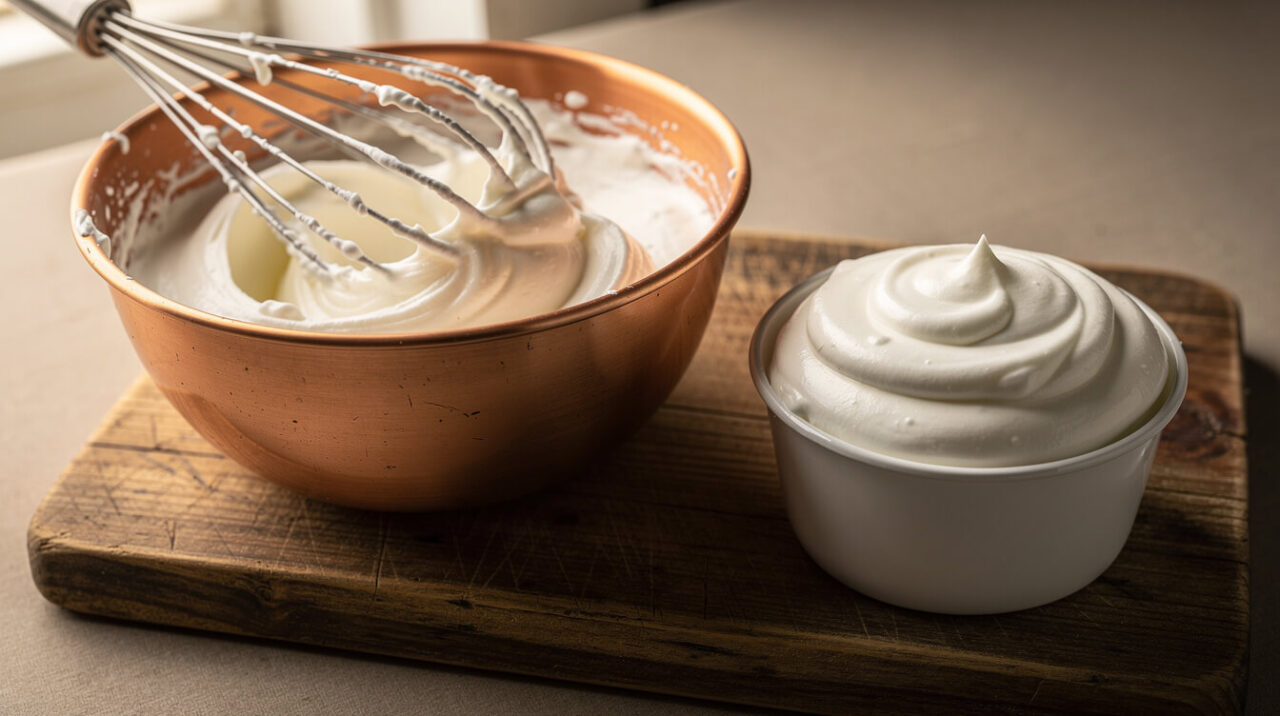
“Whipped cream” covers several very different products. Here’s how they compare for a cat.
Homemade or canned real whipped cream
Real whipped cream is cream, sometimes a little sugar and vanilla, and (in a can) nitrous oxide as the propellant. If you’re going to share anything, this is the least-bad choice: fewest ingredients, and the lowest sugar of the group (USDA: about 8 g per 100 g). Skip any that’s been flavored with liqueur, coffee, or chocolate.
Tub-style whipped topping
Tub toppings are a different food. Cool Whip Original lists water, corn syrup, high-fructose corn syrup, and hydrogenated coconut and palm kernel oils before any dairy shows up, and it runs about 25 kcal per 2 tablespoons. USDA’s frozen dessert-topping entry has nearly three times the sugar of canned cream. None of that is toxic. It’s just more calories and sugar, which your cat can’t taste anyway, and less of the dairy fat they actually want.
Non-dairy toppings
“Non-dairy” usually means vegetable oils, sugars, and stabilizers. A lick won’t hurt, but it isn’t the lactose-free upgrade it sounds like. Often there’s still a milk protein in the ingredient list, and the trade is lactose for sugar and hydrogenated fat.
Sugar-free and “zero sugar” versions, and the xylitol question
This is where a lot of advice goes wrong in both directions. Xylitol is famously dangerous for dogs, so it’s easy to assume every sugar-free topping is a xylitol bomb. The two biggest US brands don’t use it. Reddi-wip Zero Sugar is sweetened with sucralose, according to the manufacturer. Cool Whip Zero Sugar uses acesulfame potassium and aspartame, and it still lists corn syrup as its second ingredient. Other brands and store labels can differ, so read the ingredient list on the exact product in your fridge.
And for cats specifically, the xylitol evidence is less frightening than for dogs. In a 2018 study of six cats given xylitol at doses that harm dogs, researchers saw no toxic effects. That’s reassuring, but it’s six cats, so it isn’t permission. There’s no good feline research on sucralose, aspartame, or acesulfame K either way. Since your cat can’t taste the sweetness, there’s simply no reason to offer sugar-free toppings at all. If there’s a dog in the house, keep anything with xylitol well out of reach. We cover why in our gingerbread guide for dogs.
The weekly care guide
Get it right for your animal, every week
One email a week: new care guides, species deep-dives, and the safety answers keepers search for, written by our specialists. No spam. Unsubscribe anytime.
Pup cups, Puppuccinos, and the coffee-shop habit
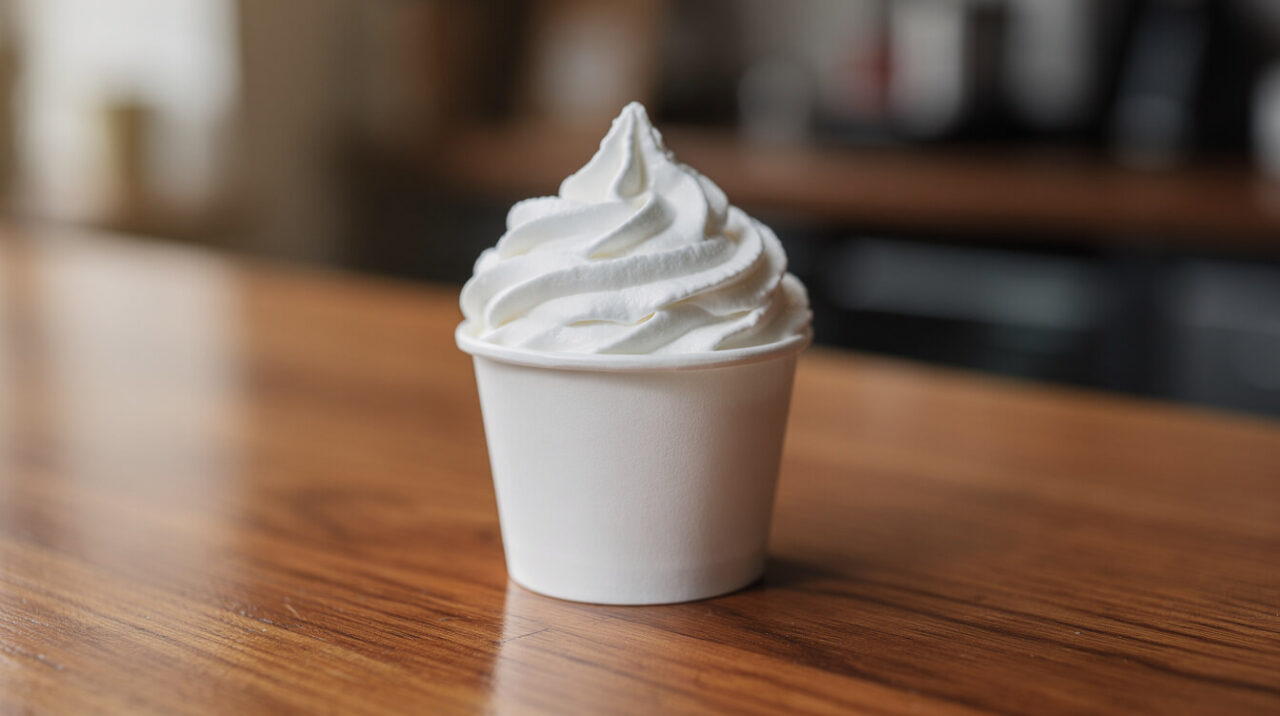
The “Puppuccino” (a small cup of whipped cream some coffee shops hand out free) was built for dogs, and cat people borrowed it. Cats who travel well in a carrier sometimes get one through the drive-through, and it’s become a whole video genre.
Here’s the honest picture:
- The cup is the problem, not the cream. Coffee shops don’t publish calorie counts for these cups, and how much a barista packs in varies. A cup with a quarter to half a cup of whipped cream works out to roughly 40 to 80 kcal at canned-cream density. That’s 15 to 36 percent of a 10-pound cat’s day, from the table above. In-store whipped cream may well be denser than the canned kind, so treat those as floor estimates.
- A once-a-year photo moment isn’t a crisis. A healthy cat eating part of a pup cup once is unlikely to come to harm beyond a possible soft stool. A weekly pup-cup ritual is a different story. It’s a lot of extra calories every week from a food that offers a cat nothing.
- Make it a lick, not a cup. If the outing is part of your routine, ask for the cup, offer your cat a fingertip’s worth, and toss the rest. Or bring their favorite treat from home and let them have that in the car.
- Keep coffee out of it. Caffeine is a real hazard for cats. Make sure the whipped cream never comes off the top of your own drink.
One more practical note for canned cream at home. Spray a little onto a spoon or saucer first, then offer it. Don’t let your cat lick straight from the nozzle. The gas comes out cold and under pressure, and you have no control over how much comes out.
How to share whipped cream safely, and when to call your vet
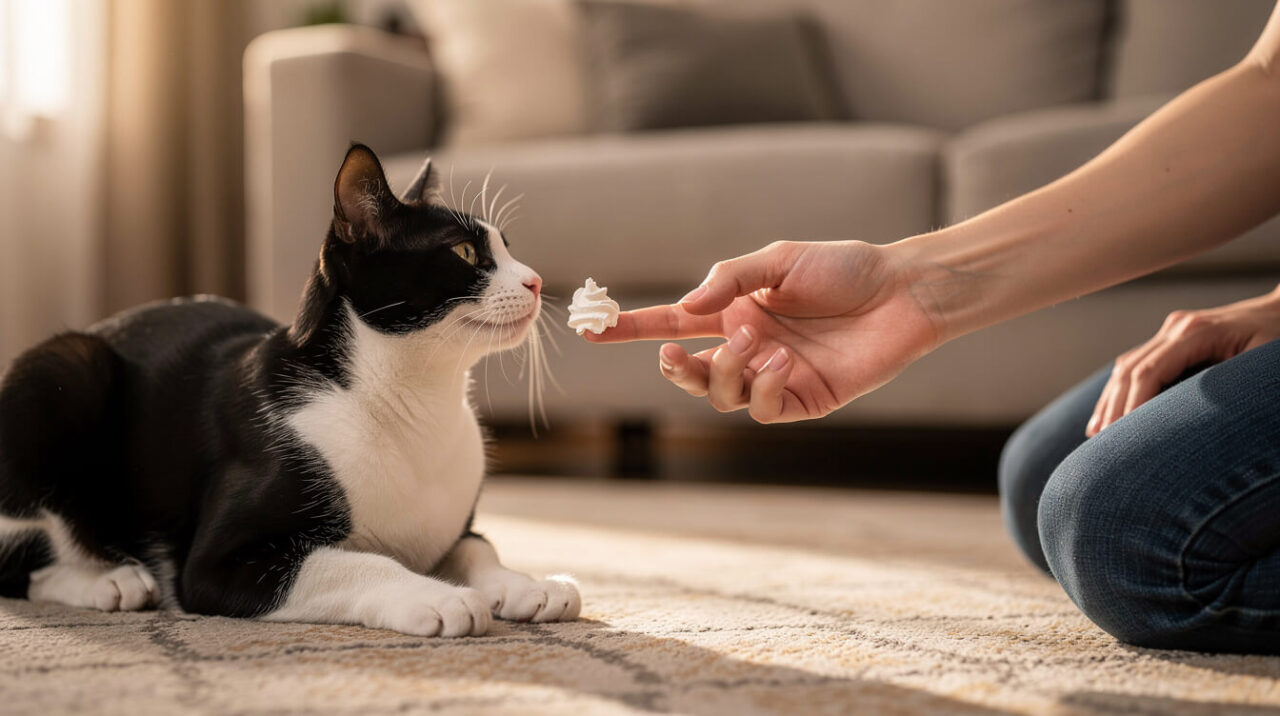
If you’ve decided your cat can have a taste now and then, here’s how to keep it truly small and truly safe.
The sharing rules
- Plain, real cream only. Nothing flavored with chocolate, coffee, or alcohol, and skip anything sugar-free.
- Fingertip-sized. A dab about the size of your fingernail is plenty. That’s about 1 g and a couple of calories.
- First time? Test small and watch. Offer one small taste, then check the litter box over the next 24 hours. Soft stool means that cat is a “no” for dairy.
- Count it. If treats are already a big part of your cat’s day, the cream comes out of that allowance. It doesn’t go on top.
- Not off the dessert. Scrape the cream off a pie and you may bring along pie filling, spices, or crust. Give your cat cream from the can or bowl, not from your plate.
Cats who should skip it (or ask the vet first)
- Cats with diabetes. The added sugar matters even though they can’t taste it.
- Cats who are overweight or on a weight-loss plan. Every calorie is spoken for.
- Cats on a prescription or elimination diet. A food trial only works if nothing else gets eaten. One “harmless” lick can muddy weeks of work.
- Cats with a sensitive stomach or a history of GI trouble with dairy.
- Cats with a history of pancreatitis. Here’s a nuance many guides get wrong. In dogs, a fatty meal is a classic pancreatitis trigger. In cats, that link isn’t established. Merck notes that dietary fat may not be as important in cats as in dogs, and VCA says cats don’t appear to develop pancreatitis from eating a high-fat diet. Even so, if your cat has had pancreatitis, their diet is your vet’s call. Ask before offering rich extras.
- Kittens. Cow’s-milk products aren’t a substitute for their mother’s milk. An orphaned or bottle-fed kitten needs a commercial kitten milk replacer and a vet’s guidance. Our first-time kitten owner FAQ covers more of the basics.
When to call your vet
Whipped cream on its own is very rarely an emergency. Call your veterinarian if, after eating it, your cat:
- vomits more than once, or diarrhea lasts beyond a day,
- has blood in the stool or vomit,
- seems lethargic, hides, or seems painful in the belly, or
- stops eating. A cat who goes without food for more than a day or so needs a vet’s attention whatever the cause.
If the whipped cream was on something else (a chocolate dessert, a coffee drink, a boozy cake), the “something else” is the bigger question. Call your vet, the ASPCA Animal Poison Control Center at (888) 426-4435, or the Pet Poison Helpline at (855) 764-7661. Both hotlines may charge a consultation fee.
Better treats your cat can actually taste
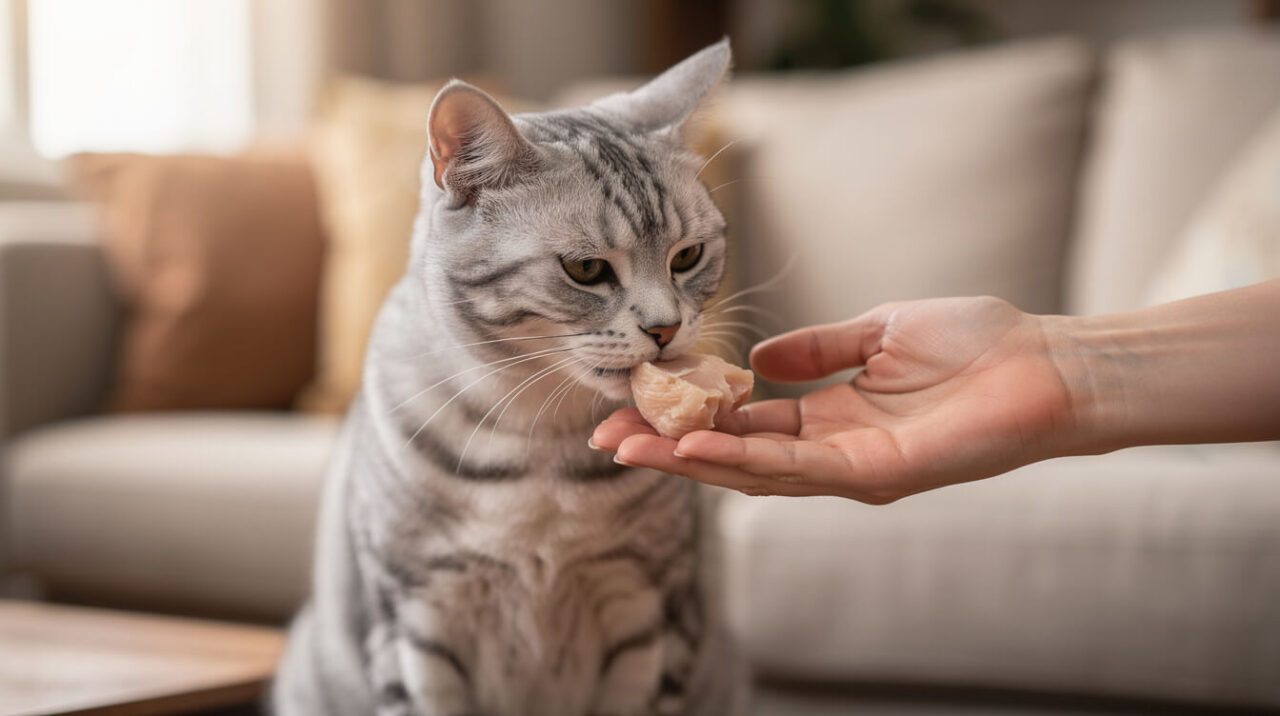
Since cats can’t taste sweetness, whipped cream’s real appeal is fat and dairy aroma. The good news is that the things cats love most are also the things their bodies are built for: animal protein and animal fat. A few swaps that cats tend to adore:
- A shred of plain cooked chicken or turkey. Skinless, boneless, unseasoned, and about the size of your thumbnail. At Thanksgiving, our guide to the safe bites of turkey walks through which parts and how much.
- Single-ingredient freeze-dried meat or fish treats. They’re light, easy to portion, and most cats go wild for them. Check the calories per piece on the bag and count them.
- A lick of their own wet food from a spoon. It’s surprisingly effective as a “special” moment, and it’s already complete nutrition.
- Lickable cat treats. Squeeze-tube treats give the same lick-lick-lick ritual as whipped cream. Treat a tube as a portion, not a snack, and count it.
- Lactose-reduced “cat milk” products. These exist for the dairy-loving cat. They still have calories, so they still belong inside the 10 to 15 percent.
And not every treat has to be food. Five minutes with a wand toy before dinner, a cardboard box, or a sunny perch near a window feeds the same part of your cat that begs for cream: the part that wants attention and something a little special. While you’re shopping for the household, our small shop has the Bearded Dragon Crown Sunglasses King T-Shirt. It’s reptile-first for now, but it’s a fun pick if a bearded dragon shares the house with your cat.

For the house where the cat and the beardie both beg
Our crowned, sunglasses-wearing bearded dragon, for the keeper whose cat guards the fridge and whose beardie guards the basking spot.
Building a holiday treat plan
Holidays are when “just a little” adds up: a bite of turkey, a lick of whipped cream, a taste of pumpkin. Pick one or two extras for the day, keep each one small, and let everything else wait. If pumpkin is on the list, our cat pumpkin guide has the safe amount. Our sweet potato guide covers the other orange dish on the table. And once the decorations go up, our Christmas tree safety guide for cats picks up where dessert leaves off.
Making “no” easy
Cats learn routines fast. If whipped cream only ever comes from a spoon, in a fingertip amount, on rare occasions, most cats stop camping by the fridge. Give the begging cat a quick play session or one of their regular treats when the can comes out, and the can loses its magic. Over time, that matters more than any single lick.
Can cats eat whipped cream? Frequently asked questions
Is whipped cream toxic to cats?
No. Plain whipped cream isn’t toxic to cats. The concerns are calories, fat, and possible stomach upset from lactose. Flavored versions are different: chocolate, coffee, and alcohol add real hazards.
How much whipped cream can a cat have?
A fingertip-sized dab (about 1 g, a couple of calories) as an occasional treat is a reasonable ceiling for a healthy adult cat. A full tablespoon is about 7.7 kcal, roughly 3 to 4 percent of a 10-pound cat’s day. That’s fine once in a while, but it isn’t a daily treat.
Why do cats love whipped cream if they can’t taste sweet?
Because it’s mostly fat, and cats are drawn to animal fat and the smell of dairy. The sweetness is lost on them. They lack a working sweet-taste receptor.
Is whipped cream better than milk for cats?
For lactose, yes: spoon for spoon it carries about a third as much, and per calorie about a tenth. For calories, it’s worse: it’s far denser. Neither is needed in a cat’s diet, and fresh water is the only drink cats require.
Can kittens have whipped cream?
It’s best not to. Kittens need complete kitten food, and orphaned kittens need a kitten milk replacer, never cow’s-milk products. Their small bodies also make every calorie count for more.
Is a Puppuccino safe for cats?
A lick from one is fine for most healthy cats. A whole cup can be 15 to 36 percent of a 10-pound cat’s daily calories, so share a fingertip’s worth and skip the rest.
My cat ate a lot of whipped cream. What should I do?
Don’t panic. Most cats will at worst have some gas or a soft stool. Make sure fresh water is available and skip treats for the rest of the day. Call your vet if vomiting repeats, diarrhea lasts beyond a day, you see blood, or your cat stops eating. If the cream came with chocolate, coffee, or alcohol, call your vet or a pet poison line right away.
The bottom line
So, can cats eat whipped cream? A little, rarely, and plain. Your cat’s love of whipped cream is about fat and smell, not sugar, and you can satisfy it with something that does them more good. If you do share, keep it plain, keep it to a fingertip, and keep it rare. That small act of restraint is a real part of loving them well.
Before you go
Keep learning your animal
We publish a new guide every day. The best of them land in one short weekly email, so you never miss the one about your species.
Dr. Lila Monroe is a seasoned veterinarian with a passion for feline health and behavior, boasting over 20 years of experience in the field. With her extensive knowledge of cat medicine combined with a deep understanding of the nuanced dynamics of cat behavior, Lila offers readers invaluable insights into creating a nurturing environment for their feline friends.