Can Dogs Eat Mac and Cheese? What’s Actually in the Box, the Casserole, and the Spoonful
Can dogs eat mac and cheese? Here’s the straight answer: mac and cheese isn’t toxic to dogs, but it’s a poor treat. It’s rich, salty, dairy-heavy, and very calorie-dense for its size. If your dog licked a dropped forkful off the floor, that’s rarely an emergency. What matters most is which mac and cheese it was. A spoonful of the plain blue-box kind is a very different thing from a heaping scoop of a deli tub, a bacon-topped holiday casserole, or a flavored dinner kit, because those are where onion and garlic tend to show up.
This guide works through it the way a careful keeper would. We checked real ingredient labels to see which versions actually contain onion or garlic. We ran the calorie math so “just a little” has a real size for your dog’s weight. And we set out the signs that mean you should stop reading and call your vet. Every number here comes from a named source, so you can check our work.
Can dogs eat mac and cheese? The short answer
Yes, technically, but it isn’t a food we’d share on purpose, and it should never be a habit. Here’s the honest breakdown:
- Nothing in plain mac and cheese is a classic dog toxin. Pasta, cheese, milk, butter, and salt aren’t poisons. The concern is the “extras”: onion or garlic in some recipes and prepared versions, and bacon, breadcrumbs, and extra butter on holiday bakes.
- It’s very rich. USDA puts homemade mac and cheese at about 223 calories and 10.5 g of fat per 100 g. One cup (230 g) works out to roughly 513 calories, 24 g of fat, and 820 mg of sodium (USDA FoodData Central, FNDDS 2708811). For a small dog, that’s more than a whole day’s food.
- A stolen bite is usually a “watch and wait” situation. A sudden rich meal can upset some dogs’ stomachs. In dogs, a large fatty helping is the kind of dietary slip vets associate with pancreatitis. We cover the warning signs below.
So the real answer to “can my dog eat mac and cheese” is: a tiny taste of a plain version won’t hurt most healthy dogs, a big portion or a seasoned version deserves more thought, and some dogs should skip it entirely. Let’s start with what was actually in the dish.
Boxed, deli, or holiday casserole: which mac and cheese did your dog eat?
You’ll often read that boxed mac and cheese is “full of onion and garlic powder.” That isn’t what we found on the labels. We pulled the ingredient lists of 219 US mac and cheese products from the Open Food Facts label database. It’s crowd-sourced, so treat these as “the labels we checked,” not market shares. Here’s how they split:
- Plain boxed or dry dinner mixes: just 2 of the 118 we checked listed onion or garlic. The classic powdered-cheese box is usually pasta, cheese sauce mix, salt, and color.
- Plain prepared versions (deli tubs, refrigerated, frozen, and “baked” styles): about 1 in 4 listed onion or garlic.
- Flavored kits and meals (bacon, buffalo chicken, cheeseburger, ranch, alfredo): most of them did.
A spot-check in USDA’s own branded-food database told the same story. The plain Kraft-style and store-brand “original” dinners we looked at listed no onion or garlic. But 5 of the first 8 “baked macaroni and cheese” labels, mostly grocery-deli and party-size trays, did. The one “Kraft dinner” entry that did list onion turned out to be a full meal with meatballs and marinara. That’s exactly the point: the seasoning rides in on the extras.
Homemade and holiday recipes
Your own recipe is the easiest one to check, because you know what went into it. Many baked holiday versions build the sauce on sautéed onion, add garlic powder or dry mustard, and top it with bacon or buttered breadcrumbs. If it was Grandma’s casserole, ask Grandma, or check the recipe card.
The “spices” myth, and how to read a label
You may have read that onion and garlic can hide under the word “spices.” Under US labeling rules, they can’t. The FDA’s definition of spice specifically excludes “onions, garlic and celery.” It also says dehydrated onion and garlic powder “shall be declared by their common or usual name” (21 CFR 101.22). So if a US label has onion or garlic powder as an ingredient, you’ll see those words. The one honest gray area is “natural flavor,” which the same rule lets include extracts of vegetables. That means a label can’t promise zero allium. But the concentrated powders that cause real trouble have to be named.
Practical takeaway: grab the box, tub, or recipe before you do anything else. It turns “my dog ate mac and cheese” from a vague worry into a specific answer.
Cheese sauce, fat, and your dog’s pancreas
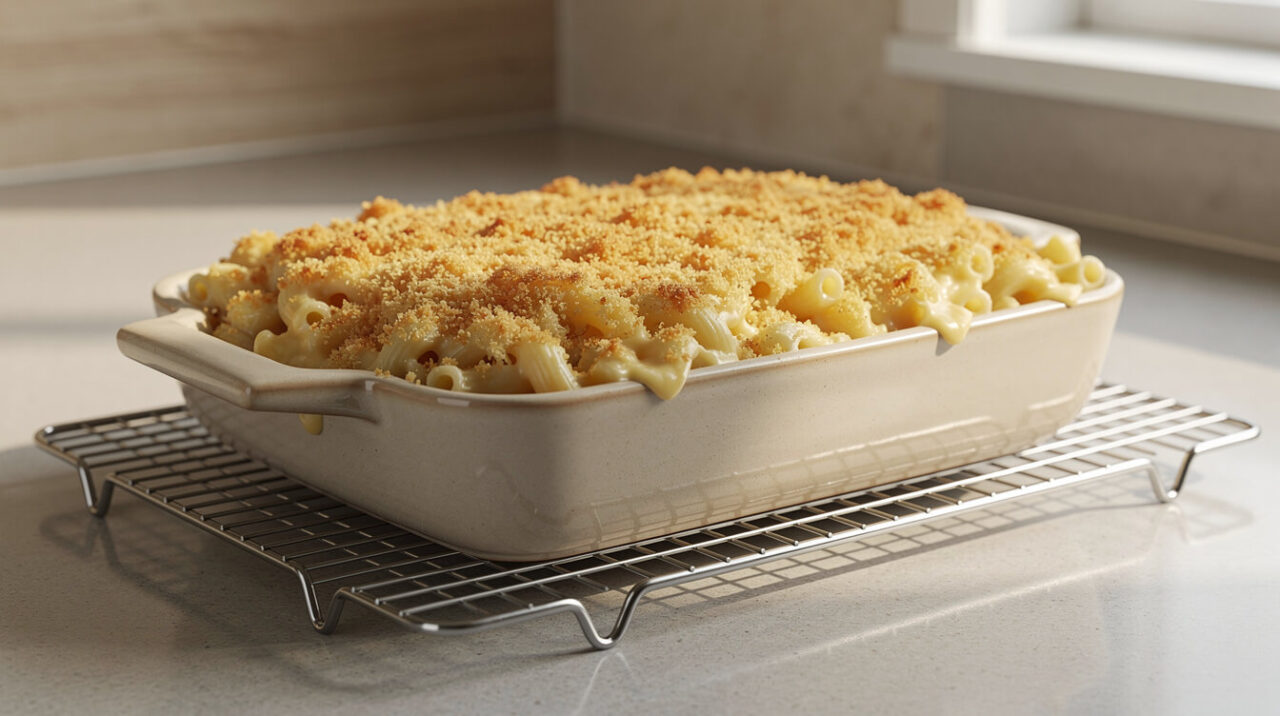
For most dogs, onion isn’t the most likely problem with mac and cheese. Fat is.
Why fat matters more for dogs
The pancreas makes digestive enzymes, and in pancreatitis it becomes inflamed. The Merck Veterinary Manual notes that “dietary indiscretion is believed to be a common risk factor in dogs.” In other words: eating something they shouldn’t, especially something rich. A Texas A&M case-control study of 198 dogs with pancreatitis supports this. Dogs that had eaten table scraps in the week before diagnosis had about 2.2 times the odds of pancreatitis. Dogs that had got into the trash had about 13 times the odds (Lem et al., JAVMA 2008). That’s an association, not proof that one scoop causes disease, and many cases have no clear trigger. But it’s why vets wince at holiday plates.
To put mac and cheese’s richness in context: when a dog is recovering from pancreatitis, Merck advises a diet with less than 20 g of fat per 1,000 calories. By our math from the USDA figures, homemade mac and cheese runs about 47 g of fat per 1,000 calories, and boxed or frozen versions run about 43 to 45 g. That’s more than double the ceiling for a sensitive dog, before anyone adds a bacon topping or an extra pat of butter.
Dogs who should skip it entirely
- Any dog that has had pancreatitis. Your vet’s low-fat plan comes first, and holiday dishes aren’t worth the gamble.
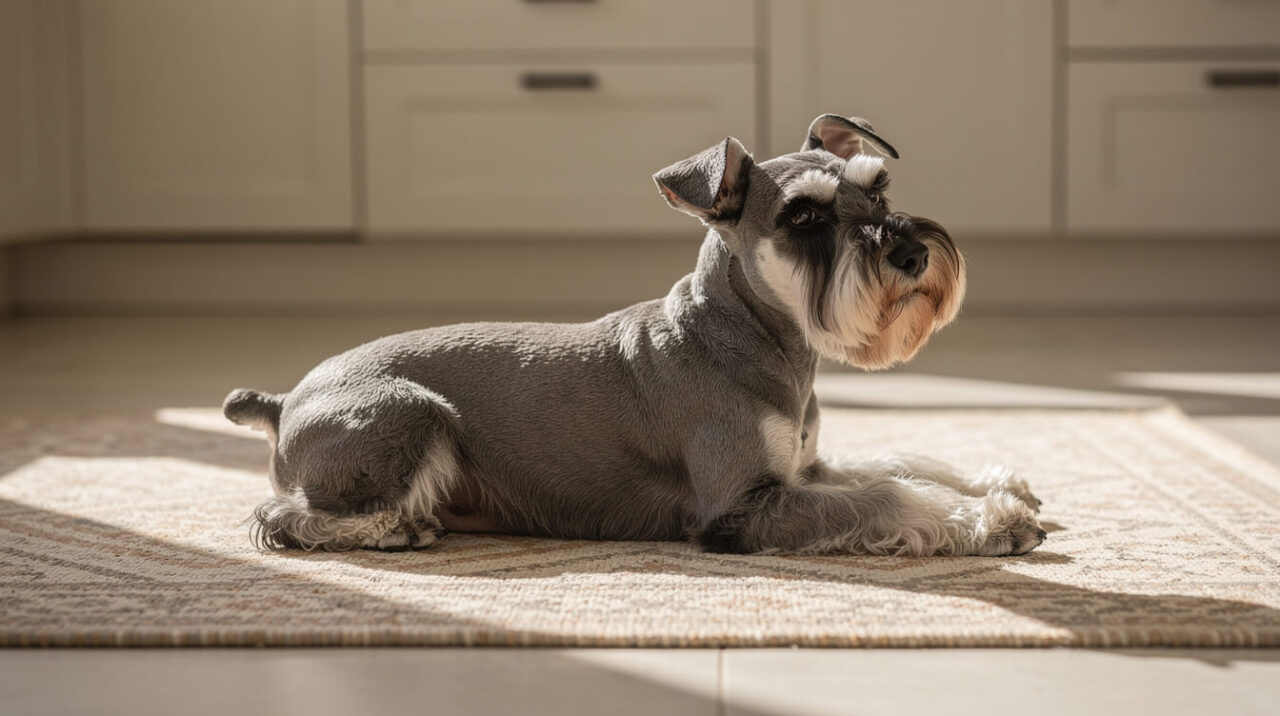
- Miniature Schnauzers. Merck notes the breed is “dramatically overrepresented” among dogs with pancreatitis.
- Dogs on a prescription or sodium-restricted diet, such as dogs managing heart or kidney disease. Ask your vet before sharing any table food.
- Dogs with a known sensitive stomach or food allergy, including a diagnosed sensitivity to wheat or dairy.
What about lactose and gluten?
Cheese sauce brings dairy. Many adult dogs produce less lactase (the enzyme that breaks down milk sugar) than puppies do, so a creamy, milky dish can mean gas or loose stool for some dogs. That’s a gut-comfort issue, not poisoning. As for gluten: true gluten-sensitive disease in dogs is uncommon and mostly documented in specific breeds (Irish Setters are the classic example). For most dogs, the pasta is the least concerning part of the dish.
How much is “a little”? The 10% rule for mac and cheese, worked out by weight
The common guideline is that treats and extras should make up no more than 10% of a dog’s daily calories. That 10% is a ceiling for all treats combined that day, not a target to fill with mac and cheese. Here’s what it means in real spoonfuls.
We estimated daily needs with the standard veterinary formula (resting energy = 70 × body weight in kg0.75, multiplied by 1.6 for a typical neutered adult). Spoon sizes use USDA’s homemade (about 31 calories per level tablespoon) and made-from-a-box (about 25 calories per tablespoon) figures.
| Dog’s weight | Approx. calories per day | 10% treat budget | Homemade mac and cheese | Boxed (made from mix) | One cup of homemade is… |
|---|---|---|---|---|---|
| 5 lb | ~210 | ~21 cal | ~¾ Tbsp | ~¾ Tbsp | ~250% of the whole day |
| 11 lb | ~375 | ~37 cal | ~1 Tbsp | ~1½ Tbsp | ~135% of the day |
| 22 lb | ~630 | ~63 cal | ~2 Tbsp | ~2½ Tbsp | ~80% of the day |
| 44 lb | ~1,060 | ~106 cal | ~3½ Tbsp | ~4 Tbsp | ~50% of the day |
| 66 lb | ~1,430 | ~143 cal | ~4½ Tbsp | ~5½ Tbsp | ~35% of the day |
| 88 lb | ~1,780 | ~178 cal | ~5½ Tbsp | ~7 Tbsp | ~30% of the day |
Two caveats. First, every dog’s real calorie needs vary with age, activity, and body condition, so treat these as ballpark figures and ask your vet for your dog’s actual number. Second, the table shows the most that would fit in a whole day’s treat allowance. It doesn’t recommend that much. Because of the fat density we covered above, we’d keep a deliberate taste to a noodle or two of a plain version, scraped clean of sauce, for any dog.
And the salt?
You’ll see scary claims about salt poisoning from mac and cheese. Here’s the proportion. Merck lists the signs of salt toxicosis in dogs appearing after about 2 to 3 g of salt per kg of body weight (Merck Veterinary Manual). At roughly 820 mg of sodium per cup of homemade, a 22-lb dog would need to eat around ten cups to reach the low end of that range. So salt poisoning isn’t a realistic worry from a plate of leftovers. Salt still matters as an everyday habit, and it matters a great deal for dogs on sodium-restricted diets.
The weekly care guide
Get it right for your animal, every week
One email a week: new care guides, species deep-dives, and the safety answers keepers search for, written by our specialists. No spam. Unsubscribe anytime.
Better ways to share the holiday table with your dog
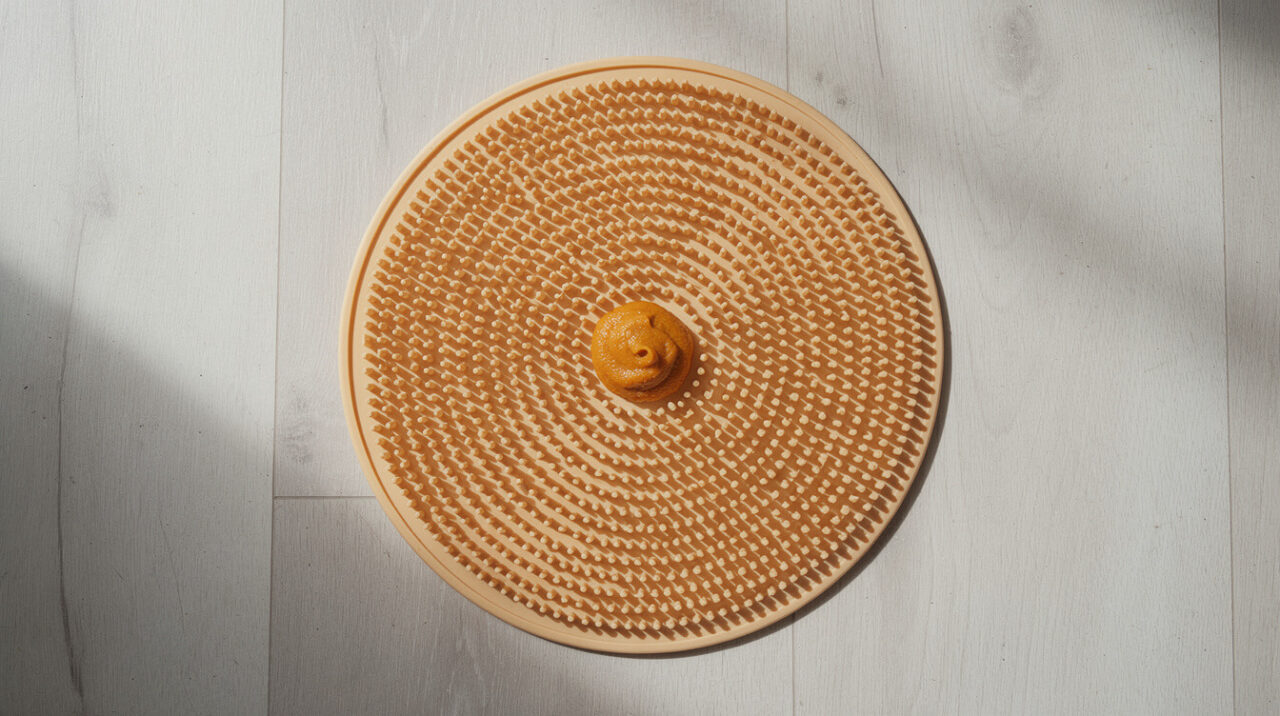
Wanting your dog included in the holiday meal is a lovely instinct. Dogs are family, and sharing food is how people show love. The trick is to share things that fit a dog’s body. Here are some swaps that give the same “you get some too” moment without the cheese sauce:
- Plain cooked pasta. Set aside a few noodles before the sauce, salt, or butter goes on. It’s mostly starch and not exciting nutritionally, but a couple of plain noodles are a perfectly reasonable holiday nibble.
- Plain pumpkin. A teaspoon or so of plain canned pumpkin (not pie filling) spread thinly on a lick mat turns a tiny amount into a long, happy activity. Our guide to feeding dogs pumpkin has the portions, and our pumpkin pie guide explains why the dessert version is a different story.
- Plain cooked sweet potato or yam. Baked or steamed with nothing added, it’s a dog-friendly side. Our post on whether dogs can eat yams covers why the candied, marshmallow-topped casserole doesn’t count.
- A small cube of their own food or a favorite treat, handed over at the table while everyone eats. Many dogs care far more about being included than about what’s in the bowl.
If you love this kind of detail, you’re our kind of person. And if your household has a reptile keeper as well as a dog, our Bearded Dragon Crown Sunglasses King T-Shirt is a fun way to wear the obsession to the holiday table.

Wear the obsession
The Bearded Dragon Crown Sunglasses King T-Shirt: a crown, shades, and total basking-rock confidence. Made for keepers whose household runs on more than one species.
A few more holiday-table guides
Most holiday sides raise the same handful of questions: the fat, the seasoning, and the portion. We’ve worked through the big ones: mashed potatoes (plain versus the buttery holiday mash), cranberry sauce (the sugar math and the add-ins that change the answer), and gingerbread (spoiler: nutmeg isn’t the main danger). Breakfast meats are their own case: our breakfast sausage guide covers fatty, seasoned breakfast meats, the same concerns a bacon topping brings. A good rule for the whole table: if a dish has butter, cream, bacon, onion, or garlic as a starring ingredient, it belongs on your plate, not your dog’s.
Set the table up for success
Most mac and cheese incidents aren’t gifts. They’re thefts. A baking dish cooling on a low counter, or a plate left on a coffee table, is a powerful temptation for even a well-trained dog. During busy gatherings, a closed baby gate, a crate with a good chew, or a quiet room with a lick mat protects your dog and your dinner. Ask guests not to slip food under the table, too. Ten people each sharing “just one bite” adds up fast.
My dog ate mac and cheese: what to watch for, and when to call your vet

First, take a breath. Most dogs who eat a bit of mac and cheese are fine, or end up with a mild upset stomach. Then do three things:
- Work out how much and which kind. A lick of a plate is different from half a casserole dish. Check the box, tub, or recipe for onion, garlic, bacon, or chives.
- Pick up what’s left, including the packaging and any foil or plastic wrap your dog may have chewed.
- Don’t try to make your dog vomit at home unless a veterinarian specifically tells you to.
Call your vet promptly if you see
- Repeated vomiting, or vomiting with diarrhea
- A painful belly: hunching, reluctance to lie down, or crying when picked up
- Refusing food, unusual lethargy, or seeming “not right”
- Any of these in a small dog, a senior, a Miniature Schnauzer, or a dog with a history of pancreatitis, even if they seem mild
These can be signs of pancreatitis, which needs veterinary care. It is not something to manage at home.
If the dish contained onion or garlic
The Merck Veterinary Manual notes that garlic is 3 to 5 times more toxic than onion. Problems are most often linked to concentrated forms such as dehydrated flakes, powders, and dry onion soup mixes. In dogs, signs have followed about 15 to 30 g of raw onion per kg of body weight. A single serving of a seasoned casserole usually falls well below that. But onion and garlic damage is delayed. Merck describes signs appearing several days after eating: weakness, pale gums, a yellowish tinge, and collapse. So, if your dog ate a large amount of an onion- or garlic-heavy dish, is small, or eats seasoned leftovers often, call for advice now rather than waiting to see:
- Your regular veterinarian or nearest emergency clinic
- ASPCA Animal Poison Control Center: (888) 426-4435
- Pet Poison Helpline: (855) 764-7661
(Both poison lines may charge a consultation fee.) Have the label or recipe and your dog’s weight ready. This guide can help you understand what’s going on, but it can’t examine your dog. When in doubt, call.
Can dogs eat mac and cheese safely? Your questions answered
Can puppies eat mac and cheese?
We’d skip it. Puppies have small stomachs and a whole day’s calorie budget that’s easy to overshoot. They need every bite to count toward a complete growth diet. If your puppy stole some, follow the same watch-and-call steps above, and call sooner rather than later for tiny breeds.
Is Velveeta shells and cheese any different?
Not in any way that changes the answer. They’re processed-cheese versions of the same idea: rich, salty, and dense. In the labels we checked, the plain shells-style products didn’t list onion or garlic. The same “a noodle or two at most” logic applies, and flavored varieties deserve a label check.
My dog ate Thanksgiving baked mac and cheese with bacon on top. Is that worse?
It can be. Bacon and buttered breadcrumbs pile fat on top of an already rich dish, and baked holiday versions are the ones most likely to contain onion or garlic. Watch closely for the pancreatitis signs above. Call your vet if your dog ate a big portion, is small, or has a sensitive stomach.
Can dogs eat plain macaroni without cheese?
Yes. Plain cooked pasta with no salt, butter, oil, or sauce is fine as an occasional nibble for most dogs. It just doesn’t add much nutrition.
My dog had pancreatitis last year. Can he have just a little?
We wouldn’t. For dogs with a pancreatitis history, your vet’s low-fat plan is the rule. Mac and cheese runs more than double the fat ceiling Merck gives for these dogs. Ask your vet which treats fit their plan. Many dogs in this situation do very happily with low-fat options.
The bottom line on dogs and mac and cheese
Can dogs eat mac and cheese? A tiny taste of a plain version usually won’t harm a healthy dog. But it’s one of the richest things on the holiday table, and it offers your dog nothing they need. The boxed, powdered-cheese kind rarely contains onion or garlic. The deli, baked, and flavored versions are where those tend to appear, so read the label or the recipe. Keep any deliberate share to a noodle or two. Skip it entirely for Schnauzers, dogs with a pancreatitis history, and dogs on special diets. And if your dog stole a big helping and starts vomiting, has a sore belly, or just seems off, call your vet.
You’re here because you want to get this right, and that’s what being a great dog person looks like. Share the love at the table with the safe stuff, and keep the cheese sauce for the humans.
Before you go
Keep learning your animal
We publish a new guide every day. The best of them land in one short weekly email, so you never miss the one about your species.

Meet Jake Harrington, your go-to guru for all things canine. With over 15 years of professional dog training experience, Jake has transformed the lives of thousands of dogs and their owners. His journey began in the bustling streets of a major city, where he discovered his natural affinity for understanding canine behaviors and communication.