
Can Dogs Eat Blackberries? A Vet-Informed Safety Guide
Short answer: yes, dogs can eat blackberries — fresh, plain, and in modest amounts. They’re one of the lower-sugar fruits you can share, and most dogs enjoy them as a trail-side or backyard treat. Here’s the nuance a caring keeper actually needs: how many is too many, what the trace amounts of natural xylitol really mean, where the “expert” sources disagree with each other, and what to watch for afterward.
The quick answer: can dogs eat blackberries?

Yes — fresh blackberries, plain and unsweetened, are safe for most dogs in small amounts. They’re low in calories and sugar compared to many other fruits, and they bring real nutritional upside: fiber, vitamin C, vitamin K, and a good dose of anthocyanins (the antioxidant compounds that give the berries their deep purple-black color).
The catch is the same one that applies to almost every “people food” treat: moderation. A handful of blackberries is a lovely occasional snack. A bowlful, or a daily habit without checking in with your vet first, is where things go sideways — mostly in the form of an upset stomach, not a genuine emergency.
- Safe: fresh, ripe, plain blackberries in dog-appropriate portions.
- Skip: blackberry jam, jelly, pie filling, or anything sweetened — the sugar load (and possible xylitol in “sugar-free” versions) isn’t worth the risk.
- Ask your vet first: if your dog is diabetic, has a sensitive stomach, or is on a prescription diet.
Why blackberries are genuinely good for your dog
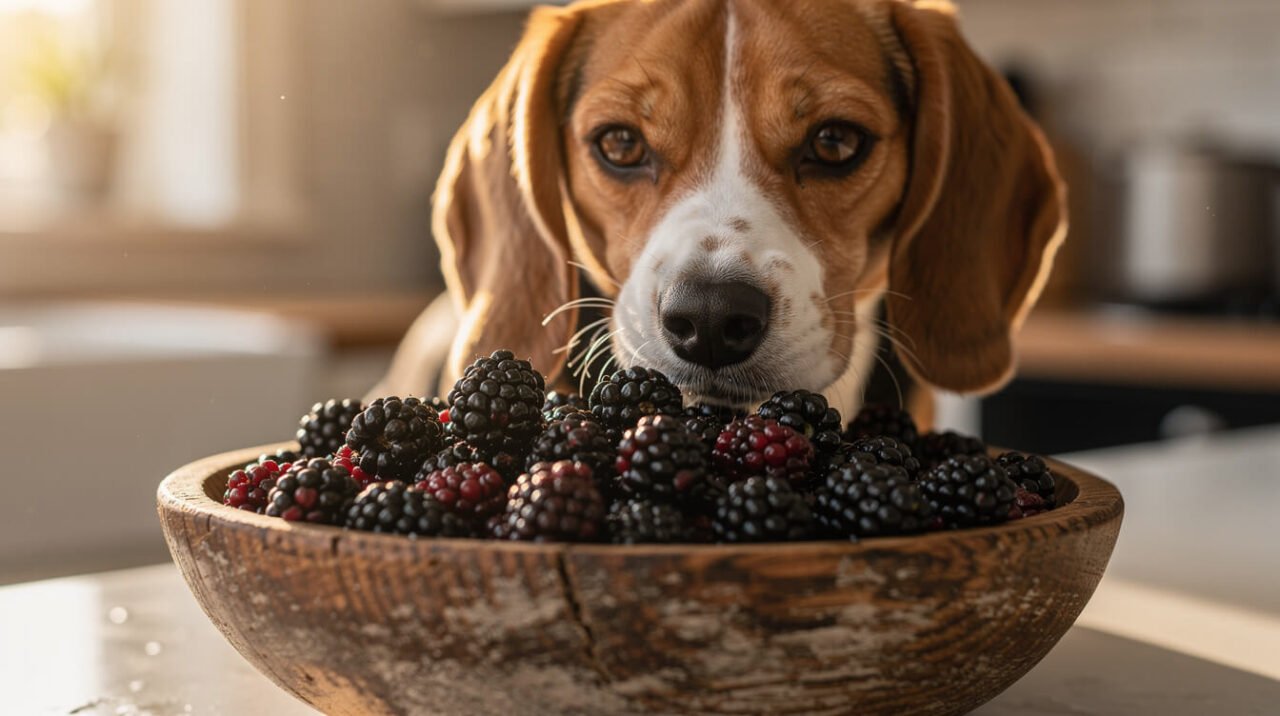
Blackberries aren’t just “not toxic” — they bring some real benefits when they’re used as an occasional treat rather than a diet staple:
- Fiber supports steady digestion and can help dogs feel satisfied on a weight-management plan.
- Anthocyanins (the antioxidants behind that deep color) help fight inflammation and are commonly cited for supporting healthy aging.
- Vitamin C, vitamin K, and manganese round out the nutrient profile, supporting immune function, bone health, and wound healing.
- Low calorie, low sugar relative to many fruits — a small handful is a genuinely light treat, which matters if your dog is already watching their weight.
- High water content makes them a nice hot-weather treat, especially for dogs who are lukewarm about drinking enough water.
Antioxidant-rich foods like blackberries are sometimes mentioned in the context of supporting senior dogs, since oxidative stress plays a role in age-related joint and cognitive changes. That’s worth knowing, but it’s a supporting detail, not a treatment — a senior dog with joint pain or cognitive decline needs an actual veterinary plan, not a berry habit. Think of blackberries as one small, pleasant piece of an overall care routine your vet is helping you build, not a substitute for it.
None of this means blackberries should replace a complete, balanced dog food — treats, blackberries included, should stay around 10% or less of your dog’s total daily calories. The other 90% needs to come from food formulated to meet your dog’s actual nutritional needs.
How many blackberries can dogs eat?
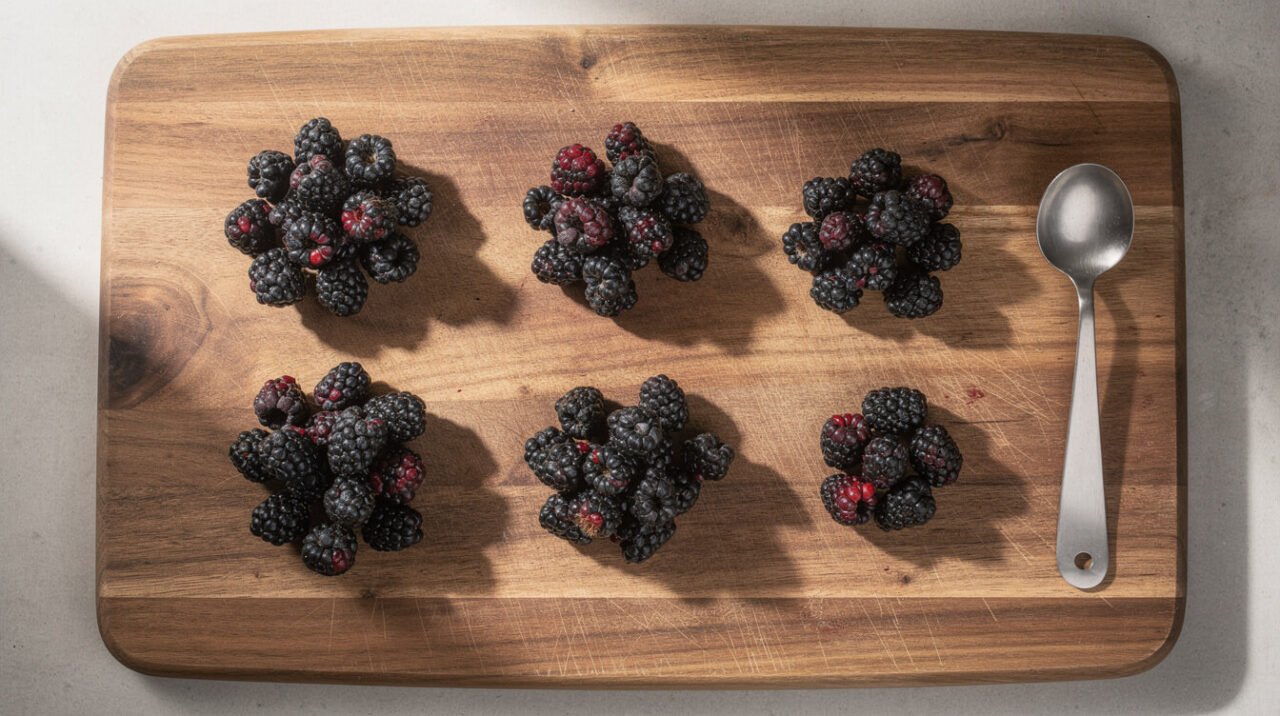
Portion size comes down almost entirely to your dog’s size. Here’s a commonly cited, vet-reviewed starting point — think of it as a sensible baseline to adjust with your own vet, not a fixed prescription:
| Dog size | Starting portion |
|---|---|
| Extra-small (2–10 lb) | 1 blackberry |
| Small (11–20 lb) | 2 blackberries |
| Medium (21–50 lb) | 2–5 blackberries |
| Large (51–90 lb) | 5–6 blackberries |
| Extra-large (91+ lb) | 7–8 blackberries, or a small handful |
A few things that matter more than the exact number:
- Start smaller than the table suggests the first time you offer blackberries, and watch how your dog’s stomach handles it before making them a regular treat.
- Factor in everything else your dog ate that day. If they’ve already had training treats, a chew, and dinner, a “large dog” portion of blackberries on top of all that is more than the guideline intends.
- Dogs on a vet-prescribed diet — for a health condition, weight-loss plan, or medication interaction — need their vet’s sign-off before any new treat, blackberries included.
It’s also worth picking berries with your dog’s benefit in mind, not just your own. Fully ripe blackberries — deep black, not reddish-purple, and slightly soft to the touch — are lower in tannins and easier on a dog’s stomach than underripe ones, which taste more tart and can be more likely to cause the mild GI upset described below. If you’re buying rather than picking, give the container a quick check for any mold at the bottom before portioning any out; berries mold fast, and moldy fruit is a real digestive risk that has nothing to do with blackberries themselves being safe.
Turn blackberry treat time into enrichment
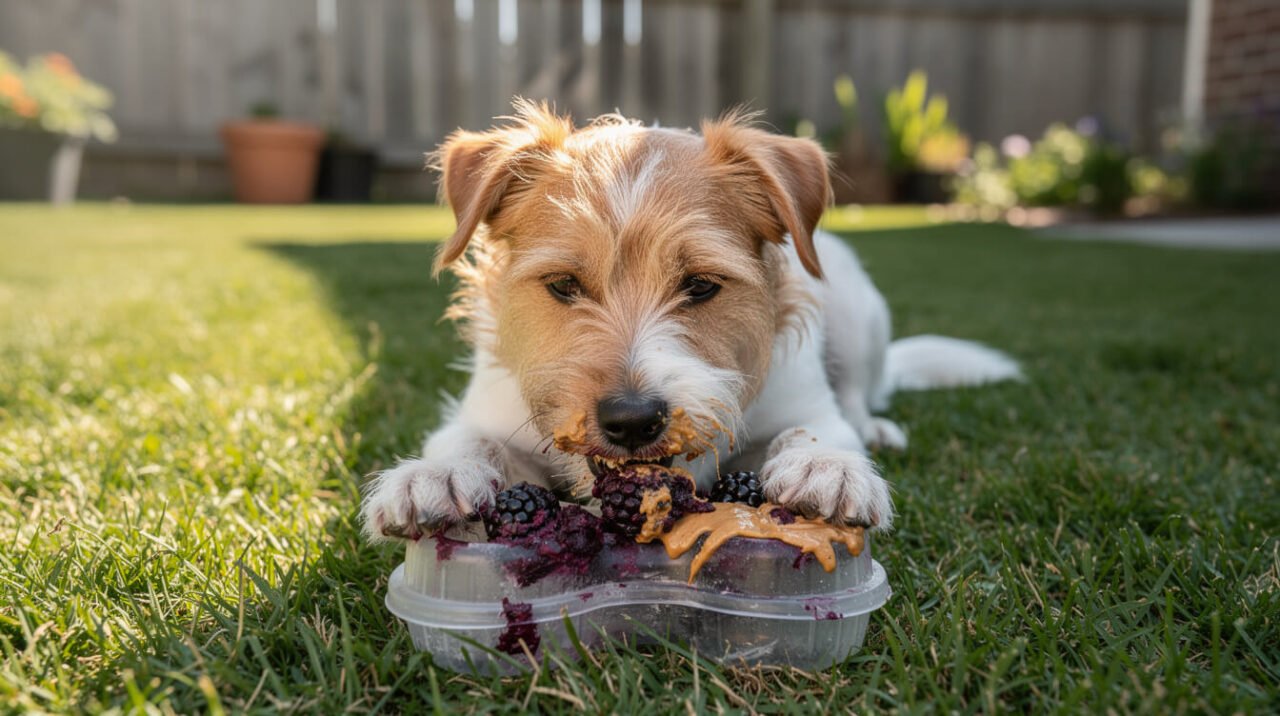
Once you know your dog tolerates blackberries well, they’re a genuinely useful tool beyond “here’s a treat” — a low-calorie way to add a few extra minutes of mental engagement to your dog’s day:
- Frozen blackberry puzzle: mash a few berries into plain (xylitol-free) peanut butter or plain yogurt, stuff it into a hollow toy, and freeze. It turns a two-second treat into a ten-minute project — genuinely useful for a dog with separation anxiety around departures, or just a hot afternoon.
- Scatter feeding: instead of hand-feeding the whole portion, scatter a few berries across the grass or a snuffle mat. It uses your dog’s nose instead of just their mouth, which is more tiring — in the good way — than it sounds.
- Training currency: because blackberries are low-calorie, they’re a reasonable swap for higher-fat commercial training treats during a long training session, as long as the total treat load for the day still fits inside that 10% guideline.
None of this changes the portion math above — an enrichment use is still a treat, and the same weight-based amounts apply whether the berries are handed over one at a time or frozen into a toy.
The weekly care guide
Get it right for your animal, every week
One email a week: new care guides, species deep-dives, and the safety answers keepers search for, written by our specialists. No spam. Unsubscribe anytime.
Wild blackberries, frozen berries, and other serving questions
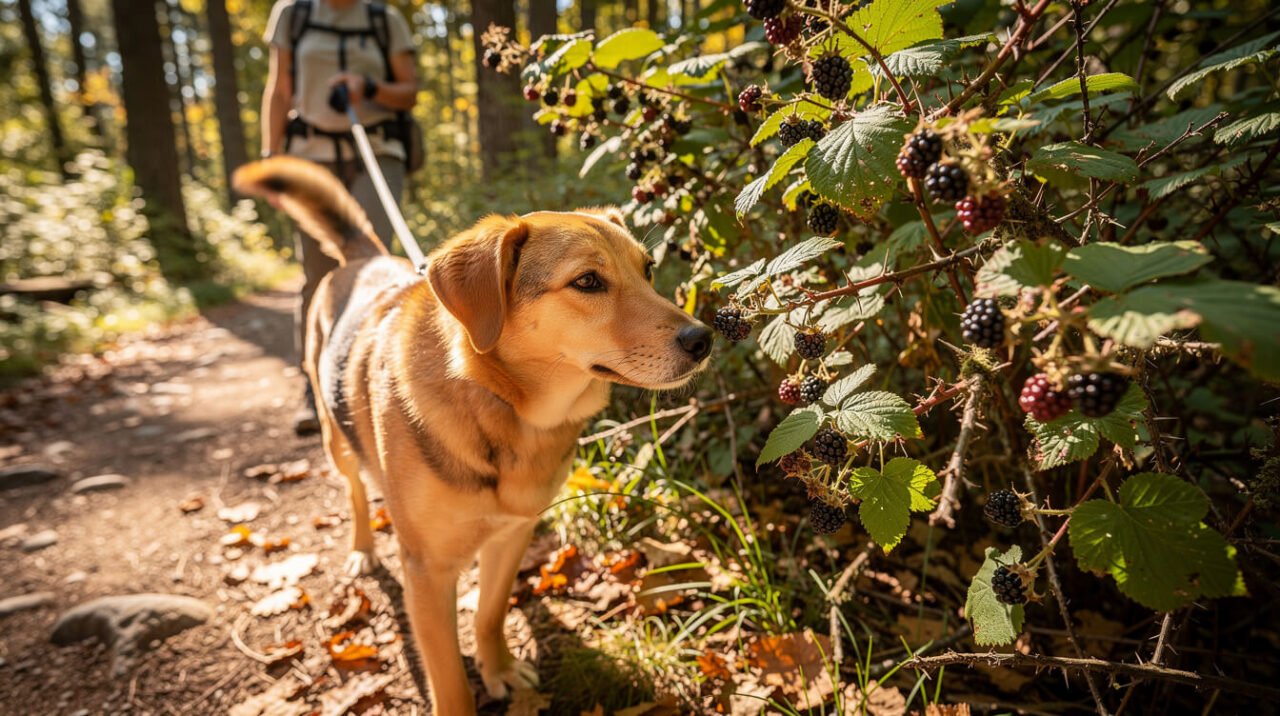
This is where it’s worth being honest with you: the trusted sources don’t fully agree on wild blackberries. Some say they’re fine for dogs as long as you’re completely certain of the identification and the patch hasn’t been sprayed. Others recommend sticking to store-bought fruit to avoid any risk of misidentifying a toxic look-alike or exposing your dog to pesticide residue.
We lean toward the cautious read: if you have even a shadow of doubt about what’s growing in that hedge along the trail, don’t let your dog eat it. A container of grocery-store blackberries costs a lot less than an emergency vet visit for a mystery-berry reaction, and there’s no meaningful downside to just playing it safe.
A few more serving questions that come up constantly:
- Frozen blackberries: fine, and a genuinely great hot-day treat — as long as they’re plain, with no added sugar. Check the label on store-bought frozen bags.
- Dried blackberries: the sugar becomes much more concentrated once the water is removed, so treat dried berries as an occasional nibble, not a swap-in-equal-amounts substitute for fresh.
- Blackberry jam, jelly, or pie filling: skip these entirely. The sugar content is far higher than fresh fruit, and some “sugar-free” versions use xylitol — which is genuinely dangerous for dogs (more on that below).
- The seeds: blackberries have small, soft seeds that are generally not a choking hazard the way cherry pits are, but mashing or pureeing the berries is a good habit for toy breeds or dogs who tend to gulp their food.
- Wash them first — even backyard or farmers-market berries — the same way you’d rinse fruit for yourself.
- Watch the brambles, not just the berries: if you’re picking wild blackberries with your dog nearby, the canes are thorny enough to scratch paws and noses. It’s a minor scrape risk, not a food-safety issue, but worth keeping in mind on a trail walk.
If your dog does well with plain fresh or frozen blackberries, our guide to weight-based serving sizes for quinoa uses a similar size-based approach if you’re building out a rotation of safe, whole-food treats.
The real risks — and when to call the vet

Blackberries are genuinely one of the lower-risk fruit treats, but “low-risk” isn’t “no-risk.” Here’s what to actually watch for:
- Stomach upset is the most common issue — gas, loose stool, or mild vomiting, usually from too much fiber or sugar at once rather than anything toxic. This is far more likely than anything serious, and it’s also the easiest to avoid: start with a small portion.
- Choking or a swallowing hazard for very small dogs given whole berries — mash or cut them for toy breeds and enthusiastic gulpers.
- Diabetic or overweight dogs should have blackberries cleared with their vet first. They’re lower in sugar than many fruits, but “lower” isn’t “none,” and a diabetic dog’s treat allowance needs to be managed precisely.
- Food sensitivities and allergies, while uncommon with blackberries specifically, are always possible with any new food. The first time you offer them, treat it like any other food trial: one small amount, then wait a day before making it a habit.
Why does fiber overload happen so easily with berries specifically? Blackberries are more fiber-dense than most fruits dogs eat regularly, and a dog’s gut isn’t as practiced at processing that much fiber in one sitting as a human’s is. A few berries spread across the week digest fine; the same total amount eaten in one sitting is far more likely to move through fast and loose. It’s less about the fruit being risky and more about matching the portion to what your dog’s system can actually handle at once.
You may also see it mentioned — accurately — that blackberries, like many fruits, contain trace amounts of naturally occurring xylitol. This is a different situation from the concentrated, manufactured xylitol used as a sugar substitute in some peanut butters, sugar-free gum, and baked goods, which is a genuine, fast-moving poisoning risk even in tiny amounts. The natural trace levels in a normal berry serving are considered safe by the sources we reviewed for this guide. The practical takeaway: don’t worry about the fruit itself, but never let your dog near a product that lists xylitol as an ingredient.
Call your veterinarian — rather than waiting it out — if your dog shows any of the following after eating blackberries:
- Repeated or severe vomiting
- Diarrhea that doesn’t improve within 24 hours
- Signs of an allergic reaction (facial swelling, hives, difficulty breathing)
- Lethargy, weakness, or loss of coordination
- Any symptoms at all if your dog is diabetic, a puppy, or has an existing health condition
A quick note so you’re not caught off guard: eating a lot of blackberries can turn your dog’s stool a dark blue-black color. It looks alarming, but it’s almost always just the fruit’s pigment passing through — not blood. If you’re at all unsure which one you’re seeing, it costs nothing to call your vet and ask.
Blackberries vs. other dog-safe berries
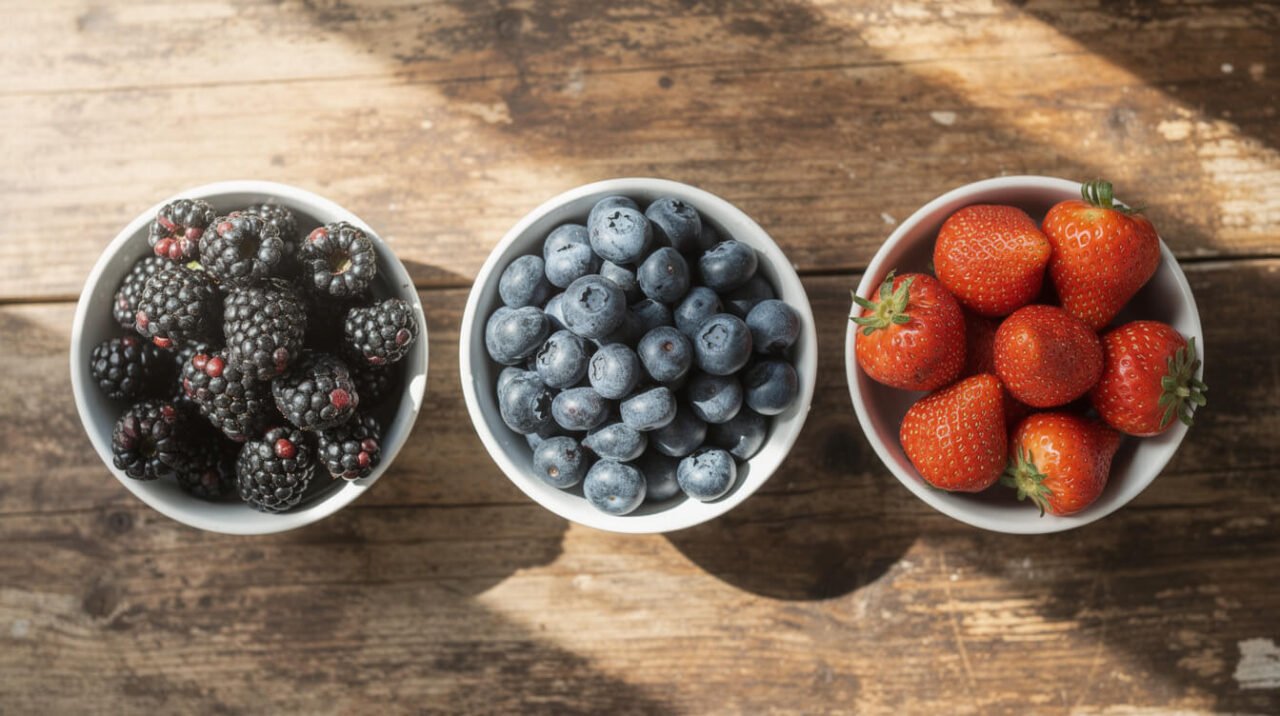
If your dog likes blackberries, there’s a good chance they’ll enjoy rotating through a few other safe berries too — variety is a nice, low-effort form of enrichment, and it keeps you from over-relying on any single fruit.
| Berry | Safe for dogs? | Notes |
|---|---|---|
| Blackberries | Yes, in moderation | Lower sugar, high fiber, antioxidant-rich |
| Blueberries | Yes, in moderation | Similar profile, slightly smaller so easier for small dogs — see our full blueberries safety guide |
| Strawberries | Yes, in moderation | Higher natural sugar than blackberries or blueberries; hull before serving |
| Raspberries | Yes, small amounts | Similar nutrient profile to blackberries; also contains trace natural xylitol |
| Grapes & raisins | No — ever | Genuinely toxic to dogs, unlike the berries above; can cause acute kidney failure at any amount |
| Cherries | No | Pits are a choking hazard and contain cyanogenic compounds; stems and leaves are toxic too |
| Holly, juniper, mistletoe, or pokeberries | No | Toxic — never let your dog near ornamental “berries” in the yard or as holiday decor |
That grapes-and-raisins line is worth pausing on: it’s a genuinely different category of risk from anything on this page. Blackberries causing an upset stomach is a “watch and adjust” situation. Grapes causing kidney failure is an emergency-vet situation, at any dose, for any dog. If your dog gets into raw ground beef, table scraps, or anything else questionable while you’re sorting fruit safety, our raw ground beef safety guide walks through the same kind of size-based thresholds and a 48-hour watch list.
Frequently asked questions
Can puppies eat blackberries?
In small amounts, most puppies tolerate blackberries fine, but their digestive systems are more sensitive than an adult dog’s. Check with your vet before introducing any new treat, and start with an even smaller portion than the adult-dog guideline above.
Can dogs eat blackberry seeds?
Yes — the seeds are tiny and soft and pass through most dogs without issue. They’re not a meaningful choking risk the way larger pits are, though mashing the berries is a good extra precaution for very small dogs.
Can dogs have blackberry-flavored yogurt or treats?
Only if you’ve checked the label carefully. Many flavored yogurts and store-bought treats include added sugar, artificial sweeteners (including xylitol), or other ingredients that aren’t dog-safe. Plain, fresh blackberries are the safer bet.
Are blackberries a choking hazard for dogs?
Whole blackberries can be a minor choking risk for very small or toy-breed dogs, and for any dog that tends to gulp treats without chewing. Cutting or mashing them removes this risk almost entirely.
What if my dog ate a lot of blackberries — like, the whole container?
Keep an eye on them for the next 24 hours. Mild, short-lived stomach upset (gas, softer stool) is the most likely outcome and usually resolves on its own. Call your vet if you see repeated vomiting, diarrhea that doesn’t let up, lethargy, or if your dog is a puppy, senior, diabetic, or has an existing health condition — in those cases, don’t wait it out, just make the call.
Can dogs eat blackberry leaves or stems?
There’s nothing in blackberry leaves or stems that’s known to be toxic to dogs, but they’re fibrous and not easy to digest. If your dog nibbles a stem while foraging on a walk, it’s not a reason to panic — just don’t intentionally include them when you’re preparing berries as a treat.
Are freeze-dried blackberry treats the same as fresh?
Not quite. Like dried blackberries, freeze-dried versions concentrate the natural sugars once the water is removed, so a handful of freeze-dried berries isn’t nutritionally equivalent to the same volume of fresh ones. Check the ingredient label for added sugar and treat freeze-dried blackberries as a smaller-portion treat than fresh.
Do blackberries stain fur or carpet?
They can — that deep purple-black pigment is the same anthocyanin content that makes blackberries nutritionally useful, and it stains light-colored fur, paws, and carpet about as readily as it stains your own hands. It’s cosmetic, not a health issue, but if you have a light-coated dog or pale carpet, feeding blackberries on a washable mat or outdoors saves some cleanup.

Wear the obsession
Bearded Dragon Crown Sunglasses King T-Shirt
Price range: $24.99 through $26.99
Shop this designFinal thoughts: can dogs eat blackberries safely?
Yes — blackberries are one of the easier fruit-safety questions to answer with confidence: fresh, plain, and portioned for your dog’s size, they’re a genuinely healthy, low-sugar treat most dogs can enjoy, and a nice low-effort enrichment tool besides. The real skill isn’t memorizing a berry count — it’s staying honest about the parts that are genuinely uncertain (wild berries, exact portions) and knowing the handful of warning signs that mean it’s time to call your vet instead of guessing. That’s the whole GeoZoo approach: the straight answer first, the nuance a devoted keeper actually needs right behind it.
Before you go
Keep learning your animal
We publish a new guide every day. The best of them land in one short weekly email, so you never miss the one about your species.

Meet Jake Harrington, your go-to guru for all things canine. With over 15 years of professional dog training experience, Jake has transformed the lives of thousands of dogs and their owners. His journey began in the bustling streets of a major city, where he discovered his natural affinity for understanding canine behaviors and communication.