
Can Dogs Eat Quinoa? The Saponin Rinse Rule and a Weight-Based Serving Chart
Short answer: yes, in moderation — plain, cooked, well-rinsed quinoa is safe for most dogs, and can even be a decent addition to a home-topped bowl. But almost every article on this topic stops at “feed it in moderation” without telling you the two things that actually matter: how to deal with the bitter coating quinoa comes with, and how much is actually reasonable for a dog your size. If you’re wondering can my dog eat quinoa because a bag is sitting open on your counter or quinoa keeps showing up in the ingredient list of your dog’s kibble, here’s what’s actually true, and here’s how to do it right.
Below, we’ll walk through the saponin coating nobody explains properly, a weight-based serving amount you can actually use, why raw quinoa is a hard no, how quinoa stacks up against rice for dogs with sensitive stomachs, and when a bout of quinoa-related stomach upset is worth a call to your vet.
At a glance:
- Plain, cooked, rinsed quinoa in small amounts: fine for most healthy adult dogs
- Unrinsed quinoa: more likely to cause gas, loose stool, or a grumpy stomach
- Raw or seasoned quinoa (onion, garlic, salt, butter): skip it entirely
Is quinoa safe for dogs? Quick answer

Quinoa itself isn’t toxic to dogs. It’s a seed (technically not a grain, though it’s used like one) that’s naturally gluten-free, a source of complete protein, and packed with fiber, iron, and magnesium — nutrients that show up in plenty of commercial dog foods already. That’s the good news, and it’s why you’ll see quinoa listed as an ingredient on bags of dry food without anyone blinking.
The nuance that gets lost is that quinoa the way most humans eat it — a scoop off your dinner plate, maybe seasoned, maybe raw and just-rinsed-not-cooked — isn’t the same as quinoa served the way a dog’s digestive system can actually handle it. The three things that turn a genuinely fine food into a stomach-upset food are: skipping the rinse, serving it raw or undercooked, and serving it with the seasonings, onion, or garlic that flavor most human quinoa dishes. None of that means quinoa is dangerous. It means quinoa, like a lot of “healthy for humans” foods, needs to be served on the dog’s terms, not the dinner table’s.
Why this question comes up so often
Quinoa’s reputation as a nutritional powerhouse for people has carried over into assumptions about dogs, and dog food marketing hasn’t helped — “ancient grains” and “superfood” show up on premium kibble bags constantly. That’s mostly earned; quinoa really is nutrient-dense. But a bag of dog food that includes properly processed, cooked quinoa in exact proportions is a very different thing from a home cook handing over a spoonful of whatever’s left in the pot. This guide is about that second scenario.
What’s actually in quinoa
For context on why quinoa keeps showing up in “healthy” dog food formulas, here’s roughly what a half-cup of cooked, plain quinoa provides:
- Protein: around 4 grams, including all nine essential amino acids — unusual for a plant-based food
- Fiber: roughly 2.5 grams, which supports digestion but is also why too much, too fast can cause loose stool
- Iron, magnesium, and phosphorus: present in meaningful amounts, though a dog eating a complete, balanced commercial diet is very likely already getting adequate levels of these from their regular food
- Gluten: none — quinoa is naturally gluten-free, which matters only for the small number of dogs with a diagnosed gluten sensitivity, not for dogs in general
None of this makes quinoa “better” than a dog’s regular, complete diet — it’s a topper, not a replacement — but it explains why it’s a reasonable one when served correctly.
The saponin coating nobody mentions — why you must rinse it
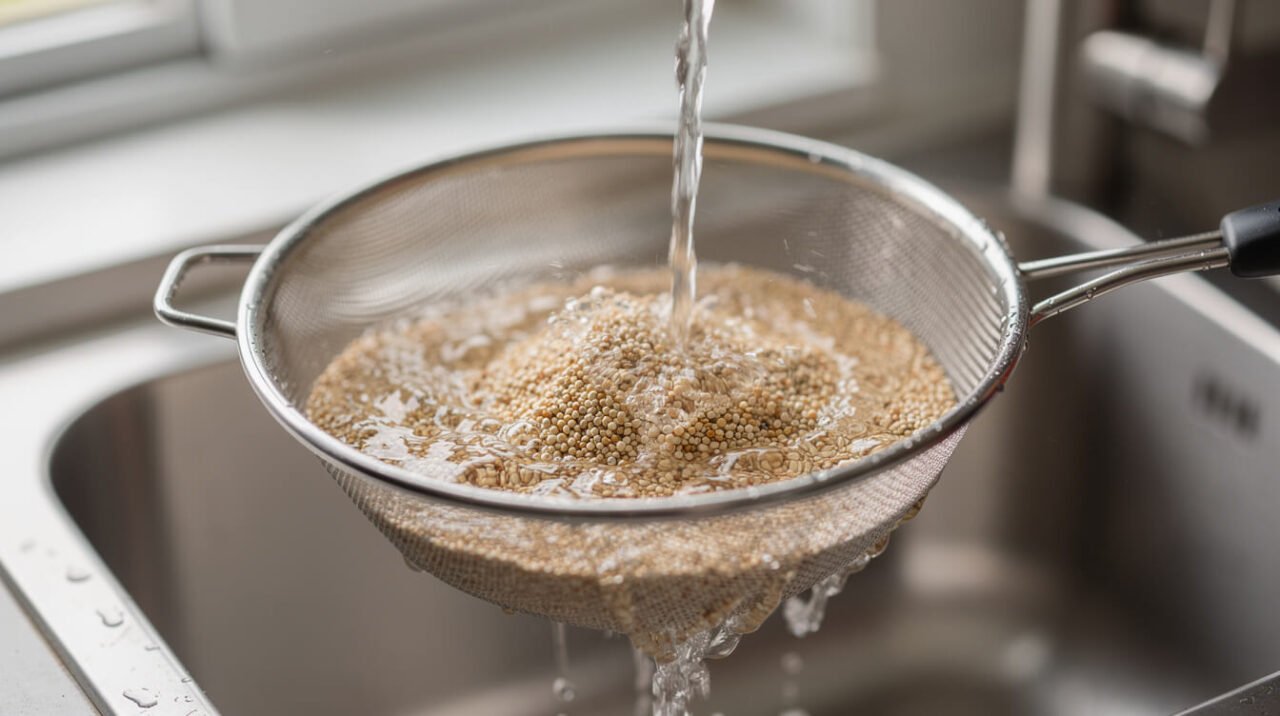
Every quinoa seed grows with a natural, bitter-tasting coating called saponin. In the plant, saponin is a built-in insect repellent — it’s the reason quinoa doesn’t need much in the way of pesticides. For dogs (and people), that same coating is the part that can cause intestinal irritation, mild GI upset, gas, or loose stool if it isn’t removed before cooking.
Most competitor articles mention saponin exists, note that it “can cause irritation,” and stop there — without ever explaining the fix, which is genuinely simple:
How to rinse quinoa properly
- Use a fine mesh strainer. Quinoa seeds are small enough to slip through a regular colander.
- Rinse under cold running water for 1–2 minutes, agitating the seeds with your hand. You’ll sometimes see a faint soapy or foamy residue — that’s the saponin washing away.
- Keep rinsing until the water runs clear, not cloudy.
- Pre-rinsed or “triple-washed” quinoa (common on grocery shelves now) has already had most of the saponin removed at the processing stage, but a quick home rinse is still a good habit, especially for a dog with a sensitive stomach.
Rinsing doesn’t remove all of the saponin — a small amount is naturally bound to the seed — but it removes enough that most dogs tolerate properly rinsed, cooked quinoa without issue. This is the single most useful thing you can do to lower the odds of a stomach upset, and it’s the step that’s almost entirely missing from the “just feed it in moderation” advice you’ll find elsewhere.
How much quinoa by dog weight
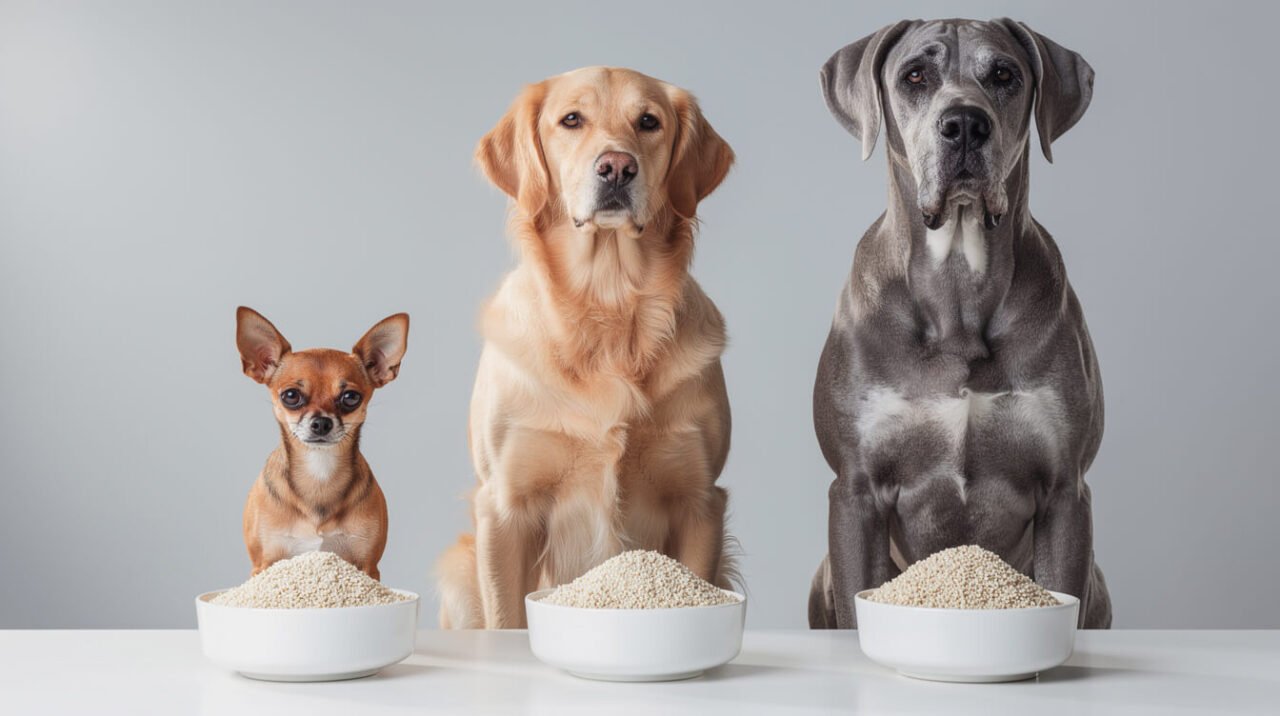
There isn’t a single official, vet-published serving chart for quinoa and dogs — it isn’t a core part of canine nutrition research the way, say, protein-to-calorie ratios are. What follows is a reasonable, conservative starting range built around the “treats and toppers should be roughly 10% or less of daily calories” guidance most veterinary nutritionists use for any extra food, applied to quinoa’s typical cooked calorie density. Treat these as a sensible starting point, not a rigid prescription — and if your dog has any health condition (especially kidney issues, since quinoa contains oxalates, or diabetes), check with your vet before adding it regularly.
How “a few times a week” fits into the bigger picture
The amounts below aren’t meant to be added on top of an already-full bowl every single day. Think of quinoa the way you’d think of any other topper or training treat: it counts toward your dog’s daily calorie total, not separate from it. For a dog who’s already at a healthy weight, swapping a bit of regular kibble volume for the quinoa topper on the days you use it keeps the math simple. For an overweight dog or one managing diabetes, skip the “starting amount” column below and talk to your vet first — quinoa’s carbohydrate content is a real variable for blood sugar management, and this is exactly the kind of care-specific number worth getting from someone who has your dog’s labs, not a general guide.
| Dog’s weight | Starting amount (cooked, plain quinoa) |
|---|---|
| Under 10 lbs (small breeds, toy breeds) | 1–2 teaspoons, occasionally |
| 10–25 lbs | 1–2 tablespoons, a few times a week |
| 25–50 lbs | 2–3 tablespoons, a few times a week |
| 50–90 lbs | 3–4 tablespoons, a few times a week |
| Over 90 lbs | Up to a quarter cup, a few times a week |
A few practical notes on using this chart: start at the low end the first time you offer quinoa to any dog, regardless of size, and watch for a day before making it a regular addition. These amounts assume quinoa is a topper or occasional treat on top of a complete, balanced diet — not a meal replacement. And because every dog’s tolerance, activity level, and existing diet differ, “starting amount” really does mean starting — you can work up slightly from there if your dog handles it well, but there’s rarely a reason to go much higher than these ranges for a food that isn’t nutritionally essential.
Cooked vs. raw — never serve it uncooked
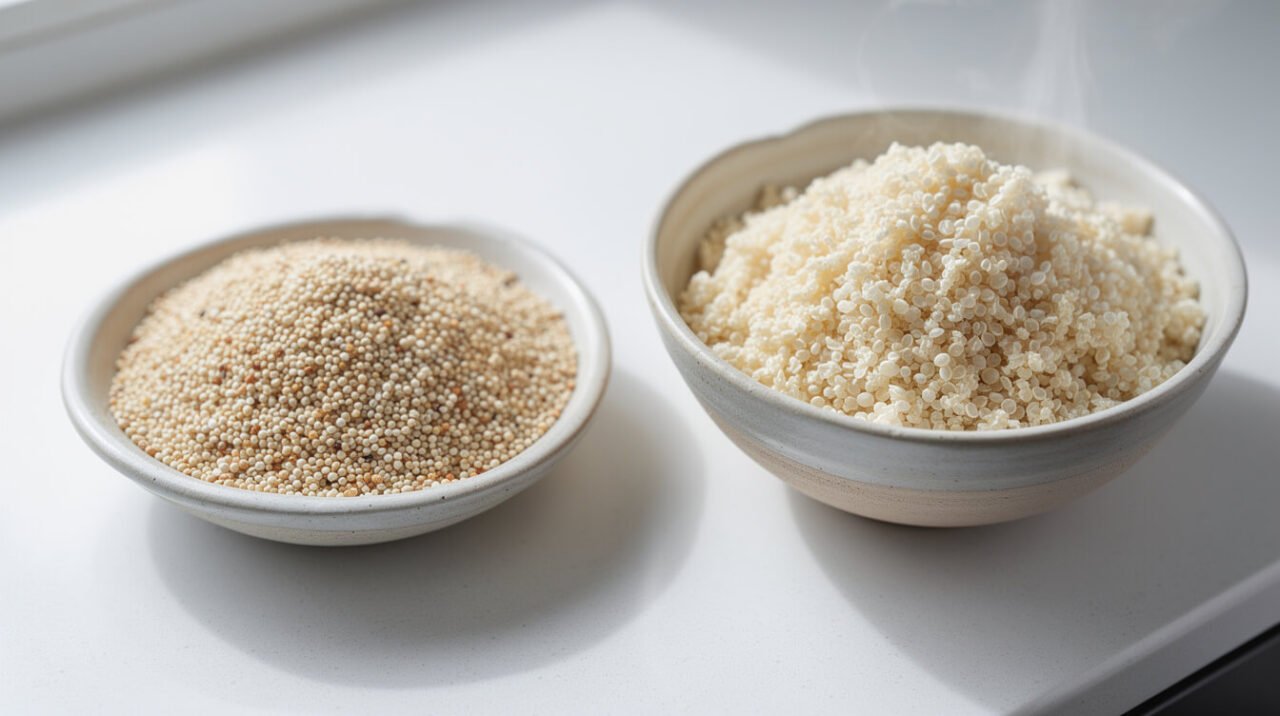
This one has a clean, non-negotiable answer: quinoa should always be cooked before it reaches your dog’s bowl, never raw. Raw quinoa is hard, dense, and much higher in saponin concentration relative to volume than cooked quinoa, since cooking further breaks down the coating and softens the seed. Raw seeds are also simply harder to digest — they’re built to survive a bird’s gut intact, which tells you something about how tough they are on a mammalian digestive tract that isn’t expecting them.
Cooking quinoa the right way is straightforward:
- Rinse thoroughly (see above) before cooking, every time.
- Cook in plain water only — no broth, bouillon, butter, oil, salt, or seasoning blends. Many broths and bouillons contain onion or garlic powder, which are genuinely toxic to dogs, so this isn’t a minor style preference.
- Use a roughly 2-to-1 water-to-quinoa ratio and simmer until the water is absorbed and the seed’s outer ring separates into a visible little spiral — that’s the sign it’s fully cooked and soft.
- Let it cool completely before serving. Straight-off-the-stove quinoa can burn a dog’s mouth just like any other hot food.
If quinoa shows up already cooked in a human dish you made for dinner — say, a quinoa salad — don’t share it directly even if the quinoa itself looks plain, since these dishes are almost always mixed with onion, garlic, dressing, or salt. Serve dog quinoa separately, cooked plain, specifically for your dog.
The weekly care guide
Get it right for your animal, every week
One email a week: new care guides, species deep-dives, and the safety answers keepers search for, written by our specialists. No spam. Unsubscribe anytime.
Quinoa vs. rice for sensitive stomachs
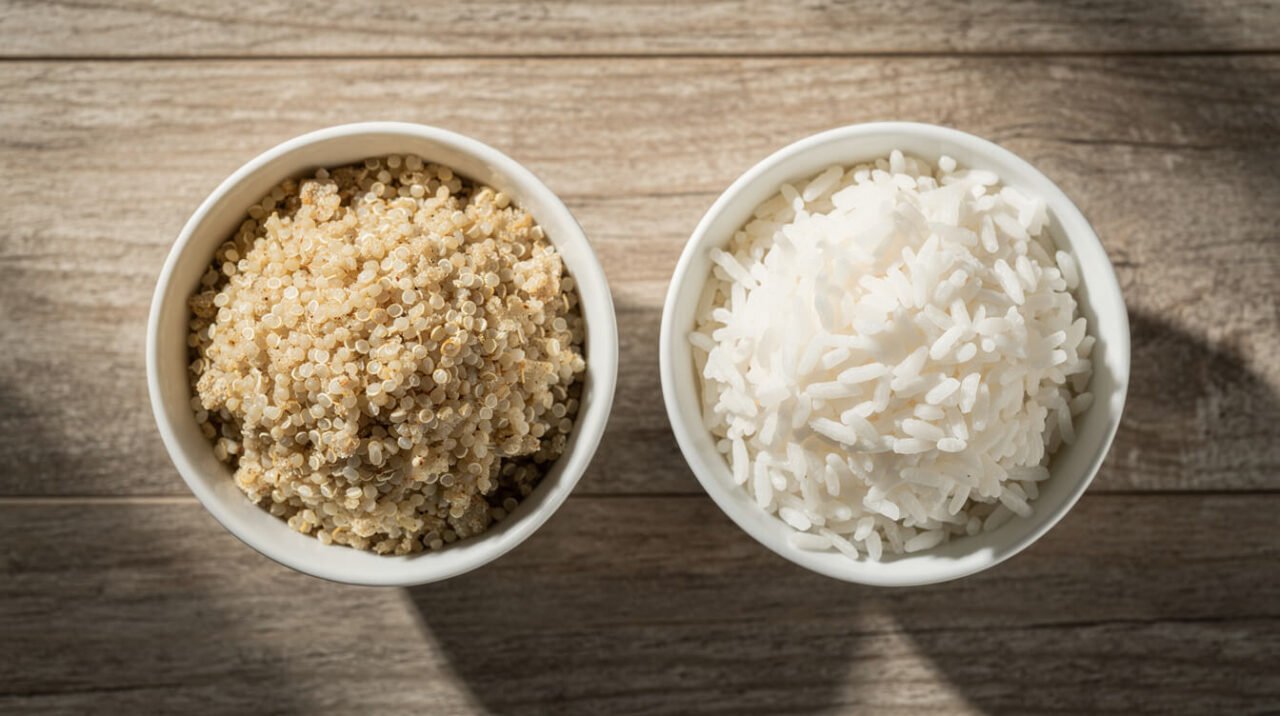
Plain white rice is the classic bland-diet staple vets recommend for dogs recovering from an upset stomach, so it’s a fair question: is quinoa a reasonable substitute, or even an upgrade? The honest answer is that it depends on why your dog needs a bland diet in the first place.
Rice still wins for acute stomach upset and bland-diet recovery. It’s lower in fiber, gentler, and easier to digest than quinoa when a dog’s gut is already inflamed or irritated — which is exactly the situation a vet is usually addressing when they recommend a rice-and-boiled-chicken bland diet. Quinoa’s higher fiber and fat content compared to white rice can actually work against a sensitive stomach in that acute window.
Quinoa can be a reasonable everyday alternative for grain-sensitive dogs who don’t have an active flare-up but react poorly to wheat, corn, or traditional grains in their regular diet. Because quinoa is technically a seed rather than a true grain and is naturally gluten-free, some dogs with grain sensitivities tolerate it better as an occasional topper than they do rice-based fillers — though this varies dog to dog, and “grain-free” isn’t automatically healthier for dogs without a diagnosed sensitivity.
The practical takeaway: reach for rice during an active stomach-upset episode or on your vet’s specific recommendation, and consider quinoa as a rotating topper option for a dog with an otherwise settled stomach and a suspected grain sensitivity — ideally one your vet has weighed in on.
Signs of an upset stomach and when to call your vet

Most quinoa-related stomach upset is mild and short-lived — usually from too much too fast, unrinsed saponin, or a dog who just doesn’t tolerate a new food well. Here’s what to watch for over the following 24 hours after introducing quinoa for the first time or increasing the amount:
- Mild, one-off soft stool or slightly looser-than-normal poop
- A small amount of gas or a gurgly stomach
- Mild, brief disinterest in the next meal
These are generally not emergencies — they usually resolve on their own within a day, and going back to your dog’s regular diet without quinoa for a while is often all that’s needed.
Call your veterinarian if you see:
- Repeated vomiting or diarrhea that doesn’t let up after 24 hours
- Blood in vomit or stool
- Signs of pain, bloating, or a visibly distended abdomen
- Lethargy that doesn’t improve, or a dog who won’t eat or drink at all
- Any known allergic reaction — facial swelling, hives, or difficulty breathing (rare with quinoa, but true of any new food)
This is general information, not a diagnosis — if your dog seems genuinely unwell after eating quinoa, or you’re not sure whether what you’re seeing is “wait it out” or “worth a call,” your vet is always the right call to make. We’d rather you check and it be nothing than skip the call and it matter.
How to serve it safely — recipes and mix-ins
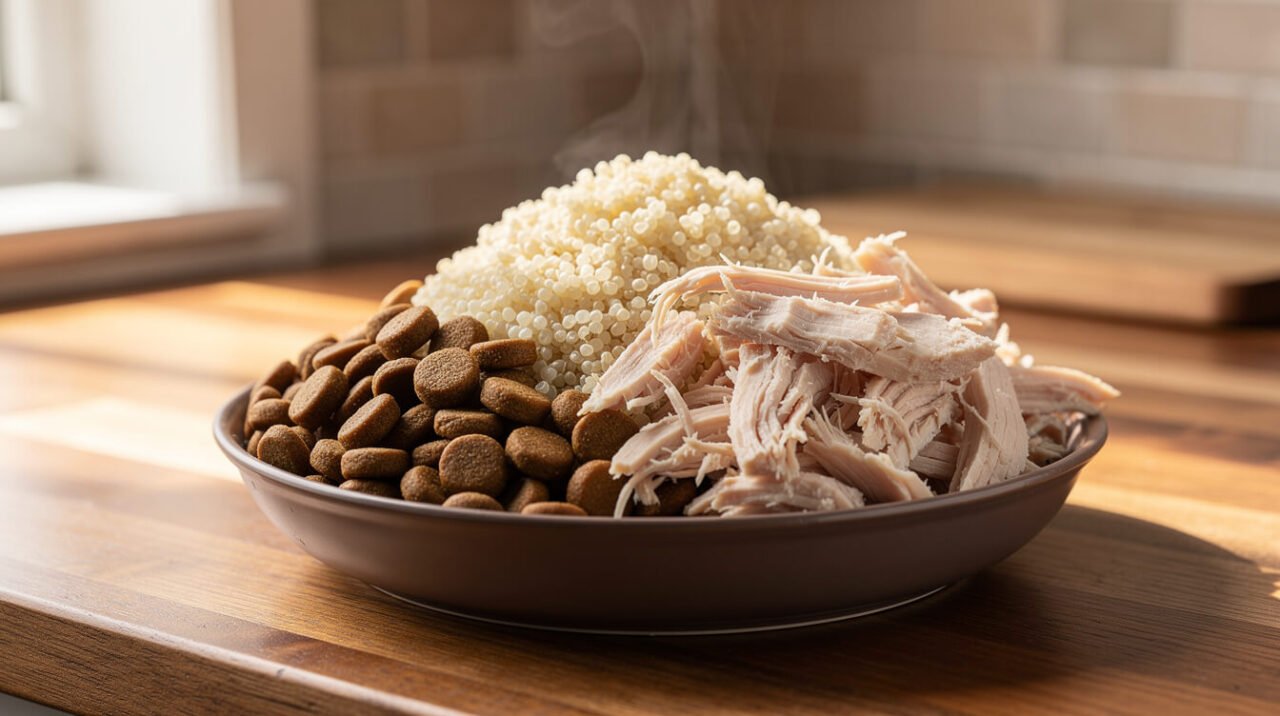
Once quinoa’s been rinsed, cooked plain, and cooled, here are a few genuinely useful, low-effort ways to work it into your dog’s routine:
- Kibble topper: stir the weight-appropriate amount from the chart above into your dog’s regular kibble for extra texture and a fiber boost.
- Protein bowl mix-in: combine cooked, plain quinoa with plain boiled or shredded chicken (no skin, no seasoning) for a simple homemade topper.
- Frozen enrichment treat: mix cooled cooked quinoa with a spoonful of plain pumpkin puree and freeze in a silicone mold or stuff into a puzzle toy.
- Single-ingredient trial portion: the first time you ever offer quinoa, serve it completely on its own — no mix-ins — so if there’s a reaction, you know exactly what caused it.
What to leave out, always: onion, garlic, salt, butter, oil, bouillon, raisins, or any pre-made human quinoa salad or pilaf. These additions are far more likely to cause a genuine problem than the quinoa itself ever would.

Wear the obsession
The Ferret Father Godfather Parody T-Shirt | Comfort Colors
Price range: $28.99 through $30.99
Shop this designFrequently asked questions
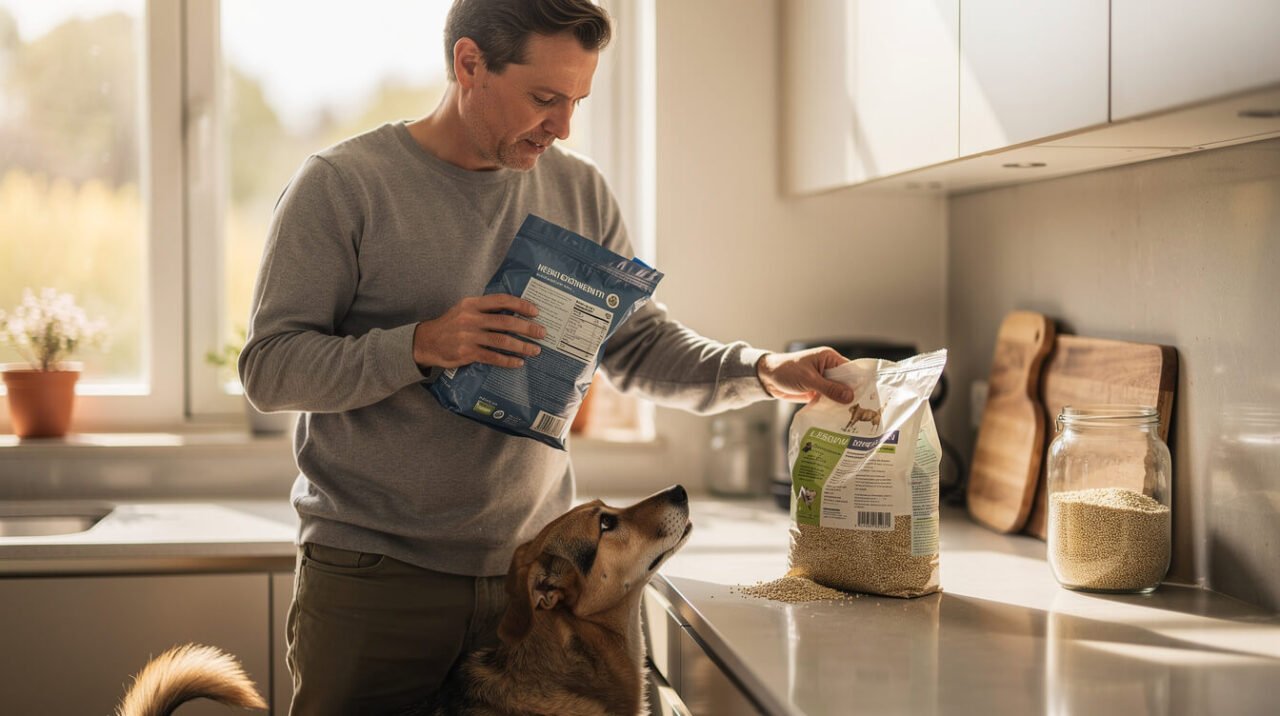
Can puppies eat quinoa?
In very small amounts, occasionally, once a puppy is fully weaned and eating solid food — but puppies have more sensitive digestive systems than adult dogs, so it’s worth checking with your vet before adding any new topper to a growing puppy’s diet, and starting with an even smaller amount than the chart above suggests.
Is quinoa in dog food different from home-cooked quinoa?
Yes. Commercial dog food manufacturers process quinoa specifically for digestibility and balance it precisely against the rest of the recipe’s nutrient profile. That’s a different thing from a home-cooked spoonful, which is why quinoa showing up as a kibble ingredient doesn’t mean unlimited amounts are fine as a topper.
Can dogs with kidney disease eat quinoa?
This is one to run by your vet directly. Quinoa contains oxalates, which are a consideration for dogs managing certain kidney conditions, and a vet who knows your dog’s specific bloodwork and history is in a far better position to weigh that than a general guide can be.
My dog ate a whole bowl of quinoa salad off the counter — what now?
The quinoa itself is the smaller concern here; a prepared quinoa salad usually contains onion, garlic, dressing, or other ingredients that are genuinely unsafe for dogs. Call your veterinarian or an animal poison control line right away, and have the recipe or ingredient list on hand if you can.
Can dogs be allergic to quinoa?
True food allergies to quinoa appear to be uncommon in dogs, but “uncommon” isn’t “impossible” — any new food carries some chance of an individual reaction. That’s the whole reason behind offering a small, single-ingredient trial portion the first time, rather than mixing it into a big bowl of other new things at once. If you ever see facial swelling, hives, or difficulty breathing after any new food, that’s an emergency vet visit, not a wait-and-see situation.
How long does cooked quinoa keep in the fridge?
Plain cooked quinoa, stored in a sealed container in the refrigerator, is generally good for about 5 days — similar to cooked rice. Portion it out for your dog’s toppers throughout the week rather than cooking a fresh batch every time, and skip anything that smells off or has been sitting for longer than that.
Quinoa isn’t a food to fear, and it isn’t a “superfood” your dog is missing out on either — it’s a genuinely fine, occasional addition once you know the two things most articles skip: rinse it to deal with the saponin, and keep the amount proportional to your dog’s size. Handled that way, quinoa earns a small, occasional spot in the bowl. If you want to keep exploring what’s safe to share from your own plate, we’ve also covered whether dogs can eat raw sweet potato, whether dogs can eat cooked shrimp, and whether dogs can eat olive oil — three more real kitchen questions worth getting right.
Before you go
Keep learning your animal
We publish a new guide every day. The best of them land in one short weekly email, so you never miss the one about your species.

Meet Jake Harrington, your go-to guru for all things canine. With over 15 years of professional dog training experience, Jake has transformed the lives of thousands of dogs and their owners. His journey began in the bustling streets of a major city, where he discovered his natural affinity for understanding canine behaviors and communication.