Can My Dog Eat Raw Sweet Potato? Safety Guide by Size
Short answer: no. A raw sweet potato isn’t the same question as a cooked one, and if your dog just swallowed a chunk of raw sweet potato, the concern isn’t nutrition — it’s whether that piece can get stuck. If you’re wondering can my dog eat raw sweet potato because you caught your dog mid-counter-surf or you’re prepping dinner and a slice landed on the floor, here’s what’s actually true, and here’s how to do it right.
Cooked, plain sweet potato is a genuinely good treat for most dogs. Raw sweet potato is a different animal — hard, starchy, and much tougher on the way down. Below, we’ll walk through why raw is riskier, how that risk scales with your dog’s size, what to watch for over the next couple of days if a piece already went down, what it means for dogs managing diabetes, and how to serve sweet potato the right way going forward.
At a glance:
- A small lick or graze of raw sweet potato: usually not a big deal for a healthy adult dog
- A swallowed chunk or piece: worth watching closely, and more concerning the smaller your dog is
- Cooked, plain, and cut small: the genuinely safe way to share sweet potato going forward
Quick answer: is raw sweet potato dangerous?

A small nibble of raw sweet potato — a lick, a graze, a corner chewed off — isn’t an emergency for most healthy adult dogs. It may cause mild stomach upset, but that’s usually the extent of it. A swallowed piece or chunk is the scenario that deserves real attention, because raw sweet potato is dense and doesn’t soften the way cooked sweet potato does. It can be genuinely difficult to chew all the way down, and larger pieces carry a real choking and intestinal blockage risk — that’s not fear-mongering, it’s the same conclusion vets and major pet-health sites land on.
So the honest, caring answer to can my dog eat raw sweet potato is: don’t offer it on purpose, and if it happened accidentally, how worried you should be depends on a few things — how much went down, how big your dog is, and whether it was chewed at all or swallowed close to whole. We’ll cover all of it below.
Why this question even comes up
Sweet potato is a staple in so many dog foods and treat bags that a lot of owners assume the vegetable itself is simply “safe,” full stop. It’s a reasonable assumption — and mostly true — but it glosses over the fact that almost everything you’ll find about sweet potato and dogs online is about the cooked, prepared version. Raw is a genuinely different food from your dog’s gut’s perspective, which is exactly why this is worth its own answer rather than folding it into a generic “are sweet potatoes good for dogs” piece.
Why raw is harder to digest than cooked
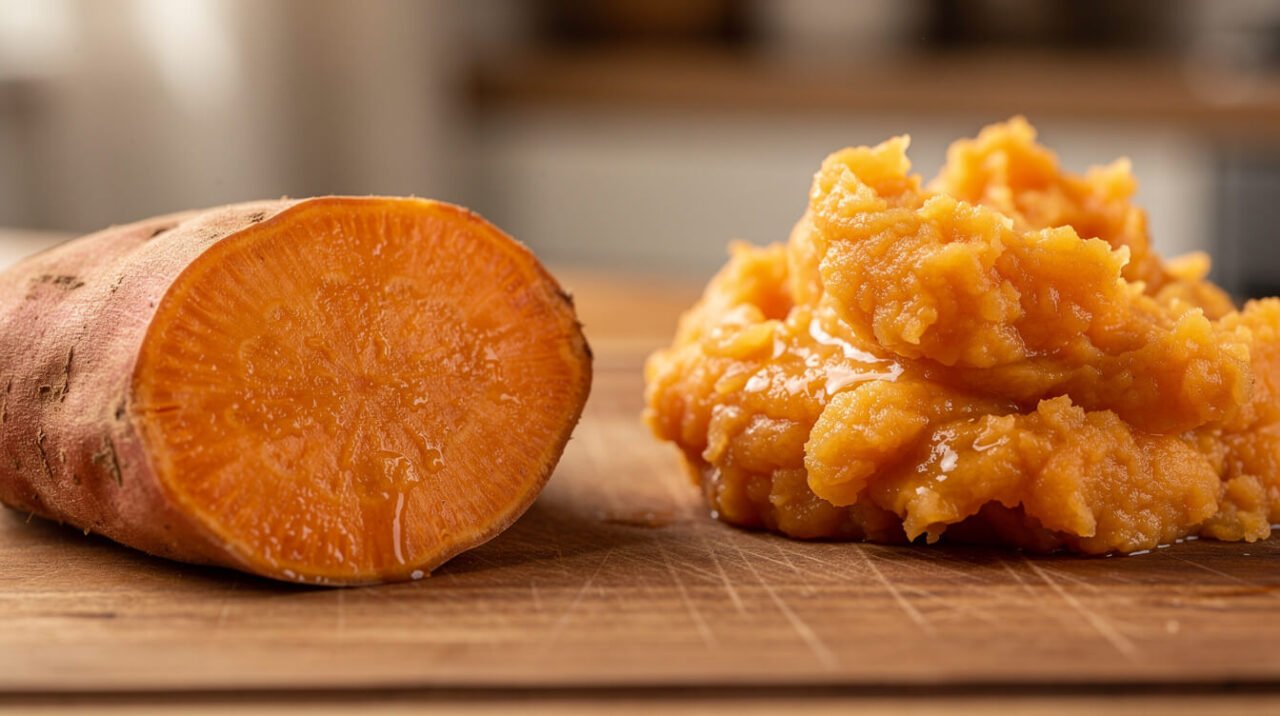
Sweet potatoes are starchy root vegetables, and raw starch is genuinely harder for a dog’s digestive system to break down than cooked starch. Cooking — boiling, steaming, baking, or microwaving — softens the plant fibers and starts breaking the starch down before it ever reaches your dog’s stomach. Raw, that same starch arrives as a dense, fibrous, water-resistant chunk that your dog’s gut has to do all the work on, which is why an uncooked piece is more likely to come back up, or come out the other end looking basically unchanged.
There’s also the texture problem. A cooked chunk of sweet potato mashes and yields easily between a dog’s teeth or against the roof of their mouth. A raw chunk is closer to a woody carrot — firm enough that a dog who doesn’t chew thoroughly (and plenty of dogs don’t; some famously “inhale” their food) can swallow a piece close to its original size. That’s the piece that can cause trouble further down, not the flavor or the vegetable itself.
The nutrition case for cooked sweet potato
None of this makes sweet potato a bad food — quite the opposite. Cooked, plain sweet potato is genuinely nutritious:
- Fiber that supports regular digestion
- Beta-carotene, which your dog’s body converts into vitamin A, supporting eye health, skin, and immune function
- Vitamin C, potassium, and manganese, useful trace nutrients that round out a balanced diet
- A relatively low fat content, which is part of why it’s a popular treat swap for dogs watching their weight
That nutrition profile is exactly why sweet potato shows up in so many commercial dog foods and treats. It’s specifically the raw, uncooked form that changes the safety picture — the nutrients don’t disappear when you cook it, and the digestibility only improves.
The real risk: choking and blockage by dog size
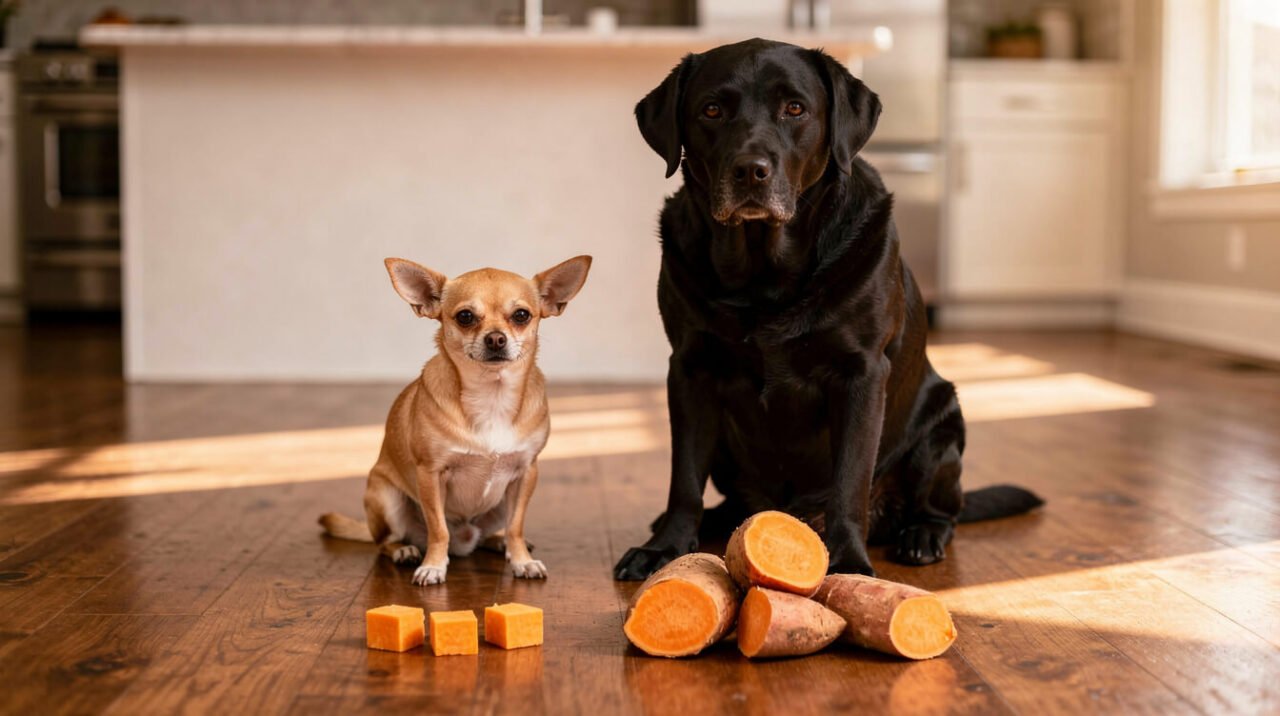
Here’s the piece most articles skip: a swallowed chunk of raw sweet potato is not the same risk for every dog. A piece that a 70-pound Labrador shrugs off might be a genuine obstruction risk for a 6-pound Chihuahua. Size matters twice over — a smaller dog has a narrower esophagus and intestinal tract to begin with, and a “small” piece to you is proportionally a much larger swallow for them.
A few honest, welfare-first ways to think about it:
- Extra-small and small dogs (under ~20 lbs): Even a modest chunk is worth taking seriously. Their airway and gut are simply narrower, so the same piece has less margin for error.
- Medium dogs (~21–50 lbs): A small nibble is usually low-risk; a large, unchewed chunk still deserves the watch list below.
- Large and giant dogs (50+ lbs): Generally more margin for a small accidental piece, but a whole raw sweet potato — or most of one — is still a legitimate blockage concern regardless of size.
We’re intentionally not putting exact ounce or inch thresholds here, because that number genuinely depends on your individual dog — their size, how they chew, whether they have a history of gulping food, and their general health. That’s a call for your veterinarian, not a blog post. If you’re unsure whether what your dog swallowed is “a lot” for their size, a quick call to your vet’s office is always the right move — they’d rather field an unnecessary call than see a blockage that waited too long.
Dogs known for gulping
Some dogs are simply higher-risk eaters regardless of size — Labradors, beagles, and other food-motivated breeds have a well-earned reputation for swallowing first and thinking never. If you’ve ever watched your dog polish off a whole biscuit in one gulp without a single audible chew, that’s the behavior worth factoring in here. If your dog is a known gulper, treat any raw sweet potato incident a notch more seriously than the general size guidance above, and consider cutting future treats — sweet potato or otherwise — small enough that gulping isn’t really an option. A simple household habit that helps across the board: keep raw produce, including sweet potatoes, out of counter-surfing range, the same way you’d manage anything else you wouldn’t want swallowed whole.
If your dog already ate a piece: what to watch for

If the swallowing already happened, take a breath — most dogs who steal a bite of raw sweet potato are completely fine. But it’s worth staying attentive for the next day or two, because intestinal blockages don’t always show up immediately; a piece can sit for a while before it causes a visible problem. This is general guidance, not a diagnosis, and it doesn’t replace a real veterinary exam.
Call your vet or an emergency animal hospital promptly if you see:
- Repeated vomiting, or retching without bringing anything up
- Refusing food for more than a meal or two, especially paired with lethargy
- Straining to defecate, or no bowel movement at all for an extended stretch
- A visibly bloated, tense, or painful abdomen
- Unusual lethargy, restlessness, or a hunched posture
What’s generally fine and doesn’t need a panic: a single episode of mild stomach upset (one loose stool, a bit of gas) in an otherwise bright, eating, normally-behaving dog. But “fine” is a moving target — you know your dog’s normal better than anyone, and if something feels off, trust that instinct and call your vet. Don’t try to induce vomiting or give home remedies on your own; that’s exactly the kind of well-meaning move that can make a real blockage worse, and it’s a decision for your vet, not the internet.
If you’re ever debating whether a symptom is “wait and see” or “go now,” the safer choice is always to call. A quick phone triage with your vet’s office costs you five minutes; waiting out a real blockage costs a lot more. If your regular vet’s office is closed, keep the number for your nearest emergency animal hospital somewhere you can find it in a hurry — that’s a good habit for any pet owner, sweet potato or not.
The weekly care guide
Get it right for your animal, every week
One email a week: new care guides, species deep-dives, and the safety answers keepers search for, written by our specialists. No spam. Unsubscribe anytime.
Diabetic dogs and glycemic considerations
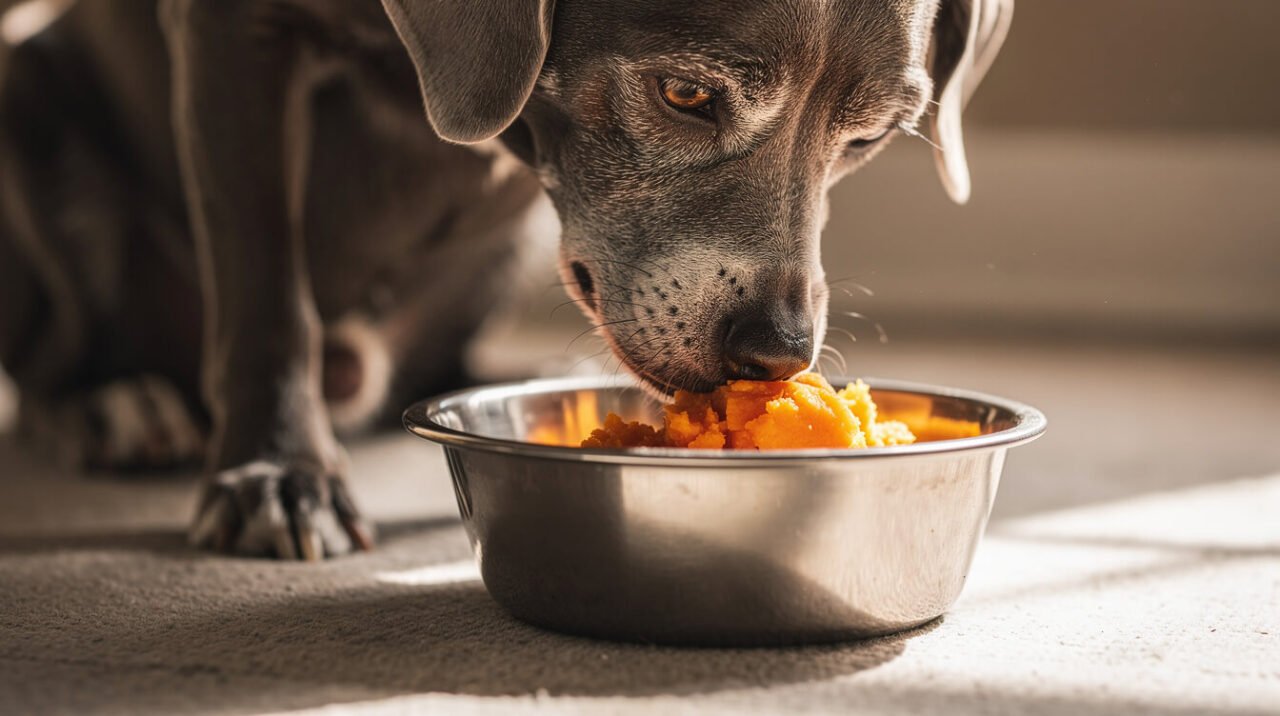
Sweet potato is a carbohydrate, and for dogs managing diabetes or another condition where blood sugar matters, that’s worth a specific mention. Even cooked and in modest amounts, sweet potato adds to your dog’s daily carbohydrate load, and a diabetic dog’s insulin dosing and meal timing are usually built around a consistent, vet-approved diet. Introducing a new carbohydrate source, even a healthy-sounding one, can shift that balance in ways that aren’t obvious from the outside.
If your dog has diabetes, is overweight, or has any condition your vet is actively managing, sweet potato — raw or cooked — isn’t a food to introduce or adjust on your own. Talk to your veterinarian first. They know your dog’s specific numbers and can tell you whether a small amount fits, or whether it’s better to skip it entirely in favor of treats designed for their condition. The same caution applies to senior dogs on a tightly managed diet, even without a diabetes diagnosis — consistency matters more than the specific treat.
Skins, fries, and other prep questions
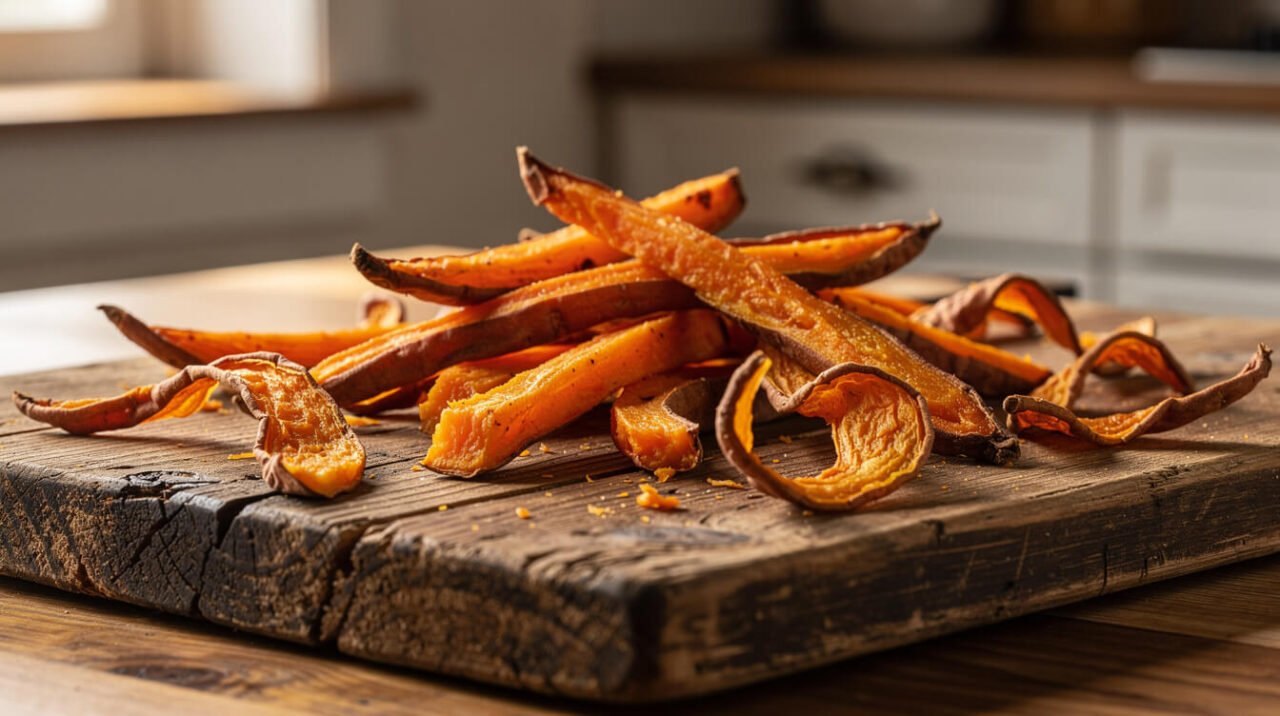
Can dogs eat sweet potato skin? The skin itself isn’t toxic, but it’s tougher and more fibrous than the flesh, which makes it harder to digest and adds to choking risk — especially raw. If you’re sharing sweet potato, peel it first, particularly for smaller dogs.
Can dogs eat sweet potato fries? Only if they’re plain, home-baked, and unseasoned. Restaurant and packaged fries are typically cooked in oil and loaded with salt (and sometimes onion or garlic powder, which are toxic to dogs), which makes them a poor choice regardless of the sweet potato itself.
Can dogs eat sweet potato casserole or pie? No. These typically contain butter, sugar, marshmallow, or spices like nutmeg, some of which can be genuinely harmful in enough quantity. Save the holiday sweet potato casserole for the humans at the table.
Is sweet potato baby food safe? Plain, single-ingredient sweet potato baby food (no onion, garlic, or added sugar) is a reasonable option in small amounts, and it’s already broken down, which some owners like for very small dogs or seniors with dental issues. Check the label every time — recipes change.
What about puppies? The same “cooked, plain, small amounts” rule applies, but puppies have smaller digestive systems and less margin for error. Talk to your vet before adding any new food to a puppy’s diet, and skip raw sweet potato entirely for them.
Is sweet potato the same as yam? In most US grocery stores, what’s labeled “yam” is actually still a sweet potato variety — true yams are a different, less common plant here. The safety guidance in this article applies to what you’ll find sold as either.
Sweet potato or pumpkin — which is better for dogs? Both are commonly recommended, low-fat, fiber-rich options when cooked and plain, and a lot of dogs do well on either. Pumpkin tends to be lower in calories and is sometimes preferred for dogs prone to soft stool, while sweet potato brings a bit more vitamin A. Neither should be fed raw for the same digestibility and choking reasons covered above, and your vet can help you pick between them if your dog has a specific digestive or weight concern.

Wear the obsession
Bearded Dragon Crown Sunglasses King T-Shirt
Price range: $24.99 through $26.99
Shop this designHow to serve sweet potato safely going forward
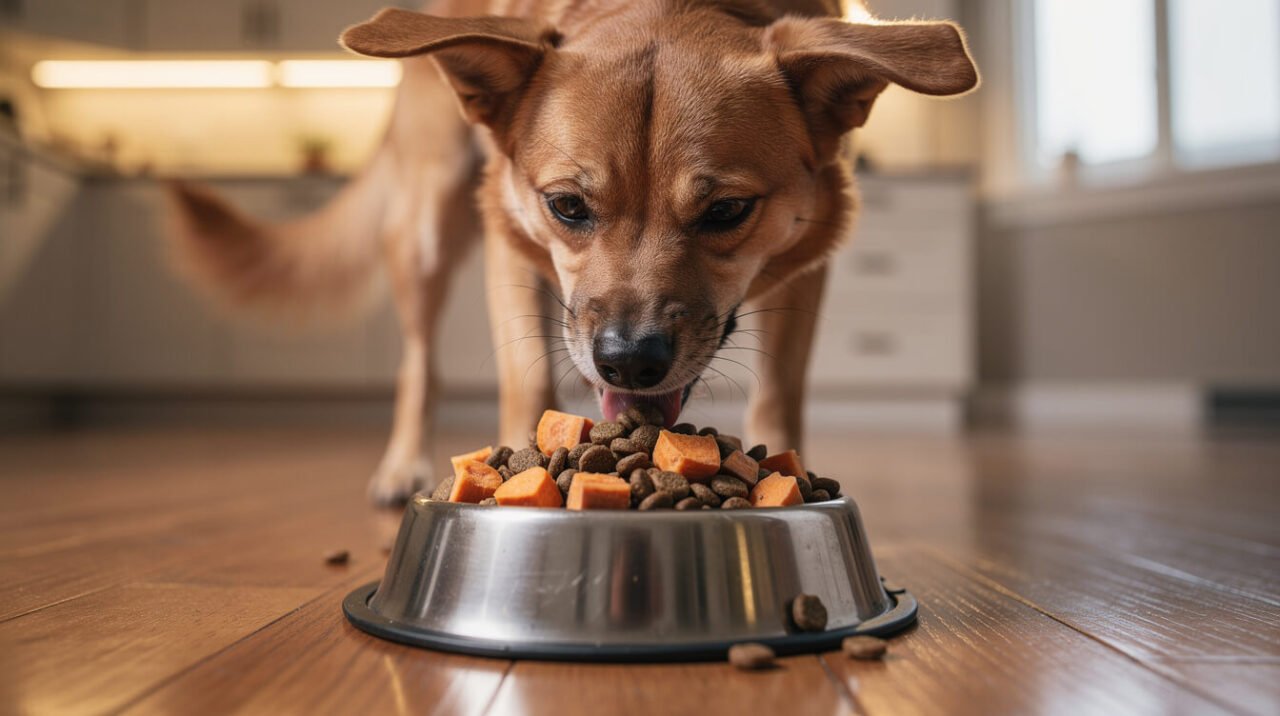
Once you’re past the “did they just eat a raw piece” moment, here’s how to make sweet potato a genuinely good addition going forward:
- Wash and peel. Give it a good scrub and remove the skin — it’s not toxic, but it’s harder to digest and adds bulk to swallow.
- Cook it all the way through. Boil, steam, bake, or microwave until it’s fully soft. This is the single biggest thing you can do to make sweet potato safe and digestible.
- Cut or mash it small. Bite-sized pieces or a mash reduce choking risk further, especially for small dogs or dogs who eat fast.
- Serve it plain. No butter, oil, salt, sugar, or seasoning — some seasonings (like nutmeg or garlic) can be unsafe for dogs in enough quantity.
- Keep it to a treat-sized portion. Treats, sweet potato included, should stay to no more than about 10% of your dog’s daily calories, with the rest coming from a complete, balanced dog food.
As a general starting point, vet-reviewed serving guidelines by dog size look roughly like this — treat these as a starting reference, not a prescription, since your vet can fine-tune it for your dog’s health and activity level:
- Extra-small dogs (2–10 lbs): about 1 tablespoon, 2–3 times per week
- Small dogs (11–20 lbs): about 1–2 tablespoons, 2–3 times per week
- Medium dogs (21–50 lbs): about 2–3 tablespoons, 2–3 times per week
- Large dogs (51–90 lbs): about 3 tablespoons, 2–3 times per week
- Extra-large dogs (91+ lbs): about 4 tablespoons, 2–3 times per week
Once it’s cooked and cooled, you can serve sweet potato on its own as a treat, mash it into your dog’s regular food, or stuff a bit into an enrichment toy for some mealtime entertainment. Introducing any new food, even a safe one, is worth doing slowly — a small amount first, then watch for a day before making it a regular thing.
If you want to go deeper on getting the whole bowl right, not just the treats, our guide on providing the best nutrition for your K9 and our piece on building a balanced diet for your dog are both good next reads. And if sweet potato has you thinking about other kitchen scraps, we’ve also covered whether dogs can eat cooked shrimp and whether dogs can eat eggplant.
Raw sweet potato isn’t a crisis waiting to happen — most dogs who grab a bite are just fine. But it’s also not something to offer on purpose, and if a real piece went down, a little vigilance over the next couple of days (and a phone call to your vet if anything looks off) is exactly the kind of caring, unfussy attention that keeps a curious dog safe. Cook it, keep it plain, keep it small, and sweet potato earns its place as an occasional, genuinely good treat — and one worth double-checking is out of paw’s reach the next time it’s on your cutting board.
Before you go
Keep learning your animal
We publish a new guide every day. The best of them land in one short weekly email, so you never miss the one about your species.

Meet Jake Harrington, your go-to guru for all things canine. With over 15 years of professional dog training experience, Jake has transformed the lives of thousands of dogs and their owners. His journey began in the bustling streets of a major city, where he discovered his natural affinity for understanding canine behaviors and communication.