
Can My Dog Eat Eggplant? A Vet-Informed Safety Guide
Can my dog eat eggplant? The quick answer
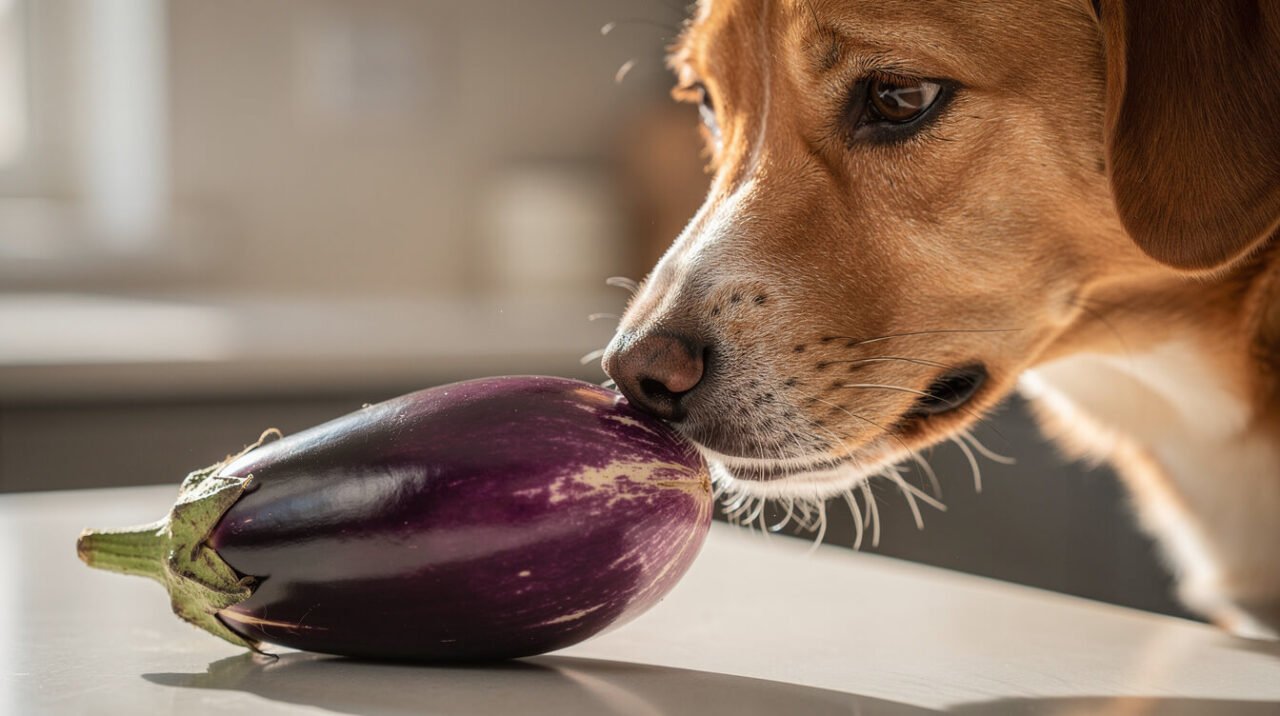
Yes — can my dog eat eggplant has a reassuring short answer: a few small bites of plain, cooked eggplant are fine for most healthy adult dogs. It isn’t a food you need to lock away like chocolate or grapes, and it isn’t a superfood your dog needs either. It sits in the same “occasional, plain, in moderation” category as zucchini or green beans.
The nuance is in the details: eggplant belongs to the nightshade family and carries a naturally occurring compound called solanine, raw eggplant is harder to digest than cooked, and — because eggplant is a popular topic in human joint-health circles — a lot of owners of older or arthritic dogs specifically want to know whether nightshades will make their dog’s joints worse. We’ll answer that directly further down, because it’s a real question and most articles on this topic skip it entirely.
If your dog just snatched a raw slice off the cutting board, take a breath: a single small piece is very unlikely to cause anything more than mild, short-lived stomach upset in most dogs. Keep reading for portion guidance by size, safe prep, and the specific situations where you should skip eggplant or call your vet.
Nightshades and solanine: what’s actually in an eggplant
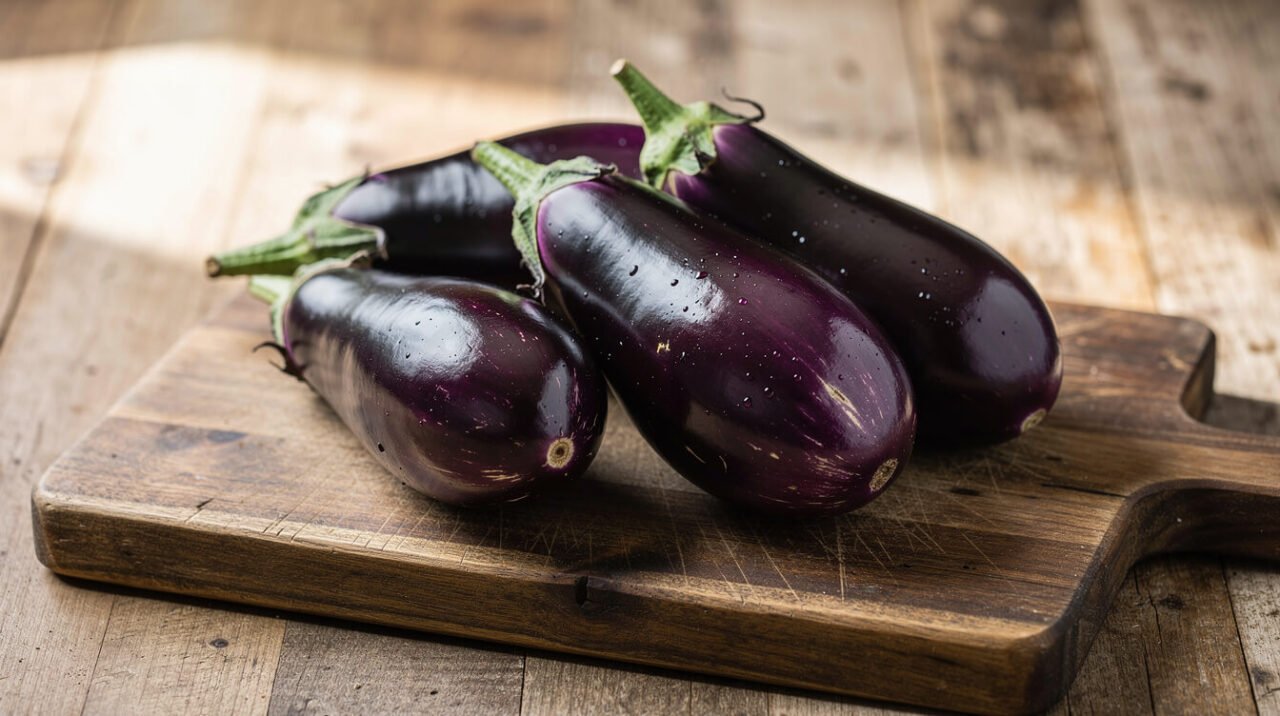
Eggplant is a member of the nightshade family, Solanaceae, along with tomatoes, potatoes, and bell peppers. Nightshades have a reputation problem because a few of their relatives — deadly nightshade being the obvious one — are genuinely toxic. Eggplant isn’t in that category, but it does contain small amounts of solanine, a natural compound the plant produces partly as a pest deterrent.
Solanine is concentrated most heavily in the stem, leaves, and flowers of the eggplant plant — parts no one is feeding their dog anyway — with much lower amounts in the flesh you’d actually cook and serve. In the quantities present in a normal store-bought eggplant’s flesh, solanine is not considered a significant toxicity risk for dogs. It becomes a concern in large quantities, which is one more reason “a few bites” stays the right serving size rather than a graduated free-for-all.
The dogs who need the most caution here are the ones with existing kidney issues or sensitive digestion, since solanine and the fiber load in eggplant both put some extra work on those systems. If that describes your dog, this is exactly the kind of judgment call worth a quick text or call to your vet before you introduce something new, rather than guessing.
Practically, this means the “is eggplant toxic to dogs” fear that circulates online is more myth than reality for the flesh of the vegetable itself — but it’s also not a reason to treat eggplant as unlimited. Small amounts, prepared plainly, is the whole guideline.
It’s worth putting solanine in perspective, too: potatoes carry the same compound, in similar or slightly higher amounts in the flesh, and cooked potato is a common, uncontroversial ingredient in plenty of commercial dog foods. No one treats a cooked potato as a hazard, and the same logic applies to eggplant flesh — the family name sounds alarming, but the actual solanine load in the part you’re feeding is modest. Where owners genuinely need to be careful is unripe or green potatoes, which concentrate far more solanine than a ripe eggplant ever does — a useful comparison if you’ve read scary things about nightshades in general and weren’t sure how eggplant specifically stacks up.
Raw vs. cooked: why preparation changes the risk
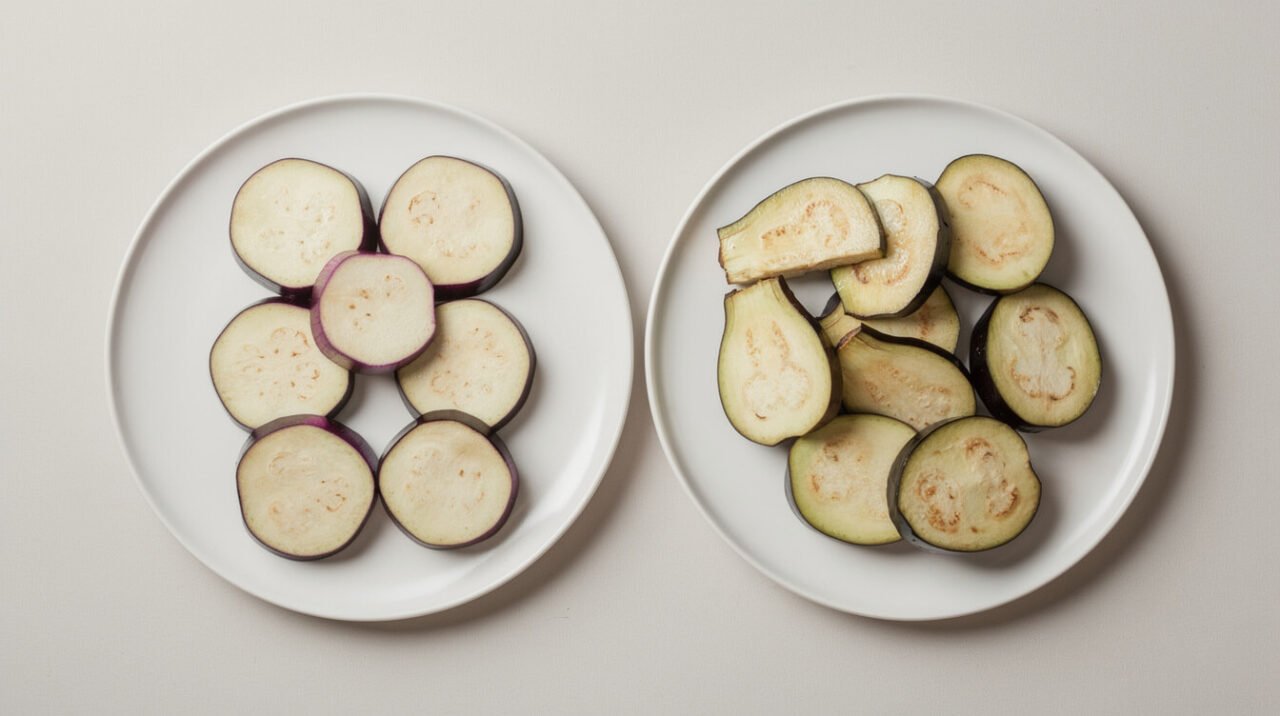
Cooking does two useful things to eggplant before it reaches your dog’s bowl: it softens the tough, fibrous flesh so it’s easier to digest, and it reduces the compounds — including solanine — that are more concentrated in the raw vegetable. That’s why every vet-reviewed source on this topic, and every source we researched for this guide, recommends cooked over raw.
Raw eggplant isn’t an emergency if your dog steals a piece, but it’s more likely to cause an upset stomach, gas, or loose stool simply because it’s denser and harder to break down. It’s also firmer, which matters for the choking-hazard conversation in the next section — a raw chunk holds its shape in a way a soft, steamed piece doesn’t.
Good cooking methods are simple: steam, bake, boil, or roast the eggplant plain, with no oil, butter, salt, garlic, or onion. Those last two — garlic and onion — are genuinely toxic to dogs in enough quantity, and they show up constantly in human eggplant recipes (eggplant parmesan, baba ganoush, ratatouille), which is exactly why “can my dog have a bite of my eggplant parmesan” and “can my dog eat plain cooked eggplant” are really two different questions with two different answers. The vegetable is fine; the dish it usually comes in often isn’t.
There’s also a texture reason to favor cooked eggplant beyond digestibility: raw eggplant flesh has a spongy, slightly bitter quality that many dogs simply don’t enjoy as much as the softer, milder cooked version. Cooking mellows the flavor and breaks down the plant’s cell walls, which is part of why it’s easier on the gut — the same principle that makes cooked carrots or cooked sweet potato gentler on digestion than their raw counterparts. If your goal is introducing a new, well-tolerated treat rather than just handling a stolen raw bite, cooked plain eggplant is the version worth actually offering on purpose.
The nightshade-arthritis myth: what we actually know

If you searched for this because you’ve read that nightshade vegetables worsen arthritis or joint inflammation — in people or in dogs — you’re not imagining the claim. It circulates widely in human wellness content, and it’s carried over into pet forums and social media as a reason to avoid tomatoes, potatoes, peppers, and eggplant for dogs with joint issues.
Here’s the honest answer: there is no solid veterinary research establishing that nightshade vegetables worsen arthritis or joint inflammation in dogs. The idea traces back to a small, disputed body of anecdotal human nutrition claims that has never been confirmed in controlled studies for people, let alone for dogs. That doesn’t mean it’s definitely false — it means it’s genuinely unproven in either direction, and we’re not going to overstate certainty we don’t have.
What we can say with more confidence: a dog’s arthritis is driven primarily by joint wear, inflammation processes, weight, and activity level — not by whether they had a bite of eggplant. If your arthritic dog tolerates a small amount of plain, cooked eggplant without any digestive upset, there’s no established evidence that it’s actively working against their joint health. That said, if you manage a dog with joint disease, it’s reasonable to mention any new food — eggplant included — to your vet at your next visit, especially if they’re on a specific therapeutic diet or joint-support regimen where consistency matters more than usual.
The practical takeaway: don’t feed eggplant to an arthritic dog because you think it will help their joints (there’s no evidence it does), and don’t avoid it out of fear that it will hurt them (there’s no evidence for that either). Treat it the same way you would for any other dog — a small, occasional, plain treat, and let your vet weigh in if your dog has a therapeutic diet plan already in place.
The weekly care guide
Get it right for your animal, every week
One email a week: new care guides, species deep-dives, and the safety answers keepers search for, written by our specialists. No spam. Unsubscribe anytime.
Safe prep: skin, seeds, and the real choking risk
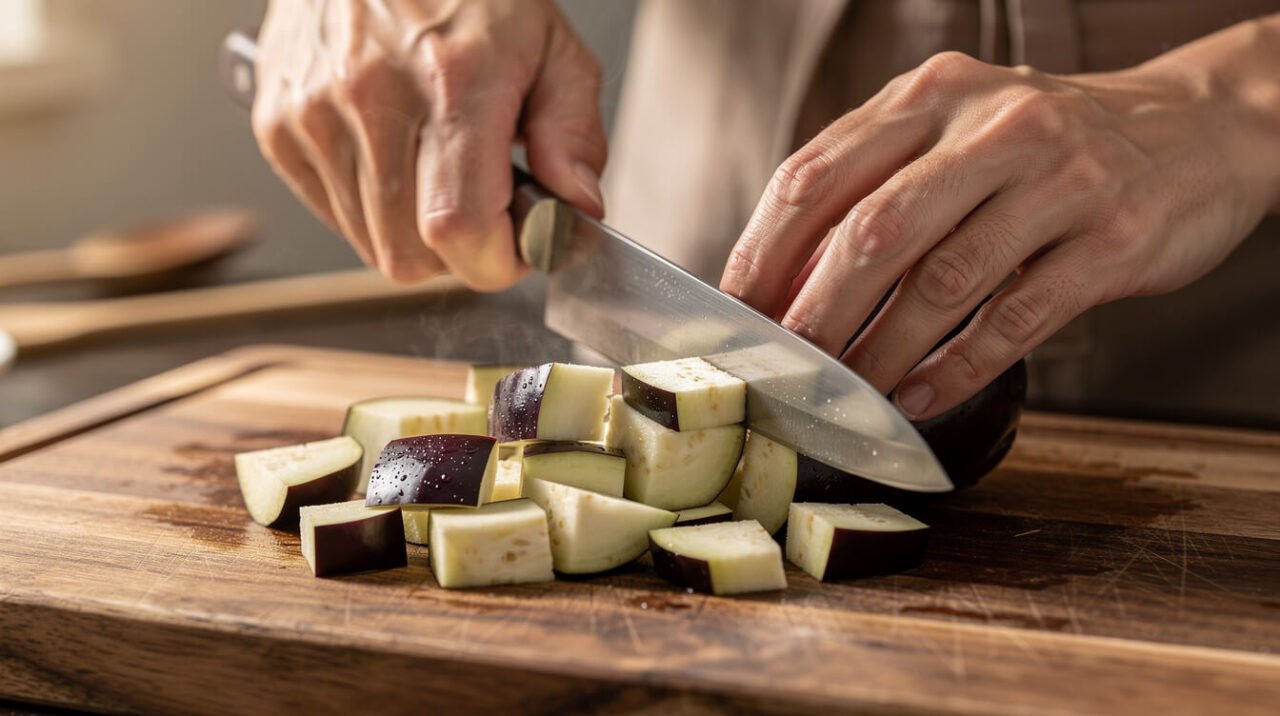
Getting eggplant ready for your dog is straightforward if you follow a few steps in order:
- Wash it thoroughly. Dogs are more sensitive to pesticide residue than people, so a good rinse matters even though it’s headed for the compost anyway if you skip this step.
- Remove the stem and cap. This is the part with the highest solanine concentration, and it’s tough and fibrous besides — there’s no upside to including it.
- Peel the skin, especially for smaller dogs. The skin itself isn’t toxic, but it’s tougher and more fibrous than the flesh, and some dogs digest it less easily. For a small or sensitive-stomached dog, peeling is the safer default; larger dogs with no history of digestive trouble usually tolerate skin-on pieces fine.
- Cut into small, bite-sized pieces. This is the step that actually prevents the most common real-world problem: choking or a partial blockage from a piece too big for your dog to chew properly, especially with small dogs and dogs that tend to gulp their food.
- Cook it plain. Steam, boil, bake, or roast until soft, with no oil, butter, salt, or seasoning — and absolutely no garlic or onion powder, which are common in eggplant recipes and genuinely toxic to dogs.
Skip anything breaded, fried, or sauced. Eggplant parmesan, baba ganoush, and most restaurant-style eggplant dishes carry salt, oil, dairy, and often garlic or onion in amounts that turn a fine vegetable into a food your dog should sit out. If your dog steals a bite off your plate, it’s usually not an emergency — but it’s also not the “safe eggplant” this guide is describing.
How much eggplant can my dog eat, and how often

Eggplant is a treat, not a diet staple, so the standard guidance applies: treats, including vegetables like eggplant, should make up no more than about 10% of your dog’s daily calorie intake, with the rest coming from a complete and balanced dog food. Within that limit, portion size scales with your dog’s size — a piece that’s a fun treat for a Great Dane could be a large serving for a Chihuahua.
As a general, size-based starting point for plain, cooked eggplant:
- Extra-small dogs (2–20 lb) — a piece or two, roughly a teaspoon’s worth
- Small dogs (21–30 lb) — a few small pieces, roughly a couple of teaspoons
- Medium dogs (31–50 lb) — about a tablespoon
- Large dogs (51–90 lb) — one to two tablespoons
- Extra-large dogs (91+ lb) — up to about three tablespoons
Treat these as a reasonable starting range, not an exact prescription — your vet knows your dog’s weight, health history, and any therapeutic diet requirements, and can give you a number tailored to your dog specifically. The first time you offer eggplant, start on the smaller end of the range and watch for a day or so before making it a regular occasional treat, the same way you’d introduce any new food.
There’s no need to feed eggplant often for it to count as a nice addition to your dog’s routine — once every week or two, in small amounts, is plenty for a dog who enjoys it. A few dogs are better off skipping eggplant altogether or checking with a vet first: those with a history of kidney disease, dogs on a strict veterinary or prescription diet where consistency matters, dogs with a known nightshade sensitivity, and any dog who has previously had an allergic or unusually severe digestive reaction to a new vegetable. For everyone else, eggplant is a low-stakes, occasional extra — not a food you need to plan around.

Wear the obsession
Bearded Dragon Crown Sunglasses King T-Shirt
Price range: $24.99 through $26.99
Shop this designFAQs: eggplant parmesan, allergies, and when to call your vet

My dog ate a bite of eggplant parmesan off my plate — what should I do?
Watch for stomach upset over the next 24 hours. The eggplant itself is the least concerning part; the breading, cheese, oil, and any garlic or onion in the sauce are the more likely culprits behind an upset stomach. A single small bite is rarely a reason to panic, but repeated vomiting, diarrhea, or lethargy warrants a call to your vet.
Can dogs be allergic to eggplant?
It’s possible, though uncommon. As with any new food, introduce a small amount first and watch for itching, swelling, hives, or digestive upset. Stop feeding it and call your vet if you notice any of these signs.
Is eggplant skin safe for dogs?
The skin itself isn’t toxic, but it’s fibrous and can be harder to digest than the flesh — peeling is the more cautious choice, especially for small or sensitive-stomached dogs.
Are other nightshades, like tomatoes and potatoes, safe too?
Ripe tomato flesh and fully cooked potato are generally considered safe in small amounts, following the same logic as eggplant — avoid the stems, leaves, and any green/unripe parts, which carry more solanine. Each deserves its own careful look rather than a blanket assumption, so when in doubt, check before sharing.
What about store-bought eggplant purees, dips, or baby food?
Be cautious here rather than assuming they’re a shortcut. Baba ganoush and similar dips are typically loaded with garlic, tahini, lemon, and salt — none of it dog-appropriate. Plain, single-ingredient eggplant baby food with no added salt or onion powder can work in a pinch, but always check the label yourself rather than assuming “baby food” means “dog safe”; some jarred varieties include onion or garlic powder for flavor.
Should I introduce eggplant differently for a puppy versus an adult dog?
Puppies have more sensitive digestive systems and are still building tolerance for new foods generally, so go smaller and slower than the adult portion ranges above — a couple of small pieces at most — and space out new food introductions so you can tell what caused any upset if one occurs. If your puppy is still on a growth-formula diet, check with your vet before adding extras, since their calorie and nutrient needs are tighter than an adult dog’s.
When should I call the vet instead of just watching and waiting?
Call promptly if your dog shows any of the following after eating eggplant or an eggplant dish:
- Repeated vomiting or vomiting that doesn’t resolve quickly
- Diarrhea, lethargy, or refusing food and water for more than a few hours
- Swelling of the face or muzzle, hives, or difficulty breathing — treat as an emergency
- Signs of abdominal pain, such as a hunched posture or a visibly bloated belly
- Any symptoms following a large amount of eggplant, or an eggplant dish containing garlic, onion, or a lot of oil and salt
None of this is meant to diagnose your dog specifically — if you’re ever unsure, a call to your regular vet or an emergency animal hospital is always the right move. The ASPCA Animal Poison Control Center is also a reliable resource (a phone consultation, for a fee) if you suspect your dog ate something more concerning than a plain piece of eggplant.
Final thoughts: A small amount of plain, cooked eggplant is a perfectly reasonable occasional treat for most healthy dogs, the solanine risk in the flesh is low, and the nightshade-arthritis worry doesn’t hold up to what we actually know — it’s neither proven harmful nor proven helpful, so there’s no need to feed or avoid eggplant on that basis alone. The real risks worth managing are portion size, plain preparation, and keeping your dog away from seasoned, oily, garlic-and-onion-laden eggplant dishes. For more on rounding out your dog’s everyday diet, take a look at our guides on whether dogs can eat cooked shrimp and olive oil safety for dogs, and if you’re building a full feeding plan, our rundown on providing the best nutrition for your dog covers the fundamentals eggplant is just one small piece of.
Before you go
Keep learning your animal
We publish a new guide every day. The best of them land in one short weekly email, so you never miss the one about your species.

Meet Jake Harrington, your go-to guru for all things canine. With over 15 years of professional dog training experience, Jake has transformed the lives of thousands of dogs and their owners. His journey began in the bustling streets of a major city, where he discovered his natural affinity for understanding canine behaviors and communication.