Can My Dog Eat Raw Ground Beef? Safe-Handling Rules, Weight-Based Vet Thresholds, and the 48-Hour Watch List
Short answer: yes, in small amounts, but raw ground beef carries real risks that cooked beef doesn’t — mainly bacteria, not the beef itself. If you’re asking can my dog eat raw ground beef because a pound just went missing off the counter, the concern isn’t nutrition, it’s Salmonella, E. coli, and how much landed in your dog’s stomach. If you’re asking because you’re building a raw diet on purpose, the concern shifts to sourcing and handling. Either way, here’s what’s actually true, and here’s how to do it right.
Below, we’ll walk through the bacterial risk and how to reduce it, how much matters if your dog helped themselves to more than a taste, exactly what to watch for over the next two days, when a phone call to your vet stops being optional, how to raw-feed more safely if that’s your plan, and a cooked alternative for owners who’d rather skip the whole question.
At a glance:
- A small taste of raw ground beef: usually not a big deal for a healthy adult dog
- A large accidental amount, especially in a small dog: worth watching closely and possibly calling your vet
- Deliberately raw-feeding: doable, but only with real sourcing and handling discipline
Can dogs eat raw ground beef? Quick answer
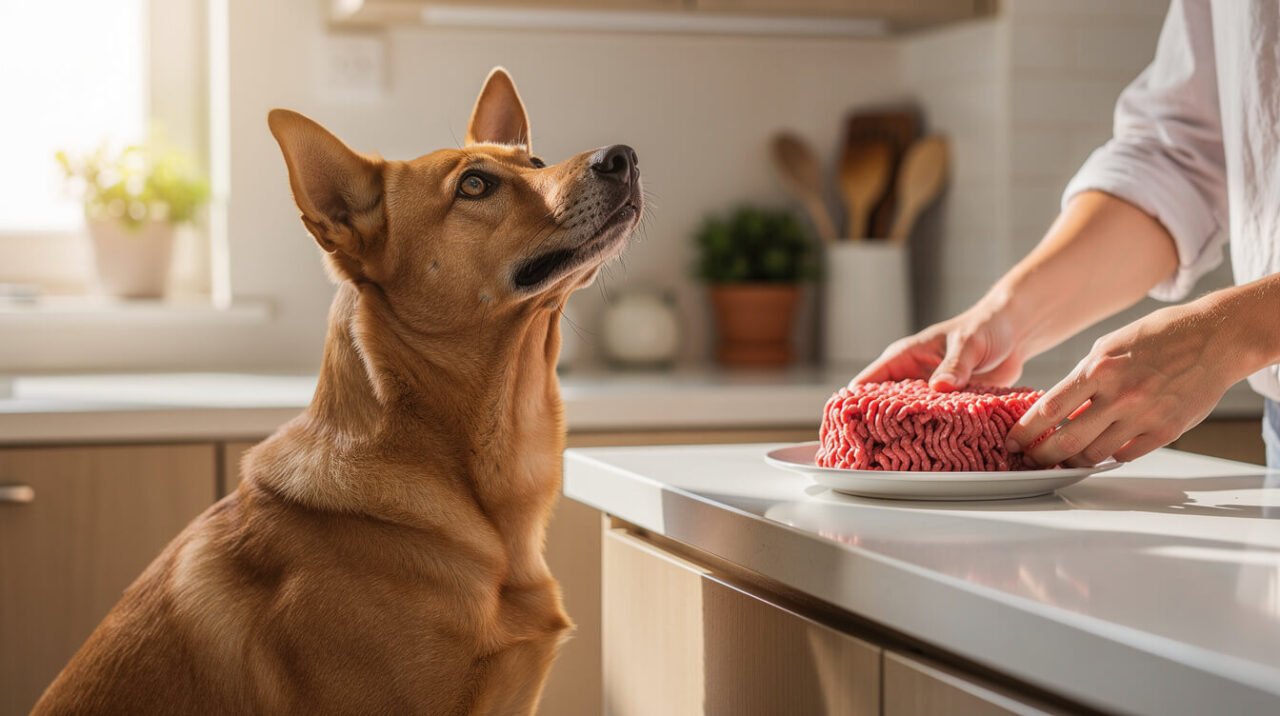
Dogs can eat raw ground beef, and plenty of dogs do — raw feeders build entire diets around it, and dogs’ shorter, more acidic digestive tracts handle some bacterial exposure better than ours do. That’s genuinely true. It’s also not the whole picture, and most of the searches behind this question aren’t from someone planning a raw diet — they’re from someone whose dog just ate a pound of it off the kitchen counter while dinner was being prepped.
Those are two different situations with two different answers. An intentional raw feeder controls sourcing, freezing, and portion size, which meaningfully lowers the bacterial risk discussed below. An accidental binge means an unknown quantity of unfrozen, possibly lower-grade meat went down fast, with no portion control at all. If your dog just helped themselves, skip ahead to the weight-based section on how much is too much — that’s where the real triage happens. If you’re here because you’re considering feeding raw on purpose, the sourcing and freezing section further down is your starting point.
Either way, the beef itself isn’t the danger the way, say, chocolate or grapes are. The danger is what can be living on and in raw meat, and how your dog’s body responds to it.
Bacterial risk: Salmonella, E. coli, and how to reduce it if you raw-feed
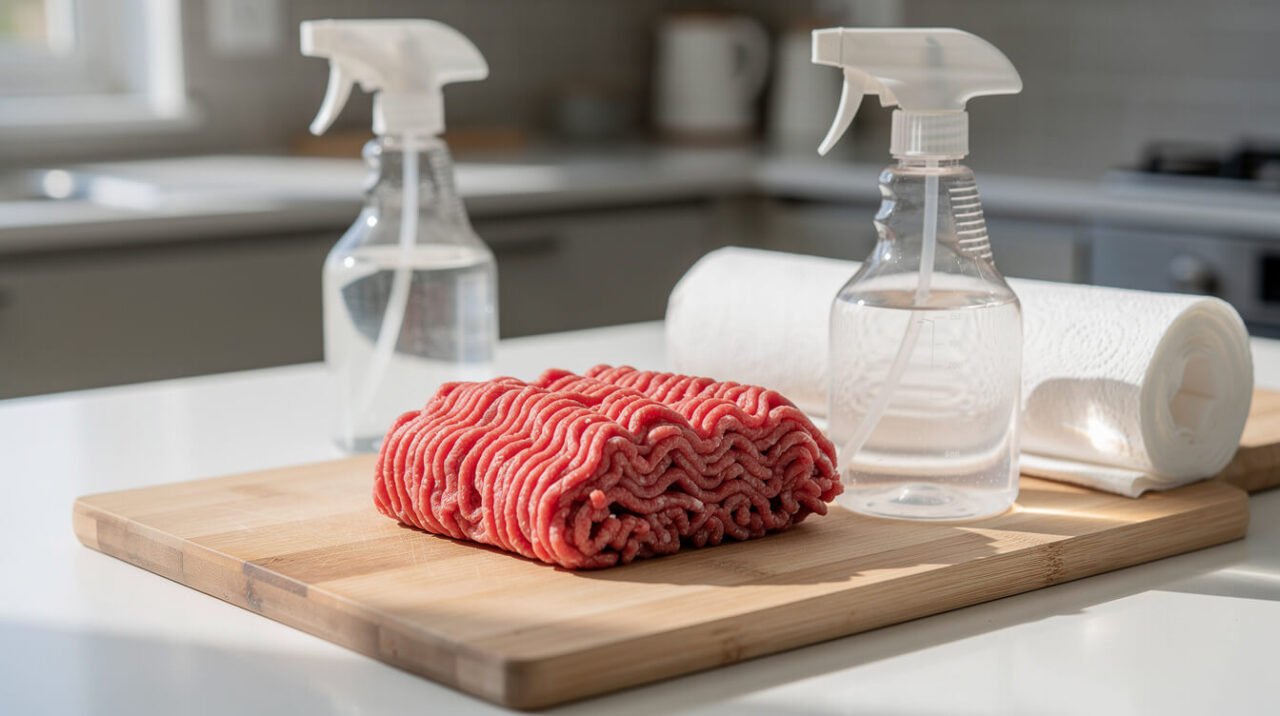
Raw ground beef can carry Salmonella, E. coli, Listeria, and Campylobacter — the same bacteria that make raw or undercooked beef a food-safety concern for people. Grinding meat matters here: the grinding process mixes surface bacteria throughout the meat rather than leaving it on the outside, where cooking would reach and kill it easily. That’s part of why ground beef carries a meaningfully higher bacterial load risk than, say, a single intact steak.
Dogs are more resistant to some of this than we are — a shorter digestive tract and a more acidic stomach environment do real work killing off a portion of what they swallow. “More resistant” isn’t “immune,” though. A healthy adult dog eating a well-sourced, properly handled portion faces a fairly low risk of getting sick. A puppy, a senior dog, a dog with an existing health condition, or a dog eating a large amount of poorly handled meat is a different risk calculation entirely, and immune-compromised dogs can develop a genuine bacterial infection from exposure a healthy adult would shrug off.
If you’re feeding raw on purpose, here’s what actually lowers the risk
- Buy human-grade meat from a source you trust — the tighter the supply chain’s food-safety standards, the lower your starting bacterial load.
- Keep it cold until the moment you serve it. Bacteria multiply fastest between roughly 40°F and 140°F, so meat that’s been sitting out at room temperature is a bigger risk than meat straight from the fridge or freezer.
- Freeze it first. A sustained deep freeze (commonly cited around -4°F for at least several days to a couple of weeks, depending on the parasite and cut) reduces certain parasite risks, though it doesn’t reliably eliminate bacteria like Salmonella or E. coli. Freezing is a parasite-risk tool, not a bacterial-safety guarantee.
- Practice the same kitchen hygiene you would for raw meat you’re cooking for yourself — separate cutting boards and utensils, thorough handwashing, and sanitizing any surface the meat touched.
- Don’t let it sit in your dog’s bowl for hours. If they don’t finish it promptly, refrigerate or discard the leftover portion rather than leaving raw meat out at room temperature.
None of this makes raw feeding risk-free — no raw-meat handling ever fully is, for dogs or people — but it’s the difference between a manageable, low-probability risk and an genuinely unnecessary one.
Accidental ingestion: how much is too much by dog weight

If your dog raided the counter, the real question is rarely “is raw beef poisonous” — it’s “how much is a lot for a dog this size.” A few licks off the wrapper is a very different event than a full pound disappearing in under a minute, and the honest answer scales with your dog’s weight, not a single fixed number.
- Small dogs (under ~20 lbs): Even a modest amount — a few ounces — is proportionally a large meal-sized event for their size. Bacterial exposure and the sheer volume of unfamiliar, rich food both carry more weight (literally) for a small dog’s system. Watch closely, and lean toward calling your vet if the amount was more than a couple of bites.
- Medium dogs (~21–50 lbs): A few ounces is usually a manageable, if unplanned, treat. A half-pound or more — especially fatty ground beef rather than lean — raises real odds of stomach upset or pancreatitis, covered in the watch list below.
- Large and giant dogs (50+ lbs): More margin for a modest amount, but a full pound or more of raw ground beef, particularly higher-fat blends, is still a legitimate concern for pancreatitis regardless of size, and the bacterial risk doesn’t scale down just because the dog is bigger.
Fat content matters as much as quantity. An 80/20 or fattier ground beef is significantly harder on the pancreas than a 90/10 lean blend, so “how much beef” and “how fatty was it” are really the same question asked two ways. We’re intentionally not giving an exact ounce-per-pound threshold here, because your dog’s individual history — prior pancreatitis, a sensitive stomach, other health conditions — changes the math in ways a general guide can’t account for. If you’re unsure whether what went down qualifies as “a lot” for your dog, a quick call to your vet’s office costs a few minutes and buys real peace of mind.
The 48-hour watch list: vomiting, diarrhea, lethargy, and pancreatitis signs

Most dogs who eat an unplanned portion of raw ground beef are completely fine within a day or two. But bacterial illness and pancreatitis don’t always show up immediately, so the next 48 hours are worth genuine attention even if your dog seems normal right now. This is general guidance, not a diagnosis, and it doesn’t replace an actual veterinary exam.
Keep an eye out for:
- Vomiting — a single episode shortly after eating isn’t unusual, but repeated vomiting, or vomiting that starts a day or more later, is worth a call.
- Diarrhea, especially if it’s watery, persistent, or contains blood.
- Lethargy or a noticeable drop in energy — a dog who’s suddenly quiet, uninterested in normal activities, or reluctant to move.
- Loss of appetite that lasts beyond a single skipped meal.
- Signs specific to pancreatitis — a hunched or “praying” posture (front legs down, rear end up), a tense or painful abdomen, and repeated vomiting are the classic combination, and pancreatitis can develop a day or two after a rich or fatty meal, not necessarily right away.
- Fever — harder to check without a thermometer, but a dog who feels warm, is panting excessively at rest, or seems generally unwell alongside the signs above adds to the picture.
What’s generally fine and doesn’t need a panic: one loose stool or a single vomiting episode in a dog who’s otherwise bright, drinking normally, and acting like themselves. What crosses the line into “call now”: anything repeated, anything paired with lethargy or abdominal pain, or anything that doesn’t start improving within a day. Don’t induce vomiting or give home remedies on your own — that decision belongs to your vet, and it depends on how much time has passed and what else was involved.
The weekly care guide
Get it right for your animal, every week
One email a week: new care guides, species deep-dives, and the safety answers keepers search for, written by our specialists. No spam. Unsubscribe anytime.
When to call your vet immediately
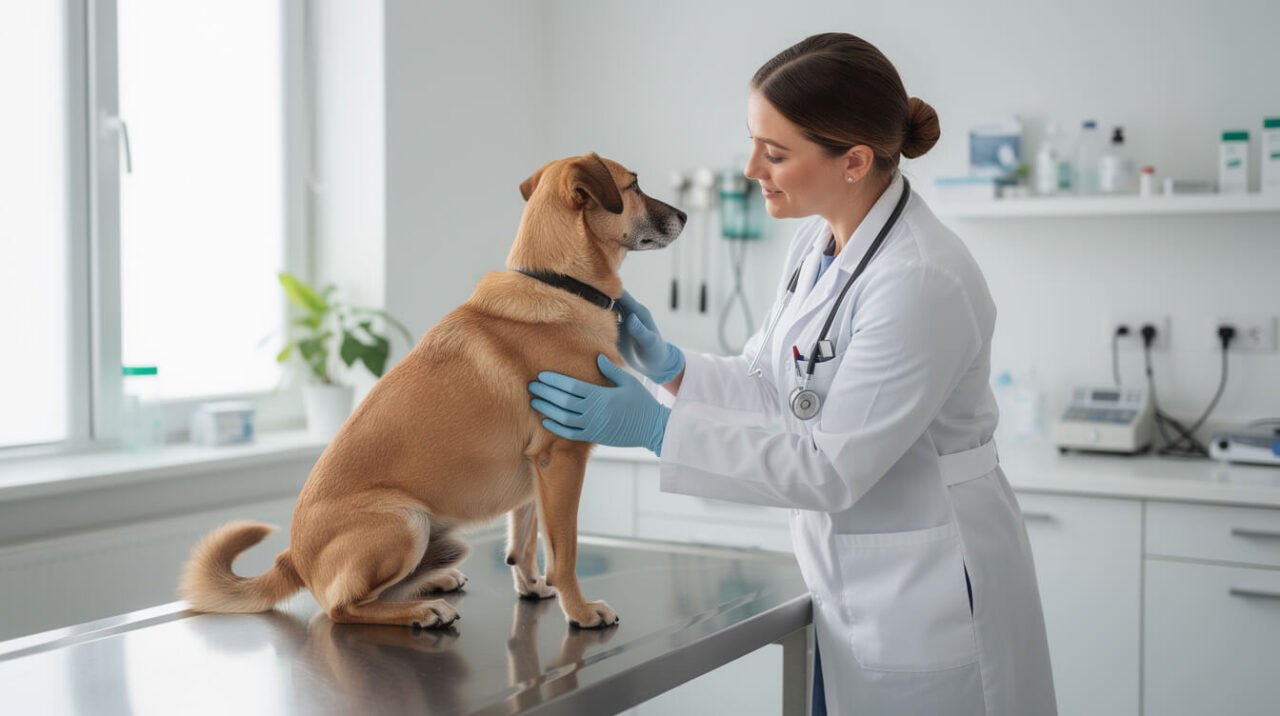
Some situations don’t belong in a “wait and watch” category. Call your vet or an emergency animal hospital right away if you see:
- Repeated vomiting or retching, or any vomiting that continues beyond the first attempt to clear something
- Diarrhea with visible blood, or diarrhea that’s severe or non-stop
- A hunched, “praying” posture, a visibly tense or bloated belly, or clear signs of abdominal pain
- Significant lethargy, weakness, or collapse
- Known pre-existing pancreatitis, a compromised immune system, or a very young, senior, or otherwise fragile dog who ate a substantial amount
- Fever, or a general sense that something is seriously wrong beyond mild stomach upset
Bring context when you call: roughly how much beef, how long ago, the fat content if you know it (lean vs. fatty blend), and your dog’s weight and any existing health conditions. That context helps your vet figure out whether they’re watching for a bacterial infection, pancreatitis, or simple dietary indiscretion, since each points toward a somewhat different plan. If your regular vet’s office is closed, most areas have a 24-hour emergency animal hospital, and the ASPCA Animal Poison Control Center offers phone consultations (for a fee) if you’re unsure how urgent the situation is. When in doubt, it costs nothing to call and ask.
If you want to raw-feed safely: sourcing and freezing guidelines
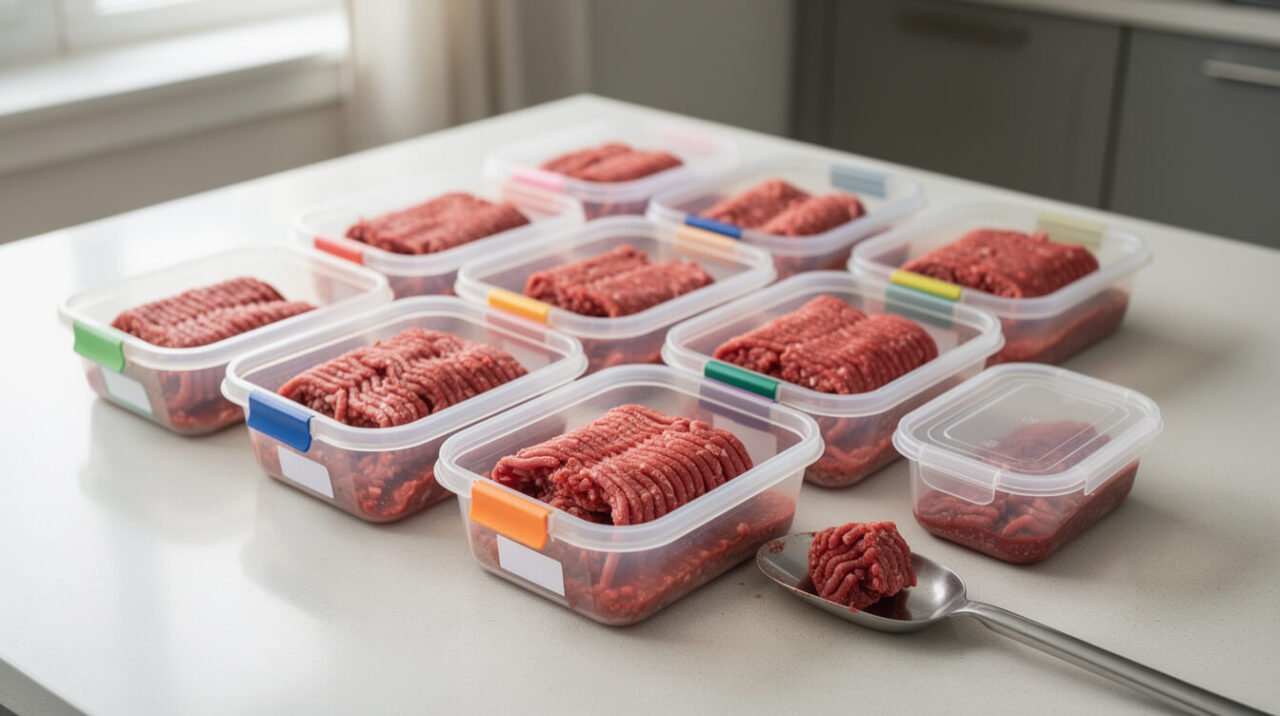
If you’re feeding raw ground beef on purpose rather than dealing with an accident, a little structure goes a long way toward making it a genuinely reasonable choice rather than an open-ended gamble.
Sourcing
Buy from a butcher, grocer, or raw-pet-food supplier with visible food-safety standards — the same instinct you’d apply buying beef for your own dinner table applies here. Human-grade meat intended for pet consumption, from a supplier that tracks sourcing and handling, is a meaningfully lower-risk starting point than beef of unknown origin or age.
Freezing
Freezing raw meat for a sustained period — commercial raw pet food guidance commonly points to around -4°F (-20°C) held for at least several days, sometimes up to a couple of weeks depending on the cut and target parasite — reduces the risk of certain parasites. It is not a reliable kill step for bacteria like Salmonella or E. coli, which is an important distinction: freezing addresses a different risk than cooking does, and raw feeders sometimes conflate the two. If parasite exposure in your area or from your specific source is a known concern, ask your vet or your supplier about their specific freezing protocol rather than assuming any freeze time is equivalent.
Portioning and balance
A raw diet built entirely around ground beef isn’t nutritionally complete on its own — dogs need a balanced mix of protein, fat, organ meat, bone or a calcium source, and other nutrients that a single muscle-meat cut doesn’t provide. If you’re building a homemade raw diet, work from a formulation a veterinary nutritionist has reviewed, or use a commercially balanced raw product, rather than assembling ground beef and hoping the rest works itself out. This is exactly the kind of decision worth a conversation with your vet before you commit to it long-term, especially for puppies, whose growing bodies have less room for error on nutritional gaps.
Ongoing hygiene
Treat every raw feeding session like handling raw meat for your own kitchen: separate bowls, surfaces, and utensils; prompt cleanup; refrigerated storage for anything not eaten immediately; and regular handwashing, especially in households with young children, elderly family members, or anyone immunocompromised, since the bacteria that can affect your dog can also make people sick through cross-contamination.

Wear the obsession
Bearded Dragon Crown Sunglasses King T-Shirt
Price range: $24.99 through $26.99
Shop this designCooked alternative for owners who’d rather not risk it
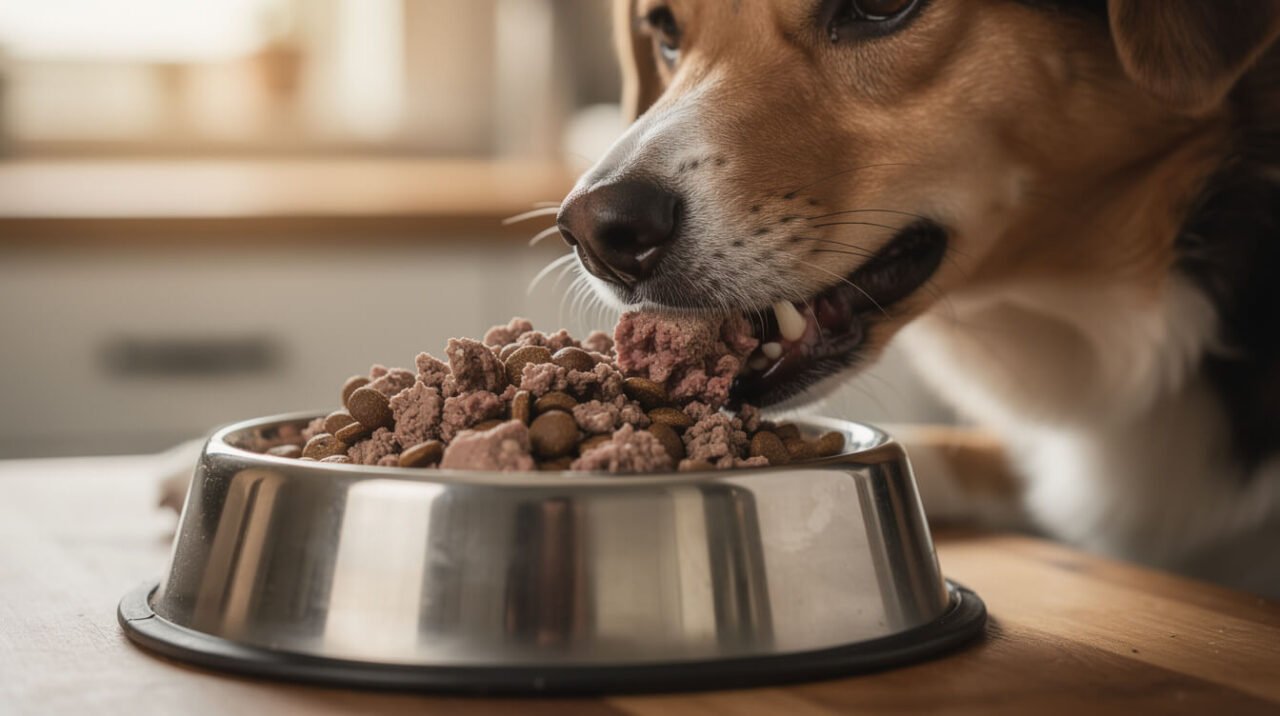
If all of the above sounds like more risk management than you want to take on, cooked ground beef gives your dog most of the same benefits — protein, iron, B vitamins — without the bacterial handling questions. It’s a perfectly reasonable choice, and plenty of devoted, well-informed keepers land here on purpose rather than as a compromise.
- Cook it plain and all the way through — no pink remaining, no seasoning, no garlic, onion, salt, or oil.
- Choose lean ground beef (90/10 or leaner) and drain excess fat after cooking; fattier blends carry more pancreatitis risk cooked or raw.
- Let it cool before serving, and treat it as an occasional addition rather than a daily staple unless it’s part of a vet-reviewed complete diet.
- Keep portions sensible — treats and add-ins, cooked beef included, should generally stay to no more than about 10% of your dog’s daily calories, with the rest coming from a complete and balanced regular diet.
Cooking removes the Salmonella and E. coli concern almost entirely (thorough cooking reliably kills these bacteria) while keeping the nutritional upside intact. For most owners who aren’t specifically committed to a raw-feeding philosophy, it’s the lower-effort, lower-risk way to let your dog enjoy beef.
Quick questions about dogs and raw ground beef
Can puppies eat raw ground beef? Puppies have less digestive margin for error and developing immune systems, which makes bacterial exposure a bigger relative risk. Cooked, plain ground beef is the safer choice while they’re young, and any diet change for a puppy is worth running by your vet first.
Is raw ground beef better than raw steak or raw chicken for dogs? Grinding increases bacterial risk compared to an intact cut, because the grinding process distributes any surface bacteria throughout the meat rather than leaving it on the outside. Raw poultry also carries its own well-documented Salmonella and Campylobacter concerns, arguably higher than beef in some studies. None of these are risk-free raw; the handling guidance in this guide applies across raw meats generally.
Does freezing raw ground beef make it safe? Freezing reduces certain parasite risks but does not reliably kill Salmonella or E. coli. Treat freezing as a parasite-risk step, not a substitute for cooking or for sourcing meat you trust.
My dog eats raw ground beef regularly with no problems — is that normal? Many raw-fed dogs tolerate it well long-term, especially with consistent, careful sourcing and handling. “No problems so far” isn’t the same as “risk-free,” though — bacterial exposure is probabilistic, not guaranteed to cause illness every time, which is exactly why the handling practices in this guide matter even for dogs who’ve never had an issue.
Can raw ground beef give my dog worms? It’s possible, depending on the source and whether the meat was properly frozen or otherwise treated for parasites. This is one more reason sourcing matters — ask your supplier what parasite-risk steps they take, and talk to your vet about a deworming schedule if raw feeding is a regular part of your dog’s diet.
Should I be worried about myself or my family, not just the dog? Yes — this is worth taking seriously. Dogs that eat raw meat can shed bacteria like Salmonella in their stool for a period afterward, even without showing symptoms themselves, which is a real consideration in households with young children, elderly family members, or anyone immunocompromised. Consistent handwashing after handling your dog’s food or cleaning up after them, and keeping raw-fed bowls and utensils separate, protects your household as much as it protects your dog.
Final thoughts: Raw ground beef isn’t an automatic emergency, and it isn’t a food to fear — but it does deserve real handling discipline, whether that beef arrived on purpose or by counter-surfing accident. Know your dog’s weight-based risk, watch for the specific signs above over the next two days, and don’t hesitate to call your vet if anything looks off rather than waiting to see. For more on rounding out what your dog eats safely, take a look at our guides on whether dogs can eat raw sweet potato, cooked shrimp safety, and olive oil for dogs — three more common kitchen questions with the same caring, straight-answer treatment.
Before you go
Keep learning your animal
We publish a new guide every day. The best of them land in one short weekly email, so you never miss the one about your species.

Meet Jake Harrington, your go-to guru for all things canine. With over 15 years of professional dog training experience, Jake has transformed the lives of thousands of dogs and their owners. His journey began in the bustling streets of a major city, where he discovered his natural affinity for understanding canine behaviors and communication.