Can Bearded Dragons Eat Strawberries? The Safe Way to Treat Your Beardie
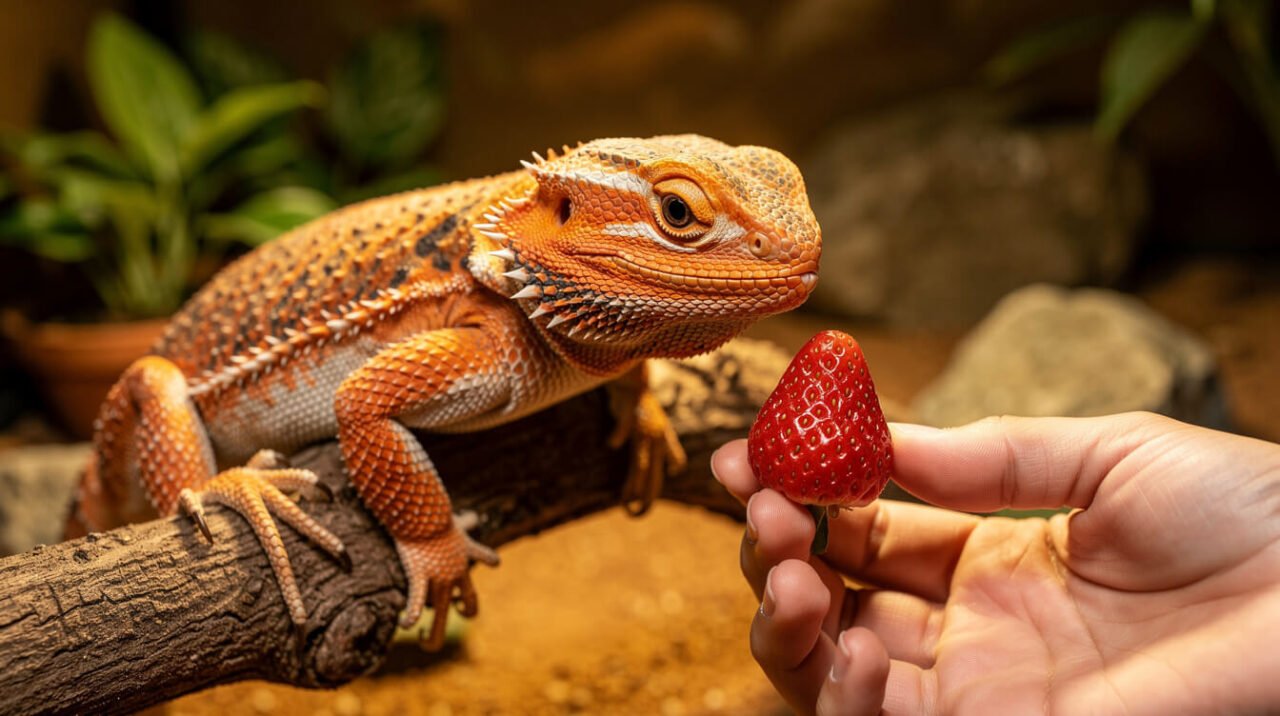
Can bearded dragons eat strawberries? Short answer: yes, in small amounts, as an occasional treat rather than a regular part of the diet. Strawberries are sweet, hydrating, and most beardies love them, but they carry a double calcium problem that a lot of care guides gloss over. Here’s the full picture, including the part most articles skip.
If you’re standing in the kitchen wondering whether that strawberry in your hand is safe to hand your bearded dragon, you’re in the right place. Below we’ll cover exactly why moderation matters here, how to prepare and serve strawberries the right way, what too much looks like, and how strawberries fit into your dragon’s bigger calcium picture.
This is a question worth taking seriously, not because strawberries are a hidden hazard, but because bearded dragons are genuinely more sensitive to dietary calcium balance than most first-time reptile owners expect. Getting the treat side of the diet right is part of keeping a dragon healthy for the long haul — and strawberries are a great case study in why “safe” and “fine to feed often” aren’t the same thing.
Can bearded dragons eat strawberries? The short answer
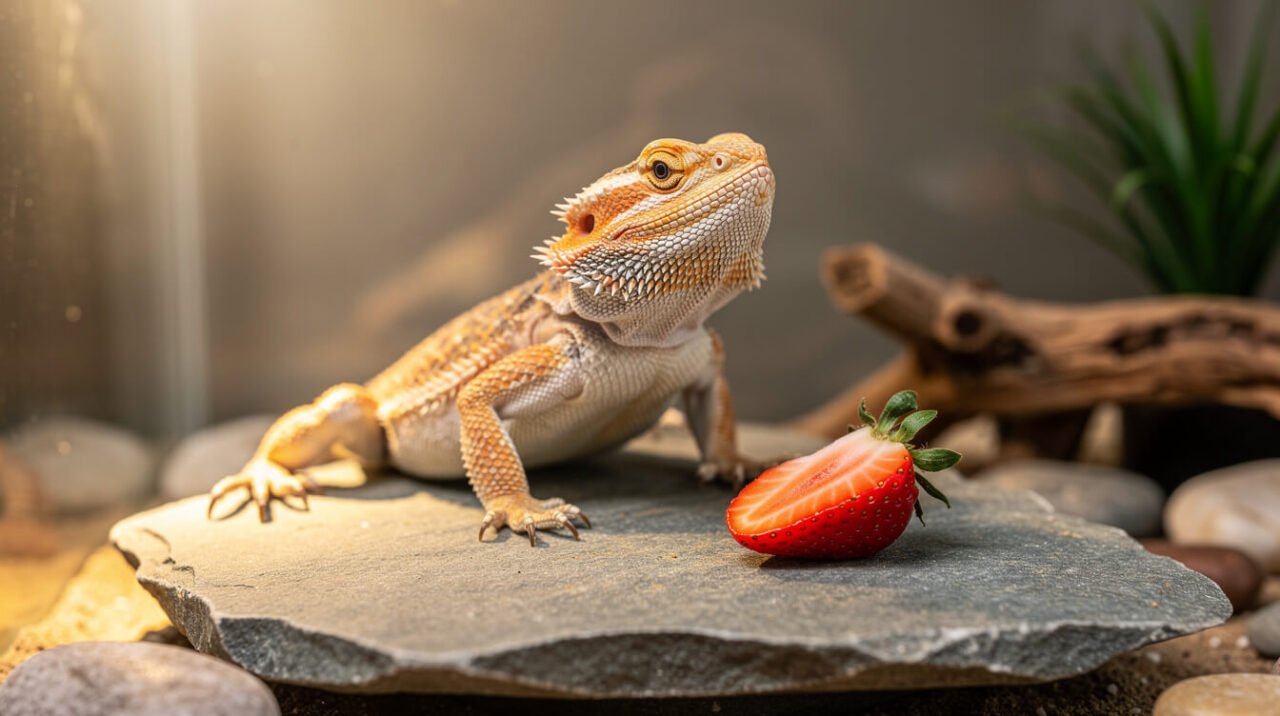
Bearded dragons can eat strawberries safely in small amounts, offered occasionally rather than as a regular menu item. Strawberries aren’t toxic, and most dragons find them genuinely appealing — the sweetness and soft texture make them one of the more popular fruit treats among keepers.
The catch isn’t toxicity. It’s what strawberries don’t offer, and what they quietly work against: a healthy calcium balance. Bearded dragons are prone to metabolic bone disease (MBD) when their calcium intake falls short relative to phosphorus, and fruit — strawberries included — is one of the easiest ways for a well-meaning owner to tip that balance the wrong way without realizing it.
Why strawberries are only an occasional treat, not a diet staple

A healthy adult bearded dragon’s diet should be built primarily from leafy greens and other vegetables (the bulk of it), gut-loaded and calcium-dusted insects (a substantial protein portion), and only a small slice — genuinely small — reserved for fruit. Strawberries fall into that last, smallest category.
Two things push strawberries toward “occasional” rather than “regular”: sugar and calcium math. Strawberries carry noticeably more natural sugar than the leafy greens that should make up most of a dragon’s diet, and a diet too heavy in sugar can contribute to digestive upset and, over time, weight and health issues — much the same way it would in any animal not built to process a lot of it. On top of that, strawberries work against the calcium-to-phosphorus balance a bearded dragon needs to stay healthy, which is the deeper issue worth understanding.
None of this means strawberries are dangerous in the way that, say, avocado or fireflies are for bearded dragons (both are genuinely toxic and should never be fed). It means strawberries are a treat food, in the same category as a rotating handful of other fruits — something offered with real restraint, not a staple sitting in the regular rotation.
A useful way to think about it: if your dragon’s daily “plate” were divided up, greens and vegetables should take up the majority, gut-loaded insects the next largest share, and fruit — all fruit combined, not just strawberries — a genuinely small sliver, more like a garnish than a course. Keepers who feed a rotating handful of fruits a few times a month, rather than any single fruit on repeat, tend to have the easiest time keeping the overall diet balanced.
The calcium double-whammy: phosphorus ratio and oxalates (the gap in most advice)
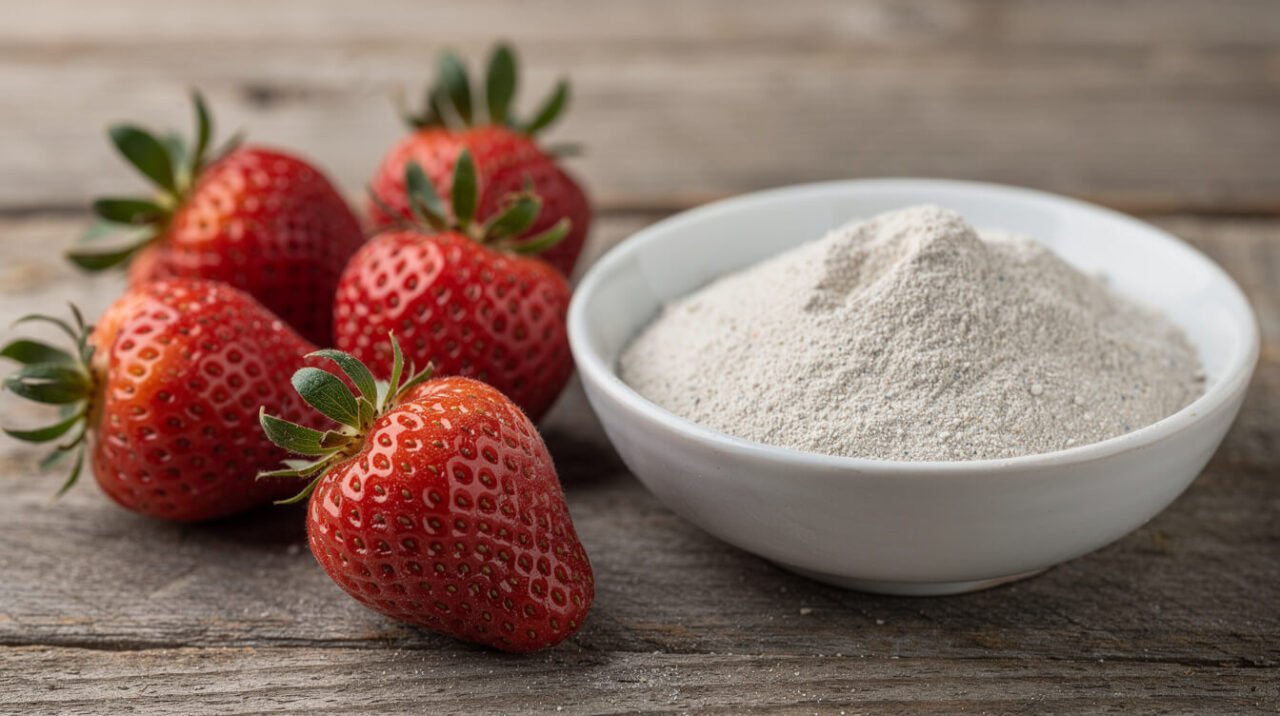
This is the part most “can my beardie eat X” articles skip entirely, and it’s worth slowing down for. Bearded dragons need a diet where calcium meaningfully outweighs phosphorus — commonly cited husbandry guidance aims for roughly twice as much calcium as phosphorus across the overall diet. Get that ratio backwards too often, and a dragon’s body starts pulling calcium from its own bones to keep other systems running, which is the underlying mechanism behind metabolic bone disease.
Strawberries work against that ratio in two separate ways, not just one:
- Phosphorus-to-calcium ratio. Strawberries contain more phosphorus than calcium, gram for gram — the opposite of what a bearded dragon’s diet needs. Feed enough of them, often enough, and they quietly drag the overall diet’s ratio in the wrong direction.
- Oxalates. Strawberries also contain oxalates, compounds that bind to calcium and make it harder for the body to absorb — including calcium from other, better foods eaten around the same time. That’s a second, independent hit against calcium absorption, on top of the phosphorus imbalance. It’s a detail that’s easy to miss if you’re only checking a single “calcium content” number rather than the fuller nutritional picture.
Neither of these makes strawberries dangerous on their own — an occasional strawberry isn’t going to cause metabolic bone disease in a dragon eating a properly calcium-dusted, mostly-greens diet. But it’s exactly why “occasional” is doing real work in this answer, and why dragons with any known calcium deficiency or MBD history should skip strawberries, and other high-oxalate fruits, unless your reptile vet says otherwise.
How to prepare and serve strawberries safely

When you do offer strawberries, a little prep goes a long way toward making the treat safe and easy for your dragon to eat.
- Wash thoroughly. Rinse strawberries well under running water to remove pesticide residue and dirt, especially if they’re not organic.
- Remove the stem and leafy cap. These aren’t a standard part of a bearded dragon’s diet — stick to the flesh of the berry.
- Cut into small, manageable pieces. Dice or mash the strawberry into pieces appropriately sized for your dragon — smaller for juveniles, slightly larger chunks are fine for adults. This also reduces the choking risk that comes with offering a whole berry.
- Mix it into a salad rather than serving it solo. Chopping a small amount of strawberry into your dragon’s regular greens encourages them to eat the vegetables alongside the treat, rather than picking out only the sweet part and leaving the healthy base behind.
- Keep portions genuinely small. A rough starting point some reptile-savvy keepers use is a single small piece — think one diced strawberry, not a whole berry — offered no more than once every week or two for an adult. There’s no single official number that applies to every dragon, so treat this as a starting point, and ask your reptile vet for guidance tailored to your individual animal, especially if you’re unsure.
- Skip it for young, growing dragons. Juveniles have higher protein and calcium needs relative to their size, and a stomach that’s better spent on gut-loaded insects and calcium-rich greens than on sugary treats. Most keepers hold off on fruit treats like strawberries until a dragon is closer to adulthood.
- Choose ripe, unblemished berries. Overripe or moldy strawberries can upset digestion beyond the normal sugar-and-calcium considerations — the same common sense you’d apply to your own produce applies here.
- Remove uneaten portions promptly. Strawberry left in a warm enclosure can attract insects or start to spoil within a few hours — clear out anything your dragon doesn’t finish.
The weekly care guide
Get it right for your animal, every week
One email a week: new care guides, species deep-dives, and the safety answers keepers search for, written by our specialists. No spam. Unsubscribe anytime.
Signs your beardie has had too much (and what to do)
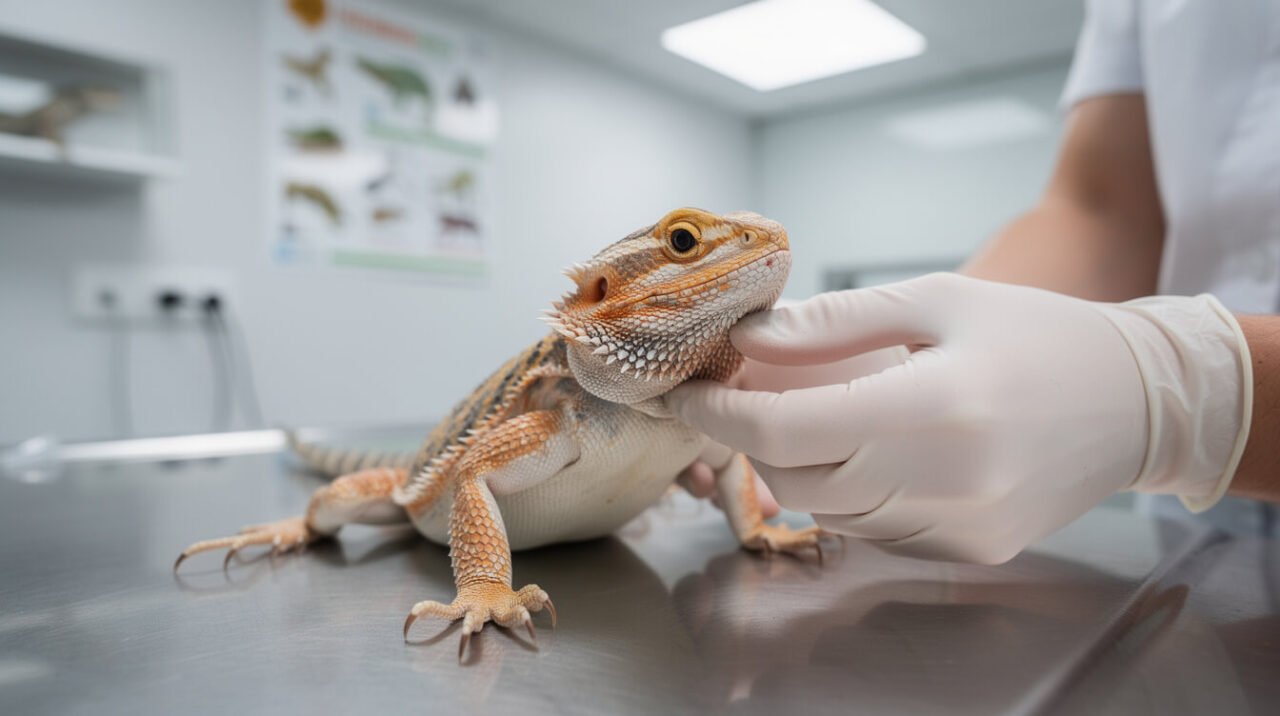
An occasional strawberry, prepared and portioned as above, is unlikely to cause a problem for a healthy dragon on an otherwise balanced diet. But it’s worth knowing what overdoing fruit treats — strawberries or otherwise — can look like over time, or if a dragon eats far more than intended in one sitting.
- Loose or unusually watery stool. A sudden increase in sugary or high-water food can upset digestion in the short term.
- Reduced appetite for staple foods. If your dragon starts turning up its nose at greens and insects in favor of holding out for treats, that’s worth addressing before it becomes a habit.
- Signs of metabolic bone disease, over the longer term. This is the one to take seriously, and it develops gradually rather than after a single treat. Watch for lethargy, tremors or twitching, difficulty moving or climbing, a swollen or rubbery-feeling jaw, or visible swelling along the limbs or spine.
A single strawberry is not going to cause MBD — this is a diet-wide, weeks-to-months pattern, not a one-time event. But if you notice any of the signs above, or if you’re generally uncertain whether your dragon’s overall calcium intake is adequate, please contact a reptile-experienced veterinarian. MBD is manageable when caught early and genuinely dangerous when it isn’t, and it’s not something to try to diagnose or treat on your own.
Can bearded dragons eat strawberries daily? The bigger calcium picture
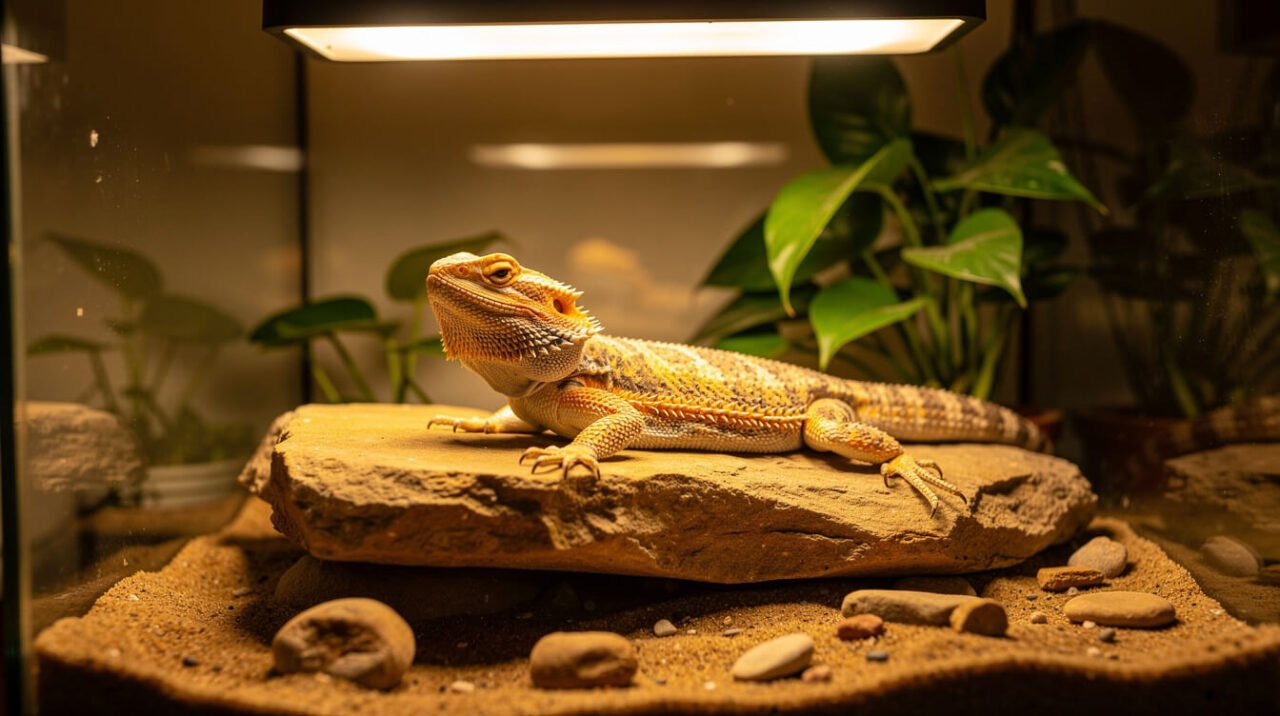
Daily is more than most dragons need, and given the phosphorus-and-oxalate double-whammy above, daily strawberries specifically are worth avoiding. The healthier long-term habit is thinking about strawberries — and fruit in general — as an occasional garnish on top of a diet that’s already doing the calcium work correctly.
That means keeping the fundamentals solid:
- Calcium-dusted insects. Most keepers dust feeder insects with a calcium supplement at every feeding for juveniles, tapering to a few times a week for adults — check with your vet or a current care guide for a schedule that fits your dragon’s age.
- Gut-loading. Feeder insects should themselves be fed a nutritious diet before being offered to your dragon, so the insects are carrying good nutrition forward rather than empty calories.
- UVB lighting. Bearded dragons need appropriate UVB exposure to actually process and use dietary calcium — without it, even a calcium-rich diet won’t fully do its job. Bulb type, distance, and replacement schedule all matter here, and it’s worth double-checking your current setup against current guidance if it’s been a while.
- A greens-forward daily diet. Calcium-rich, oxalate-low leafy greens (like collard, mustard, and turnip greens) should make up the bulk of your dragon’s vegetable intake, with higher-oxalate greens like spinach kept occasional.
Seen against that backdrop, one small strawberry every week or two is a rounding error. A diet that’s light on calcium dusting, UVB, or greens — with or without strawberries — is the real risk factor worth your attention.
It’s also worth building a simple habit around variety rather than repetition. Rotating through a handful of safe greens across the week — rather than feeding the same one or two every day — helps cover nutritional gaps that any single vegetable might have, the same way strawberries shouldn’t be the only fruit in rotation if you do offer fruit at all. A dragon that gets variety in its staple diet has more room, in terms of overall balance, for the occasional treat without tipping things off course.
How strawberries compare to other bearded dragon treats

It helps to see where strawberries sit next to other common treat options, since “safe” covers a wide range:
- Blueberries and raspberries: Similar sugar-and-oxalate profile to strawberries — treat them the same way, as occasional, small-portion fruit.
- Melon (cantaloupe, watermelon): Lower in oxalates and a good hot-weather hydration treat, though still sugary enough to keep occasional.
- Calcium-rich greens (collard, mustard, turnip greens): These should make up the bulk of a dragon’s diet, offered daily — a far better everyday habit than any fruit.
- Foods to avoid entirely: Avocado (toxic), rhubarb (extremely high oxalates, toxic in meaningful amounts), fireflies (toxic and often fatal), and anything high in fat, salt, or added sugar. None of these belong anywhere near a bearded dragon, regardless of quantity.
Seen next to that list, strawberries land in a reasonable middle ground: not dangerous like avocado or rhubarb, but not a food to lean on the way you would collard greens either. That’s exactly why “occasional, small, and mixed into a proper salad” is the right way to think about them.
Frequently asked questions
Can baby bearded dragons eat strawberries?
It’s best to hold off. Juvenile dragons have higher protein and calcium needs relative to their size, and their diet is better spent on gut-loaded insects and calcium-rich greens than on sugary treats. Most keepers wait until a dragon is closer to full adult size before introducing fruit treats like strawberries.
Can bearded dragons eat strawberry leaves or the green top?
Stick to the flesh of the berry. The stem and leafy cap aren’t a standard, tested part of a bearded dragon’s diet, so there’s no real upside to including them — just remove them before serving.
Are frozen or dried strawberries okay?
Fresh is best. Frozen strawberries (thawed first) are generally fine in the same small portions as fresh ones, but dried strawberries concentrate the sugar significantly and are best avoided or offered only in tiny amounts, rarely.
My dragon only wants strawberries and won’t eat greens anymore — what do I do?
Pull fruit treats entirely for a while and go back to offering only greens and properly gut-loaded, calcium-dusted insects. Most dragons will resume eating their staple diet once the sweeter option isn’t available. If your dragon refuses food altogether for more than a couple of days, that’s worth a call to your reptile vet regardless of the cause.
Can bearded dragons eat strawberries if they have a history of metabolic bone disease?
This is exactly the situation where it’s worth checking with your reptile vet before offering strawberries or other high-oxalate fruit. A dragon recovering from or managing MBD needs its calcium intake carefully managed, and an oxalate-containing treat works against that in a way that’s not worth the risk without professional guidance.
Do bearded dragons need fruit in their diet at all?
No — fruit is optional enrichment, not a nutritional requirement. A bearded dragon can live a fully healthy life on gut-loaded insects and a well-chosen rotation of calcium-rich greens and vegetables without ever eating a strawberry. If you’d rather skip fruit treats entirely to simplify calcium management, that’s a perfectly reasonable choice, not a deprivation.
How many strawberries is too many for a bearded dragon?
There’s no single hard number, since it depends on your dragon’s size, age, and overall diet — but as a general guideline, more than a small piece more than once a week starts to push into “too often” territory for most adult dragons. If you’re feeding fruit treats regularly and you’re not sure whether the overall balance is right, a quick check-in with your reptile vet can put your mind at ease.

Wear the obsession
Bearded Dragon Crown Sunglasses King T-Shirt
Price range: $24.99 through $26.99
Shop this designFinal thoughts

Strawberries are a genuinely fine occasional treat for a bearded dragon on an otherwise well-balanced diet — most dragons enjoy them, and there’s nothing toxic about a small, properly prepared piece. The part worth remembering is the calcium math: strawberries carry more phosphorus than calcium and contain oxalates that bind calcium further, so they work quietly against the diet balance your dragon depends on to avoid metabolic bone disease. Keep portions small, keep them occasional, and keep the fundamentals — gut-loaded and calcium-dusted insects, real UVB, and a greens-forward daily diet — doing the heavy lifting. If you’re ever unsure about your dragon’s calcium intake, or you notice anything that looks like the early signs of MBD, a call to a reptile-experienced veterinarian is always the right move.
If you’re dialing in the rest of your dragon’s setup, our guides on what a skink lizard eats and setting up a blue-tongue skink enclosure cover a lot of the same calcium-and-UVB fundamentals that apply across pet lizards. And if geckos are also on your radar, our albino leopard gecko guide is a good next read.
Before you go
Keep learning your animal
We publish a new guide every day. The best of them land in one short weekly email, so you never miss the one about your species.

Dr. Zoe Santos is a distinguished herpetologist and a revered expert in the care, conservation, and study of reptiles and amphibians. With a PhD in herpetology and over 18 years of field and academic experience, Zoe brings a depth of knowledge to her readers that is both rare and invaluable.