Can Rabbits Eat Cucumber? A Vet-Informed Safety Guide
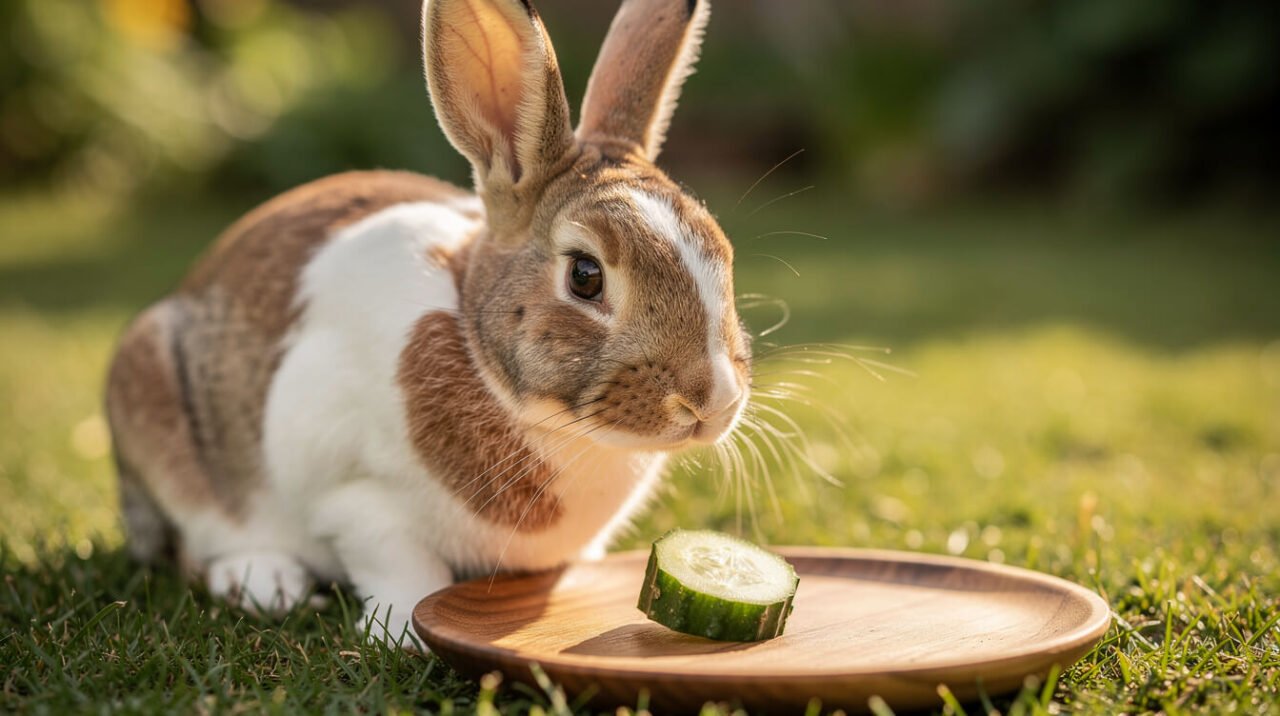
Short answer: yes — cucumber is safe for rabbits as an occasional treat. It’s low in calories, mostly water, and most rabbits enjoy the crunch. The nuance is in the “occasional”: cucumber shouldn’t replace the hay-first diet your rabbit actually needs, and going overboard can upset a surprisingly delicate digestive system. Here’s how to do it right.
If you’ve got a slice of cucumber in your hand and a rabbit giving you those eyes, you’re in the right place. Below we’ll cover how much is actually safe, how to introduce it for the first time, what overfeeding looks like, and which parts of the cucumber to skip.
Can rabbits eat cucumber? The short answer
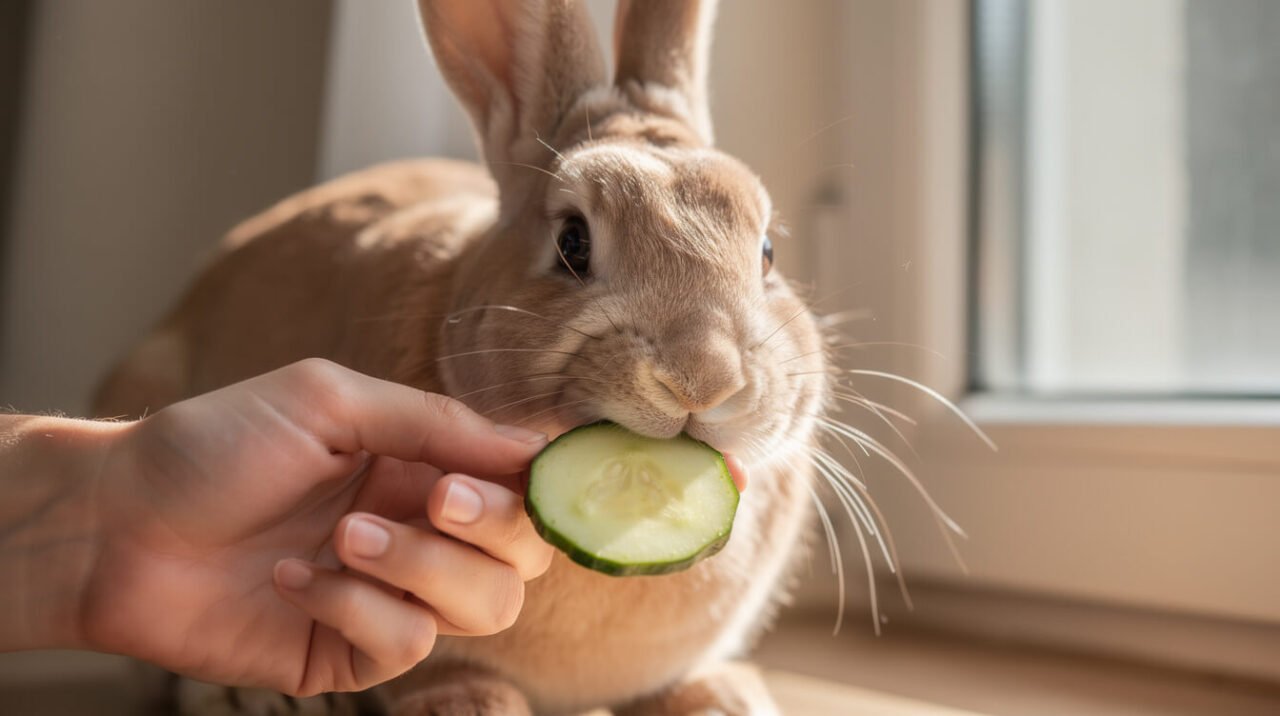
Rabbits can eat cucumber safely, and most take to it readily — the high water content and mild crunch make it an easy, low-stakes treat. It’s non-toxic, doesn’t carry the calcium or oxalate concerns that come up with some leafy greens, and a thin slice or two, offered a few times a week, fits comfortably into a healthy rabbit’s diet.
What cucumber isn’t is a substitute for the diet your rabbit actually needs to thrive. Hay should make up roughly 80% of what a rabbit eats — it’s the fiber that keeps their gut moving and their teeth worn down properly. Cucumber is a garnish on top of that foundation, not a food group of its own.
Why cucumber is safe in moderation (and why it isn’t a health food)
Cucumber is about 95% water, which is exactly why it works well as a treat: it’s hydrating, refreshing, and very low in calories, sugar, and fat compared to fruit-based treats. Rabbits can’t overeat calories on cucumber the way they can on a piece of apple or banana.
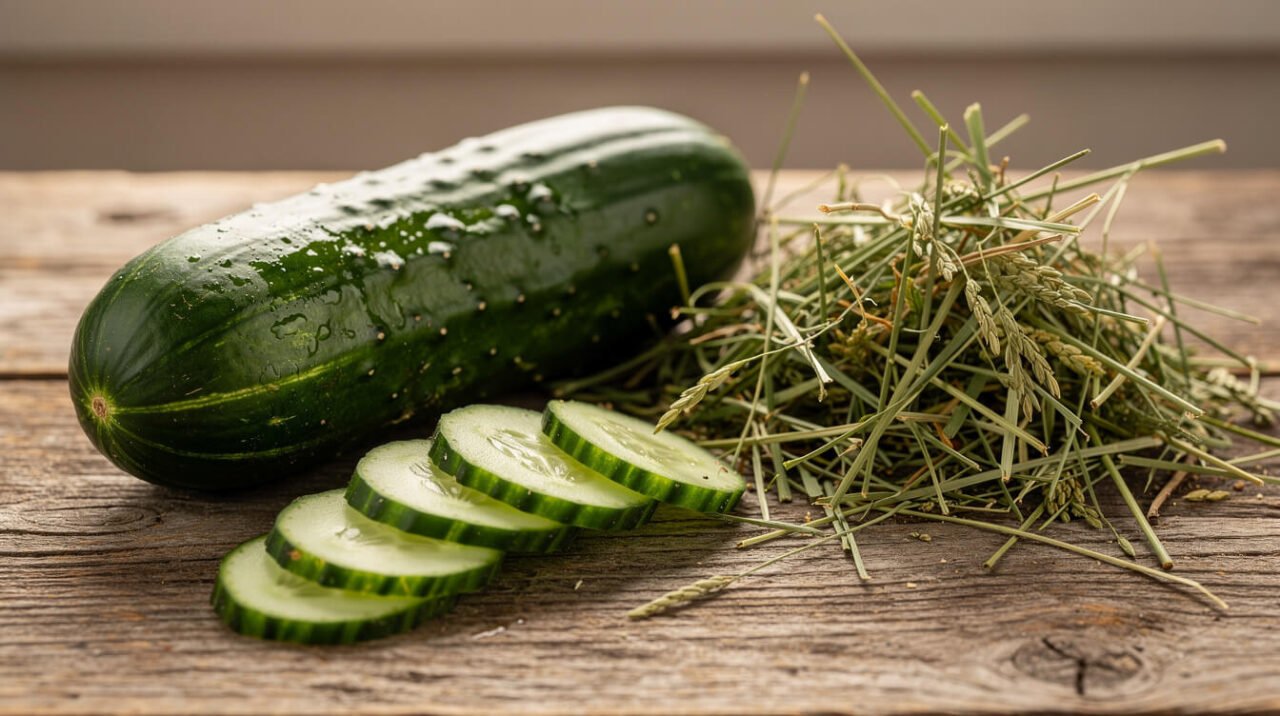
That same water-heavy profile is also cucumber’s limitation. It offers very little in the way of fiber, protein, or the vitamins and minerals a rabbit actually needs — those come from timothy or grass hay, a measured portion of quality pellets, and a rotating base of leafy greens like romaine, cilantro, or bell pepper. Think of cucumber the way you’d think of a snack you enjoy but don’t build a meal plan around: fine in its place, doing none of the nutritional heavy lifting.
It helps to understand a little about how a rabbit’s gut actually works, because it explains why moderation matters more for rabbits than it might for, say, a dog. Rabbits are hindgut fermenters — most of the real digestive work happens in a large pouch called the cecum, where beneficial bacteria break down fiber and produce nutrient-rich droppings called cecotropes, which rabbits re-eat to absorb the nutrients fully. That whole system depends on a steady, fiber-heavy diet to keep functioning smoothly. Flood it with a low-fiber, high-water food like cucumber and the balance of that fermentation can shift, which is part of why loose stool is the first sign something’s off — it’s less “cucumber is dangerous” and more “cucumber is easy to overdo in a system built around hay.”
One genuine upside worth naming: on a hot day, a cold cucumber slice is a nice bit of hydration and enrichment — something to nose around, lick, and nibble. That’s a real welfare benefit, not just a treat for treat’s sake.
How much cucumber is safe — sizing treats to your rabbit
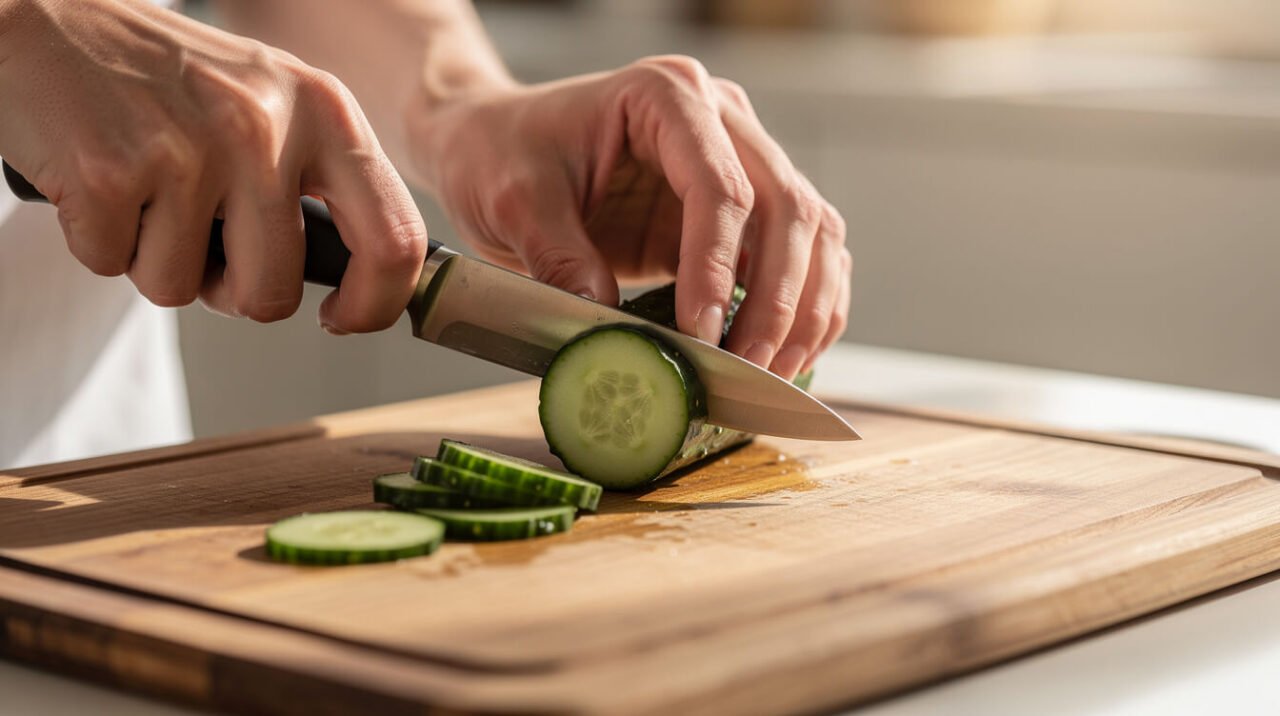
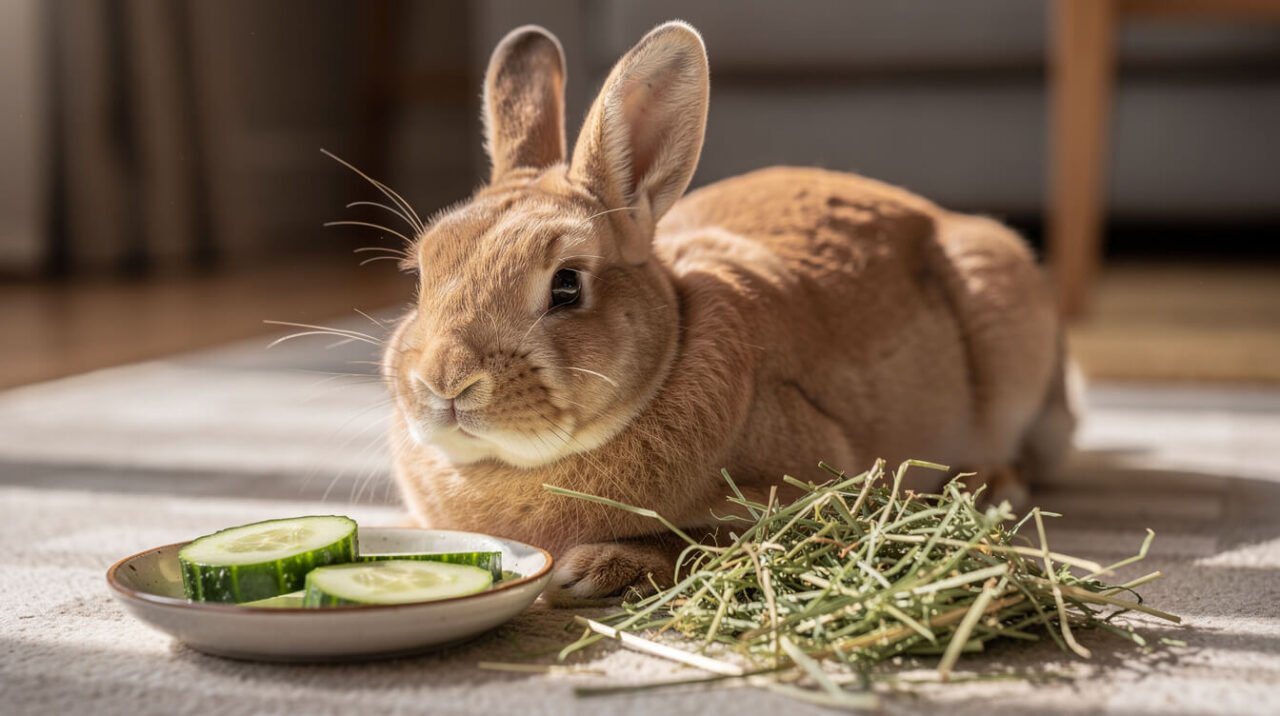
There isn’t one official number that applies to every rabbit — size, age, and individual digestive sensitivity all matter, so treat any quantity you read (including this one) as a general starting point, not a rule carved in stone. As a reasonable guideline, most healthy adult rabbits do fine with a slice or two of cucumber (roughly the thickness of a coin), offered two or three times a week, alongside their normal hay and greens.
A few sizing notes:
- Smaller and dwarf breeds should get proportionally less — a single thin slice is plenty.
- Young rabbits (under about 12 weeks) shouldn’t have cucumber or other treat foods yet — their gut flora is still establishing, and even gentle treats can throw that off. Stick to alfalfa hay, pellets, and water until your vet or breeder gives the green light on introducing vegetables.
- Senior rabbits or rabbits with a known sensitive stomach may do better with cucumber less often, or skipped altogether — go by how your individual rabbit responds, and loop in your vet if you’re unsure.
If you’re already offering a rotation of leafy greens daily (the healthier long-term treat habit for most rabbits), cucumber can simply be one item in that rotation rather than an addition on top of it — variety matters more than volume.
It’s worth thinking in terms of your rabbit’s total treat budget rather than cucumber in isolation. A commonly cited rule of thumb among rabbit-savvy vets and rescues is that treats and fruit-forward extras, combined, shouldn’t exceed a tablespoon or two per day for an average-sized adult rabbit — and cucumber, being mostly water, can sit toward the generous end of that because it’s not delivering much sugar or starch in the process. Still, “low-risk” isn’t “no-limit.” A rabbit that fills up on cucumber and skips hay is missing the fiber and chewing time that keeps its digestion and teeth healthy, even if the cucumber itself never causes a problem.
How to introduce cucumber for the first time
Any new food should be introduced slowly, and cucumber is no exception — even though it’s low-risk, a rabbit’s gut microbiome is easily disrupted by sudden dietary change.
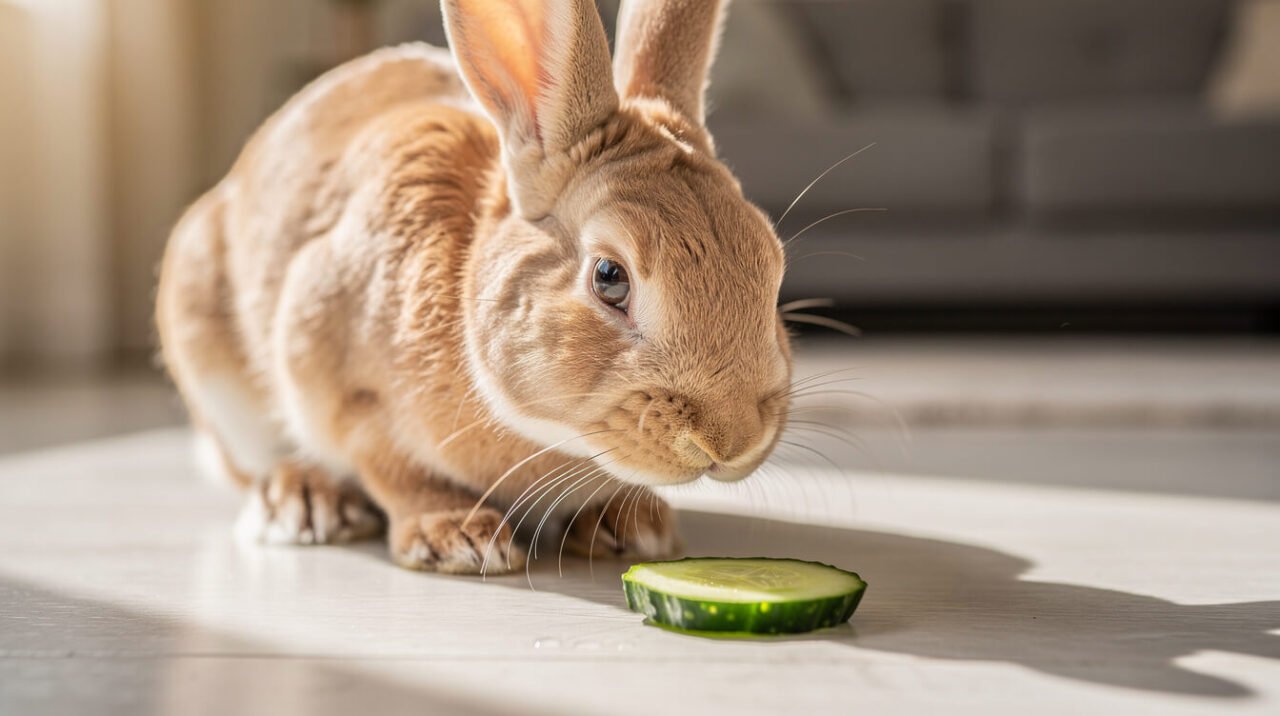
- Start tiny. Offer one thin slice, no more, and remove any uneaten portion after a couple of hours so it doesn’t sit and spoil.
- Wait 24 hours. Watch your rabbit’s droppings and general behavior before offering cucumber again. Normal, well-formed droppings and a rabbit that’s eating and acting like themselves is the green light.
- Increase gradually if all is well. Once you’ve confirmed your rabbit tolerates cucumber, you can settle into the “a slice or two, a few times a week” range described above.
- Introduce one new food at a time. If you’re building out a rotation of vegetables, add them one at a time with a few days between each — that way, if something doesn’t agree with your rabbit, you’ll know exactly which food is responsible.
This slow-and-watch approach is the same one worth using for any new vegetable, and it’s worth building the habit — it’s the difference between catching a problem early and not knowing what caused it.
The weekly care guide
Get it right for your animal, every week
One email a week: new care guides, species deep-dives, and the safety answers keepers search for, written by our specialists. No spam. Unsubscribe anytime.
Signs of overfeeding: soft stool, diarrhea, and when to call your vet
Because cucumber is mostly water and low in fiber, too much of it (or too much too fast) can loosen a rabbit’s stool. This is the main thing to watch for, and it’s genuinely important — a rabbit’s digestive system is unforgiving, and GI upset can escalate quickly.
Watch for:
- Soft, mushy, or misshapen droppings — a change from the normal round, dry, uniform pellets is the earliest and most reliable sign something’s off.
- Diarrhea — loose or watery stool is more serious and warrants pulling back on treats immediately.
- Reduced appetite or lethargy — a rabbit that’s off its hay or unusually quiet needs attention regardless of the cause.
- A visibly bloated or tense abdomen — this is an urgent sign, not a wait-and-see one.
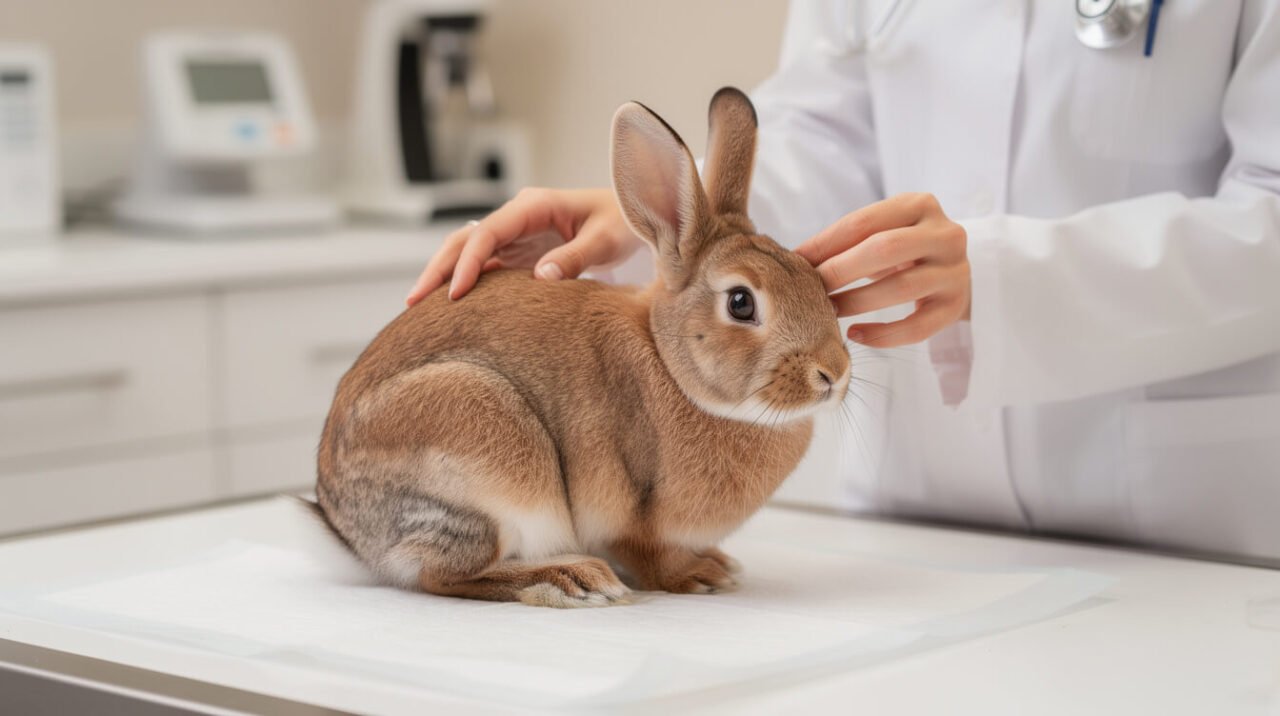
If you see soft stool, stop offering cucumber (and any other treats) and go back to hay, water, and pellets only for a day or two. If droppings return to normal, you can try again later in smaller amounts. But if you see diarrhea, a bloated abdomen, your rabbit stops eating or drinking, or anything seems seriously wrong, don’t wait it out — contact your veterinarian, ideally one experienced with rabbits or exotics. Rabbits can decline fast when their gut motility stalls (a condition often called GI stasis), and it’s always better to have a vet rule out something serious than to guess.
Skin, seeds, and prep — what parts are safe
The good news: nearly the whole cucumber is fine for rabbits, with a bit of common-sense prep.
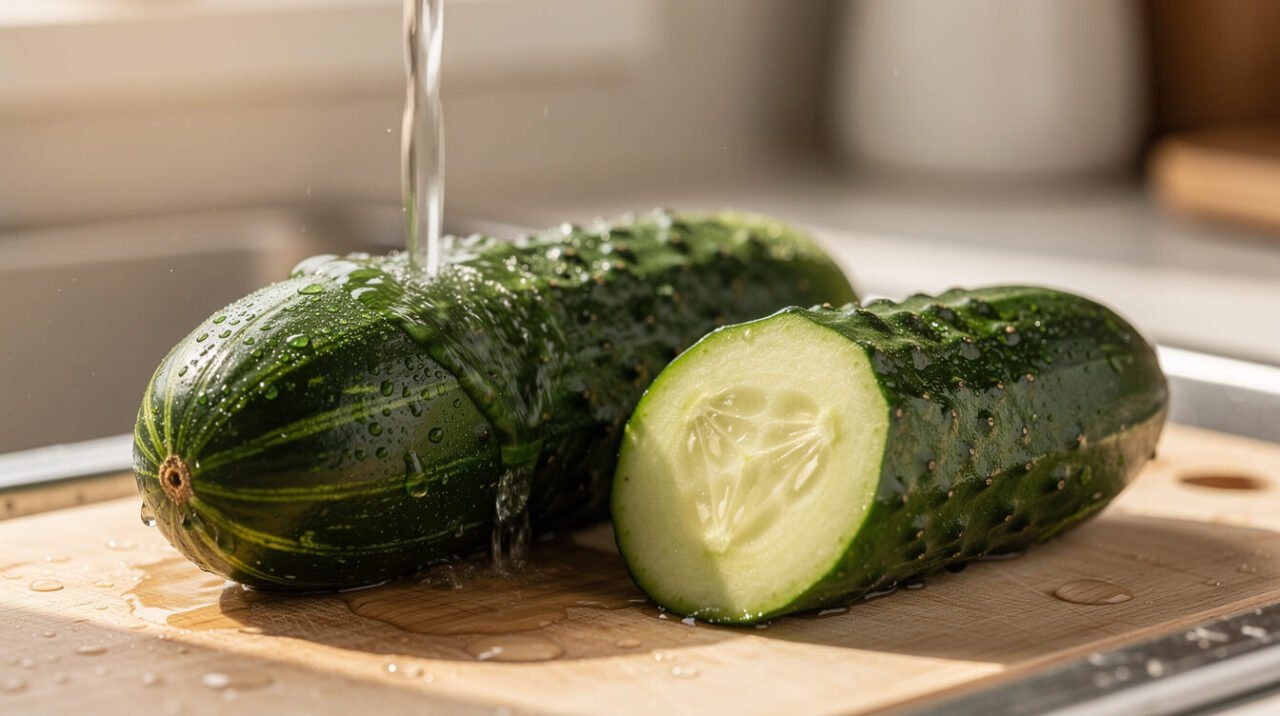
- Skin: Safe to leave on, and it adds a bit of texture rabbits often enjoy. Just wash it thoroughly first — see below.
- Seeds: The soft seeds inside a standard cucumber are fine in small amounts and don’t need to be removed.
- Wash first, always. Cucumbers can carry pesticide residue and waxy coatings, especially store-bought ones. Rinse well under running water, and consider peeling if the cucumber isn’t organic or you’re unsure how it was treated.
- Slice thin. Thin rounds or matchsticks are easiest for a rabbit to nibble and reduce the temptation to gulp down a large piece.
- Serve fresh, remove leftovers. Cucumber spoils quickly once cut. Don’t leave uneaten pieces in the enclosure — remove them after a couple of hours to avoid mold or bacterial growth.
- Skip pickled cucumber entirely. Pickles are loaded with salt, vinegar, and often garlic or onion — all things rabbits should never have. Only plain, fresh cucumber belongs anywhere near your rabbit’s bowl.
How cucumber compares to other rabbit treats
Cucumber rarely gets its own dedicated writeup because, on the spectrum of rabbit treats, it’s genuinely one of the lowest-risk options. It helps to see where it sits next to other common choices:
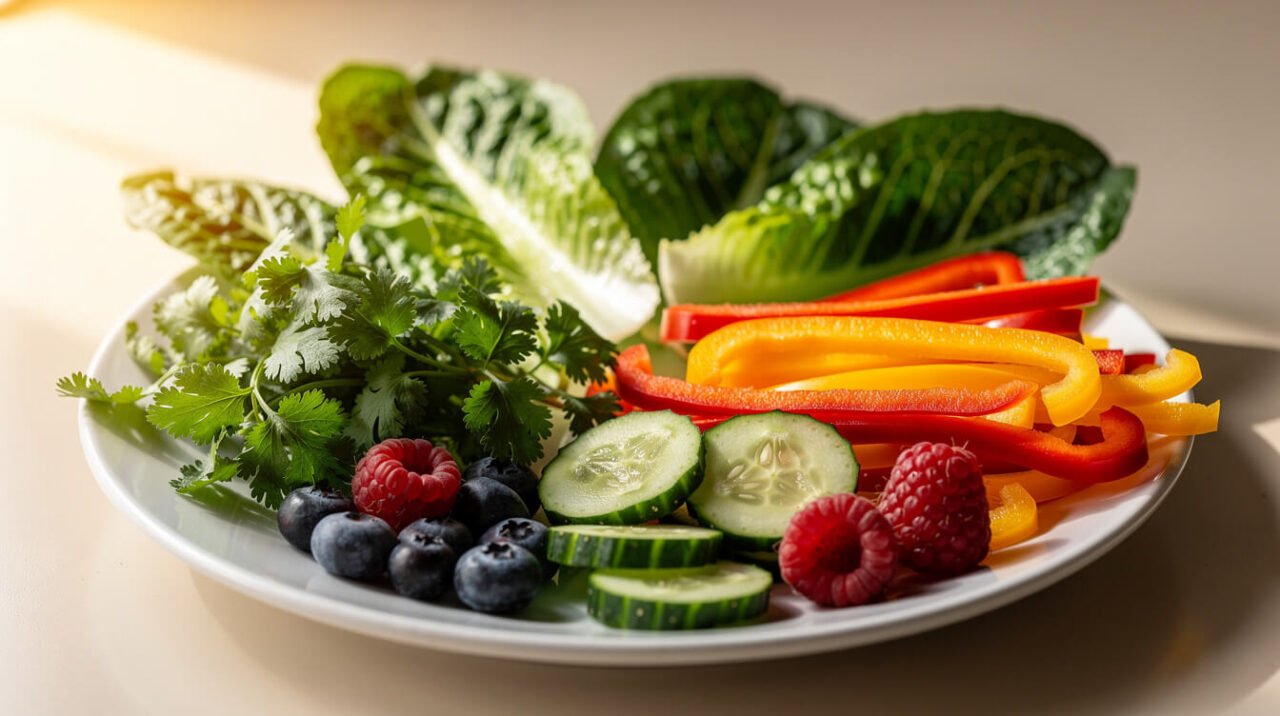
- Leafy greens (romaine, cilantro, basil, bell pepper): These should actually make up the bulk of a rabbit’s “extras,” offered daily in a rotating mix — they carry far more nutritional value than cucumber and are the better daily habit to build.
- Fruit (apple, banana, berries, melon): Higher in sugar than cucumber, so these belong in smaller, less frequent portions — a teaspoon-sized amount once or twice a week is plenty, and seeds or pits should always be removed.
- High-calcium or high-oxalate vegetables (spinach, kale, parsley in large amounts): Fine occasionally, but worth limiting compared to cucumber, since excess calcium is linked to bladder sludge and stones in rabbits over time.
- Foods to avoid entirely: Iceberg lettuce (mostly water with negligible nutrition and, in some rabbits, linked to digestive upset), onions, garlic, chives, avocado, chocolate, and anything high in starch like bread, pasta, or crackers. None of these belong anywhere near a rabbit, regardless of quantity.
Seen next to that list, cucumber’s appeal is its predictability — it’s neither a nutritional powerhouse like leafy greens nor a genuine risk like onions or avocado. That’s exactly why it’s a reasonable “starter treat” for a rabbit that hasn’t had many vegetables yet, and why it stays in light rotation even for rabbits with an established, varied diet.
Frequently asked questions
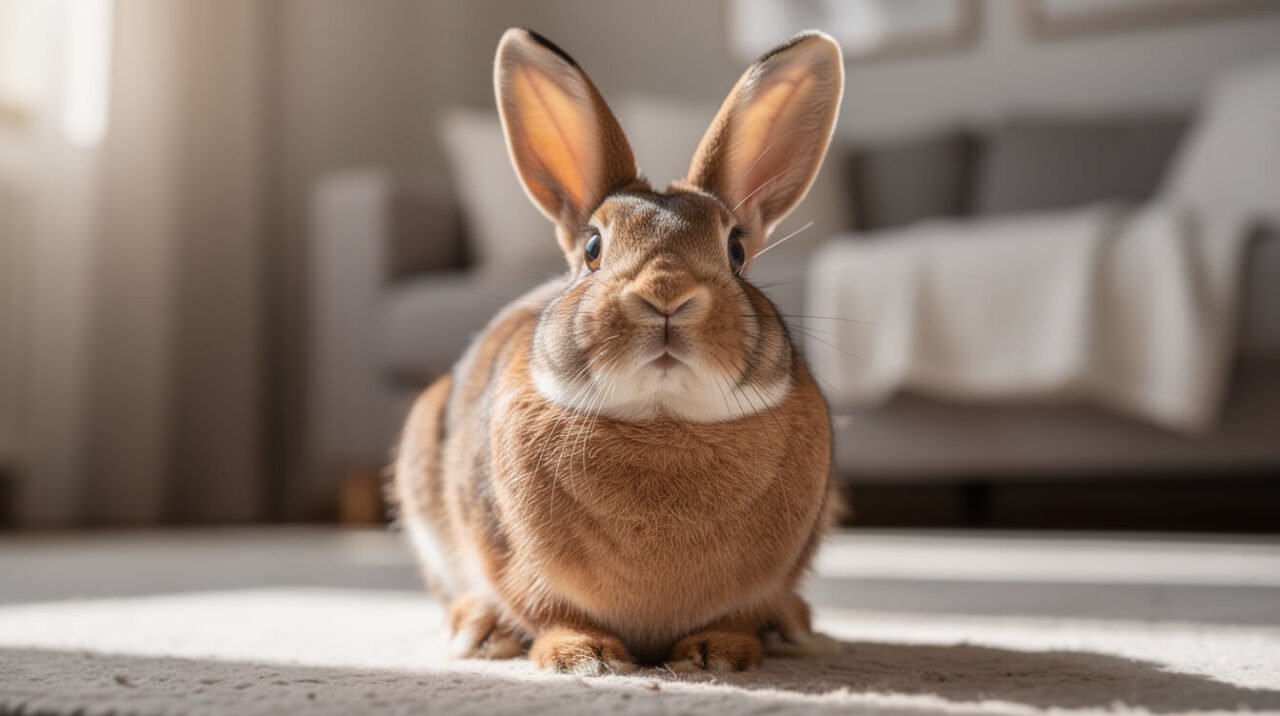
Can baby rabbits eat cucumber?
Not yet. Rabbits under about 12 weeks old should stick to hay, pellets, and water while their digestive system matures. Introduce vegetables, cucumber included, gradually after that point.
Can rabbits eat cucumber leaves or flowers?
Plain cucumber flesh, skin, and seeds are the parts to offer. Leaves and vines aren’t a standard part of rabbit diets and aren’t necessary to feed — when in doubt, stick to the fruit itself.
Is cucumber good for a rabbit’s hydration?
It can contribute a little extra water, especially as a warm-weather treat, but it’s not a substitute for a full, clean water supply, which your rabbit should always have access to.
Can rabbits eat cucumber every day?
Daily is more than most rabbits need. A few times a week, in small amounts and as part of a varied treat rotation, keeps cucumber in the “safe extra” category rather than crowding out hay and pellets.
My rabbit had too much cucumber and has soft stool — is that an emergency?
Not necessarily, but it’s not something to ignore either. Pull all treats, keep hay, pellets, and fresh water available, and watch closely over the next 12–24 hours. If stool firms back up and your rabbit is eating and behaving normally, you’re likely fine. If it doesn’t improve, worsens into diarrhea, or your rabbit seems unwell in any other way, treat that as a reason to call your vet rather than wait and see.
Can rabbits eat cucumber if they have a sensitive stomach?
Some rabbits handle high-water vegetables less well than others, and there’s no way to know in advance except by watching how your individual rabbit responds. If your rabbit has a history of soft stool or GI issues, it’s worth introducing cucumber (or skipping it) in close consultation with your vet rather than guessing.
Serving cucumber as enrichment, not just a snack
Food doesn’t have to just appear in a bowl — for a species as naturally curious and food-motivated as rabbits, how you serve a treat can matter almost as much as what the treat is. A few low-effort ways to turn cucumber into genuine enrichment rather than a handout:
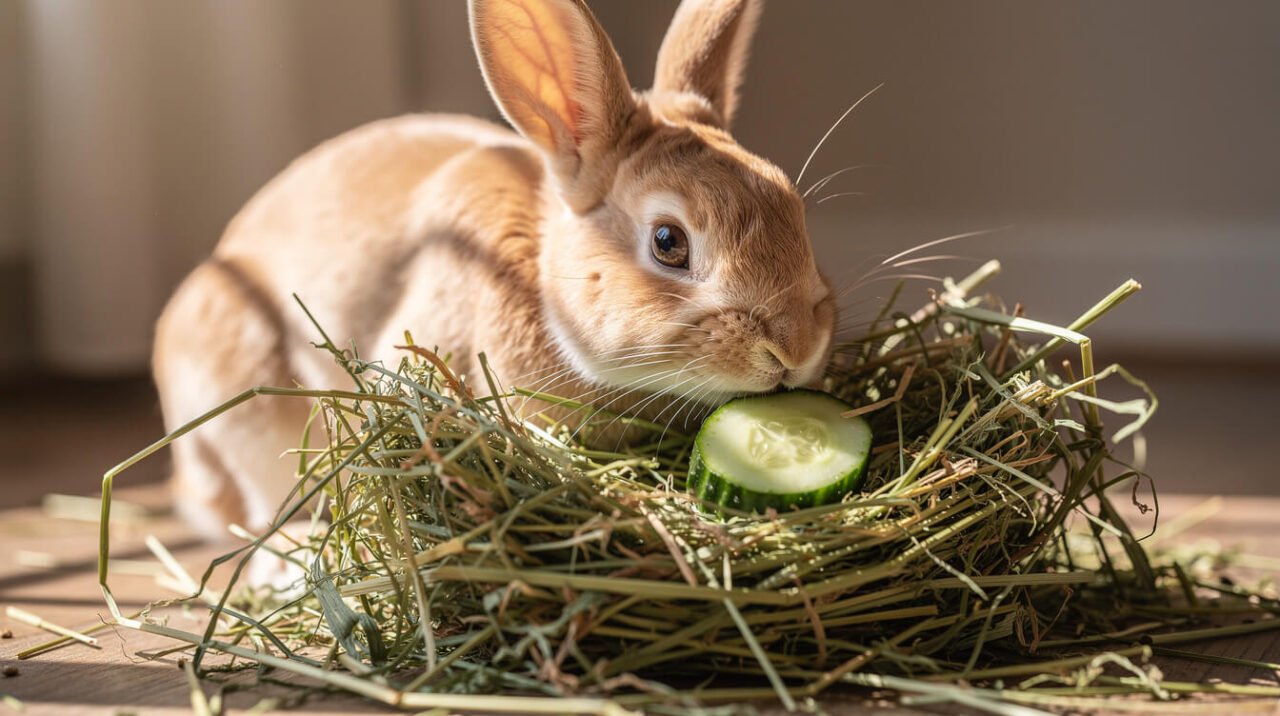
- Hide it in hay. Tuck a thin slice into a pile of fresh hay so your rabbit has to forage a little to find it — this mimics natural foraging behavior and slows down eating.
- Skewer it on a hay-safe chew toy. Threading a slice onto a willow or grass-based chew stick gives your rabbit something to work at, combining a treat with dental wear.
- Offer it whole (for larger rabbits) rather than pre-sliced. Letting a rabbit gnaw a manageable chunk on its own can be more engaging than a bite-sized piece handed over — just keep an eye on portion size so “whole” doesn’t mean “unlimited.”
- Rotate where it shows up. A different spot in the enclosure each time keeps things novel and encourages movement and exploration, which matters for a species that’s prone to boredom in small, static setups.
None of this changes the underlying moderation guidance above — it’s simply a reminder that a caring approach to treats is about more than nutrition. A rabbit that has to work a little for its cucumber is getting mental stimulation along with the snack, which is exactly the kind of small, low-cost enrichment that adds up to a genuinely good life for an animal that spends most of its day in a relatively small space.

Wear the obsession
Bearded Dragon Crown Sunglasses King T-Shirt
Price range: $24.99 through $26.99
Shop this designFinal thoughts
Cucumber is one of the lower-stakes treats you can offer a rabbit — hydrating, low-calorie, and genuinely enjoyed by most. The habits that keep it safe are simple: introduce it slowly, keep portions small, watch your rabbit’s droppings, and never let treats crowd out the hay-first diet that does the real nutritional work. If you’re ever unsure whether something is safe, or you notice a change in your rabbit’s stool, appetite, or energy, a quick call to your veterinarian is always the right move — better safe than sorry with a digestive system this sensitive.
Cucumber curious rabbit owners tend to be curious about the rest of the diet too. For more on building out a balanced approach to feeding a small pet, our guide on taking care of your pet’s nutrition is a solid next read, and if you keep — or are considering — other small mammals alongside your rabbit, our comprehensive guinea pig care guide covers a lot of the same hay-first, treats-in-moderation principles.
Before you go
Keep learning your animal
We publish a new guide every day. The best of them land in one short weekly email, so you never miss the one about your species.

Oliver Grant is your go-to expert for all things related to small mammals. With 15 years of hands-on experience raising and caring for rabbits, guinea pigs, hamsters, and ferrets, Oliver brings a wealth of knowledge to his readers.