Can Chickens Eat Watermelon? A Backyard Keeper’s Safety Guide
Can chickens eat watermelon? Yes — flesh, seeds, and rind are all safe for backyard chickens, and most flocks genuinely love it. It’s one of the best hot-weather treats you can offer, but “safe” still comes with a few real caveats: how much to give, how to cut it, and what to watch for afterward. Here’s the full picture, not just the short answer.
Can Chickens Eat Watermelon? The Short Answer
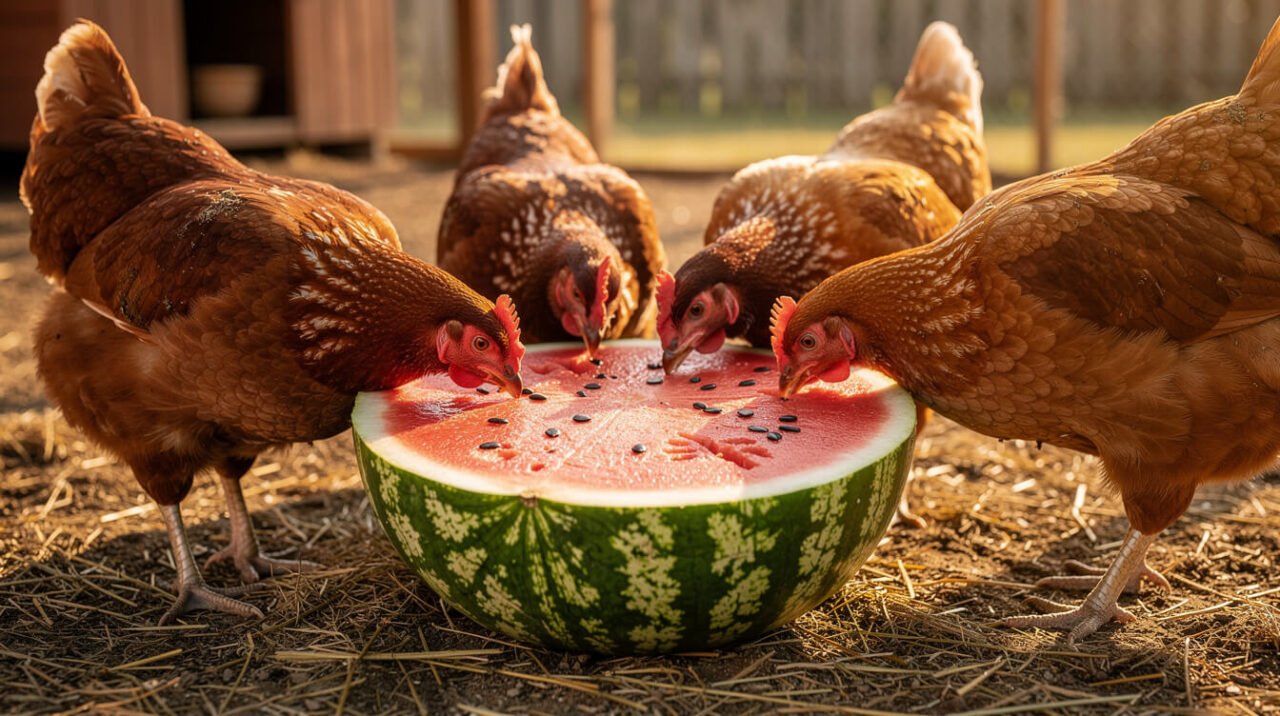
Watermelon is non-toxic to chickens and shows up on nearly every “safe treats” list for good reason. It’s over 90% water, low in the fats and salts that cause real problems for poultry, and easy for a flock to peck apart on their own. Whether you keep three hens in a suburban backyard or a full coop of layers, tossing over a slice on a hot afternoon is a genuinely good call.
That said, “safe” doesn’t mean “unlimited,” and it doesn’t mean every part should be served the same way. The sections below cover the parts that are fine, the parts that need a little prep, how watermelon stacks up against other common treats, and the handful of situations where something can go wrong — not because the fruit is dangerous, but because of how it’s served or how much of it displaces real feed. If you’re new to backyard flocks, this is also a good template for evaluating any “can my chicken eat X” question: start with the short answer, then look at portion size, preparation, and what a genuine warning sign actually looks like versus normal digestion doing its job.
Why Watermelon Is a Genuinely Useful Summer Treat
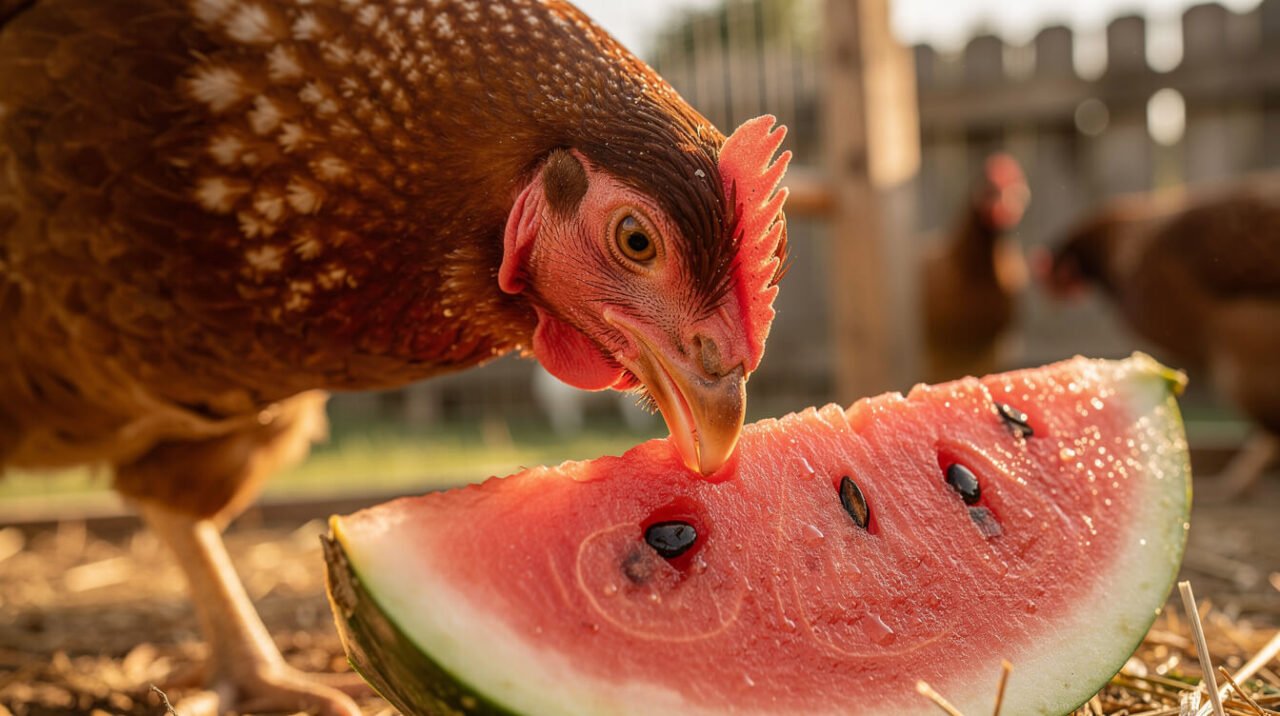
This isn’t just a “chickens will eat almost anything” story — watermelon actually solves a real physiological problem for your flock. Chickens don’t sweat. They release heat through their skin and, most importantly, through their combs and wattles, which is why Mediterranean breeds with oversized combs (Leghorns, Andalusians, Minorcas) tend to handle summer heat better than small-combed cousins like Wyandottes or Chanteclers. Most chickens are genuinely comfortable in the 45–65°F range; once temperatures climb past 80°F, you’ll see the classic heat-stress posture — wings held away from the body, open-mouth panting, reduced appetite for regular feed, and birds seeking out shade or dust baths instead of foraging.
A chilled, water-dense treat like watermelon gives a flock hydration and a bit of electrolyte-carrying sugar at exactly the moment they’re least interested in eating dry layer pellets. Watermelon flesh is also a genuine, if modest, source of vitamin A, vitamin C, and potassium — none of it a reason to feed it on its own, but a nice bonus layered on top of the cooling effect. It’s not a substitute for fresh, cool drinking water — nothing replaces that, and dehydration risk should always be addressed with water first — but watermelon is a legitimate part of a heat-stress toolkit alongside shade, cross-ventilation in the coop, and ice cubes or frozen water bottles in the waterer.
There’s an enrichment angle too, and it matters more than people expect. A half-melon dropped into the run or hung at head height on a string gives a flock something to investigate, peck, and gently squabble over — the same kind of mental stimulation that matters for any pet, not just backyard birds. If you keep other species alongside your flock, the same “boredom is a welfare issue, not just a nice-to-have” logic applies across the board — see our White Faced Cockatiel care guide for how enrichment plays out with a very different kind of bird sharing many of the same core needs.
Which Parts Are Safe — Flesh, Seeds, and Rind
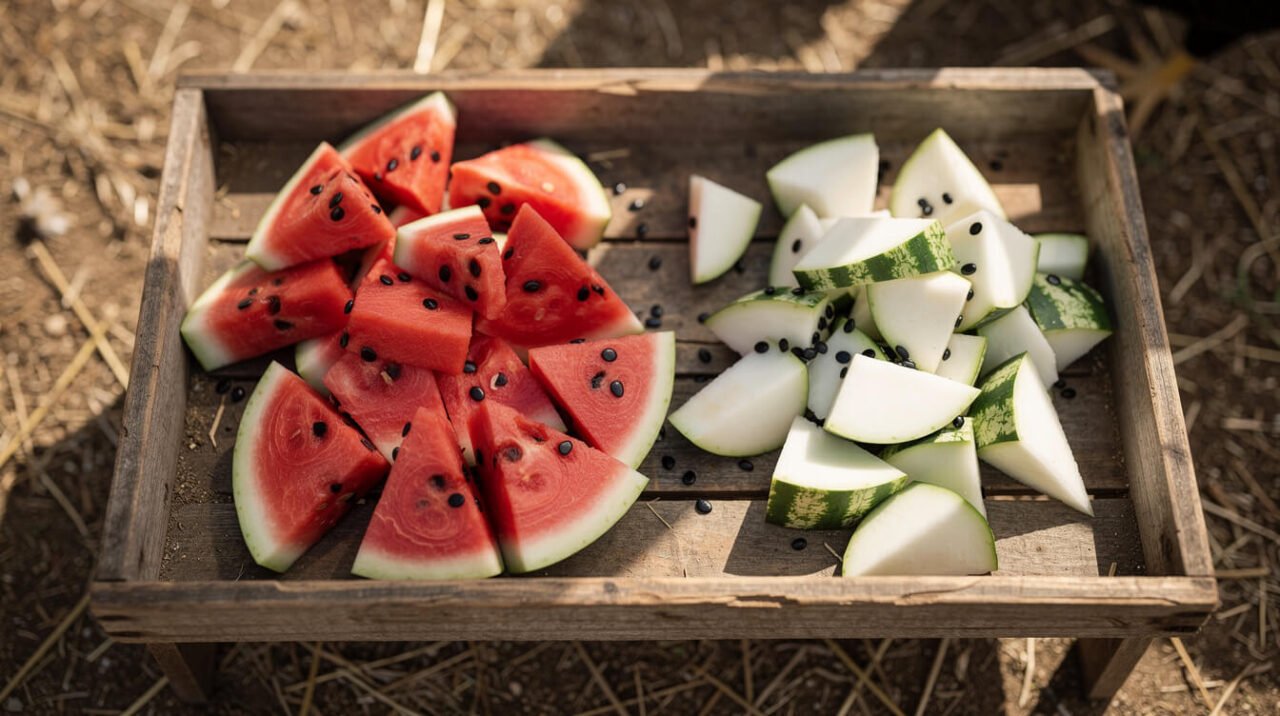
Flesh
The easiest part, by far. Cut into wedges or chunks, watermelon flesh is the least fussy piece of the fruit — high water content, minimal fiber to deal with, and the part your flock will demolish first. There’s no meaningful difference between seeded and seedless varieties here; both are fine.
Seeds
Watermelon seeds are safe for chickens in the quantities found in a normal melon. Chickens have a gizzard — a muscular part of the digestive tract that grinds tough material using small stones (grit) the bird has swallowed — which is exactly the tool built for handling seeds. If your flock free-ranges or has access to a grit supplement, seeds pose essentially no risk. Seedless watermelon works just as well if that’s what’s in your fridge; there’s no nutritional downside to skipping seeds entirely.
Rind
The rind is where a little care actually matters, and it’s the part of this question that separates a quick “yes” answer from a genuinely useful one. Most keepers feed rind with no issue at all, and a lot of flocks eat it right down to the tough, pale-green outer skin without a second thought. But that outer skin is fibrous and doesn’t break down the way the pink flesh does, and there’s at least one documented backyard-keeper report of a chicken dying after eating whole rind pieces, with choking on the tough outer skin suspected as the likely cause. To be clear about how solid that report is: it’s a single, unverified anecdote — no necropsy was performed, the keeper herself estimated only “99% sure,” and her other four birds ate the same rinds with no issue at all. It’s not evidence that rind is dangerous. It’s a reasonable enough scenario, though, that it costs nothing to hedge against: cut rind into smaller, more manageable pieces, or score the tough outer layer, especially for smaller-bodied birds, bantams, or anyone new to the flock’s feeding routine.
One more rind-related habit worth building: don’t let rind pieces sit directly on bare dirt or bedding for more than a few hours in warm weather. The cut surface picks up mold and bacteria faster than the sealed skin of a whole melon, and a flock that’s genuinely hungry will sometimes eat rind that’s past its prime rather than leave it. A quick daily check of the treat area catches this before it becomes an actual issue rather than a hypothetical one.
How Much Watermelon Is Too Much?
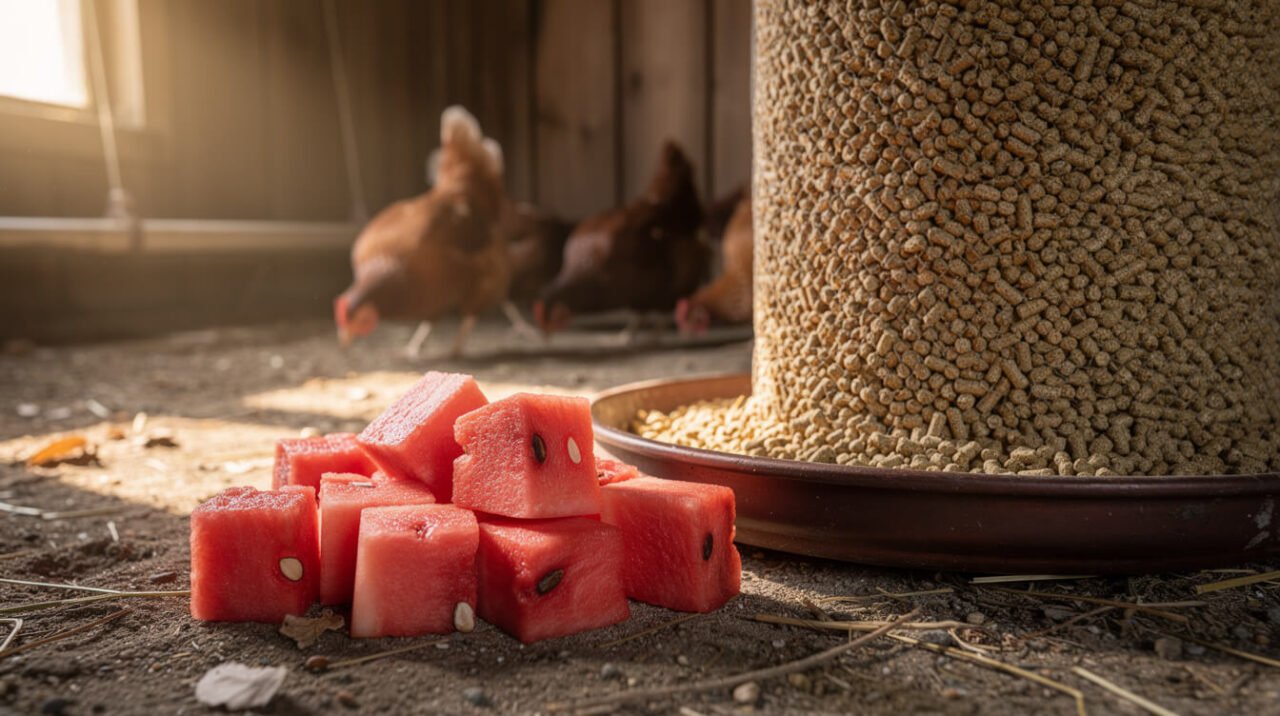
Watermelon should stay a treat, not a meal replacement — a good rule of thumb used across backyard-poultry keeping is that treats of any kind (fruit, garden scraps, scratch grains) shouldn’t exceed about 10% of a chicken’s daily intake. Layer feed is formulated with the calcium, protein, and mineral balance a laying hen actually needs to produce strong-shelled eggs and stay in good body condition; watermelon has almost none of that. A flock that fills up on melon and skims past its regular feed can end up short on nutrition that’s easy to overlook until shell quality or energy levels start to slip.
In practice, that means a few slices or a couple of cups of chopped watermelon per bird, offered a few times a week during hot weather, is a perfectly reasonable amount — not a daily all-you-can-eat buffet sitting in the run around the clock. For a flock of four to six standard hens, a quarter to half of a medium watermelon split between them is plenty for one sitting; bantams and smaller breeds should get proportionally less. If you notice looser droppings after a big watermelon feeding, that’s usually just the extra water content moving through quickly and not a sign of illness — but it’s still a good cue to scale the portion back next time and see if it resolves.
The weekly care guide
Get it right for your animal, every week
One email a week: new care guides, species deep-dives, and the safety answers keepers search for, written by our specialists. No spam. Unsubscribe anytime.
Watermelon Compared to Other Backyard Treats
Watermelon sits comfortably among the safer treat options, but it’s worth knowing where it fits relative to other things people commonly reach for:
- Leafy greens and most garden vegetables — generally safer than fruit for everyday feeding since they’re lower in sugar; a good rotation partner with watermelon rather than a replacement.
- Other melons (cantaloupe, honeydow) — similarly safe and can be offered the same way, flesh, seeds, and rind included.
- Grapes and berries — fine in moderation, though grapes should be halved for smaller or younger birds to reduce whole-piece choking risk, the same logic that applies to tough watermelon rind.
- Avocado skin and pit, raw dried beans, and chocolate — these are the genuine “no” list for chickens; they contain compounds that are actually toxic to poultry, unlike watermelon, which has no such compound to worry about.
- Salty or processed table scraps — chickens have a low tolerance for salt, so chips, cured meats, and similar leftovers are worth skipping even though a slice of watermelon from your own plate is perfectly fine.
The short version: watermelon isn’t a special case that needs unusual caution — it’s one of the more forgiving treats available, and most of the real “toxic” concerns in backyard keeping live elsewhere. When in doubt about a specific food that isn’t on this list, a quick rule holds up well: if it’s a genuine health food for humans in moderation (leafy greens, most fruit, plain cooked vegetables) it’s usually fine for chickens in moderation too; if it’s something humans are also told to limit for health reasons (salty, sugary, processed, alcoholic, or caffeinated), assume it’s a worse idea for a chicken than it is for you.
How to Serve It Safely — Chicks, Bantams, and Standard Hens
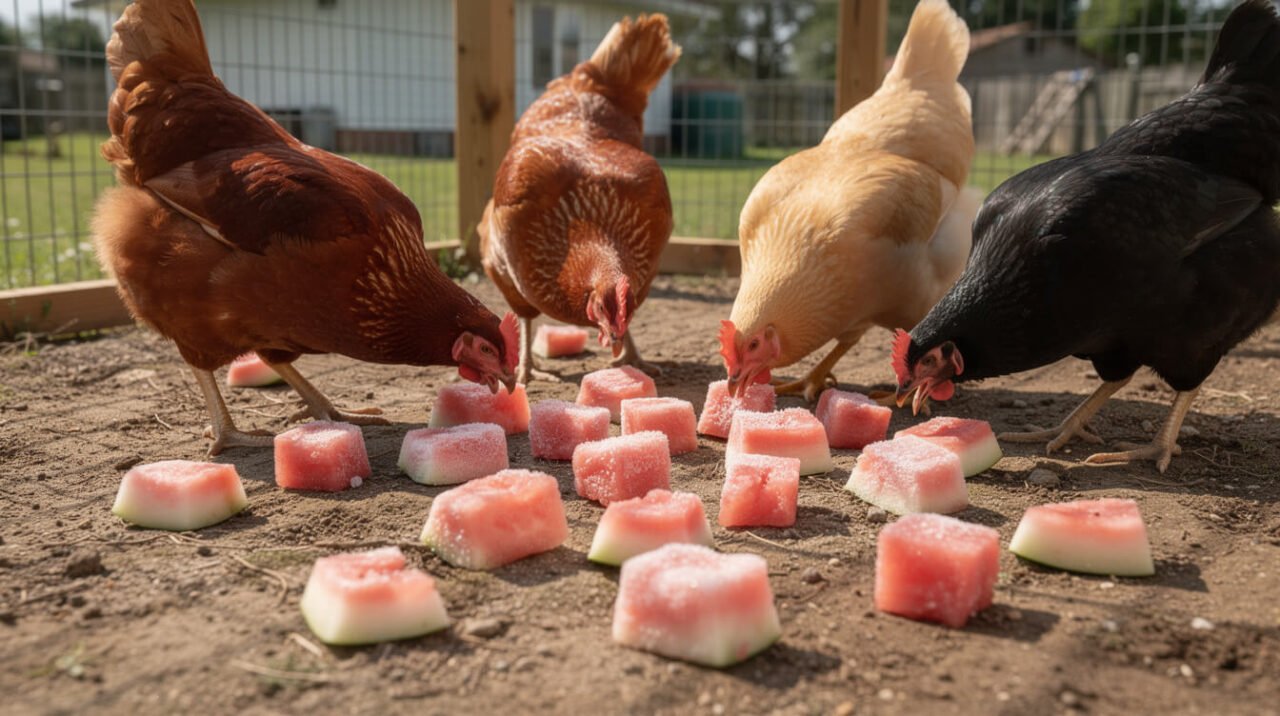
A few serving habits make watermelon safer and more useful for every bird in the flock:
- Chill it or freeze it on hot days. Frozen watermelon cubes melt slowly, stay cool longer, and double as a slower, more engaging enrichment activity than a soft, already-warm slice. Some keepers freeze chunks inside a shallow ice block for a longer-lasting “melon popsicle.”
- Cut it down for chicks and bantams. Smaller birds have smaller crops and less grinding power in the gizzard early on. Dice flesh small, skip large rind pieces entirely for young chicks, and introduce any new treat gradually rather than all at once.
- Don’t leave uneaten melon sitting in the run. In summer heat, cut watermelon spoils and attracts flies and pests within hours. Pull anything that’s gone soft, slimy, or has been sitting since morning, and rinse the feeding dish before the next use.
- Serve in a dish or on clean ground, not in muddy or droppings-heavy areas. Basic food hygiene reduces the odds of your flock picking up bacteria along with their treat.
- Watch for competition at the treat pile. In a mixed-age or mixed-size flock, smaller or lower-ranking birds can get pushed out entirely. Scattering melon in two or three spots instead of one pile helps everyone actually get a share.
Backyard chickens are often a household’s introduction to keeping a farm animal day-to-day, and a lot of the same “treats in moderation, hygiene matters, hydration matters” logic carries over to other backyard livestock. If that’s the direction your homestead is headed, our guide to owning a pig as a pet covers a lot of the same groundwork from a different angle.
When Watermelon Signals a Bigger Problem
Watermelon itself very rarely causes a real medical issue in a chicken. But because it’s often the most memorable thing a flock ate that day, it’s easy to blame the melon for something unrelated. Contact a veterinarian experienced with poultry — not just a general small-animal vet — if you see any of the following, whether or not watermelon was involved:
- A hen that’s lethargic, not eating regular feed, or isolating herself from the rest of the flock
- A visibly swollen, doughy, or hard crop the morning after eating (a sign of impacted or sour crop, which needs proper diagnosis rather than home remedies)
- Persistent watery or bloody droppings that don’t resolve within a day or two
- Sudden death of a healthy-seeming bird, especially with no other explanation
We’re not vets, and we can’t diagnose what’s happening in your specific flock from a description online — a poultry-experienced vet or your local agricultural extension office can. If something feels off, treat it as a health question first and a “what did she eat yesterday” question second.
Frequently Asked Questions
Can baby chicks eat watermelon?
In small, well-diced amounts, yes — but keep it occasional and secondary to a proper chick starter feed, which is where their real nutrition needs to come from in the first weeks of life.
Can chickens eat watermelon rind?
Yes, most chickens eat rind without any issue at all — it’s one of their favorite parts, in fact. Just cut larger or tougher rind pieces down rather than tossing in whole hunks, especially for smaller birds.
Can chickens eat watermelon seeds?
Yes. A chicken’s gizzard is built to grind tough material like seeds and grit, so ordinary watermelon seeds pass through without a problem.
Will watermelon make my chickens lay fewer eggs?
Not directly — but if watermelon (or any treat) regularly displaces layer feed, the calcium and protein shortfall that follows absolutely can affect shell quality and laying consistency over time. Keep treats to a supporting role, not the main event.
Can watermelon replace my flock’s water source?
No. Even at over 90% water, watermelon isn’t a substitute for a clean, always-available water source. Treat it as a hydrating bonus on top of water, never instead of it.
Is watermelon good for chickens in the winter, or just summer?
It’s most useful as a cooling, hydrating treat in hot weather. There’s nothing wrong with offering it occasionally in cooler months too, just without the “beat the heat” purpose — treat it as a rare snack rather than a seasonal must.
Do certain breeds need extra caution with watermelon?
Not because of the fruit itself, but body size matters: bantam breeds and smaller-framed hens should get smaller, more diced pieces than a large-framed breed would need, mostly to reduce any whole-piece choking risk rather than because of anything specific to watermelon.
My chicken ate a large piece of rind whole — should I panic?
Watch her for the rest of the day rather than panicking immediately. Normal signs — alert, moving around, eating and drinking as usual — mean she’s almost certainly fine. Lethargy, gagging, stretching her neck repeatedly, or a visibly full crop that doesn’t soften by the next morning are the signs that warrant a call to a poultry-experienced vet.

Wear the obsession
Bearded Dragon Crown Sunglasses King T-Shirt
Price range: $24.99 through $26.99
Shop this designFinal Thoughts
Can chickens eat watermelon? Yes, all of it — flesh, seeds, and rind — and on a hot day, it’s one of the kindest, easiest treats you can offer a backyard flock. Keep portions occasional rather than constant, cut rind down for smaller birds, pull anything that’s started to spoil in the heat, and let regular layer feed stay the backbone of the diet. Do that, and watermelon is exactly what it looks like: a simple, genuinely useful way to help your flock through the hottest part of the year.
Curious what else is safe to share with the animals in your life? Our library covers safe-treat questions across species, including whether bearded dragons can eat strawberries, and full care guides like how to care for a betta fish if your backyard menagerie extends past the coop.
Before you go
Keep learning your animal
We publish a new guide every day. The best of them land in one short weekly email, so you never miss the one about your species.

Emily Chen is a passionate avian specialist with over a decade of experience in nurturing and training birds of all feathers. From the melodious canaries to the intelligent parrots, Emily’s expertise spans a wide range of avian care, including diet, habitat setup, and behavioral training.