How to Care for a Betta Fish: The Complete Beginner’s Guide
If you’ve ever seen a betta fish sold in a tiny cup or a bare bowl the size of a teacup, you’ve met the single most persistent myth in the fishkeeping world. Betta fish need real space, filtration, and heat — a heated, filtered tank of at least 5 gallons, ideally 10, is the honest starting point, not a bowl on a desk. Get that right, cycle your tank before your betta ever arrives, and this is one of the most rewarding, personality-packed fish you can keep. Here’s how to care for a betta fish the way a devoted keeper actually should.
Bettas (Betta splendens) are labyrinth fish, meaning they can gulp air at the surface as a backup to their gills — which is exactly why the pet trade got away with selling them in cups for so long. They can survive in poor conditions longer than most fish. “Can survive” and “is thriving” are two very different things, and this guide is about the second one.
Why the “Betta in a Bowl” Myth Persists (and What Real Betta Fish Care Looks Like)
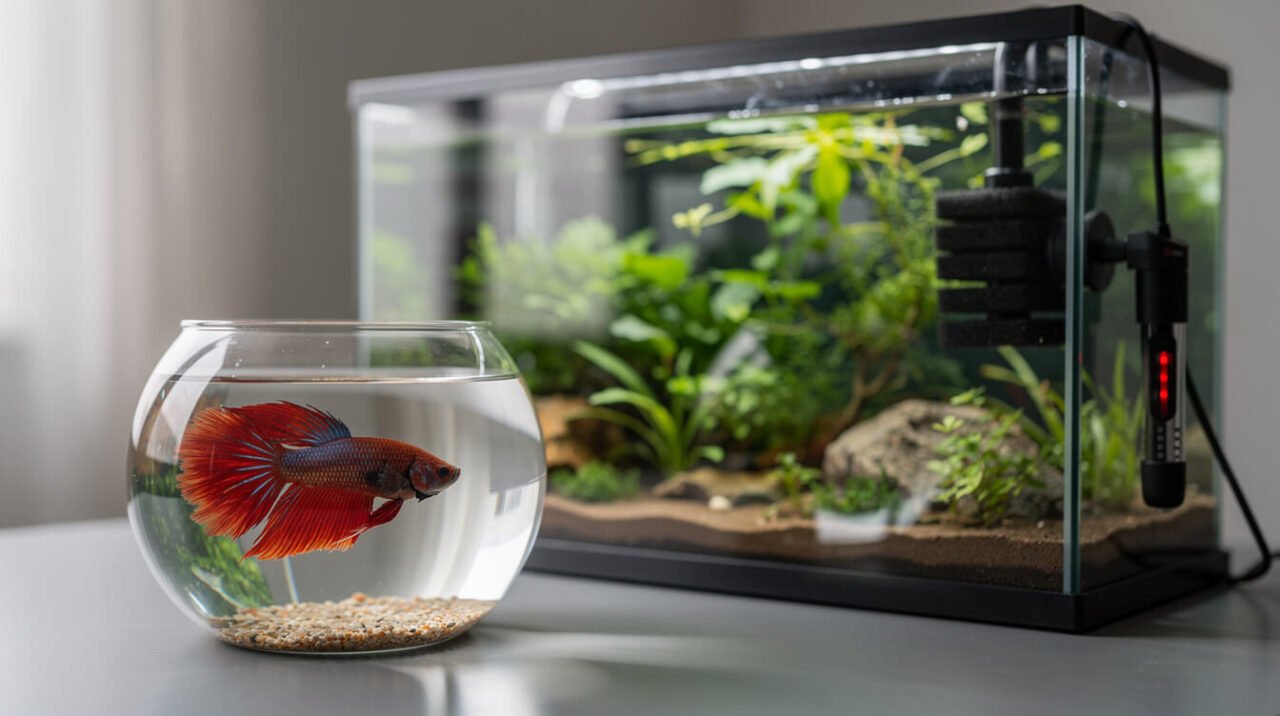
The myth survives because bettas can physically tolerate small, unfiltered containers for a while, thanks to that labyrinth organ. Retailers lean on this to sell a low-cost, low-commitment product. But tolerance isn’t welfare. In a bowl with no filter, ammonia from waste builds up fast, temperature swings with the room, and a naturally curious, active fish has nowhere to go and nothing to do.
In the wild, bettas live in shallow rice paddies, slow-moving streams, and drainage ditches across Thailand and neighboring parts of Southeast Asia — warm, still-to-slow water with dense vegetation, not a glass sphere. A properly set-up tank gets you much closer to that: stable warmth, gentle filtration, plants to explore, and enough volume that water quality doesn’t swing wildly between water changes.
The short version for anyone skimming: skip the bowl, skip the unheated vase, and budget for a real setup before you bring a betta home. The rest of this guide walks through exactly what that looks like.
Betta Fish Care Setup Checklist: Tank, Filter, Heater, and Real Costs
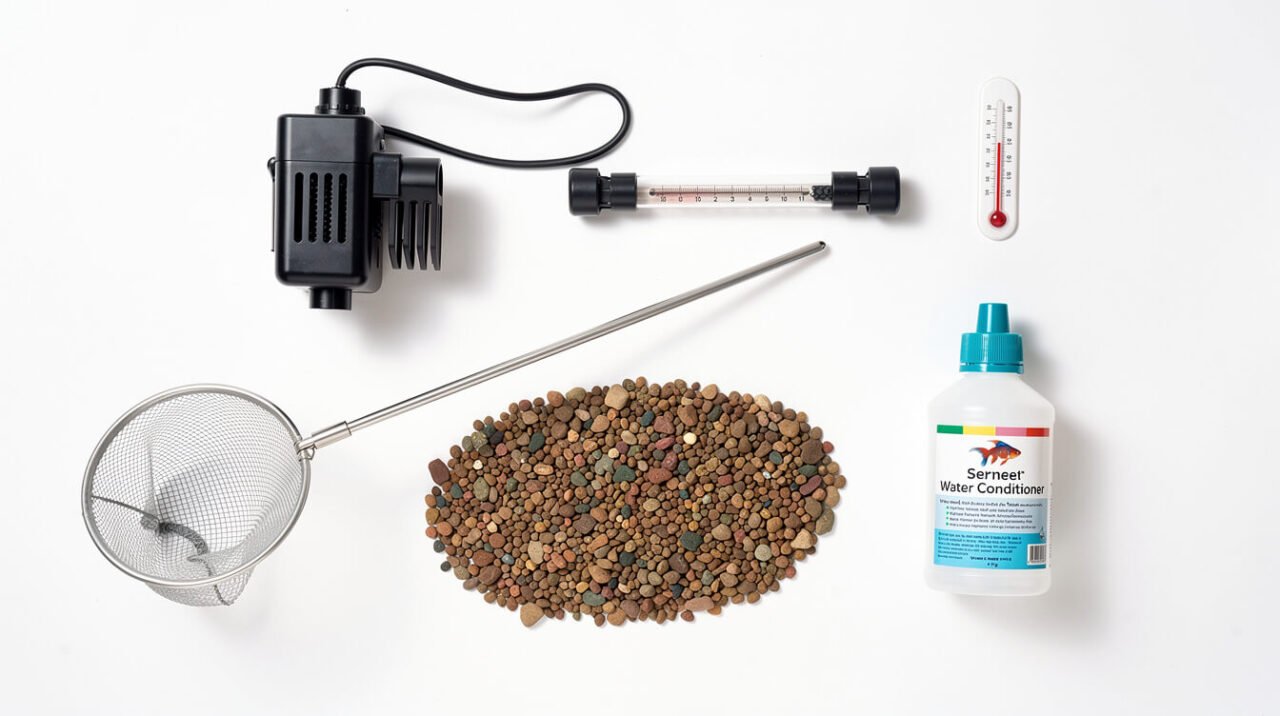
Here’s what an honest, welfare-first betta setup actually requires — and what it tends to cost, so there are no surprises.
The tank
5 gallons is a reasonable minimum; 10 gallons gives you a much easier margin for water-quality stability and room for the low-current tank mates bettas can sometimes handle. Bigger tanks are more forgiving, not less — more water dilutes waste faster and holds temperature more steadily than a small volume does.
The filter
A gentle sponge filter or a small hang-on-back filter with the flow turned down is ideal. Bettas have long, flowing fins and evolved in slow water, so a filter that creates a strong current can exhaust them and shred their fins over time. You want mechanical and biological filtration, not a whitewater rapid.
The heater
A heater sized to your tank, with a thermostat, is non-negotiable — bettas are tropical fish and need consistently warm water (more on the exact range in the next section). Room temperature alone is rarely warm or stable enough, even in a heated home.
The rest of the list
- A thermometer (a stick-on strip is fine, a digital probe is better)
- Substrate of your choice (sand or smooth gravel both work)
- Live or silk plants and at least one cave or hide — never stiff plastic plants that can tear fins
- A lid — bettas are known jumpers
- A basic water test kit (liquid reagent kits are more accurate than strips over time)
- Dechlorinator/water conditioner for every water change
Realistic budget: a modest but complete setup — tank, filter, heater, thermometer, décor, test kit, and conditioner — typically lands somewhere in the $80–$150 range depending on where you shop and whether you go new or secondhand for the hardware. That is meaningfully more than a $5 bowl, and that gap is the whole point: it’s the difference between housing a betta and actually caring for one.
Cycle Before You Buy: A Week-by-Week Nitrogen Cycling Timeline
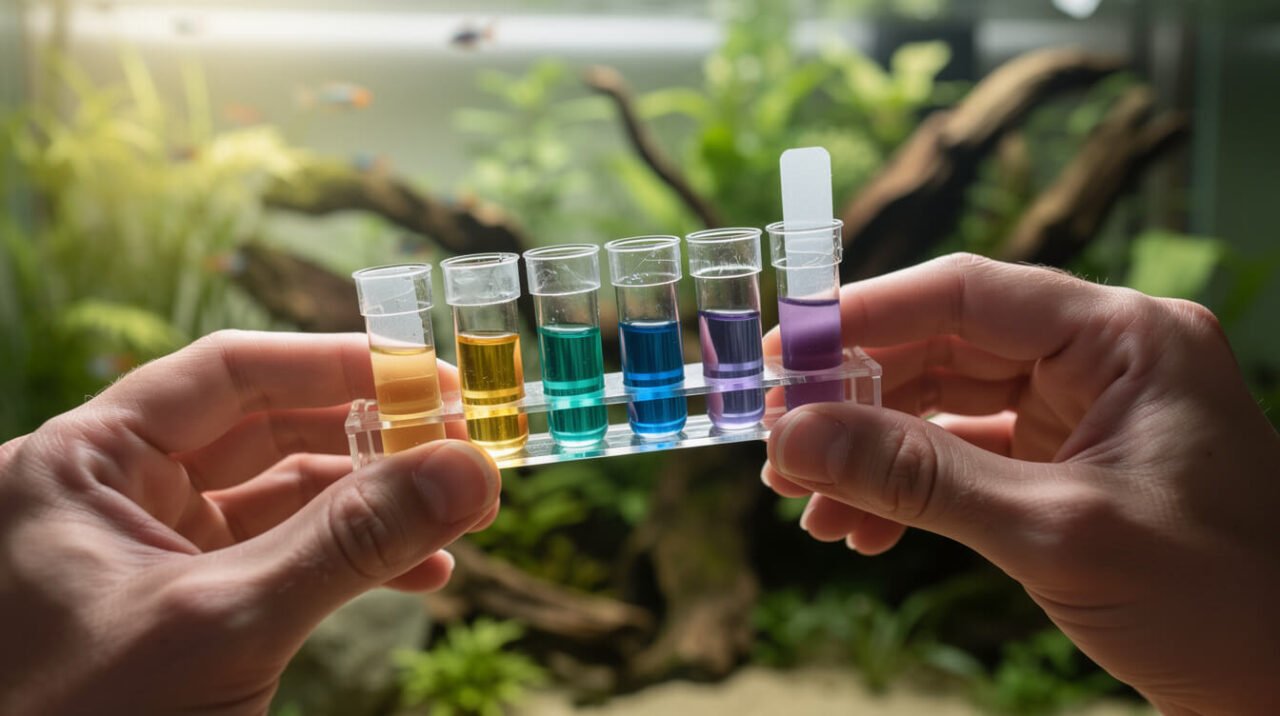
This is the step almost every quick-start guide skips, and it’s the one most responsible for early betta deaths. Cycling means growing a colony of beneficial bacteria in your filter and substrate that converts toxic ammonia (from fish waste and uneaten food) into nitrite, and then into much-less-harmful nitrate. Add a fish to an uncycled tank and you’re asking it to survive in its own rising ammonia while that bacterial colony tries to catch up — a slow, stressful way to start a fish’s life with you.
The fix is simple in concept: cycle the tank before the betta arrives, using a “fishless cycle.” Here’s a realistic week-by-week shape — actual timing varies with your water, temperature, and source of bacteria, so treat this as a pattern to watch for, not a fixed countdown:
Week 1
Set up the tank fully (substrate, décor, filter, heater running at your target temperature). Add a source of ammonia — a bottled pure-ammonia product made for cycling, or a small amount of fish food left to decay — to feed the bacteria you’re trying to grow. Test daily. You should see ammonia present with no nitrite yet.
Weeks 2–3
Nitrite typically appears as the first wave of bacteria (which turns ammonia into nitrite) establishes itself. Ammonia readings often start dropping while nitrite climbs. Keep dosing ammonia to keep the process fed, and keep testing every day or two.
Weeks 3–5
A second bacterial colony (which turns nitrite into nitrate) catches up. You’re looking for the point where, within about 24 hours of dosing ammonia, both ammonia and nitrite read zero and nitrate is present. That’s a fully cycled tank.
Using a bottled bacterial starter product alongside fishless cycling can shorten this considerably — sometimes to a week or two — but always confirm with your own test results rather than the calendar. Every tank is different, and “it’s probably done by now” is how ammonia spikes happen. Once you get two consecutive days of zero ammonia, zero nitrite, and detectable nitrate, your tank is ready for its betta.
Water Parameters and Temperature: Keeping the Cycle Stable
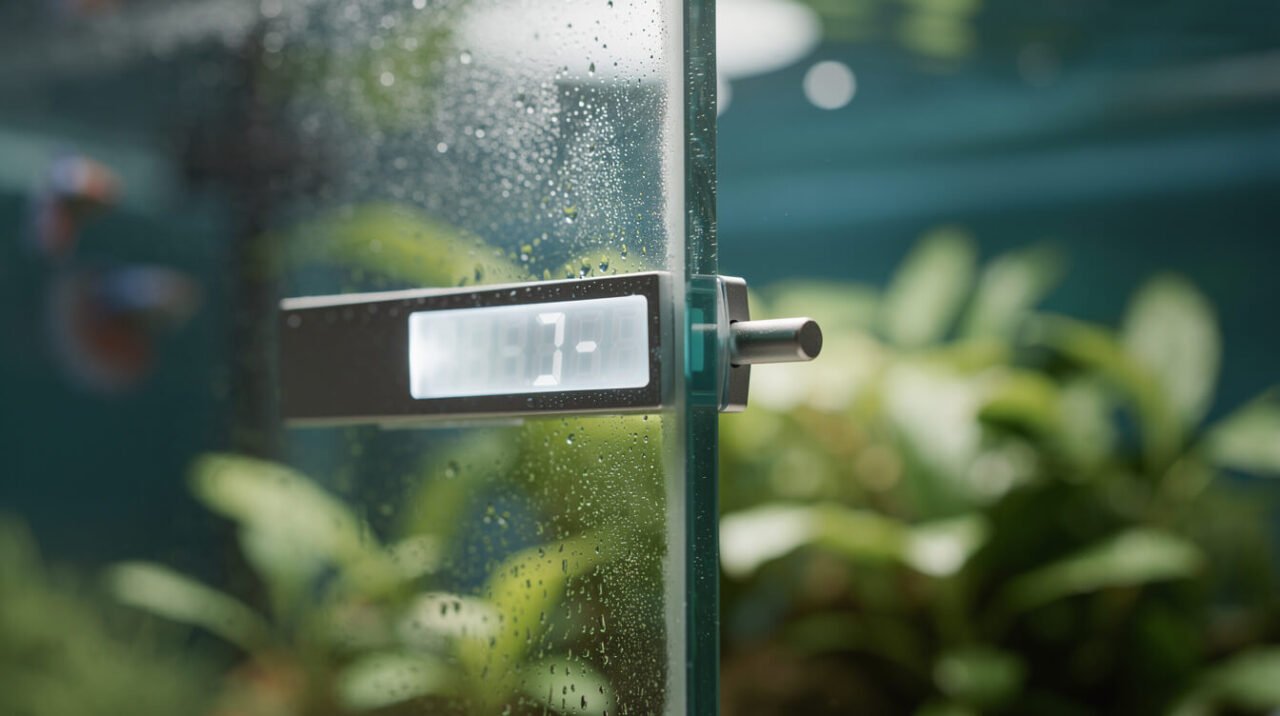
Once your betta is in, the goal shifts from building the bacterial colony to keeping its environment steady. Bettas do best with consistency far more than with hitting an exact number.
- Temperature: bettas are tropical fish and generally do well in the mid-to-upper 70s°F, with many keepers and aquatic veterinarians citing a comfortable range extending toward the low 80s°F. Sudden swings are harder on a betta than a temperature at the edge of that range held steady — a reliable heater with a thermostat is what actually protects your fish here.
- pH: bettas tolerate a fairly wide range, but stability matters more than chasing a “perfect” number. Avoid swinging pH with chemical additives; let it settle naturally with your water source and adjust gradually if you must.
- Ammonia and nitrite: should read zero once cycled. Any detectable reading in an established tank is a sign something changed — overfeeding, a filter that got cleaned too aggressively, or a tank that’s overdue for a partial water change.
- Nitrate: some nitrate is normal and expected in a cycled tank; regular partial water changes (a common practice is roughly 25–30% weekly, adjusted to your specific tank’s readings) keep it from climbing too high.
Test regularly, especially in the first months after cycling, and keep a simple log. Patterns over time — not any single reading — tell you whether your tank is genuinely stable.
The weekly care guide
Get it right for your animal, every week
One email a week: new care guides, species deep-dives, and the safety answers keepers search for, written by our specialists. No spam. Unsubscribe anytime.
Feeding Your Betta: What, How Much, and How Often
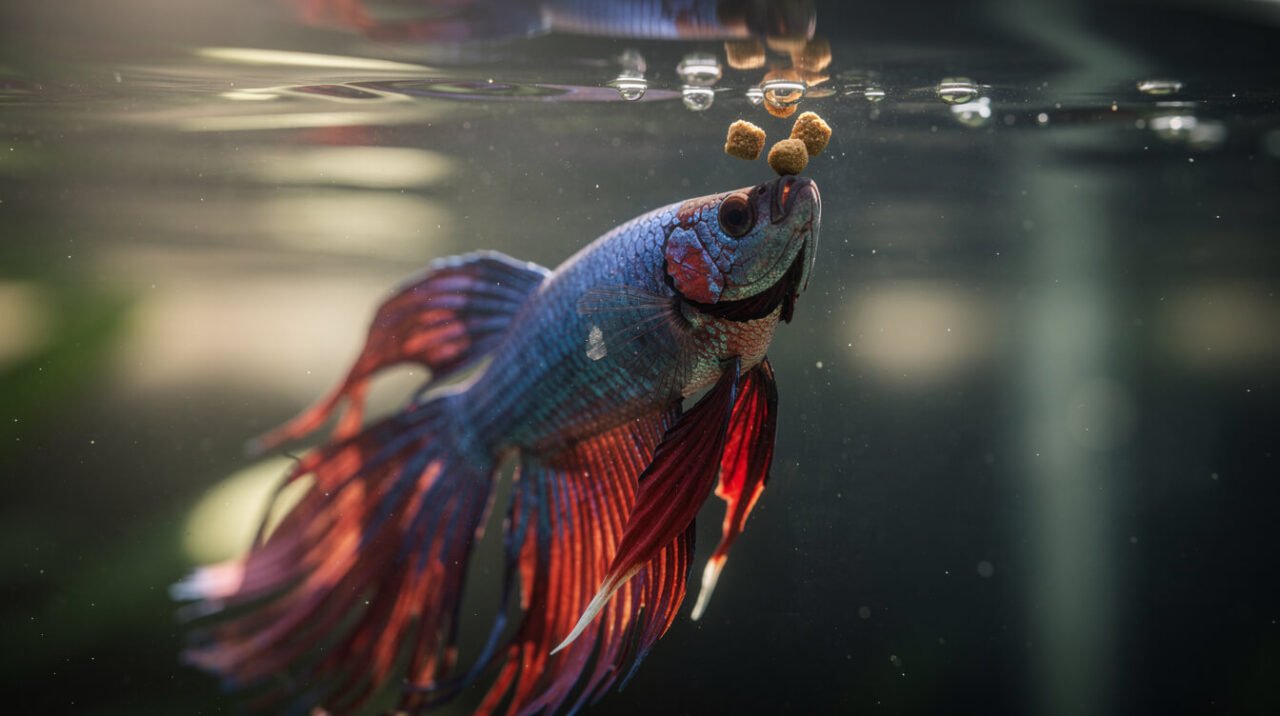
Bettas are carnivores in the wild, feeding on insects, larvae, and small invertebrates. Their diet in a tank should reflect that.
What to feed
A high-quality betta-specific pellet should be the base of the diet — look for one where a fish-based protein is the first ingredient. Rotate in occasional variety: frozen or freeze-dried bloodworms, brine shrimp, or daphnia make good supplemental treats and let your betta express natural hunting behavior.
How much and how often
A useful, hedge-appropriate rule of thumb many keepers and betta-care resources use: feed an amount roughly the size of your betta’s eye, once or twice a day, and go a step further and only feed what your fish visibly finishes within a couple of minutes. Bettas have small stomachs and are prone to overfeeding-related bloating and constipation — underfeeding slightly is a far smaller risk than overfeeding.
Consider skipping food entirely one day a week. This mimics natural feast-and-famine patterns and gives the digestive system a break, a practice many experienced keepers use without any downside observed.
Uneaten food is also an ammonia source, tying feeding directly back to the water-quality work you did during cycling — another reason “a little less than you think” is the safer default.
Enrichment: Flaring, Foraging, Plants, and Current Preference
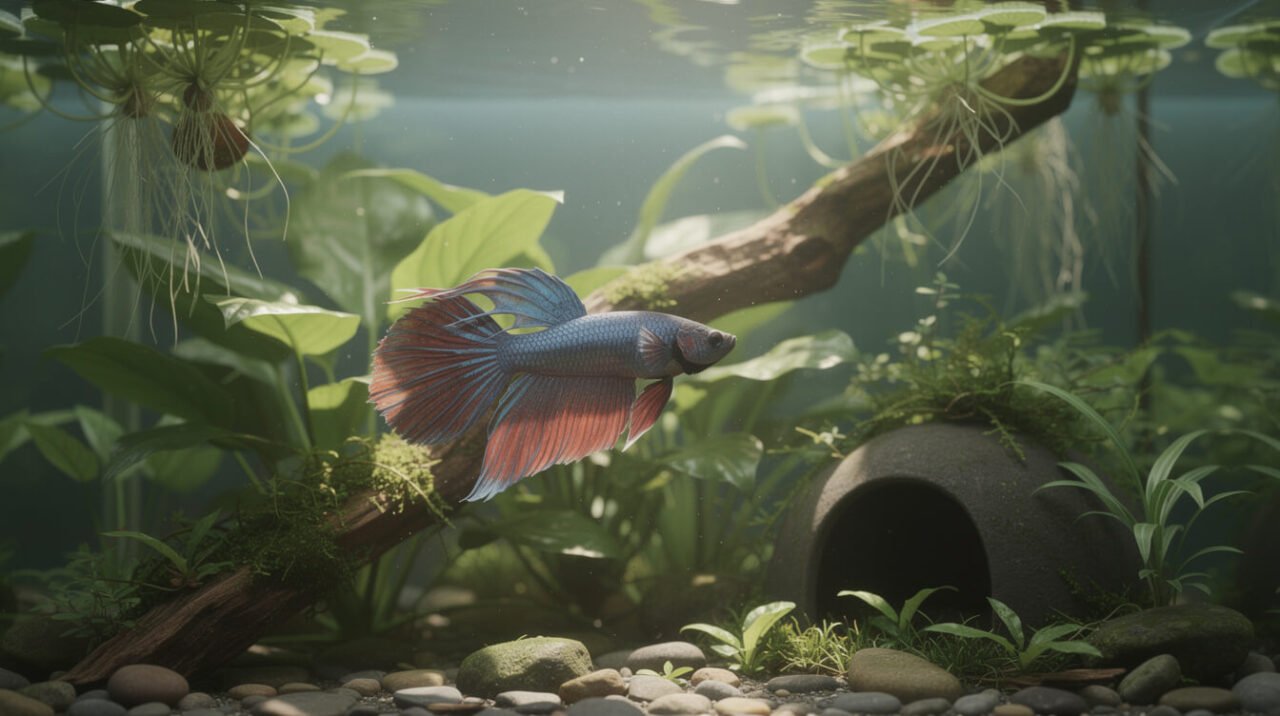
This is where a lot of betta guides stop short — they’ll tell you what to buy, not how to give your fish a genuinely engaging environment. Bettas are intelligent, curious, and surprisingly individual in temperament, and enrichment is part of real care, not a bonus.
Flaring
Bettas flare their fins and gill covers as a natural display behavior, usually in response to a perceived rival. A brief look in a mirror a couple of times a week, for a minute or two, can offer mental stimulation similar to a natural territorial encounter. This should stay brief and occasional — used as an occasional behavioral outlet, not a routine, since prolonged or frequent flaring can become a genuine stressor rather than enrichment.
Foraging
Instead of dropping all their food in one spot, try scattering pellets across the surface, or using a feeding ring in a larger tank, so your betta has to work a little to find each piece — closer to how it would hunt in the wild.
Plants and hides
Live plants (or soft silk substitutes) give a betta places to explore, rest, and retreat. Floating plants like frogbit or duckweed diffuse light and mimic the vegetation-dense water bettas evolved in. A cave or hide gives your fish somewhere to feel secure, which matters more for a solitary, territorial species than it might for a schooling fish.
Current preference
Watch how your betta responds to your filter’s outflow. A fish that’s constantly fighting the current, clinging to one low-flow corner, or looking exhausted needs the flow baffled or reduced — remember, those long fins evolved for slow water, not a rapid.
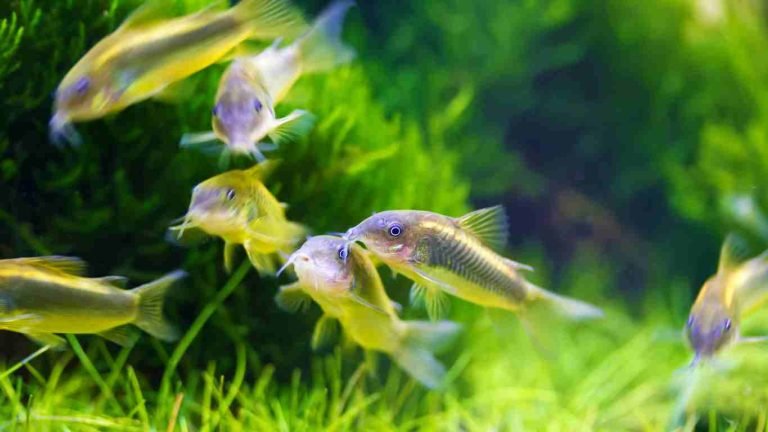
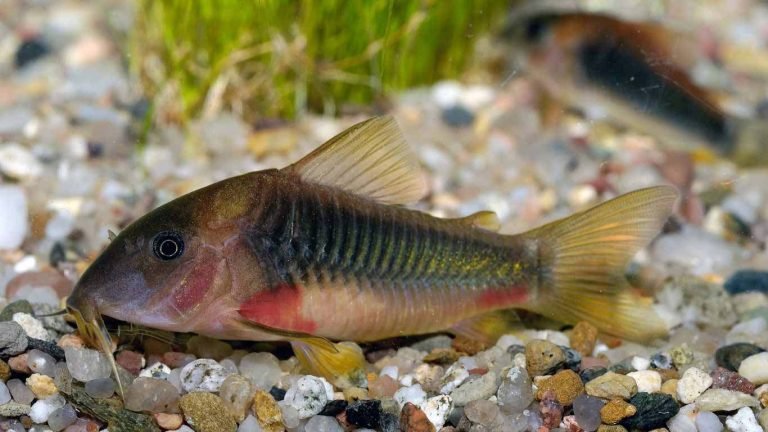
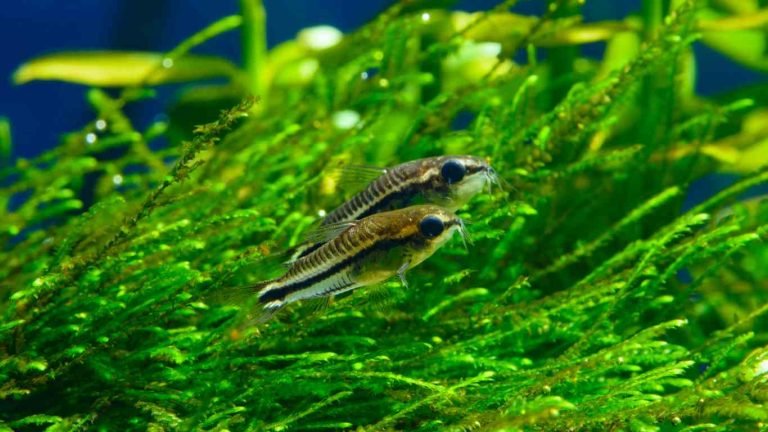
If you’re building out a larger community tank around your betta, tank-mate compatibility becomes its own enrichment question — not every fish makes a good neighbor for a territorial species. We cover this in detail in Pygmy Corydoras with Betta: Ideal Tank Mates?, and if you’re drawn to building out a peaceful bottom-dwelling community alongside your betta, our guides on breeding corydoras and salt and pepper corydoras care are a natural next read.
Signs of a Healthy (vs. Stressed) Betta — When to See an Aquatic Vet
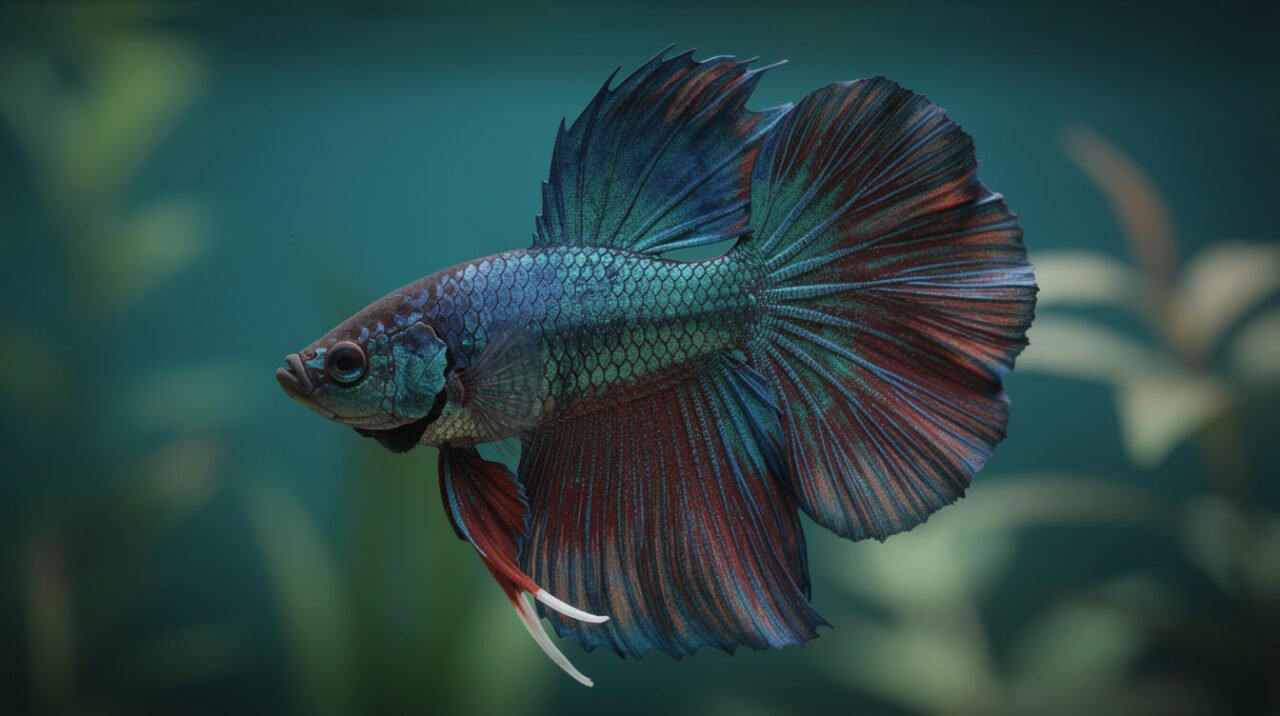
Knowing your betta’s normal baseline is the best early-warning system you have. Check in daily — it only takes a moment once it’s a habit.
Signs of a healthy betta
- Vibrant, consistent color and fins held open, not clamped
- Active but not frantic — investigating the tank, coming to the surface to feed with interest
- Steady appetite, finishing meals within a couple of minutes
- Smooth, unlabored swimming and normal buoyancy
Signs something’s off
- Clamped fins held tightly against the body
- Faded or blotchy color, or dark spots that weren’t there before
- Lethargy, hiding constantly, or resting at odd angles
- Loss of appetite for more than a day or two
- Rapid gill movement, gasping at the surface, or visible growths, white spots, or fuzzy patches
- Bloating, especially with a raised, pinecone-like appearance to the scales
Many mild stress signs resolve once you correct the underlying cause — a water-quality check and a partial water change is always the right first move. But if you see visible illness, sudden behavior changes, or anything you can’t explain with a water-quality issue, that’s a job for a veterinarian experienced with aquatic or exotic species — this guide can help you build good habits, but it isn’t a substitute for a professional diagnosis when your betta is genuinely unwell. Not every general vet sees fish regularly, so it’s worth locating an aquatic-experienced vet or exotics practice before you need one, not during an emergency.
For a sense of what a well-cared-for aquatic pet’s lifespan can look like when the fundamentals are dialed in, our piece on how long corydoras live is a useful companion read if you’re planning a community tank around your betta.
Frequently Asked Questions About Betta Fish Care
Can bettas live with other fish?
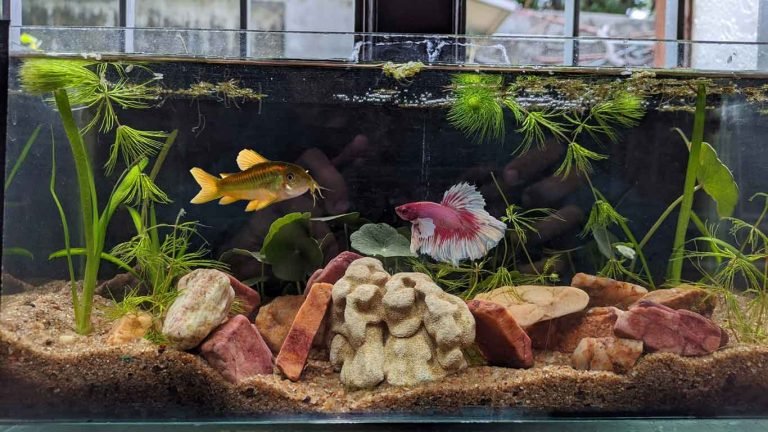
Sometimes, with real caution. Male bettas are territorial and should never be housed with other bettas or with fin-nipping, brightly colored, or long-finned species that could trigger aggression. In a large enough tank (10+ gallons) with plenty of plant cover, some keepers successfully house a betta with calm, fast-moving bottom dwellers like corydoras — but always research the specific species first and have a backup tank ready in case the pairing doesn’t work out. Our guide to keeping pygmy corydoras with a betta walks through what makes a pairing more or less likely to succeed.
Do bettas need a bubbler or air stone?
Not strictly, since they can breathe atmospheric air via their labyrinth organ, and a properly cycled, filtered tank already provides oxygenation through surface agitation. That said, an air stone doesn’t hurt and can help in a very densely planted or warmer tank, where dissolved oxygen runs lower. It’s a nice-to-have, not a requirement.
How often should I do water changes?
A common, sensible starting point is a 25–30% water change weekly in a cycled tank, adjusted up or down based on your own ammonia/nitrite/nitrate readings and tank size — smaller tanks generally need more frequent attention than larger ones. Always treat new water with a dechlorinator and match the temperature closely to avoid shocking your betta.
Can two bettas live together?
Two male bettas should never be housed together — they are named for a reason, and serious, sometimes fatal, fighting is the near-certain result. Female bettas can sometimes be kept in a carefully managed group (often called a “sorority”) in a large, heavily planted tank with close monitoring, but this setup carries real risk of aggression and isn’t a good starting project for a first-time keeper.
Do bettas need a light, and how long should it stay on?
A regular light cycle of roughly 8–12 hours on, with a consistent dark period overnight, supports both your betta’s natural rhythm and any live plants in the tank. Consistency matters more than the exact hour count — a timer makes this effortless and removes the guesswork.

Wear the obsession
Bearded Dragon Crown Sunglasses King T-Shirt
Price range: $24.99 through $26.99
Shop this designFinal Thoughts: Give Your Betta the Setup It Actually Deserves
A betta in a cup at the store is a betta waiting for someone to do better by it. The good news is that “better” isn’t complicated — it’s a cycled, heated, filtered tank of real size, a diet that respects what this fish evolved to eat, and a little attention to what genuine enrichment looks like for a curious, individual little animal. Do that, and you’ll likely find a betta is one of the most engaging, expressive fish you can keep — worth every bit of the setup it asks for.
Before you go
Keep learning your animal
We publish a new guide every day. The best of them land in one short weekly email, so you never miss the one about your species.

Meet Marcus Lee, your aquatic enthusiast and guide to the mesmerizing world of aquariums. With a decade of hands-on experience in both freshwater and saltwater environments, Marcus has mastered the art of creating thriving aquatic ecosystems.