Can Guinea Pigs Eat Broccoli? Safe Amounts, Bloat Risk, and the Vitamin C Connection
Short answer: yes, guinea pigs can eat broccoli — a small piece, a couple of times a week. It’s a genuinely useful vitamin C source for a species that can’t make its own, but it’s also one of the vegetables that’s easiest to overdo. Broccoli sits in that “good in the right amount, a problem in the wrong amount” category, which is exactly why so many guinea pig owners land here searching can guinea pigs eat broccoli before they hand over that first floret.
Here’s what you’ll walk away with: why broccoli actually earns its place in your piggy’s diet, the two real risks worth understanding (not fear-mongering — just the actual mechanics), which part of the plant is gentlest on their stomach, how to introduce it without any guesswork, and what to watch for afterward. Your cavy’s already curious about it. Let’s make sure you’re feeding it right.
Can guinea pigs eat broccoli? The short answer
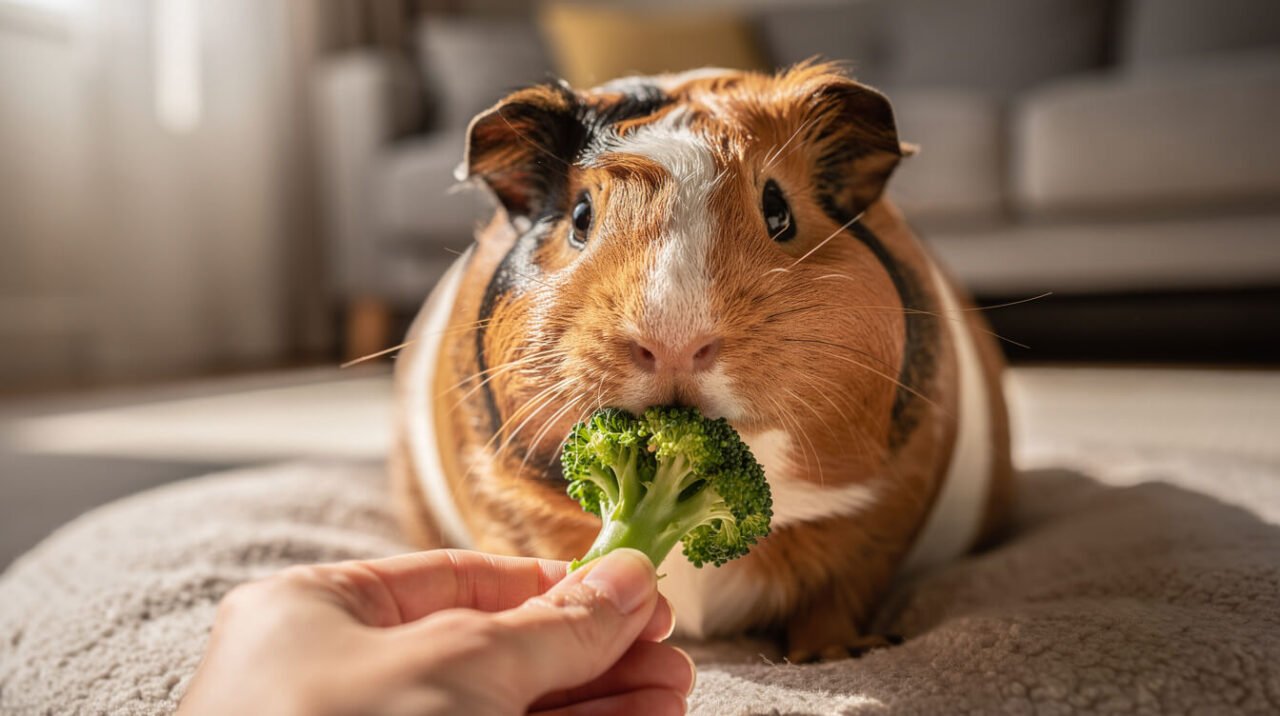
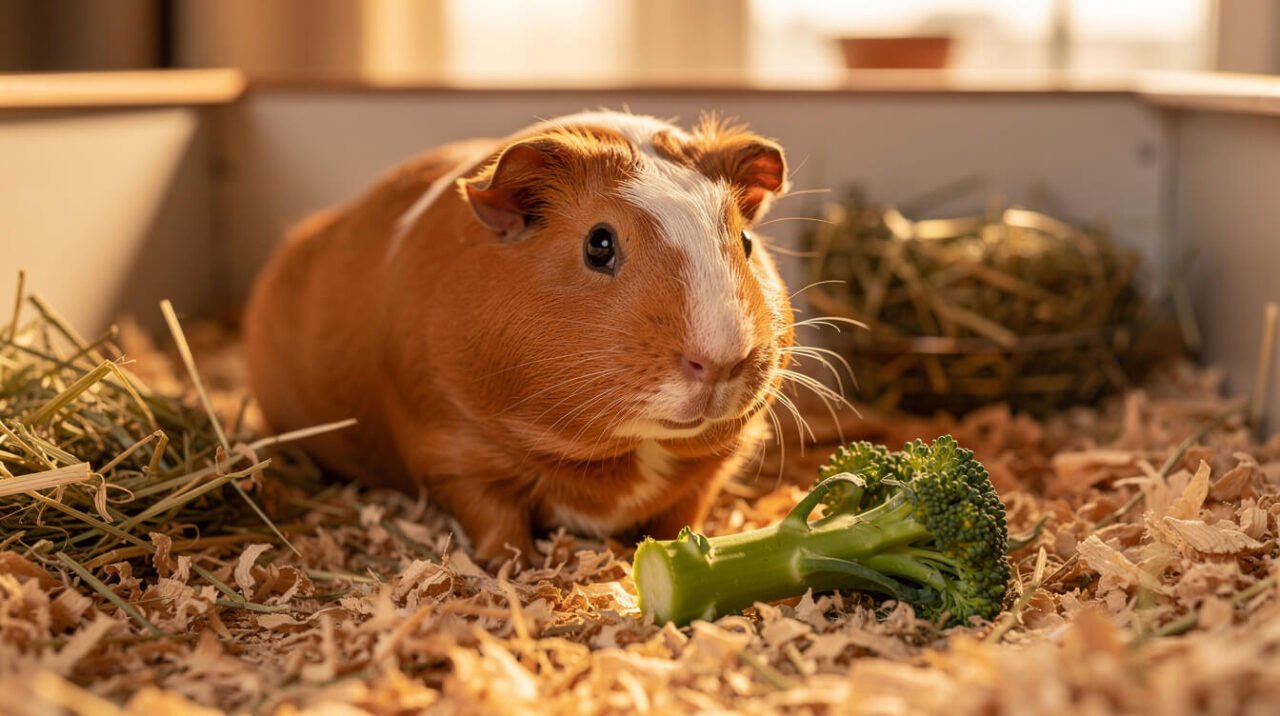
Yes — raw, fresh broccoli in small, occasional amounts is safe for most guinea pigs. Every part of the plant is fine: florets, stems, and stalks. Nothing about broccoli itself is toxic to guinea pigs the way, say, onions or avocado are to some other pets.
The catch isn’t safety in the “will this poison my guinea pig” sense — it’s moderation. Broccoli is denser and harder to digest than the leafy greens that should make up the bulk of a guinea pig’s fresh-veggie rotation, and it carries enough calcium and oxalates that overfeeding it regularly is a real, documented concern (more on that below). Think of broccoli less like a daily salad topper and more like a treat with benefits — occasional, appreciated, and best kept in check.
One more thing before you reach for a floret: hay comes first. Unlimited grass hay is still the foundation of your guinea pig’s digestive and dental health. Broccoli, like every fresh vegetable, is a supplement to that foundation, never a replacement for it.
Why broccoli is actually good for guinea pigs (the vitamin C connection)
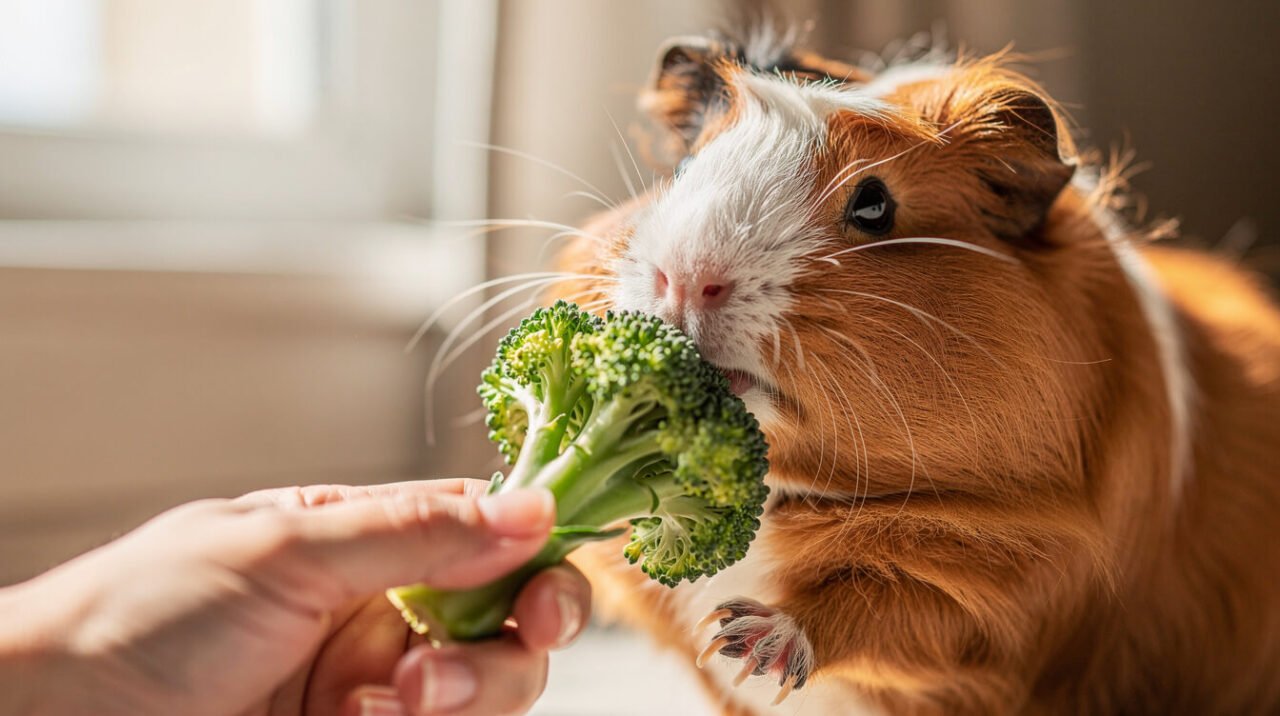
Guinea pigs share an odd trait with humans: they can’t synthesize their own vitamin C. It has to come from their diet, every day, or they’re at risk of a deficiency that shows up as lethargy, joint pain, poor coat condition, and slow-healing wounds. That’s not a broccoli-specific fact — it’s the reason fresh vegetables matter at all in a guinea pig’s diet, not just hay and pellets.
Broccoli happens to be a strong source of it. A quarter cup of chopped broccoli provides roughly 20 mg of vitamin C, and a healthy adult guinea pig generally needs somewhere in the range of 10–50 mg per day depending on size, age, and life stage (more for pregnant or nursing sows). That’s a meaningful chunk of their daily requirement from a small serving — which is exactly why broccoli earns a spot in the rotation, just not an every-day one.
What else broccoli brings to the table
- Fiber — supports healthy digestion alongside the fiber they’re already getting from hay.
- Low sugar — broccoli won’t spike anything the way sweeter treats can.
- Antioxidants — general cellular-health support, the same reason we’re told to eat our greens.
None of this makes broccoli a “superfood” your guinea pig needs daily. It makes it one solid option in a varied vegetable rotation — and variety, not any single vegetable, is what actually keeps a guinea pig’s diet balanced.
The real risk: gas, bloat, and why broccoli needs care
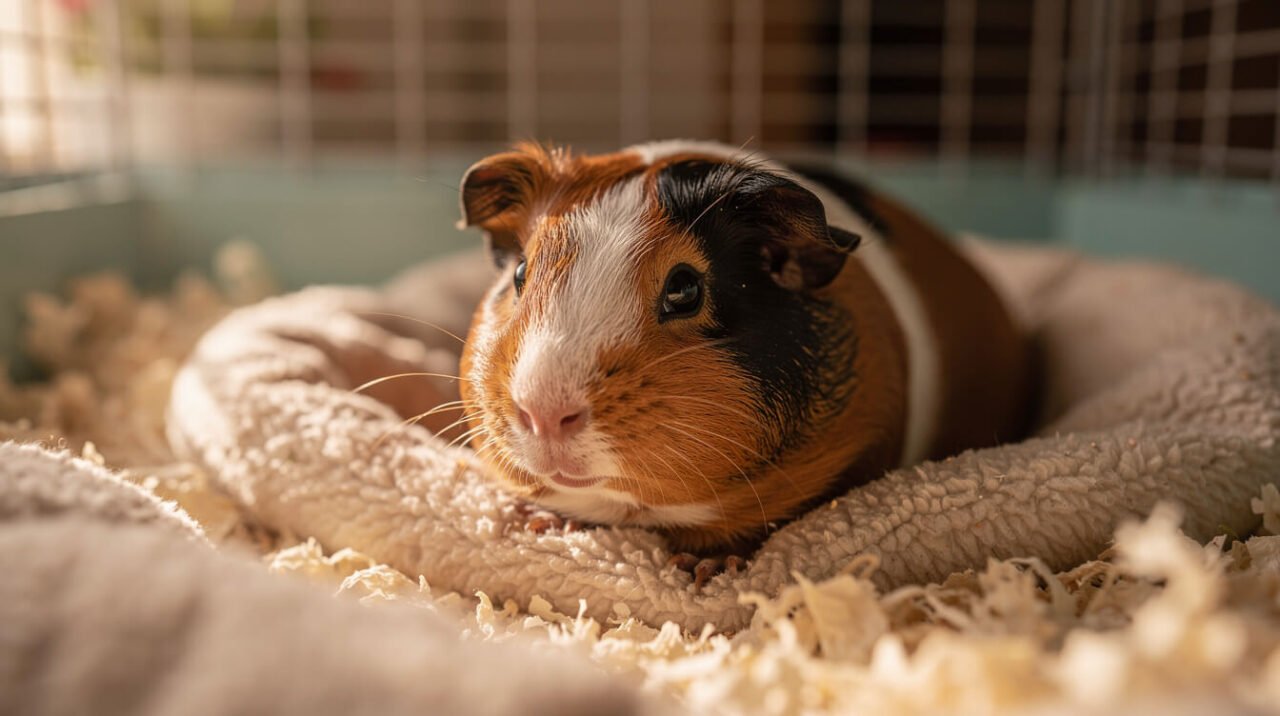
This is the part worth slowing down for, because it’s the actual reason broccoli isn’t a free-for-all vegetable.
Gas and a “bubbly belly”
Broccoli is part of the same cruciferous family that gives humans gas, and guinea pigs aren’t exempt. Feed too much, especially the denser florets, and you can end up with a genuinely uncomfortable, gassy guinea pig. Guinea pigs can’t burp or vomit to relieve gas buildup the way we can, which makes excess gas more than just an unpleasant smell — it can mean real digestive discomfort. This is the single biggest reason experienced keepers treat broccoli as an occasional food rather than a daily green.
Calcium, oxalates, and bladder stones
The second risk is longer-term. Broccoli carries a moderate amount of calcium and oxalates. Fed in excess, over time, that combination is a recognized contributor to bladder and kidney stones in guinea pigs — a painful condition that, in some cases, requires veterinary treatment or even surgery to resolve. This isn’t unique to broccoli; it’s the same reason other calcium-forward vegetables like kale and spinach are also treat-frequency foods, not daily staples, for this species.
Neither risk is a reason to avoid broccoli entirely. Both are entirely manageable with modest portions and a rotation that doesn’t lean on any one vegetable too heavily — which is exactly what the next two sections walk you through.
Florets vs. stems vs. leaves — what’s safest and how much
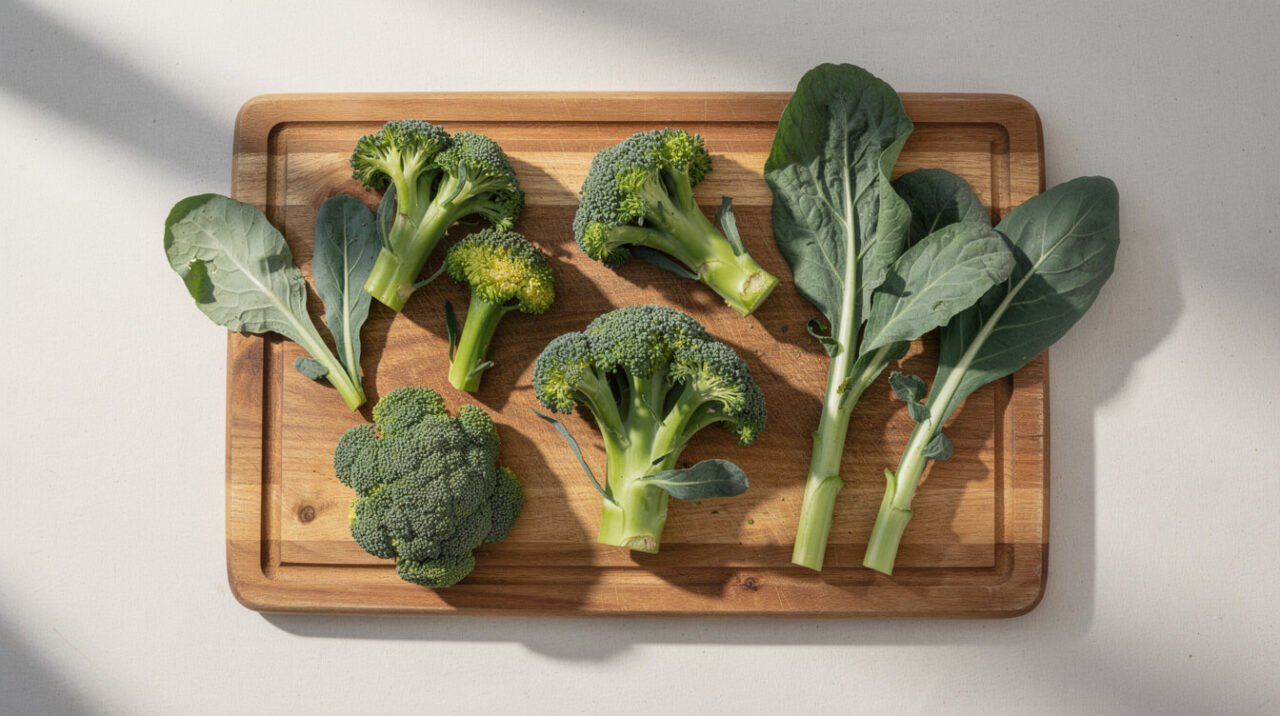
Every part of the broccoli plant is safe for guinea pigs, but they’re not identical from a digestion standpoint.
- Stalks and stems — generally the gentlest option. They’re firmer and less dense than the flower heads, which seems to make them easier on a guinea pig’s stomach. Many keepers find stems are the better everyday choice precisely because they’re less likely to trigger gas.
- Florets — the “flowery” crown is where most of the gas-producing compounds are concentrated. Still safe, still a favorite with most guinea pigs, but the part to be most conservative with.
- Leaves — the leafy greens attached near the stalk are fine too and closer in texture to the leafy vegetables guinea pigs already handle well.
On amount: think in terms of a single 1-inch piece, offered once or twice a week, as a sensible starting benchmark — not a rigid prescription, since every guinea pig’s tolerance is a little different, but a reasonable place to anchor your judgment. That fits within the broader guideline of roughly a cup of mixed fresh vegetables a day, spread across several different vegetables rather than concentrated on one. Broccoli should be one contributor to that cup, not the whole thing.
Always serve it raw and fresh — cooked vegetables aren’t appropriate for guinea pigs — and wash it thoroughly first to rinse off any pesticide residue, the same as you would for any produce.
The weekly care guide
Get it right for your animal, every week
One email a week: new care guides, species deep-dives, and the safety answers keepers search for, written by our specialists. No spam. Unsubscribe anytime.
How to introduce broccoli the right way (a gradual, watch-and-wait approach)
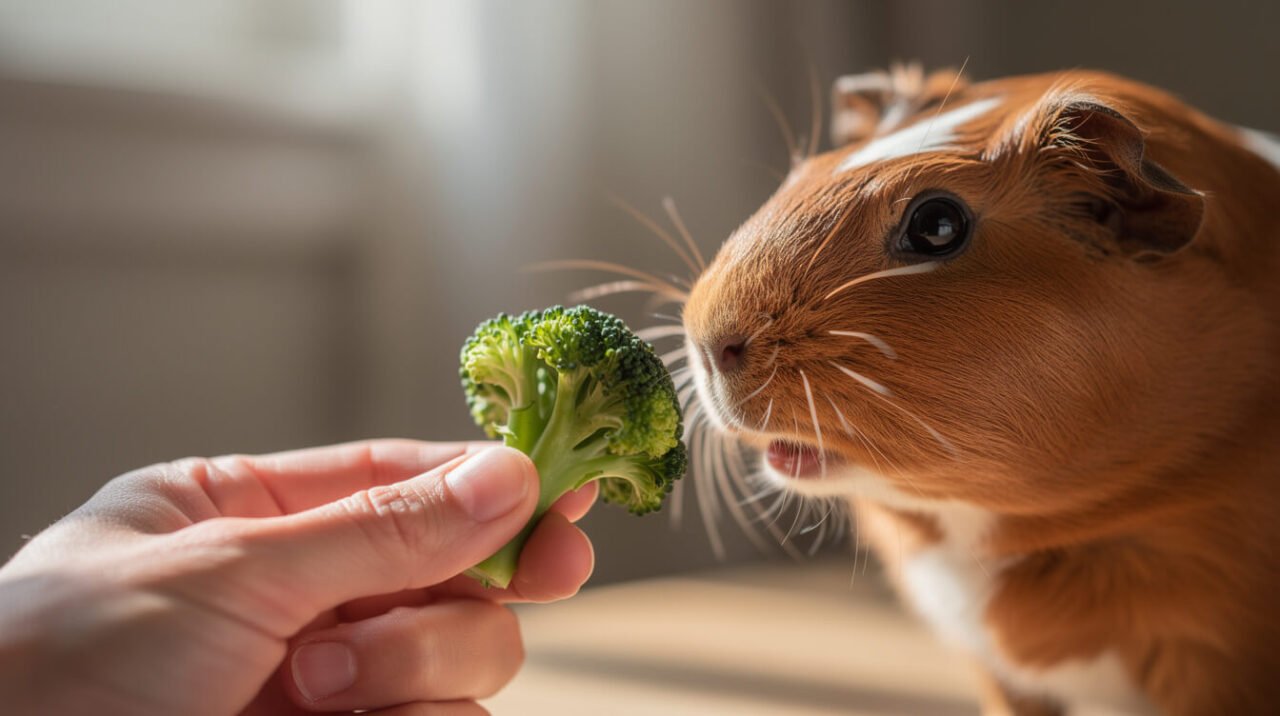
If your guinea pig has never had broccoli before, don’t start with a full floret. A good introduction looks like this:
- Offer a small taste. A piece about the size of a fingernail is plenty for a first try — you’re testing tolerance, not feeding a meal.
- Wait 24 hours and watch. Keep an eye on droppings, appetite, and general behavior. Normal, firm droppings and a guinea pig acting like themselves is the sign you’re clear to continue.
- Increase gradually if all is well. Work up toward that roughly 1-inch-piece benchmark over a couple of introductions, rather than jumping straight there.
- Settle into a frequency, not a daily habit. Once you know your guinea pig tolerates it, once or twice a week — rotated with other safe vegetables — is the sustainable long-term pattern.
This same slow, watch-and-wait approach is worth using for any new vegetable, not just broccoli. Guinea pigs have sensitive digestive systems, and the few extra days it takes to introduce something gradually is a small price for avoiding a genuinely upset stomach.
Building broccoli into a weekly vegetable rotation
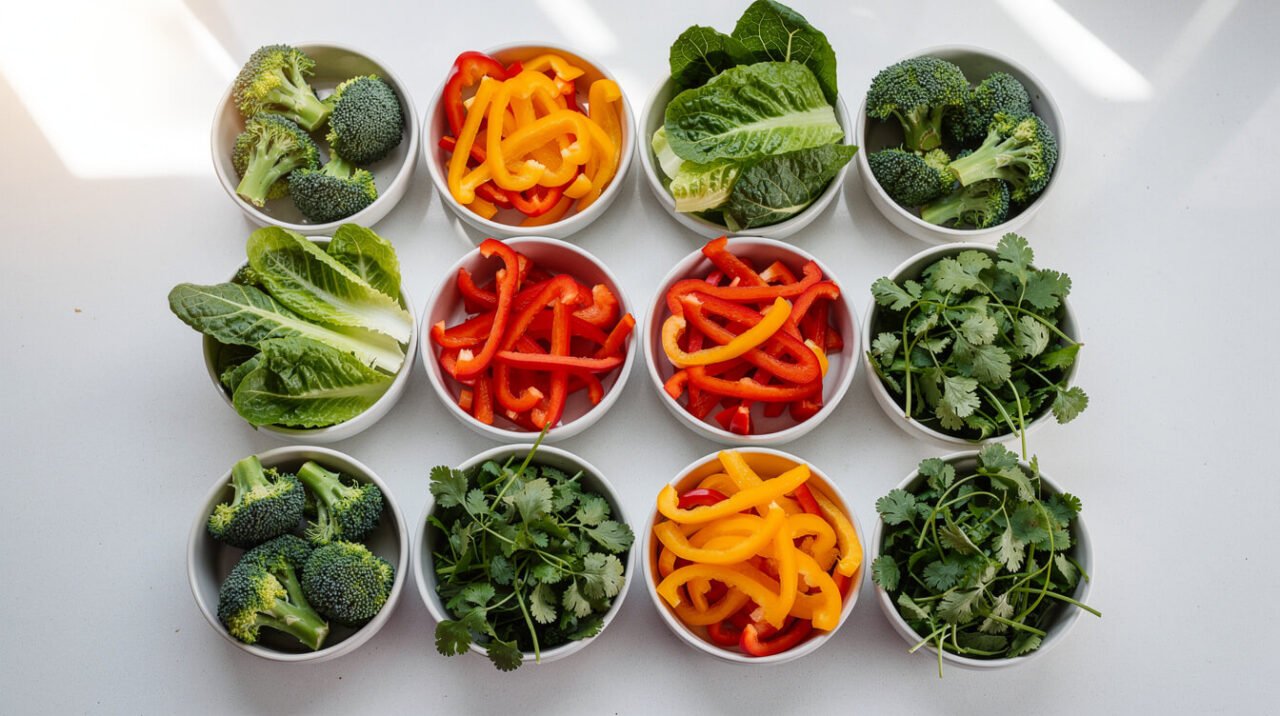
Most of the guidance you’ll find online stops at “feed broccoli in moderation” without ever showing what that actually looks like day to day. Here’s a practical way to think about it, once your guinea pig has passed the introduction stage above.
Treat your guinea pig’s roughly one-cup daily vegetable allowance as a rotation across the week, not a fixed daily menu. A sensible pattern might look like:
- Most days: a base of leafy greens — romaine, red or green leaf lettuce, cilantro, or parsley — which are gentle on digestion and can reasonably be offered daily.
- 1–2 days a week: your broccoli day — a single 1-inch piece (stem or leaf if your guinea pig tolerates florets less well), paired with a leafy green rather than another calcium-heavy vegetable like kale or spinach on the same day.
- 1–2 other days a week: a different vitamin-C-forward option, like bell pepper, so broccoli isn’t the only source your guinea pig relies on.
The point of rotating rather than repeating is twofold: it spreads out the calcium and oxalate load so no single vegetable’s risks compound day after day, and it means a genuinely varied diet — which, beyond the food-safety angle, also just makes mealtime more interesting for an animal that notices and appreciates variety. If you keep a simple written log of what you fed and when for the first few weeks, patterns in droppings or appetite become much easier to connect to a specific food, rather than a guessing game after the fact.
A worked example, for a guinea pig who’s already comfortable with broccoli:
- Monday, Wednesday, Friday, Sunday: leafy green base (romaine, leaf lettuce, or cilantro)
- Tuesday: broccoli — one 1-inch piece, stem or leaf, paired with a small leafy green
- Thursday: bell pepper, another strong vitamin C source, plus a leafy green
- Saturday: a different safe vegetable from your guinea pig’s established favorites, again alongside a leafy green
None of this needs to be exact or followed to the letter every single week — the underlying principle is what matters: lean on leafy greens as the daily default, treat the calcium-forward and gassier vegetables like broccoli as once-or-twice-weekly additions, and don’t stack two of those richer vegetables on the same day. Once you’ve internalized that pattern, you’ll find yourself building rotations for new vegetables without needing to look anything up.
Signs of bloat or discomfort — and when to call your exotic vet

Knowing what “too much broccoli” looks like in practice matters more than memorizing a gram count. Watch for:
- A visibly swollen or firm-feeling belly — gas buildup can make the abdomen look or feel distended.
- Reduced appetite or reluctance to move — a guinea pig in digestive discomfort often goes quiet and still, which is a real departure from their usual food-motivated selves.
- Soft, loose, or unusually formed droppings — a change from their normal, firm pellets is one of the clearest early signals something didn’t sit right.
- Audible gut sounds or apparent discomfort when touched near the belly — guinea pigs are generally not shy about voicing displeasure; take it seriously.
- Straining, or signs of pain when urinating — this points toward the bladder-stone risk specifically, not simple gas, and deserves prompt attention.
Mild gas from a slightly too-generous portion usually resolves on its own within a day as the guinea pig’s system processes it, especially if you pull back on rich vegetables and let hay do the work. But guinea pigs are prey animals that hide illness well, and digestive problems in this species can escalate quickly — GI stasis, in particular, is a genuine emergency. If your guinea pig seems significantly uncomfortable, stops eating or drinking, shows any sign of straining to urinate, or simply seems “off” in a way you can’t explain, don’t wait it out. Call a veterinarian experienced with exotic or small mammal patients. It’s always better to make that call and find out it was nothing than to hesitate on something that turns out to matter.
Frequently asked questions
Can baby guinea pigs eat broccoli?
Young guinea pigs have more sensitive digestive systems than adults. It’s best to hold off on broccoli and other gas-prone vegetables until they’re a bit older and established on hay and pellets, then introduce it slowly using the same watch-and-wait approach described above.
Can guinea pigs eat broccoli leaves?
Yes. The leaves are safe and tend to be gentler on digestion than the florets, similar to other leafy greens guinea pigs already tolerate well.
Is broccoli stem better than florets for guinea pigs?
Many keepers find stems easier on a guinea pig’s stomach than the denser floret heads, which is where more of the gas-producing compounds are concentrated. Both are safe; stems are the gentler everyday pick.
Can guinea pigs eat broccoli every day?
It’s not recommended. Once or twice a week, rotated with other safe vegetables, keeps the calcium/oxalate load and gas risk in a comfortable range while still letting your guinea pig enjoy it regularly.
What vegetables pair well with broccoli in a guinea pig’s rotation?
Leafy greens like romaine or bell peppers (both high in vitamin C and gentler on digestion) make good rotation partners, so broccoli isn’t carrying the vitamin C load on its own several days a week.
Can guinea pigs eat broccoli sprouts?
There isn’t strong, guinea-pig-specific evidence either way on sprouts specifically, and sprouts carry their own separate food-safety considerations around freshness and bacterial risk. Stick to fresh, mature broccoli florets, stems, and leaves, which are well established as safe, rather than experimenting with sprouts.
Why did my guinea pig refuse broccoli?
Some guinea pigs simply don’t like the taste or texture, and that’s completely normal — individual preference varies as much in guinea pigs as it does in people. Don’t force it; offer it again in a week or two, or simply let it go and lean on the other safe vegetables your guinea pig already enjoys.

Wear the obsession
Bearded Dragon Crown Sunglasses King T-Shirt
Price range: $24.99 through $26.99
Shop this designFinal thoughts
Broccoli isn’t something to fear, and it isn’t something to feed freely, either — it’s a genuinely good vegetable for guinea pigs when it’s treated like what it is: an occasional, vitamin-C-rich treat, not a daily staple. Start small, watch how your guinea pig responds, lean toward stems and leaves over heavy floret portions, and keep it to once or twice a week alongside a rotation of other safe vegetables. Do that, and broccoli becomes one more way to round out a diet that’s already doing right by your pig.
If you’re still dialing in the rest of your guinea pig’s setup, our comprehensive guinea pig care guide covers diet, habitat, and health basics beyond just this one vegetable, and our guide to fleece bedding for guinea pigs is a natural next read if you’re still working out their cage setup. And if you’re a cavy person who’s ever wondered what else is out there in the guinea pig’s extended family, our profiles on Patagonian cavies as pets and their legal status in the US are worth a look.
Before you go
Keep learning your animal
We publish a new guide every day. The best of them land in one short weekly email, so you never miss the one about your species.

Oliver Grant is your go-to expert for all things related to small mammals. With 15 years of hands-on experience raising and caring for rabbits, guinea pigs, hamsters, and ferrets, Oliver brings a wealth of knowledge to his readers.