Bearded Dragon Tank Setup: The Real Cost Breakdown and Upgrade Timeline
If you’re planning a bearded dragon tank setup for the first time, here’s the short version: buy for the adult your dragon will become, not the hatchling sitting in front of you right now. Most of the frustration (and most of the wasted money) in beardie-keeping traces back to one decision made in week one — a “starter” tank that gets outgrown in months, paired with lighting that was never quite strong enough to begin with.
This guide walks through exactly what a proper setup costs at both the budget and long-term-correct end, when to upgrade from a juvenile enclosure to an adult one, and which pieces of the habitat are genuinely non-negotiable versus which ones are personal preference. We’ll keep every number here as a realistic range, not a guarantee — prices, product lines, and even some husbandry guidance shift over time, and your local reptile-savvy vet or an experienced keeper in your area is always the better tiebreaker for your specific animal. (Once the habitat’s sorted, diet is the other half of the equation — see our guide on what treats are safe for a bearded dragon for the feeding side.)
Bearded Dragon Tank Setup: What Size Do You Actually Need?
Start with the animal your dragon will be at twelve months old, not the one you’re bringing home this week. Bearded dragons grow fast — a hatchling smaller than your palm can reach 16–24 inches nose to tail within a year — and an enclosure sized for a juvenile becomes cramped well before most owners expect.
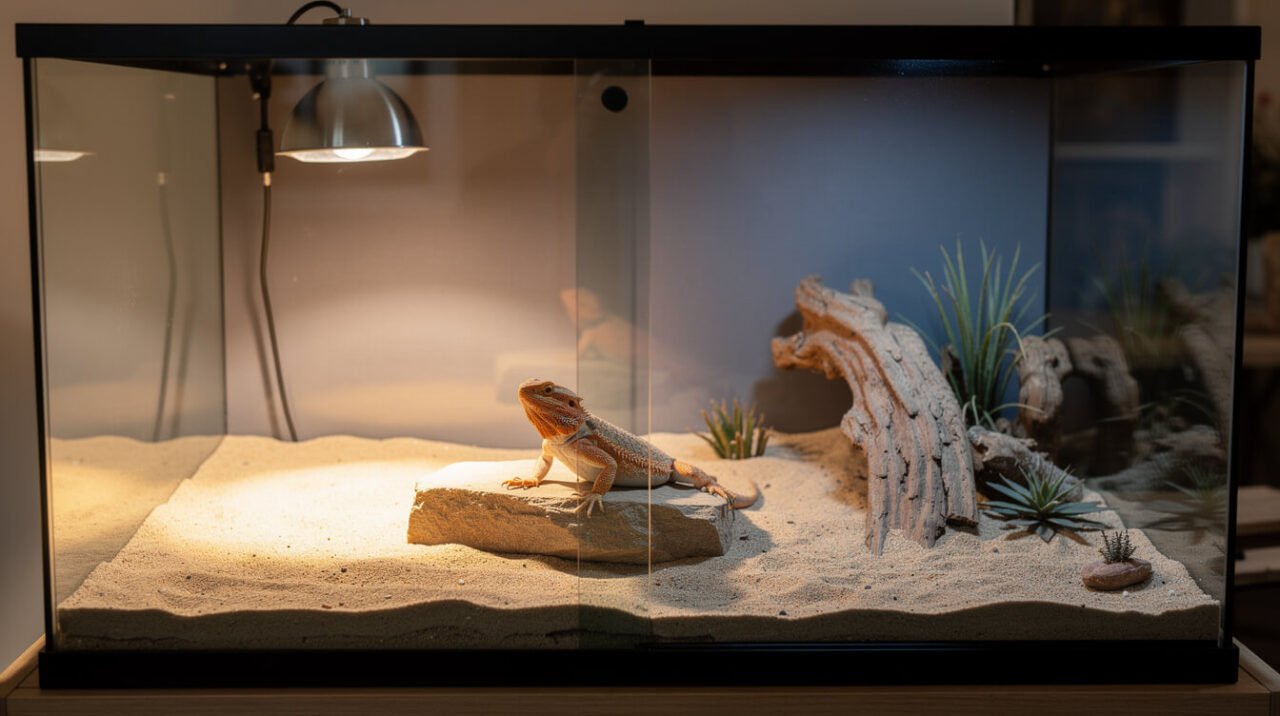
Most current husbandry sources agree on a floor: a full-grown adult needs a minimum footprint in the neighborhood of 4 feet long by 2 feet wide by 2 feet tall (roughly the equivalent of a 75–120 gallon glass tank or a comparable PVC enclosure). Smaller 40-gallon setups are commonly sold as “adult” tanks, and a dragon can technically survive in one, but more floor space means more room for a real temperature gradient — a cooler end and a proper basking end — which is the whole mechanism that lets your dragon regulate its own body temperature. Cramped enclosures make that gradient hard to build, and that shows up over time as a dragon that’s sluggish, stressed, or struggling to thermoregulate.
If you’re set on starting in a smaller tank while your dragon is young, treat it explicitly as temporary — something you’ll replace within months, not a “starter home” you’ll live in for years. Many experienced keepers skip the tiny juvenile tank altogether and set up the full adult-sized enclosure from day one, using extra hides and closer-placed heat sources to make the larger space feel manageable for a small lizard. Either approach can work; what doesn’t work is assuming a hatchling-sized tank will still fit your dragon at month eight.
The Real Cost Breakdown — Budget vs. Long-Term-Correct Setup
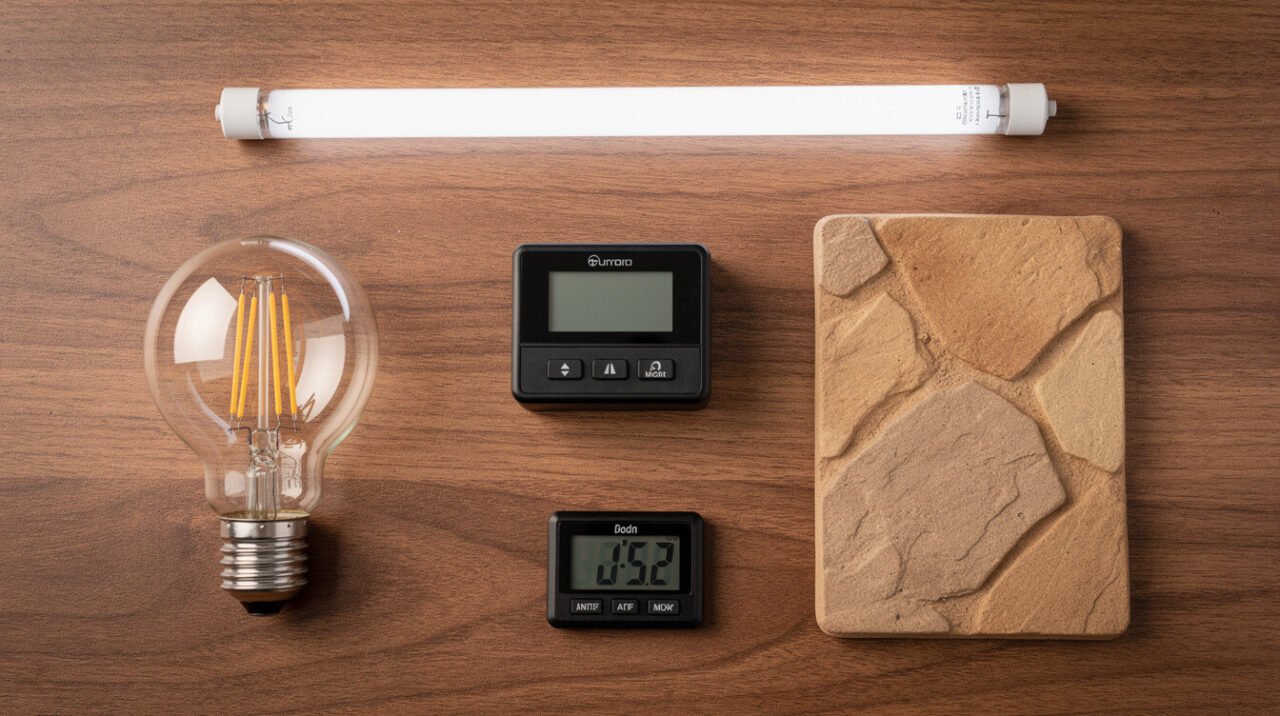
This is the part most care guides skip, and it’s exactly where new keepers get blindsided. A bearded dragon habitat isn’t a one-time purchase — it’s a system of parts, several of which need periodic replacing. Here’s a realistic, rounded picture of what each path tends to cost. Treat these as ballpark ranges to budget against, not fixed prices — retailers, regions, and sales all move the number, so check current listings before you buy.
- Enclosure: budget glass tank roughly $80–$180; a proper 4x2x2 adult-sized PVC or glass enclosure roughly $250–$500+
- Lighting (UVB + basking + fixtures): budget linear/compact UVB and basking bulb roughly $40–$70; a full T5 HO UVB fixture plus a quality basking bulb and dimmable fixtures roughly $100–$180
- Thermostat/controller: a basking-lamp thermostat is genuinely worth the roughly $25–$45 — it’s cheap insurance against a stuck-on heat bulb
- Substrate: reptile carpet or non-particulate tile roughly $15–$40; loose “bioactive” substrate setups with live plants and a drainage layer can run $60–$150+
- Décor (hides, basking branch/rock, background): roughly $30–$100 depending on how much you build out
- Thermometer/hygrometer: a decent digital combo unit roughly $10–$20 — don’t skip this; it’s how you verify the gradient is actually working, rather than guessing
Add it up and a genuinely no-corners-cut adult setup tends to land somewhere around $450–$900 up front, with UVB bulbs needing replacement roughly every 6–12 months (check your specific bulb’s manufacturer guidance — output drops well before the bulb visibly dims) and basking bulbs an ongoing minor cost. A bare-minimum budget setup can be assembled for meaningfully less, but a few of those line items — the UVB fixture and the thermostat especially — are worth stretching the budget for, since they sit closest to your dragon’s actual health.
Don’t forget the ongoing costs either, since they’re easy to underestimate when you’re focused on the initial shopping list. Heat and UVB fixtures run for roughly 10–14 hours a day, which adds a modest but real amount to your electricity bill over a year. Feeder insects (crickets, dubia roaches, or similar, plus leafy greens and the occasional fruit treat) are a recurring grocery-style expense rather than a one-time cost, and a calcium/vitamin supplement dusted on feeders is inexpensive but genuinely worth budgeting for continuously, not just at setup. None of these ongoing costs are large individually, but together they’re a more accurate picture of what keeping a bearded dragon well actually costs over its lifespan — which, with good care, can run a decade or more.
Juvenile to Adult — When and Why to Upgrade
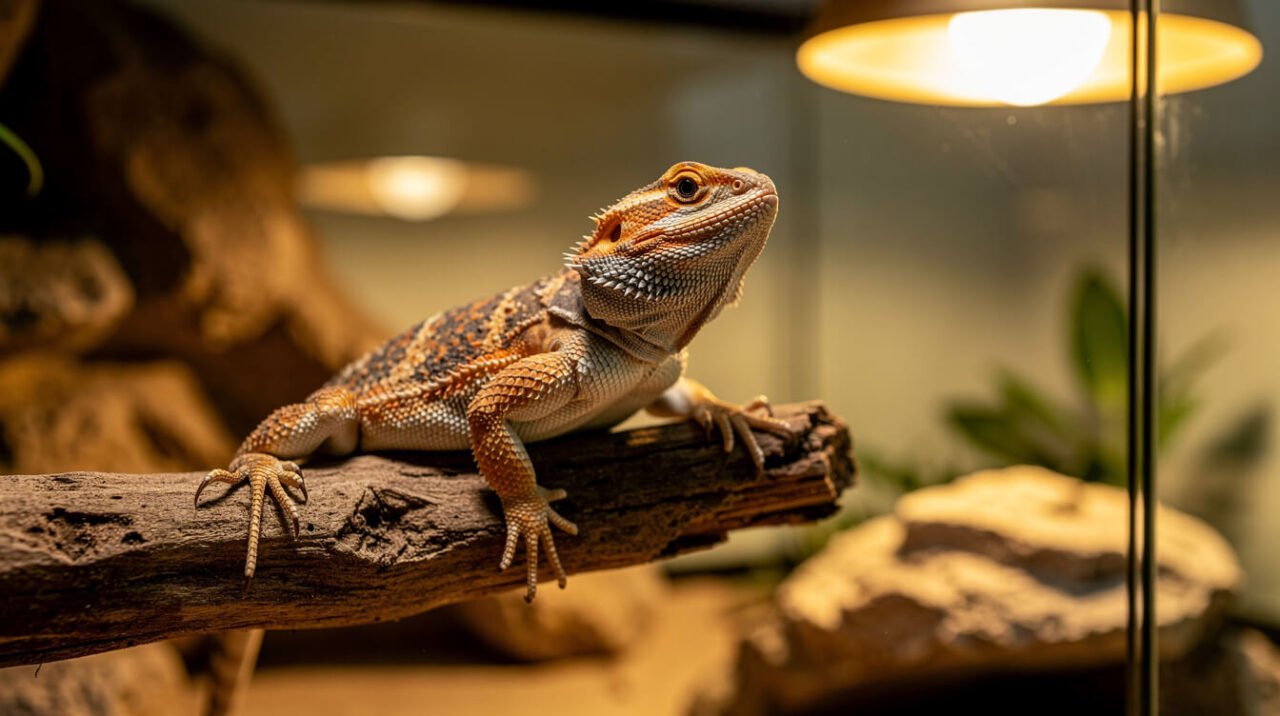
There’s no single magic date — growth rate varies by individual, diet, and genetics — but a rough timeline most keepers see looks something like this:
- 0–3 months (hatchling): small, fast-growing, often kept in a temporary smaller enclosure or a full-sized adult tank set up with closer heat/UVB placement
- 3–8 months (juvenile): rapid growth phase — this is usually when a 20-gallon-class tank starts feeling genuinely tight
- 8–18 months (sub-adult): most dragons are approaching or at full length and need the full adult footprint
- 18+ months (adult): growth has largely leveled off; this is the enclosure your dragon should live in long-term
The signal to upgrade isn’t a date on a calendar — it’s the animal. If your dragon’s total length is approaching most of the tank’s length, if it can’t get meaningful distance between the basking spot and the cool end, or if you’re struggling to hold a proper thermal gradient in the space you have, that’s your cue. Waiting too long doesn’t just cramp your dragon physically — it can make it harder to maintain the temperature range and hiding options a stressed or growing animal actually needs.
Bearded Dragon Tank Setup: UVB and Heating — What’s Non-Negotiable
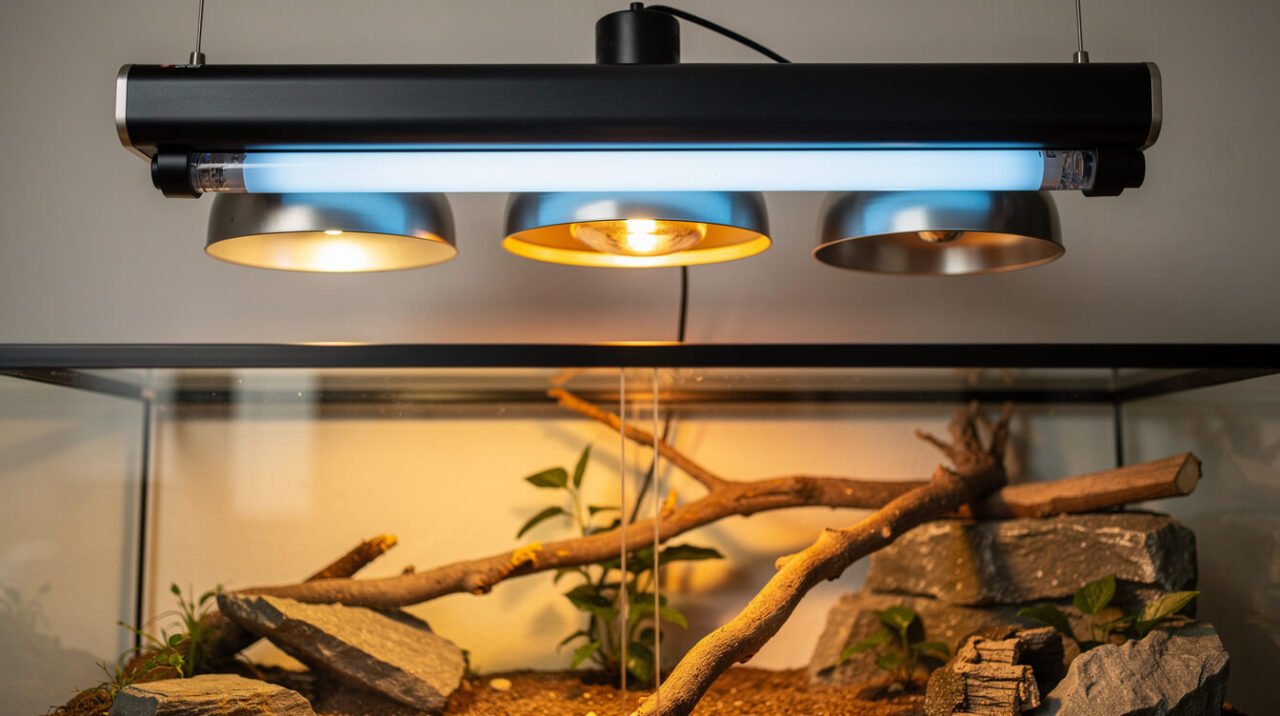
If you only get two things right in this whole setup, make it these two — they’re the pieces most directly tied to long-term skeletal and metabolic health.
UVB lighting
Bearded dragons need UVB exposure to synthesize vitamin D3 and properly use dietary calcium. Without it, even a perfect diet can’t prevent metabolic bone disease over time. A linear or T5 HO UVB fixture that runs most of the length of the enclosure is generally considered far more effective than a small compact bulb, since it gives your dragon room to move toward or away from the UVB gradient the same way it does with heat. UVB output drops well before a bulb visibly dims, so plan on replacing it on the schedule your specific bulb’s manufacturer recommends — don’t wait for it to “look” worn out.
Heating and the temperature gradient
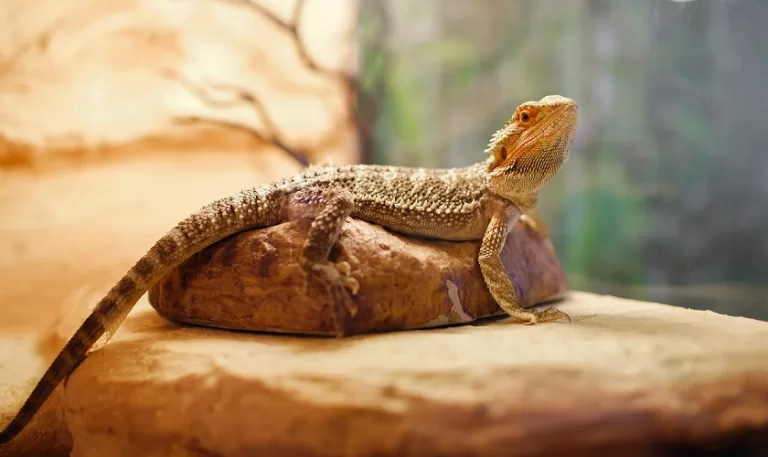
Bearded dragons are desert-adapted and cold-blooded, which means they rely entirely on their environment to regulate body temperature. Most care sources describe a basking spot in the roughly 95–105°F range for adults (juveniles are sometimes kept a little warmer), a cooler end that lets the dragon retreat and lower its body temperature, and an ambient daytime range and nighttime drop that mimics a natural day/night cycle. Exact numbers vary somewhat by source and by individual animal, so use a digital thermometer at both ends of the enclosure to verify your actual gradient rather than trusting a bulb’s advertised wattage — and pair your basking bulb with a thermostat so an equipment malfunction can’t turn “warm” into “dangerous” while you’re not watching.
If your dragon is regularly refusing to bask, staying unusually dark or unusually pale, or seems lethargic despite what looks like a correct setup, that’s worth a call to a reptile-experienced veterinarian rather than more guesswork on your end — it can be a sign the gradient isn’t actually working the way your thermometer suggests, or of something unrelated to the enclosure entirely.
The weekly care guide
Get it right for your animal, every week
One email a week: new care guides, species deep-dives, and the safety answers keepers search for, written by our specialists. No spam. Unsubscribe anytime.
Substrate — Safe Options and What to Avoid
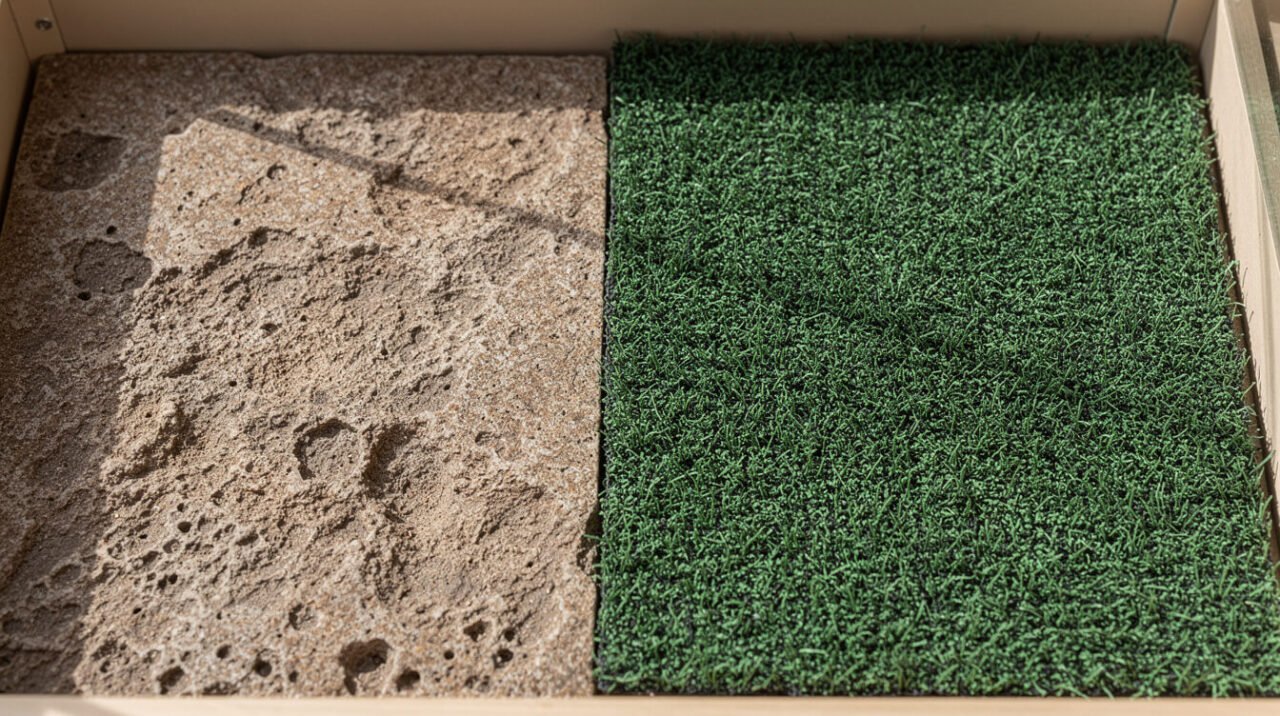
Substrate is one of the more debated corners of bearded dragon care, and it’s worth understanding why. The concern with loose substrates — sand blends, walnut shell, small-particle bark — is impaction: if bits are ingested (often while lunging at food), they can potentially cause a digestive blockage, which is a genuine veterinary emergency, not something to manage at home.
For that reason, many keepers — especially with younger dragons who are messier, more food-driven eaters — stick to non-particulate options: reptile carpet, paper towel while your dragon settles in, or textured tile, all of which are easy to clean and carry essentially no impaction risk. Experienced keepers running bioactive, plant-based setups do use loose substrate successfully, but it typically comes with more careful feeding practices (feeding from a dish rather than loose in the enclosure) and closer observation. If you’re newer to reptile-keeping, starting with a non-particulate substrate and revisiting bioactive setups once you’re more experienced is the lower-risk path — and if you ever notice your dragon straining, not passing waste normally, or seeming lethargic after a period on loose substrate, that’s a same-day call to your vet, not a wait-and-see situation.
Layout — Basking, Hides, and Vertical Space
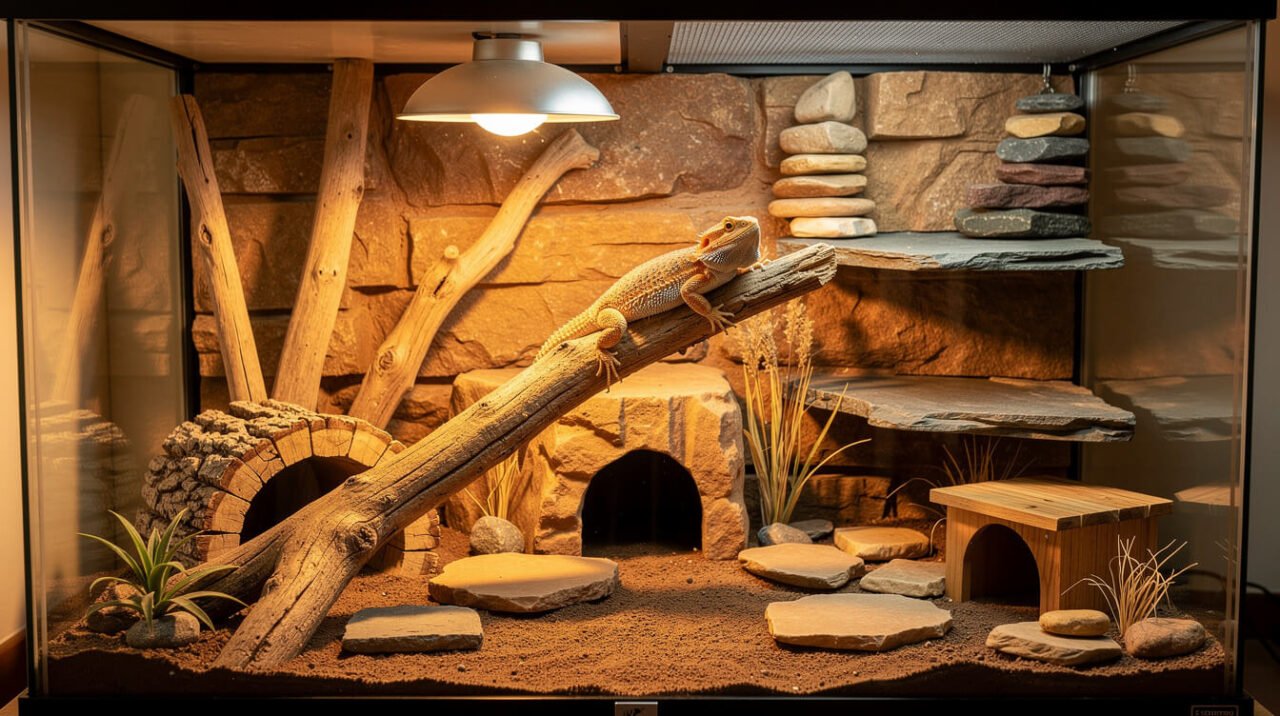
Once size, lighting, and substrate are sorted, layout is where the enclosure starts to actually work for your dragon day to day. A few pieces earn their space:
- A basking platform — a sturdy branch, ledge, or flat rock positioned so your dragon can get genuinely close to the basking bulb without touching it directly
- At least one hide at the cool end (and ideally one near the basking end too) — bearded dragons that can’t retreat and feel secure tend to show more stress behavior over time
- Some vertical interest — branches or ledges at varying heights let your dragon choose its own spot along the temperature gradient rather than being stuck on one flat plane
- Open floor space — resist the urge to over-decorate; bearded dragons are ground-dwelling, active animals that need room to move, not just perch
Double-check anything you add for stability. A climbing branch or rock stack that can shift or collapse is a real injury risk, especially once your dragon is heavier as an adult — wedge and secure décor rather than just balancing it.
If you’re setting up habitats for more than one reptile species, the same gradient-and-gear logic applies elsewhere in the house — our leopard gecko tank setup guide covers how the same size/heat/substrate framework shifts for a very different desert species.
Common Bearded Dragon Tank Setup Mistakes That Cost More Later
A handful of first-tank mistakes show up again and again, and nearly all of them end up costing more money (or more stress for the dragon) down the line than getting it right the first time would have:
Buying the tiny tank as a “starter home”
A 10–20 gallon tank marketed for hatchlings gets outgrown within months. If budget is the constraint, it’s often more economical to buy the adult-sized enclosure once and adjust heat placement for a small dragon, rather than buying twice.
Skimping on UVB
A weak or expired UVB bulb is invisible — your dragon still basks, still eats, and nothing looks obviously wrong until bone health problems show up much later. This is the single item in the setup least worth cutting for budget reasons.
No thermostat on the basking bulb
Without one, a bulb that runs hotter than expected (or a fixture malfunction) can push basking temperatures into dangerous territory with nothing to catch it. A thermostat is inexpensive relative to the risk it removes.
Guessing temperatures instead of measuring them
Bulb wattage and box claims are a starting point, not a measurement. Room temperature, fixture height, and reflector type all change the real number at basking level — a digital thermometer at both ends of the enclosure is the only way to know your actual gradient.
Loose substrate before the dragon (or the keeper) is ready
As covered above, impaction risk is real with younger, food-driven eaters on loose substrate. Starting simple and non-particulate, then upgrading once you’re confident in your dragon’s feeding habits, is the lower-risk sequence.
Frequently Asked Questions
Can I use a 20-gallon tank for my bearded dragon forever?
Not comfortably. A 20-gallon-class tank generally works only for the earliest juvenile stage. Plan to move to a full adult-sized enclosure (roughly 4 feet long) well before your dragon reaches its adult length.
Do I really need both a UVB bulb and a separate basking bulb?
Yes — they do different jobs. The basking bulb provides heat; the UVB bulb allows your dragon to produce vitamin D3 and use dietary calcium properly. Standard heat bulbs don’t emit meaningful UVB, and UVB bulbs generally aren’t a strong heat source, so most setups need both.
How often does the UVB bulb actually need replacing?
Output degrades well before the bulb visibly dims or burns out, so go by your specific bulb’s manufacturer guidance (commonly cited as roughly every 6–12 months for many linear/T5 UVB bulbs) rather than waiting for a visible sign.
What’s the cheapest way to do this setup safely?
Buy the adult-sized enclosure once instead of a juvenile tank you’ll replace, and don’t cut corners on the UVB fixture or the thermostat — those two are the closest to your dragon’s actual health. Substrate, décor, and stands are where a genuinely tight budget can flex more safely.
My dragon won’t bask even though the temperature looks right — what should I do?
Double-check the reading with a digital thermometer at the actual basking surface, not just the ambient air, since surface temperature can differ a lot from air temperature. If the gradient checks out and your dragon still isn’t basking, eating normally, or seems lethargic, that’s worth a call to a reptile-experienced veterinarian rather than more trial and error.
Does the tank need a screen top or lid?
Most glass tanks marketed for reptiles come with a screen lid, and it matters for more than just containment — a secure, well-ventilated top keeps other household pets out and helps you mount lighting fixtures safely above the enclosure rather than inside it. If you build or buy a PVC enclosure instead, check that it has equivalent secure, ventilated access before you consider the setup finished.
Is it okay to buy a used tank or enclosure secondhand?
Often, yes — the enclosure itself is usually fine to buy used, and it’s one of the easier ways to hit the budget end of the cost range. Give it a thorough clean and inspect for cracks or a compromised seal before use. Lighting is the one category worth buying new: a used UVB bulb of unknown age may already be past its effective output life even if it still turns on, so there’s no reliable way to judge how much good UVB it actually has left.
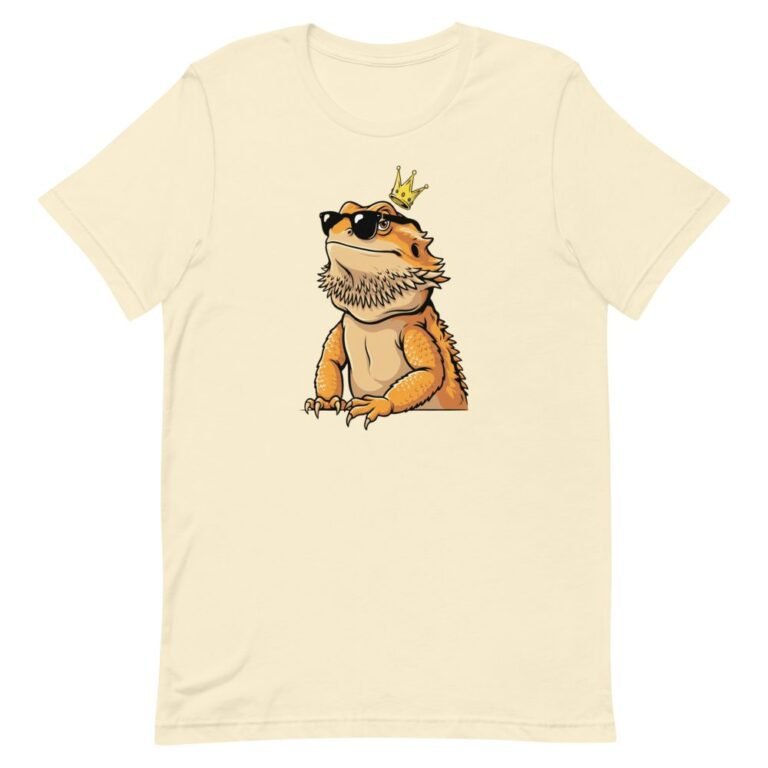
Wear the obsession
Bearded Dragon Crown Sunglasses King T-Shirt
Price range: $24.99 through $26.99
Shop this designFinal Thoughts
A proper bearded dragon tank setup isn’t about buying the most expensive version of everything — it’s about getting the handful of genuinely non-negotiable pieces right (real adult-sized space, working UVB, a verified temperature gradient, a thermostat) and treating everything else as flexible to your budget and style. Spend a little more up front on the enclosure and lighting, and you’ll likely spend less overall than a keeper who buys the juvenile tank twice and upgrades the lighting after the fact.
Every dragon and every household is a little different, so treat the ranges here as a starting framework, not a rulebook — and when something about your specific animal doesn’t match what a general guide says, a reptile-experienced vet or a genuinely experienced keeper is worth more than any single article, this one included. New to reptile-keeping in general? Our roundup of the best reptiles for beginners is a good next stop for context on how bearded dragons compare to other beginner-friendly species.
Before you go
Keep learning your animal
We publish a new guide every day. The best of them land in one short weekly email, so you never miss the one about your species.
Dr. Zoe Santos is a distinguished herpetologist and a revered expert in the care, conservation, and study of reptiles and amphibians. With a PhD in herpetology and over 18 years of field and academic experience, Zoe brings a depth of knowledge to her readers that is both rare and invaluable.