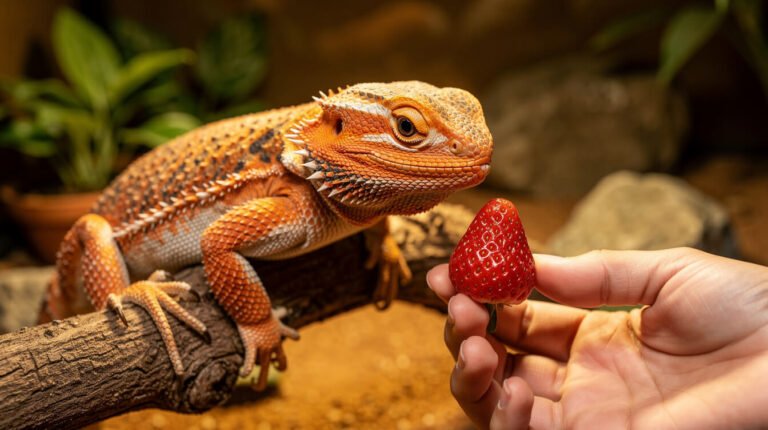
The Complete Bearded Dragon Care Guide
If you’re weighing whether a bearded dragon is the right pet — or you already brought one home and want to get every detail right — this bearded dragon care guide covers what actually matters: enclosure size, heating and UVB, diet by life stage, health and behavior, and handling. No filler, no invented numbers, just the care picture a devoted keeper needs to give their dragon a genuinely good life.
Bearded dragons are one of the most beginner-friendly reptiles precisely because they’re forgiving of small mistakes — but “beginner-friendly” doesn’t mean “low-effort.” A healthy beardie needs the right-sized home, a real heating and UVB gradient, and a diet that shifts as they grow. Get those right, and you’ll likely have a curious, food-motivated companion for a decade or more.
Bearded dragon care basics: what you’re taking on
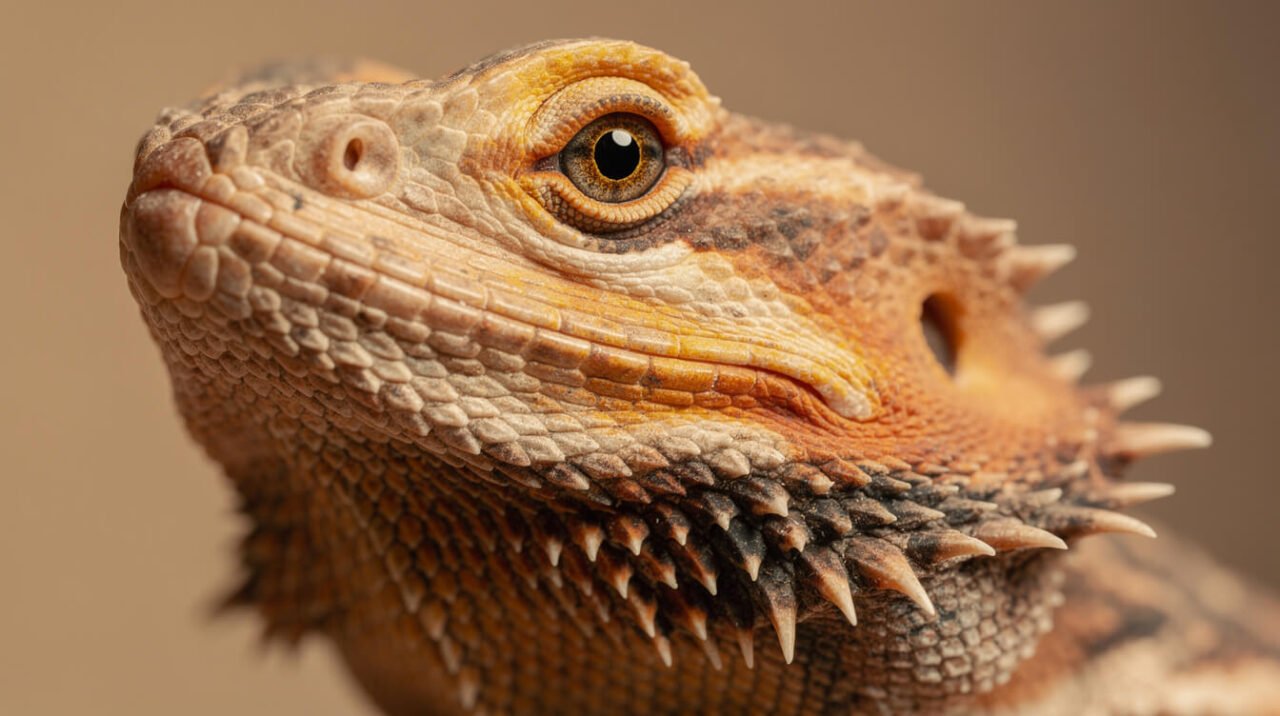
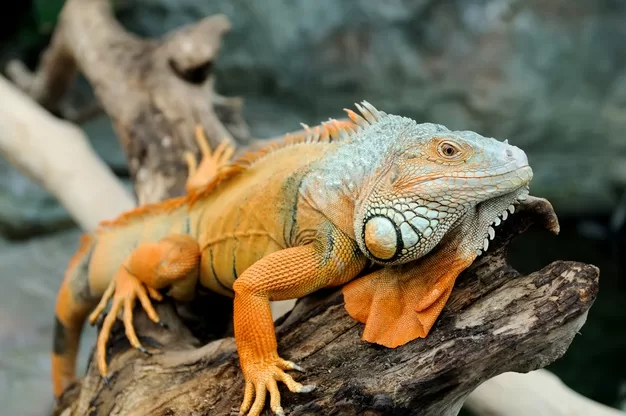
Bearded dragons (Pogona vitticeps, most commonly) are agamid lizards native to the semi-arid scrublands and woodlands of central Australia. In the wild, they spend their days basking on rocks and fallen branches, digging burrows for shelter, and hunting insects and vegetation as opportunistic omnivores. Every captive-bred dragon you’ll find in the US or UK pet trade descends from that desert-dwelling lifestyle, which is exactly why heat, light, and space matter so much in captivity.
A full-grown adult typically reaches 18 to 24 inches nose to tail (about half of that length is tail), with most individuals settling into their adult size by 18 to 24 months. Lifespan commonly runs 8 to 12 years with good husbandry, and some well-cared-for dragons live well beyond that — so this is a pet you’re committing to for the better part of a decade, not a passing project.
Their signature “beard” is the spiky, expandable skin beneath the chin. It darkens — sometimes to solid black — when a dragon feels threatened, is regulating temperature, or is displaying to another dragon. Understanding what that beard (and the rest of their body language) is telling you is a real skill, and we’ll come back to it in the behavior section below.
Temperament-wise, bearded dragons earn their reputation as one of the calmest lizards you can keep. Most acclimate to gentle handling, recognize their keeper, and show genuine curiosity about their surroundings. That said, every individual is different — some are bold and food-driven, others are shyer and need more patience, and that’s normal, not a sign you’re doing something wrong.
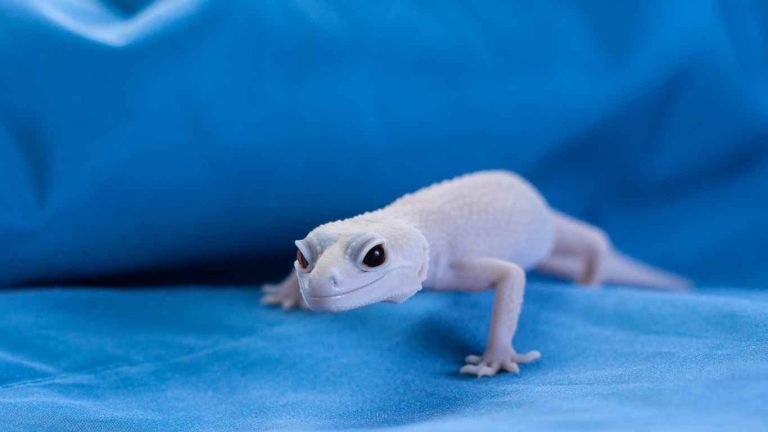
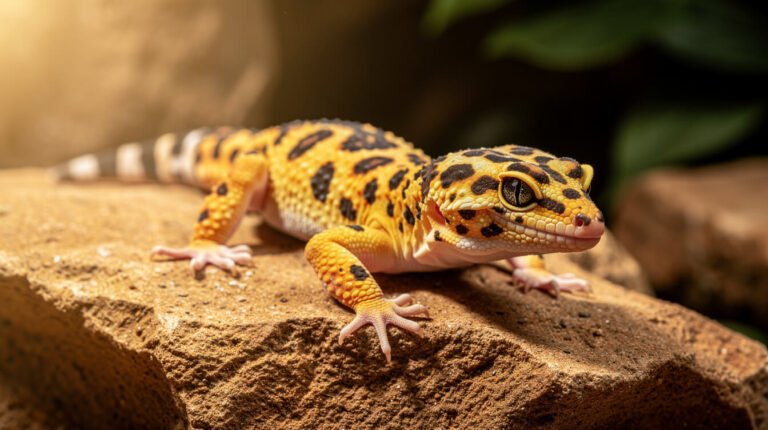
If you’re weighing a bearded dragon against another approachable reptile, you’re not alone — leopard geckos come up constantly in the same conversation. The two have genuinely different care needs (geckos are nocturnal, don’t need UVB the same way, and stay smaller), so it’s worth comparing before you decide. Our leopard gecko tank setup guide covers the equivalent housing basics for that species if you want the side-by-side.
Enclosure size and setup
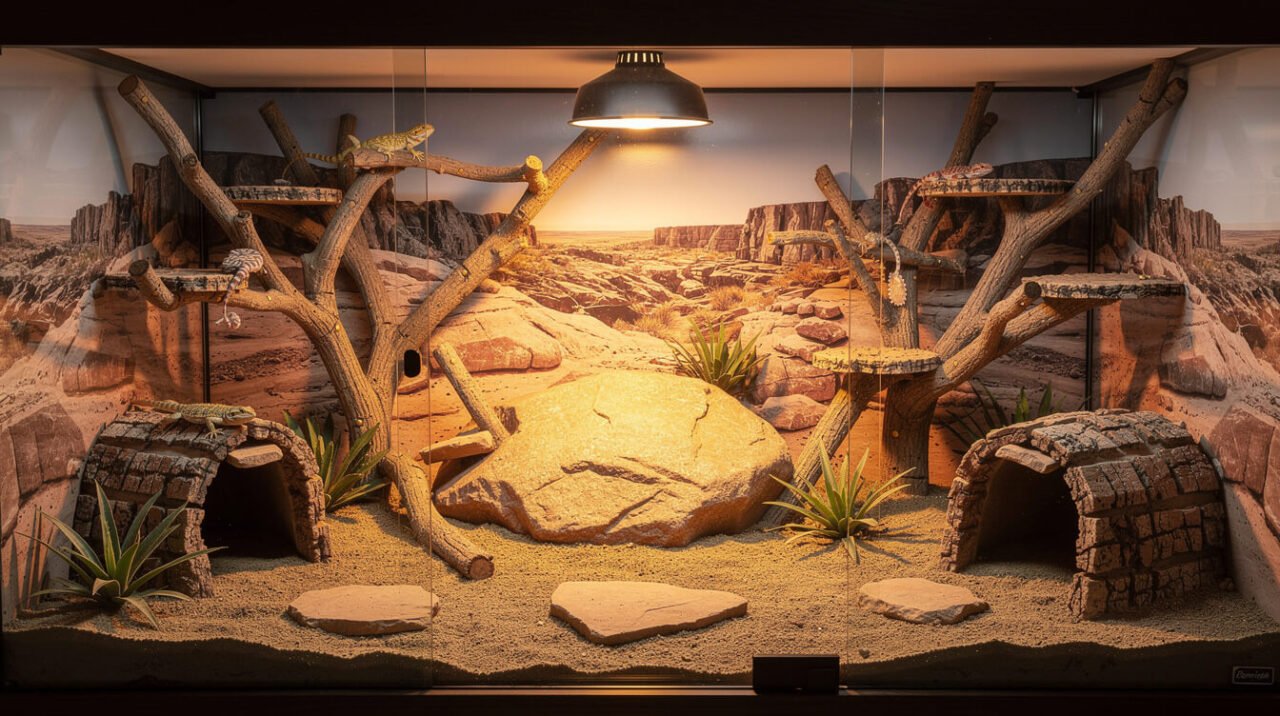
Enclosure size is the single most common place new keepers under-plan. A juvenile bearded dragon can start in a 20-gallon enclosure, but adults need considerably more room — a bare minimum of 40 gallons, and larger is genuinely better. If you want a more precise target than “40 gallons,” the Association of Reptile and Amphibian Veterinarians recommends a simple formula: measure your dragon nose to tail, multiply by four, and that’s the minimum floor space in square inches. A 24-inch adult, for example, works out to roughly 96 square inches of floor space at an absolute minimum — most experienced keepers aim well past that, often landing on 4-foot-long enclosures for adults.
If you’re setting up an enclosure for the first time, our bearded dragon tank setup guide walks through the real cost breakdown and a juvenile-to-adult upgrade timeline in more depth than we can cover here.
Substrate is a genuine safety issue, not just an aesthetic choice. For juveniles especially, stick to reptile carpet, textured shelf liner, ceramic tile, or plain paper towels — anything loose (sand, including “calcium sand,” walnut shell, wood shavings, or gravel) carries a real risk of impaction if ingested, which can become a veterinary emergency. Some experienced keepers do move adult dragons onto bioactive, loose substrates once they’re confident in their dragon’s feeding behavior and the setup is done correctly — but that’s an intermediate-to-advanced project, not a starting point.
Round out the enclosure with a sturdy basking platform (flat rock or slate work well and hold heat evenly), at least one hide on the cool side, and some climbing branches — bearded dragons are surprisingly capable climbers and appreciate the vertical space.
Keeping the enclosure clean matters as much as the initial setup. Spot-clean daily — remove uneaten food, shed skin, and waste as soon as you see it, since bearded dragons will walk through (and sometimes eat) whatever’s sitting in their space. Wipe down glass and swap water daily too. Plan on a deeper clean roughly every two to four weeks: remove your dragon to a secure temporary container, wash hides and decor, and disinfect surfaces with a reptile-safe cleaner (a dilute vinegar-and-water solution or a purpose-made reptile disinfectant both work — avoid household cleaners, which can leave residue that’s harmful if your dragon licks a surface). Rinse thoroughly and let everything dry fully before your dragon goes back in.
Heating, lighting, and UVB
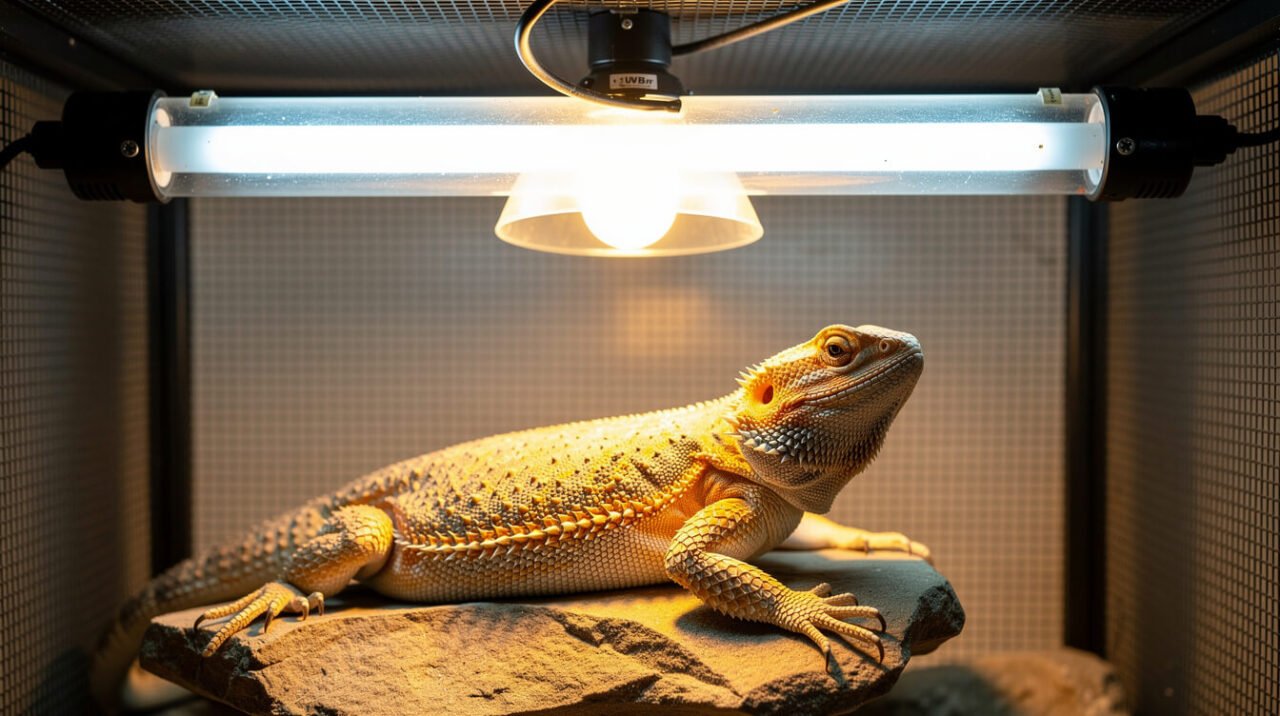
Bearded dragons need a clear temperature gradient, not a single “right” temperature. Most care sources put the basking spot in the 95–110°F range (measured at the basking surface, not the air), with the cool end of the enclosure sitting somewhere in the 75–85°F range. Where your dragon falls in those ranges depends on age (juveniles generally run a little warmer) and your specific setup — check temperatures daily with a reliable thermometer rather than trusting the dial on the fixture, and adjust bulb wattage or distance until you’re consistently landing in range.
UVB lighting is non-negotiable — without it, a bearded dragon can’t metabolize calcium properly, which is the root cause of metabolic bone disease (more on that below). Use a linear T5 HO UVB bulb in the 10.0 (or roughly 12%) range, run on a 10–12 hour light cycle, and replace it every 6 to 12 months even if it still produces visible light — UVB output degrades long before the bulb visibly dims. Position the fixture so nothing (glass, plastic, or fine mesh with too tight a weave) blocks the UVB between the bulb and your dragon, since UVB doesn’t pass through glass or standard plastic at all. Keepers who want to go a step further can use a UV Index meter to measure actual UVB exposure at basking distance rather than relying on bulb percentage alone — it’s a more precise, increasingly recommended practice, though a good-quality bulb replaced on schedule is a solid baseline if that’s not in your budget yet.
Turn heat and light off at night — bearded dragons don’t need supplemental heat after dark in a normal indoor home, and the natural day/night temperature drop is part of a healthy cycle for them.
Humidity is the piece new keepers most often overlook, since it’s easy to focus entirely on temperature and lighting. Bearded dragons come from a dry, semi-arid climate, so ambient humidity should generally stay low — many care sources point to roughly a 20–40% range as appropriate for most setups, checked with a basic hygrometer rather than guessed at. Humidity that runs consistently higher than that, often from an enclosure that’s poorly ventilated or a water dish that’s too large, raises the risk of respiratory infection and can interfere with a clean shed. If you’re in a naturally humid climate, prioritize airflow (a mesh or screened lid helps) over anything that would trap moisture in.
Diet and feeding by life stage

Bearded dragon diets flip as they grow, and getting the ratio wrong in either direction is one of the more common nutrition mistakes. Juveniles are growing fast and need a protein-heavy diet — commonly cited guidance puts that around 70–80% appropriately sized feeder insects (crickets or dubia roaches, sized no larger than the space between your dragon’s eyes) to 20–30% finely chopped vegetables and greens, offered once or twice daily. Adults flip that ratio, moving toward roughly 70–80% vegetables and greens with insects becoming more of a supplement than the main event, typically fed every other day.
Staple greens — collard, mustard, and turnip greens, escarole, and dandelion greens — should make up the bulk of the vegetable side. Rotate in other vegetables for variety, and treat higher-sugar fruit (like the strawberries we cover in this safe-serving guide) as an occasional treat rather than a daily staple, since sugar and the calcium-to-phosphorus ratio both matter for long-term health. Avoid feeding avocado, rhubarb, and fireflies entirely — all three are genuinely toxic to bearded dragons, not just “not ideal.”
Feeder insects should be gut-loaded — fed a nutrient-rich diet themselves for a day or two before you offer them — so that nutrition passes through to your dragon. On top of that, most care guides recommend dusting feeder insects with a calcium supplement (without added vitamin D3) at most feedings, and a calcium-plus-D3 or multivitamin supplement roughly twice a week — though your specific schedule can reasonably vary based on how much natural or artificial UVB your dragon gets, so it’s worth double-checking against your supplement’s own label or a reptile vet’s guidance rather than treating any single number as fixed.
Fresh water should always be available in a shallow dish, even though bearded dragons get much of their hydration from food. Some keepers also mist greens lightly before feeding, which can help borderline-dehydrated dragons take in a bit more water.
The weekly care guide
Get it right for your animal, every week
One email a week: new care guides, species deep-dives, and the safety answers keepers search for, written by our specialists. No spam. Unsubscribe anytime.
Health, behavior, and when to call the vet
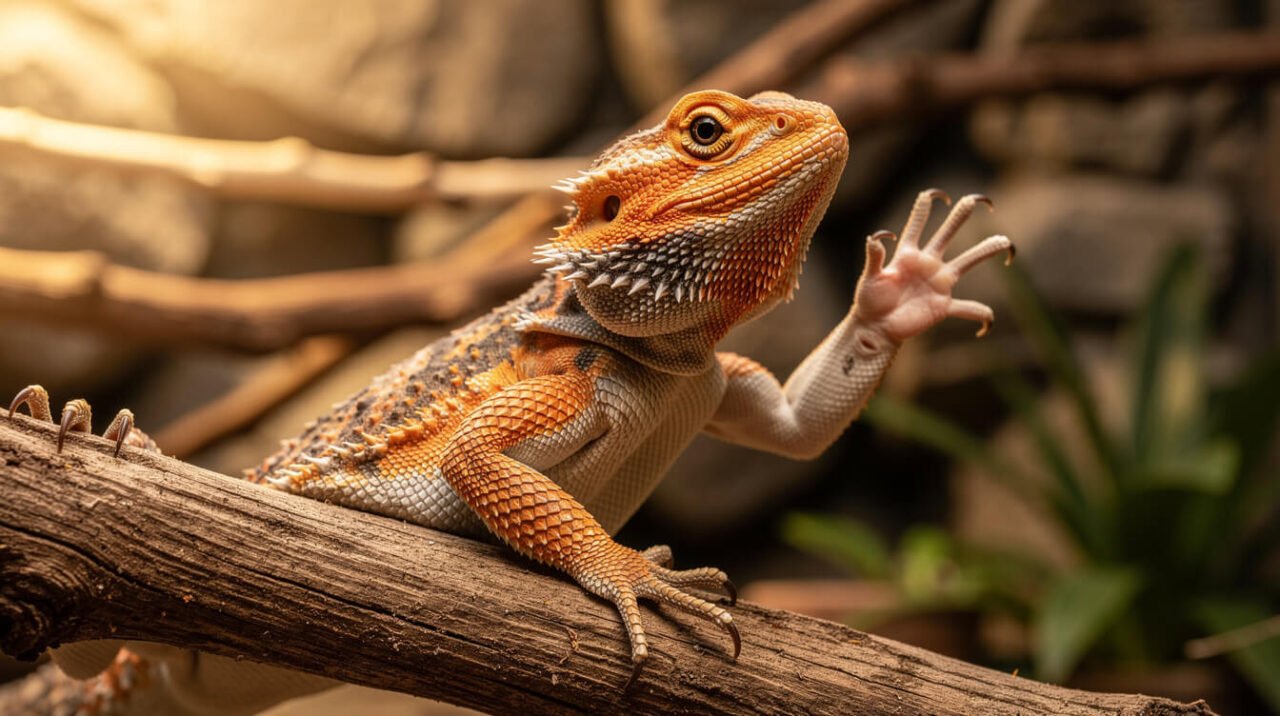
Bearded dragons communicate a lot through body language, and learning to read it is one of the most useful things a new keeper can do. Arm waving is generally a submissive or acknowledging gesture — often seen when one dragon “greets” another dragon or even a keeper. Head bobbing tends to signal dominance or, in breeding season, mating interest. A black beard can mean several things — stress, temperature regulation, a territorial display, or simple excitement at feeding time — context matters more than the beard color alone. Glass surfing (repeatedly clawing at the enclosure walls) is usually a sign something’s off — often an enclosure that’s too small, a temperature or lighting problem, or a dragon that can see its own reflection and reads it as a rival.
One behavior that alarms a lot of first-time keepers unnecessarily is brumation — a bearded dragon’s natural, reptile version of a seasonal slowdown, typically triggered by shorter days and cooler temperatures. A brumating dragon may sleep far more than usual, eat little or nothing, and seem sluggish for weeks at a time. That’s often completely normal, especially in adults during cooler months — but because the symptoms overlap with genuine illness, it’s genuinely worth a call to a reptile-experienced veterinarian the first time you see it, or any time lethargy is paired with weight loss, an unusual stool, or a beardie that’s still young enough that brumation would be unusual for its age.
On the medical side, we’re not a substitute for a veterinarian, and we won’t pretend otherwise — but it’s worth knowing the conditions to watch for so you know when a same-day call is warranted rather than a wait-and-see approach:
- Metabolic bone disease (MBD) — caused by inadequate calcium, vitamin D3, or UVB exposure over time; signs include a soft or swollen jaw, difficulty walking, or limb tremors. This is preventable with correct UVB and supplementation, and it needs a vet, not a home fix.
- Impaction — a blockage, often from loose substrate or oversized feeder insects; signs include straining without producing stool, or a visibly swollen abdomen. Treat this as a same-day call to your vet, not a wait-and-see situation.
- Respiratory infection — usually linked to temperatures or humidity that are consistently off; signs include open-mouth breathing, wheezing, or mucus around the nose or mouth.
- Dystocia (egg binding) — affects females who can lay eggs whether or not they’ve been near a male; a female who is straining, lethargic, or clearly gravid past a normal laying window needs prompt veterinary attention.
One more note that applies to every reptile, not just bearded dragons: they can carry Salmonella, which is a normal part of reptile biology, not a sign of an unhealthy or dirty animal. Wash your hands before and after handling your dragon or anything in its enclosure, and this is a straightforward, manageable precaution rather than a reason for concern.
Handling, bonding, and enrichment
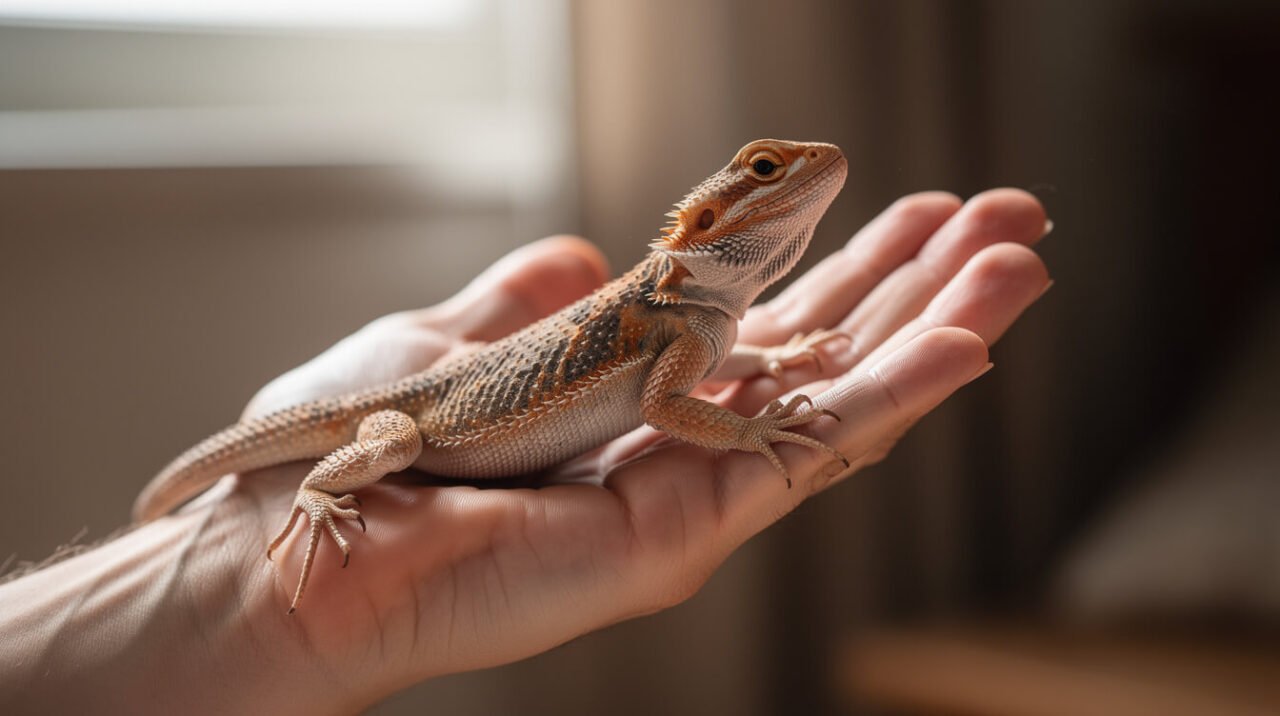
Most bearded dragons genuinely enjoy time out of their enclosure once they’re settled in, which is part of why they’re such a popular first reptile. Start with short sessions, support their body and tail rather than letting limbs dangle, and always approach from the side or below rather than from directly above — reaching down from above mimics a predator (like a bird of prey) and can startle even a well-acclimated dragon. Watch for stress signals during handling — a darkening beard, hissing, or puffing up — and give your dragon a break if you see them.
Enrichment matters more than a lot of first-time keepers expect. Rotate decor occasionally, offer varied climbing options, and consider supervised, escape-proof outdoor basking time on genuinely warm days as an occasional treat rather than a routine. Some keepers also vary feeding methods — hand-feeding some insects, letting others move naturally around the enclosure for the dragon to hunt — which taps into natural foraging behavior instead of just topping off a bowl.
Frequently asked questions
Are bearded dragons good pets for beginners?
Generally, yes — they’re calm, food-motivated, and tolerant of handling. That said, “beginner-friendly” still means real equipment (proper UVB, a heat gradient, an appropriately sized enclosure) and an ongoing time and cost commitment, not a low-maintenance pet.
How long do bearded dragons live?
Commonly 8 to 12 years with good care, with some individuals living longer. Lifespan is closely tied to correct UVB, temperatures, and diet over the long term.
Do bearded dragons need a heat lamp at night?
Usually not, in a typical home. Turn heat and UVB off at night — the natural temperature drop is part of a healthy day/night cycle. If your home regularly drops well below the mid-60s°F overnight, check with an experienced keeper or your vet about whether supplemental heat is warranted for your specific setup.
Can bearded dragons see color?
Yes — they have full color vision, which is part of why enclosure lighting and even your clothing can catch their attention.
Is brumation dangerous?
Not usually — it’s a natural seasonal slowdown in adults. But because its symptoms (lethargy, reduced appetite) overlap with genuine illness, it’s worth a vet check the first time you see it, or any time it’s paired with weight loss or comes on in a young dragon too early for brumation to be typical.

Wear the obsession
Bearded Dragon Crown Sunglasses King T-Shirt
Price range: $24.99 through $26.99
Shop this designBearded dragon care: final thoughts
A bearded dragon that’s set up correctly from the start — right-sized enclosure, a real heat and UVB gradient, a diet that shifts as they grow, and a keeper who knows what normal behavior looks like — is one of the most rewarding reptiles you can bring into your home. None of this is complicated once you’ve done it once; it just takes getting the fundamentals right before your dragon comes home, not after.
If you’re still deciding whether a bearded dragon — or another beginner-friendly species — is the right fit for your household, our guide to the best reptiles for beginners is a good next stop. And if a health question comes up that this guide doesn’t answer with certainty, that’s exactly the moment to call a reptile-experienced veterinarian rather than guess — we’d always rather you ask than assume.
Before you go
Keep learning your animal
We publish a new guide every day. The best of them land in one short weekly email, so you never miss the one about your species.
Dr. Zoe Santos is a distinguished herpetologist and a revered expert in the care, conservation, and study of reptiles and amphibians. With a PhD in herpetology and over 18 years of field and academic experience, Zoe brings a depth of knowledge to her readers that is both rare and invaluable.