How Big Do Ball Pythons Get? Length, Weight, and Why Every Source Gives a Different Number
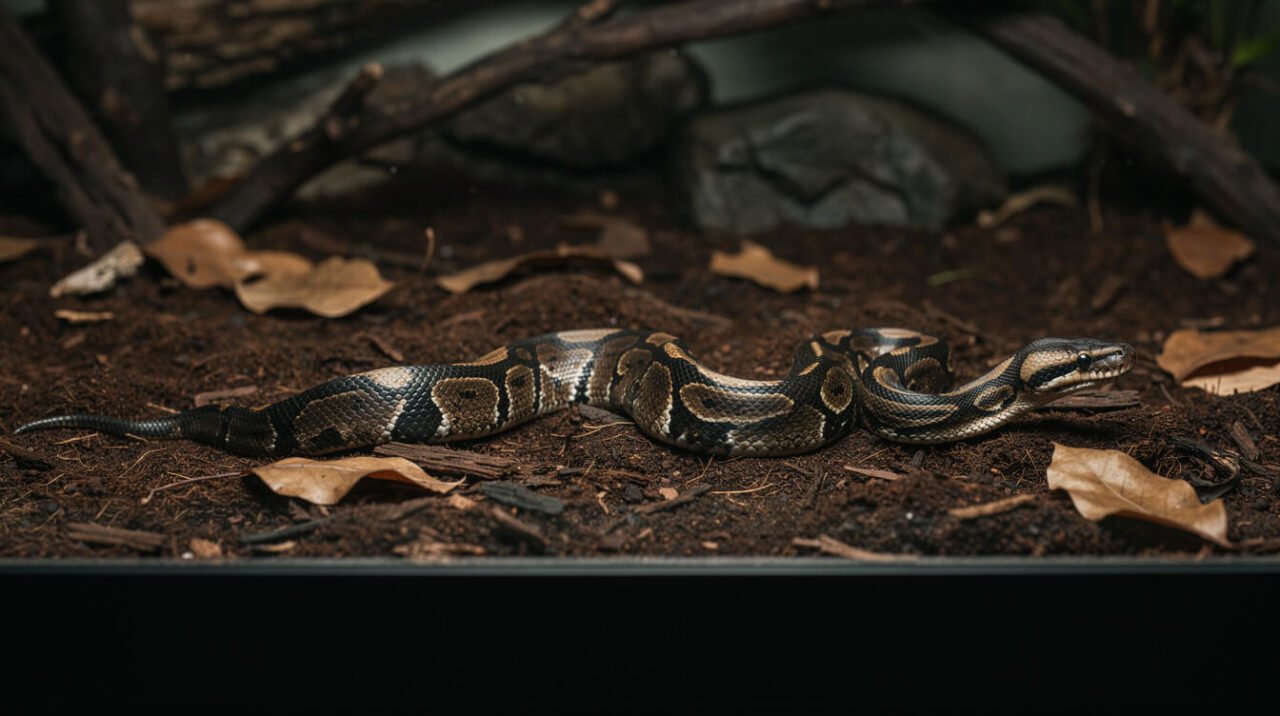
How big do ball pythons get? Most adults land somewhere between 3 and 5 feet long and weigh roughly 1 to 2 kilograms (about 2 to 4.5 pounds). Females are usually the larger sex, and big females weigh more still. An exceptional female can approach 6 feet. That is the honest short answer. It’s also why you’ve probably seen half a dozen different numbers already: one care sheet says males stay at 2 to 3 feet, another says the average adult is 4 to 5, and one tells you a hatchling can be as small as 6 inches.
Not all of these numbers are guesses. One field study measured and weighed 1,250 wild ball pythons, and its figures settle most of the confusion. Below, we walk through what that study found, why the numbers online disagree, and how big your snake is likely to get. We also explain why grams tell you more than feet, and what all of this means for the enclosure your python actually needs.
How big do ball pythons get? The short answer, and the measured one
Here is what the most-read care sheets say, side by side:
- Reptile Rescue Center: hatchlings 10 to 16 inches; adult males average 2 to 3 feet; adult females average 3 to 5 feet.
- PetMD: the average adult is 4 to 5 feet long, and adult size arrives after about three years.
- A-Z Animals: 3 to 5 feet by the end of life, with an exceptionally large individual reaching 6 feet.
- Animal Diversity Web (University of Michigan): adults 1 to 1.5 meters (about 3 ft 3 in to 4 ft 11 in), with reports of wild snakes at 1.83 meters.
None of those pages cites its range. So here is the measured version. Between 1999 and 2000, Fabien Aubret and colleagues measured 1,250 wild ball pythons near Lomé, Togo, and published the results in the Journal of Herpetology (Aubret et al., 2005). Among the snakes they classed as adults:
- Females averaged 116.2 cm snout to vent, plus about 8.7 cm of tail. That’s roughly 4 ft 1 in in total. Non-gravid females averaged 1,276 g (about 2.8 lb).
- Males averaged 111.3 cm snout to vent, plus about 8.6 cm of tail. That’s roughly 3 ft 11 in in total. They averaged 1,182 g (about 2.6 lb).
- The largest female measured 170 cm snout to vent (about 5 ft 7 in before her tail) and weighed 3,224 g (7.1 lb). The largest male measured 140 cm (about 4 ft 7 in) and weighed 2,460 g (5.4 lb).
Those averages carry a spread of about 10 cm either way, so a healthy adult a few inches above or below them is completely ordinary. Hold on to them for now, because the next section explains why other sources land somewhere else, including one well-known error.
Why every source gives a different number

Five things push the numbers apart. Only one of them is anybody being careless.
1. Sex: females really are bigger, but not by as much as folklore says
Every reliable source agrees that adult females outgrow males. The Togo study found the difference was undetectable at hatching and clear in adults. Even so, the gap between the averages was only about 5 cm. The bigger difference is at the top end: no male in that sample passed 140 cm snout to vent, and the largest female reached 170. So “females get bigger” mostly means that the biggest snakes are females. It doesn’t mean every female will dwarf every male.
2. Where you draw the line called “adult”
This one quietly shapes every average you’ll read. The researchers counted a female as adult once she reached 95 cm snout to vent, the size of the smallest gravid female they caught. There was no equivalent data for males, so they used the same cutoff. However, Animal Diversity Web puts male maturity at 16 to 18 months and female maturity at 27 to 31 months, so plenty of breeding-age males are smaller than 95 cm. Leaving them out pushes the male average up. That’s probably part of why the field data and Reptile Rescue Center’s “males average 2 to 3 feet” are so hard to square. Neither is lying. They’re measuring different groups of snakes.
3. Snout-to-vent versus total length (smaller than you’d think)
Scientists measure snout to vent, without the tail, while keepers quote nose to tail tip. It’s tempting to blame the whole disagreement on that, but a ball python’s tail is short. In the Togo data, it averaged about 8.7 cm, or roughly 3.4 inches. The two conventions explain a few inches, not a foot.
4. Wild snakes versus snakes that eat on schedule
A wild python eats when it can catch something. A captive one is fed on a calendar, and captive weights reflect that. In a 2018 study at an Italian breeding facility, 129 two-year-old females averaged 1,800 g at about 130 cm. They had been raised for breeding and fed every four days (Bertocchi et al., PLoS ONE). That’s a different population, fed for a different purpose. It’s not a target for a pet.
5. A copying error that has traveled a long way
If you’ve read that female ball pythons max out at 1.635 kg and males at 1.561 kg, you’ve seen this one. Those figures appear on Wikipedia and, word for word, in a CITES Animals Committee document, both citing the Aubret paper. But the paper doesn’t say that. Its maxima were 3,224 g and 2,460 g. The repeated figures match the paper’s averages plus one standard deviation. The female number is mean body mass plus one SD (1,275.7 + 359.0), and the male number matches the size-adjusted body-condition mean plus one SD (1,227.8 + 333.2). It’s an easy slip to make in a table full of “mean ± SD.” The practical effect is that a perfectly normal 2 kg female can look “over the maximum” to anyone checking her against that line. She isn’t.
The growth timeline: hatchling, first year, and adult
At hatching
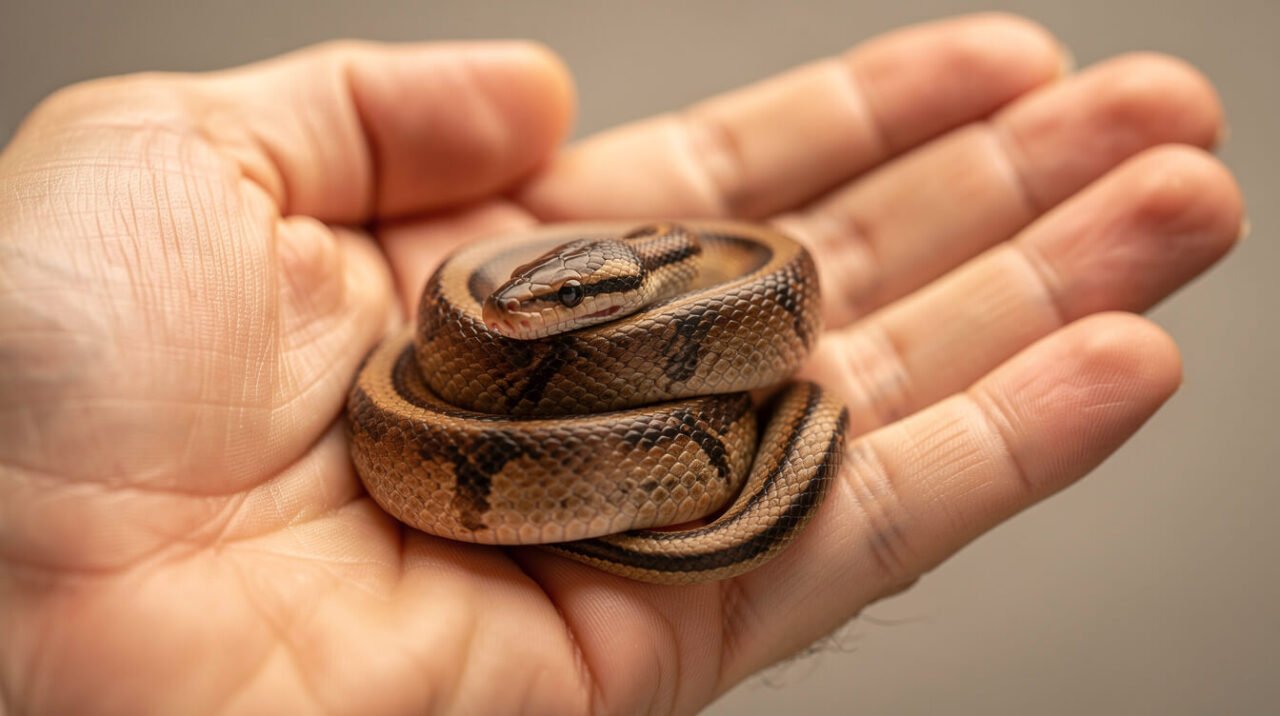
The hatchling numbers disagree more than any others, and here the measured data is especially useful. The Togo team measured 605 neonates. On average they were 38.3 cm snout to vent with a 3.4 cm tail, which comes to about 16 inches in total, and they weighed about 59 g (around 2 ounces). Other measured ranges agree closely. Animal Diversity Web gives 25 to 43 cm and 65 to 103 g, and a 1997 survey summarized in a CITES document gives 28 to 49 cm and 25 to 90 g. Reptile Rescue Center’s 10 to 16 inches sits inside that range.
The “6 to 12 inches” figure you’ll also see is the outlier. A 6-inch hatchling would be less than half the size of the smallest measured range. If your new baby is around a foot long or a bit more, that’s normal.
The first year
Growth is fastest early. A-Z Animals puts a well-fed ball python at 18 to 24 inches by its first birthday. Breeder Ghost Constrictors, whose growth chart is the most detailed we found (it’s a commercial source, so treat it as a guide), puts many yearlings at around 400 to 600 g. Females pull ahead from early on. In the Togo study, newly hatched females grew faster than males during their first 10 days, before they had eaten anything.
Adulthood, and the growth that never quite stops
PetMD puts adult size at around three years. After that, growth slows dramatically but doesn’t completely stop. Snakes keep adding small amounts for years, which is why the very largest individuals tend to be old ones. A-Z Animals also makes a point worth repeating: the idea that a snake “grows to fit its enclosure” is a myth. Size follows genetics and food, not the size of the box.
If you’re thinking about a ball python and wondering what you’re signing up for, the size question has a sibling worth reading first: how long ball pythons live. The answer is decades, and that matters more than the extra foot.
Weight matters more than length: how big do ball pythons get on the scale?
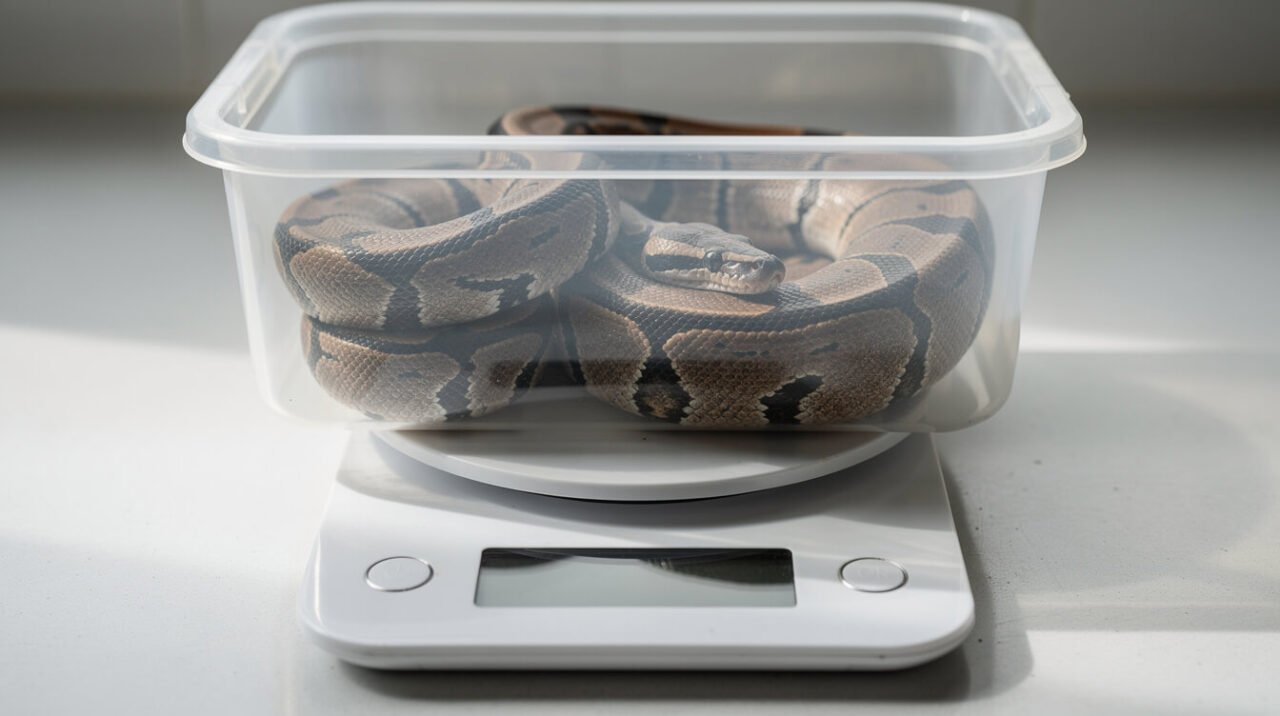
Ask an experienced keeper how big their snake is and you’ll usually get a number in grams. There’s a good reason for that. A live snake almost never lies in a straight line, so any length you get is an estimate. Weight is quick, repeatable, and stress-light, and it tells you whether the animal is growing, holding steady, or losing condition. ReptiFiles even sizes its first enclosure tier by weight (“hatchlings up to 300 g”), not by length.
The numbers worth knowing
- Hatchling: about 59 g on average in the Togo data, with measured ranges running from 25 g to about 100 g.
- Wild adults (non-gravid): females averaged about 1,276 g and males about 1,182 g, with the largest at 3,224 g and 2,460 g.
- Captive adults, by breeder experience: Ghost Constrictors reports adult males commonly settling between 1,000 and 1,800 g, and females between 1,800 and 3,500 g. These are figures from one breeder’s records, not a study, and breeding animals are often kept heavier than pets need to be.
Notice the wild maximum for females (3,224 g) sits right alongside the top of that breeder range. A large, well-kept female at 2 to 3 kg is not automatically overweight, especially if she’s also long. Weight only means something next to length and shape. That leads to the most useful habit in this whole article.
The weigh-in habit
Use a kitchen scale and a lidded tub. Zero the scale with the tub on it, then add the snake. Weigh at a consistent point, such as a few days before a meal rather than right after one, and write the date, weight, and any notes (recent meal, in shed). Ghost Constrictors suggests weighing every few feedings rather than daily, because normal digestion and hydration swings make day-to-day numbers noisy. Over months, the log becomes your snake’s growth chart, and it gives your reptile vet real data instead of “he seems fine.”
The weekly care guide
Get it right for your animal, every week
One email a week: new care guides, species deep-dives, and the safety answers keepers search for, written by our specialists. No spam. Unsubscribe anytime.
Healthy size versus overweight: growth isn’t a race
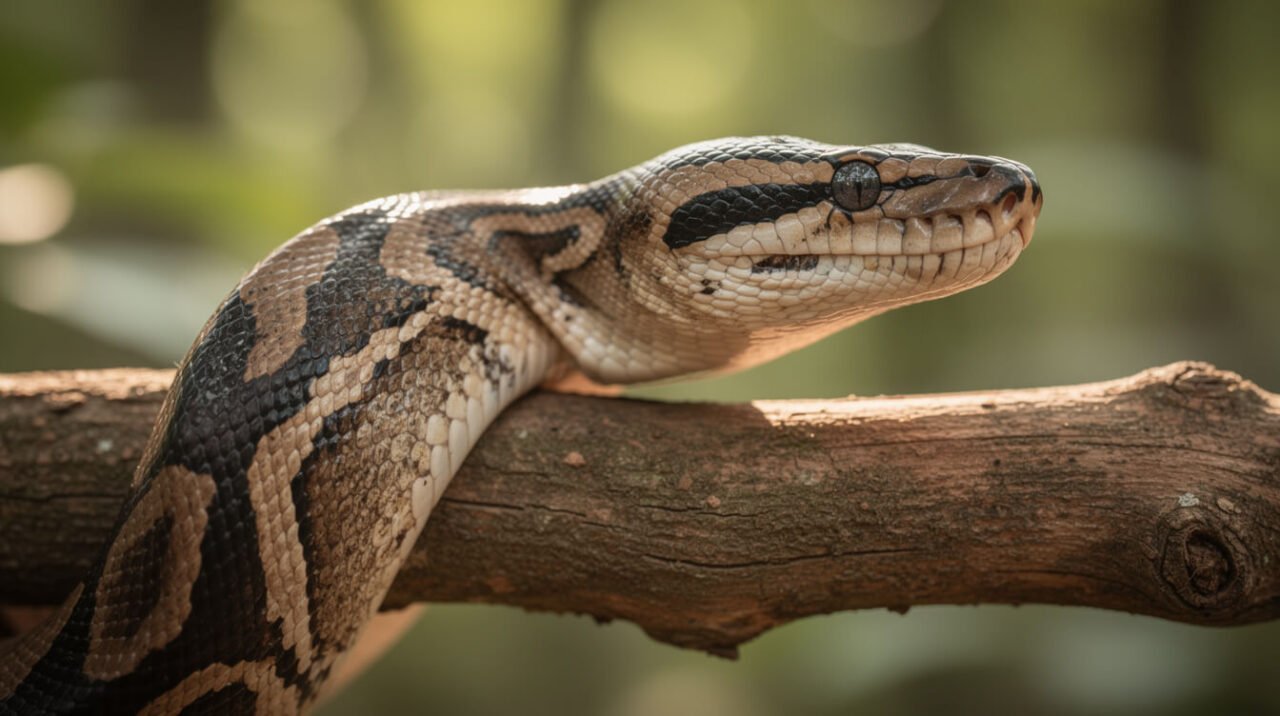
Here’s where size questions turn into welfare questions. Because a bigger snake looks impressive, and because breeding programs prize fast growth to breeding weight, there’s real pressure to feed more and feed more often. The term for it is power-feeding, and it’s the wrong goal for a pet.
Veterinary zoo-medicine specialist Brad Lock, DVM, DACZM, writes in Veterinary Partner that overfeeding is “the single most important risk factor” for hepatic lipidosis (fatty liver disease) in reptiles, and that larger enclosures or the chance to exercise are “quite important” in preventing it. ReptiFiles’ ball python obesity page lists power-feeding, overfeeding, small enclosures, and lack of exercise as the causes it sees.
What overweight looks like
The signs ReptiFiles lists are scales that wrinkle or fold, skin showing between scales, fat rolls near the head or vent, a body that feels squishy rather than firm, and a segmented look. One caution: skin can show between scales right after a big meal, or in a gravid female, and that’s expected. What you’re looking for is a shape that persists.
Snake Haus, a snake rescue whose team includes veterinarians, offers a cleaner test using the cross-section of the back. In a snake that’s too thin, the muscles along the spine slope away like an upside-down V. In a healthy snake, the back is a rounded upside-down U. In a snake carrying too much internal fat, the spine sits in a groove between raised muscles, so the back looks like a lowercase m. Look at your snake’s back from the end, at eye level, not from above.
Feeding to condition, not to the calendar
Sources don’t agree on a single schedule, and that’s normal. Reptile Rescue Center suggests feeding adults every 7 to 10 days, PetMD says every 1 to 2 weeks, and A-Z Animals’ table stretches snakes over three years to every 2 to 5 weeks, depending on meal size. The Merck Veterinary Manual says most snake species should be fed every 1 to 2 weeks. The common thread is to let the weigh-in log and the snake’s shape decide. If an adult is steadily gaining with no end in sight, the meals are too big or too frequent. If you think your snake is overweight, talk to a reptile-experienced vet before making big changes. Bringing your weight log to that appointment helps. We cover how feeding connects to lifespan in our ball python lifespan guide.
How big an enclosure does a ball python really need?
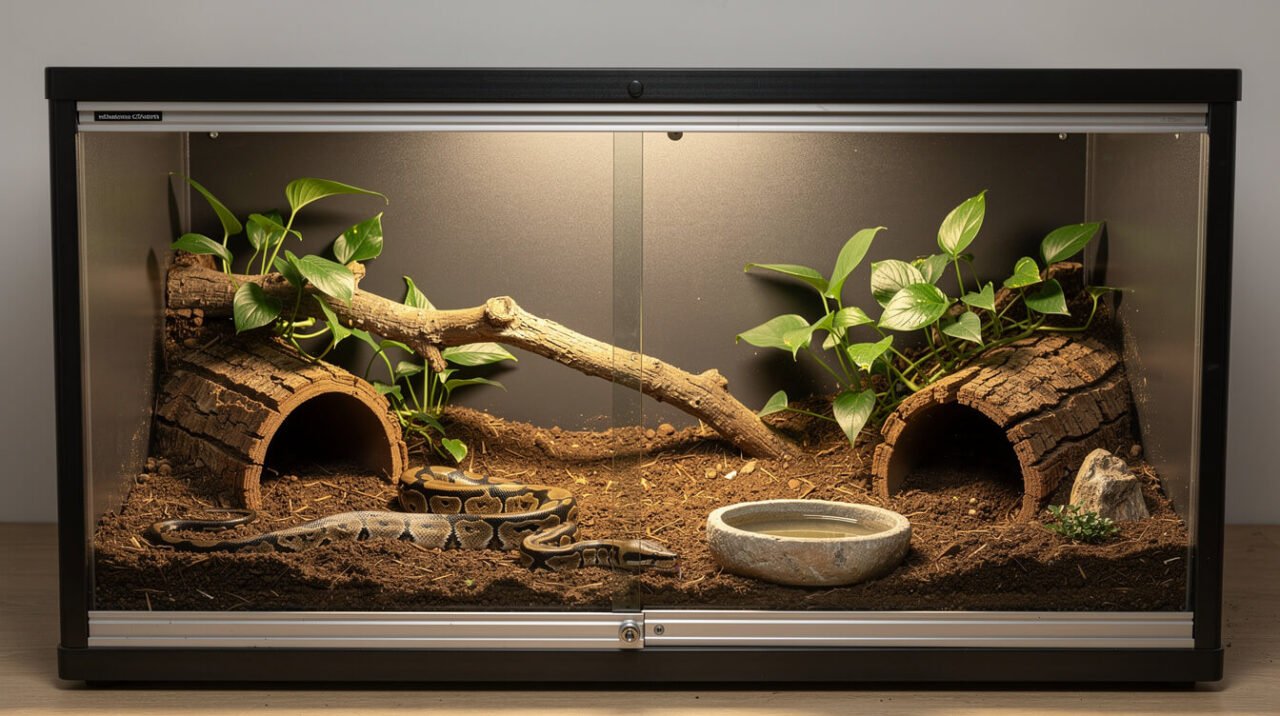
This is why most people ask how long a ball python gets, so here’s a straight answer: the enclosure should be at least as long as the snake. That wasn’t always the advice, and you’ll still see the older rule. Here’s how the two compare.
The old rule: two-thirds of the snake’s length
Reptile Rescue Center’s care sheet gives the long-standing rule of thumb: an enclosure about two-thirds the length of the snake, a 10-gallon tank for a baby, and 40 to 60 gallons for larger adults. PetMD recommends 40 gallons or more for adults and adds “always provide the largest habitat possible.” The same two-thirds figure appeared in the UK’s 2018 licensing guidance for selling pets.
The trouble shows when you do the math. A standard 40-gallon breeder tank is 3 feet long. Put the average adult female from the field data (about 4 feet) inside, and she can never lie straight.
The current rule: at least as long as the snake
Three pieces of research moved the advice:
- A 2021 review of 65 publications found that recommendations for enclosures shorter than the snake traced back to decades-old rules of thumb with no supporting evidence. Recommendations that let snakes fully stretch out were the ones grounded in evidence and welfare reasoning (Warwick et al., 2021). Many of the authors work in animal welfare or veterinary practice, so it’s an advocacy-adjacent review, but its central finding is about the absence of evidence for the old rule.
- A controlled study at the University of Lincoln housed corn snakes in enclosures either two-thirds of their length or longer than their length. In the longer enclosures, the snakes were more active and spent time stretched out. Given a choice, active snakes clearly preferred the bigger space (Hoehfurtner et al., 2021).
- For ball pythons specifically, a Munich study moved 35 snakes from a rack system into furnished terrariums scaled to each snake’s body length. Basking, climbing, burrowing, and bathing only appeared in the terrariums, and possible stereotypic behaviors were seen almost only in the racks (Hollandt et al., 2021).
ReptiFiles’ enclosure guide turns this into tiers: a 10-gallon (about 20 × 11 × 13 in) for hatchlings up to 300 g, 36 × 18 × 18 in or larger for juveniles under 3 feet, and 48 × 24 × 24 in (about 8 square feet of floor) or larger for subadults and adults over 3 feet. It also says outright that a 5-foot python belongs in a 5-foot enclosure. ReptiFiles calls the idea that big enclosures stress ball pythons a myth, and links undersized housing to overweight, poorly muscled snakes. That ties enclosure size back to the condition problem in the section above.
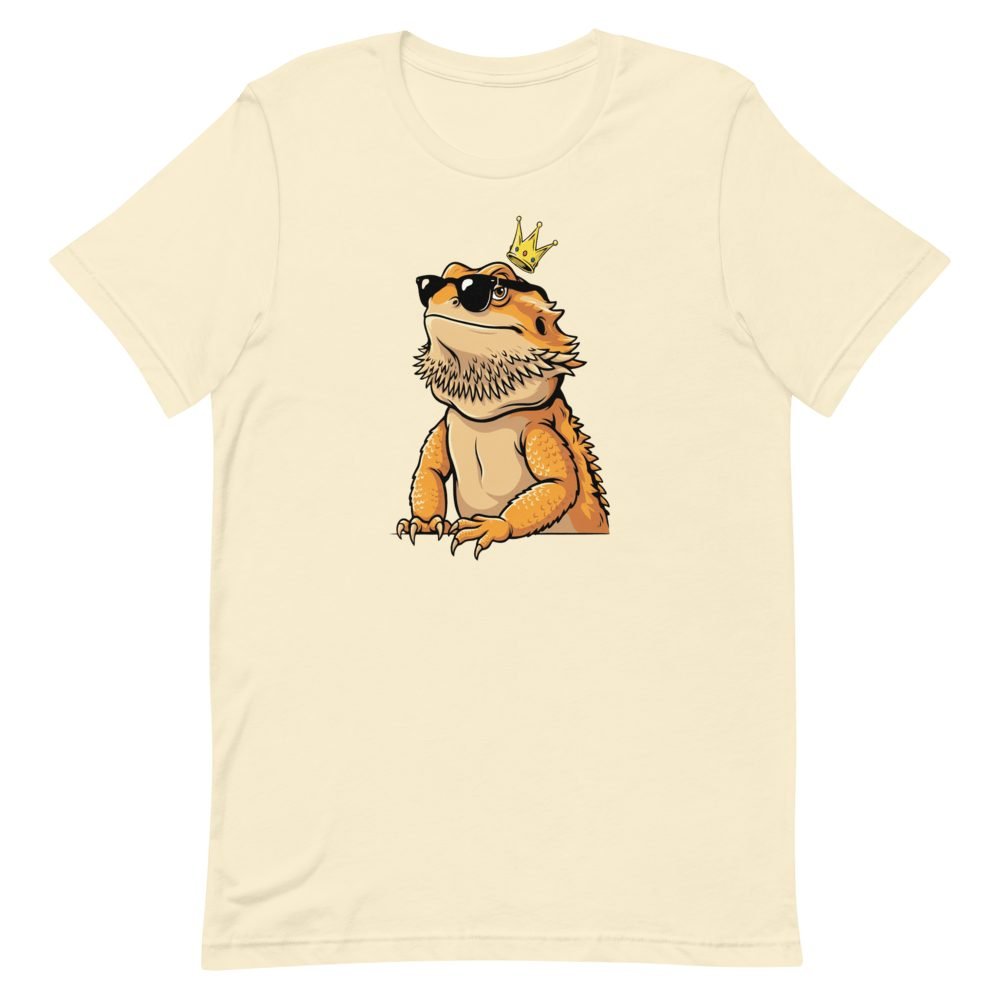
We’re a small reptile-first shop as well as a care guide. If you’re proud of the snake that just earned a 4-foot upgrade, our Bearded Dragon Crown Sunglasses King T-Shirt is the one design we have right now. It’s for the bearded dragon side of the reptile room, but it’s made for keepers who are a little obsessed, like you.
Wear the obsession
The Bearded Dragon Crown Sunglasses King T-Shirt is our reptile-room tee for keepers who measure, weigh, and log everything. It’s the one design in our small shop right now, so it stands in for the whole scaled crew.
Planning the upgrades without overspending
Because ball pythons reach most of their adult size in about three years, many keepers skip the middle step. If you’re buying a hatchling, ReptiFiles notes that juveniles can go straight into a long-term adult enclosure, as long as it has enough cover and hiding places. A small snake in a big, empty box feels exposed, but a small snake in a big box full of hides, clutter, and foliage feels secure. Plan for the adult size from day one, and choose the length based on the snake you’re likely to have at five years, not the one in your hand. For most keepers that means a 4-foot enclosure as a minimum. For a female who keeps growing past 4 feet, plan on something longer. Whatever size you choose, it needs secure locks: ball pythons are escape artists. Our complete reptile care guide covers the heating and humidity basics that apply to any size of enclosure.
How big do ball pythons get? Common questions, answered
How long do ball pythons keep growing?
Most of their growth happens in the first three years, and PetMD puts adult size at around that point. After that, growth slows sharply but continues in small increments, which is why the largest ball pythons tend to be older females.
Are female ball pythons bigger than males?
Yes, on average, and especially at the top end. In the largest wild study, the biggest female was 30 cm longer than the biggest male, measured snout to vent. But size isn’t a reliable way to sex a snake. Reptile Rescue Center recommends having an experienced professional confirm sex by probing.
Can a ball python reach 6 feet?
Rarely. Wikipedia gives a maximum of 182 cm (about 72 inches), citing a 2006 husbandry reference, and the largest female in the Togo study was 170 cm before her tail. Six feet is the extreme end of the species, not something to expect.
Do morphs grow to different sizes?
Some breeders, including Ghost Constrictors, report that certain multi-gene recessive combinations run slightly smaller as adults. We couldn’t find a published study measuring this, so treat it as breeder experience rather than established fact. Sex, food, and individual genetics matter far more than color pattern.
How do I measure my ball python without stressing it?
Don’t stretch or pull the snake straight. It’s stressful, and the number won’t be more accurate. Two easier options: photograph the snake resting beside a tape measure and trace its curves on the photo, or let it cruise along a long, straight surface and estimate. Better still, rely on weight. A kitchen scale gives you a number you can repeat and trust.
Is a ball python big enough to be dangerous?
It’s a small python and nonvenomous. At 3 to 5 feet, it’s nothing like the giant constrictors, which is a big part of why ball pythons are such popular beginner reptiles. They can still bite, and an adult’s bite hurts, so handle calmly, avoid handling right after a meal, and supervise children around any snake. If you’re weighing a ball python against other options, our piece on why reptiles make such good pets is a good place to start.
Final thoughts
So how big do ball pythons get? Usually 3 to 5 feet and 1 to 3-plus kilograms, with females making up most of the large end and the occasional older female reaching nearly 6 feet. The numbers online disagree for real reasons: sex, where “adult” begins, wild versus captive feeding, and at least one maximum-weight figure copied from a misread table.
The more useful takeaways are practical ones. Weigh your snake, keep a log, and judge its shape, not just the number. Feed for condition rather than speed. And build the enclosure around the snake you’ll have in a few years: one it can stretch out in, end to end. If anything about your python’s weight or shape worries you, a reptile-experienced vet is the right next step, and your weigh-in log will make that visit much more useful.
Before you go
Keep learning your animal
We publish a new guide every day. The best of them land in one short weekly email, so you never miss the one about your species.

Dr. Zoe Santos is a distinguished herpetologist and a revered expert in the care, conservation, and study of reptiles and amphibians. With a PhD in herpetology and over 18 years of field and academic experience, Zoe brings a depth of knowledge to her readers that is both rare and invaluable.