Why Does My Dog Keep Licking His Paws? What the Pattern Tells You (and What It Can’t)
Your dog settles onto the rug after dinner and starts in on a paw. Lick, lick, lick. You call his name, he glances up, and two seconds later he’s back at it. If you’ve found yourself typing why does my dog keep licking his paws into a search bar at 11pm, you’re in good company, and you’re asking the right question. A little paw licking is ordinary grooming. Licking that won’t stop is your dog telling you something, and the useful part is that how he licks says a lot about why.
This guide shows you how to read that pattern using the same clinical features veterinary dermatologists use. It’s also honest about where the pattern runs out, because the question owners ask most (“is it his food?”) is one you can’t answer by watching.
Why does my dog keep licking his paws? Normal grooming vs. a problem
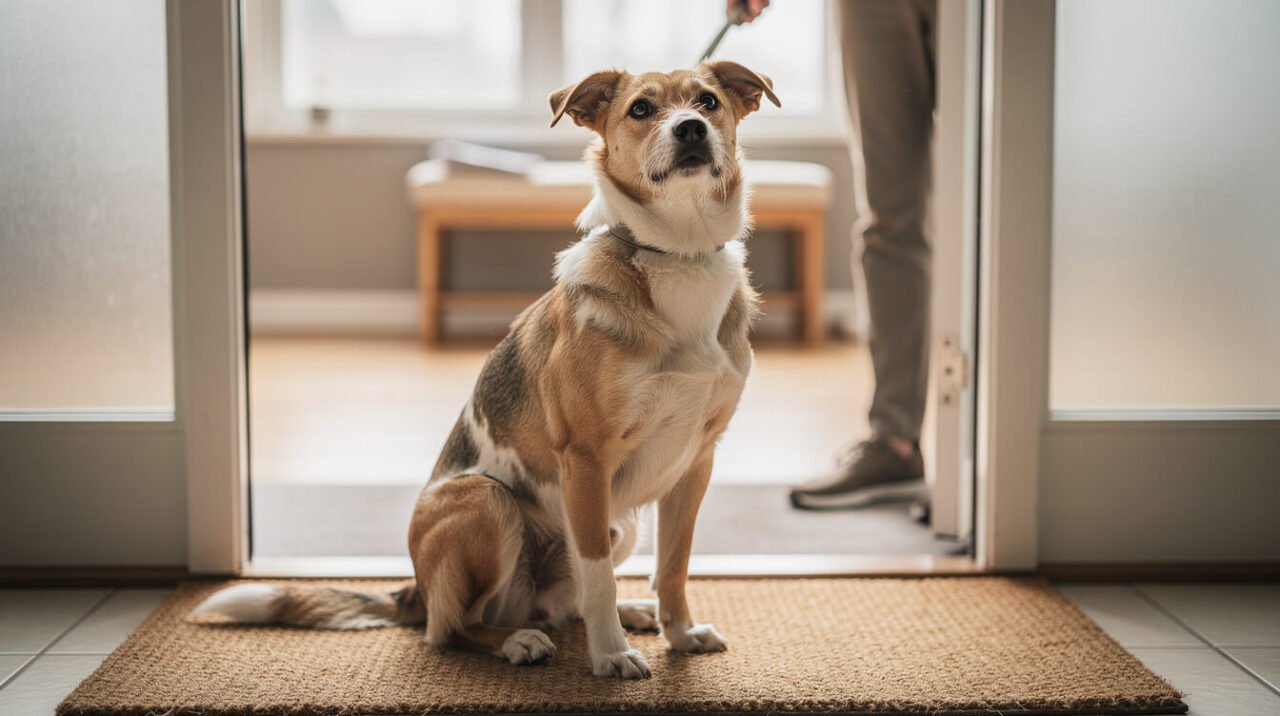
Dogs lick their paws to clean off mud, tidy up after eating, or settle down before sleep. None of that needs fixing. The line between grooming and a problem is easier to find than you’d think. PetMD’s vet-reviewed guidance puts it in practical terms: licking becomes excessive when your dog doesn’t stop when you call him or try to distract him with a toy, food, or a walk. We like to call this the interrupt test, and it’s a good first check:
- Easy to interrupt, short sessions, paws look normal: almost certainly grooming. Keep an eye on it, nothing more.
- Hard to interrupt, or he goes straight back to it: something is driving it. Usually that’s an itch or discomfort, sometimes boredom or stress.
- Visible change in the paw: redness, hair loss, swelling, a smell, or reddish-brown staining on light fur. That’s a sign the licking has been going on long enough to change the skin, and it’s worth a vet visit even if he seems happy otherwise.
That reddish-brown staining is saliva, and owners of light-coated dogs often spot it before they notice the licking. It doesn’t tell you the cause, but it does tell you the behavior isn’t new. Once you’ve decided the licking is more than grooming, the next step isn’t guessing at causes. It’s watching where it happens.
Read the pattern: which paws, where else, and when
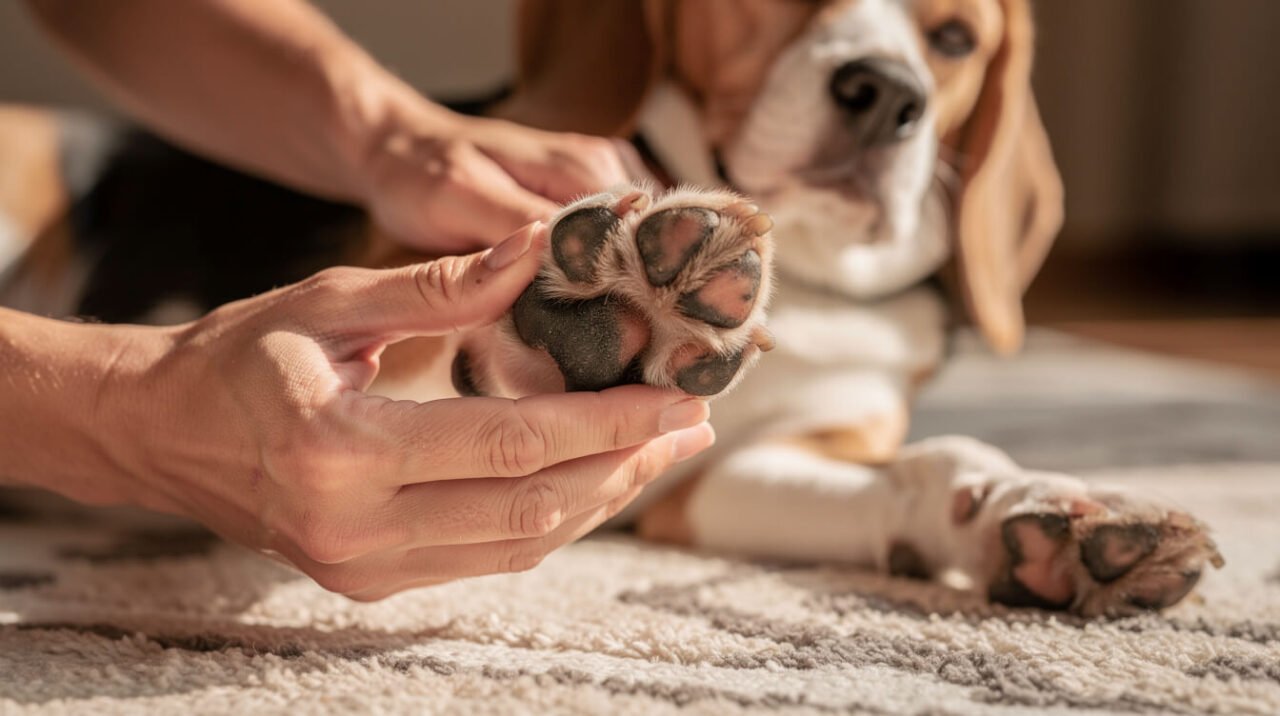
Several good vet pages tell owners to notice whether the licking is on one paw or several. That’s the right instinct, but it’s only part of the map. The rest of your dog’s body, and the calendar, complete the picture.
| What you notice | What it points toward | Where that comes from |
|---|---|---|
| One paw, started suddenly (often after a walk) | Something local: a cut, a grass seed or splinter between the toes, a broken nail, a sting | Vet clinic guidance (Oakhurst, Your Vet Online, Petmate) |
| One leg, older dog, stiff or slow to get up, skin looks normal | Pain under the skin, such as a sore joint | Your Vet Online, PetMD |
| Both front feet, plus ear flaps, face, armpits, or belly; started before about age three | Allergic skin disease (atopic dermatitis or food allergy) | Favrot’s criteria, ICADA guidelines |
| Lower back, base of the tail, and backs of the thighs are the itchiest spots | Flea allergy (paw licking may be a second, separate itch) | ICADA guidelines (Hensel et al. 2015) |
| Flares every spring or late summer, calmer in winter | An environmental allergen such as pollen | ICADA guidelines |
| Year-round, no seasonal pattern | Dust mites, food, or both (impossible to separate by looking) | ICADA guidelines; Favrot 2010 |
| Musty or “corn-chip” smell, greasy skin or brown staining between the toes | A secondary yeast or bacterial infection on top of the original cause | Vet clinic guidance (Paoli Vetcare, Oakhurst) |
| Licking focused on one spot near the wrist until a raised, hairless patch forms | Lick granuloma (acral lick dermatitis) | Best Friends Animal Society |
The front-feet clue, and why it’s not “just a habit”
One row in that table is worth slowing down on. In 2010, a team led by veterinary dermatologist Claude Favrot studied a large group of dogs with atopic dermatitis and built a set of clinical features that predict it. Those features are now part of the International Committee for Allergic Diseases in Animals (ICADA) diagnostic guidelines. The list:
- Itching started before age three
- Lives mostly indoors
- The itch responds to steroids (your vet would know this from past treatment)
- Chronic or recurrent yeast infections
- Affected front feet
- Affected ear flaps
- Ear margins not affected
- Lower back not affected
Meeting five of the eight identified about 85% of atopic dogs in the study. That’s why we’d gently push back on the idea, which shows up on at least one popular page, that front-paw-only licking mostly points to anxiety or referred pain. Front feet are one of the classic allergy sites. Treat front-paw licking as a possible itch first.
Now the honest caveat, and it’s an important one. The same criteria had a specificity of about 79%, which means roughly one in five itchy dogs without atopic dermatitis also ticked five boxes. The ICADA authors say plainly that the criteria shouldn’t be used alone as a diagnostic test. So use the list as a set of notes for your vet, not as a diagnosis you make at home.
Allergies: the most common cause, and what you can’t tell by looking
Allergies are the cause most vets name first for chronic paw licking, and the paws are one of the places allergic itch shows up earliest. The thin skin between the toes touches the ground with every step. Best Friends Animal Society notes that signs of atopic dermatitis usually begin between one and five years of age, and that the face, ears, and feet are the usual targets.
Two kinds are in play. Environmental allergy (atopic dermatitis) comes from pollen, grasses, mold, and house dust mites, and pollen allergy tends to be seasonal. Food allergy is an immune reaction to a protein in the diet. It’s year-round, and some dogs also have gut signs.
Food or pollen? Here’s the hard truth
Is it the chicken? The honest answer is that nobody can tell by looking, including your vet. Favrot’s 2010 study compared dogs whose atopic signs were food-induced with dogs whose signs weren’t, and confirmed the two are clinically indistinguishable. Same itch, same paws, same ears.
So the pattern table above can tell you “this looks like allergy rather than an injury or fleas.” It can’t tell you “it’s the food.” Only one test can.
The elimination diet: the only reliable food test
The standard of care is an elimination diet trial, run with your vet. Your dog eats only a diet with a protein he’s never had, or one where the protein is broken down so the immune system doesn’t recognize it. If the itch settles, the old food goes back in. A flare on re-challenge is what confirms it.
How long does it take? Longer than most people expect. A 2015 critically appraised review by veterinary dermatologists Olivry, Mueller, and Prélaud found that more than 80% of food-allergic dogs had improved by five weeks, and that trials should last at least eight weeks to catch more than 90%. A two-week “let’s try a new food” experiment simply isn’t long enough to tell you anything.
The trial also has to be strict, and this is where most of them quietly fail. Board-certified dermatologist Dr. Heng Tham, writing in Today’s Veterinary Practice, lists what has to go during the trial: treats, table scraps, rawhide chews, flavored toothpaste, and chewable supplements. Flavored monthly parasite preventives need swapping for an unflavored or topical version, which is a conversation to have with your vet rather than a change to make on your own. He also cautions against using over-the-counter “limited ingredient” foods for the trial, because studies keep finding undeclared ingredients in them. In one study he cites, 65% of 29 store-bought dog foods tested contained undeclared chicken DNA.
What about allergy tests?
You’ll see blood, hair, and saliva tests sold as a shortcut for food allergy. The evidence on them isn’t kind:
- A 2017 systematic review found that blood tests for food-specific antibodies in dogs had low repeatability and highly variable accuracy, and concluded the elimination diet is still the best way to diagnose food reactions.
- In a 2019 study, two veterinary dermatologists sent one commercial hair-and-saliva test samples from an allergic dog, a non-allergic dog, fake fur, and plain water. The results couldn’t be told apart from random chance, and repeat samples didn’t match each other.
Skin and blood allergy testing does have a real job: once a vet has diagnosed environmental allergy, it helps pick allergens for allergy shots. It’s not a way to diagnose food allergy, though.
And if your dog is food-allergic, which proteins are the usual suspects? A review pooling 297 food-allergic dogs found the most commonly reported culprits were beef (34%), dairy (17%), chicken (15%), wheat (13%), and lamb (5%). That’s useful context for your vet, not a reason to swap foods at random. (If chicken is part of your dog’s diet, our guide to raw chicken and dogs covers the separate safety questions.)
The one-paw licker: injuries, foreign bodies, nails, and pain
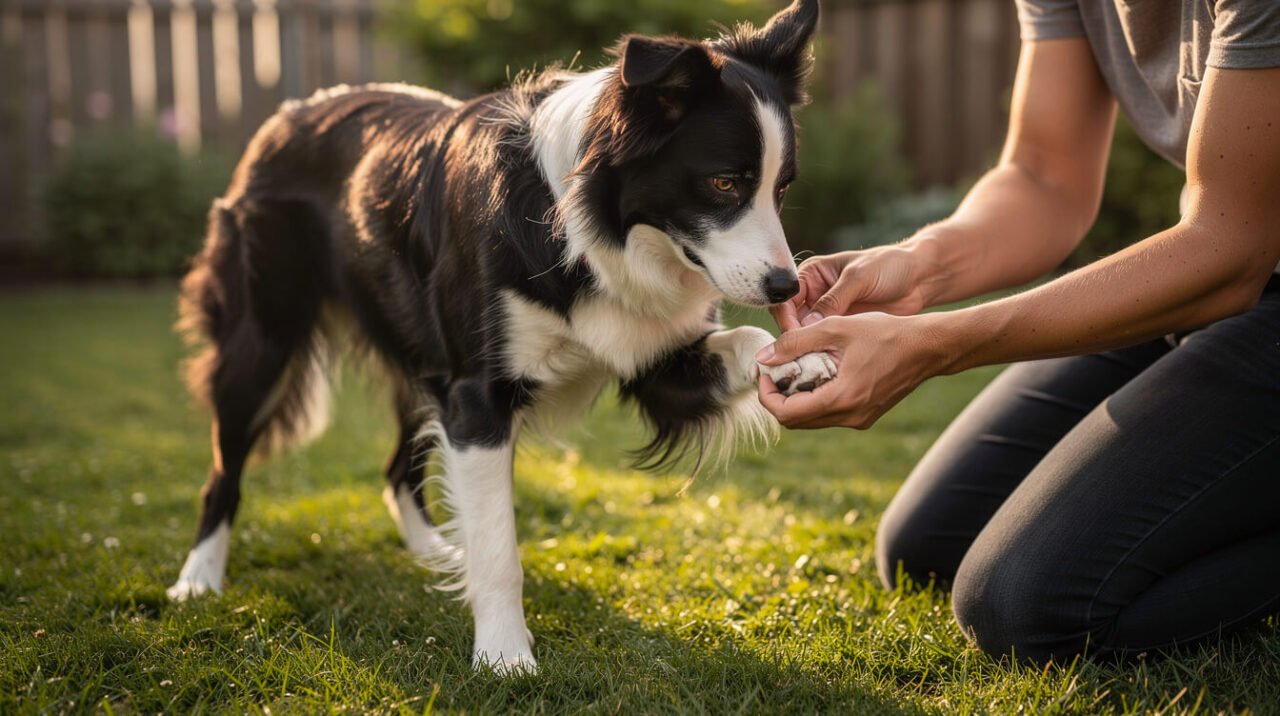
When the licking is on one paw and it started suddenly, think local before you think allergy. Several vet clinics make the same point: a sudden single-paw focus usually means something happened to that foot.
The usual suspects:
- Something stuck between the toes: grass awns and seeds, splinters, burrs, or small stones. Grass seeds are especially sneaky because they can work their way into the skin and leave only a small swollen spot.
- A cut or a cracked pad: from glass, sharp gravel, ice, or hot pavement.
- A broken or torn nail: often obvious once you look, and painful. If your dog’s nails run long, our guide to trimming your dog’s nails without the stress can help prevent the next one.
- Insect stings: PetMD’s vet notes that an embedded stinger should come out, since stings can trigger allergic reactions.
- Interdigital cysts or growths: painful lumps between the toes that a vet needs to look at.
When the skin looks fine but he won’t stop
Pain under the skin can cause licking too. Vets get suspicious of pain when only one leg is involved, the dog is older, there’s stiffness or limping, and the skin looks normal. Tell your vet that specifically. “The skin looks fine” is a useful clue, not a reason to wait.
How to check a paw safely
Do this in good light, with your dog relaxed:
- Compare the licked paw with the opposite one. Is it warmer, puffier, or held differently?
- Spread the toes gently and look between each one, including the webbing.
- Look at each pad for cuts, cracks, or something embedded.
- Check every nail, including the dewclaw if he has one.
- Take clear photos of anything unusual for your vet.
A painful paw can make even the gentlest dog nip. If he pulls away hard, yelps, or growls, stop. That reaction is itself useful information for your vet.
The weekly care guide
Get it right for your animal, every week
One email a week: new care guides, species deep-dives, and the safety answers keepers search for, written by our specialists. No spam. Unsubscribe anytime.
Fleas, mites, and yeast: the itch that feeds itself

Parasites are one of the first things a vet rules out, because they’re common and treatable. Two things about fleas surprise owners.
First, you don’t have to see fleas for fleas to be the problem. Dogs with flea allergy can be intensely itchy after very little exposure. Second, flea allergy has its own map. The ICADA guidelines describe flea allergy itch as concentrated on the lower back, the base of the tail, and the backs of the thighs. They also note that when a dog is itchy mainly on the paws or in the ear canals, fleas may not be the only cause. So a dog chewing his tail base and licking his front feet may have two problems at once. Our guide on getting fleas off a dog covers the household side of a flea problem. Year-round prevention, chosen with your vet, does most of the work.
Some mange mites cause intense itching too, which is why the first visit for an itchy dog often includes a quick skin scraping.
The licking-yeast loop
Here’s the part that keeps a lot of dogs licking long after the original trigger. Saliva keeps the skin between the toes warm and damp. Damaged, damp skin is where yeast and bacteria do best. The infection itches, so the dog licks more, and round it goes.
The signs that a secondary infection has joined in:
- A musty, yeasty, or “corn-chip” smell from the feet
- Red, greasy, or flaky skin between the toes
- Brown or rust-colored staining on the fur
- Crusts, discharge, or thickened skin
Infections like this need a vet. A swab or tape sample under the microscope shows whether it’s yeast, bacteria, or both, and the treatment differs. Clearing the infection usually isn’t the end of it, though. If whatever started the itch is still there, the loop restarts, so your vet will often treat the infection and look for the cause at the same time.
Boredom, anxiety, and lick granuloma
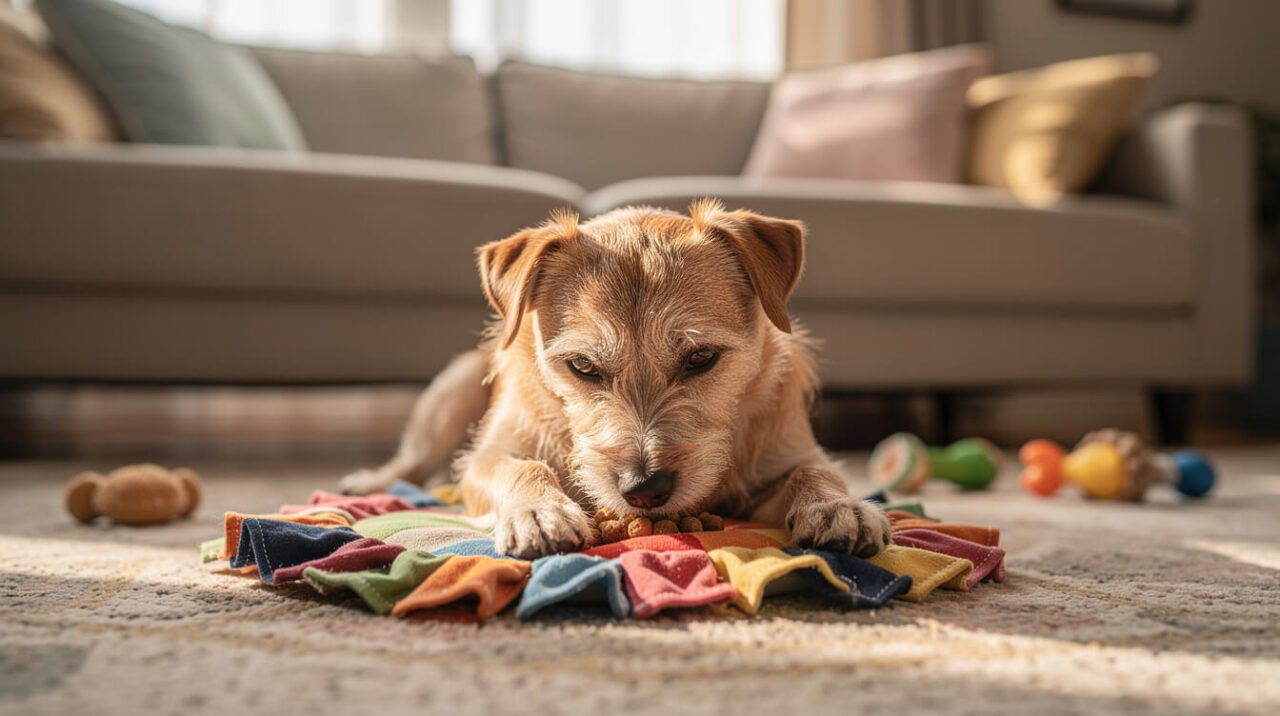
Some dogs lick because they’re under-stimulated, anxious, or soothing themselves. Changes in routine, long stretches alone, or not enough exercise can all start it, and over time a self-soothing habit can turn compulsive.
There’s an important order of operations, though. Vets look for a medical cause first, because licking that looks purely behavioral very often has an itch or an ache underneath. “He’s just bored” should be the conclusion you reach after the vet has ruled out the rest, not the first guess.
Lick granuloma
The most serious form of this is the lick granuloma, also called acral lick dermatitis. Best Friends Animal Society describes it as a dog licking one spot, usually the front of the wrist, over and over until a raised, hairless, inflamed patch forms. The exact cause is debated. Anxiety and boredom are often blamed, but an old injury, a sore, or joint pain can start it too. Granulomas can become deeply infected and can be stubborn to treat, so they need a vet early rather than late.
What genuinely helps a bored or anxious licker
This is the part you can do the most about at home, and most dogs love the fix:
- Give the nose a job. Snuffle mats, scatter feeding in the grass, and food puzzles tire a dog out mentally in a way a walk alone doesn’t. Our list of ways to relieve your dog’s boredom has more ideas.
- Redirect, don’t scold. When the licking starts, invite him to do something else, like a short training game or a chew he’s allowed. Punishment adds stress, and stress feeds the licking.
- Look at the timing. If the licking clusters around departures, thunderstorms, or visitors, that’s a stress pattern worth mentioning to your vet, who may refer you to a behavior specialist.
- Keep a steady routine. Predictable walks, meals, and quiet time help anxious dogs settle.
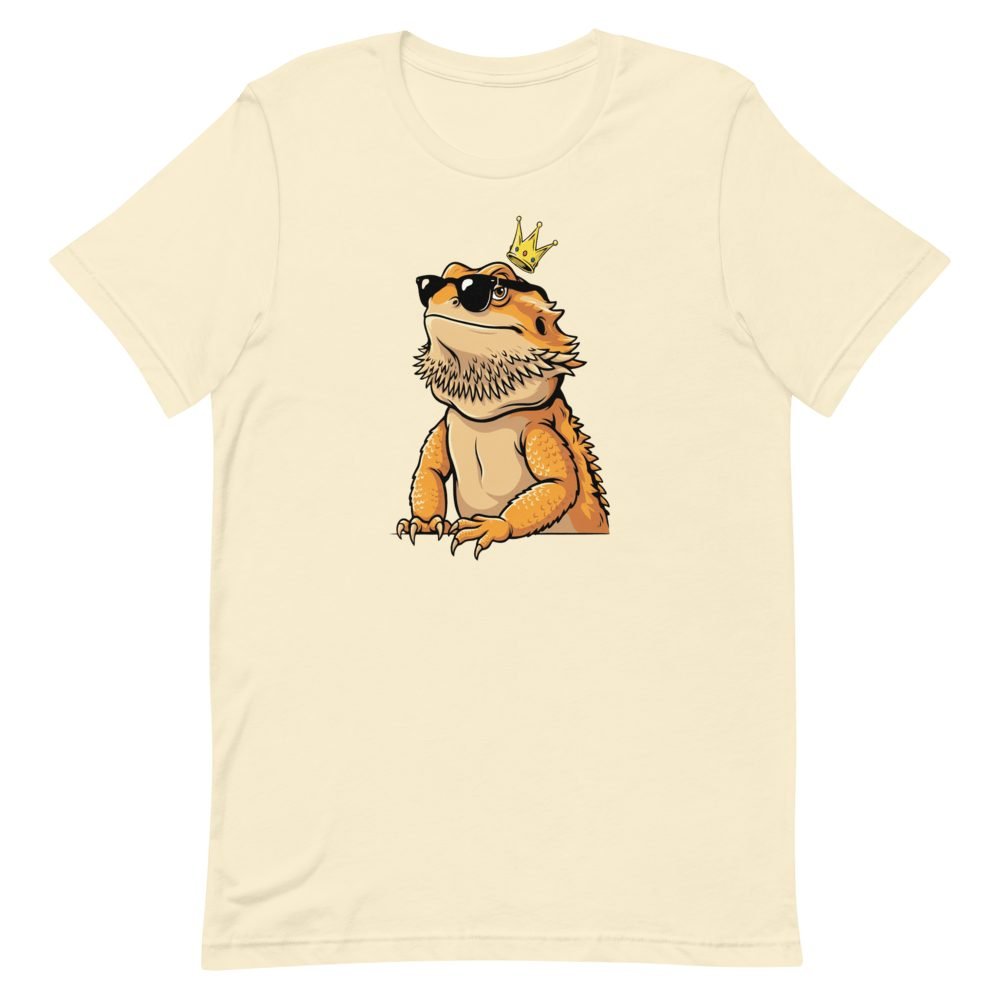
And if a bearded dragon shares the house with your dog, our small, reptile-first shop has a Bearded Dragon Crown Sunglasses King T-Shirt for the keeper who loves both.
For the multi-species household
The Bearded Dragon Crown Sunglasses King T-Shirt, from our small keeper-merch shop. For the person whose dog has a scaly housemate.
Cones, socks, and bitter sprays
A soft cone, a protective bootie, or a vet-recommended bitter deterrent can stop a dog from licking a sore while it heals. Think of these as bandages, not answers. A dog wearing a cone for an itch nobody has diagnosed is still itchy.
What to do today, and when to call the vet
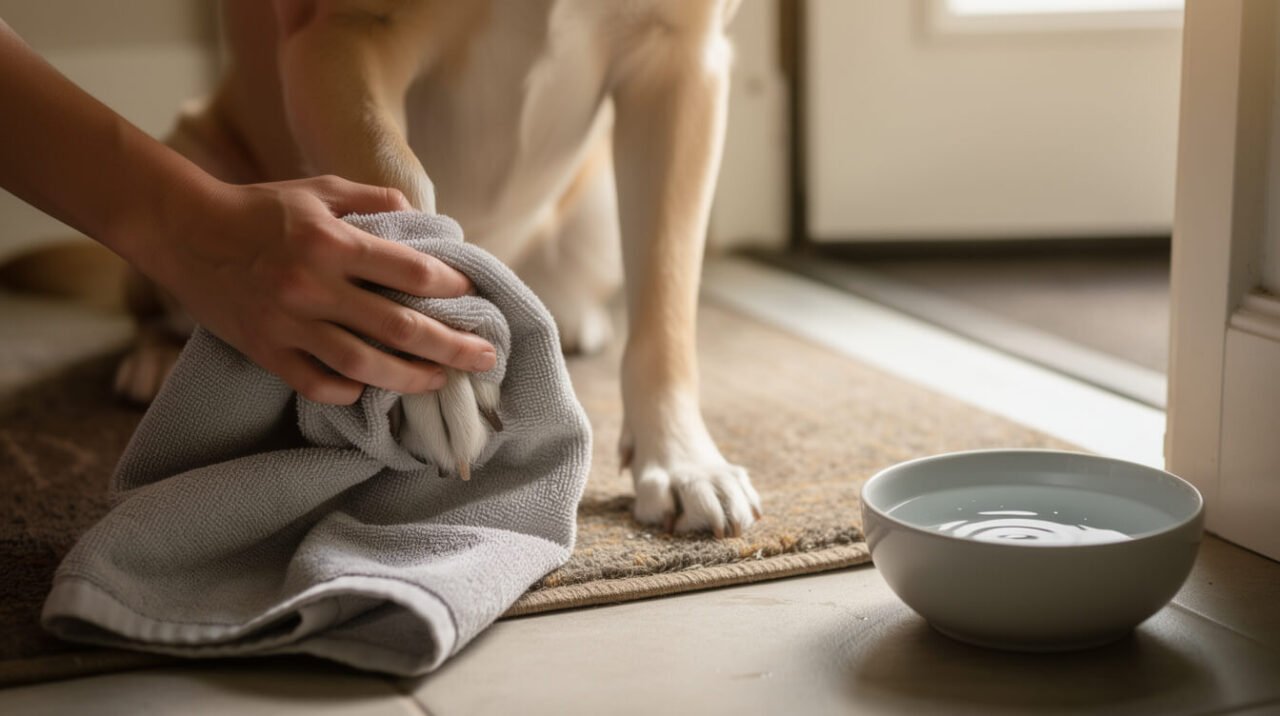
You don’t need to wait for an appointment to start helping. Here’s what’s safe and useful in the first day or two.
Safe things to do now
- Check the paw using the steps in the one-paw section above.
- Rinse and dry after walks. Plain lukewarm water, then dry thoroughly between the toes. This clears pollen, grit, and lawn chemicals, and drying matters as much as rinsing, since damp skin feeds yeast.
- Write down the pattern. Which paws, what time of day, what else he scratches or licks, and whether anything changed recently (new food, new treats, new cleaning product, a move, a new season).
- Take photos and a short video. Licking often stops the moment you walk into a clinic, so a clip from home shows your vet what you’re seeing.
- Bring in the flea prevention question. Note what he’s on and when it was last given.
Things to skip
- Essential oils, especially tea tree oil. The ASPCA Animal Poison Control Center reviewed 443 cases of dogs and cats exposed to concentrated tea tree oil and found that 89% of exposures were intentional, meaning owners applied it on purpose. Signs such as drooling, lethargy, weakness, wobbliness, and tremors appeared within 2 to 12 hours and lasted up to three days. A licked paw means whatever you put on it gets swallowed too.
- Anything on raw, broken, or bleeding skin without your vet’s okay. Some vet clinics suggest gentle soaks for intact, mildly irritated skin, but broken skin is a different situation.
- Human medicines. Don’t give any without asking your vet first.
- Switching foods on a hunch. As above, a casual switch can’t confirm or rule out food allergy, and it makes a proper trial harder later.
When to call your vet
Paw licking is rarely an emergency, but these signs mean it’s time for an exam rather than more watching. The list comes from PetMD’s veterinary guidance and vet clinic advice:
- Bleeding, open sores, or raw skin
- Swelling of the paw or between the toes
- Limping or not wanting to put weight on the foot
- Pus or other discharge
- Whimpering or crying out when you touch the paw
- A strong musty smell, or brown staining between the toes
- Licking that lasts more than a few days, or keeps coming back
If the licking comes with signs that feel bigger than a paw problem, like a sudden swollen face, hives, trouble breathing, or collapse after a sting, treat it as an emergency and get to a vet right away.
A good vet visit for an itchy dog follows the same order the guidelines do: rule out fleas, mites, and infection, then look at allergy, then talk about a food trial. Along the way your vet is also ruling out less common conditions, which is one more reason not to settle on a cause too early.
Why does my dog keep licking his paws? Quick answers
Why does my dog lick his paws at night?
Itch feels worse when there’s nothing else to focus on, so allergic dogs often lick most when the house goes quiet. Self-soothing before sleep plays a part too. Nightly licking that wakes you up is worth mentioning to your vet.
My dog keeps licking his paw but there’s nothing there. Why?
Early allergy and early infection can look like very little, a grass seed can sit deep between the toes, and pain from a joint won’t show on the skin at all. “Nothing visible” doesn’t mean nothing’s wrong. If it continues for more than a few days, have it checked.
Why did my dog suddenly start licking his paws?
A sudden start usually means a new trigger: an injury, something stuck in the paw, a sting, a new season’s pollen, or a change in his environment. Check the paw first. If one paw is the focus and it started abruptly, an injury or foreign body is the most likely place to start.
Can I figure out if it’s his food at home?
Not by watching, and not with a hair or saliva kit. Food allergy and environmental allergy look the same, so the only reliable test is a strict elimination diet trial of at least eight weeks, run with your vet, followed by a re-challenge. It’s a commitment, but it gives you a real answer.
Will a different brand of food fix it?
Sometimes the licking improves after a switch because the season changed, and without a proper trial you can’t tell which. If diet is on your mind, our guide to giving your dog a balanced diet is a good place to start, and your vet can tell you whether a food trial makes sense.
Is paw licking related to other odd behaviors?
It can be. Repetitive behaviors often share the same roots: discomfort, stress, or not enough to do. Our piece on why dogs run in circles covers the line between quirky and concerning.
The short version
When you’re asking why your dog keeps licking his paws, start with where and when. One paw that started suddenly points to the foot itself. Both front feet plus ears, face, or belly, starting young, points to allergy. The lower back and tail base point to fleas. A musty smell means infection has joined in. Then be honest about the limit: no amount of watching tells food allergy from pollen allergy, and no hair or saliva kit can either. Bring your notes, photos, and video to your vet, and you’ll get to the real cause faster. Your dog is lucky to have someone paying this much attention.
Before you go
Keep learning your animal
We publish a new guide every day. The best of them land in one short weekly email, so you never miss the one about your species.

Meet Jake Harrington, your go-to guru for all things canine. With over 15 years of professional dog training experience, Jake has transformed the lives of thousands of dogs and their owners. His journey began in the bustling streets of a major city, where he discovered his natural affinity for understanding canine behaviors and communication.