
Can My Dog Eat Watermelon? A Vet-Informed Safety Guide
Can my dog eat watermelon? The quick answer

Yes — can my dog eat watermelon is one of the easiest “can my pet eat this” questions to answer with a confident yes. A few plain, seedless cubes of watermelon flesh are a safe, genuinely healthy treat for most dogs. It’s roughly 92% water, low in calories, and comes with a handful of real nutritional upsides, which is exactly why it’s such a popular hot-weather snack to share.
The catch isn’t the watermelon itself — it’s the parts around it. The seeds and the rind are where almost every watermelon-related vet visit starts, and both are easy to avoid once you know what to look for. We’ll walk through exactly what’s safe, what to skip, how much to serve, and the specific situations (puppies, seniors, dogs with certain health conditions) where a little extra caution is worth it.
If your dog already snatched a bite of rind off a picnic table, don’t panic — a small piece is unlikely to cause more than mild, short-lived stomach upset in most dogs. Keep reading for the details, the serving chart, and the signs that mean it’s time to call your vet.
Why watermelon appeals to dogs — the hydration and nutrition behind it
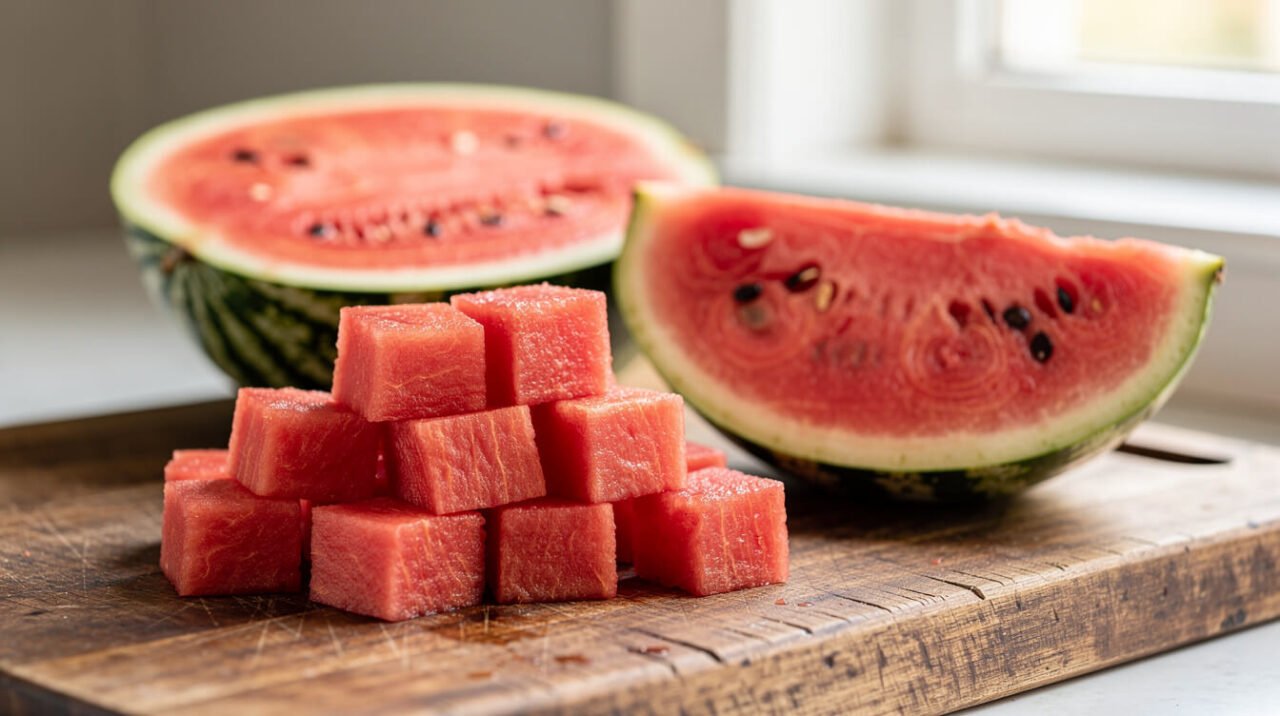
Dogs gravitate toward watermelon for a lot of the same reasons we do: it’s sweet, cold, juicy, and satisfying on a hot day. Fun fact worth knowing — botanically, watermelon is actually a berry, not a melon in the technical sense, though that trivia won’t change how you serve it.
The nutritional case for watermelon as an occasional treat is genuinely solid. The flesh is about 90–92% water, which makes it a nice way to help a dog top up hydration during a summer walk or a backyard afternoon, on top of (never instead of) their regular water bowl. It’s also naturally low in calories — roughly 45–50 calories per cup of diced flesh — and contains vitamin A, vitamin B6, vitamin C, and potassium, along with a small amount of fiber. None of that makes watermelon a substitute for a complete dog food, but it does mean you’re not just handing over empty sugar when you offer a few cubes.
It’s also naturally free of fat and cholesterol, which matters if you’re watching a dog’s weight or managing a condition where fatty treats are off the table. Compare that to a lot of commercial dog treats, which can carry more sugar, salt, or filler than owners realize, and watermelon starts to look like one of the more sensible “human food” treats you can offer — as long as it stays occasional and the prep is right.
The one nutritional caveat: watermelon does contain natural sugar. It’s not a concern for most healthy dogs in treat-sized portions, but it’s worth knowing about before we get to the section on dogs with diabetes or weight-management needs further down.
Hydration is worth dwelling on a little more, because it’s genuinely the strongest case for watermelon over most other fruit treats. On a hot day, after a long walk, or during any activity where your dog is panting more than usual, a few cold watermelon cubes can be a welcome, appealing way to help them take in a bit of extra fluid — especially for dogs who are picky about drinking plain water when they’re worked up or overheated. That said, watermelon is a supplement to water, never a replacement for it; always make sure fresh water is available, and if you’re ever concerned your dog is showing signs of heat stress (heavy panting that doesn’t ease up, drooling, wobbliness, bright red gums), that’s a “call the vet now” situation, not a “offer some fruit” one.
Can my dog eat watermelon seeds or rind? The real risks
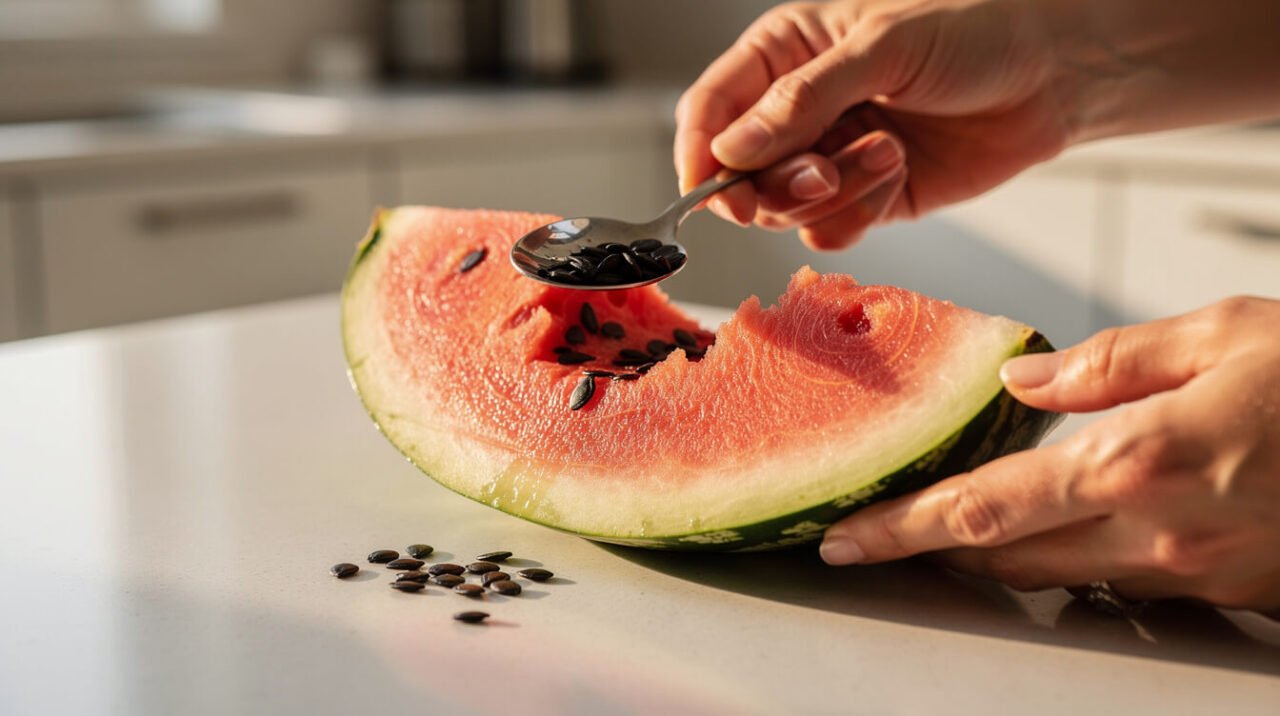
If you take one thing away from this guide, make it this: the flesh is the safe part. The seeds and the rind are where the actual risk lives, and they’re both easy to manage once you know to look for them.
Seeds. Mature, dark watermelon seeds are hard and don’t break down easily in a dog’s digestive tract. A seed or two swallowed by accident usually passes without incident in a medium or large dog, but eating a larger number of seeds — which happens more easily than you’d think when a dog is enthusiastically snacking on a slice — can cause an intestinal blockage. Small and toy breeds are at higher risk here simply because their digestive tract is narrower. This is exactly why seedless watermelon, or flesh you’ve deseeded yourself, is the safer default rather than an optional extra step.
Rind. The tough green-and-white outer layer is genuinely hard to digest. Dogs who eat rind — especially a large piece, gulped rather than chewed — risk stomach upset, vomiting, diarrhea, and in more serious cases, gastrointestinal obstruction, which is a real emergency that can require surgery. The rind isn’t toxic in the way that, say, grapes are toxic; the danger is mechanical (it doesn’t break down and can physically block the gut), not a poisoning risk. That distinction matters for how worried to be, but it doesn’t change the guidance: rind isn’t a “small piece is probably fine” food the way flesh is.
Watch for these symptoms after your dog eats watermelon, and call your vet if you see them:
- Persistent vomiting or vomiting that doesn’t resolve within a few hours
- Diarrhea, especially if it continues past a day
- Lethargy or noticeable abdominal discomfort (a hunched posture, a tender or bloated belly)
- Loss of appetite or refusing water
- Straining to pass stool, or not passing stool at all — this can signal a blockage and warrants prompt veterinary attention
None of this is meant to diagnose your own dog — if you’re ever unsure, a call to your regular vet, or an emergency animal hospital after hours, is always the right move. The ASPCA Animal Poison Control Center is also a reliable resource if you suspect your dog swallowed a genuinely large amount of rind or seeds.
Seedless vs. seeded watermelon — and other watermelon products
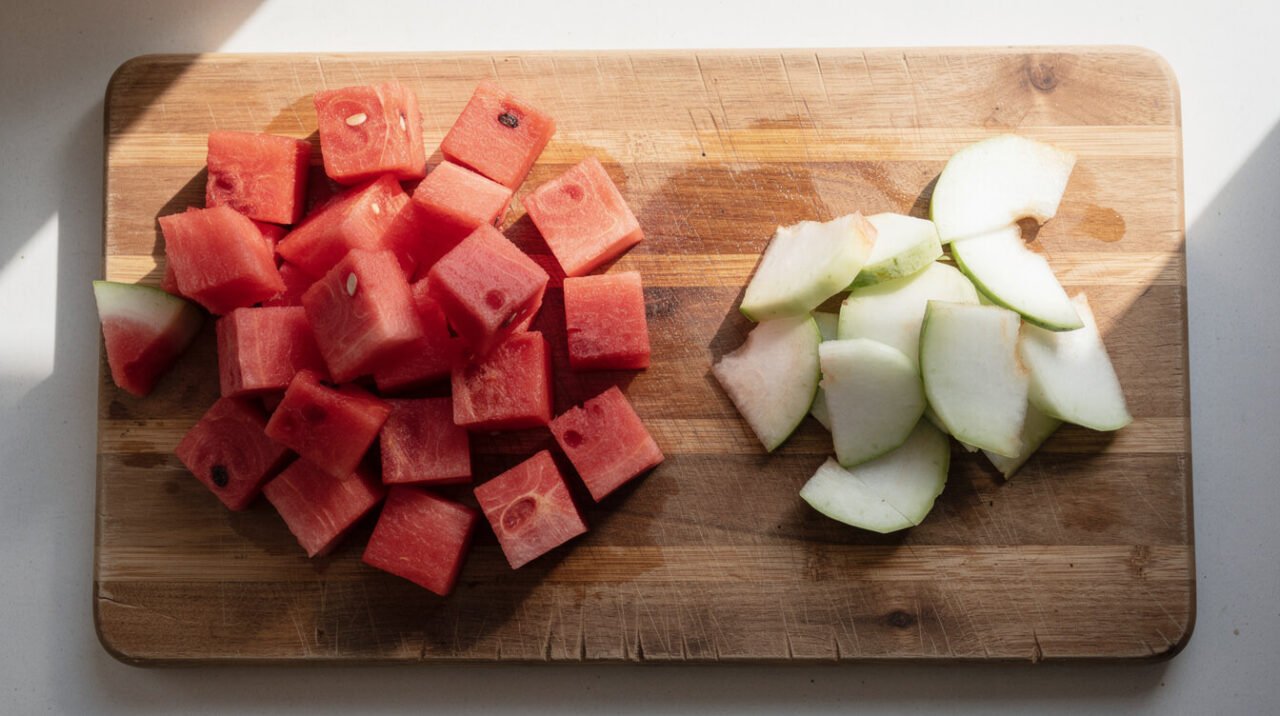
“Seedless” watermelon is the easiest way to take the seed risk off the table almost entirely — but it’s worth knowing that seedless varieties still contain small, soft, pale seed coats. Those are generally harmless in small numbers since they haven’t hardened, but it’s still good practice to do a quick visual check and pick out any you notice before serving, rather than assuming “seedless” means zero seeds at all.
If all you have on hand is a seeded watermelon, deseeding is a five-minute job: slice the flesh away from the rind, then either pick out the visible black seeds by hand or run a spoon through the flesh to scoop out the bulk of them. You don’t need to be surgical about it — a stray seed or two that slips through isn’t the concern; a dog eating a whole unpicked slice, seeds and all, is.
What about other forms watermelon shows up in?
- Watermelon juice: Plain, fresh-pressed watermelon juice in a small amount is generally fine, but it delivers concentrated sugar with none of the fiber of the whole fruit, so treat it as an occasional novelty, not a regular addition to the water bowl.
- Watermelon rind pickles or candied rind: Skip these. Beyond the rind-digestibility issue already covered, these preparations typically add large amounts of sugar, salt, or spices that aren’t appropriate for dogs.
- Watermelon-flavored human snacks (candy, gum, popsicles): These aren’t real watermelon and often contain xylitol, added sugar, or artificial sweeteners — xylitol in particular is genuinely dangerous to dogs even in small amounts. Stick to the actual fruit.
The safest, simplest version of this food is also the easiest to prepare: fresh, ripe, plain watermelon flesh, seeds removed, rind removed, cut into pieces sized for your dog. Everything else on that list is either an unnecessary risk or an unnecessary sugar load.
A few simple, vet-friendly ways to serve it, beyond plain cubes:
- Frozen cubes: a cooling, longer-lasting treat on a hot day (see the FAQ section below for portion notes)
- Mashed on a lick mat: plain, mashed watermelon flesh (no rind, seeds strained out) spread thin on a lick mat makes for a slow, enrichment-friendly treat rather than a food your dog inhales in one bite
- Blended with plain yogurt: a small amount of plain, unsweetened yogurt blended with watermelon and frozen in an ice cube tray makes a novel warm-weather treat — just confirm your dog tolerates dairy first, since some dogs are lactose sensitive
Whatever the format, the same two rules apply every time: no seeds, no rind, and keep the portion in line with your dog’s size.
The weekly care guide
Get it right for your animal, every week
One email a week: new care guides, species deep-dives, and the safety answers keepers search for, written by our specialists. No spam. Unsubscribe anytime.
How much watermelon can my dog eat, and how often?

Watermelon is a treat, not a meal replacement or a diet staple, so the general rule for all dog treats applies here: treats should make up no more than about 10% of your dog’s total daily calories, with the other 90% coming from a complete, balanced dog food. Watermelon’s low calorie count (roughly 45–50 calories per cup) gives you some room to work with, but “low calorie” still isn’t “unlimited.”
For serving size, cut watermelon into bite-sized pieces roughly the size of a large kibble piece for small dogs, and slightly larger cubes for medium and large dogs — no piece so big your dog is tempted to gulp it whole. As a rough starting point by size:
- Small dogs (under 20 lbs): a few small cubes (roughly 2–3 tablespoons total), once every few days
- Medium dogs (20–50 lbs): a small handful of cubes (roughly ¼–½ cup), a couple of times a week
- Large dogs (50+ lbs): up to about ½–¾ cup of cubes, a couple of times a week
These are general starting points, not a prescription — every dog’s calorie needs vary by age, activity level, and any health conditions, so treat this as a sensible default rather than a hard rule. If you’re ever unsure what fits your specific dog’s daily calorie budget, your vet can help you dial in an exact number.
If it’s your dog’s first time trying watermelon, start with just one or two small pieces and wait a few hours before offering more. This lets you confirm your dog tolerates it well before it becomes a regular warm-weather treat.
Puppies, seniors, and dogs with health conditions

Puppies. A puppy’s digestive system is still developing and generally more sensitive to new foods than an adult dog’s. A tiny taste of plain, deseeded watermelon flesh is usually fine for most puppies past the weaning stage, but go smaller than you would for an adult, and introduce it slowly. Because puppies are also growing on a tighter calorie and nutrient budget, it’s worth a quick check with your vet before adding any new treat to a young puppy’s diet, especially one still on a growth-formula food.
Senior dogs. Watermelon’s soft texture and hydration benefit are genuinely nice for older dogs, particularly ones who don’t drink as much water as they should or who have dental issues that make crunchier treats uncomfortable. The main thing to watch in seniors is that metabolism often slows with age, so the same treat portion that was fine at five years old may need to shrink a little at twelve.
Dogs with diabetes. Watermelon contains natural sugar, and while its glycemic impact is generally considered lower than many other fruits thanks to its high water and fiber content, “generally lower” isn’t the same as “safe to assume.” If your dog has diabetes, talk to your vet before adding watermelon or any fruit to their routine — this is exactly the kind of care specific worth getting a direct answer for rather than guessing.
Dogs with kidney disease. Watermelon’s potassium content is a consideration for dogs on a restricted-potassium diet, which is sometimes the case with certain kidney conditions. Again, this isn’t a blanket “never” — it’s a “check with the vet managing that condition first,” since the right answer depends on your dog’s specific bloodwork and diet plan.
Dogs with sensitive stomachs. If your dog tends toward a sensitive digestive system generally, introduce watermelon in a smaller amount than the chart above and watch for any softening of stool before making it a regular treat.

Wear the obsession
Bearded Dragon Crown Sunglasses King T-Shirt
Price range: $24.99 through $26.99
Shop this designFAQs: frozen watermelon, allergies, and when to call the vet
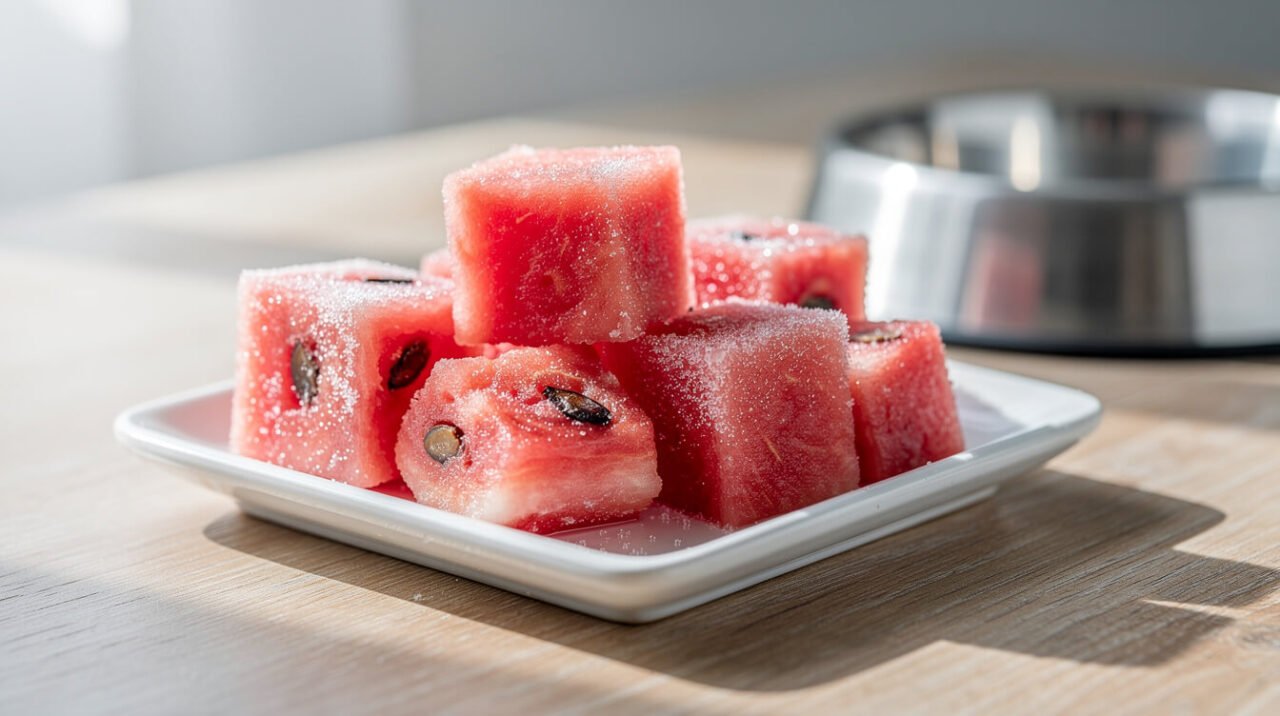
Can I freeze watermelon cubes for my dog?
Yes, and it’s one of the nicer warm-weather treat ideas out there. Cut plain, deseeded, rind-free watermelon into small cubes, freeze them on a tray, then offer a piece or two as a cooling snack. Keep portions the same as the fresh-serving guidance above — frozen doesn’t mean unlimited, and a few frozen cubes go a long way on a hot afternoon.
Is my dog allergic to watermelon?
True watermelon allergies in dogs are uncommon, but they’re not impossible. Watch for itching, hives, swelling of the face or muzzle, or digestive upset shortly after eating it for the first time. If you see any of those signs — especially facial swelling or difficulty breathing — treat it as an emergency and get to a vet right away. For most dogs trying watermelon for the first time, mild, temporary loose stool from a too-large portion is far more likely than a true allergic reaction.
My dog ate watermelon rind — should I be worried?
A small nibble is unlikely to cause more than mild, short-lived stomach upset in most dogs. A larger piece, especially in a small dog, is more concerning because of the blockage risk described above. Watch for vomiting, straining to pass stool, lethargy, or a bloated or tender belly over the next 24–48 hours, and call your vet promptly if any of those show up.
Can dogs eat other melons, like cantaloupe or honeydew?
Generally, yes, other melons follow similar guidance to watermelon: plain flesh in moderation is fine for most dogs, while seeds and rind should be avoided. As always, introduce anything new slowly and in small amounts.
Is watermelon good for a dog with an upset stomach?
This is one to be cautious with rather than lean on. Watermelon’s water and fiber content sound soothing, but introducing any new food — even a generally safe one — while your dog’s digestive system is already unsettled can sometimes make things worse rather than better. If your dog has an upset stomach, the more reliable move is a bland, vet-approved recovery diet and a call to your vet if symptoms last more than a day, rather than reaching for a new fruit to fix it.
How many watermelon seeds are actually dangerous?
There’s no exact universal number, since it depends on your dog’s size and the seeds’ size, but a handful or more swallowed at once — the kind of thing that can happen if a dog gets into an unattended slice — is where the blockage risk becomes real, especially in small breeds. One or two stray seeds swallowed with a bite of flesh is a different, much lower-risk situation. If you’re ever unsure how many your dog actually ate, that uncertainty itself is a good reason to call your vet rather than guess.
When should I call the vet instead of just watching and waiting?
Call promptly if your dog shows repeated vomiting, diarrhea that doesn’t resolve, lethargy, a swollen or painful abdomen, straining without producing stool, or any sign of an allergic reaction like facial swelling or hives. None of this is meant to diagnose your dog specifically — when in doubt, your regular vet or an emergency animal hospital is always the right call.
Final thoughts: A few pieces of plain, seedless watermelon flesh is a safe, hydrating, genuinely healthy warm-weather treat for most dogs — the real work is just remembering to skip the seeds and rind and keep portions sensible. If you’re rounding out your dog’s treat rotation, take a look at our guides on whether dogs can eat blueberries and blackberry safety for dogs for two more low-calorie fruit options, our breakdown of raw sweet potato safety by size if you’re building out a fuller treat lineup, and our rundown on providing the best nutrition for your dog for the everyday-diet fundamentals watermelon is just one small, tasty piece of.
Before you go
Keep learning your animal
We publish a new guide every day. The best of them land in one short weekly email, so you never miss the one about your species.

Meet Jake Harrington, your go-to guru for all things canine. With over 15 years of professional dog training experience, Jake has transformed the lives of thousands of dogs and their owners. His journey began in the bustling streets of a major city, where he discovered his natural affinity for understanding canine behaviors and communication.