Budgie Lifespan: Why the Numbers Disagree, and What Actually Decides Yours
Ask ten sources about budgie lifespan and you can get ten different answers on one search page: 4 to 6 years, 5 to 10, 7 to 15, 10 to 12 “with proper care,” a record of 29. If you’ve just brought a budgie home, or you’re watching a beloved one reach seven or eight and wondering what’s normal, that spread is confusing. It isn’t random, though. Most of those numbers are measuring different groups of birds, and once you see which group each one describes, the spread tells you something useful: how much of a budgie’s life is in your hands.
Here’s what the numbers actually say, where they come from, and the handful of things that decide how long your bird gets.
Budgie lifespan: the short answer
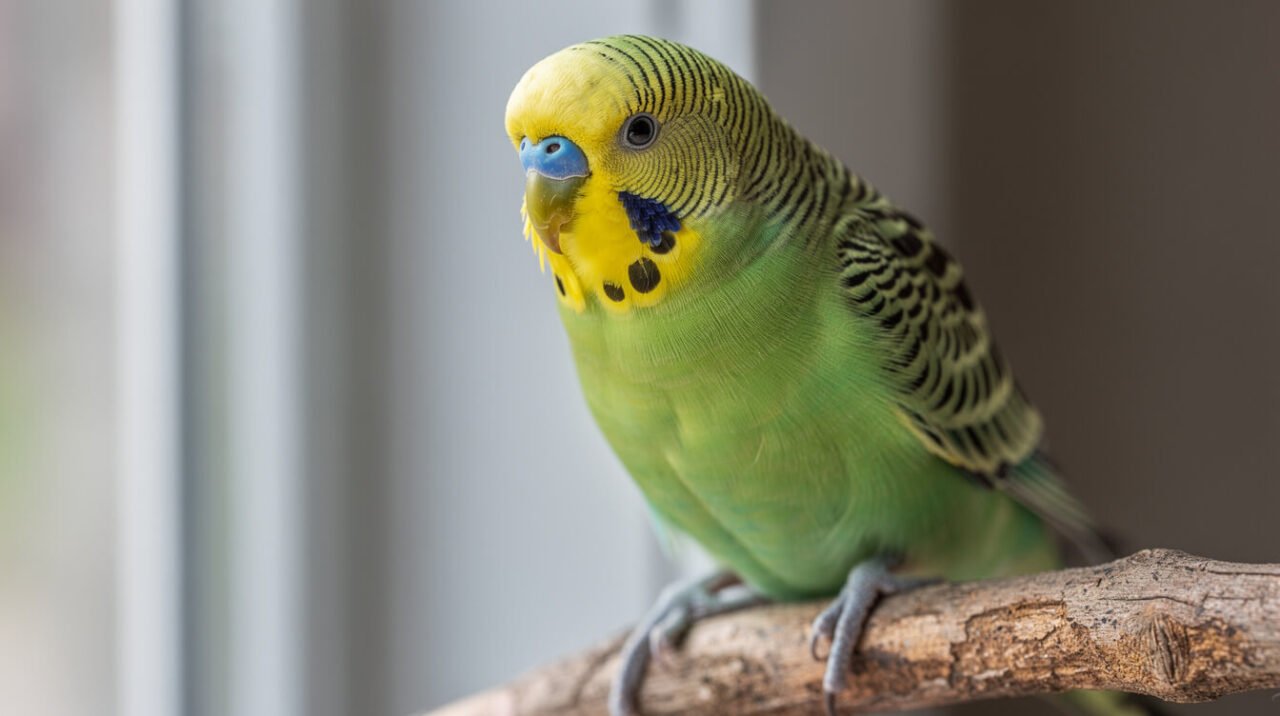
A well-kept pet budgie commonly lives somewhere around 8 to 12 years, some reach their mid-teens, and a few go well beyond that. Plenty of budgies die much younger, mostly from causes that good care can prevent or catch early. The record for a pet budgie is 29 years and 2 months.
That’s the honest summary. The rest of this guide explains why budgie lifespan figures from 4 to 20 get quoted side by side, because which number you believe changes how you plan.
A budgie (budgerigar, Melopsittacus undulatus) is one species, but the figures online describe at least four different things:
- The typical pet, including all the birds kept on seed only, in small cages, near the kitchen, with no vet care.
- The well-kept pet, the bird whose owner reads guides like this one.
- Zoo and breeding-collection records, which are often the only real datasets.
- Record holders, single exceptional birds.
None is wrong, but they answer different questions, and averaging them would hide the most important fact on the page.
Where the budgie lifespan numbers come from

Here’s what the pages people actually land on say, checked in October 2026:
- PetMD’s budgie care sheet (vet-reviewed by Dr. Teresa Manucy, DVM): “10–12 years with proper care.” PetMD’s separate budgerigar facts page says 6–12.
- Long Island Bird & Exotics Veterinary Clinic: “between 7–15 years.”
- Birdfact: “around 5 to 15 years in captivity,” with an average “probably more like 8,” and 6 to 12 as “a more reasonable range.”
- An Australian pet-store fact sheet (Head to Tail Pets): “8–15+ years.”
- The Avian Exchange: 5–10 years.
- The Association of Avian Veterinarians (AAV), in its senior-parrot handout: a median captive life expectancy of 5.5 years and a captive longevity record of 18.
- Guinness World Records: Charlie, hatched in April 1948 and kept by J. Dinsey of Stonebridge, London, who died on 20 June 1977 aged 29 years and 2 months.
So there’s an 18-year record and a 29-year record, and a vets’ median of 5.5 that sounds alarmingly low next to a care sheet’s 10–12. Both puzzles have the same answer, and it’s in the footnote.
The 5.5-year figure is a zoo statistic
The AAV table cites one source: a 2012 study by Young, Hobson, Lackey, and Wright in Animal Conservation, “Survival on the ark.” The authors analyzed more than 83,000 records of parrots held in zoos and other institutions that report to the International Species Information System (ISIS). For budgerigars, their table shows:
- Maximum recorded lifespan: 18.01 years. That’s the AAV’s “18,” and it’s a zoo-records maximum, not the pet record.
- Median lifespan of 4,840 budgies that survived their first day: 0.97 years. In breeding collections, a lot of chicks and juveniles die young.
- Median lifespan of the 819 that reached age four: 5.64 years.
- Median age of the 324 adults still alive in March 2008: 5.20 years.
That’s genuinely useful data, but it describes colony birds in institutions, not one-or-two-bird households. We couldn’t find an equivalent dataset for pet homes, which is why every care sheet’s budgie lifespan range is an informed estimate rather than a measurement.
Wild figures are even less settled. Birdfact says wild budgies live about 4 to 6 years and notes that “there’s little information or data on wild budgie mortality.” The AAV table lists a wild median of 7–15. The evidence can’t reconcile those, so the honest answer is that wild lifespan is poorly studied.
Why the ranges disagree (and why that’s useful)
Dr. Duncan Houston, a veterinarian writing for Ask A Vet, puts it well: “a record is not an average,” and published figures “measure different populations and different outcomes.” Combine that with the zoo numbers and the picture is clear. The low figures average across all budgies, including the many that never get a good diet or vet care. The 10–15 figures describe birds that do. Same species, two very different lives.
So the gap between “5.5” and “12” isn’t uncertainty about biology. It’s roughly how much husbandry is worth to budgie lifespan. The Long Island clinic’s note on budgies is blunt: “Sadly, they have gained a reputation as ‘throw away’ pets because of their affordability.” The birds that reach their teens almost always belong to someone who never treated them that way.
English or American budgie: does it change the budgie lifespan?
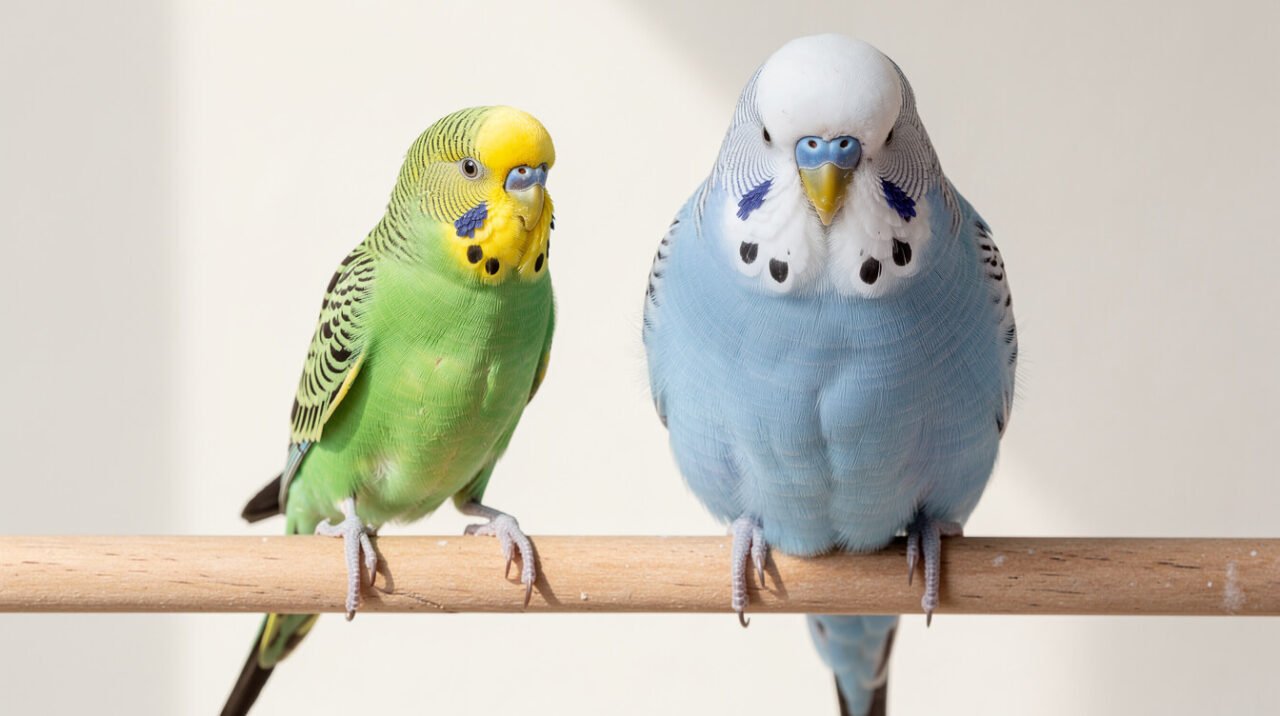
The American (standard or Australian) budgie is the smaller, sleeker bird, close in build to wild budgerigars. The English, or show, budgie has been bred for the show bench: bigger, with a rounder head and much fuller facial feathering. Both are the same species.
Most sources say the English budgie lives shorter:
- Birdfact: American 8–12 years, English 6–9.
- Gomine: English 6–9, American 8–12 in one paragraph and 8–14 in another on the same page.
- Long Island Bird & Exotics: English budgies “often have half the lifespan of the American budgie due to inbreeding.”
The explanation is the same each time: intensive selective breeding for size and feather. That’s plausible and widely believed. Here’s what’s missing, though. We could not find a published study that actually measures English versus American budgie lifespan. Those figures are clinical impressions and breeder experience, not data. And at least one vet explicitly warns against overreading them. Dr. Houston writes that “a fixed individual forecast based only on appearance is not justified.”
What is well documented is that budgerigars as a species carry an unusually heavy tumor burden. In a seven-year retrospective clinic study by Filip and Scope (2002) covering 1,738 parrots, tumors were found in 20.6% of budgerigars against 3.6% of other parrot species. Whether show lines carry more of that burden is a reasonable question nobody has properly answered.
What that means if you’re choosing a bird
Treat type as one factor, not a sentence. An English budgie from a breeder who selects for health, and who can tell you how long their birds’ parents and grandparents lived, may well outlive an American budgie from a crowded store tank. Ask any breeder or rescue about family longevity, tumors in the line, and diet; a good one will be glad you asked. And if you adopt an adult with an unknown history, its future depends on the care it gets from here, not its label.
What takes years off a budgie’s life

No study ranks causes of death in pet budgies, so we won’t invent a league table. But veterinary sources agree on what shortens budgie lifespan again and again, and nearly all of it is preventable or catchable.
1. An all-seed diet
This is the big one, and it connects to a lot of the others. VCA’s veterinarians link a high-fat, all-seed diet to obesity, fatty liver disease (hepatic lipidosis, which “may lead to death”), and lipomas, the benign fatty tumors budgies are prone to. They also link it to goiter, because most seeds are very low in iodine, and to egg binding in females, which “is seen often in pet budgerigars, even those housed alone.” The Long Island clinic says much the same: budgie health problems “often materialize due to an all-seed diet.” (Diet is less simple than “pellets good, seeds bad,” though, so it gets its own section below.)
2. Things in the air
A budgie’s respiratory system is extraordinarily efficient, which is wonderful for flight and dangerous indoors. When non-stick (PTFE, the best-known brand being Teflon) cookware overheats, it releases fumes that kill birds. The Merck Veterinary Manual notes this happens at temperatures reaching 280°C (536°F), as when a pan boils dry. It also says that “often, the only clinical sign” is sudden death, and that small birds “die suddenly with minimal exposure.” VCA adds that birds can be poisoned even when they aren’t in the same room, that budgies are among the most sensitive species, and that cases have been reported even at recommended cooking temperatures.
The sources list more than frying pans: drip pans, waffle irons, clothing irons and ironing board covers, some self-cleaning ovens, heating elements, and heat lamps. Merck also flags aerosols, carpet fresheners, burned plastics, perfumes, candles, and cigarette smoke. VCA says the only reliable prevention is not using PTFE products in a bird home, so switching to stainless steel and cast iron is one of the cheapest ways to protect your budgie’s lifespan. If you ever suspect fume exposure, get your bird into fresh air and call your avian vet or emergency clinic immediately.
3. Tumors, and the limp that isn’t an injury
Budgies commonly develop tumors of the kidneys and reproductive organs. VCA describes one warning sign every keeper should know. Because these tumors can press on the sciatic nerve, they often cause a one-sided lameness that owners mistake for an injured leg. A budgie that suddenly favors one leg, knuckles its toes, or can’t grip a perch on one side needs an avian vet, not a wait-and-see.
4. Too little flight, too much weight
Budgies are built to fly. A bird sitting in a small cage eating seed is set up for obesity. Daily supervised flight in a bird-safe room is exercise, enrichment, and health care at once.
5. Illness caught too late
Birds instinctively hide illness, so by the time a budgie looks sick, it often is very sick. The Long Island clinic lists signs that warrant a vet immediately, adding: “Do not wait overnight, they can be fatal.” Please treat these as same-day signs:
- Sitting fluffed up and quiet, especially at the bottom of the cage
- Tail bobbing, open-mouth breathing, or clicking breaths
- A change in droppings, or eating noticeably less
- Any lump, bump, or swelling, or sudden lameness
This is recognition, not diagnosis. Your job is to notice, and your avian vet’s job is to find out why.
6. Accidents
Open doors and windows, ceiling fans, hot stovetops, standing water, other pets, and worn toy clips or frayed rope all take budgies every year. Supervise time out of the cage and check the room before every flight.
The weekly care guide
Get it right for your animal, every week
One email a week: new care guides, species deep-dives, and the safety answers keepers search for, written by our specialists. No spam. Unsubscribe anytime.
The diet question: where the experts actually disagree

You’ll often read “just switch to pellets.” The reputable sources don’t actually agree on that, and since diet is the biggest lever on budgie lifespan, the differences matter.
- PetMD’s care sheet says a high-quality pelleted diet “should make up 60–70% of a budgie’s diet,” with seeds and millet as treats.
- The Long Island clinic calls seeds “the french fry of the bird world” and says pellets are “the best option.”
- The AAV’s basic-care handout makes a budgie-specific exception: small parrots, “especially budgerigars,” “can have kidney problems on a pelleted-only diet,” so for them AAV recommends free-choice pellets plus meal feeding some seeds each day, with healthy fresh foods making up 25% or less.
- Dr. Houston cautions that “small parrots should not all be forced onto an identical percentage chart.”
They agree on the direction (all-seed is a problem) and disagree on the destination (how far toward pellets). AAV’s caveat is why “100% pellets” isn’t the goal for this species. What they all support:
- Don’t feed seed only. Every source agrees.
- Offer pellets plus fresh vegetables every day, with seed portioned as a measured part of the diet rather than an always-full bowl.
- Convert slowly, with your avian vet. AAV says conversion “can be tricky and should be performed with the help of your avian veterinarian.” Never take away the familiar food and wait for hunger to win. A budgie can starve beside a full bowl of food it doesn’t recognize as food.
- Weigh your bird. A digital kitchen scale that reads in grams is the best early-warning tool you can own. Weekly weights catch a bird that’s eating less, during a diet change or otherwise, long before you’d see it.
- Keep water clean and plain. AAV advises against adding vitamins or supplements to the water unless your vet says to, because they encourage bacterial growth.
Ask your vet what mix suits your bird. Given what’s known about budgie kidneys, that’s the right call, not a cop-out.
How to give your budgie a long life
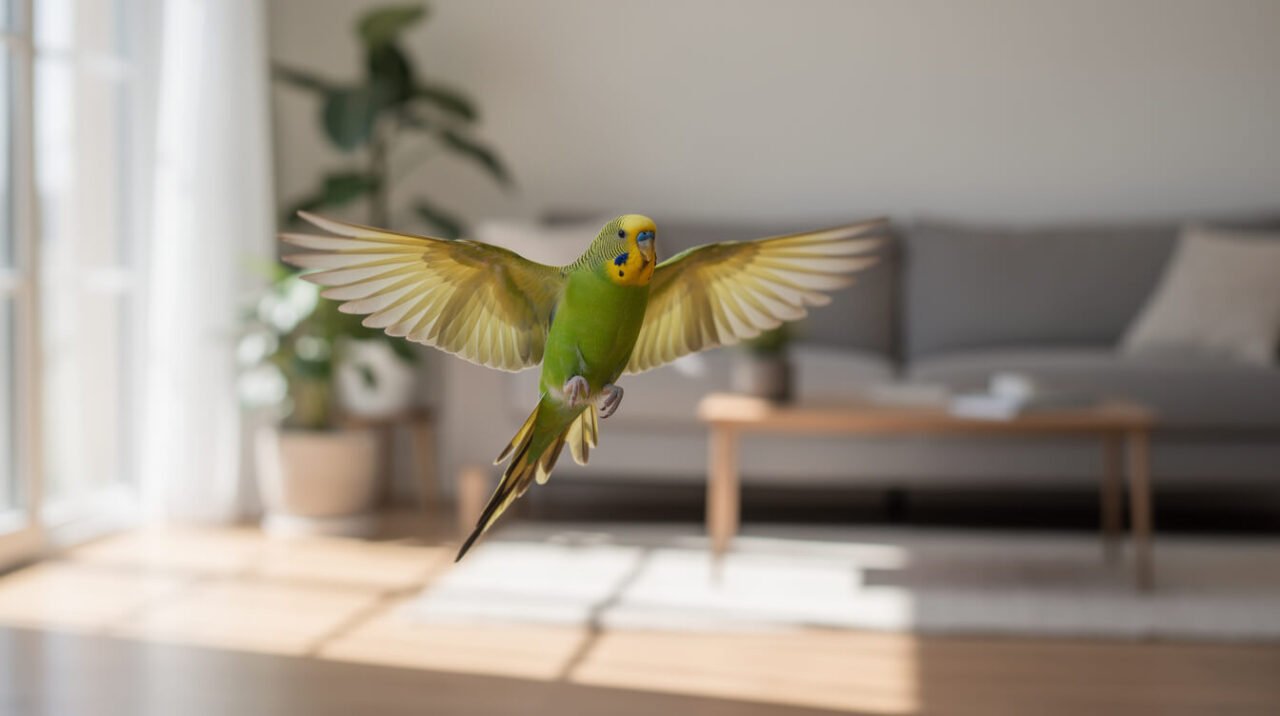
This is the hopeful part: most of what decides budgie lifespan is within your control, and the habits that add years are simple and daily.
Find an avian vet while your bird is well
Avian medicine is its own specialty. A clinic that sees mostly dogs and cats may not have the equipment or experience to treat a 30-gram bird quickly. Find the vet before you need one: the AAV runs a Find-a-Vet tool at aav.org. Ask whether they see budgies regularly and what they do after hours. VCA recommends semi-annual checkups, and a first wellness visit gives your vet a healthy baseline to compare against later.
Space, flight, and a safe setup
Get the biggest cage you can house well, with bar spacing small enough that a budgie can’t get its head through (PetMD specifies ½ inch or smaller), plus daily flight time outside it. Our complete parrot cage guide covers sizing and setup, and the cockatiel cage guide explains why bar spacing and cage size are linked when you’re shopping. For enrichment, our parrot toy guide covers safe materials and what wears out. Vary perch diameters and use natural branches. AAV warns that same-diameter dowels can cause foot sores and that sandpaper perch covers should never be used.
Company
Budgies are flock birds, and loneliness is a welfare problem. A compatible companion, introduced carefully after quarantine, is often the kindest addition. The Long Island clinic is honest about the trade-off: paired budgies tend to bond more with each other than with you. One bird can do well only if you can provide a lot of daily social time. A mirror isn’t a flockmate.
If you’ve read this far, you’re the kind of keeper who notices the small things, and that’s half the battle with a bird that hides how it feels. Our shop is small and openly reptile-biased right now, but plenty of devoted bird people wear the Bearded Dragon Crown Sunglasses King T-Shirt anyway, as a flag for anyone who loves their animal a little more than is strictly normal.
Wear the obsession
For the keeper who reads the footnotes. The Bearded Dragon Crown Sunglasses King tee is our one design right now, and it’s for anyone who takes their animal seriously, scales or feathers.
When you travel
Can a budgie be left alone for three days? Please don’t leave one unchecked. Water dishes get tipped or fouled, a sick bird can go downhill within hours, and, as Dr. Houston points out, a seed dish that looks full may be nothing but empty husks. Arrange a sitter who visits at least daily, knows your bird’s normal behavior and droppings, and has your avian vet’s number and the carrier ready.
Caring for an older budgie
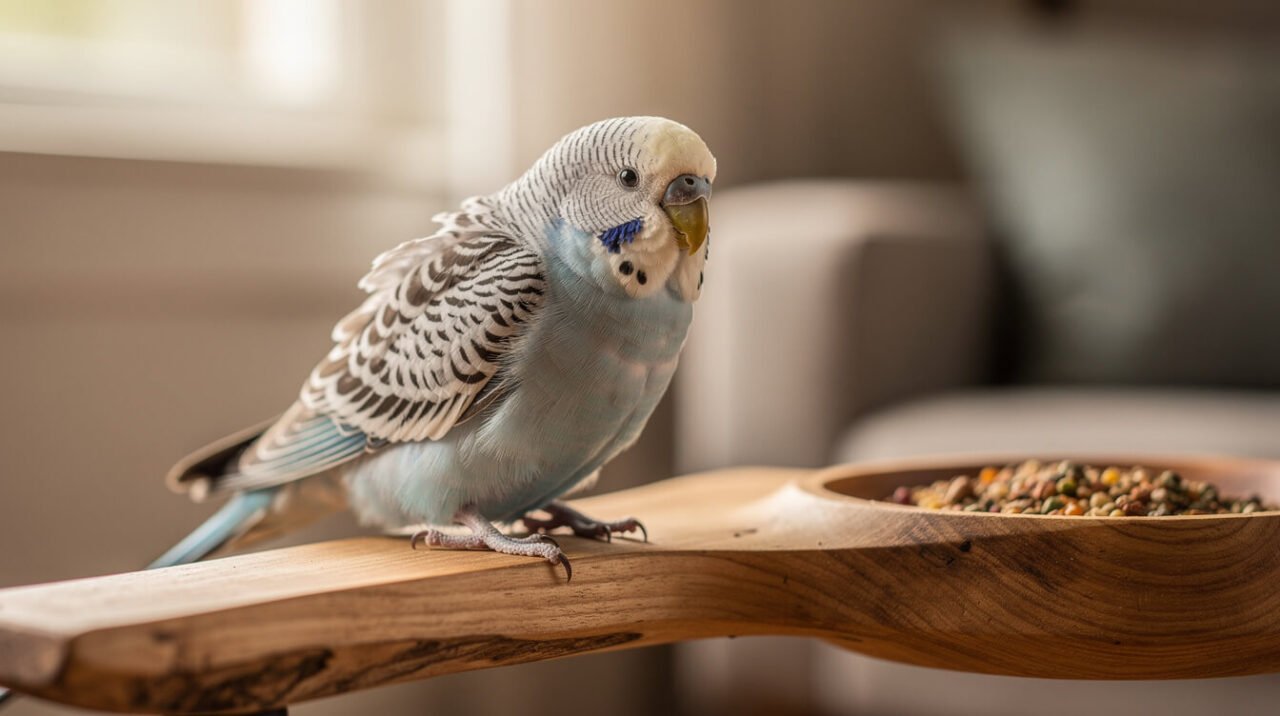
AAV’s handout considers a budgie geriatric from around six years, which surprises owners whose birds still seem young. Senior status isn’t a countdown; it means the risks change, and your care should too.
- More frequent checkups. AAV recommends semi-annual exams once a bird is geriatric, possibly with blood work or imaging to check organ function.
- Watch for small changes. AAV notes that changes in water intake, droppings, eating, or preening can be the first sign something is changing. Birdfact describes the general pattern of old age: more sleep, less energy, quieter, more withdrawn, and eventually some loss of eyesight.
- Keep them moving. Gentle exercise helps protect against the heart and joint problems of age. Encourage short flights, climbing, and foraging.
- Adapt the cage. Wider, flatter, or padded perches help sore feet. Lower perches reduce falls. For a bird with failing eyes, AAV says to keep changes to the layout minimal, especially where food, water, and perches are.
- Don’t write off changes as “just old age.” Lameness, weight loss, a swelling, or a change in breathing in an older budgie still deserves a vet visit, because some of these are treatable or manageable.
When care can no longer keep life good, your avian vet can help you judge quality of life and make end-of-life decisions with compassion.
Budgie lifespan FAQ
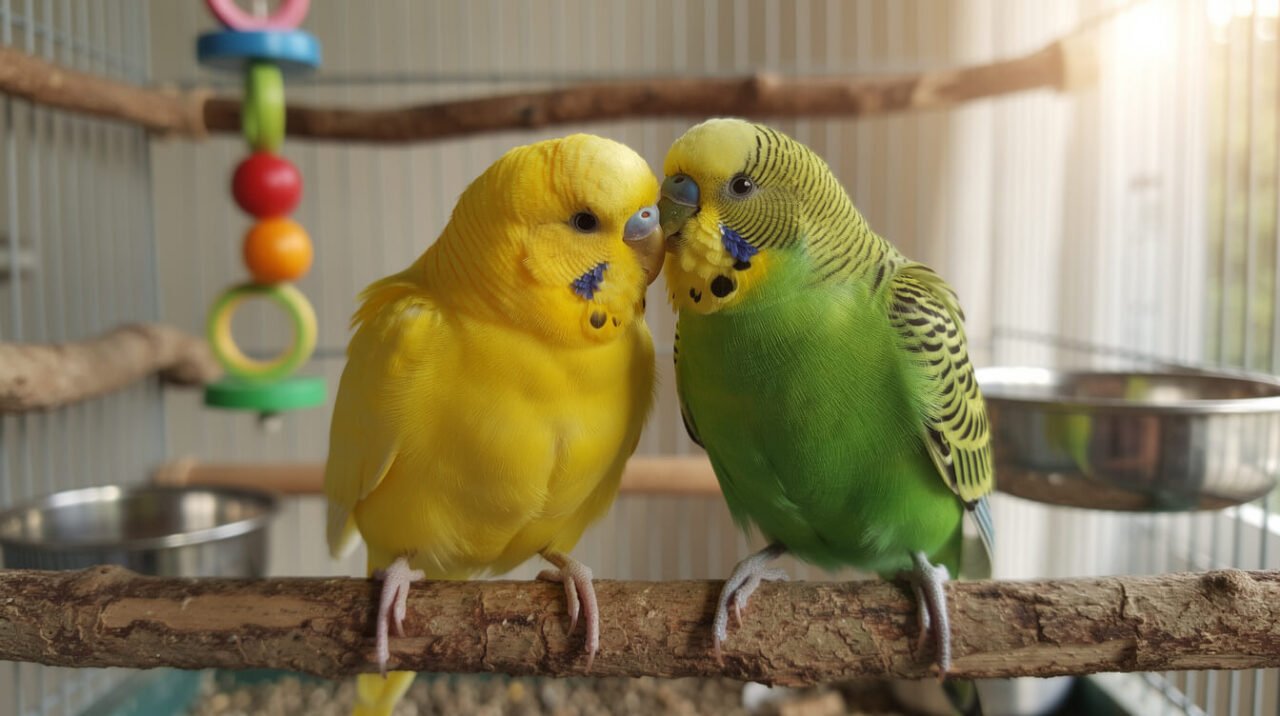
Can budgies live 15 years?
Yes, some do, and a few live far longer. The Guinness record is 29 years and 2 months, and the zoo-records maximum in Young et al.’s dataset is 18. But 15 is a long budgie lifespan, not a guaranteed average. Plan for a decade or more and be glad of every year past that.
What is the most common cause of death in budgies?
There’s no large survey of pet budgie deaths to settle this. In the veterinary literature, though, tumors, particularly kidney tumors, come up repeatedly as one of the most common single causes of death in budgerigars, and clinic studies find tumors far more often in budgies than in other parrots. Among the preventable causes, diet-related disease, airborne toxins like PTFE fumes, and accidents are the ones vets warn about most.
Is 10 old for a budgie?
By AAV’s definition a 10-year-old is a senior, and it’s also an age many well-kept budgies reach and pass. Give it senior-level care and expect that it may still have good years ahead.
How can I tell how old my budgie is?
Only roughly, and only while it’s young. In typically marked budgies, youngsters have dark barring running down the forehead to the cere and solid dark eyes. After the first molt, usually within the first few months, the forehead barring recedes and a pale iris ring appears. Some color mutations don’t show these markers clearly. Once a budgie is an adult, no reliable outward sign gives its age, so a breeder’s hatch record is worth asking for.
Do budgies live longer in pairs?
We couldn’t find evidence measuring that directly. But companionship is a real welfare need for a flock species, and a less stressed, more active bird is a healthier one. Get a second budgie for the bird’s quality of life, not as a lifespan guarantee.
Curious how budgies compare with other pets? A grey parrot can live for decades (see our grey parrot care guide), and the white-faced cockatiel is a close small-parrot cousin. Across species, the same story keeps showing up, from how long ball pythons live to axolotl lifespan: the published average is a starting point, and care decides the rest.
Final thoughts
The budgie lifespan numbers disagree because budgies live very different lives depending on who keeps them. The 5.5-year median traces back to zoo and institutional records, not pet homes, and in those collections many birds never reached adulthood. The 10-to-15-year figures describe budgies whose people fed them well, kept their air clean, let them fly, and got them to an avian vet early. Charlie’s 29 years show how far the ceiling goes.
No honest guide can promise your budgie a particular age. But most of what decides budgie lifespan comes down to small daily choices: a balanced diet, a pan swapped out, a weekly weigh-in, a vet you found before you needed one. Your budgie gets one small, bright life. You’re already doing the most important thing, which is learning how to make it a long one.
Before you go
Keep learning your animal
We publish a new guide every day. The best of them land in one short weekly email, so you never miss the one about your species.
Emily Chen is a passionate avian specialist with over a decade of experience in nurturing and training birds of all feathers. From the melodious canaries to the intelligent parrots, Emily’s expertise spans a wide range of avian care, including diet, habitat setup, and behavioral training.