Chinchilla Dust Bath: How Often, How Long, and When to Throw the Dust Out
Watching a chinchilla dust bath for the first time is one of the great small joys of keeping these animals: a flop, a spin, a cloud of gray, and a chinchilla who comes out looking twice as fluffy as she went in. It is also one of the most argued-over parts of chinchilla care. Look up how often, how long, or what to put in the bowl and you will get confident answers that disagree with each other, sometimes from two respected sources on the same page of results.
So here is what’s actually true, and how to do it right. We’ve gone through the veterinary references, an exotic-mammal veterinarians’ association handout, and the most-read care pages, put their numbers side by side, and worked out why they disagree. The short version: a dust bath is not optional, water is never the substitute, and most of the “conflicting” advice turns out to be people measuring different things.
Why a chinchilla dust bath replaces water, every time
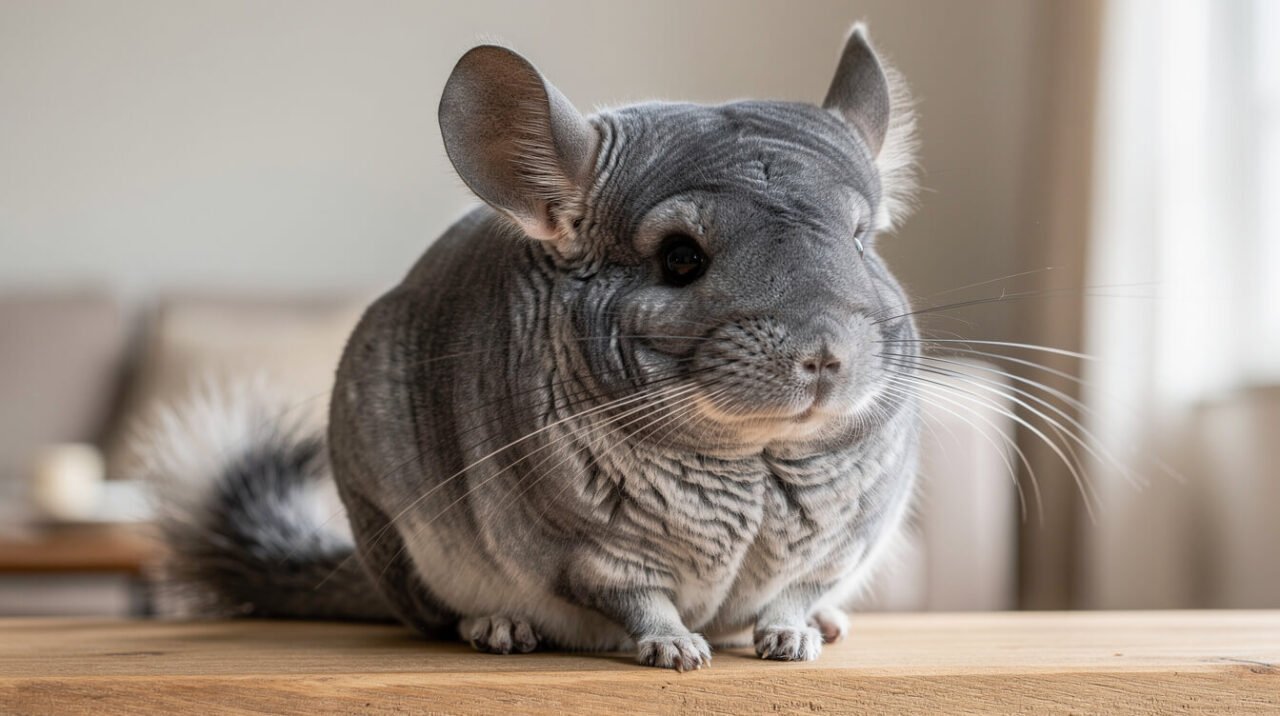
Wild chinchillas live in barren, rocky country high in the Andes of northern Chile, at roughly 3,000 to 5,000 meters, according to the Merck Veterinary Manual. It is cold, dry, and dusty up there, and chinchillas evolved to keep clean by rolling in fine volcanic dust rather than in water.
The reason is the coat. Most mammals, us included, grow one hair from each follicle. A chinchilla grows dozens. The exact figure depends on who you ask: PetMD says up to 60, Oxbow’s veterinary technician writes 60 to 70, the Association of Exotic Mammal Veterinarians says as many as 60 to 75, and several retailers say 80. Whatever the true count, the result is fur so dense that it holds moisture against the skin and dries very slowly. Wet fur can mat and leave the skin open to bacterial and fungal trouble, and Oxbow names skin infection and dermatitis specifically.
Dust does the job water can’t. It soaks up excess oil and moisture, lifts dirt out of the coat, and leaves the fur dry, separated, and soft. It is also a real behavioral need. The rolling and flipping is instinct, and for a lot of chinchillas it is clearly the best few minutes of the day.
What about a sticky patch or a spill?
If something sticky gets onto the coat, a damp cloth on the surface of the fur is about as far as water should go. Never soak, never shampoo, never dunk. If your chinchilla does get properly wet (a fall into a water bowl, an accident during cleaning), dry her gently with a towel, keep her somewhere comfortably cool and draft-free, and call an exotics vet for advice. Dense fur that stays damp is exactly the problem dust baths exist to prevent.
How often your chinchilla needs a dust bath
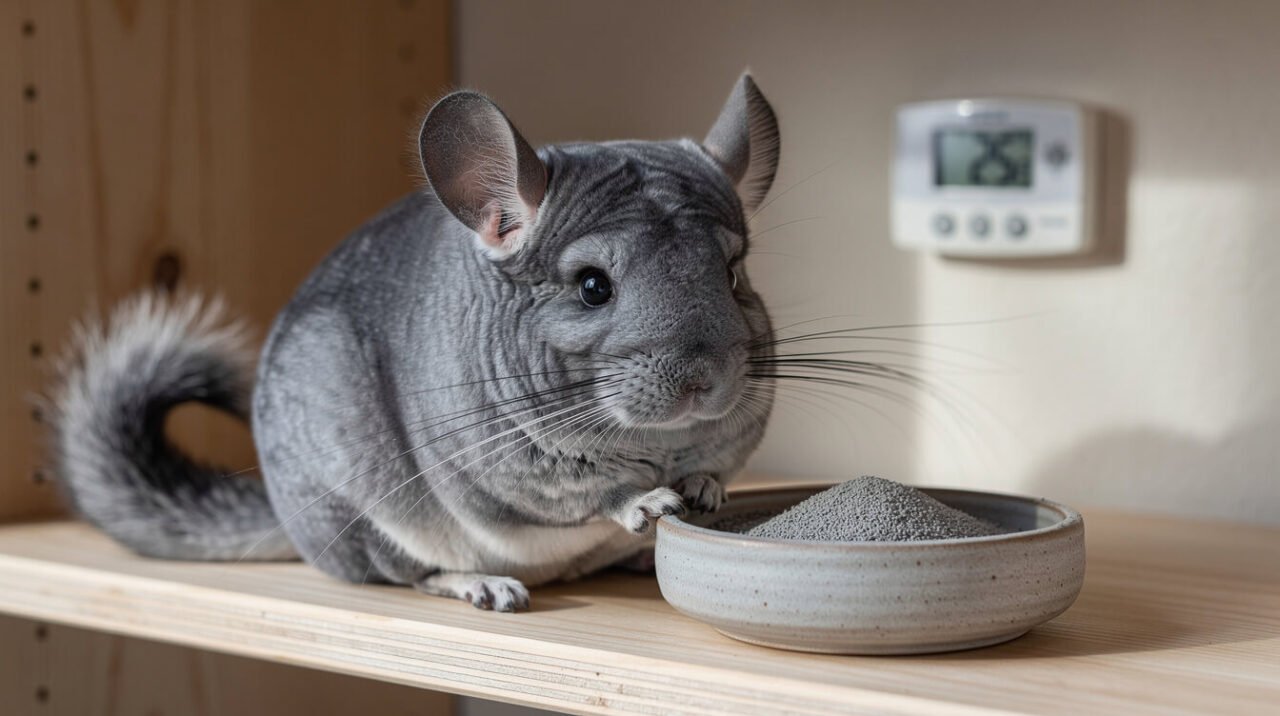
Here is the first place the sources split:
- Merck Veterinary Manual: 2 to 3 times a week.
- Association of Exotic Mammal Veterinarians (AEMV): 3 to 4 times a week.
- PetMD (written by a veterinarian): 2 to 4 times a week, with once weekly acceptable in some cases.
- Oxbow: 2 to 4 times a week, closer to 4 in hot or humid weather and closer to 2 when it’s cold or dry.
Put together, that’s a range of two to four sessions a week, and Oxbow’s note explains most of the spread. How often a chinchilla needs to bathe depends on how much moisture and oil her coat is dealing with, and that depends on the room she lives in. A chinchilla in a dry, air-conditioned apartment and one in a muggy summer house are not on the same schedule.
Read the coat, not the calendar
Start in the middle, around three times a week, and let the animal tell you which way to adjust:
- Bathe a little more often if the fur looks greasy or clumped, separates into tufts instead of standing up soft, or feels slightly damp. Sticky-looking patches are a sign too.
- Bathe a little less often if you see dry, flaky skin, or dry-looking ears and feet. Oxbow lists those three as the signs of over-bathing.
- Watch the eyes. If they look red or irritated after baths, cut back and read the over-bathing section below, because eye trouble isn’t always the dust.
The bath can’t fix a room that’s too warm
This is the point most dust-bath guides miss. If the coat is going greasy and matted, the room may be the problem, not the bathing schedule. Merck notes that chinchillas develop matted fur when kept warm (above 80°F) and humid, and gives a simple danger check: add the temperature in °F to the relative humidity in percent, and treat anything over 150 as dangerous. The AEMV recommends a cool, dry room, ideally 50 to 68°F with humidity under 40%, and says to keep chinchillas away from temperatures above 72°F. Chinchillas are vulnerable to heat stroke. If your room is running warm, adding extra baths treats the symptom, while fixing the room protects the animal.
How long to leave a chinchilla dust bath in
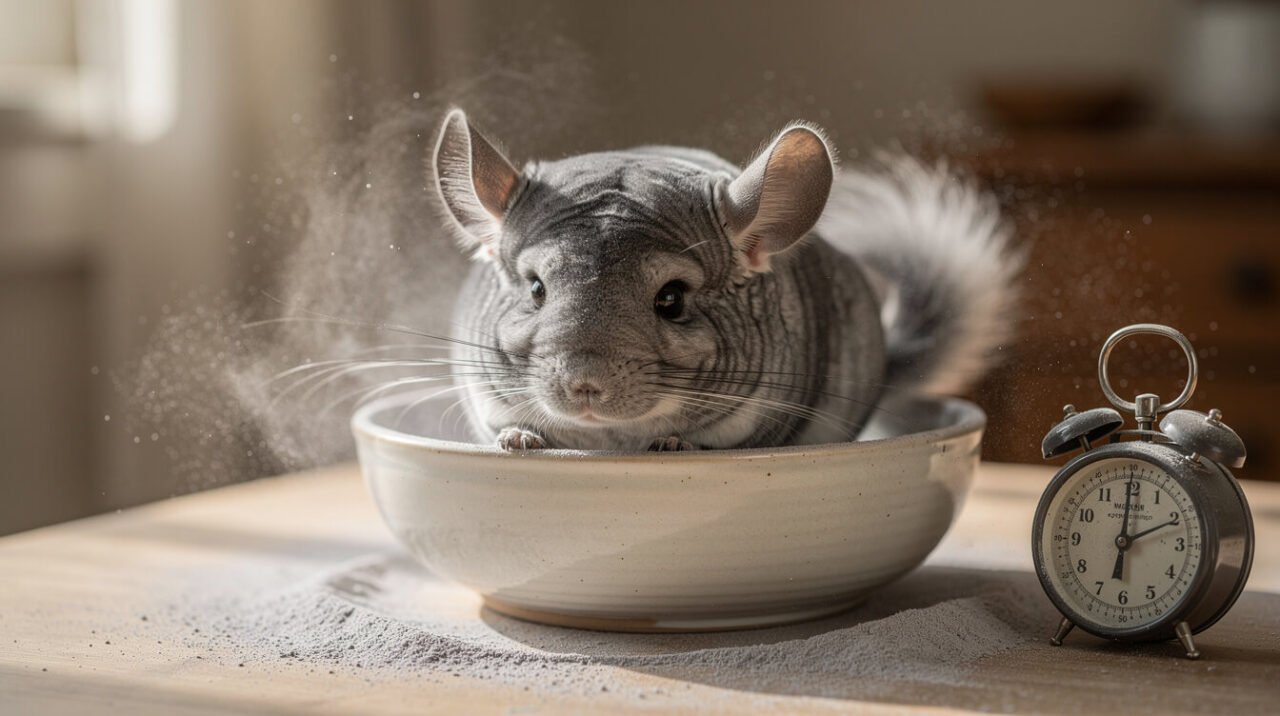
If the frequency advice disagrees a little, the duration advice disagrees a lot. Here is what the main sources actually say:
- Oxbow (veterinary technician): 3 to 5 minutes is typically enough.
- Kaytee and HayDay: around 5 to 10 minutes.
- Pet Supplies Plus: 10 to 15 minutes.
- Merck Veterinary Manual: up to 15 minutes at a time.
- PetMD: 10 to 30 minutes, and always remove the container after 30.
That’s a tenfold spread, from 3 minutes to 30. It isn’t a disagreement about chinchilla biology. The sources are measuring two different things. The short figures describe the bath itself: a healthy chinchilla does her rolling in a few energetic minutes and then stops. The long figures describe how long the container may stay available before it has to come out. PetMD’s 30 minutes is a hard limit, not a target.
A practical rule that satisfies all of them
- Offer the bath and watch.
- When the rolling stops and she starts sitting in it, nibbling at it, or using it as a lounge, the bath is over. For most adults that’s somewhere in the 3 to 10 minute window.
- Take the container out then. Don’t go past 15 minutes (Merck’s ceiling), and never past 30 under any circumstances.
Leaving the chinchilla dust bath in is how problems start. Kaytee, Oxbow, and Pet Supplies Plus all warn that a dust bath left in the cage gets used as a litter box, and chinchillas with all-day access tend to over-bathe and dry their skin out.
The under-one-year exception
PetMD flags something easy to miss: very fine dust can irritate the nose and eyes, especially in chinchillas younger than a year, and recommends limiting young chinchillas to three or four minutes per bath. If you’ve just brought home a kit, keep baths short and gentle for the first year, and treat any sneezing or watery eyes as a reason to call your vet rather than something to push through.
Dust or sand? The contradiction on page one
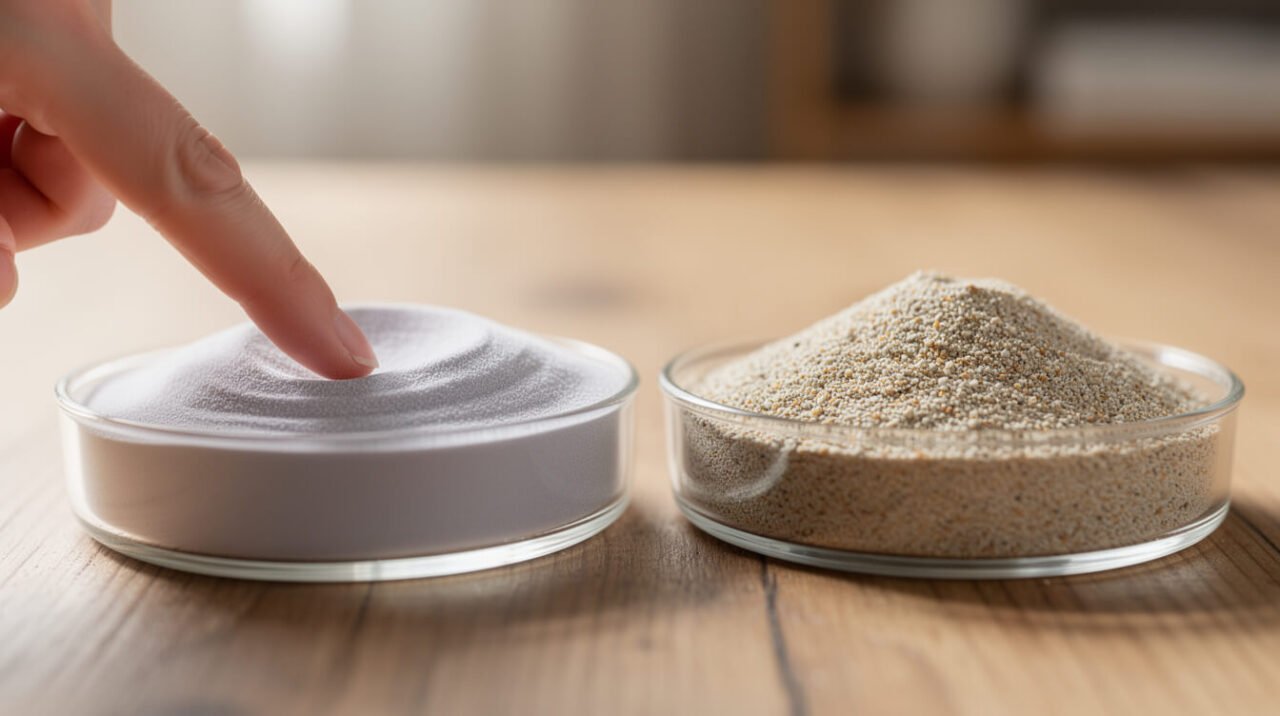
This is the chinchilla dust bath question that confuses new keepers most, and the sources really do contradict each other.
PetMD says: “Don’t use sand or sand-like products that are not designed for chinchilla dust baths. These products can be too abrasive and lead to skin, eye, or respiratory issues.” Oxbow goes further: sand absorbs oil poorly, and its grains can lodge at the base of the hairs and irritate the skin. Then Kaytee calls its own Chinchilla Bath Sand, made from volcanic pumice, “the superior option” to dust.
Two things are worth knowing before you pick a side. First, Kaytee makes and sells both the dust and the sand, and Oxbow makes dust, so both are manufacturers describing their own product category. That doesn’t make either one wrong, but it’s context PetMD’s veterinarian doesn’t have to carry. Second, the word “sand” is doing three different jobs in this argument:
- Play sand, builder’s sand, craft sand, and reptile or other-animal substrates. Every source agrees: never. They’re too coarse, they don’t clean the coat, and they aren’t made for an animal that buries its face in them. Oxbow says to avoid dust-like products packaged for other species too, however similar they look.
- Products sold as chinchilla “bath sand.” These are generally coarser-ground pumice, the same family of material as many dusts, just a bigger grain. This is where the experts genuinely split. A UK veterinary review (Saunders, 2009, cited by HayDay) allows fine-ground pumice or silver sand, while PetMD and Oxbow lean firmly toward fine dust.
- Chinchilla dust. Merck describes most commercial bathing dusts as powdered pumice or aluminum silicate. PetMD lists volcanic ash, pumice, kaolin, and silver sand, and describes good dust as feeling “soft, smooth, and silky.”
How to choose without a particle-size chart
We’d love to give you a micron figure that separates “dust” from “sand.” Manufacturers don’t publish comparable particle specifications, and we’re not going to make one up. Here’s what we’d do instead:
- Buy a product labeled specifically for chinchillas, with the ingredients listed.
- Rub a pinch between your fingers. It should feel silky, like flour or talc, not gritty.
- Avoid anything with added fragrance or chemicals.
- If your chinchilla sneezes, squints, or seems irritated on a new product, stop using it and ask your exotics vet before trying another.
Fine, chinchilla-specific dust is the choice no reputable source objects to. If you’re unsure, start there.
The weekly care guide
Get it right for your animal, every week
One email a week: new care guides, species deep-dives, and the safety answers keepers search for, written by our specialists. No spam. Unsubscribe anytime.
Setting up the bath: container, depth, and a calm spot
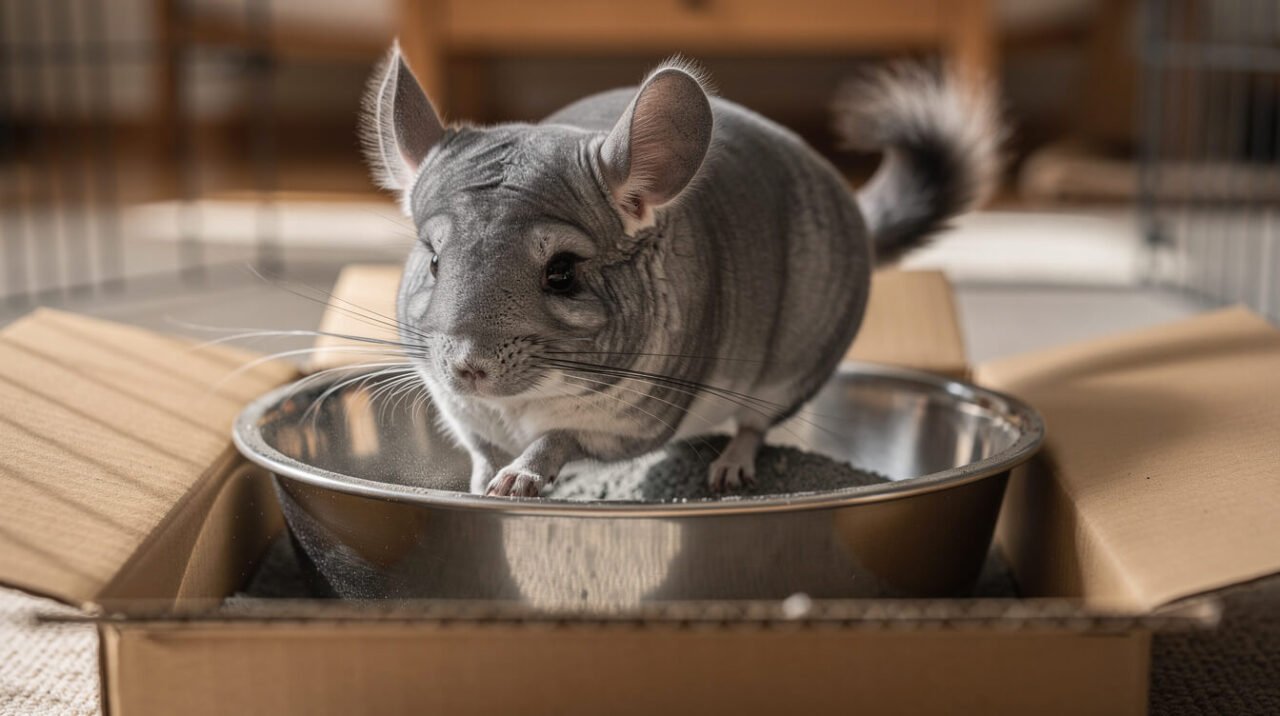
The setup for a chinchilla dust bath is simple, and the main thing is that it’s stable. Here’s what the sources agree on:
- Size: a little bigger than your chinchilla, so she can roll and flip without hitting the sides. The AEMV’s housing checklist allows a dust-box space of about 6 × 6 × 9 inches (15 × 15 × 23 cm).
- Weight: heavy and tip-resistant. A stainless-steel bowl, a heavy ceramic dish, a small glass fishbowl, or a purpose-made bath house all work. Avoid flimsy plastic she can chew.
- Depth: about an inch of dust. Merck, Oxbow, and PetMD all say roughly one inch, and Oxbow points out that’s enough for full coverage. Deeper just means more dust in the air.
Open bowl or enclosed bath house?
Yes, this is another split. PetMD wants an open top, because a fully enclosed container can trap moisture against the skin. Kaytee recommends an enclosed bath house, because it contains the mess and keeps the chinchilla in full contact with the dust. Oxbow says both are fine as long as the container is stable. Our take: either works when the session is short and the container comes out afterward. If you use an enclosed house, make sure it has a wide opening and isn’t left in the cage between baths.
For the mess, set the bowl inside an open-topped cardboard box (PetMD’s trick), offer the bath in the evening when chinchillas are naturally most active, and do it somewhere calm. When the bath is done, let her hop out on her own or lift her out gently. Merck notes that rough handling can trigger “fur slip,” where a frightened chinchilla releases a whole patch of fur, which can take months to grow back.
The real reward here is watching an animal do exactly what it evolved to do, and loving that is a big part of keeping chinchillas. Our shop is small and reptile-first at the moment, with one design: the Bearded Dragon Crown Sunglasses King T-Shirt. If your house has a bearded dragon living alongside the chinchilla, it was made for you.
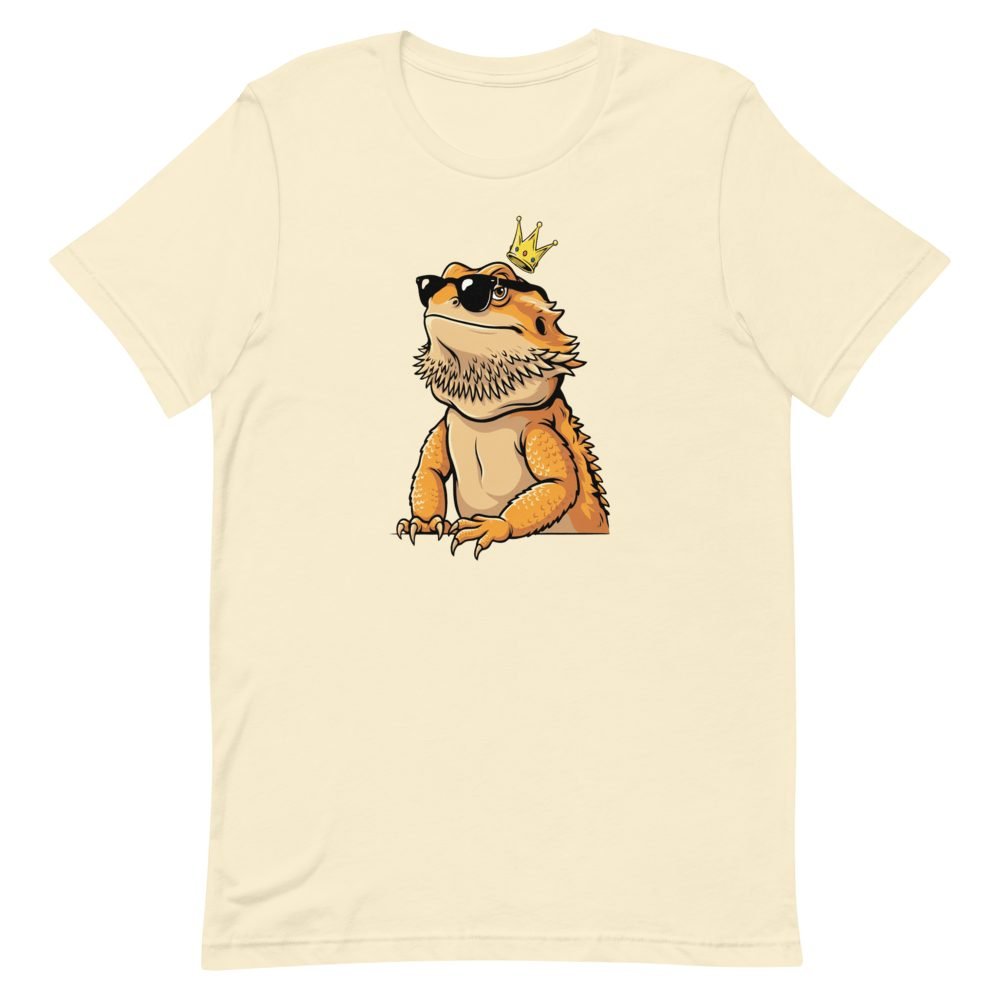
Wear the obsession
The Bearded Dragon Crown Sunglasses King T-Shirt, our one design so far: reptile-keeper humor for the multi-species household. If a bearded dragon shares your home with the chinchilla, this one’s for you.
If you have a dust-sensitive human in the house
PetMD notes that chinchilla dust is generally safe for people but can irritate the airways of sensitive individuals with heavy exposure. If that’s you or someone you live with, offer the bath in a well-ventilated room, step back while it’s in progress, and consider gloves and a dust mask when you’re pouring or sifting. A room air purifier helps with the haze that settles afterward.
Keeping the dust clean: sift, replace, and never share
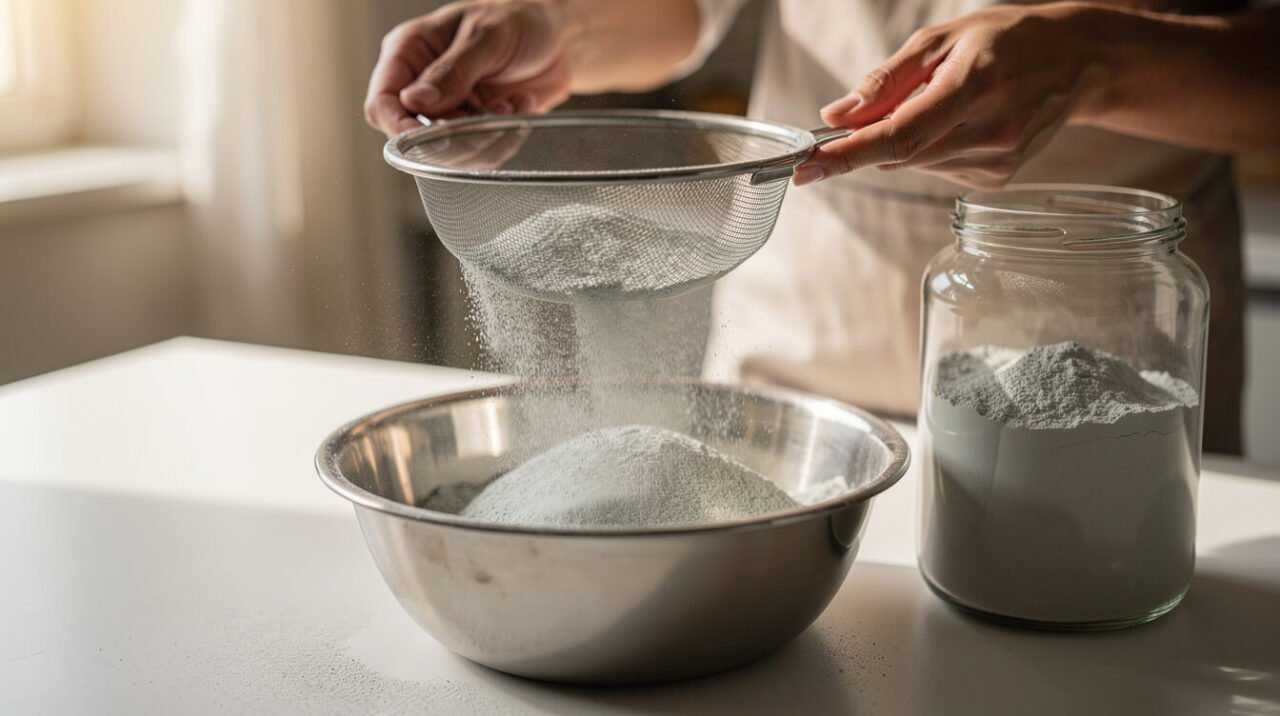
You don’t need fresh dust for every chinchilla dust bath. Oxbow says reuse is “perfectly acceptable,” and Pet Supplies Plus agrees as long as you remove waste. But the sources differ on when to throw it out: PetMD and Oxbow say when it turns thick, clumpy, or soiled, while HayDay says at least once a week no matter what. A routine that covers both:
- After each bath: pick out droppings and any urine clumps. A fine kitchen sieve kept just for this makes it quick.
- Store it covered between baths, outside the cage, in a lidded jar or tub. PetMD notes that keeping it out of the enclosure is what keeps it usable.
- Throw it out as soon as it clumps, smells, looks gray and greasy, or has been soiled. If you’re unsure, a weekly full change is a sensible default.
One bowl of dust per chinchilla household
This is the hygiene point almost nobody makes: don’t pass the same dust between chinchillas who don’t already live together. According to Merck, chinchillas can carry ringworm (dermatophytosis, a fungal skin infection) without showing any signs, reinfection from the environment happens, and ringworm is contagious to other animals and to people. A shared dust bath is an easy way to pass along something nobody knew was there. Give a new arrival in quarantine its own container and its own dust, and do the same for a visiting or boarded chinchilla. One pumice maker gives the same advice against rotating dust between cages. Merck’s note about silent carriers is the reason to take it seriously.
If you spot small, scaly bald patches on the nose, behind the ears, or on the front feet (the places Merck lists), that’s a vet visit, both for your chinchilla’s sake and for the people who handle her.
Signs of over-bathing, and why red eyes aren’t always the dust
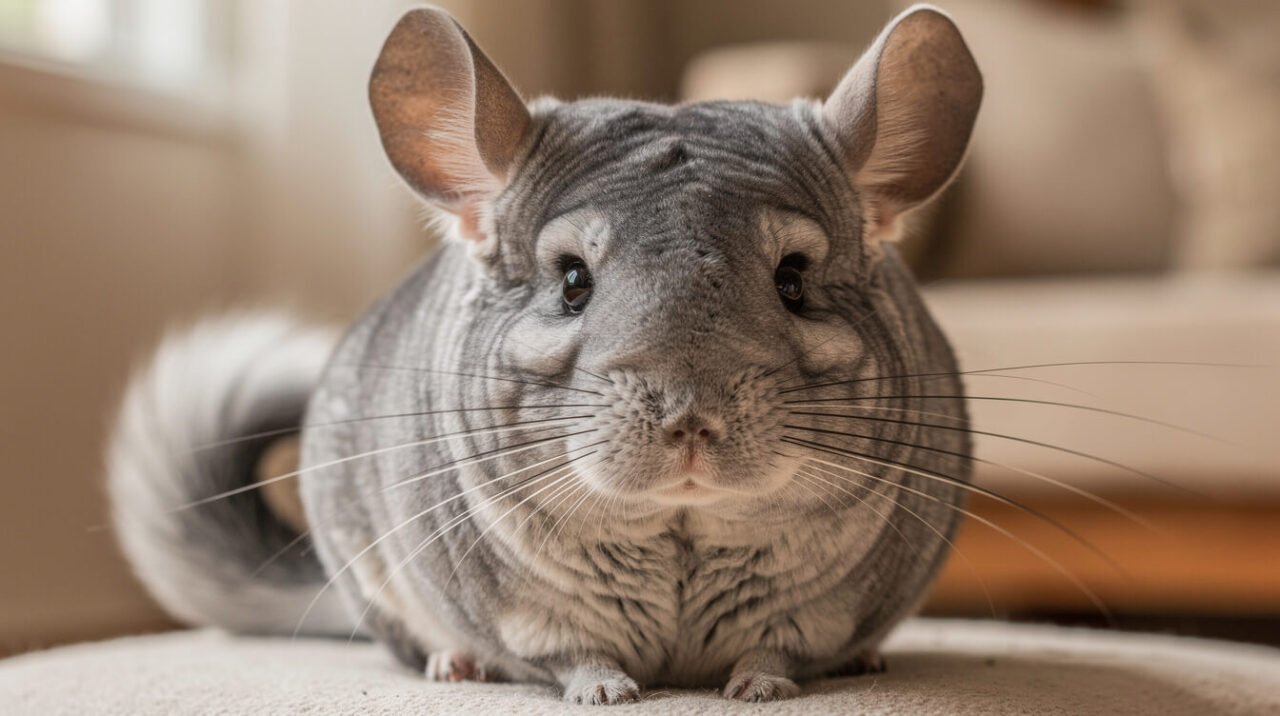
A chinchilla dust bath is good for her, and too many of them are not. Merck is specific about the harm: bathing too often irritates the eyes and causes conjunctivitis, typically without the other signs of a respiratory infection, and excessive dust bathing can damage lung tissue. Oxbow adds dry skin, dry feet, and dry ears.
Watch for:
- red, watery, squinting, or crusty eyes
- sneezing or nasal discharge after baths
- flaky skin, or dry, cracked-looking ears or foot pads
- scratching more than usual after a bath
- bald patches, broken fur, or a scruffy coat
Here’s the nuance that matters most. Eye trouble after a dust bath is not automatically dust irritation. In a 2017 study in the Journal of Small Animal Practice of 49 chinchillas with bacterial conjunctivitis, half the bacteria isolated were Pseudomonas aeruginosa. Merck calls it the most important pathogen in chinchillas and notes that conjunctivitis is a common early sign of a Pseudomonas infection, which can go on to affect the whole body. The study also found that history and physical signs couldn’t tell the different bacterial causes apart. A vet needs to look at it.
When to call the vet: any eye discharge or swelling that doesn’t clear within a day of stopping baths, any breathing change, bald or scaly patches, or a chinchilla who is quieter, eating less, or producing fewer droppings. Chinchillas hide illness well. See a veterinarian experienced with exotic companion mammals, and don’t try to treat an eye or skin problem at home from an article, including this one.
The AEMV recommends an annual exam for every chinchilla. Find an exotics vet while your chinchilla is healthy so you aren’t searching for one in an emergency. If you keep other small mammals too, our rabbit care guide and guinea pig care guide cover the same find-the-vet-first habit for those species.
Chinchilla dust bath FAQs
Can I leave a dust bath in my chinchilla’s cage?
No. Every source we reviewed says to take it out after the session. Left in, it gets used as a toilet, and constant access leads to over-bathing, dry skin, and eye irritation. ChillDust, a pumice maker, says its dust can be left in for free-choice use but will need cleaning and changing often. That’s the one outlier, and it comes from a product page.
How long can a chinchilla go without a dust bath?
PetMD’s vet says more than a week without one can lead to excess oil and skin irritation. If you’ll be away, the person caring for your chinchilla needs to offer baths too, along with fresh hay, water, and a check that the room isn’t getting too warm.
My chinchilla won’t use the dust bath. What should I do?
Try a different container first, because a wider, more stable bowl often makes the difference. Then try a different time (evening), a quieter spot, or a brand with a different texture. A chinchilla who used to bathe happily and has stopped is a different case. A change in normal behavior is worth mentioning to your vet, especially alongside any change in appetite or droppings.
Do two chinchillas need two dust baths?
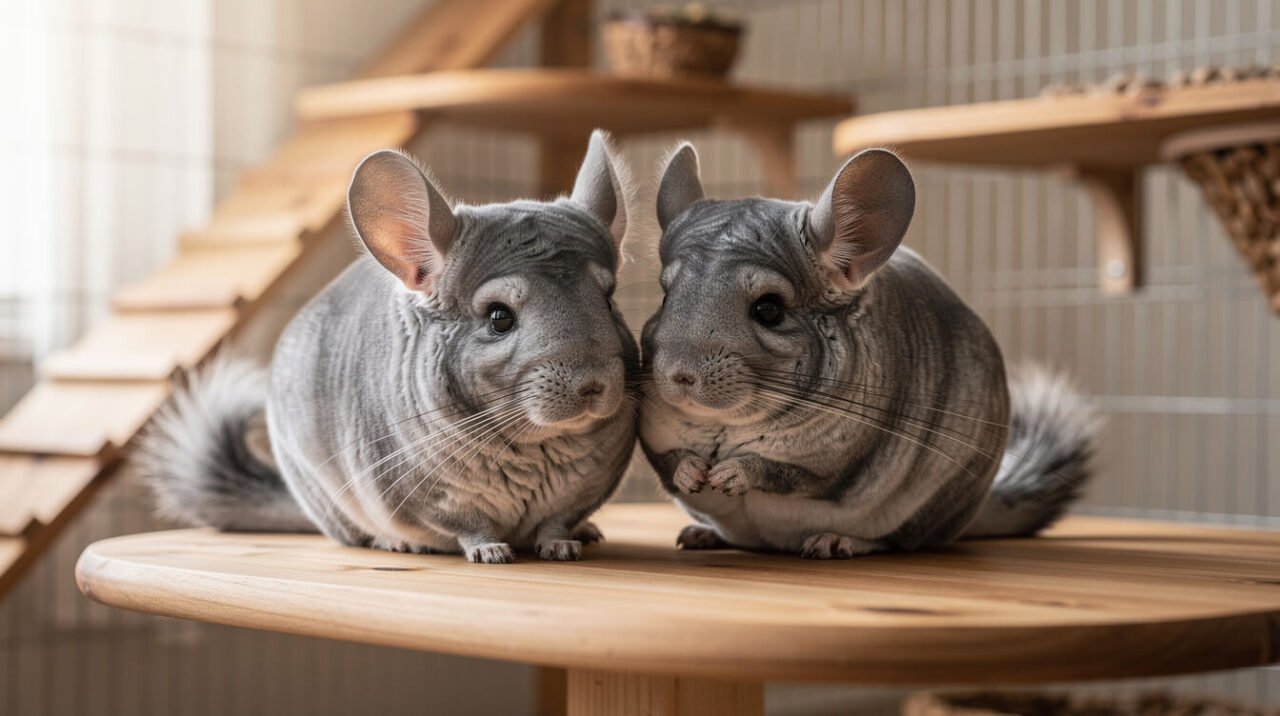
A bonded pair who live together can share a bath, and many enjoy bathing together. Just make the container big enough for both and watch for squabbling. What you shouldn’t share is dust between chinchillas from different households or cages, for the ringworm reason above.
Is chinchilla dust safe for degus, gerbils, or hamsters?
Several other dry-climate rodents also enjoy dust bathing. Needs vary by species, though, so check species-specific guidance or ask your vet rather than assuming a chinchilla routine fits. If you’re still deciding which small exotic suits your home, our roundup of underrated pets that make great companions and our guide to Patagonian cavies (another South American rodent with its own special requirements) are good next reads.
Final thoughts
A chinchilla dust bath really is as simple as a sturdy bowl, an inch of fine chinchilla-specific dust, a few minutes of happy chaos, and then putting it away. The conflicting numbers online mostly come from sources measuring different things or writing for different climates. The coat and the eyes are the real guide: greasy fur means a little more often, flaky skin means a little less, and irritated eyes mean a vet looks, not a guess.
Get the room cool and dry, keep each chinchilla household’s dust to itself, and enjoy the show. Understanding why she needs it is how you keep it good for her.
Before you go
Keep learning your animal
We publish a new guide every day. The best of them land in one short weekly email, so you never miss the one about your species.

Alex Johnson stands at the forefront of exotic pet expertise, with a particular affection for the misunderstood beauty of tarantulas. With years of experience caring for a range of unique animals, from sugar gliders to chinchillas, Alex brings a wealth of knowledge to the exotic pet community.