Can Dogs Eat Cornbread? What 271 Store Labels Show, and the Add-Ins That Change the Answer
Can dogs eat cornbread? A small bite of plain, fully baked cornbread is generally fine for a healthy dog. It isn’t toxic, and it isn’t a treat that does them any good either. The trouble is that holiday cornbread is rarely plain. It’s jalapeño-cheddar, honey-buttered, baked in bacon drippings, or crumbled into dressing with onions. Those versions are a different answer.
Most guides stop at “plain is okay, avoid toxic add-ins.” We wanted to know how often the add-ins are already in the box, so we went through the ingredient lists of 271 store-bought cornbreads, corn muffins, and cornbread mixes in the USDA’s branded food database. Then we worked out what a real square of cornbread means for a 10-pound dog versus an 80-pound one. Here’s what’s actually true, and how to share safely if you want to.
Can dogs eat cornbread? The short answer
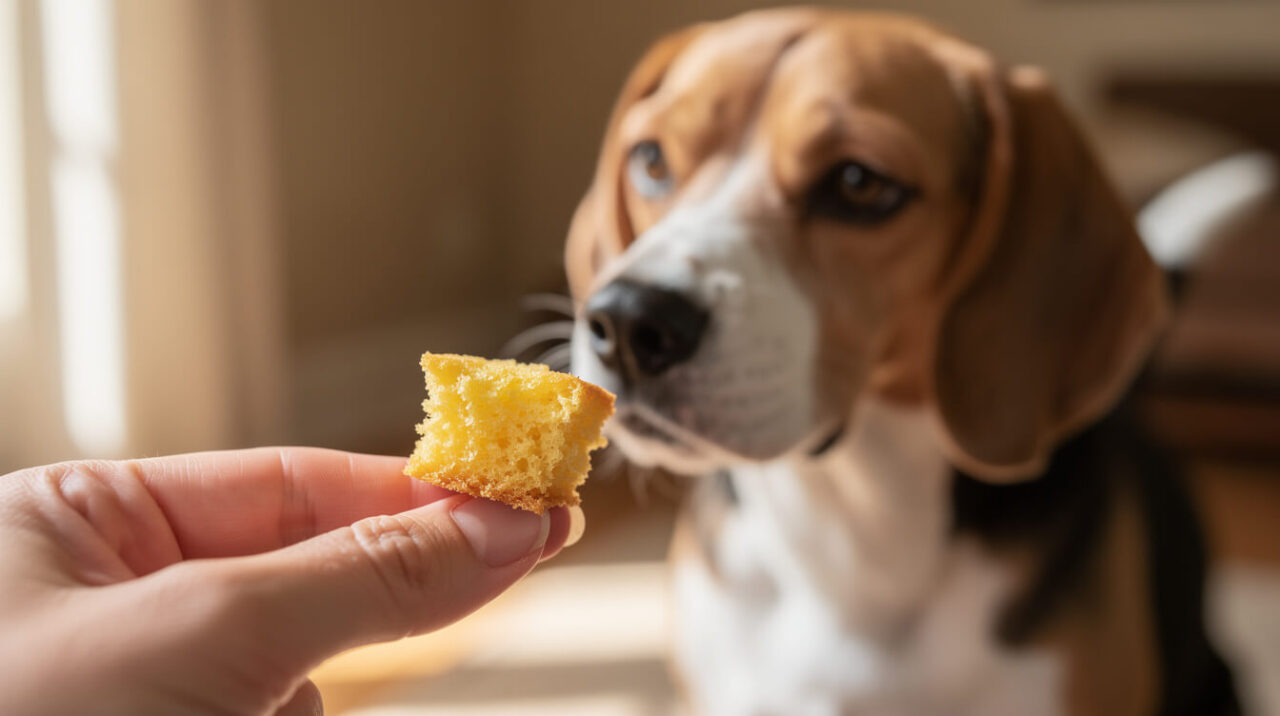
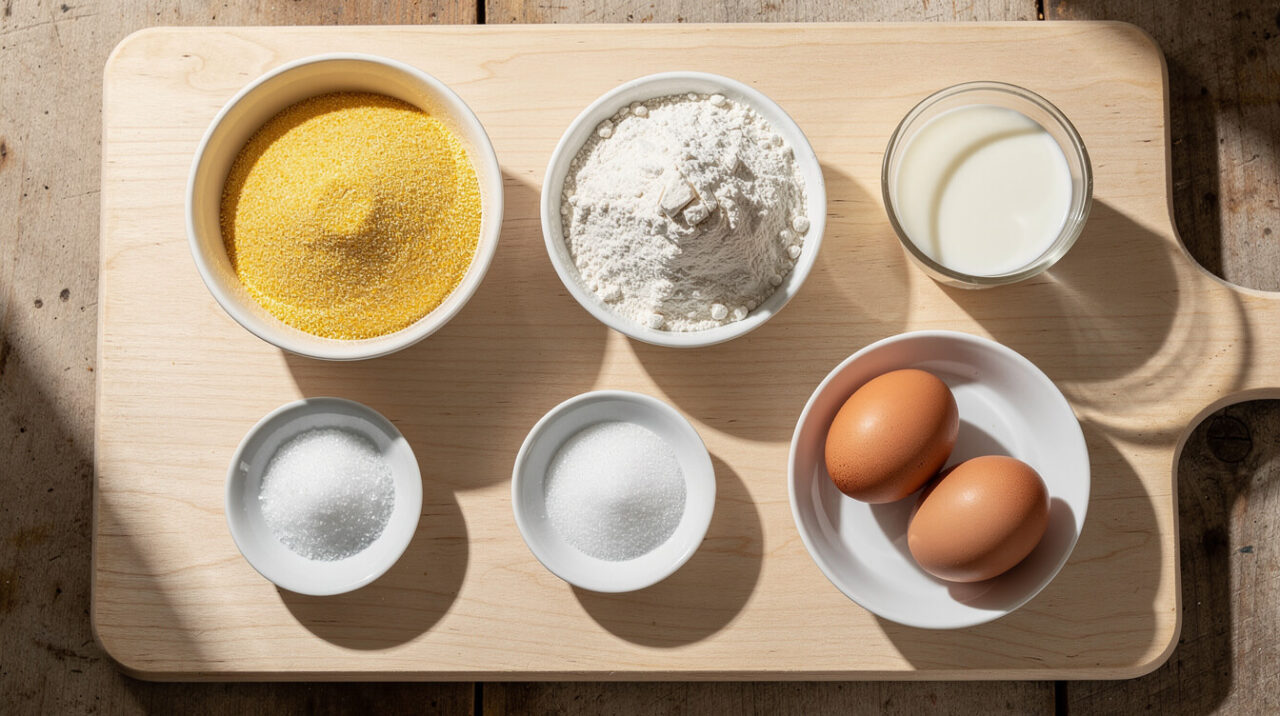
Yes, in small amounts, if it’s plain. A basic cornbread is cornmeal, flour, milk or buttermilk, eggs, a fat, baking powder, salt, and usually some sugar. Nothing on that list is poisonous to dogs. A bite or two of a plain piece is unlikely to cause more than, at most, a mildly upset stomach in a healthy adult dog.
No, if it contains any of these:
- Onion, garlic, chives, scallions, or onion/garlic powder. These are common in jalapeño, “Mexican-style,” and Southwest cornbreads, and in every cornbread dressing.
- Xylitol (also sold as birch sugar or wood sugar), sometimes used in homemade “sugar-free” or keto recipes.
- Raisins or currants, if a homemade recipe adds them. None of the store products we checked did.
- A thick layer of butter, honey butter, or bacon drippings. These aren’t poisons, but they turn a starchy bite into a rich, fatty one.
And even plain cornbread has nothing your dog needs. Their complete dog food already covers their nutrition. Think of cornbread as a “share a crumb so they feel included” food, not a snack to hand over by the square.
What’s actually in cornbread? We checked 271 labels
We pulled every cornbread, corn muffin, and cornbread mix in the USDA FoodData Central branded database. That’s the ingredient lists manufacturers report. We removed duplicates and anything that was really a different food, like stuffing, crackers, or cornbread-topped meals. That left 271 products. Here’s what turned up.
Onion and garlic: rare in plain cornbread, common in savory styles
17 of the 271 list onion, garlic, or chives. That sounds reassuring until you look at which ones. Of the 34 products with a savory style in the name (jalapeño, Mexican, Southwest, chipotle, fiesta, cheddar, and the like), 15 list onion or garlic. That’s nearly half. Many use dried onion, onion powder, or garlic powder. That matters because the Merck Veterinary Manual notes that toxicosis in dogs is most commonly associated with concentrated forms like powders and dehydrated flakes, and that garlic is 3–5 times more toxic than onion.
Two products had plain-sounding names and still listed onion. One was a cornbread mix sold as “old fashioned,” with onion powder in it. So a plain-sounding name doesn’t prove the cornbread is plain. The ingredient list does.
Xylitol: zero
None of the 271 listed xylitol. The one mix that used a sugar substitute used erythritol. That’s good news for store-bought cornbread, but it doesn’t cover homemade. The FDA notes that people buy xylitol in bulk to bake at home, and that baked goods like muffins can contain it. If someone brought “keto cornbread” to dinner, ask what sweetened it before your dog gets a crumb.
Lard, sugar, and wheat
- Lard or tallow: 12 of the 137 mixes list lard or beef tallow, including the classic little blue-and-white box corn muffin mix that many families bake every Thanksgiving. Animal fat isn’t toxic, but it’s worth knowing for a dog whose vet has asked you to watch fat.
- Sugar: 252 of the 271 list sugar by name, and most of the rest use honey or dextrose. Among ready-to-eat cornbreads and muffins, the median was about 21 g of sugar per 100 g, or roughly 13 g per labeled serving (the middle half ran about 10–17 g). You’ll see “18 grams of sugar per slice” quoted online. That’s a big or extra-sweet slice, not a typical one.
- Wheat: 239 of 271 (88%) contain wheat flour (on US labels, plain “enriched flour” means wheat). Nearly all of the 32 without it are gluten-free products made with rice or other flours. Only a couple are all-cornmeal mixes.
“Isn’t cornbread gluten-free?”
Usually not. You’ll read that dogs with a gluten or wheat sensitivity can have cornbread because “most recipes don’t contain wheat flour.” The labels say the opposite: 88% do. Unless a cornbread is specifically labeled gluten-free or you made it yourself with only cornmeal, assume it contains wheat. We’ll come back to what that means for allergies below.
The add-ins that change the answer

Cornbread isn’t the problem. What goes into it and onto it is. Here’s how each common variation sorts out.
Jalapeño, cheddar, and “Mexican-style” cornbread
Skip these. Spicy peppers can irritate a dog’s mouth and stomach, cheese adds fat and salt, and as the label check showed, nearly half of savory-named cornbreads also contain onion or garlic. You often can’t see it, either. Onion powder doesn’t leave visible bits, and picking out the jalapeño rings doesn’t remove what’s baked into the crumb.
Butter and honey butter
This is where a “harmless” bite quietly changes. USDA figures put a standard piece of homemade cornbread at about 173 calories and 4.6 g of fat. One tablespoon of butter adds about 102 calories and 11.5 g of fat. That’s more than double the fat of the cornbread itself. A drizzle of honey adds more sugar on top (about 21 calories per teaspoon).
Here’s why fat density matters for dogs. Merck lists dietary indiscretion, meaning dogs eating foods they don’t normally eat, as a common risk factor for pancreatitis in dogs. For dogs recovering from it, Merck advises a diet with less than 20 g of fat per 1,000 calories. By our math from the USDA figures, plain cornbread runs about 27–29 g of fat per 1,000 calories. A buttered piece runs about 59 g. That’s not an emergency in one bite. It’s a good reason to share from the unbuttered edge, especially with a Miniature Schnauzer, which Merck notes is dramatically overrepresented among pancreatitis cases, or with any dog that’s had pancreatitis before.
Bacon drippings and cracklin’ cornbread
Plenty of Southern skillet cornbread starts with bacon grease heated in the pan, and “cracklin'” bread has bits of fried pork skin stirred in. That’s the same fat story, turned up. Rendered bacon fat is essentially pure fat, and the crust soaks it up. Cracklin’ cornbread is also saltier than plain. This one is a “people only” bread.
Cornbread dressing
Once cornbread becomes dressing, it’s a different dish: onions, celery, broth, butter, often sausage, and sometimes dried fruit. Treat it exactly like stuffing. Our guide to whether dogs can eat stuffing has the onion math by dog size and what we found on 160 stuffing labels. The short version: it’s a skip.
Sweet cornbread, corn muffins, and corn cake
These aren’t toxic. They’re just sweeter and richer. A plain corn muffin follows the same rule as plain cornbread: a bite, not the muffin. Remove the paper liner first (more on liners below).
How much cornbread can dogs eat? The math by weight

The usual guideline is that treats and extras should stay under 10% of a dog’s daily calories. That 10% covers everything extra that day, including dog treats, chews, and table food. It’s a ceiling, not a target to fill with cornbread.
We estimated daily needs with the standard veterinary formula (resting energy = 70 × body weight in kg0.75, × 1.6 for a typical neutered adult). Cornbread values come from USDA FoodData Central: a 65 g homemade piece (about 173 calories) and a 60 g piece made from a mix (about 198 calories). We added one tablespoon of butter for the buttered column.
| Dog’s weight | Approx. calories per day | 10% treat budget | Most of a plain homemade piece that fits | One plain piece is… | One buttered piece is… |
|---|---|---|---|---|---|
| 5 lb | ~210 | ~21 cal | about ⅛ of a piece | ~85% of the whole day | ~135% of the day |
| 11 lb | ~375 | ~37 cal | about ⅕ of a piece | ~45% of the day | ~75% of the day |
| 22 lb | ~630 | ~63 cal | about ⅓ of a piece | ~28% of the day | ~44% of the day |
| 44 lb | ~1,060 | ~106 cal | about ⅗ of a piece | ~16% of the day | ~26% of the day |
| 66 lb | ~1,430 | ~143 cal | about ⅘ of a piece | ~12% of the day | ~19% of the day |
| 88 lb | ~1,780 | ~178 cal | about 1 piece | ~10% of the day | ~15% of the day |
Two caveats. First, real calorie needs vary a lot with age, activity, and body condition, so treat these as ballpark figures and ask your vet for your dog’s number. Second, the “fits” column is the most that would squeeze into a day with no other treats at all. It doesn’t recommend that much. For a deliberate taste, we’d keep it to a thumbnail-sized bite for a small dog and a couple of bites for a large one, taken from an unbuttered piece.
Mix-made cornbread runs a little higher in calories than homemade. A store-bought square is often larger than USDA’s piece, too. The median labeled serving was about 57 g, but bakery squares are frequently bigger.
What about the salt?
A homemade piece has about 428 mg of sodium, which works out to roughly 1.1 g of salt. Merck notes that signs of salt toxicosis in dogs can appear after about 2–3 g of salt per kg of body weight. A 22-lb dog would have to eat around 18 pieces to reach the low end of that range. Salt poisoning from cornbread isn’t a realistic worry. Salt does still matter as a habit, and it matters a lot for dogs on a sodium-restricted diet for heart or kidney disease.
The weekly care guide
Get it right for your animal, every week
One email a week: new care guides, species deep-dives, and the safety answers keepers search for, written by our specialists. No spam. Unsubscribe anytime.
Wheat, corn, and allergies: what cornbread can and can’t tell you
Some guides warn that corn is a common allergen and that a dog reacting to cornbread is probably allergic to corn. The research points elsewhere.
A 2016 veterinary review pooled every published case of confirmed food allergy in dogs, 297 dogs in total (Mueller, Olivry & Prélaud, BMC Veterinary Research). Among those allergic dogs, the most frequently reported triggers were:
- Beef: 34%
- Dairy: 17%
- Chicken: 15%
- Wheat: 13%
- Soy: 6%
- Corn: 4%
- Egg: 4%
Those percentages are among dogs already diagnosed with a food allergy, not among all dogs. Corn can be a trigger, and Merck’s owner guide lists it among the foods dogs react to. But the point for cornbread is this: a typical piece also contains wheat, milk, and egg, and two of those rank higher than corn. If your dog seems itchy or gassy after cornbread, “corn” is only one of several suspects.
One episode of loose stool after a rich holiday meal doesn’t diagnose a food allergy, either. Merck explains that food allergies are diagnosed with a strict elimination diet trial, followed by re-introducing ingredients to see what brings the signs back. Blood and skin tests aren’t reliable for this. If your dog has ongoing itching, ear trouble, or keeps licking their paws, that’s a conversation for your vet, and it’s worth having.
And if your dog is in the middle of an elimination trial right now, skip the cornbread completely, even a crumb. A single off-plan bite can muddy weeks of careful work.
Better ways to share the holiday table with your dog

Wanting your dog to be part of the meal is a lovely instinct. Here’s how to include them without the butter, onion, and guesswork:
- Set aside a plain corner before anything goes on top. If you’re baking a plain recipe, cut your dog’s bite from the edge before the honey butter comes out. Then you know exactly what’s in it.
- Plain sweet potato or yam. Baked or steamed with nothing added, it’s a dog-friendly side. Our guide on whether dogs can eat yams explains why the candied casserole doesn’t count.
- Plain pumpkin. A small spoonful of plain canned pumpkin (not pie filling) on a lick mat stretches a tiny amount into a long, happy job. See our pumpkin portions guide.
- A few pieces of their own kibble or a favorite treat, handed over at the table while everyone eats. Many dogs care far more about being included than about what’s in your hand.
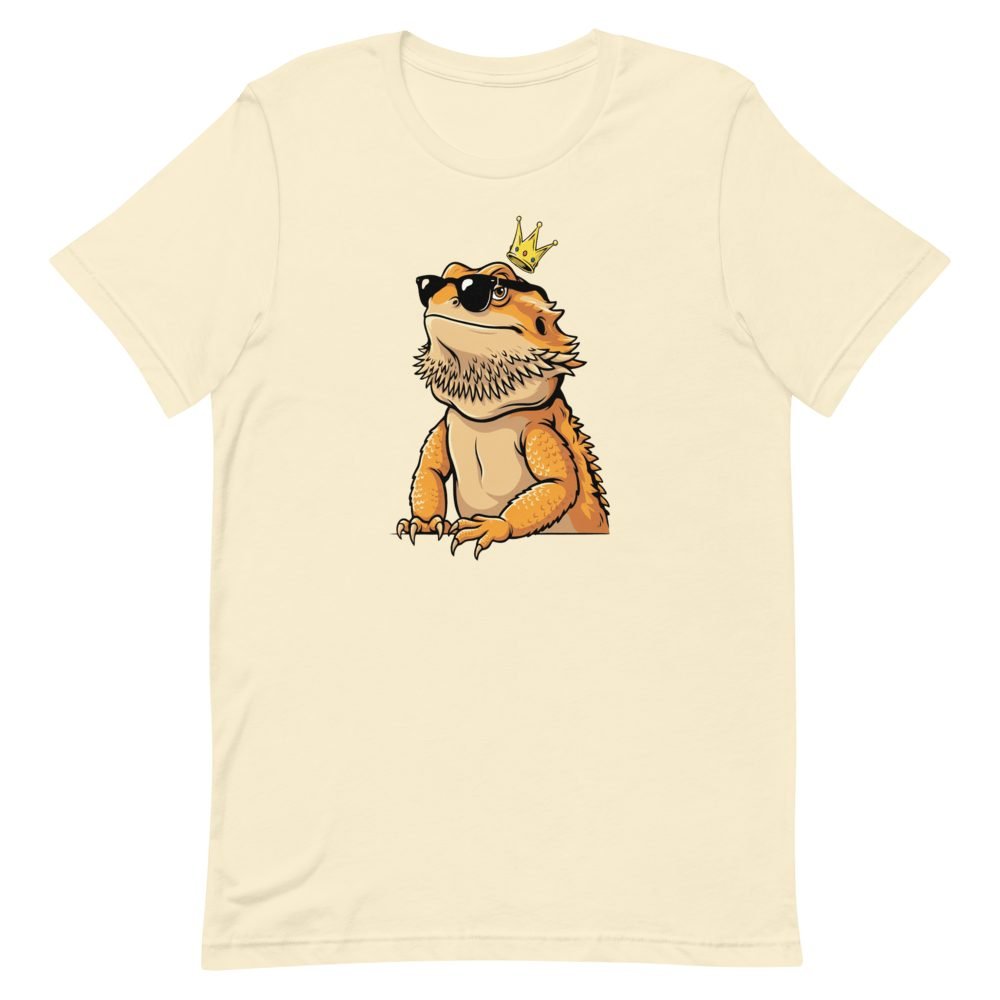
Wear the obsession
The Bearded Dragon Crown Sunglasses King T-Shirt: a crown, shades, and total basking-rock confidence. For keepers whose holiday table has more than one species looking up at it.
If your household is a little bit of a zoo, you’re our kind of people. A dog under the table and a beardie on the basking rock is a very GeoZoo holiday, and our Bearded Dragon Crown Sunglasses King T-Shirt is made for exactly that kind of keeper.
Keep the pan out of reach
Most cornbread problems aren’t the bite you gave. They’re the half-skillet your dog helped themselves to while everyone was in the other room. Cool cornbread on the back of the counter or on top of the fridge, not at the counter’s edge. Put a pet gate across the kitchen doorway during the busiest cooking hours, and let guests know your dog isn’t allowed table food. That one sentence saves a lot of sneaky “just a little piece” handouts.
For the rest of the meal, our guides to mashed potatoes, mac and cheese, and cranberry sauce break down the other Thanksgiving sides the same way.
My dog ate cornbread: what to do

First, don’t panic. Most cornbread thefts end with nothing worse than a gassy evening. Work out which situation you’re in.
Call your vet or a pet poison line now if:
- The cornbread or dressing contained onion, garlic, chives, or onion/garlic powder, and your dog ate more than a bite or two. Check the box or ask the cook. Onion and garlic damage to red blood cells is delayed, so a dog who seems fine tonight still needs a call.
- It may have contained xylitol. The FDA warns that xylitol can drop a dog’s blood sugar within 10 to 60 minutes. Don’t wait for signs.
- It contained raisins or currants.
- Your dog ate a large amount (a big share of a pan, or a whole batch of muffins), especially if they’re small, a puppy, a senior, or have a history of pancreatitis.
Your options are your regular vet, an emergency clinic, the ASPCA Animal Poison Control Center at (888) 426-4435, or the Pet Poison Helpline at (855) 764-7661. Both poison lines are staffed 24/7 and may charge a consultation fee. Have the recipe or box, your dog’s weight, and your best guess at how much they ate ready. Don’t try to make your dog vomit at home unless a veterinarian tells you to.
Plain cornbread, modest amount
If it was plain and your dog is a healthy adult, keep an eye on them for the next day or two. Mild gas or a soft stool can happen. Call your vet if you see repeated vomiting, a painful or hunched belly, refusing food, or unusual lethargy. Those can be signs of pancreatitis after a rich meal, and they deserve a prompt exam.
They ate the muffin liners too
Dogs who steal muffins often eat the paper cups with them. Paper liners often pass, but they don’t digest, and any swallowed object can cause a blockage. Merck lists vomiting, not eating, belly pain, diarrhea, and lethargy as signs of a gastrointestinal obstruction, and it treats obstruction as an emergency. Call your vet if your dog is small, ate several liners, or the liners were foil, and call right away if any of those signs appear.
They ate raw batter or dry mix
Raw batter isn’t food, but cornbread batter isn’t the same emergency as raw yeast bread dough. Merck’s warning about dough that expands in the stomach and produces alcohol applies to yeast-based dough, and cornbread rises with baking powder. Raw batter is still raw egg and raw flour plus all the fat and sugar of the finished bread. If your dog ate a meaningful amount, or the mix was a jalapeño or Mexican-style one that may contain dried onion, call your vet.
Can dogs eat cornbread? Your questions answered

Can dogs eat corn muffins?
The same rule applies. A bite of a plain corn muffin is fine for most healthy dogs, without the paper liner. Skip sweet-glazed, buttered, cheesy, or jalapeño muffins.
Can dogs eat Jiffy cornbread?
A small bite of plain baked Jiffy-style corn muffin mix isn’t toxic. Its ingredient list includes sugar and lard, so it’s richer than a from-scratch plain cornbread, and the same small-bite rule applies. Always check the specific box, because flavored versions differ.
Can dogs eat honey cornbread?
A crumb won’t hurt a healthy dog, but honey cornbread is sweeter and usually comes with butter. Skip it for dogs with diabetes, and keep it to a crumb for everyone else.
Can dogs eat cornbread dressing?
No. Dressing almost always contains onion and often garlic, plus butter and sometimes sausage. See our stuffing guide for what to do if your dog already ate some.
Can puppies eat cornbread?
It’s best to skip it. Puppies have small bodies, sensitive stomachs, and growing bodies that need every calorie to come from their puppy food. A puppy who’s begging will be just as happy with a piece of their own kibble.
Is corn bad for dogs?
Not inherently. Corn is a common, digestible ingredient in many complete dog foods, and plain corn kernels are fine as an occasional treat. The real dangers are corn cobs (a blockage risk) and what corn gets cooked with. Our popcorn guide covers another corn snack that’s fine plain and a problem buttered.
The bottom line: cornbread isn’t a danger food. It’s a “depends what’s in it” food. A plain, unbuttered bite is a fine way to include your dog at the table. Jalapeño, onion-seasoned, sugar-free, and dressing versions belong on the people side of the table. Check the box, cut your dog’s bite before the butter goes on, and keep the skillet out of reach. You’ll both have a better holiday.
Before you go
Keep learning your animal
We publish a new guide every day. The best of them land in one short weekly email, so you never miss the one about your species.

Meet Jake Harrington, your go-to guru for all things canine. With over 15 years of professional dog training experience, Jake has transformed the lives of thousands of dogs and their owners. His journey began in the bustling streets of a major city, where he discovered his natural affinity for understanding canine behaviors and communication.