Can My Dog Eat Olive Oil? A Vet-Informed Safety Guide
Short answer: yes, dogs can eat olive oil — a small amount, mixed into their food, now and then or even daily if your vet gives the okay. It’s one of the rare “human kitchen” ingredients that’s genuinely useful for dogs rather than just harmless, which is exactly why so many owners land here searching can my dog eat olive oil before they drizzle any onto the kibble bowl.
Here’s what you’ll walk away with: why olive oil actually earns a place in your dog’s diet, the real risks worth understanding (pancreatitis is the one that matters most), how much is actually safe — including where the experts disagree — and how to introduce it without any guesswork. Let’s get your pup’s oil habit right from day one.
Can my dog eat olive oil? The short answer
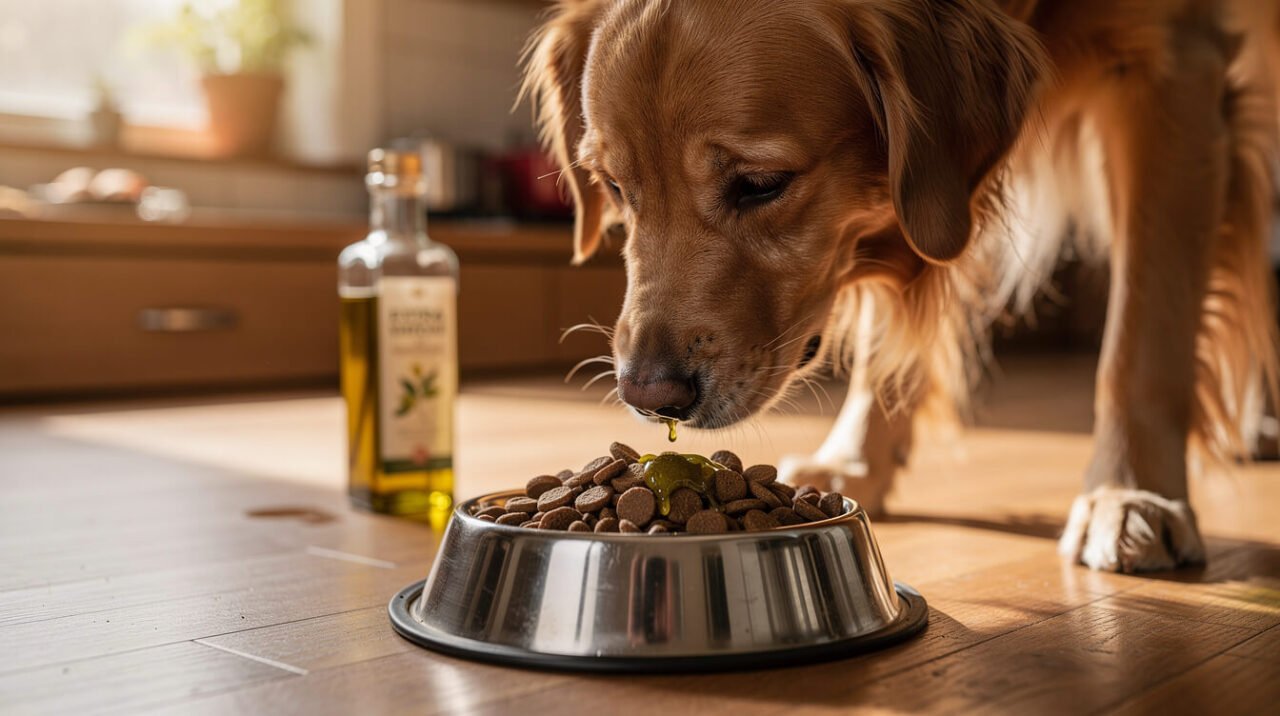
Yes — plain, unflavored olive oil in small amounts is safe for most healthy adult dogs, and a growing body of veterinary opinion suggests it can genuinely help their skin, coat, and digestion. Unlike onions, grapes, or xylitol, olive oil isn’t toxic to dogs in the “call poison control” sense.
The catch isn’t safety in the “will this hurt my dog” sense — it’s dose. Olive oil is pure fat and pure calories, and like any fat, too much of it can cause real problems, from a stomach ache to a genuinely dangerous case of pancreatitis. Think of it less like a daily supplement you pour freely and more like a small, deliberate addition — a teaspoon here, mixed thoughtfully into a meal, not a habit that creeps upward over time.
One more thing before you reach for the bottle: this is general care information, not a substitute for your veterinarian’s judgment on your specific dog. If your dog has a history of pancreatitis, is overweight, or has any chronic digestive condition, check with your vet before adding olive oil — or any new fat — to their diet.
Why olive oil can benefit your dog’s health

Olive oil isn’t just a neutral filler — it brings a few genuinely useful compounds to the table.
Skin and coat support
Olive oil is rich in vitamin E and oleic acid, a monounsaturated fat that several veterinary dermatologists have observed improving coat shine and softness over time — typically after about 30 days of consistent, small additions to food. It’s the fatty acids doing the work here, the same reason fish oil gets recommended for the same purpose.
Easing allergy-related itching
Oleic acid has anti-inflammatory properties that may take some of the edge off itching caused by environmental allergies — pollen, dust, or flea saliva. It’s not a treatment for allergies, and it won’t replace whatever your vet has already prescribed, but it’s a reasonable, low-risk addition alongside an existing allergy plan.
Gentle digestive support
In small amounts, olive oil has a mild natural laxative effect, which is why some owners use it occasionally for a constipated dog. This is a “small amount, occasional use” tool, not a daily habit — overuse of exactly this property is part of how olive oil causes diarrhea when owners get too generous with it.
Antioxidants, in moderation
Olive oil contains polyphenols and vitamin E, antioxidants linked to reduced cellular damage and, in some human and limited canine research, a possible role in supporting long-term health. The research in dogs specifically is thin — this is a “nice bonus,” not a headline reason to add olive oil to your dog’s bowl. If your goal is disease prevention specifically, talk to your vet about your dog’s actual risk factors and diet as a whole; olive oil is a small supporting piece, not a substitute for age-appropriate vet care and a complete diet.
The real risks: pancreatitis, weight gain, and stomach upset

None of this makes olive oil risk-free, and the risks are worth taking seriously rather than glossing over.
Pancreatitis is the one to know
Olive oil is close to pure fat, and a sudden load of fat — especially given all at once rather than mixed into a meal — is a recognized trigger for pancreatitis in dogs: a painful, sometimes serious inflammation of the pancreas. Warning signs include abdominal pain, vomiting, diarrhea, lethargy, and a dog that seems hunched or reluctant to be touched near the belly. If you see these signs after introducing olive oil (or any new fatty food), stop and call your veterinarian — this isn’t a “wait and see” situation.
Weight gain and obesity
Olive oil is calorie-dense. A dog who’s already overweight, or prone to it, doesn’t need extra fat calories layered on top of a complete commercial diet — even a “healthy” fat. If your dog is carrying extra weight, this is a case where skipping the olive oil is the caring choice, not a deprivation.
Garden-variety stomach upset
Even in dogs with no underlying condition, too much olive oil — or olive oil introduced too fast — commonly causes loose stool, vomiting, or a generally unhappy stomach. This is usually the first sign you’ve overshot the right amount for your individual dog, and it’s reversible by backing off, not a reason to panic.
Some dogs need extra caution
A handful of breeds — Miniature Schnauzers especially, along with some Yorkshire Terriers and Shetland Sheepdogs — are more prone to a fat-metabolism issue called hyperlipidemia, which raises their baseline risk for pancreatitis. If your dog is one of these breeds, has diabetes, or has ever had an unexplained bout of vomiting and belly pain, treat olive oil (and any added fat) as a “check with your vet first” item rather than something to try on your own. The same caution applies to senior dogs, whose pancreas and digestive systems tend to be less forgiving of new additions than a younger dog’s.
How much olive oil can a dog have?
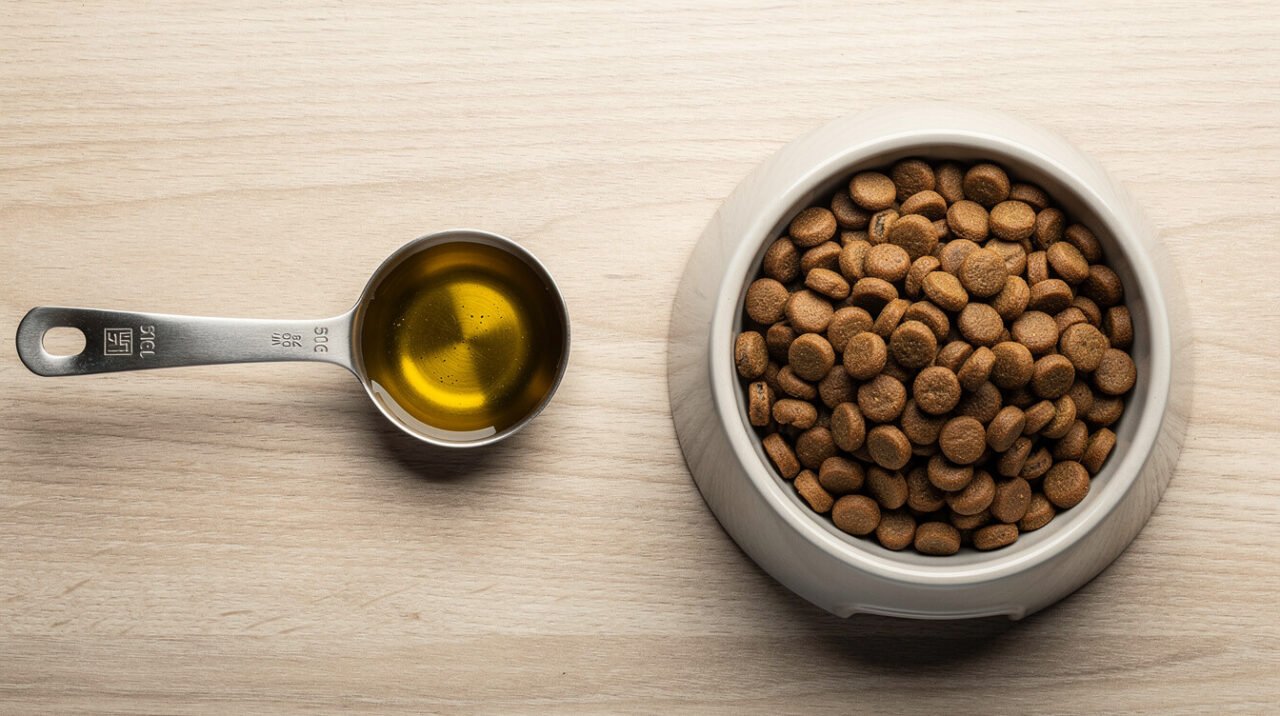
This is the part where we have to be honest with you: reputable veterinary sources don’t fully agree, and we’d rather tell you that than hand you a single confident number that might not fit your dog.
One commonly cited veterinary guideline puts it at roughly 1 teaspoon of olive oil per 20 pounds of body weight, per day — so a 40-pound dog might get about two teaspoons. Other veterinarians are considerably more conservative, recommending as little as a quarter teaspoon daily for a small or medium dog, and up to half a teaspoon for a large or giant breed — regardless of exact weight. Both come from real veterinary guidance; they simply reflect different clinical comfort levels with how much fat is “safe enough” to add on top of an already-complete diet.
To put those two guidelines side by side, here’s roughly what each looks like in practice — treat both as a starting range to discuss with your vet, not a prescription:
| Dog’s size | More conservative guideline | More liberal guideline |
|---|---|---|
| Small (under 20 lbs) | ~1/4 teaspoon/day | ~1 teaspoon/day |
| Medium (20–50 lbs) | ~1/4 teaspoon/day | 1–2.5 teaspoons/day |
| Large (50–90 lbs) | ~1/2 teaspoon/day | 2.5–4.5 teaspoons/day |
| Giant (90+ lbs) | ~1/2 teaspoon/day | 4.5+ teaspoons/day |
Notice how wide that gap is, especially for larger dogs — which is exactly why we’re not going to tell you to pick the top of the range and run with it. Start at the conservative end regardless of your dog’s size, hold it there for a week, and only consider moving up if your vet agrees it’s appropriate for your dog specifically.
What we can tell you with confidence:
- Start low. Whichever range you use, begin at the smallest end — even less than the guideline suggests — for the first week, and watch how your dog responds.
- Keep any diet addition under about 10% of daily calories. That’s a standard veterinary rule of thumb for treats and extras generally, and it applies here too.
- Ask your vet for a number specific to your dog. Your dog’s weight, existing diet, activity level, and any health history (especially pancreatitis or GI sensitivity) all change what’s actually appropriate — a vet who knows your dog’s chart can give you a real answer, and we can’t.
If in doubt, less is genuinely safer here. There’s no health benefit worth chasing that justifies pushing past what your dog’s stomach is telling you.
The weekly care guide
Get it right for your animal, every week
One email a week: new care guides, species deep-dives, and the safety answers keepers search for, written by our specialists. No spam. Unsubscribe anytime.
How to serve olive oil safely
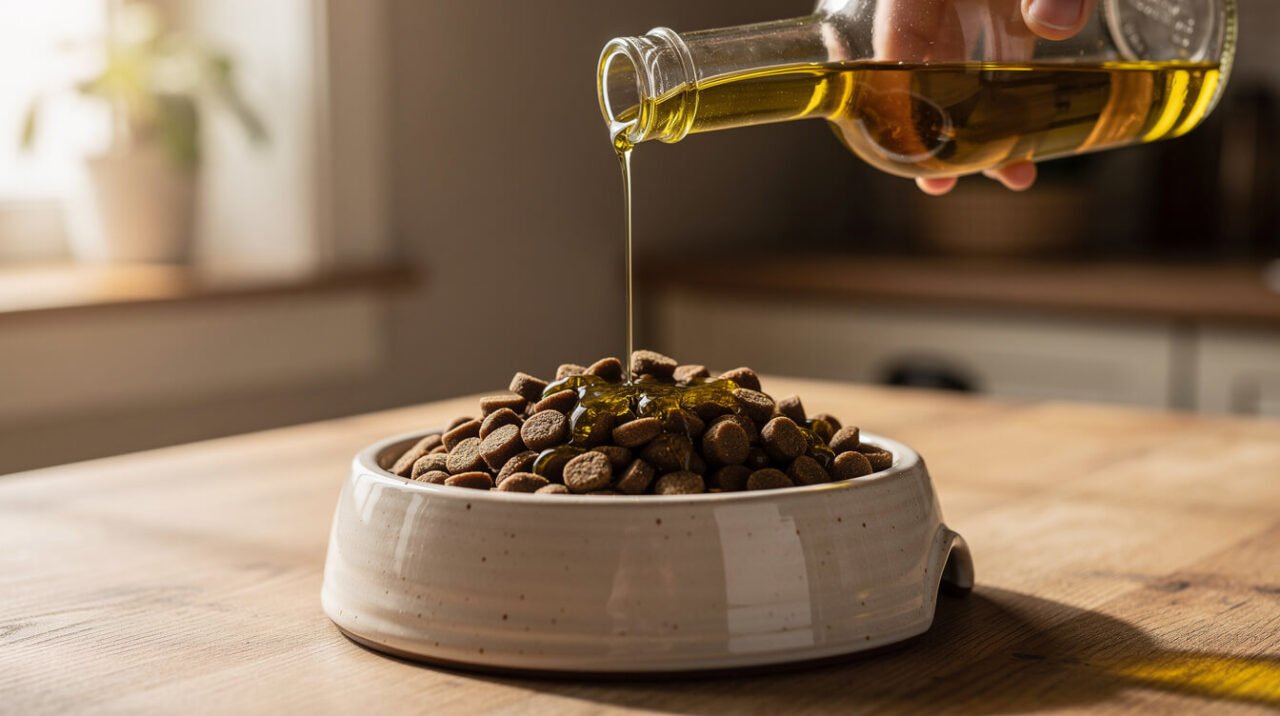
Getting the “how” right matters almost as much as getting the amount right.
Mix it into food — never serve it straight
Always stir olive oil into your dog’s regular wet or dry food rather than feeding it off a spoon on its own. Giving it straight increases the odds of a fast fat load hitting the stomach at once, which is part of what makes pancreatitis more likely. Mixed into a meal, it’s absorbed more gradually.
Choose cold-pressed extra virgin olive oil
Extra virgin olive oil (EVOO), especially cold-pressed, retains the most antioxidants and nutrients and has the fewest additives. Skip olive pomace oil, “pure” olive oil, and heavily refined varieties — they carry less nutritional benefit and, in some cases, more processing residue. Store it in a dark bottle away from heat, since EVOO turns rancid faster than more processed oils.
Never use garlic- or onion-infused olive oil
Plain olive oil is fine. Garlic-infused, onion-infused, or other flavored/infused olive oils are not — garlic and onion are genuinely toxic to dogs, capable of damaging red blood cells and causing a serious anemia even in fairly small amounts. Always check the label. If it’s flavored or infused with anything beyond olives, it’s not the bottle to reach for.
This one is worth a second look before your next drizzle, since infused and “gourmet” olive oils are common on grocery shelves and easy to grab by mistake. Read the ingredient list every time, not just the front label — and when in doubt, keep a plain, unflavored bottle set aside specifically for your dog.
Never apply it to your dog’s skin or coat
It’s tempting to treat dry skin topically, but most dogs will lick off anything applied to their fur — which not only wastes the oil but can trigger excessive licking, hot spots, and localized hair loss. If you want the coat benefits, they come from the inside, through food, not from the outside.
Introduce it slowly and watch for a few days
Start with a small fraction of the eventual target amount, give it a few days, and watch for loose stool, vomiting, or lethargy before increasing. If your dog already eats commercial food or treats that list olive oil in the ingredients, factor that in — you don’t need to add more on top.
What about whole olives, and other oils?
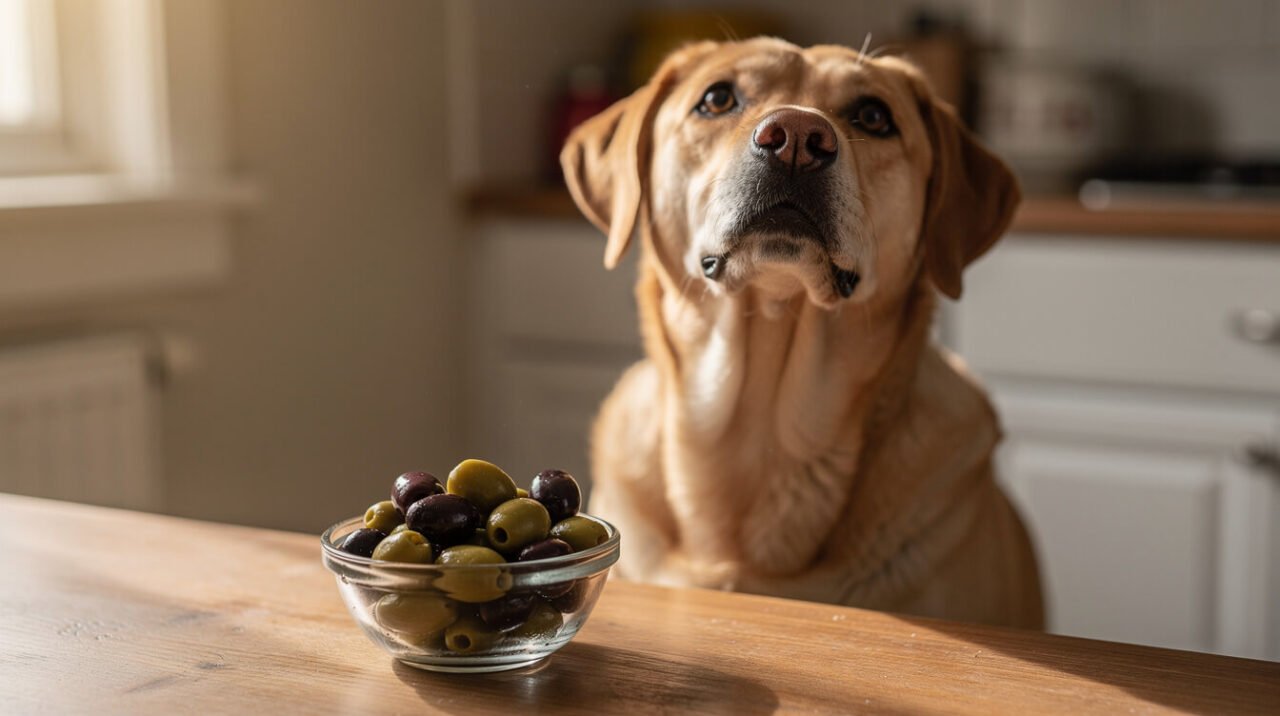
A question that comes up right alongside olive oil: what about the olives themselves? Plain, unsalted, pitted olives are generally fine in small quantities — but the brined, jarred kind most people keep in the fridge are a different story. They’re typically packed in a heavy dose of sodium, and sometimes garlic or other seasonings that aren’t dog-safe, so they’re best left out of your dog’s bowl entirely.
It’s also worth knowing that olive oil isn’t necessarily the best oil for every dog. Dogs lack the enzyme that efficiently converts the plant-based omega-3 in olive oil into the more usable forms found in fish oil, so if omega-3 support for joints, brain, or heart health is your actual goal, a vet-recommended fish oil supplement may do more for your dog than olive oil will. Olive oil’s strengths are more about coat shine, mild anti-inflammatory support, and occasional digestive help — good reasons on their own, just not interchangeable with fish oil’s benefits.
Frequently asked questions
Is garlic-infused olive oil safe for dogs?
No. Garlic (and onion) infused or flavored olive oils are unsafe for dogs — garlic is toxic to dogs and can damage red blood cells even in small doses. Only give your dog plain, unflavored olive oil, and check the label to be sure.
Can I give my dog olive oil every day?
Generally, yes, in small amounts — many vets consider daily olive oil safe for healthy dogs. Confirm the right amount for your specific dog with your veterinarian, especially if you plan to make it a permanent daily habit rather than an occasional addition.
Can puppies have olive oil?
Puppies have more sensitive digestive systems than adult dogs, and their complete puppy food is already formulated to meet their fat and nutrient needs. It’s best to hold off on adding olive oil until your vet confirms it’s appropriate, rather than introducing it during those early, delicate months.
If your dog is still a puppy figuring out the basics, our guide to building a balanced dog diet is a good next stop before adding any extras.
What are the signs my dog has had too much olive oil?
Watch for diarrhea, vomiting, lethargy, or a reluctance to be touched near the belly. Mild loose stool usually resolves once you stop giving the oil and let their stomach settle; vomiting, lethargy, or belly pain warrants a call to your vet, since those can also be early pancreatitis signs.
Is extra virgin olive oil better than regular olive oil for dogs?
Yes. Cold-pressed extra virgin olive oil retains the most beneficial compounds and the fewest additives. Refined, “pure,” or pomace olive oils offer less nutritional benefit and aren’t the best pick if you’re adding oil specifically for its health properties.
Can dogs with pancreatitis have olive oil?
No — dogs with a history of pancreatitis should avoid added fats like olive oil entirely unless their veterinarian specifically says otherwise. Fat is the exact trigger that makes pancreatitis flare, so this is a firm “ask your vet first” situation, not a “small amount should be fine” one.
Can dogs eat olive oil in salad dressing or cooked food?
It’s best to give dogs plain olive oil mixed into their own food rather than table scraps of dressed salad or cooked dishes, since salads and many cooked meals often contain onion, garlic, or excess salt that are unsafe for dogs. Keep the olive oil separate and dog-only.
Can pregnant or nursing dogs have olive oil?
Pregnant and nursing dogs have different, higher energy and fat needs than usual, and those needs are already accounted for in a properly formulated pregnancy or nursing diet. Don’t add olive oil or any new supplement during pregnancy or lactation without your veterinarian’s explicit go-ahead, since their tolerance for extra fat and any digestive upset is different during this period.
Does my dog’s current food already have enough fat?
Possibly — check the guaranteed analysis on your dog’s food bag for the crude fat percentage, and if your dog already eats a diet formulated with added oils (olive, fish, or otherwise), factor that into how much extra you add. A complete, balanced commercial diet is designed to meet your dog’s fat needs on its own; olive oil on top of that is a bonus, not a correction for something missing.

Wear the obsession
Bearded Dragon Crown Sunglasses King T-Shirt
Price range: $24.99 through $26.99
Shop this designFinal thoughts
Olive oil is one of the few human kitchen staples that’s a genuine, if modest, win for dogs when it’s used the way it’s meant to be — a small, deliberate addition mixed into food, not a free-pour pantry habit. Start with the most conservative amount for your dog’s size, watch how they respond for the first few days, and lean on your vet for the exact number that fits your dog’s weight, diet, and health history. Do that, and olive oil becomes one small, well-considered way to support your dog’s coat and comfort — nothing more dramatic than that, and nothing less either.
For more on rounding out your dog’s everyday diet safely, take a look at our guide on whether dogs can eat breakfast sausage and our safety rundown on dogs and Powerade — both good reads if you’re the kind of owner who checks before sharing. And if you’re still building out your dog’s full nutrition plan, our guide to giving your dog a balanced diet covers the fundamentals olive oil is just one small piece of.
Before you go
Keep learning your animal
We publish a new guide every day. The best of them land in one short weekly email, so you never miss the one about your species.

Meet Jake Harrington, your go-to guru for all things canine. With over 15 years of professional dog training experience, Jake has transformed the lives of thousands of dogs and their owners. His journey began in the bustling streets of a major city, where he discovered his natural affinity for understanding canine behaviors and communication.