
Can Dogs Eat Gingerbread? Why Nutmeg Isn’t the Real Danger (and What Is)
Can dogs eat gingerbread? No, it isn’t a good food for dogs. But one stolen bite of an ordinary gingerbread cookie is rarely an emergency. The thing most articles warn you about, nutmeg, is present in such small amounts in a cookie that the Pet Poison Helpline’s own veterinarians call serious poisoning from recipe amounts “very unlikely.” The real risks are the things that ride along on gingerbread: raisins or currants pressed into a gingerbread man, xylitol in sugar-free versions, chocolate on a gingerbread house, and the butter-and-sugar load of eating a whole tray.
So the useful question isn’t really “is gingerbread toxic?” It’s “what was on or in this gingerbread, and how much did my dog eat?” Below, I’ll walk through the nutmeg math using real published recipes, rank what actually matters, give quick verdicts on cookies, ginger snaps, houses, and lattes, and lay out a calm checklist for the moment you find the empty plate. If that moment is now, jump to what to do if your dog ate gingerbread.
Can dogs eat gingerbread? The short answer, and why it isn’t scarier than it is

Gingerbread is a people food built from flour, butter or shortening, sugar, molasses, egg, and warm spices: usually ginger and cinnamon, often cloves or allspice, sometimes nutmeg. None of that is good for your dog, and a couple of things in some versions are genuinely dangerous. That’s the “no.”
Here’s the part that should lower your heart rate a little. A plain gingerbread cookie, with no raisins, no chocolate, and no sugar-free sweetener, is mostly a sugar, fat, and spice problem. For most dogs that means, at worst, an upset stomach: some vomiting or loose stool that settles within about a day. The size of your dog and the size of the haul matter a lot. A Labrador who snatched one cookie is in a very different spot from a Yorkie who emptied a cooling rack.
The internet tends to flatten all of this into one scary sentence, and you’ll see “any amount of gingerbread can harm your dog” repeated across the first page of search results. That framing puts the worry in the wrong place. If you spend your energy on the nutmeg in a cookie, you can miss the two raisin “buttons” on the gingerbread man, and those are the part that needs a phone call.
What this means in practice
- Don’t share gingerbread on purpose. There’s no benefit to your dog, and the sugar and fat are pure downside.
- Don’t panic over an accident. One plain cookie in a medium or large dog usually means watching, not rushing.
- Do check what it was. Raisins, currants, xylitol, chocolate, or a whole tray changes the answer. We’ll go through each one.
The nutmeg question, answered honestly
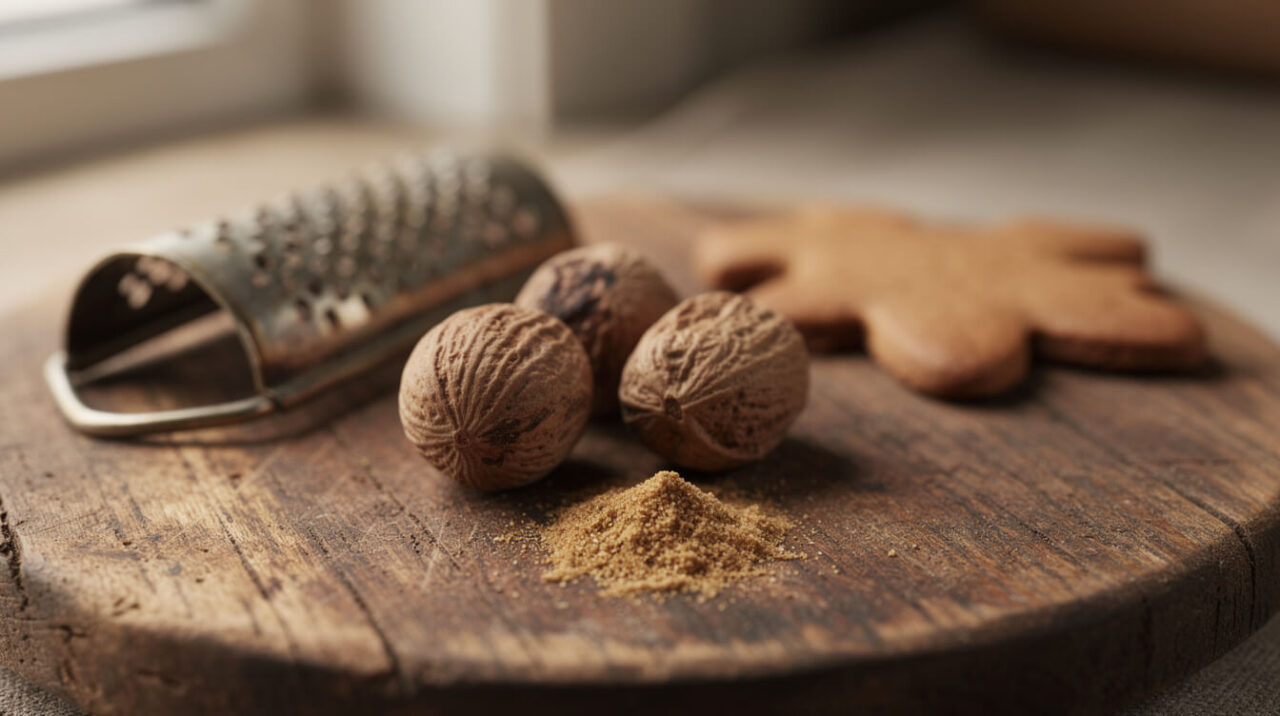
Nutmeg really does contain a toxin. It’s called myristicin, and in large amounts it can cause disorientation, a racing heart, high blood pressure, belly pain, and in severe cases seizures, with signs that can last up to 48 hours. None of that is in dispute. What matters is the dose.
Several top-ranking articles call nutmeg “the biggest risk” in gingerbread, and at least one links to the Pet Poison Helpline as its source. Here is what that Pet Poison Helpline page, written by staff veterinarian Dr. Charlotte Flint, actually says:
“The small amount of nutmeg used in recipes is very unlikely to cause serious toxicity, though mild stomach upset could occur if a small amount is ingested… A pet would need to ingest a very large amount of nutmeg, and this is very unlikely to occur if a dog or cat ingests food with nutmeg in it.”
In other words, myristicin poisoning is a jar-of-nutmeg problem, or a whole-nutmeg-seed problem, not a cookie problem. A veterinarian quoted by Chewy put the amount that becomes a concern at around a teaspoon of ground nutmeg, or two to three whole nutmegs, while adding that the dose in a single piece of gingerbread isn’t likely to cause symptoms.
The cookie arithmetic
To see why, look at real recipes. These are rough numbers, not a toxic-dose calculator, but they show the scale:
- Joy of Baking’s classic gingerbread men call for ¼ teaspoon of ground nutmeg in a batch that makes about three dozen cookies. That works out to roughly 1/144 of a teaspoon per cookie. To reach a full teaspoon of nutmeg, a dog would have to eat about four batches.
- Sally’s Baking Addiction’s gingerbread cookies, a hugely popular recipe online, contain no nutmeg at all. They use ginger, cinnamon, allspice, and cloves.
Homemade recipes and bakery cookies vary, and some spice-heavy recipes use more, but the pattern holds: by the time a dog had eaten enough cookies for the nutmeg to matter, the butter and sugar would long since have become the bigger problem.
What about cinnamon and cloves?
The same Pet Poison Helpline page covers cinnamon. Dr. Catherine Angle writes that it takes more than about a teaspoon of cinnamon powder to cause problems in most pets. The Sally’s recipe above uses a full tablespoon of cinnamon across 24 cookies, about ⅛ teaspoon each. So one cookie is fine on the cinnamon front, but a dog who ate the whole batch has eaten roughly three teaspoons. That’s one more reason “a whole tray” is its own category. Cloves and allspice contain eugenol, which in larger amounts can upset the stomach. Again, the amount in one cookie is small.
The real dangers are a different list, and the most important one is easy to miss.
What actually makes gingerbread risky for dogs, ranked
If your dog got into gingerbread, these are the things worth checking, in order of how fast you need to act.
1. Raisins or currants: call now, whatever the amount
Traditional gingerbread men often have raisins or currants for eyes and buttons, and some gingerbread loaves and cakes have dried fruit mixed in. The “currants” in baking are almost always Zante currants, which are small dried grapes. The Merck Veterinary Manual lists grapes, raisins, and Zante currants together as causes of kidney failure in dogs. (True currants, the Ribes berries, haven’t been linked to kidney injury, but a currant on a cookie is almost never one of those.)
The likely culprit is tartaric acid, which dogs are poor at clearing from their kidneys. The ASPCA Animal Poison Control Center reports that its concentration in grapes varies from 0.35% to 2%, which is why no one can predict which dog will be affected or by how much. Merck’s rough guide is that more than one grape or raisin per 10 pounds (4.5 kg) of body weight may be enough to pose a risk. For a 10-pound dog, that’s two raisin buttons on one cookie.
Signs usually start with vomiting or diarrhea within 6 to 12 hours, and kidney failure can follow within 24 to 72 hours. Early decontamination by a vet works far better than treatment after kidney values rise. If raisins or currants were on or in what your dog ate, call your vet or a poison line now, even if your dog seems completely fine. This is the one genuinely time-critical line in this whole article.
2. Xylitol in sugar-free or “keto” gingerbread: call now
Xylitol is a sugar alcohol used in some sugar-free baked goods, icings, candies, syrups, and peanut butters. In people it barely affects insulin. In dogs it triggers a rapid insulin release that can drop blood sugar dangerously, sometimes within 30 minutes, and some dogs go on to develop liver injury a day or two later. If the gingerbread, the icing, or anything on the house was labeled sugar-free, low-carb, or keto, read the ingredient list for xylitol (sometimes listed as “birch sugar”). If it’s there, or you can’t find out, call now.
3. Chocolate decorations: call, and know the type
Gingerbread houses and decorated cookies can carry chocolate chips, chocolate candies, or chocolate drizzle. How serious that is depends on the type (baking chocolate and dark chocolate are much stronger than milk chocolate), the amount, and your dog’s weight. A poison line can work out whether your dog’s exposure needs treatment, so have the wrapper or a good guess at the amount ready when you call.
4. Fat and sugar: the whole-tray problem
This is the risk that applies to every gingerbread, including perfectly plain cookies. A recipe like Sally’s uses 10 tablespoons of butter for 24 cookies, roughly 6 grams of butter in each one. One cookie won’t bother most dogs. A whole tray, a buttery gingerbread cake, or half a gingerbread house is a large, sudden fat load, and that’s a known trigger for pancreatitis, a painful inflammation of the pancreas that can need hospital care. Small dogs, dogs with a history of pancreatitis, and breeds prone to it, like Miniature Schnauzers, deserve extra caution. If you’re seeing a pattern from holiday tables, it’s the same one we covered in our guide to mashed potatoes for dogs: the trimmings are usually the problem, not the base food.
5. The spices: usually just an upset stomach
At cookie amounts, nutmeg, cinnamon, cloves, and ginger are most likely to cause mild stomach upset, if anything. They move up this list only when the amount is large: a whole batch, a spilled spice jar, or the dough.
Gingerbread cookies, ginger snaps, houses, and lattes: quick verdicts

“Gingerbread” covers a lot of different foods. Here’s how each one shakes out.
Can dogs eat gingerbread cookies?
Not as a treat. One plain cookie is usually a watch-at-home situation for a medium or large dog. Check for raisin or currant decorations and sugar-free labeling first. Iced cookies add more sugar, but ordinary icing isn’t toxic.
Can dogs eat ginger snaps?
Same verdict. Ginger snaps are crunchy, usually molasses-heavy, sometimes more strongly spiced, and occasionally made with nutmeg. One or two dropped on the floor shouldn’t cause more than mild stomach upset in most dogs. Don’t hand them out.
Can dogs eat gingerbread houses?
No, and this is the version most likely to cause real trouble, because a house is gingerbread plus everything else:
- Candy and chocolate. See the chocolate and xylitol notes above. Kits sometimes include sugar-free candies.
- Royal icing. It’s mostly sugar and egg white. Some homemade royal icing recipes include a pinch of cream of tartar, which is a form of tartaric acid, the compound now believed to be the grape toxin. The documented dog cases involved homemade play dough and tamarind paste, not icing, and we found no reports linked to icing. Still, if your dog ate a lot of homemade icing, mention it when you call.
- Non-food parts. Cardboard or foil-covered bases, wooden skewers or toothpicks used as supports, ribbon, and plastic figures. Ribbon and sharp wood can cause choking or a gut blockage, which is a separate emergency from anything toxic.
- Age. A house that’s been on display for weeks can grow mold. Moldy food can carry toxins that cause tremors in dogs, so a dog who ate an old, moldy house needs a call even if it was plain gingerbread.
- Size. A whole house is a huge amount of sugar and fat for any dog.
Can dogs have a gingerbread latte?
No. Coffee drinks add caffeine, a stimulant dogs are sensitive to, plus syrup and whipped cream. A lick of foam off a cup is unlikely to matter. A dog who drank most of a cup, especially a small dog, warrants a call. If the syrup was sugar-free, check its sweetener for xylitol.
Can dogs eat gingerbread dough?
Raw dough is worse than the baked cookie. It’s a denser dose of fat, sugar, and spice, and raw flour and raw egg carry their own food-safety risks. Most gingerbread cookie dough is leavened with baking soda, but some gingerbread breads and cakes use yeast. Raw yeast dough is an emergency on its own, because it keeps rising in the stomach and produces alcohol, so call right away if the dough contained yeast.
The weekly care guide
Get it right for your animal, every week
One email a week: new care guides, species deep-dives, and the safety answers keepers search for, written by our specialists. No spam. Unsubscribe anytime.
My dog ate gingerbread: a calm checklist and when to call

First, take a breath. Most gingerbread thefts end with a dog who has a mildly upset stomach. Work through this list in order.
Step 1: Figure out what it was
Pick up whatever’s left and look at it, along with the box or recipe if you have it. Ask yourself four questions:
- Were there raisins or currants on it or in it? If yes, call now.
- Was anything sugar-free, low-carb, or keto, or does the label list xylitol or birch sugar? If yes, or you can’t tell, call now.
- Was there chocolate? If yes, call, and have the type and rough amount ready.
- Did your dog eat non-food parts like ribbon, skewers, foil, or plastic, or was the dough raw yeast dough? If yes, call now.
Step 2: Estimate how much, compared with your dog
If the answer to all four was no, you’re mostly looking at a sugar, fat, and spice exposure. A single cookie for a 60-pound dog is very different from three cookies for a 6-pound dog. If a small dog ate several cookies, if any dog ate a whole tray or a large part of a house, or if you simply can’t tell how much went missing, call your vet for advice. Calling is never an overreaction.
Step 3: Don’t make your dog vomit unless you’re told to
It’s tempting to reach for hydrogen peroxide. Don’t, unless a veterinarian or poison line tells you to and explains how. Inducing vomiting isn’t right for every situation (Merck advises that for xylitol it ideally happens under veterinary supervision), and home methods can cause harm of their own.
Step 4: Watch for the next day
For a plain-gingerbread exposure, mild signs look like one or two episodes of vomiting, some loose stool, or a quieter-than-usual dog, settling within about 24 hours. Call your veterinarian promptly if you see any of these:
- Repeated vomiting, or vomiting that won’t stop
- A painful or swollen belly, hunching, or a “praying” stance with the front end down and the rear up
- Refusing food or water, or marked lethargy
- Tremors, wobbliness, a racing heart, or unusual agitation
- Seizures or collapse. This is an emergency: go to the nearest emergency vet now.
Who to call
Your own veterinarian knows your dog’s history. If they’re closed, call a 24-hour emergency clinic, or one of the two US animal poison lines, both staffed by veterinary toxicology professionals:
- ASPCA Animal Poison Control Center: (888) 426-4435
- Pet Poison Helpline: (855) 764-7661
Both charge a consultation fee. Have your dog’s weight, what was eaten, roughly how much, and when it happened ready before you dial.
Ginger vs. gingerbread, and dog-friendly holiday treats

Ginger itself is a separate question from gingerbread, and the answer is friendlier. Plain ginger root isn’t toxic to dogs, and PetMD notes that small amounts of fresh or powdered ginger are generally considered safe for healthy adult dogs. Some vets do suggest it for nausea or motion sickness. Ginger can act as a mild blood thinner, though, so dogs on certain medications or heading into surgery should skip it. Ask your vet before you add it to your dog’s food, and let them suggest an amount. The spice isn’t what makes gingerbread a problem. The sugar, fat, and add-ons are.
If you want your dog in on the holiday fun, there are easier wins than sharing your baking:
- Treats made for dogs. Pet stores and bakeries sell gingerbread-flavored dog biscuits made without the sugar load. Read the label anyway, and skip anything with xylitol.
- A spoonful of plain pumpkin. Plain canned pumpkin (not pie filling, which is spiced and sweetened) is a seasonal favorite. Our guide to pumpkin for dogs covers the right amount.
- A frozen lick mat or a stuffed chew toy. These keep a dog busy while you bake, so they aren’t stationed under the counter.
- Something you already have. A few pieces of your dog’s own kibble, handed out as “cookies” during decorating, are just as exciting to most dogs.
Keep extras within your dog’s normal treat budget. Holiday treats add up fast, especially when several family members are slipping them under the table.
One more holiday idea, if there’s a reptile keeper on your gift list: our Bearded Dragon Crown Sunglasses King T-Shirt. We don’t have a dog design yet, but in a house with a dog bed and a basking lamp, it’s a good gift.

A gift for the reptile keeper on your list
Our crowned, sunglasses-wearing beardie, for the keepers whose holiday homes have room for scales and a dog bed. No cookies required.
A gingerbread-safe kitchen for the season
Prevention is easier than triage, and most of it is about height and habits:
- Cool cookies up high. Counter-surfers can reach the back of a standard counter. The top of the fridge or a closed oven works better.
- Display gingerbread houses out of reach, and throw them away before they’ve been sitting long enough to go stale or moldy.
- Bag the decorating leftovers. Raisins, candy, and sugar-free sweets go straight into a sealed container when you’re done.
- Tell your guests. Visitors who don’t live with a dog often don’t know about raisins or xylitol, and holiday gatherings are when dogs get the most “just one bite” offers.
Gingerbread isn’t the only seasonal hazard. Our guide to poinsettias and other holiday plants covers what’s on the windowsill, and our winter pet safety guide covers what’s outside.
Can dogs eat gingerbread? Your other questions, answered

Can a dog have one gingerbread cookie?
It isn’t recommended, but one plain cookie, without raisins, chocolate, or xylitol, usually causes nothing worse than a mild upset stomach in a medium or large dog. Watch for vomiting or loose stool over the next day. For a very small dog, or if anything was on the cookie, call your vet.
What if my dog ate a whole plate of gingerbread cookies?
Check for raisins, currants, chocolate, and sugar-free sweeteners first. Then call your vet, even if everything was plain. A whole plate is a large fat and sugar load, and your vet can weigh pancreatitis risk against your dog’s size and history.
Is gingerbread more dangerous for puppies or small breeds?
Yes, simply because the same cookie is a much bigger dose for a smaller body. Puppies also tend to eat fast and eat everything, including wrappers. Use a lower threshold for calling your vet with puppies, toy breeds, seniors, and dogs with diabetes, pancreatitis, or kidney or liver disease.
How much nutmeg is toxic to dogs?
There isn’t a well-established toxic dose for dogs, and I won’t invent one. Veterinary sources describe trouble from large amounts, such as a spilled jar, a whole nutmeg seed, or something on the scale of a teaspoon of the ground spice. They do not describe trouble from the small amounts baked into cookies. If your dog got into the spice jar itself, call your vet or a poison line.
Are gingerbread dog treats safe?
Treats made specifically for dogs are formulated without the sugar and fat of human gingerbread, so they’re generally fine within your dog’s normal treat allowance. Read the ingredient list, skip anything with xylitol, and introduce new treats gradually if your dog has a sensitive stomach.
Can dogs eat gingerbread men?
Treat a gingerbread man like any gingerbread cookie, with one extra check: look at the eyes and buttons. Raisins and currants are a traditional decoration, and those turn a probable upset stomach into a call-your-vet-now situation.
The bottom line on dogs and gingerbread
Gingerbread is a people treat, and it should stay that way. But the fear around it is often aimed at the wrong ingredient. The nutmeg in a cookie is very unlikely to poison your dog. The raisins on a gingerbread man, the xylitol in a sugar-free batch, the chocolate on a gingerbread house, and the butter in a whole tray are the things that actually matter.
If your dog got into some, check what it was, compare the amount with your dog’s size, and call your vet or a poison line whenever raisins, currants, xylitol, chocolate, non-food parts, or a large amount are involved. Then do what every experienced dog person does each December: move the cooling rack higher. You’re already doing the most important part by looking this up before guessing.
This article is for general information and is not a substitute for veterinary care. If you think your dog has eaten something harmful, contact your veterinarian, an emergency clinic, or an animal poison control service right away.
Before you go
Keep learning your animal
We publish a new guide every day. The best of them land in one short weekly email, so you never miss the one about your species.

Meet Jake Harrington, your go-to guru for all things canine. With over 15 years of professional dog training experience, Jake has transformed the lives of thousands of dogs and their owners. His journey began in the bustling streets of a major city, where he discovered his natural affinity for understanding canine behaviors and communication.