How Cold Is Too Cold for Dogs? Temperature Thresholds by Size, Coat, Age, and Health
How cold is too cold for dogs? The honest answer is that it depends on the dog, and that’s why most answers online sound vague. A thin-coated Chihuahua and a sled-fit Malamute are living in different weather on the same sidewalk. There is still a useful starting point, though, and there’s a famous chart behind most of the numbers you’ve seen. This guide covers both. We’ll explain where “the Tufts chart” came from, what it really measures, the things that move your dog’s personal limit up or down, and how to tell when a walk has gone on long enough.
One thing first. If your dog is weak, confused, or collapsing after time in the cold, stop reading and call your veterinarian or the nearest emergency clinic now. Everything below is for planning, not emergencies.
How cold is too cold for dogs? The short answer
The most widely repeated rule of thumb, published by PetMD and echoed by several veterinary clinics, goes like this:
- Above about 45°F: cold shouldn’t be a problem for most dogs.
- Below about 45°F: some cold-averse dogs start to feel uncomfortable.
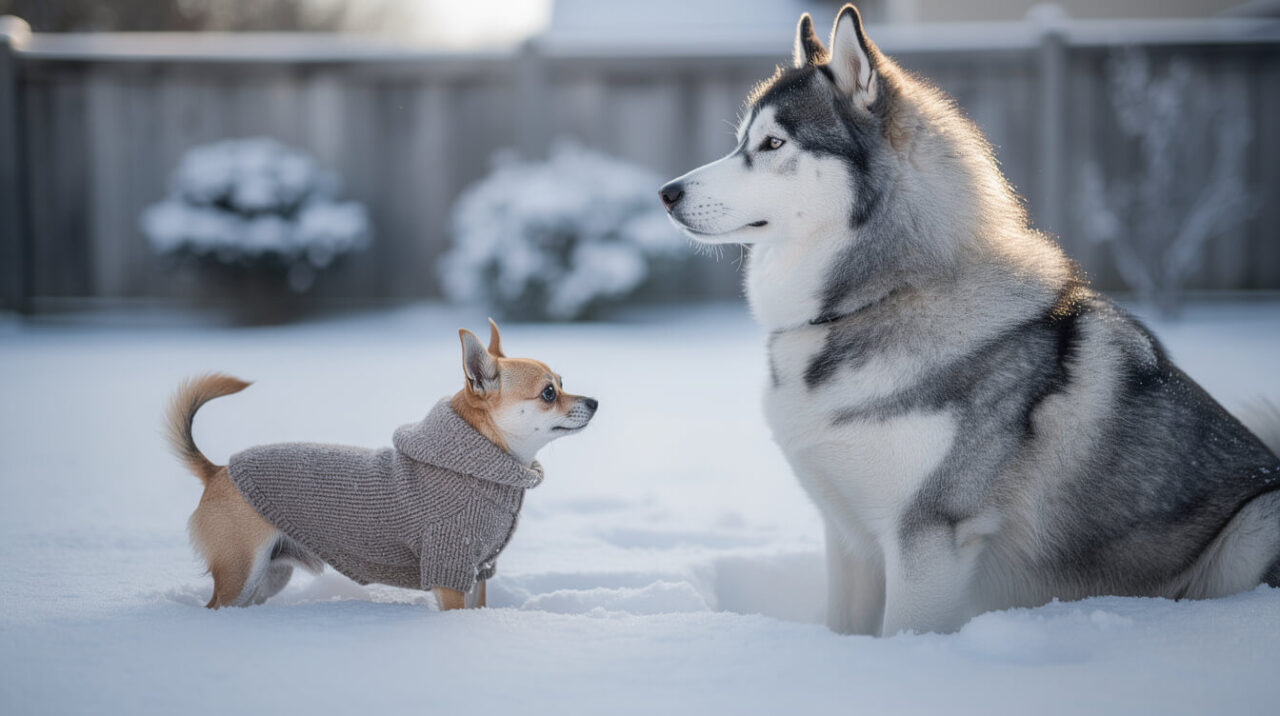
- Below 32°F: small dogs, thin-coated dogs, and very young, old, or sick dogs can be in danger if they spend too much time outside.
- Below 20°F: every owner should be thinking about hypothermia and frostbite during longer stretches outdoors.
That’s a fair starting point. Just treat it as the place you start, not the answer. Those bands describe an imaginary average dog standing still in dry air. Your dog is smaller or bigger, thinner or fluffier, younger or older, wetter or drier, and moving more or less than that average dog. Each of those things shifts the line by a meaningful amount, which is what the rest of this guide is about.
It’s also worth hearing from someone who sees cold-weather emergencies. Writing for Tufts Now, Jonathan Babyak, an emergency and critical care veterinarian at Tufts, put it bluntly: “There’s really no cut-off temperature for it being too chilly to take your dog outside.” His advice is to watch your dog’s cues instead, and he adds that some dogs benefit from a jacket or even snow booties. Keep that line in mind as we get to the chart that’s often credited to his own university.
So the practical version of how cold is too cold for dogs is a combination: the temperature bands tell you when to start paying attention, and your dog tells you when to go home.
Where “the Tufts chart” comes from, and what it actually says

Search for dog cold-weather limits and you’ll eventually meet a colorful chart, usually captioned as “modeled after” or “based on” a Tufts University scale. Mental Floss, for example, runs a pet insurer’s version and describes it that way. We went back to the source.
It was built to spot neglect, not to plan walks
The original is the Tufts Animal Care and Condition (TACC) scales, designed by veterinarian Gary Patronek and printed in Animal Sheltering magazine in July–August 1998 (a copy of the TACC pages is hosted by Vermont Humane). The article is explicit about its purpose: to help animal control officers, cruelty investigators, and veterinarians “determine the condition of a potentially neglected dog.” Its disclaimer calls it “a simple screening device for determining when neglect may be present.”
That matters. The weather scale was meant to help an officer looking at a dog in a yard decide whether to warn the owner, return later, or step in. It wasn’t designed as a walk planner for a dog that lives indoors, and its own notes say that brief exposure to cold “would not be life-threatening,” unlike brief exposure to high heat.
How the scale works
The weather safety scale scores risk from 1 to 5 on three diagonal bars, one each for small, medium/large, and very large/giant dogs. A score of 3 means “indicators of a potentially unsafe situation, depending on breed, time outdoors.” A score of 5 means “potentially life-threatening risk present,” with immediate intervention required.
Read straight off the baseline bars, before any adjustments, the cold side reaches a 3 somewhere around 40°F (high 30s to low 40s, depending on size). It reaches a 5 at roughly 20°F for small dogs and roughly the low teens for medium, large, and giant dogs. Treat those as approximate. The chart is a hand-drawn diagonal that you read by tracing a line from the temperature axis, and our readings could easily be off by a few degrees. That’s why we aren’t printing a precise table, and why any chart claiming single-degree precision is overselling its source.
The modifiers are the useful part
The most valuable part of the TACC scale for dog owners is the list of adjustments, which most modern versions leave out. In cool or cold weather, the original says to:
- Add 1 point for a toy dog.
- Add 2 points if the dog is out in rain or sleet.
- Subtract 1 point for a northern or heavy-coated breed.
- Subtract 1 point if the dog has good shelter and bedding.
- Subtract 1 point if the dog is acclimated to cold.
- And in all weather, add 1 point if the dog is under six months old or elderly.
Run the arithmetic and something jumps out. Wet weather adds two full points, the biggest single adjustment on the list. By the chart’s own math, a small dog standing in cold rain around 40°F lands on the same score as a dry small dog at roughly 20°F. Of all the things you can control, keeping a dog dry may matter most.
Wind, wet, sun, and activity: what moves the number
Temperature is only one input. Four other things change how the same reading feels to your dog.
Wind
The TACC chart doesn’t mention wind at all, so newer versions that add wind chill are improving on the original. The National Weather Service says wind chill “applies only to people and animals.” Wind strips away the layer of warm air trapped in a coat, so a breezy 30°F day costs your dog more heat than a still one. If the forecast lists a wind chill, use that number with the bands above.
Wet
Water conducts heat away from the body far faster than air, and a soaked coat stops insulating. That’s why the TACC scale charges two points for rain or sleet. The Merck Veterinary Manual also notes that frostbite is more likely in wet or windy conditions. A dog who swims in a pond or rolls in slush at 40°F can get chilled faster than a dry dog at freezing.
A note on frostbite and “under 40 degrees”
You’ll find pages warning that frostbite becomes a risk below 40°F, even for thick-coated breeds. Frostbite is tissue freezing, as the NWS defines it. Wind makes exposed skin lose heat faster, but it can’t drive skin below the actual air temperature on its own. (Evaporation from wet fur can push a little lower, which is one more reason wet is worse than windy.) So frostbite is a below-freezing problem, and wind and wet bring it on sooner. At 40°F, the realistic concern is a chilled, wet small dog, not frozen ear tips.
Sun and activity
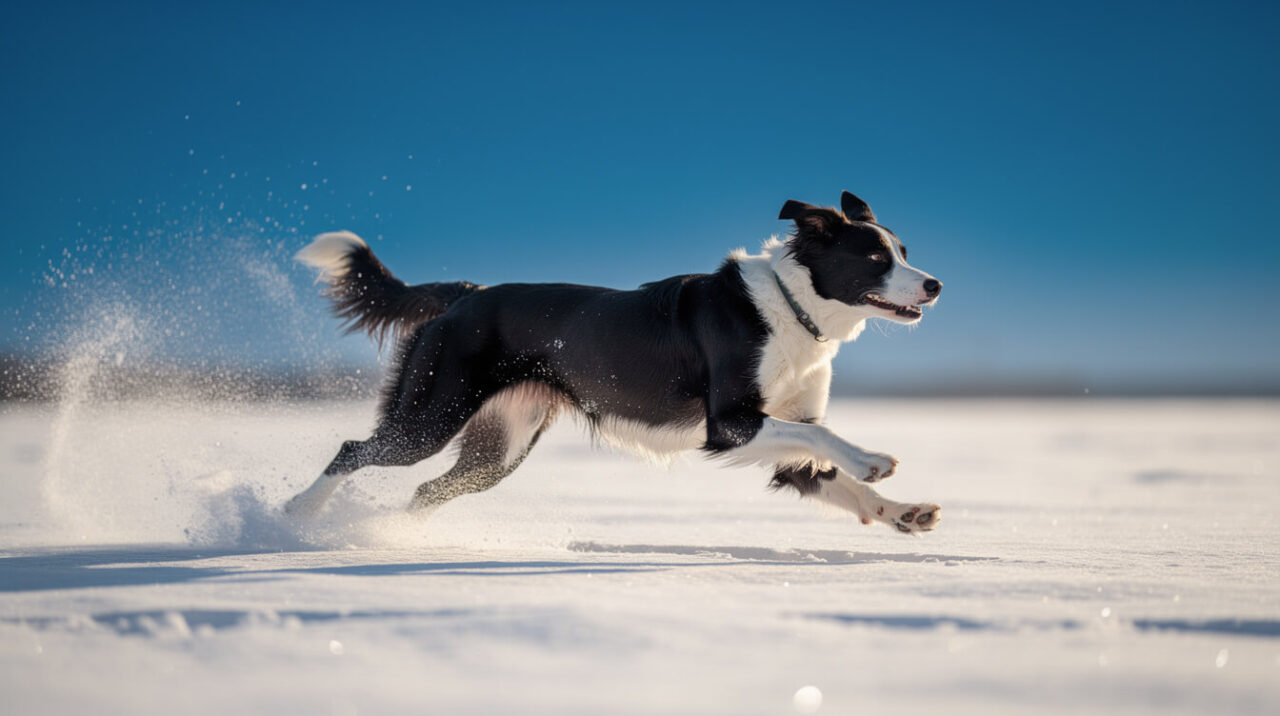
Bright sun on a dark coat adds real warmth, and exercise adds a lot more. A dog running hard can overheat even on a cold day. A study of dogs in UK canicross races (cross-country running in harness), held in “feels-like” conditions from about 23°F to 52°F, found that 10.7% of post-race readings exceeded 40.6°C (105°F), the temperature the researchers associated with heatstroke risk if it lasts. Male dogs and dark-coated dogs were more likely to get that hot. You’ll sometimes see this study cited to suggest dark coats keep dogs warmer in winter. It doesn’t show that. It shows that a dog working hard in cold weather can still overheat. So if your dog runs with you, skip the heavy coat for the run, and save it for slow walks and standing around.
Dogs who need a lower limit (and dogs who can go further)

The gap between dogs is enormous, and research shows it.
The range is wider than most people think
A Japanese study of outdoor-living mixed-breed dogs found their thermoneutral zone (the temperature range where the body doesn’t need to spend extra energy to stay warm) was about 79–84°F in summer and 72–79°F in winter. The dogs adapted to cold by growing more insulating coat and running a slightly higher resting metabolism. At the far end, Inuit sled dogs in Greenland had a thermoneutral zone that extended down to about −13°F (−25°C).
Two lessons come from that. First, acclimatization is real, which is why the TACC scale subtracts a point for it. A dog who has lived through the gradual cooling of fall copes better than one who moved from Florida last week. Second, the edge of the thermoneutral zone isn’t a danger line. Below it, a dog just burns more energy to stay warm. Discomfort and danger come much later, and they come at very different temperatures for different dogs.
Who needs a more cautious line
- Toy and small dogs. Small bodies have more surface area for their size and lose heat faster. The TACC scale adds a point for toy breeds on top of using the small-dog bar.
- Thin-coated and lean dogs. Greyhounds, whippets, Italian greyhounds, and many short-coated breeds carry little body fat and a single thin coat. If you share your home with one (and our guide to why greyhounds make great family dogs explains the appeal), a well-fitted coat is equipment, not fashion.
- Puppies and seniors. The TACC scale adds a point for dogs under six months or elderly dogs, in any weather. Puppies haven’t fully developed their temperature control, and older dogs often have less muscle and more joint stiffness in the cold.
- Dogs with health conditions. Heart disease, hormonal conditions, kidney disease, and some medications can all affect how a dog handles cold. If your dog has an ongoing condition, ask your veterinarian for a personal limit.
- Dogs with recent haircuts. A dog clipped short for the holidays has temporarily lost the insulation its breed counts on.
Who can usually go further
Northern and heavy-coated breeds such as huskies, Malamutes, Samoyeds, Bernese mountain dogs, and Newfoundlands are built for cold, and the TACC scale subtracts a point for them. Built for it isn’t the same as immune to it, though. Even these breeds need dry shelter, water that isn’t frozen, and a way out of the wind. The famous sled dogs of the 1925 serum run (our story of the real Balto covers it) were conditioned working animals, not house dogs taken straight out into a blizzard.
The weekly care guide
Get it right for your animal, every week
One email a week: new care guides, species deep-dives, and the safety answers keepers search for, written by our specialists. No spam. Unsubscribe anytime.
Walks vs. sleeping outside: time, shelter, food, and water
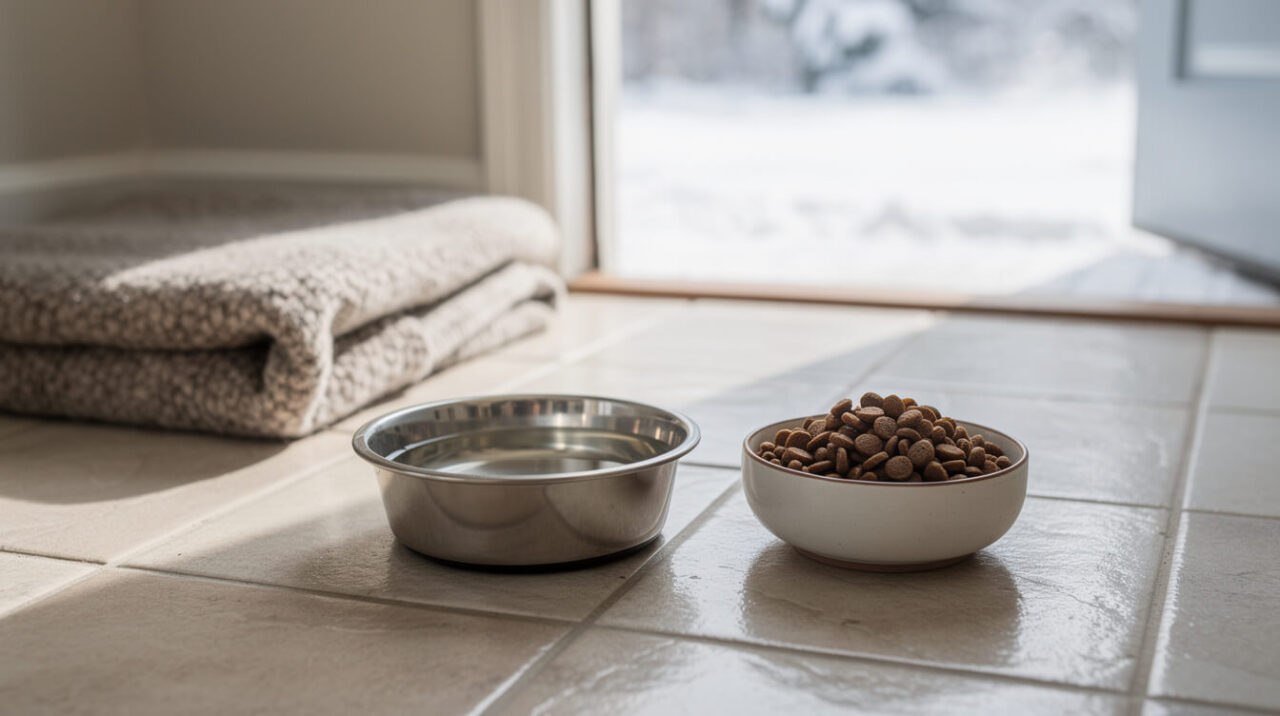
A 10-minute walk at 25°F and a night outside at 25°F are completely different questions, and most temperature charts don’t separate them.
Walks
Time matters as much as the temperature. PetSmart suggests keeping outings to about 10–15 minutes when it’s below freezing and watching closely, which is a reasonable default for small or thin-coated dogs. A heavy-coated, acclimated dog who’s moving can often go much longer. A few habits help any dog:
- Walk during the warmest, sunniest part of the day when you can.
- Keep your dog moving. A dog standing still loses heat faster than one trotting.
- Do several short outings instead of one long one on very cold days.
- Dry your dog off when you get home, especially the legs, belly, and paws.
- Keep the leash on near ice. Frozen ponds and rivers are a real drowning risk.
Sleeping outside
This is where the stakes rise, because a dog outside overnight can’t tell you it wants to come in. For most pet dogs, the honest answer once temperatures drop below freezing is to bring them inside to sleep. PetSmart takes the same view (“in most cases, no”), and we agree for any dog that’s small, thin-coated, young, old, unwell, or not acclimated.
Some acclimated working and northern-breed dogs do live outdoors in winter. If that’s your situation, the Merck Veterinary Manual’s outdoor-dog guidance sets the floor:
- Shelter: clean, with a solid roof, raised off the ground to stay dry, big enough to stand up and turn around in, with a flexible door flap to keep rain and snow out.
- Food: outdoor dogs burn a lot of energy keeping warm. Merck’s table goes as far as twice their usual amount in cold weather, split into smaller meals. That guidance is for dogs living outdoors, not house dogs who go out for walks. Ask your vet how much your dog needs, and watch its body condition.
- Water: water that stays liquid, such as a heated bucket. Snow isn’t a water supply.
- Company: frequent contact with people and other dogs.
Even then, the TACC modifiers tell you when to bring a dog in: rain or sleet adds two points, and age adds one. In a freezing rain storm, every dog belongs indoors. Some cities and states also have laws about outdoor shelter or tethering in cold weather, so check your local rules.
Signs your dog is too cold, and when to call the vet

There are two separate lists here, and mixing them up causes problems.
“Let’s head home” signs
These are discomfort signals, and they mean it’s time to finish the walk and warm up:
- Shivering or trembling
- Lifting one paw after another, or refusing to walk
- Slowing down, hunching, or tucking the tail
- Pulling toward home, whining, or looking for shelter
“Call the vet now” signs
The Merck Veterinary Manual lists the signs of hypothermia as a slow pulse, shallow breathing, confusion, collapse, or unconsciousness. It also says plainly that “shivering is not a reliable sign of hypothermia.” PetMD makes a related point: shivering can stop as hypothermia gets worse. So a dog who has stopped shivering isn’t necessarily warming up, and a dog who never shivered isn’t necessarily fine. A weak, wobbly, dull, or confused dog after cold exposure needs a veterinarian right away.
Frostbite usually affects the parts with the least insulation: the tips of the ears, the feet, and the tail. Merck describes affected skin as pale or red, swollen, and painful. In severe cases it can turn dark and hard. Any suspected frostbite should be seen by a vet, because the full extent of the damage can take time to show.
What to do on the way to the vet
Merck’s first-aid guidance is simple. If the dog is wet, dry it first, then wrap warm (not hot) water bottles around its body. If you suspect frostbite, warm the area slowly, and “do not rub it or apply snow or very hot water.” Call ahead so the clinic is ready for you.
Don’t trust the nose
A cold nose doesn’t tell you much. In a study of 100 dogs arriving at an emergency room, nose temperature had no correlation with core body temperature (r = 0.02), and touching the nose was poor at identifying dogs that were too hot or too cold. Watch behavior, ears, paws, and energy instead.
Coats, booties, and paw care
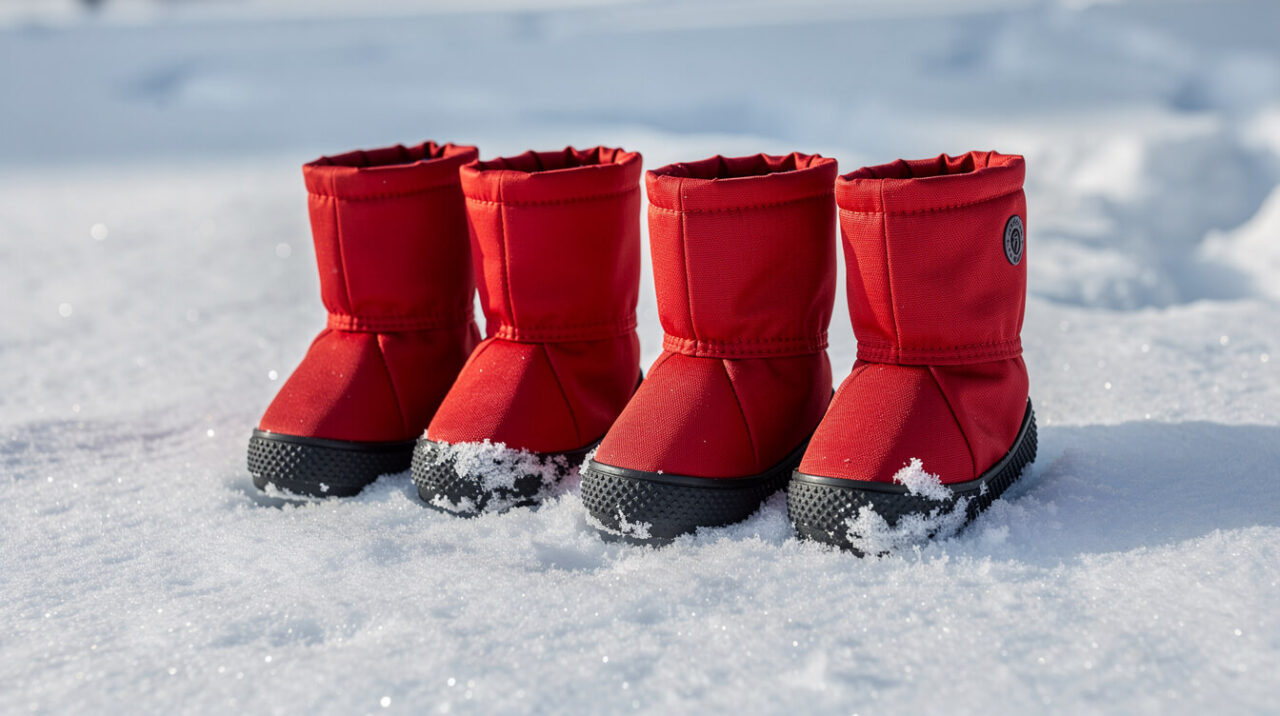
This is the good-news section, because gear really does move the line. A well-fitted coat can turn a miserable 25°F walk into a comfortable one for a dog who needs it.
Coats and sweaters
Coats help most for small, thin-coated, lean, young, old, or recently clipped dogs. Look for a coat that covers the chest and belly, not just the back, and that lets your dog move and relieve itself freely. Water resistance matters more than thickness, given what wet does to a dog’s heat. Take it off indoors so your dog doesn’t overheat, and skip it for hard runs. Heavy-coated northern breeds usually don’t need one at all and can get too warm.
Booties
Booties protect paws from ice, sharp crusted snow, and de-icing salt, and they stop snow balling up between the toes. Most dogs walk strangely in them at first. Introduce them indoors in short, rewarded sessions before trying them on a real walk, and check that they’re snug without pinching. Paw balm or wax is another option for dogs who won’t tolerate booties.
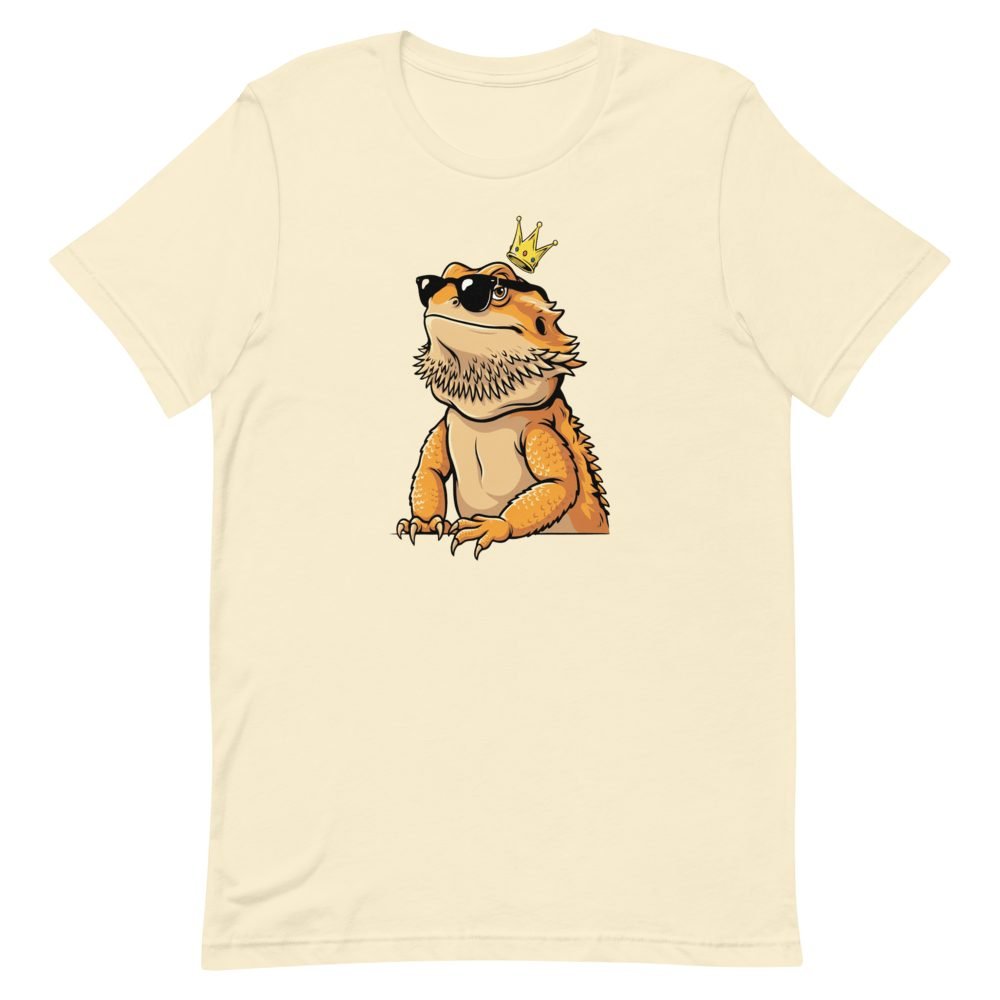
And because so many of us share the house with more than one kind of animal, here’s our one bit of merch for the season. Our Bearded Dragon Crown Sunglasses King T-Shirt is for the reptile keeper who also walks the dog in the snow. It won’t keep your dog warm, but it’s a good layer under your own coat.
Wear the obsession
Our Bearded Dragon Crown Sunglasses King tee is for the multi-species household: a soft everyday shirt for keepers who take their animals seriously and themselves a little less so.
After every walk: wipe the paws
Sidewalk de-icers are the other winter paw hazard. Merck warns that dogs can get salt poisoning by licking rock salt off their paws, with vomiting that can progress to weakness, tremors, and seizures. Babyak at Tufts takes a calmer view of the everyday case: a dog that licks a little off its pads will, at worst, get an upset stomach, while eating a bag of it is an emergency. Both sources land on the same habit, though. Wipe your dog’s paws with a damp cloth after every winter walk. It takes 30 seconds and removes salt, grit, and chemicals before your dog can lick them off. If your dog is still licking its paws a lot indoors, our guide to why dogs keep licking their paws covers what the pattern can mean.
Antifreeze is the winter poison to take most seriously. It tastes sweet, and Merck notes that only a small amount can be lethal to a dog. Clean up any drips in the garage or driveway right away. If you think your dog has licked antifreeze or eaten de-icer, call your veterinarian or an animal poison control line immediately: the ASPCA Animal Poison Control Center at (888) 426-4435 or the Pet Poison Helpline at (855) 764-7661 (both may charge a fee). For more seasonal hazards, see our roundup on pet safety during the winter and our guide to whether poinsettias are poisonous to dogs.
How cold is too cold for dogs: quick answers
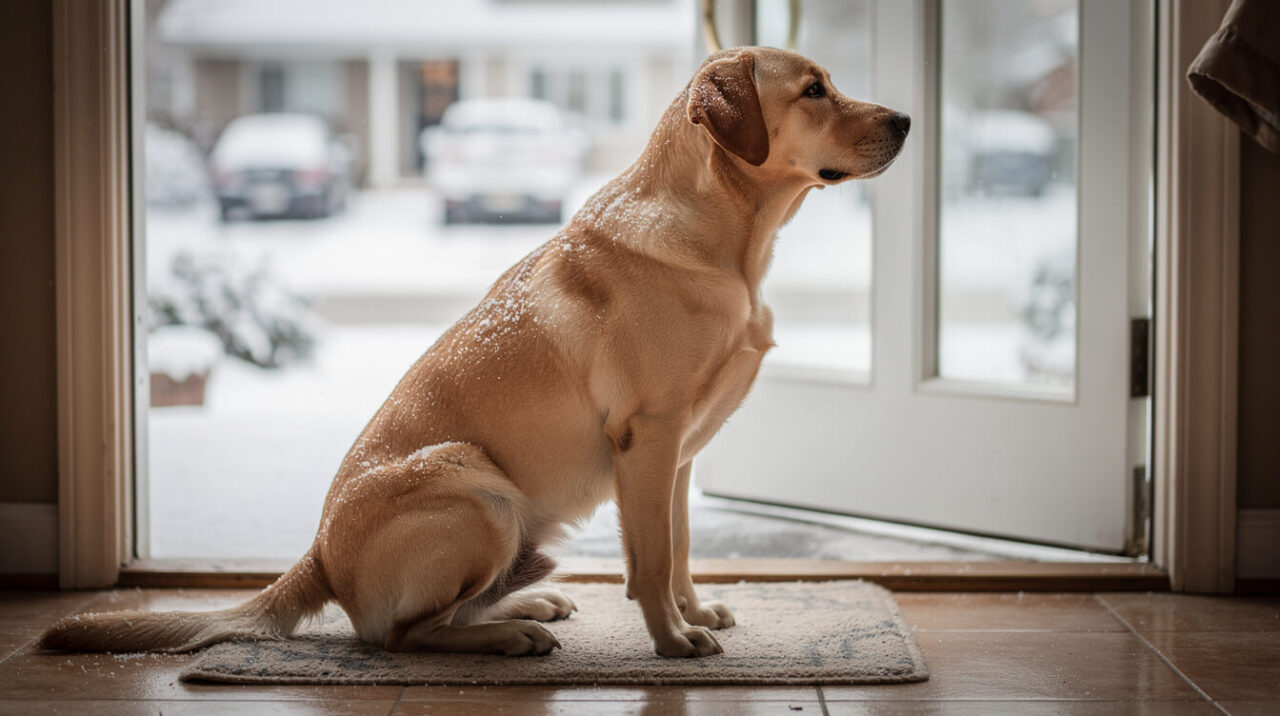
How cold is too cold for dogs to sleep outside?
For most pet dogs, below freezing (32°F) is the point to bring them in overnight, and sooner if they’re small, thin-coated, young, old, unwell, or wet. Acclimated northern breeds with real shelter, bedding, unfrozen water, and extra food can handle more, but no dog should be outside overnight in freezing rain or sleet.
What temperature is too cold to walk a dog?
There’s no single number. Many vets suggest getting cautious with small and thin-coated dogs below about 32°F and shortening walks for every dog below about 20°F. Wind, wet, and your dog’s own signals matter more than the exact reading. Short, brisk walks are usually fine even on very cold days.
Can dogs get frostbite at 40°F?
Frostbite is tissue freezing, so it’s a below-freezing risk, and wind and wetness make it happen faster. At 40°F, the bigger concern is a wet small dog getting chilled.
Do huskies have a cold limit?
Yes, though theirs is far lower than most dogs’. Acclimated sled dogs can be comfortable well below 0°F. A husky still needs dry shelter, liquid water, and enough food, and a husky who has spent the fall in a warm apartment isn’t acclimated yet.
Is a cold nose a sign my dog is cold?
No. In an emergency-room study, nose temperature didn’t track core body temperature at all. Look at behavior, energy, ears, and paws instead.
Is there an official Tufts temperature chart for walking dogs?
Not as far as we can find. The original is a 1998 neglect-screening scale for animal control officers, and the walking charts online are adaptations of it. The original’s adjustments for size, age, coat, wet weather, shelter, and acclimatization are still worth knowing.
The bottom line: use 45, 32, and 20°F as checkpoints, then adjust for your dog. Smaller, thinner, younger, older, wetter, or stiller means come in sooner. Bigger, fluffier, acclimated, dry, and moving means your dog can usually stay out longer. Above all, keep your dog dry, watch how it’s acting, and call your vet for anything beyond shivering.
Before you go
Keep learning your animal
We publish a new guide every day. The best of them land in one short weekly email, so you never miss the one about your species.

Meet Jake Harrington, your go-to guru for all things canine. With over 15 years of professional dog training experience, Jake has transformed the lives of thousands of dogs and their owners. His journey began in the bustling streets of a major city, where he discovered his natural affinity for understanding canine behaviors and communication.