The Complete Axolotl Care Guide: Tank, Water, Diet, and Health
If you’ve fallen for an axolotl’s permanent smile and feathery gills, you’re not alone — and you’re about to learn that a good axolotl care guide looks nothing like a typical fish-tank setup. Axolotls aren’t fish at all; they’re fully aquatic salamanders with a narrow temperature window, a picky filtration wish list, and a few hard “never” rules that catch new keepers off guard. None of it is complicated once you know it. This guide walks through the tank, the water chemistry, the diet, and the health red flags that actually matter — so your axolotl gets the stable, cool, calm world it needs to thrive for a decade or more.
Axolotl Tank Setup: Size, Substrate, and Cycling
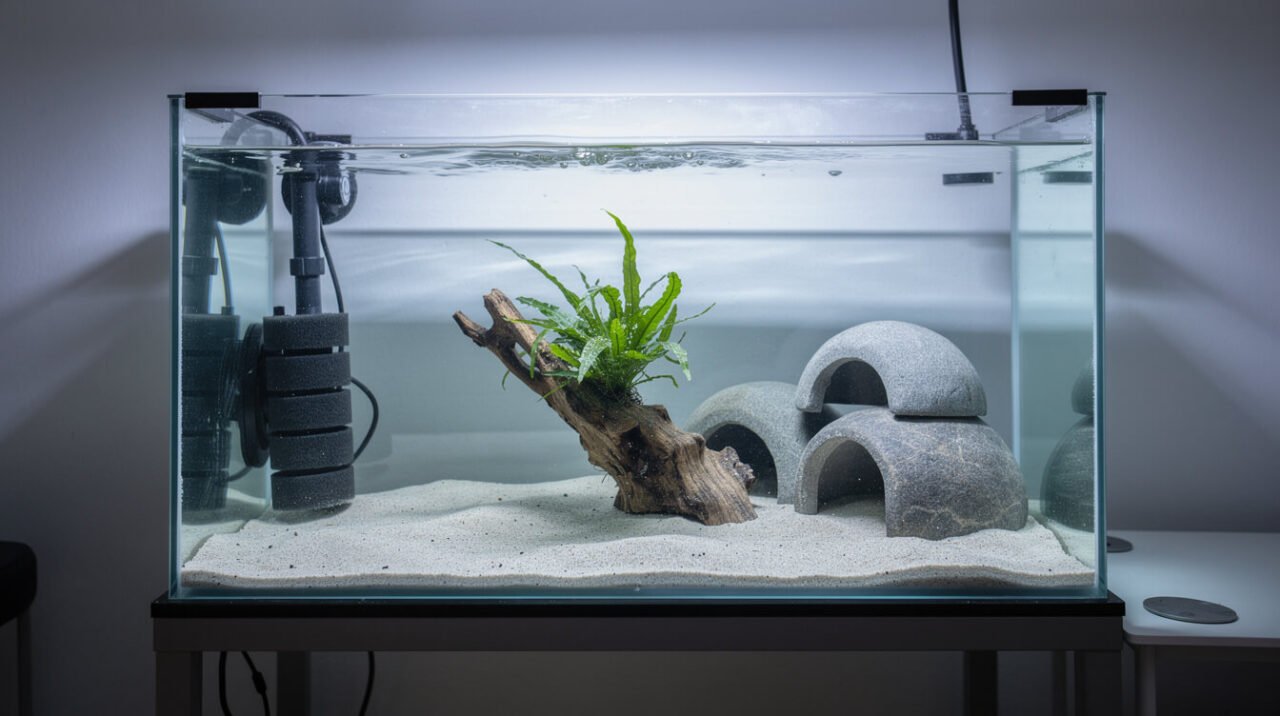
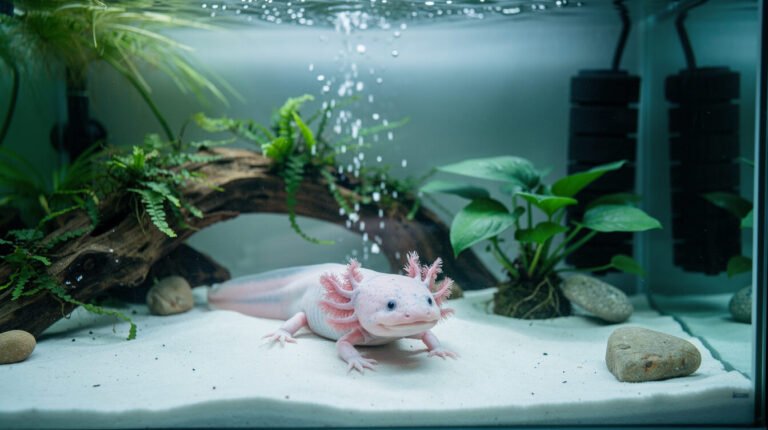
Start bigger than you think you need to. A single adult axolotl does best in at least a 20-gallon long tank — the extra water volume matters more than the footprint, because more water means temperature and water chemistry swing less between water changes. A 10-gallon can work temporarily for a young juvenile, but you’ll be doing water changes constantly to keep up, and axolotls grow fast enough that you’ll outgrow it within months anyway.
Substrate is where a lot of well-meaning setups go wrong. Skip gravel and small pebbles entirely — axolotls are ambush feeders that inhale their food, and loose substrate gets vacuumed up right along with it, leading to impaction. Bare-bottom (just the glass) or a smooth, fine sand are the two genuinely safe options. If you use sand, keep the layer thin so it doesn’t trap waste.
Cycle the tank before your axolotl moves in
Axolotls produce a lot of waste for their size, and an uncycled tank means ammonia and nitrite spikes that burn their gills within days. Run a fishless nitrogen cycle for several weeks before adding your axolotl — the same process aquarium keepers use for fish tanks, just on a system that needs to already be handling bioload before a sensitive amphibian arrives. Dose the tank with a source of ammonia, seed it with beneficial bacteria if you can, and test daily until you see ammonia and nitrite both reliably dropping to zero within 24 hours while nitrate rises — that’s your sign the biological filter is established. If you already keep a cycled betta or community aquarium, you already understand the mechanics; axolotls just have zero tolerance for skipping this step.
Filtration should be gentle. Axolotls dislike strong current — it’s stressful and can damage their delicate external gills — so a sponge filter or a canister filter with the output baffled down is a better choice than a standard power filter running wide open. Add a lid: axolotls can and do jump, especially when startled or when water quality is bothering them.
Decor, plants, and hides
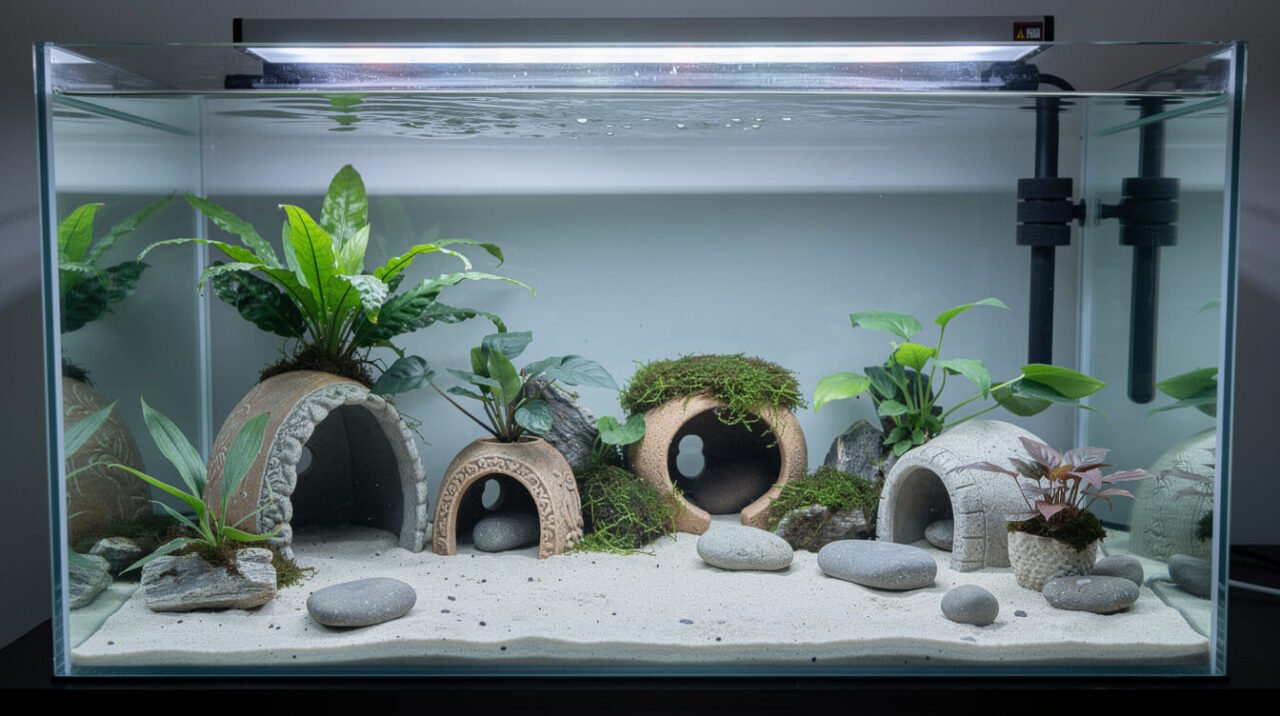
Furnish the tank with the animal in mind, not the aesthetic. Smooth, rounded caves and hides (nothing with sharp edges that could snag a gill or catch a limb) give your axolotl somewhere to retreat during the day, since they’re most active at dusk and overnight. Live plants like java fern, anubias, or java moss tolerate cool water well and don’t need substrate to root in — you can anchor them to decor instead, which sidesteps the substrate question entirely. Silk plants are a safe artificial alternative; skip plastic plants with hard, pointed leaves. Leave open swimming space too — a tank crammed wall-to-wall with decor doesn’t give a 9–12 inch adult axolotl room to turn around comfortably.
Water Quality and Temperature: The Two Things That Make or Break Axolotl Care
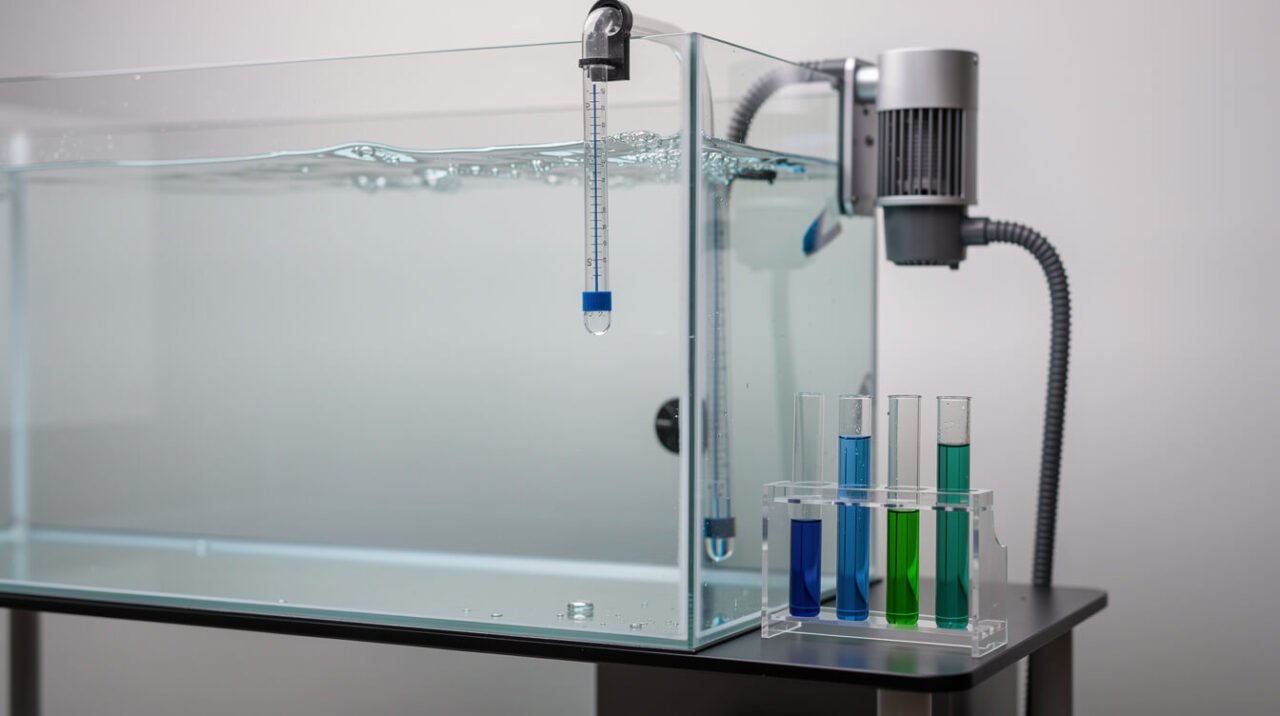
This is the section to bookmark. Axolotls are cold-water animals — comfortable in the roughly 60–68°F (16–20°C) range. Once water temperature climbs past about 74°F, axolotls start showing real heat stress: appetite loss, lethargy, and a much higher risk of illness. In most climates, that means a small aquarium chiller or a fan-cooling setup isn’t optional gear — it’s part of the baseline build, especially through summer.
On water chemistry, aim for these targets and treat them as a floor, not a suggestion:
- Ammonia: 0 ppm
- Nitrite: 0 ppm
- Nitrate: under roughly 20 ppm, lower is better
- pH: neutral to slightly alkaline, roughly 6.5–8
Test with a liquid freshwater test kit rather than trusting your eyes — clear water can still carry dangerous ammonia. Do partial water changes of around 20–30% weekly at minimum (more often for smaller or newer tanks), always with dechlorinated, temperature-matched water. Axolotls absorb a lot through their skin and gills, so chlorine, chloramine, and sudden temperature swings hit them harder than they’d hit most fish.
Water conditioner and hardness
Always treat tap water with a dechlorinator formulated to neutralize both chlorine and chloramine before it touches your axolotl — this is non-negotiable, not optional gear. Water hardness matters more for axolotls than for many aquarium fish: moderately hard water helps maintain the integrity of their skin and slime coat, so avoid using distilled or heavily softened water as your primary source. If your tap water is naturally very soft, a remineralizing product made for freshwater aquariums can help bring general hardness (GH) into a healthier range. When you do a water change, match the new water’s temperature to the tank within a degree or two — a sudden cold or warm shock is genuinely stressful for an animal this sensitive to its environment.
If you only take one thing from this guide: a stable, cool, cycled tank prevents more axolotl health problems than any supplement, treatment, or “hardy” reputation ever will.
What Do Axolotls Eat? A Feeding Schedule That Works
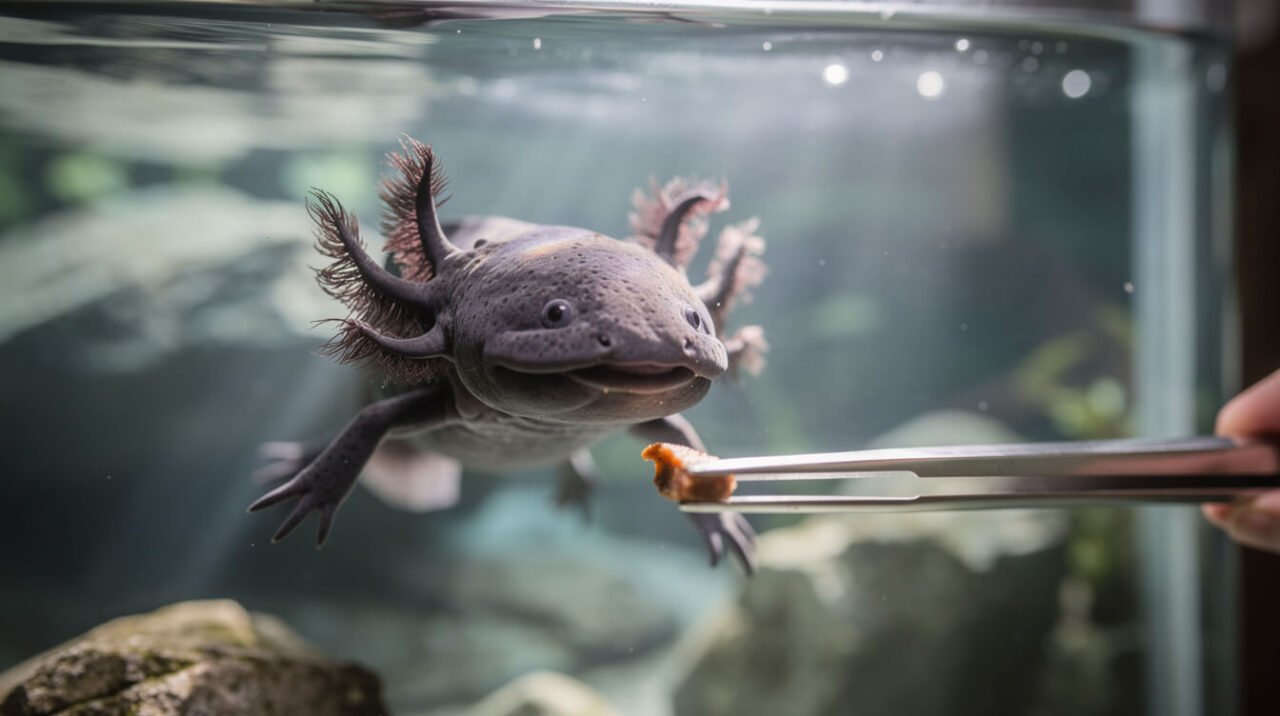
Axolotls are carnivores, and their feeding style is part of their charm — they’re ambush predators that inhale prey whole rather than biting or chewing. A solid staple diet includes nightcrawlers (chopped for smaller axolotls), frozen (thawed) bloodworms, and a good-quality sinking salmon or axolotl-specific pellet. Blackworms and occasional cooked, unseasoned shrimp make fine treats.
Juveniles are still growing fast and typically eat daily; adults generally do well on a feeding every two to three days. Offer only what your axolotl finishes in five to ten minutes, and remove anything left over — uneaten food fouls the water fast, and undoes a lot of the water-quality work above. Feeding with feeding tongs also gives you a daily, hands-off health check: an axolotl that suddenly stops eating is telling you something’s off.
Avoid making feeder fish (like goldfish or minnows) a regular part of the diet. Beyond parasite and bacterial risk from live fish, several common feeder species carry an enzyme called thiaminase that breaks down thiamine (vitamin B1) — a steady diet of them can lead to a real nutritional deficiency over time. An occasional feeder fish isn’t an emergency, but it shouldn’t be the staple.
Juveniles vs. adults
Young axolotls grow quickly and are hungrier for it — daily or near-daily small feedings support that growth, and chopping food into smaller pieces prevents a juvenile from choking on something sized for an adult. As axolotls approach their full adult size, usually somewhere around 12–18 months, growth slows and metabolism drops with it, which is why the feeding schedule stretches out to every two or three days. Watch body condition rather than the calendar: a healthy axolotl has a visibly rounded, full body without looking swollen, and a visible dip behind the head (a “wasp waist”) is usually a sign of underfeeding.
Foods to avoid entirely
Skip anything seasoned, cooked in oil, or intended for human plates — axolotls have no use for salt, spices, or fat, and these can genuinely harm their digestive system. Don’t feed insects caught outdoors, since pesticide exposure is a real risk, and never offer beef or other mammal-based meat; it’s too fatty and difficult for an axolotl to digest properly. When in doubt, stick to the short, proven list above rather than experimenting.
Tank Mates and Daily Life: What an Axolotl Actually Wants
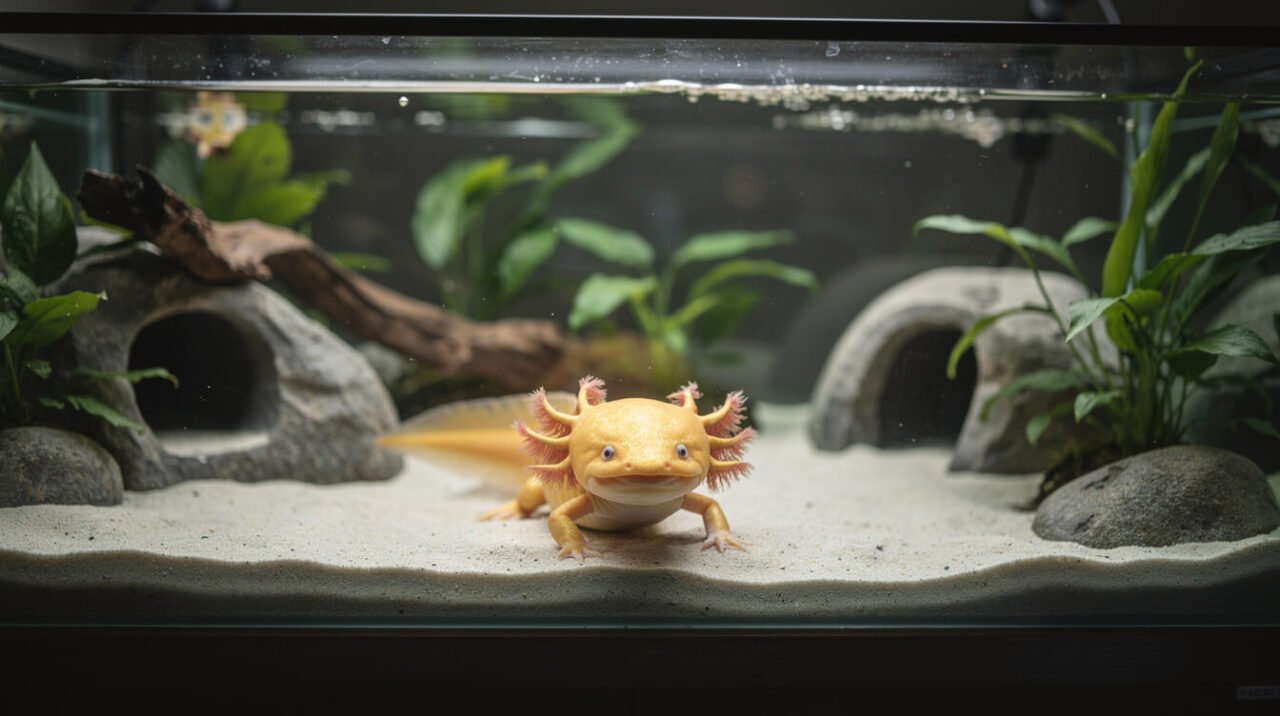
The honest, if slightly disappointing, answer here is: no tank mates. Fish will nip at those feathery gills (and axolotls will happily eat small fish back), and axolotls themselves aren’t social — juveniles in particular are known to bite the legs and gills off tankmates, including other axolotls, when housed too closely. If you want more than one, give each animal its own tank rather than hoping they’ll coexist peacefully.
Day to day, axolotls want dim lighting (they have poor eyesight and are sensitive to bright light), plenty of hides, and minimal handling. Their skin has a protective mucus coat that handling strips away, so treat “hands in the tank” as an occasional-maintenance activity, not a way to interact with your pet — wet your hands first if you must, support the body fully, and never pick one up by the tail or gills. Enrichment for an axolotl looks less like toys and more like a well-decorated tank: smooth caves, silk or live plants, and the occasional rearranged decoration to give them something new to investigate.
Choosing and settling in a healthy axolotl
Be honest with yourself about the setup before you bring one home — a fully cycled, correctly chilled tank should be ready and stable before your axolotl ever arrives, not something you’re racing to finish in the first week. When choosing an animal, whether from a breeder or a specialty shop, look for full, evenly colored gills held upright and fanned out, a body free of visible sores or cotton-like patches, and alert, responsive behavior. Ask about the water conditions the animal is coming from so you can match them on arrival rather than shocking it with a big parameter swing. Float the sealed bag in your tank for temperature acclimation, then gradually mix in small amounts of your tank water over 15–20 minutes before release, and keep a close eye on that new arrival for the first couple of weeks — a brief adjustment window of reduced appetite is normal, but real lethargy or refusal to eat beyond a week or so is worth a call to an exotics vet.
Health Watch: Common Axolotl Problems and When to Call an Exotics Vet
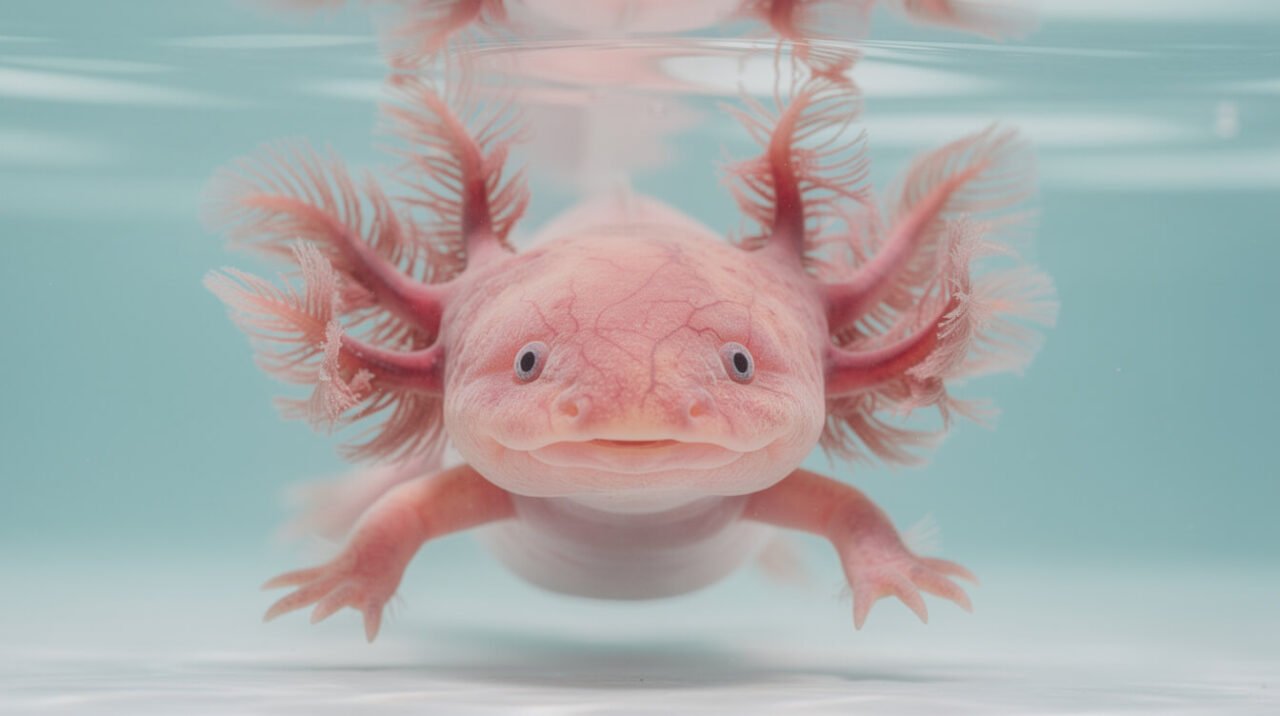
Most axolotl health issues trace straight back to water quality or temperature, which is exactly why the sections above matter so much. Still, know the warning signs:
- Curling or receding gills, or gills going pale/red and irritated — often a water-quality or ammonia problem; test your water immediately.
- Fuzzy white or gray patches on the skin — can indicate a fungal or bacterial issue, especially after an injury.
- Bloating, floating, or straining — can point to impaction (often from swallowed substrate or gulped air) or a digestive blockage.
- Sudden loss of appetite lasting more than a few feeding cycles, or persistent lethargy — worth investigating rather than waiting out.
We’re not vets, and we’re not going to hand you a home diagnosis or treatment plan here — axolotl medicine is specialized enough that it genuinely needs a professional. Look specifically for a veterinarian experienced with amphibians or exotics; a general small-animal vet may not have the right background, so it’s worth finding and saving that contact before you need it in an emergency. If something looks off, don’t wait it out hoping it resolves — a same-week call to an exotics vet is always the safer move than guessing.
Preventing problems before they start
Most of the health issues above are preventable rather than inevitable. Quarantine any new plants or decor from an established fish tank before adding them, since axolotls are more sensitive to parasites and pathogens that a hardy fish might shrug off. Avoid sudden changes — a big unplanned water change, a temperature swing, or overfeeding after a fast — since axolotls handle gradual change far better than abrupt shocks. And remember their famous regenerative ability isn’t a free pass: a lost limb or damaged gill filament will usually regrow over weeks to months in clean, stable water, but the underlying cause (rough tankmates, sharp decor, a filter intake without a guard) still needs to be fixed, or it will just happen again.
Frequently Asked Questions About Axolotl Care
How big of a tank does one axolotl actually need?
A 20-gallon long is a solid minimum for a single adult; bigger is better for water stability. Multiple axolotls need multiple tanks, not one large shared one.
Do axolotls need a heater?
No — the opposite. Axolotls need to stay cool (roughly 60–68°F), so most keepers need a chiller or cooling fan rather than a heater, especially outside of naturally cold climates.
Can axolotls live with fish or shrimp?
Fish are a poor match — they’ll nip at gills, and axolotls will eat anything small enough to fit in their mouths. Shrimp are sometimes kept alongside larger, well-fed axolotls, but there’s real risk in both directions and it’s not something to bank on.
How long do axolotls live?
Commonly 10–15 years with good care, with some well-cared-for individuals reported well beyond that. We go deep on the specific factors that shorten or extend axolotl lifespan in our full lifespan breakdown if you want the longer view.
Are axolotls a good pet for beginners?
Be honest with yourself here: axolotls are rewarding but not low-maintenance. The temperature and water-quality requirements are unforgiving compared to many community fish, and there’s a real learning curve. A beginner who’s willing to cycle a tank properly and stay disciplined about water changes can absolutely succeed — but this isn’t an impulse-buy pet.
Do axolotls bite, and are they safe to handle?
They can nip, though it’s rarely more than a startled, harmless pinch — axolotls don’t have teeth designed for defense. The bigger concern runs the other way: handling is harder on the axolotl than on you, since it strips their protective slime coat and can stress a genuinely delicate animal. Keep hands-on contact to occasional, necessary maintenance rather than regular play.
What do the different axolotl colors (morphs) mean for care?
Wild-type, leucistic, melanoid, golden albino, and piebald are among the most common color morphs, and the good news is that color doesn’t change the core care requirements above. One practical note: albino and leucistic axolotls tend to have more sensitive, pale skin and eyes, so keep their lighting especially dim and their tank free of any bright, direct exposure.
How much does it cost to set up an axolotl tank properly?
Budget for more than just the animal itself. Between a 20-gallon-or-larger tank, a lid, a gentle filter, a chiller or reliable cooling method, a heater-free thermometer, a water test kit, dechlorinator, and decor, a properly built setup is a real upfront investment before you ever add livestock — and the chiller in particular is often the line item new keepers underestimate. It’s worth pricing the full setup out before committing, rather than buying the animal first and scrambling to catch up.
How often do I really need to do water changes?
Weekly 20–30% changes are the reasonable baseline for an established, well-cycled tank, but let your test kit set the actual schedule — if nitrate or other readings climb faster than that, change water more often rather than sticking rigidly to a weekly calendar. Newer or smaller tanks typically need more frequent attention until the biological filter matures.
Final Thoughts: Is an Axolotl Right for You?
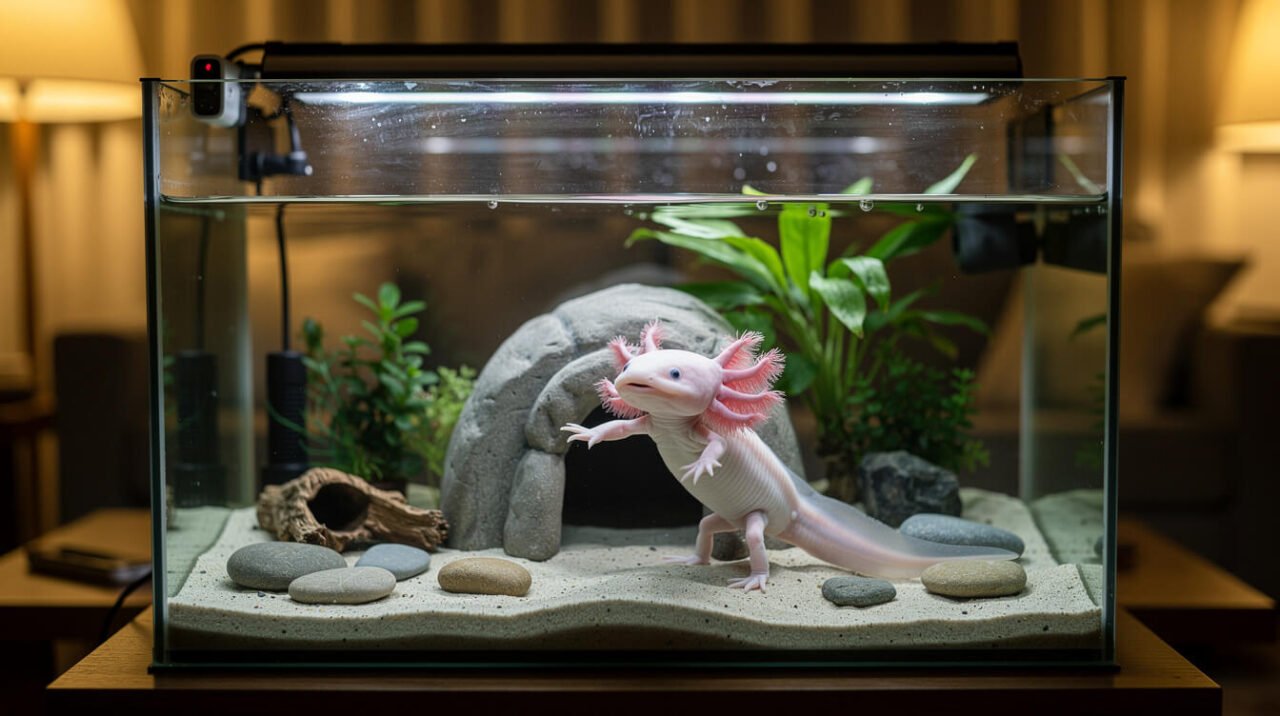
Axolotls reward exactly the kind of keeper who reads guides like this one before bringing one home: patient, willing to nerd out on water parameters, and genuinely curious about an animal that’s unlike anything else in the aquarium hobby. Get the tank size, temperature, and cycling right before day one, keep the diet simple and consistent, and skip the tank mates — and you’re set up for a genuinely easy, low-drama decade-plus with one of the most fascinating amphibians you can keep.
If any of this — the chiller, the strict water parameters, the total absence of tank mates — sounds like more commitment than you’re ready for right now, that’s a completely reasonable thing to realize before buying one, not after. There’s no shame in deciding to keep researching for a few more months while you build out the right setup. The axolotls that thrive are the ones whose keepers did exactly that.
Already building out your amphibian and aquarium knowledge? Our guides on betta fish care and keeping a pet frog cover the same water-quality fundamentals from a couple of different angles, and our corydoras breeding guide is a good next read if cycling and water chemistry just clicked for you and you want to go deeper into the aquarium side of the hobby.
Dr. Zoe Santos is a distinguished herpetologist and a revered expert in the care, conservation, and study of reptiles and amphibians. With a PhD in herpetology and over 18 years of field and academic experience, Zoe brings a depth of knowledge to her readers that is both rare and invaluable.