The Complete Reptile Care Guide: Getting the Basics Right for Any Species
Reptile care is one of the most misunderstood corners of pet keeping. People come to it expecting something like a fish tank — set it up once, feed on a schedule, done — and then wonder why their gecko is hiding, their bearded dragon won’t eat, or their tortoise’s shell looks a little off. The truth is that reptiles are ectotherms: their whole biology, from digestion to immune function, runs on getting their environment right, not just their food bowl. Get the setup right and most reptiles are remarkably low-maintenance, resilient animals. Get it wrong, and small mistakes compound quietly for months before they show up as a real problem.
This guide isn’t a care sheet for one species — it’s the foundation every reptile keeper needs before they zero in on the specifics for their particular animal. We’ll walk through what actually differs between species, what stays true across almost all of them, and where you should go for the exact numbers once you know what you’re keeping. Whether you’re eyeing your first leopard gecko, already deep into bearded dragon ownership, or just trying to double-check what the pet store told you, this is the “get the basics right” guide.
What reptile care actually means (and why one-size-fits-all fails)
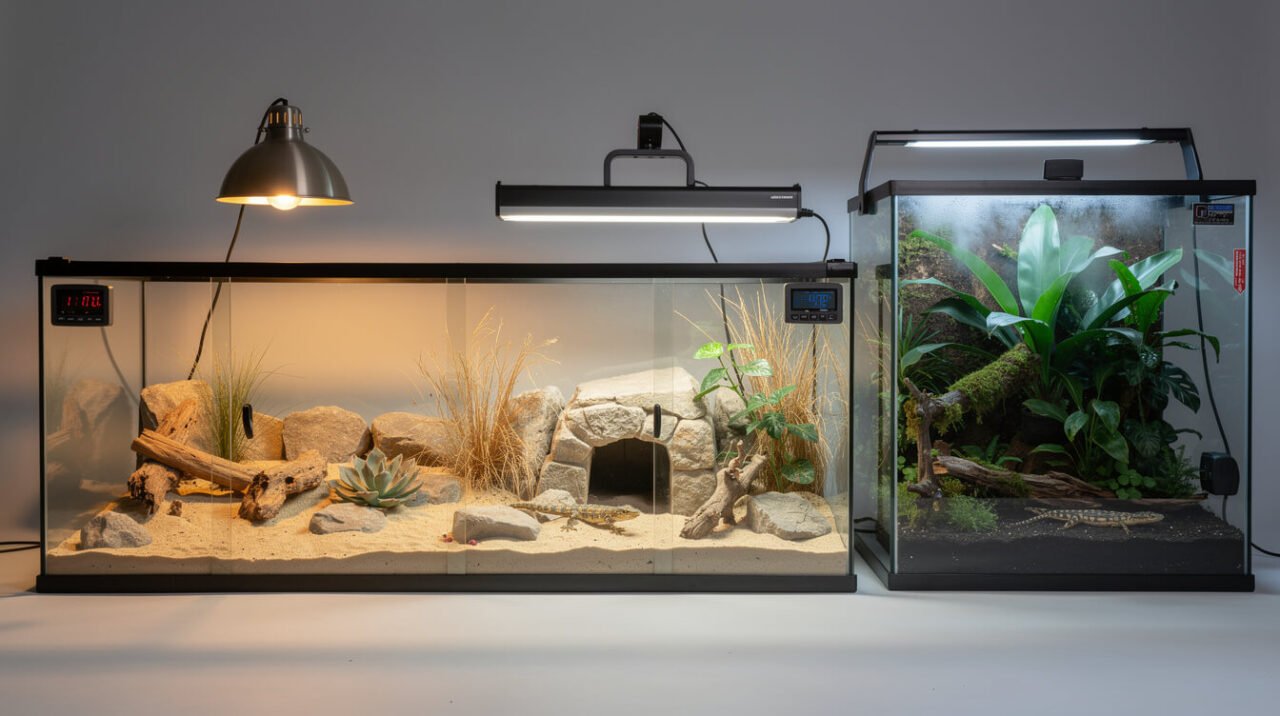
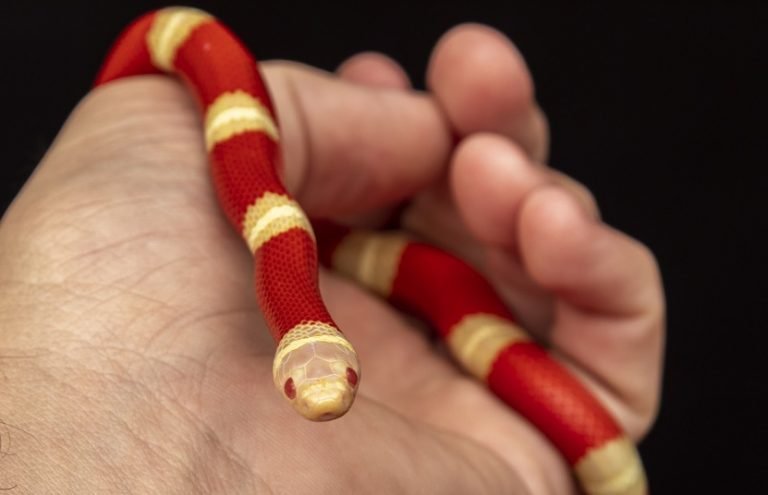
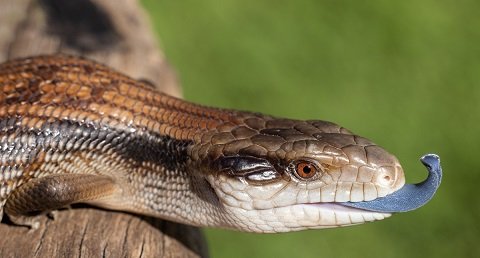
“Reptile” is a huge, sprawling category. Bearded dragons, leopard geckos, ball pythons, blue-tongue skinks, red-eared sliders, and Russian tortoises are all reptiles, and their care requirements barely overlap. A desert-adapted lizard and a tropical gecko can need opposite humidity levels in the very same room. That’s the single most important thing to understand before you set up anything: there is no universal “reptile temperature” or “reptile humidity” — the right numbers depend entirely on the specific species and, sometimes, on where in its native range that species comes from.
What does generalize across almost every reptile is the underlying logic of care:
- Thermoregulation is non-negotiable. Every reptile needs a temperature gradient — a warm end and a cool end — so it can move between them to regulate its own body temperature. Without that gradient, digestion, immune response, and basic metabolism all suffer.
- Light matters beyond visibility. Most diurnal reptiles need UVB lighting to synthesize vitamin D3 and metabolize calcium properly. Skipping it is one of the most common beginner mistakes.
- Enclosure size is a welfare issue, not a decorating choice. A cramped enclosure causes chronic stress, and chronic stress shows up as poor appetite, glass surfing, and a weaker immune system.
- Diet follows biology, not convenience. Insectivores, herbivores, omnivores, and carnivores each need fundamentally different feeding plans — there’s no single “reptile food.”
Once you know which of these categories your animal falls into, you can go find the exact numbers for your species. We keep detailed, species-specific guides — our complete bearded dragon care guide and leopard gecko tank setup guide are good starting points if either is your animal. The rest of this guide covers the principles that carry across species, so you know what questions to ask and what to watch for no matter what you keep.
Enclosure basics: size, heat gradient, and UVB

The enclosure is where most reptile care either succeeds or quietly fails. A few principles hold true almost universally:
Size: bigger than the store recommends
Pet store starter kits are built around what’s cheap and what fits on a shelf, not what a reptile actually needs. As a rule of thumb, most reptiles do better in the largest enclosure you can reasonably provide rather than the smallest one they can “get by” in — more room means more ability to thermoregulate, explore, and express natural behavior. Exact minimum sizes vary a lot by species and by how large that species gets as an adult, so always check the species-specific number rather than guessing.
The heat gradient
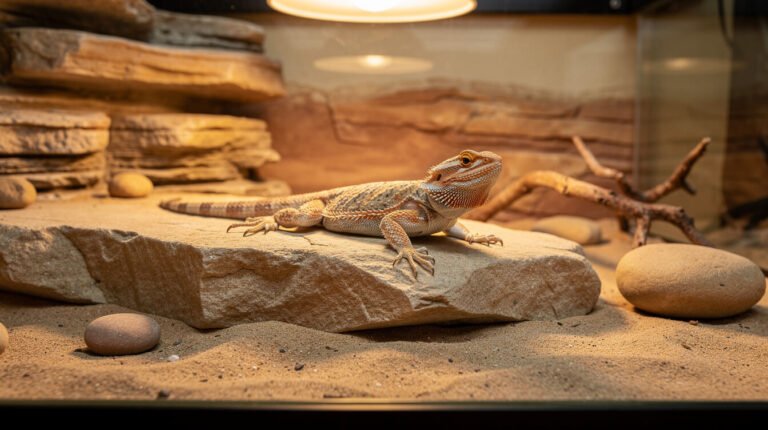
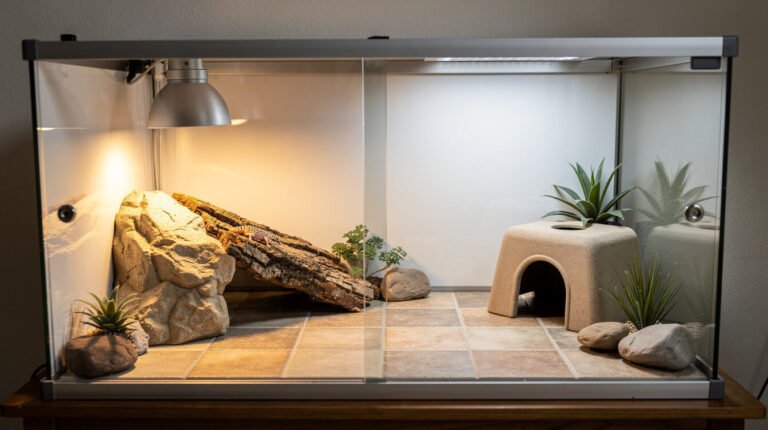
Every enclosure needs a distinct warm side and cool side, created with a basking bulb, heat mat, or ceramic heat emitter on one end only — never heating the whole enclosure evenly. This lets your reptile choose its own temperature throughout the day, which is exactly how thermoregulation works in the wild. You’ll need a reliable digital thermometer (not the cheap analog dial stickers) at both the basking spot and the cool end, because “it feels warm enough” is not a measurement. The specific target temperatures depend entirely on your species — a desert species and a tropical species can need very different basking temperatures, so look those up for your exact animal rather than copying numbers from a different reptile’s care sheet.
UVB lighting
Most diurnal reptiles (active during the day) need UVB lighting to produce vitamin D3, which lets them absorb calcium from their diet. Without it, even a perfect diet can lead to metabolic bone disease over time — a serious, often irreversible condition. UVB bulbs lose effective output well before they visibly burn out, so they need to be replaced on a schedule (commonly every six to twelve months, depending on the bulb type and manufacturer) rather than “when the light stops working.” If you keep a nocturnal species, check whether UVB is still recommended — the needs differ, and it’s worth confirming with a species-specific source rather than assuming either way.
Substrate: what to avoid
Substrate — the material lining the enclosure floor — is one of the easiest places to accidentally cause harm. Loose particulate substrates like sand or fine gravel carry a real impaction risk for some species if ingested during feeding, particularly for younger or smaller animals, so many keepers reach for safer alternatives like paper towel, reptile carpet, or coconut fiber while they’re still learning a species’ habits. Other species handle naturalistic loose substrate just fine and even need it to burrow or dig, so this is very much a “know your species” decision rather than a universal rule. Whatever you choose, spot-clean waste daily and do a full substrate change on a regular schedule — a damp, dirty substrate is a breeding ground for bacteria and mold, and several of the respiratory and skin issues reptiles develop trace straight back to enclosure hygiene rather than anything more complicated.
Diet and feeding: matching food to what your reptile actually is

Before you can plan a diet, you need to know which broad category your reptile falls into:
- Insectivores (many geckos, chameleons) eat primarily gut-loaded, appropriately sized insects, usually dusted with a calcium supplement.
- Herbivores (many tortoises, some lizards) need a varied rotation of leafy greens and vegetables — never just iceberg lettuce or a single “safe” food on repeat.
- Omnivores (bearded dragons, many aquatic turtles) need a mix of animal protein and plant matter, with the ratio often shifting as they mature.
- Carnivores (most snakes) typically eat whole prey items on an infrequent schedule rather than daily meals.
A few feeding principles apply almost everywhere:
Gut-loading matters as much as the insect itself. A cricket or dubia roach is really a delivery vehicle for whatever it last ate — feed your feeder insects a nutritious diet for 24–48 hours before offering them, so your reptile gets real nutrition, not an empty shell.
Calcium and vitamin supplementation is not optional for most species. Dusting insects or produce with a calcium supplement (and a multivitamin on a less frequent schedule) is standard practice for the vast majority of pet reptiles, since captive diets rarely match the nutrient density of what the species would eat in the wild.
Fresh water, always. Even species that drink very little still need clean, accessible water changed regularly — and some species, like certain chameleons, need moving water or drip systems rather than a still dish, since they may not recognize standing water as drinkable at all.
Feeding schedule and portion size both shift with age. Juveniles of most species grow quickly and often need more frequent feeding to support that growth, while adults of the same species can become overweight on a juvenile-sized feeding schedule carried too far into adulthood. Overfeeding is a genuinely common, easy-to-miss problem — a reptile that always finishes its food isn’t necessarily telling you it’s still hungry, and a body-condition check (feeling for excess fat along the tail base and limbs, depending on species) is a better guide than appetite alone.
If you’re specifically wondering whether a particular food is safe for your pet, we cover that species by species — see our guide on what’s safe to feed a bearded dragon for one example of how we approach these safety questions in detail.
Humidity, water, and shedding
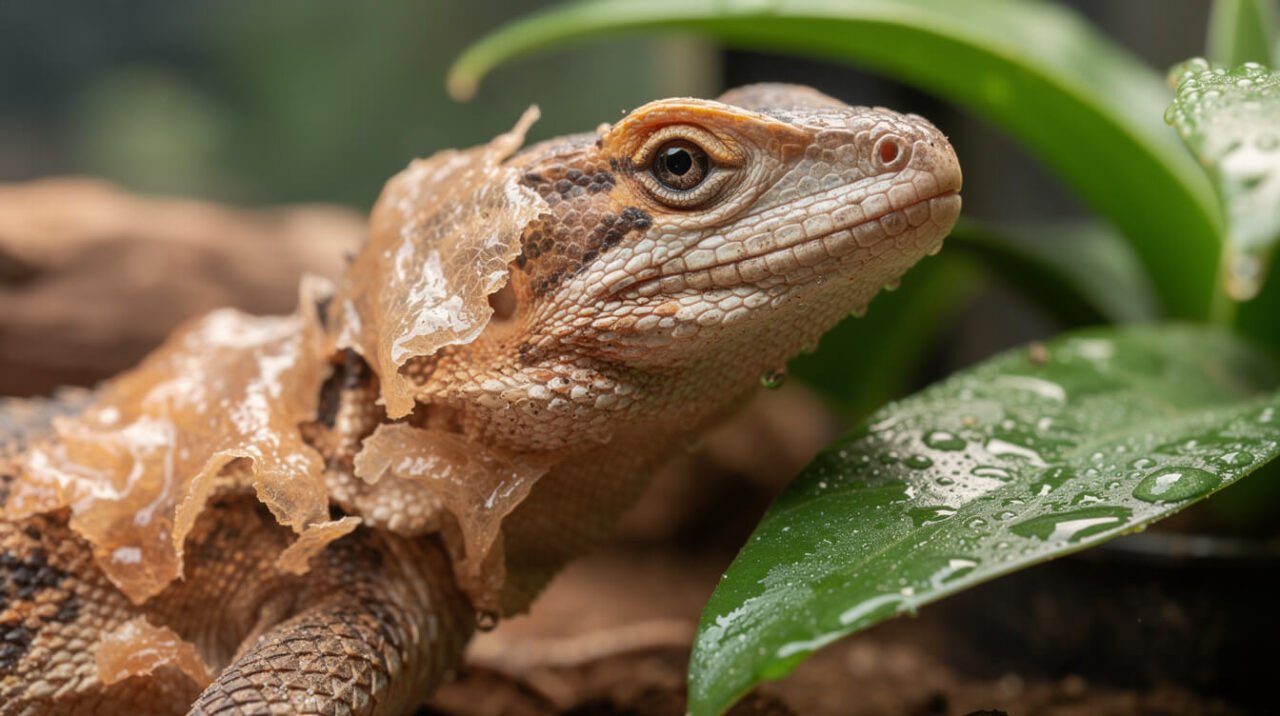
Humidity is the piece of reptile care most beginners underestimate, because it’s invisible in a way that heat and light aren’t. Too low, and shedding becomes incomplete or stuck, especially around toes and the tail tip, which can restrict blood flow if left unresolved. Too high for a desert species, and you’re inviting respiratory infections and skin issues instead.
A digital hygrometer is worth owning for the same reason a thermometer is: guessing doesn’t work. The right humidity range depends heavily on where your species evolved — a rainforest gecko and a desert tortoise have essentially opposite needs, and neither will thrive at the other’s ideal number.
A few humidity-related habits help almost any reptile:
- Provide a humid hide — a small enclosed space lined with damp moss or substrate — even for desert species, so they can access extra humidity during a shed without you having to raise the whole enclosure’s baseline.
- Watch for stuck shed around toes, the tail tip, and eye caps, and address it promptly (a warm soak is a common first step for many species) rather than assuming it will resolve on its own.
- If your species needs higher ambient humidity, prioritize ventilation alongside moisture — stagnant, overly wet air causes its own problems, including bacterial and fungal growth.
For species that need consistently higher humidity, a manual misting routine a few times a day can work, but it’s easy to fall behind on, especially on busy days. An automated mister or fogger on a timer takes the guesswork (and the missed doses) out of it, and it’s a worthwhile upgrade once you know your species needs that level of consistency rather than an occasional boost.
Handling, stress signals, and everyday health watch
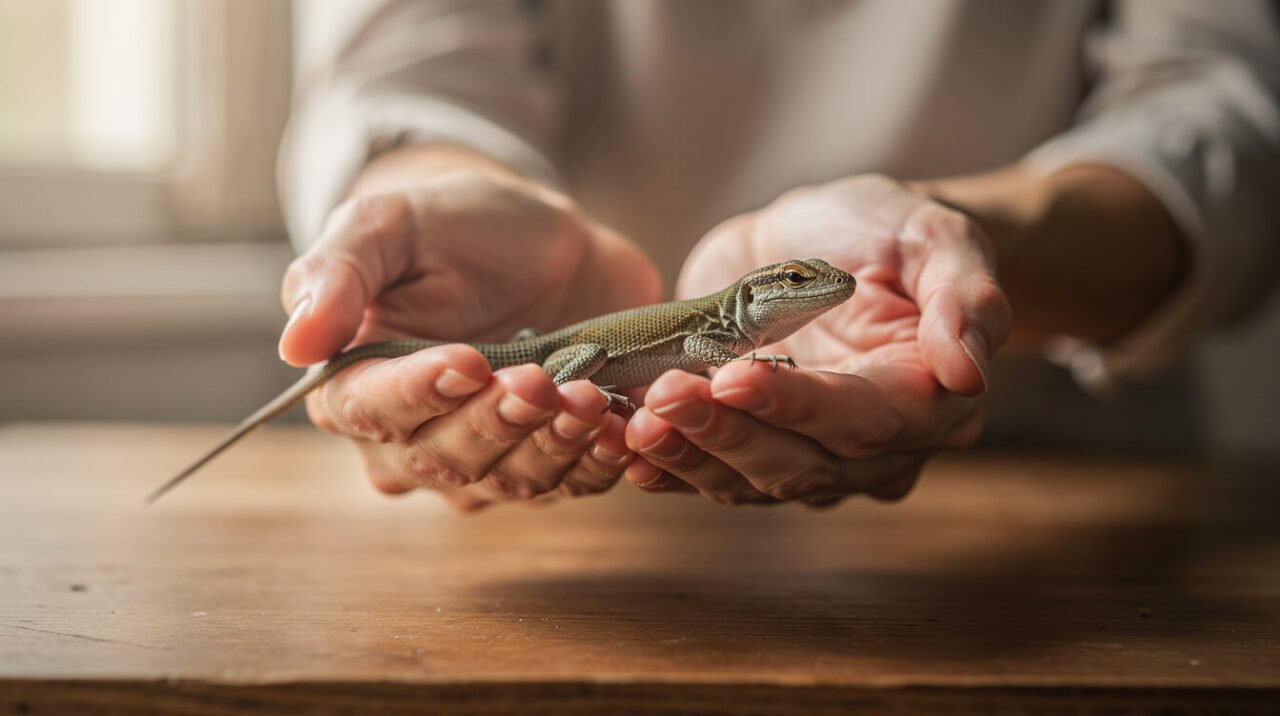
Reptiles vary enormously in how much handling they tolerate or enjoy — some bearded dragons genuinely seem to like it, while many snakes and most wild-caught animals are far more stress-sensitive. A few handling habits apply broadly:
- Support the body fully rather than gripping — most reptiles feel safer with solid contact under their weight than with a loose or dangling hold.
- Keep handling sessions short, especially with a new animal still settling in, and let your reptile set the pace rather than forcing interaction on your schedule.
- Handle close to a table or your lap, not standing up — a startled reptile can jump or bolt, and falls are a real injury risk.
- Watch the body language: a puffed-up posture, hissing, tail-whipping, dark stress coloring (common in bearded dragons), or repeatedly trying to flee are all signs to end the session, not push through it.
Beyond handling, a quick weekly health check catches problems early: clear eyes, steady weight, normal stool, and an enclosure free of leftover feeder insects or old shed. Watch for a short list of warning signs that mean it’s time to call a vet who treats exotics specifically — not every general vet practice does — rather than waiting to see if it resolves:
- Open-mouth breathing, wheezing, or bubbles around the nose or mouth
- Persistent loss of appetite, especially paired with lethargy
- Swelling in the jaw or limbs, or a noticeably soft/rubbery jaw (a possible metabolic bone disease sign)
- Repeated stuck shed that isn’t resolving with humidity and soaking support
- Any visible parasites, unusual discharge, or a sudden change in droppings
We’re not able to diagnose your specific animal from a blog post, and we’d never want to guess at a health issue — if you see any of the above, please get your reptile to a qualified exotics veterinarian rather than troubleshooting from an article. Quick action on a small problem is almost always easier than catching up on a big one.
Frequently asked questions about reptile care

What’s the easiest reptile to take care of for a beginner?
Leopard geckos and bearded dragons are commonly recommended starting points because they’re relatively hardy, well-documented, and tolerant of minor setup mistakes while you learn. “Easy” is always relative, though — every reptile still needs a properly researched, correctly sized setup from day one.
How often should I feed my reptile?
It depends entirely on the species and life stage. Many insectivorous juveniles eat daily, adult herbivores often eat daily smaller portions, and many snakes eat just once every one to a few weeks as adults. Look up the specific schedule for your species rather than assuming a universal answer.
Do all reptiles need UVB lighting?
Most diurnal (day-active) species do, and it’s one of the most commonly skipped essentials in budget setups. Some nocturnal species have different requirements, so it’s worth confirming for your exact animal rather than assuming either way.
Why is my reptile hiding all the time?
Hiding is often completely normal, especially for a newly acquired animal, a nocturnal or crepuscular species, or one without enough hide options to feel secure. Persistent hiding paired with appetite loss or other symptoms is different — that combination is worth a vet check rather than assuming it’s just shyness.
Is it okay to buy a reptile on impulse from a pet store?
We’d gently say: research first. Reptiles can live a long time — some tortoises outlive their owners, and even a modest species like a leopard gecko can live well over a decade with good care — and many species have specific, non-negotiable setup costs before they even come home. An honest look at the space, budget, and years of commitment involved makes for a much better outcome for the animal than a same-day decision.
How do I know if my enclosure is still big enough as my reptile grows?
Revisit enclosure size at each major growth stage, not just once at setup. A juvenile-appropriate tank can become genuinely cramped within months for fast-growing species, and “it still fits” isn’t the same test as “it still has room to thermoregulate, move, and express normal behavior.” If you’re ever unsure, sizing up is almost always the safer call, and our bearded dragon tank setup breakdown walks through exactly how that upgrade path tends to look in practice.
Final thoughts on responsible reptile care
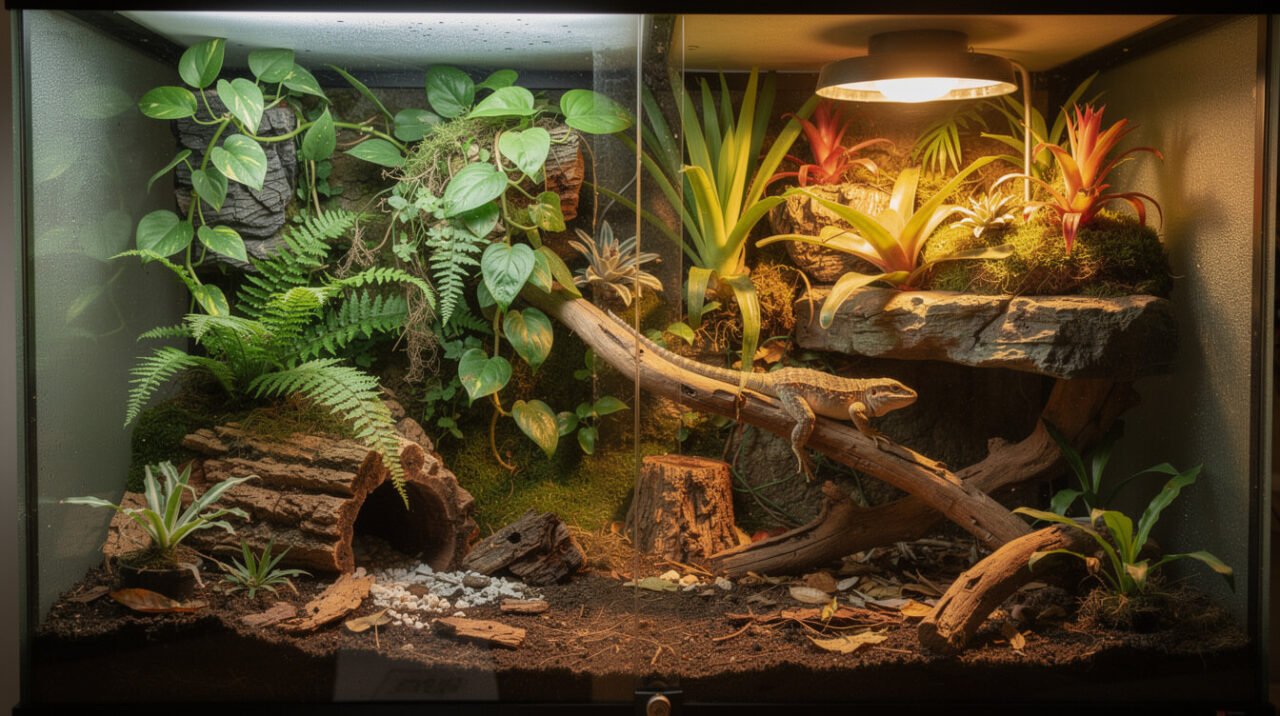
Good reptile care isn’t complicated once you understand the logic behind it: get the thermal gradient right, match the lighting, substrate, and humidity to where your species actually comes from, feed according to what kind of animal it biologically is, and watch for the handful of warning signs that mean it’s time to call an exotics vet. The specific numbers will always depend on your exact species — that’s not a detail to skip, it’s the whole game — but the framework above should make those species-specific care sheets far easier to understand and apply.
If you already know which reptile you’re keeping or hoping to keep, head to our species-specific guides for the exact setup details — starting with our bearded dragon care guide, leopard gecko tank setup guide, and pet frog care guide if amphibians are more your speed. Your reptile’s whole world is the enclosure you build for it — take the time to get it right, and most of what follows takes care of itself.
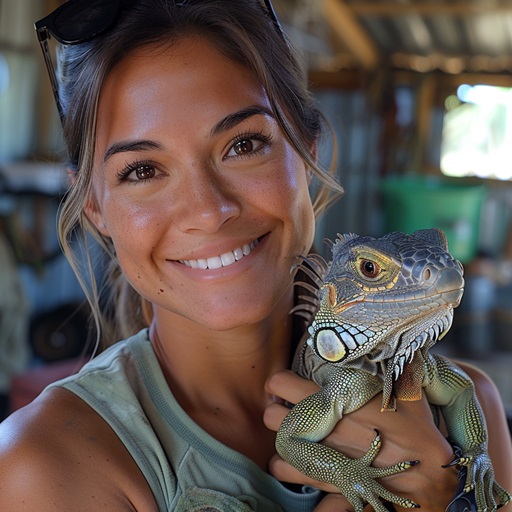
Dr. Zoe Santos is a distinguished herpetologist and a revered expert in the care, conservation, and study of reptiles and amphibians. With a PhD in herpetology and over 18 years of field and academic experience, Zoe brings a depth of knowledge to her readers that is both rare and invaluable.