Can Rabbits Eat Pumpkin? How Much, Which Parts, and Why the Advice Disagrees
Can rabbits eat pumpkin? Yes. Plain, fresh pumpkin flesh is safe for healthy adult rabbits in small amounts, and most bunnies think it’s wonderful. Skip the seeds, the stringy pulp, the stem and leaves, anything spiced or sweetened, and any pumpkin that has sat on a porch. Start with a piece about the size of your thumbnail.
The trickier question is how much, because the advice online is all over the map. One vet-reviewed guide says about a teaspoon once a week. Rabbit welfare groups list pumpkin as an everyday vegetable. Those two answers are up to roughly 60 times apart. Neither group is careless. They’re putting pumpkin in different food groups. Below, we check pumpkin against the USDA’s nutrient data to see which group it really belongs in, then turn that into a simple amount by body weight. You’ll also find which parts to cut away, which pumpkins never belong in the bowl, and why pumpkin is not the tummy fix it is for dogs.
Can rabbits eat pumpkin? The short answer
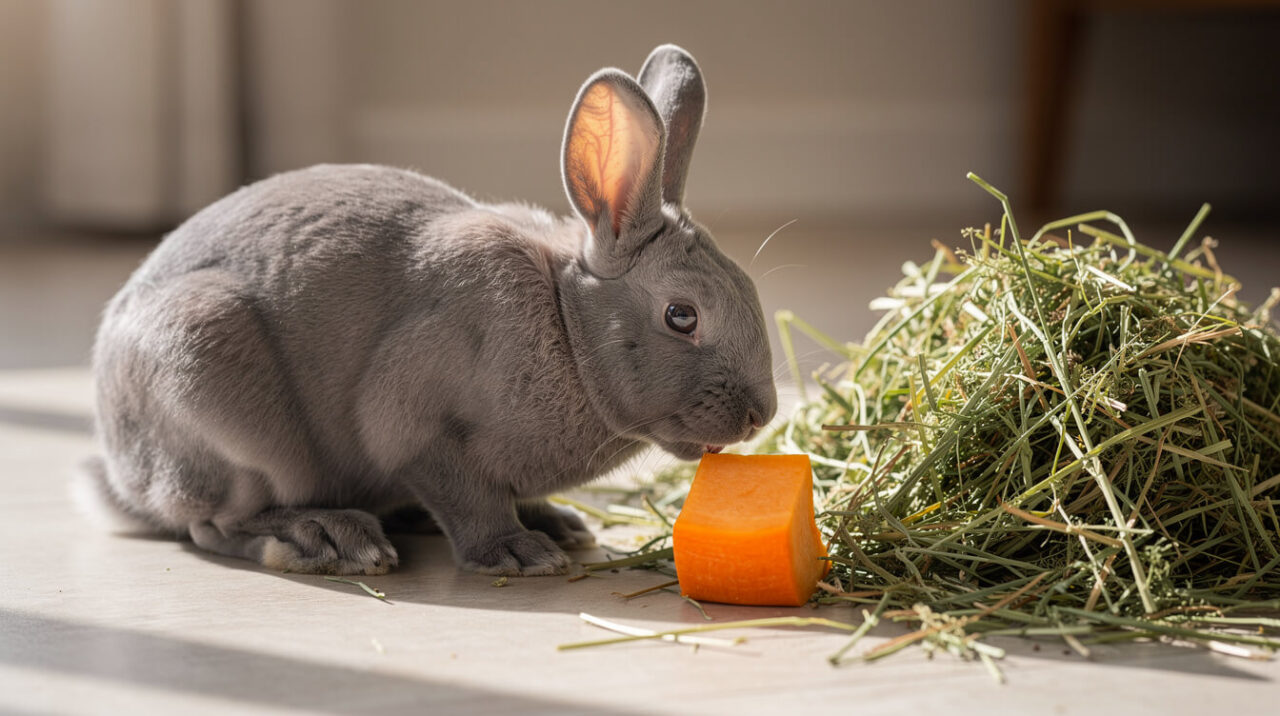
Rabbits can eat pumpkin. It isn’t toxic, it isn’t on the Merck Veterinary Manual’s list of foods to limit or avoid for rabbits, and the major rabbit organizations include it among their safe vegetables. The Rabbit Welfare Association & Fund (RWAF) lists it, and so does the House Rabbit Society–based vegetable guide at rabbit.org.
What makes it work is the same thing that makes every rabbit food work: it stays small next to the hay. The Merck Veterinary Manual puts a healthy adult rabbit’s diet at roughly 85–90% grass hay, with measured pellets, a daily helping of fresh vegetables, and fruit only as an occasional treat. Pumpkin fits into the vegetable part of that picture. It never replaces hay.
The quick rules
- Yes: raw, fresh, peeled pumpkin flesh (carving or pie pumpkins), in small cubes.
- Okay, with care: plain cooked pumpkin or canned 100% pumpkin with nothing added. There’s no benefit over raw, and raw gives your rabbit something to chew.
- No: seeds, stringy pulp, stems, leaves and vines, pumpkin pie filling, anything with sugar, butter, salt, or spice, decorative gourds, and any pumpkin that has been outdoors, carved, or painted.
- Not yet: rabbits under about 12 weeks, and any rabbit with a history of gut trouble until you’ve checked with your vet.
If pumpkin is just one stop on a bigger diet rethink, our complete rabbit care guide covers the full hay, pellet, and greens setup this post assumes.
How much pumpkin can a rabbit eat? Why the advice disagrees
Here’s what the sources currently on page one say about portion size:
| Source | How it classes pumpkin | Amount |
|---|---|---|
| Chewy (vet-reviewed, 2026) | Treat | About 1 teaspoon, once a week |
| FullyHealthy (retailer blog) | Treat | 1 tablespoon, once a week |
| A-Z Animals | Treat | Start no bigger than a marble |
| House Rabbit Resource Network | Vegetable, “sparingly, lots of sugar” | Not specified |
| rabbit.org (HRS vegetable list) | Non-leafy vegetable | Shares the non-leafy allowance of about 1 Tbsp per 2 lb body weight per day |
| RWAF (UK) | “Botanical fruit,” lower in sugar than true fruits | Part of the varied non-leafy portion |
Take a 6-pound rabbit. The treat camp says a teaspoon a week. The vegetable camp allows about 3 tablespoons of non-leafy vegetables a day, which is 63 teaspoons a week if pumpkin filled the whole allowance. That’s the 60-fold gap. Both camps are being careful. They just put pumpkin in different food groups, so the nutrient numbers have to settle it.
What the USDA numbers actually show
The usual reason given for keeping pumpkin small is “it’s high in sugar.” We checked that against USDA FoodData Central. Carrot is the vegetable every rabbit group already rations as a treat, so it makes a useful benchmark:
| Per 100 g, raw | Pumpkin | Carrot |
|---|---|---|
| Total sugars | 2.76 g | 4.74 g |
| Dietary fiber | 0.5 g | 2.8 g |
| Calories | 26 kcal | 41 kcal |
| Water | 91.6 g | 88.3 g |
Sources: USDA FoodData Central, pumpkin, raw (168448) and carrots, raw (170393).
Raw pumpkin has about 40% less sugar than carrot, so “lots of sugar” overstates it. The RWAF’s classification, a botanical fruit that’s lower in sugar than true fruits, fits the data better. But look at the fiber row. Pumpkin has less than a fifth of carrot’s fiber, and next to what a rabbit’s gut runs on, it barely registers. Merck recommends pellets with 15–20% crude fiber, and hay is higher still. Raw pumpkin is 0.5% fiber. It’s mostly sweet water.
So the treat camp’s caution is right, but for a different reason than the one they give. Sugar is a minor concern with pumpkin. The bigger one is that every bite of pumpkin is a bite that isn’t hay, and pumpkin offers almost nothing a rabbit’s gut and teeth need in return.
The amount we recommend
Count pumpkin as part of the non-leafy vegetable allowance, not on top of it. The House Rabbit Society’s diet guidance caps non-leafy vegetables at about 1 tablespoon per 2 pounds of body weight per day, all of them combined:
| Rabbit’s weight | Total non-leafy veg per day (HRS ceiling) | A sensible pumpkin serving |
|---|---|---|
| 3 lb (dwarf breeds) | about 1½ Tbsp | 1–2 small cubes |
| 4–5 lb | about 2–2½ Tbsp | 2–3 small cubes |
| 6 lb | about 3 Tbsp | up to about 1 Tbsp |
| 8–10 lb (large breeds) | about 4–5 Tbsp | up to about 1½ Tbsp |
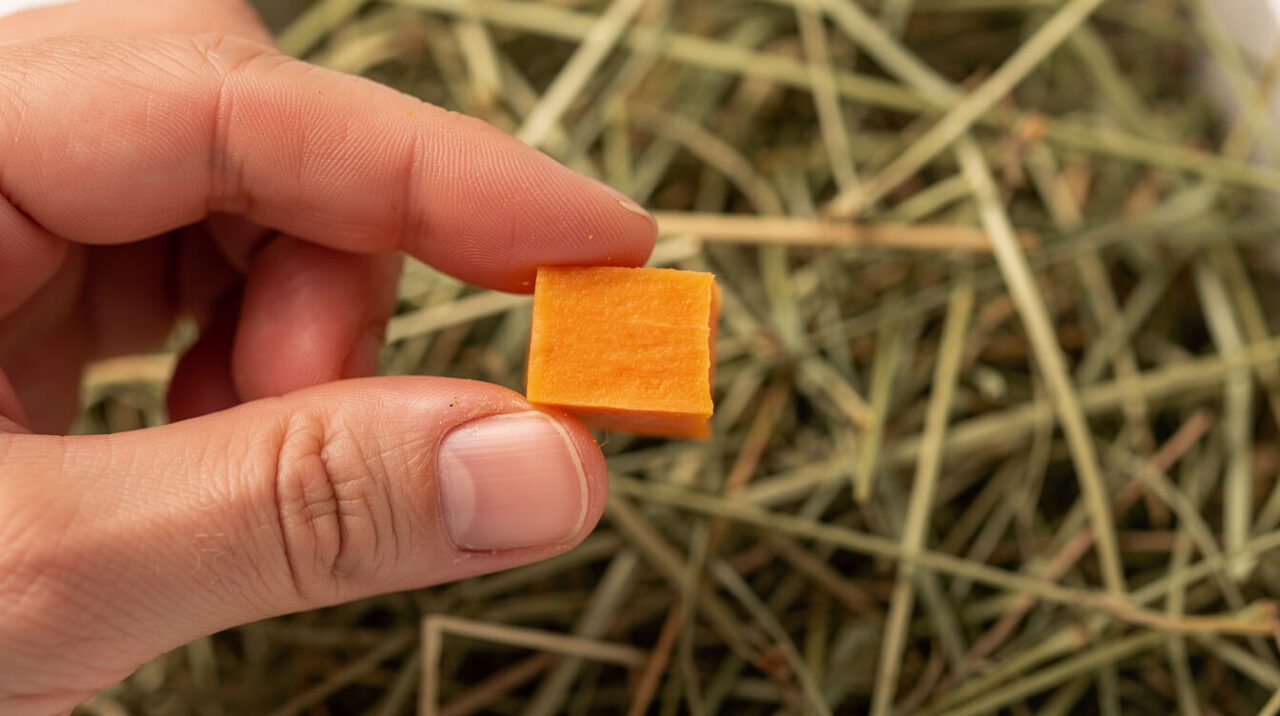
The middle column comes from HRS. The right-hand column is our own judgment. Pumpkin is one of the lowest-fiber items on the non-leafy list, so we’d give it a share of that allowance, rotated with other vegetables a few days a week, rather than the whole allowance every day. A “small cube” here means roughly thumbnail-sized, about half a teaspoon. Chewy’s teaspoon a week is a perfectly good choice if you’d rather keep pumpkin a rare seasonal treat. It’s just stricter than the nutrition requires for a healthy rabbit.
One exception to everything above: if your rabbit is overweight, has a history of soft or uneaten cecotropes, or has ever had GI stasis, stay at the strict end, or skip pumpkin entirely, and ask your vet first.
Which parts of a pumpkin can rabbits eat?
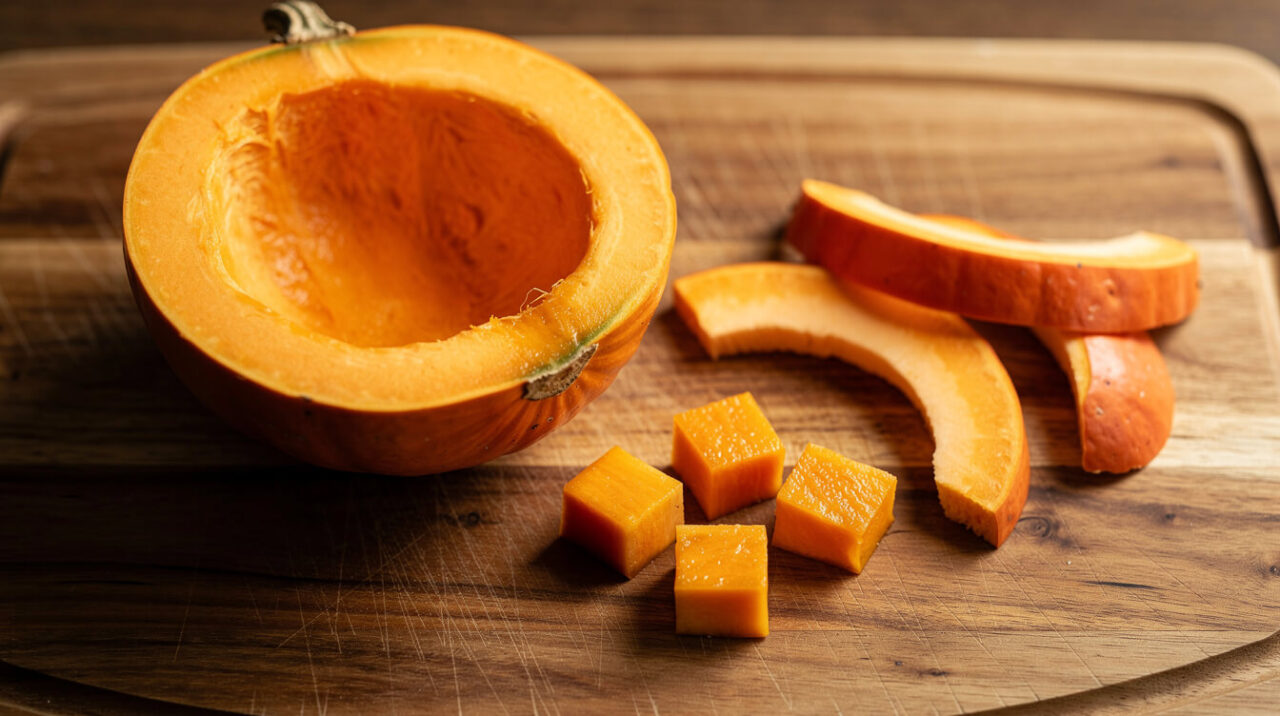
A pumpkin is several different foods in one shell, and the sources disagree about some of them. Here’s each part, with how sure we are about it.
Flesh: yes
The firm orange flesh is the part every source agrees on. Cut it into small cubes so your rabbit gets a little chewing out of it.
Rind and skin: peel it
The House Rabbit Society generally suggests leaving the skin on fruit, but a pumpkin’s rind is a different thing. It’s thick and woody, and on store-bought pumpkins it may carry wax or residue. Chewy and A-Z Animals both advise removing it. There’s no nutritional reason to keep it, so peel it.
Seeds: no
Pumpkin seeds aren’t toxic. They’re simply the wrong food. Dried pumpkin seed kernels are 49% fat by weight (USDA), and Best Friends Animal Society’s rabbit diet guidance says plainly not to feed rabbits seeds or nuts, because they’re hard to digest. Whole seeds in the shell are also slippery and awkward to chew. Scoop every one out.
Stringy pulp: scrape it out
The wet strands in the middle aren’t poisonous, but they’re where the seeds hide, and long fibrous strings are the same shape of problem that leads rabbit.org to recommend cutting celery into short pieces. Strings can wrap around teeth. Scraping the cavity clean takes ten seconds.
Stem: skip it
One page-one article calls the stem a safe chew toy. We couldn’t find a single rabbit-vet or welfare-organization source that agrees, and stems are woody, dusty, and often handled by a lot of people before they reach your kitchen. Your rabbit will get far more from a proper chew like an untreated apple or willow stick.
Leaves and vines: skip them
The RWAF’s list allows courgette (zucchini) flowers but specifically excludes the leaves, and pumpkin leaves are close relatives: bristly and prickly. Without a clear source saying they’re fine, we’d leave them out.
Raw, cooked, canned, or decorative: picking the right pumpkin
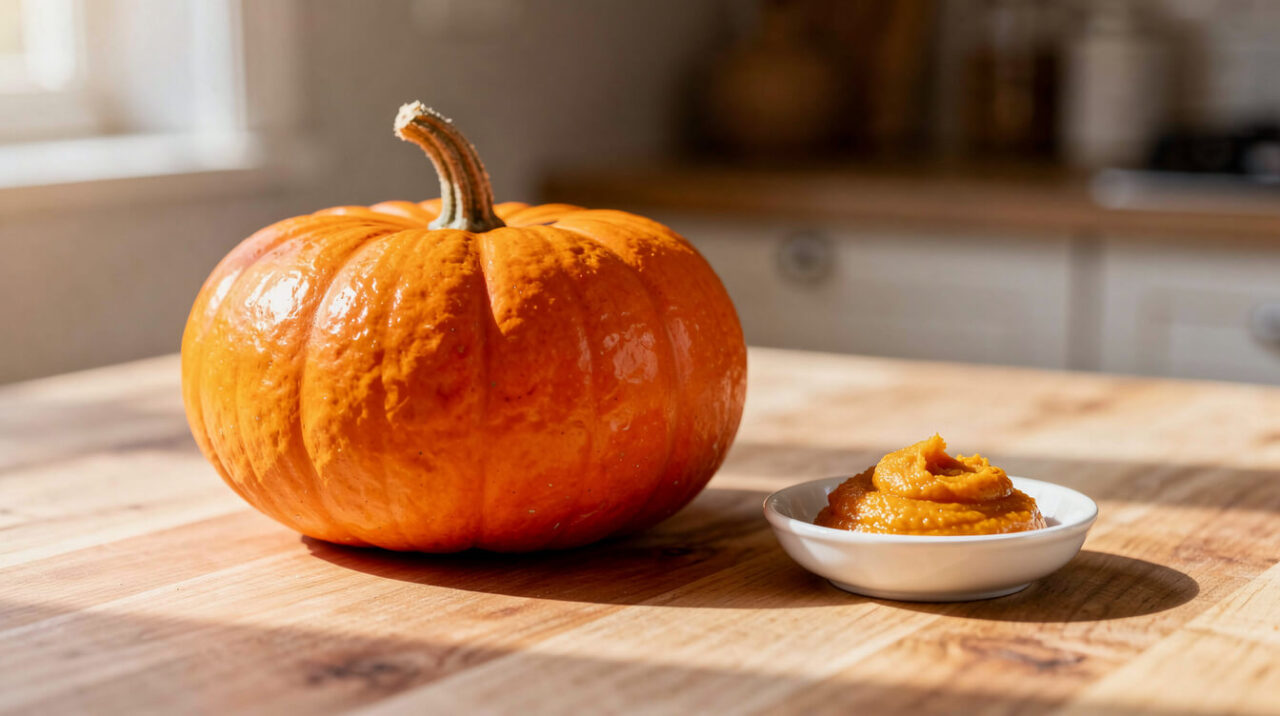
In late October, pumpkins turn up all over the house in different forms. Some are fine for the bowl and some never are.
Fresh raw pumpkin: the best choice
A firm, fresh pumpkin from the grocery store or farm stand, cut that day, washed, and peeled. Small pie or sugar pumpkins are easier to use up than a huge carving pumpkin. The House Rabbit Society recommends washing all produce for at least two minutes in a bowl, changing the water several times, as a precaution against rabbit hemorrhagic disease (RHDV2). Wash the outside before you cut, too, because the knife drags whatever is on the rind through the flesh.
Canned pumpkin: only 100% pumpkin, and less of it
Plain canned pumpkin with one ingredient on the label is safe. It isn’t better, though. Canning concentrates it, so USDA lists canned pumpkin at 34 kcal and 3.3 g sugar per 100 g against raw’s 26 kcal and 2.76 g. It’s also a smooth purée, so your rabbit gets no chewing out of it. If canned is what you have, use the small end of the serving range. And read the label carefully: pumpkin pie filling sits right next to it on the shelf and contains added sugar and spices. That one is a firm no.
Cooked pumpkin: fine if it’s plain, pointless if it isn’t
Plain steamed or boiled pumpkin with nothing on it won’t hurt your rabbit. Sources disagree here: Chewy says a little cooked pumpkin is okay, while FullyHealthy says to avoid it. Rabbits are built for raw plants, though, and cooking only softens away the chewing. Roasted pumpkin from your own dinner almost always has oil, butter, salt, or spice on it, so keep that off the plate.
Porch pumpkins and jack-o’-lanterns: never
This is the warning most rabbit articles miss. A pumpkin that has been sitting outside is more than a mold risk. If wild rabbits live nearby, it can be a disease risk. The USDA’s Animal and Plant Health Inspection Service says RHDV2 can spread through contaminated materials, food included, as well as insects and people’s hands and shoes. Wild cottontails and jackrabbits in the U.S. have tested positive. A porch pumpkin that wild rabbits or other animals have nibbled is exactly the kind of food you don’t want to carry inside. Carved jack-o’-lanterns add candle soot and wax, and their cut faces start to spoil within days. Compost them.
Decorative gourds and bitter pumpkin: never
Ornamental gourds and many tiny decorative pumpkins aren’t grown to be eaten, and decorative ones are often waxed, painted, or glittered. There’s also a natural toxin to know about. Pumpkins and squash can contain cucurbitacins, bitter compounds the plant makes in self-defense. Poison Control notes that grocery varieties are bred to have very little, that stressed or cross-pollinated plants can produce a lot, and that cooking doesn’t destroy it. Its rule for people works for rabbits too: if it’s bitter, it’s not dinner. If a pumpkin tastes noticeably bitter to you, throw the whole thing away.
The weekly care guide
Get it right for your animal, every week
One email a week: new care guides, species deep-dives, and the safety answers keepers search for, written by our specialists. No spam. Unsubscribe anytime.
How to serve pumpkin to your rabbit, step by step
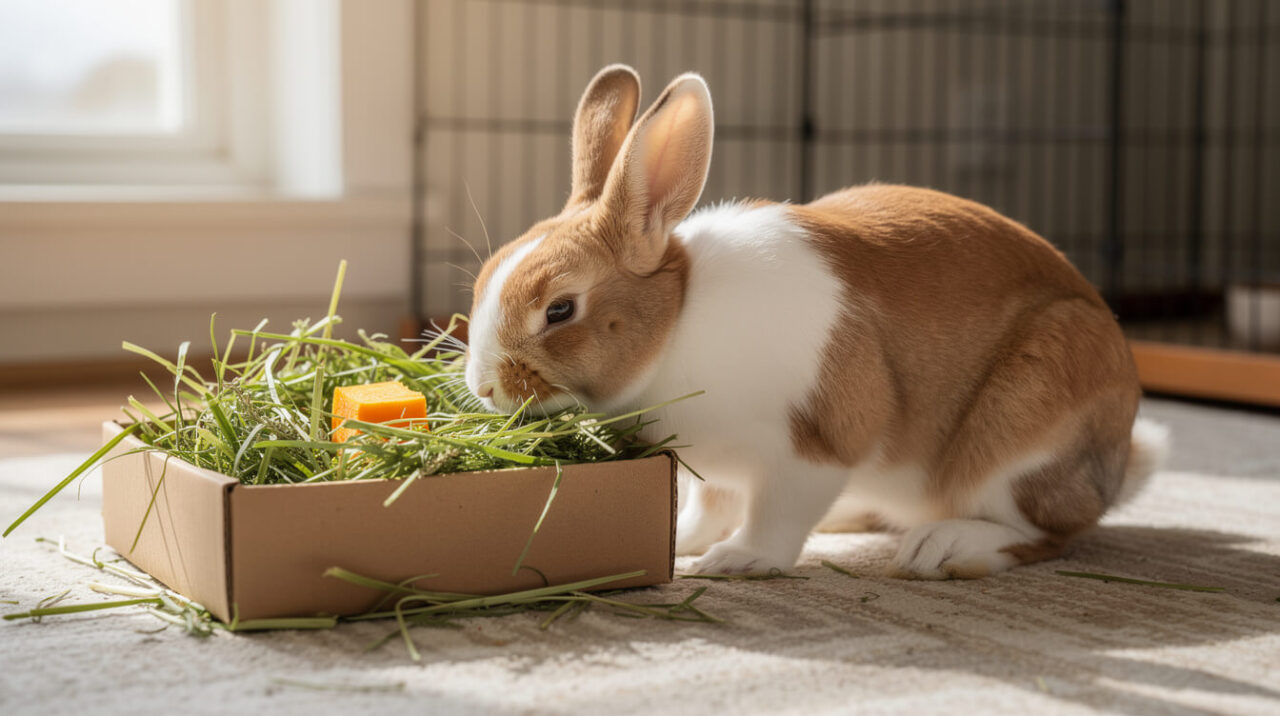
Now for the fun part. When it’s done right, pumpkin is a lovely seasonal treat, and plenty of rabbits greet it with a happy little binky.
The first taste
- Wash, peel, and scoop. Remove the rind, all the seeds, and the stringy pulp.
- Cut one thumbnail-sized cube. That’s the whole first serving, even for a big rabbit.
- Offer it on its own. Don’t introduce any other new food that day, so if something changes, you’ll know the cause.
- Watch the next 24 hours of droppings. You want the same round, firm fecal pellets as always, and no smeared or uneaten cecotropes.
- Build up slowly. If all is well, increase over a week or two toward the amount in the table above.
Young rabbits need more patience. The House Rabbit Society’s guidance for baby rabbits introduces fresh greens at around 12 weeks, one at a time. We’d wait until a youngster is well established on several leafy greens before adding a non-leafy extra like pumpkin.
Make it work for the hay
The best use of a pumpkin cube is to get your rabbit eating more hay. Hide one in a box or tube stuffed with timothy, and your rabbit forages through a mouthful of hay to find the prize. You’re feeding the same small treat, but it now comes with a lot of chewing.
If your household runs to more than one kind of animal (and with keepers, it usually does), the Bearded Dragon Crown Sunglasses King T-Shirt is our small nod to multi-species homes. The shop is reptile-first for now.
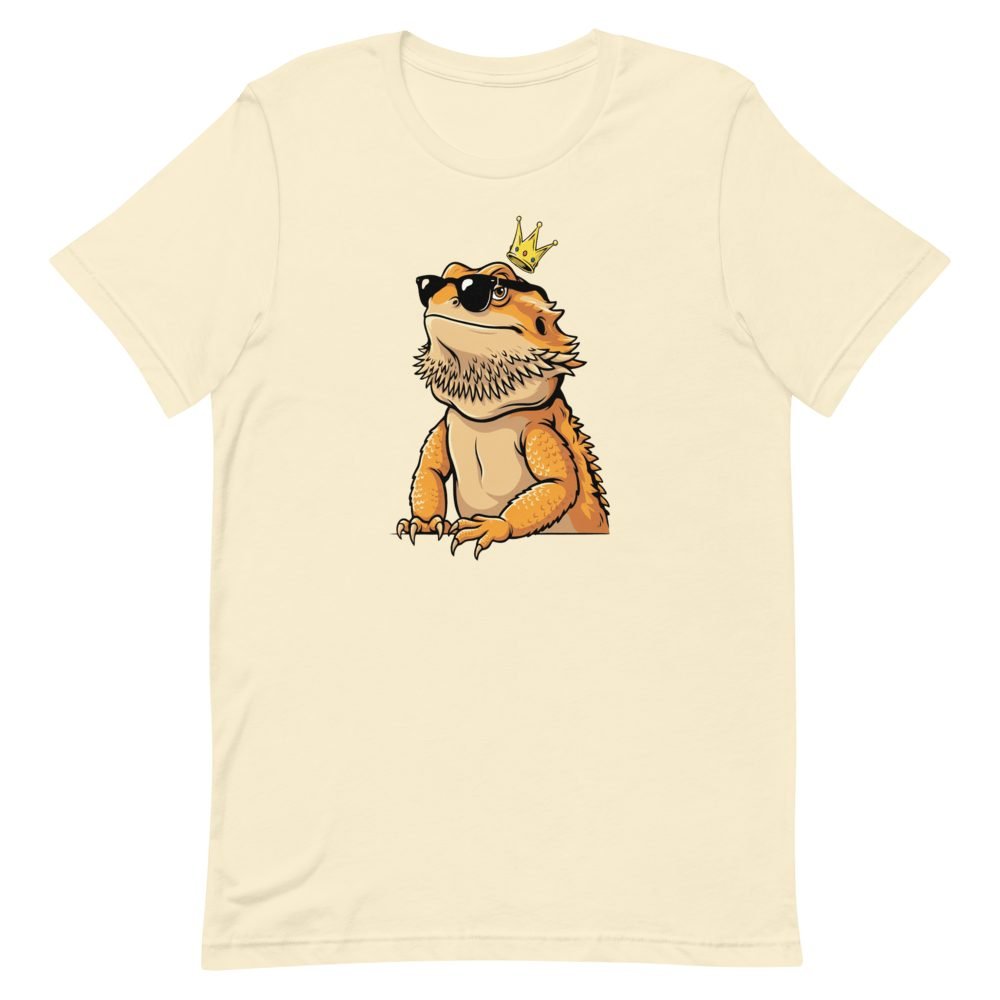
For homes with more than one kind of animal
Rabbit in the pen, bearded dragon under the basking lamp? The Bearded Dragon Crown Sunglasses King T-Shirt is a soft, everyday tee for keepers who are a little obsessed, in the best way.
Storing the rest of the pumpkin
One pumpkin is a lot of rabbit servings. Cut cubes keep a few days in a covered container in the fridge. Throw them out if they turn slimy, soft, or smell sour, and pull any uneaten pumpkin out of the enclosure the same day before it spoils. To keep some longer, freeze thumbnail-sized cubes on a tray, bag them, and thaw one at a time to room temperature. Never serve pumpkin frozen solid.
Pumpkin isn’t a remedy: the warning signs to watch for
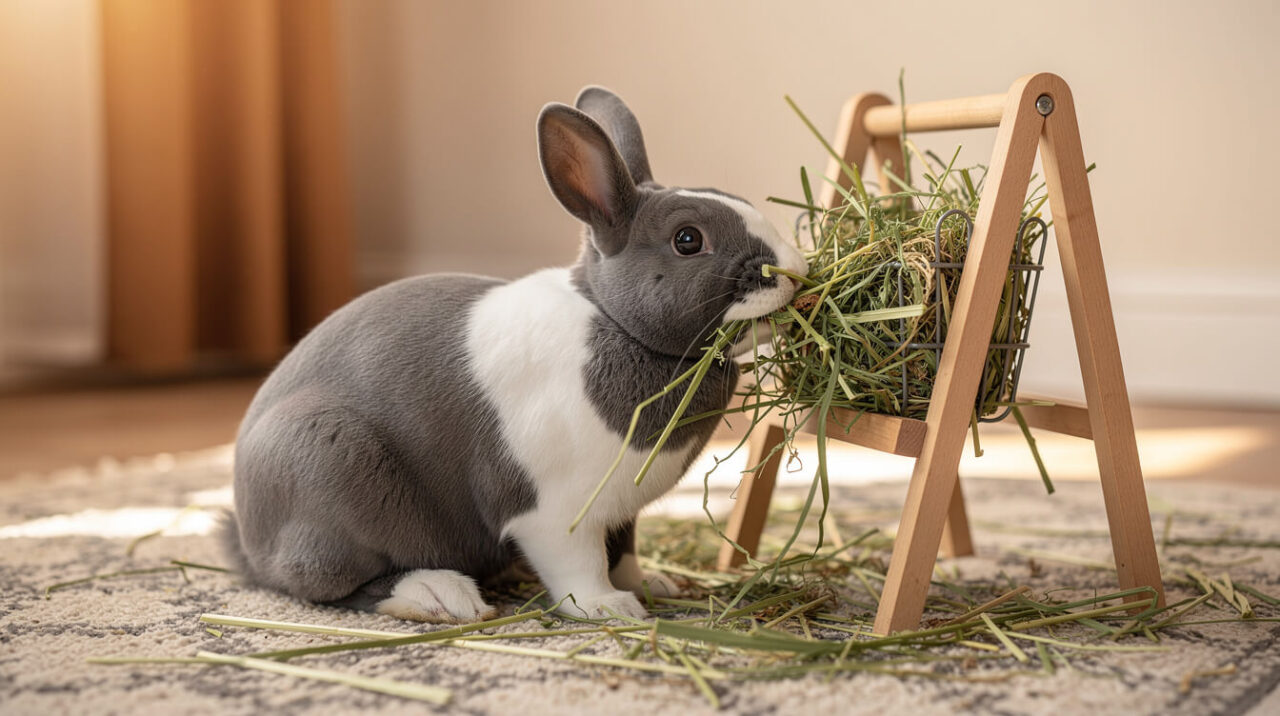
If you also have a dog, you’ve probably heard that canned pumpkin settles an upset stomach. (We covered how far that holds up in can dogs eat pumpkin and can cats eat pumpkin.) That idea has drifted into rabbit circles too. One long-running rabbit forum describes pumpkin as something “normally used for rabbits who are ill and need extra fiber.”
For rabbits, it’s the wrong way round. The House Rabbit Society of Chicago’s GI stasis guidance tells owners to remove high-carbohydrate foods such as carrots, pumpkin, and fruit when a rabbit’s gut slows down, and to get veterinary care promptly. Chewy’s vet-reviewed guide gives the same warning. The numbers above explain why: a rabbit’s gut runs on long, coarse fiber, and pumpkin is 0.5% fiber. When a rabbit’s digestion is struggling, more hay and a vet are the answer, and pumpkin isn’t.
Mild signs: pause the pumpkin
- Softer or smaller droppings than usual
- Uneaten, smeared cecotropes in the enclosure or stuck to the fur (here’s what uneaten cecotropes can mean)
- Eating less hay than normal on pumpkin days
Stop the pumpkin, keep fresh hay and water in front of your rabbit, and watch. If things don’t return to normal within a day, call your vet.
Urgent signs: call a rabbit-savvy vet now
- Your rabbit stops eating, or stops producing droppings
- A hunched posture, tooth grinding, or pressing the belly to the floor
- A bloated or tight belly
- Watery diarrhea, or unusual lethargy
These can be signs of GI stasis or another serious digestive problem, and rabbits can go downhill fast. Don’t wait it out, and don’t try a home remedy first. If your regular vet is closed, find an emergency clinic that treats rabbits. We can help you understand your rabbit’s diet, but we can’t examine your rabbit. Your vet can.
Can rabbits eat pumpkin? Frequently asked questions
Can rabbits eat pumpkin every day?
A healthy adult can have pumpkin as part of their daily non-leafy vegetable allowance without harm, but we wouldn’t make it a daily fixture. It’s very low in fiber, and variety is the point of the vegetable portion. A few days a week, rotated with other vegetables, is a better pattern.
Can rabbits eat pumpkin seeds?
No. They’re about half fat by weight, and rabbit welfare groups advise against seeds and nuts entirely. If your rabbit snatches a seed or two, that’s not an emergency, but don’t offer them.
Can rabbits eat canned pumpkin?
Only if it’s 100% pumpkin with nothing added, and in smaller amounts than raw, since it’s more concentrated. Never feed pumpkin pie filling.
Can baby rabbits eat pumpkin?
Not until they’re well past 12 weeks and already eating several leafy greens without any digestive upset. Young rabbits’ guts are the most sensitive, and their diet should center on hay and age-appropriate pellets.
Can rabbits eat pumpkin leaves or the stem?
We’d skip both. Neither is reliably documented as safe by rabbit-welfare or veterinary sources, and the RWAF specifically excludes the leaves of the pumpkin’s close relative, the courgette.
Is butternut squash the same as pumpkin for rabbits?
It’s similar. The RWAF lists squash of all varieties in the same “botanical fruit” group as pumpkin, and rabbit.org notes that squash is higher in sugar. Prepare it the same way: raw, peeled, no seeds, small portions. For another rabbit favorite from the same plant family, see can rabbits eat cucumber.
My rabbit ate a big chunk of pumpkin. What do I do?
Plain pumpkin isn’t toxic, so this is usually a “watch closely” situation, not an emergency. Take away anything left, make sure there’s plenty of hay and water, and watch droppings and appetite over the next 24 hours. If your rabbit stops eating or pooping, or shows any of the urgent signs above, call your vet right away. If the pumpkin had spices, sugar, or other ingredients in it, call your vet now.
Can my other small pets have pumpkin too?
Not all of them. UK charity Woodgreen advises that chinchillas, degus, and hedgehogs shouldn’t have pumpkin at all, so don’t share the rabbit’s portion with a chinchilla. Guinea pigs have their own vitamin C needs, and we’ll cover them separately.
Pumpkin season is a lovely excuse to spoil your rabbit a little, and now you can do it with a clear head: a thumbnail of fresh, peeled flesh, tucked into a pile of hay, with porch pumpkins and pie filling kept well out of reach. Your rabbit, understood.
Before you go
Keep learning your animal
We publish a new guide every day. The best of them land in one short weekly email, so you never miss the one about your species.

Oliver Grant is your go-to expert for all things related to small mammals. With 15 years of hands-on experience raising and caring for rabbits, guinea pigs, hamsters, and ferrets, Oliver brings a wealth of knowledge to his readers.