Can Guinea Pigs Eat Pumpkin? How Much, Which Parts, and Why It Won’t Cover Their Vitamin C
It’s pumpkin season, your guinea pigs are wheeking at the sound of the knife, and you’re wondering whether they can have a bite. Can guinea pigs eat pumpkin? Yes. Fresh, raw pumpkin flesh is safe for guinea pigs in small amounts, about two or three half-inch cubes once or twice a week. The seeds, stem, leaves, canned puree, pie, and anything that’s been sitting on the porch are a no.
That answer matches what most guinea pig rescues and keepers say. Their reasons often don’t hold up, though. Pumpkin is routinely called “high in sugar” and “very high in vitamin A,” and by the USDA’s own numbers it’s neither. The real catches are quieter: pumpkin has very little fiber and very little vitamin C, and vitamin C is the one nutrient a guinea pig can’t make for itself. Below, we’ll walk through what’s actually in pumpkin, how much to give, which parts to keep for yourself, and how to turn a few cubes into a foraging game your herd will love.
Can guinea pigs eat pumpkin? The short answer
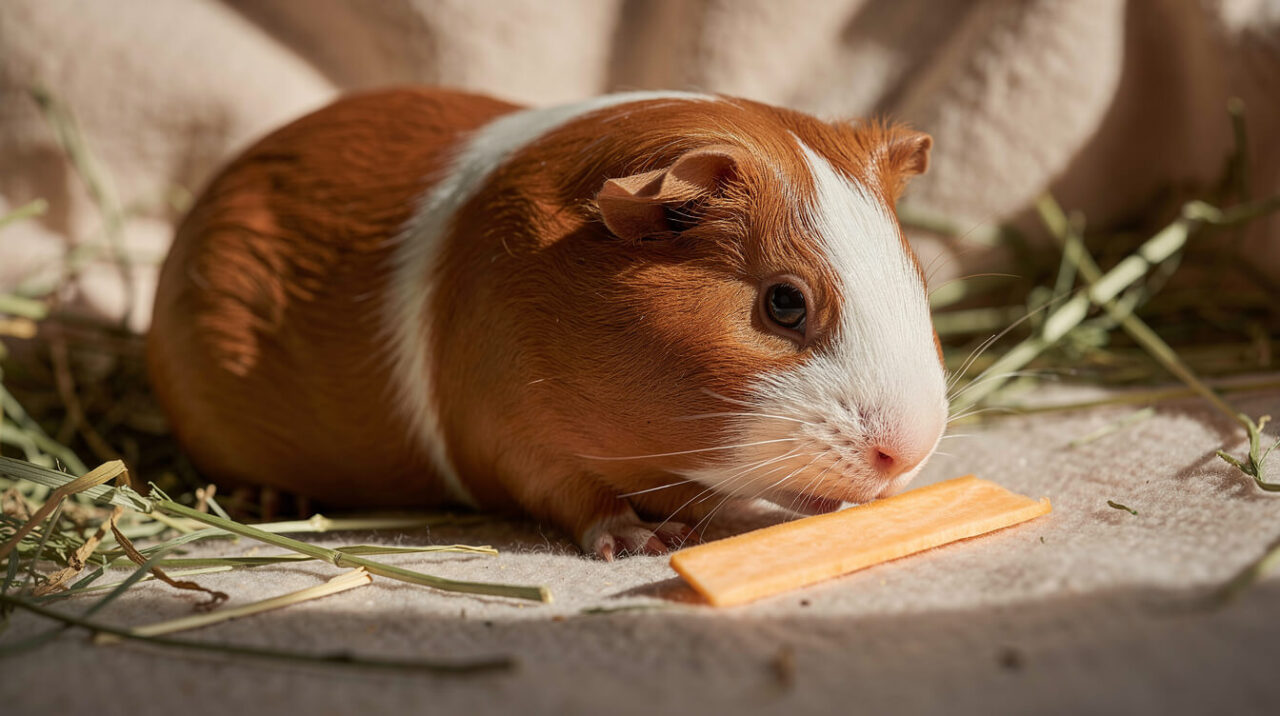
Yes, guinea pigs can eat pumpkin. Plain, fresh, raw pumpkin flesh isn’t toxic to cavies, and most enjoy it. UK charity Woodgreen lists fresh pumpkin as fine for guinea pigs “in moderation/small amounts.” Southern California Guinea Pig Rescue includes raw pumpkin on its safe list, and so does a veterinary clinic handout from the Companion Animal Wellness Center, which specifies “no seeds.”
Here’s the whole answer at a glance:
- Fresh raw flesh: yes, as an occasional extra, two or three half-inch cubes once or twice a week.
- Skin: not toxic, but tough. Peel it unless you know the pumpkin is unwaxed and untreated.
- Seeds: no. Fatty, slippery, and a choking concern among keepers.
- Stem, leaves, and vines: no.
- Cooked, canned, pie filling, or pumpkin-spice anything: no.
- Carved jack-o’-lanterns, porch pumpkins, and ornamental gourds: no.
The one rule that matters more than any of these: pumpkin is never a stand-in for the vitamin C foods in your guinea pig’s daily salad. It goes alongside the bell pepper, not instead of it. The next two sections explain why.
What’s really in pumpkin: two myths and one real catch
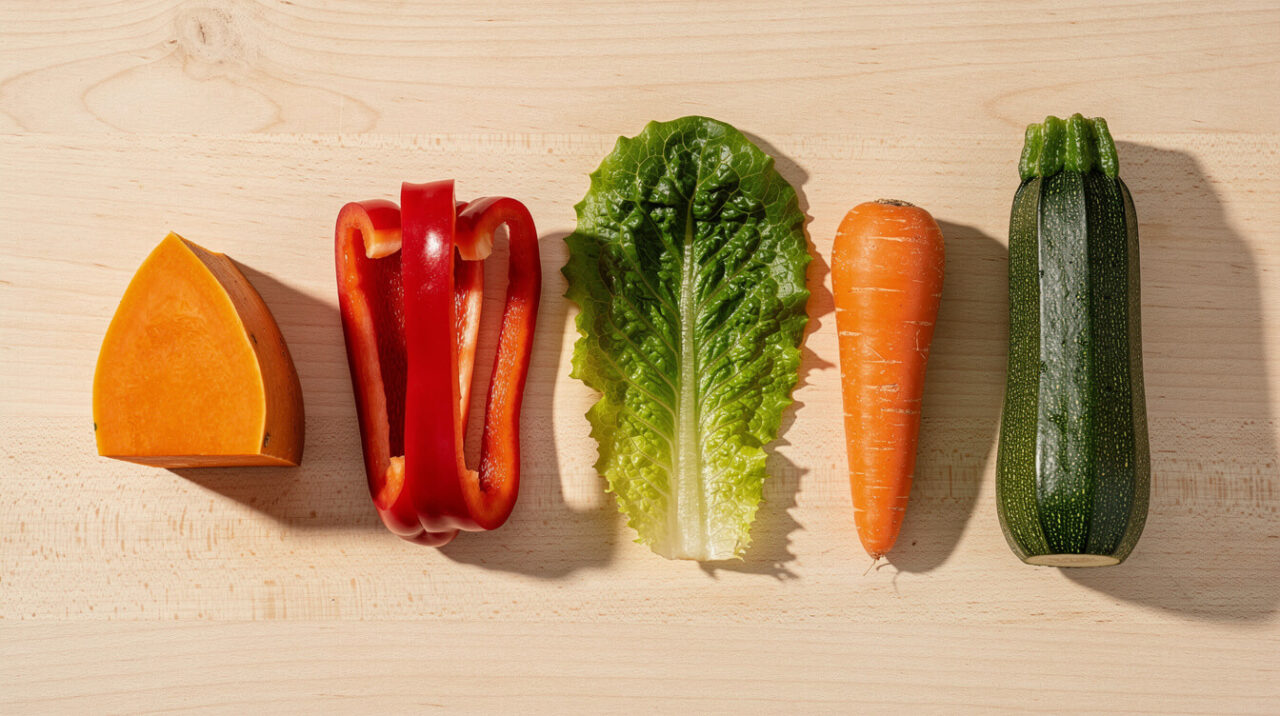
Most pumpkin-for-guinea-pigs articles skip the actual nutrient data, so we pulled it. Here’s raw pumpkin next to the vegetables guinea pig keepers already know, per 100 grams, from USDA FoodData Central:
| Per 100 g, raw | Vitamin C | Sugars | Fiber | Calcium |
|---|---|---|---|---|
| Pumpkin | 9 mg | 2.8 g | 0.5 g | 21 mg |
| Red bell pepper | 128 mg | 4.2 g | 2.1 g | 7 mg |
| Green bell pepper | 80 mg | 2.4 g | 1.7 g | 10 mg |
| Zucchini (with skin) | 18 mg | 2.5 g | 1.0 g | 16 mg |
| Carrot | 6 mg | 4.7 g | 2.8 g | 33 mg |
| Romaine lettuce | 4 mg | 1.2 g | 2.1 g | 33 mg |
| Parsley | 133 mg | 0.9 g | 3.3 g | 138 mg |
Myth 1: “Pumpkin is high in sugar”
One of the top-ranking pumpkin guides tells readers to limit pumpkin “since it’s high in sugar.” The table says otherwise. Raw pumpkin has about 2.8 g of sugar per 100 g. That’s less than red bell pepper (4.2 g), which welfare charities list as an everyday guinea pig vegetable, and a little over half of what’s in carrot (4.7 g). Pumpkin’s sugar is in the same range as zucchini and green pepper. If sugar were the reason to ration pumpkin, you’d have to ration red pepper even harder, and nobody sensible suggests that.
Myth 2: “Pumpkin is packed with vitamin A”
Pumpkin’s orange color comes from beta-carotene, which the body converts to vitamin A. That’s why some keeper blogs call it “very high in vitamin A.” Measured as vitamin A activity, raw pumpkin has 426 µg per 100 g. Romaine lettuce has 436 µg, and parsley has 421 µg. In other words, pumpkin has about the same vitamin A as the lettuce your guinea pig already eats, so it’s neither a reason to feed pumpkin nor a reason to fear it. (One popular guide prints the figure as “5.7 g of Vitamin A” per 100 g, which is off by a factor of more than ten thousand.)
The real catch: water, not much else
Pumpkin is about 92% water with only 0.5 g of fiber per 100 g, the lowest of anything in that table. It’s a quarter of what romaine or red pepper carries, and a sixth of carrot’s. Guinea pigs run on fiber. The Merck Veterinary Manual names a lack of dietary fiber as one of the most common nutritional problems in guinea pigs. Too little fiber, or too many sugary foods, can slow the gut and lead to gas, bloating, and a rapid decline. A watery, low-fiber food in big portions is how you get soft droppings. That’s the honest reason to keep pumpkin small. There’s one more reason, and it’s the one that matters most for a guinea pig.
And one genuinely good note: at 21 mg of calcium per 100 g, pumpkin is lower in calcium than romaine or carrot and nowhere near parsley or kale. If you’re watching calcium for a guinea pig with a history of bladder sludge or stones, pumpkin isn’t the problem food. That said, a guinea pig with a urinary history should have its whole diet planned with your vet.
Why pumpkin can’t cover your guinea pig’s vitamin C
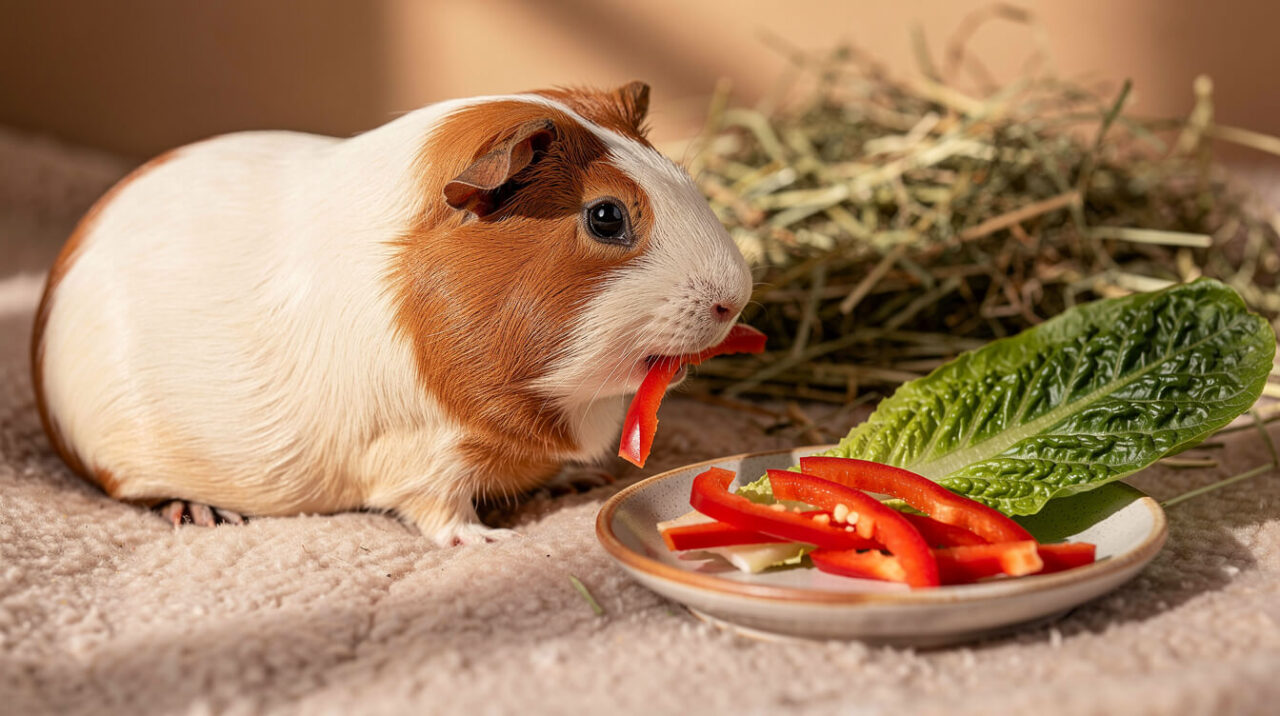
Guinea pigs, like people, can’t make their own vitamin C. Every milligram has to come from food. According to Merck, guinea pigs need at least 10 mg of vitamin C per kilogram of body weight per day, and pregnant sows need 30 mg/kg. Most adults weigh around a kilogram. Veterinary Partner’s vitamin C guide for guinea pigs aims higher, at about 20–25 mg a day for adults. Merck gives a minimum, and Veterinary Partner gives a comfortable target, so we’ll use both.
Now the arithmetic, using the USDA figures above:
- To reach Merck’s 10 mg minimum from red bell pepper, a guinea pig needs about 8 g, a couple of thin strips.
- To reach the same 10 mg from pumpkin, it would need about 110 g, roughly a full cup of cubes. That’s the entire day’s vegetable allowance, all in pumpkin, and all of it low in fiber.
- At Veterinary Partner’s 25 mg target, pumpkin would need nearly 280 g. Red pepper does it in about two tablespoons, chopped.
A sensible pumpkin treat of three half-inch cubes weighs about 6 g and delivers roughly half a milligram of vitamin C, about 5% of Merck’s daily minimum for a 1 kg guinea pig. Pumpkin isn’t bad. It’s just not a vitamin C food. Veterinary Partner says outright that any vegetable not on its list of strong vitamin C sources is “likely to be a very poor source,” and pumpkin isn’t on it.
That matters because a guinea pig’s fresh food comes in a fixed daily budget, roughly a cup per pig according to PDSA’s vets. Every cube of pumpkin takes up space a vitamin C food could have had. The pumpkin should come out of the “variety” part of the bowl, never the pepper part.
Vitamin C in pellets also fades. Merck notes it degrades with heat, light, and moisture and can drop substantially within months, so fresh produce does a lot of the real work. Signs of vitamin C deficiency (scurvy) include a poor appetite, a rough coat, swollen or sore joints, limping or reluctance to move, weight loss, and diarrhea. If you see these, please see an exotics-experienced veterinarian. Scurvy needs proper treatment, and those signs overlap with other illnesses that need a diagnosis. No vegetable, pumpkin or otherwise, is the fix. Our guide to feeding guinea pigs broccoli covers one of the better everyday vitamin C options and how to introduce it without gas.
How much pumpkin can a guinea pig eat, and how often?
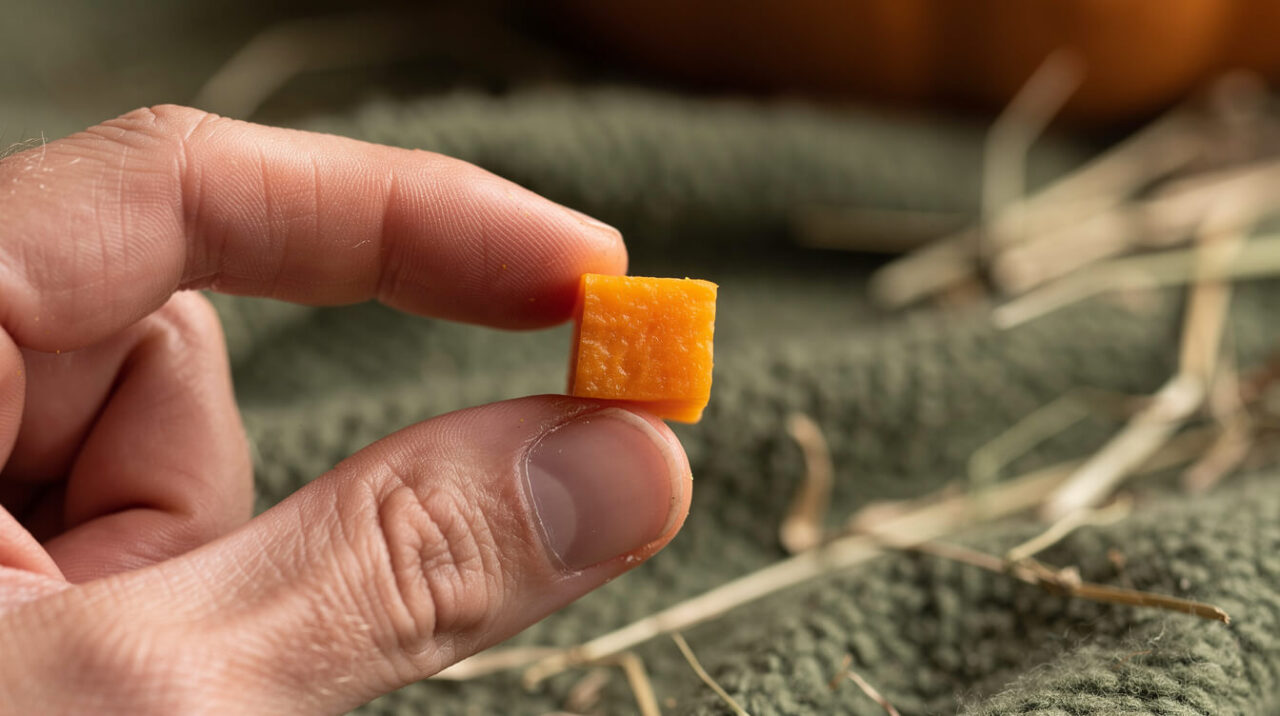
Sources mostly agree on the amount, even when their reasons wobble:
- GuineaDad suggests two to three small cubes of about half an inch, once or twice a week, and watching the droppings.
- Southern California Guinea Pig Rescue puts raw pumpkin under “OK to feed rarely, once per week at most.”
- The Companion Animal Wellness Center handout lists raw pumpkin (no seeds) under “rarely,” at one to two servings a week at most.
There’s a small inconsistency in those last two lists. Both put “squash” or “winter squash” in a more generous tier, two to four times a week, while pumpkin sits in the “rarely” tier. Botanically, pumpkin is a winter squash. We think the rarely-tier placement is down to pumpkin’s reputation as a sweet treat rather than its chemistry. It’s not a sugar problem (see the table), and with only 21 mg of calcium per 100 g it’s not a calcium problem either. The low fiber and minimal vitamin C are reason enough to keep it small, so we land in the same place by a more honest route.
Our guideline
This is our judgment, built from the sources above. It isn’t an official standard.
- First time: one half-inch cube, then wait a day and check the droppings.
- Ongoing: up to two or three half-inch cubes per adult guinea pig, once or twice a week.
- Inside the daily cup, not on top of it. On pumpkin days, trim another “variety” vegetable, never the bell pepper or other vitamin C staples.
- Every day? No. Rotation is the point. Our guinea pig care guide explains how hay, pellets, and fresh foods fit together.
Introduce it slowly, one new food at a time. Merck notes that guinea pigs form food preferences early and do best when new foods arrive gradually. If droppings turn soft or smaller after pumpkin, stop. SoCal Guinea Pig Rescue’s rule of thumb is to pause fresh veggies for at least 24 hours, then add them back sparingly. Leave pumpkin out of the rotation for a good while after that.
Young, pregnant, elderly, or medically fragile guinea pigs are a different conversation. Keep their diets steady and check with your vet before adding anything new.
The weekly care guide
Get it right for your animal, every week
One email a week: new care guides, species deep-dives, and the safety answers keepers search for, written by our specialists. No spam. Unsubscribe anytime.
Which parts of a pumpkin can guinea pigs eat, and which pumpkins?
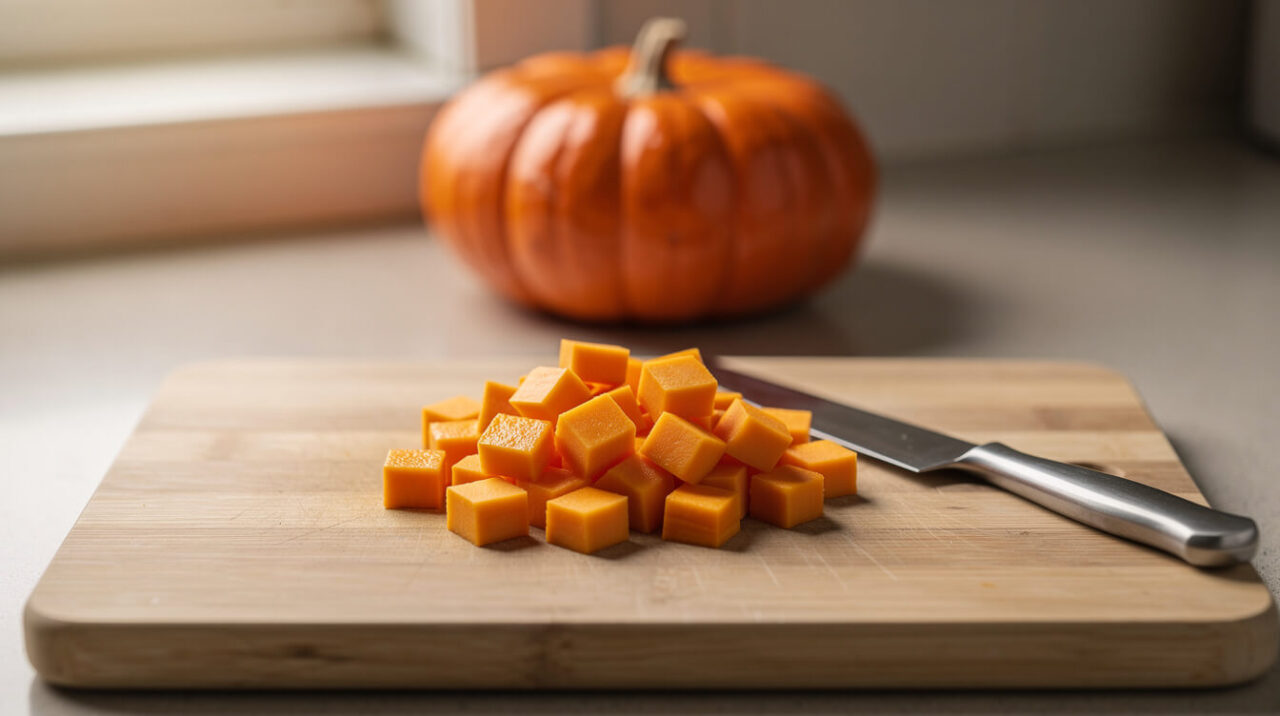
The flesh: yes
The firm orange flesh is the part to share. Take it from a fresh, firm, unblemished pumpkin that’s meant for eating. A small “sugar” or “pie” pumpkin is ideal. Cut a few cubes for your guinea pigs before the rest goes into your own cooking.
The skin: optional, and we’d peel
Sources disagree here, sometimes within the same article. One top-ranking guide tells readers to avoid the skin in its key takeaways, then says further down that guinea pigs “can eat both the rind and the flesh.” A long-running UK keeper blog says the skin is “perfectly edible,” and a moderator on The Guinea Pig Forum says guinea pigs can eat “the same bits of pumpkins” that people can. Here’s what we can say with confidence: pumpkin skin isn’t toxic. But on carving pumpkins it’s thick and hard. Store-bought pumpkins can also be waxed or treated, and you can’t easily tell. Peeling costs you nothing and removes the uncertainty. If you grew the pumpkin yourself, untreated, a thin, well-washed sliver of skin is fine.
Seeds: no
Pumpkin seeds aren’t poisonous, but they’re rich in fat and slippery. Keepers widely treat them as a choking hazard for guinea pigs, and SoCal Guinea Pig Rescue puts seeds on its “never feed” list. Scoop out every seed and the stringy pulp around them. Roasted, salted, or spiced seeds are a firmer no.
Stem, leaves, and vines: no
The stem is hard, woody, and usually dirty. We couldn’t find a single veterinary or welfare source recommending pumpkin leaves or vines for guinea pigs, which are prickly-haired and often sprayed in the field. With so many well-documented greens available, this isn’t the place to experiment.
Cooked, canned, or pie: no
Guinea pig rescues are blunt about cooked vegetables. SoCal lists “frozen or cooked vegetables” under “never feed,” and GuineaDad says to avoid canned or cooked pumpkin. Cooking breaks down vitamin C, the one thing a guinea pig needs most from produce. Canned puree is a concentrated, cooked product, and pie filling adds sugar and spices that have no place in a cavy’s bowl. That includes pumpkin-spice treats and pumpkin-flavored small-animal snacks. If your guinea pig licked a bit of plain canned puree off a spoon, it’s not an emergency. Watch the droppings and appetite. There’s just no reason to offer it.
Jack-o’-lanterns, porch pumpkins, and ornamental gourds: no
A carved pumpkin starts breaking down as soon as its flesh is exposed. Within days it can grow mold you can’t fully see, and it may have candle soot or wax inside. Painted, glittered, or sealant-sprayed pumpkins are out for obvious reasons. Ornamental gourds and some decorative “mini pumpkins” are bred for looks, not eating. Plants in the squash family can contain bitter compounds called cucurbitacins. The National Capital Poison Center warns about these in its “if it’s bitter, it’s not dinner” guidance on toxic squash syndrome, and cooking doesn’t remove them. If a pumpkin’s flesh is unusually bitter, throw out the whole thing, for everyone in the house. The simple fix: buy one eating pumpkin and set your guinea pigs’ share aside before anyone picks up a carving knife.
How to serve pumpkin (and make it a foraging game)
Here’s the routine we’d use for a herd of two:
- Pick the right pumpkin. Use a fresh pie pumpkin, firm all over, with no soft spots, mold, or cuts.
- Wash it well, even if you’ll peel it, so the knife doesn’t drag dirt into the flesh.
- Peel, deseed, and dice a few half-inch cubes per pig. Scrape away every seed and string.
- Serve raw at room temperature. If you’ve cut extra, refrigerate it in a sealed container and use it within a couple of days. Let it warm up before serving, and toss anything slimy or off-smelling.
- Clear away leftovers. Merck advises removing uneaten fresh food after a few hours, and the Humane World for Animals feeding guide suggests checking about an hour after a treat. Wet pumpkin cubes buried in bedding spoil quickly.
- Check droppings the next day. Firm, plentiful, and normal-sized means you’re on track.
Turn it into foraging, not just a snack
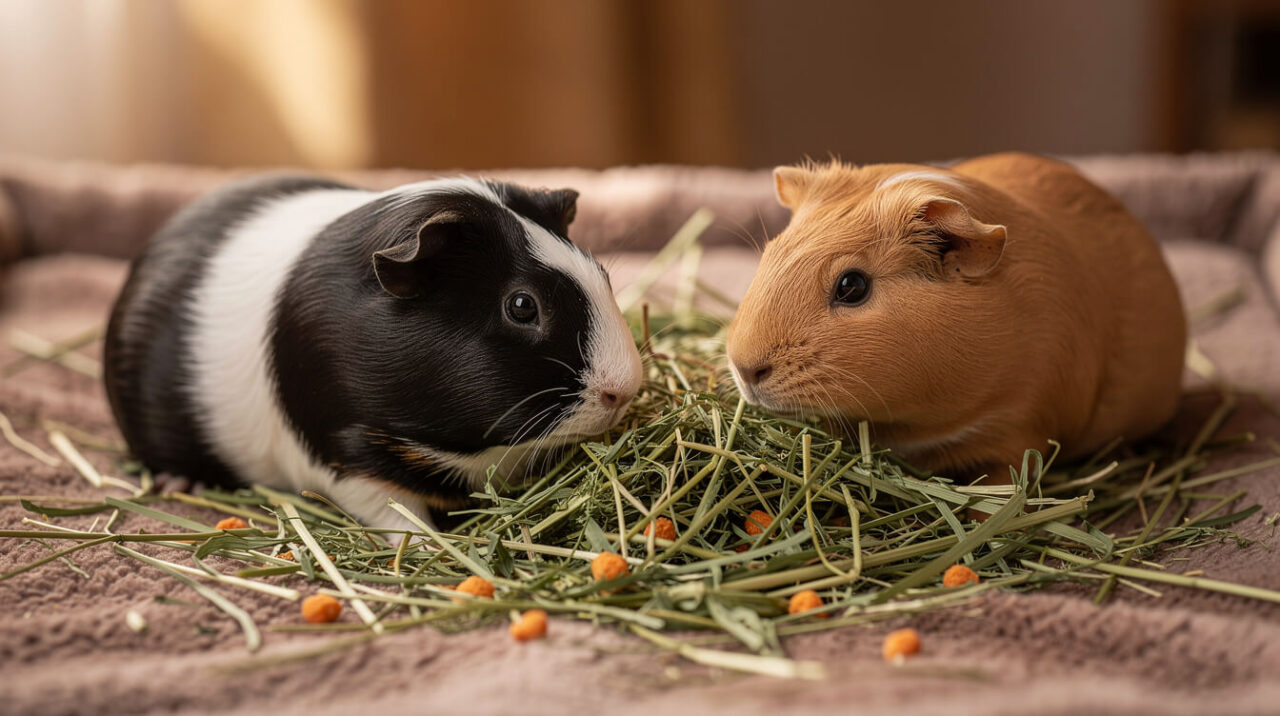
Guinea pigs are grazers, built to spend their day searching through grass. A few pumpkin cubes can tap into that. Cut your two or three cubes into smaller bits and scatter them through a fresh pile of hay so your guinea pigs have to snuffle for them. Or tuck them into a hay-stuffed cardboard tube, an idea Humane World for Animals also suggests for snacks. You get a longer, more natural activity out of the same small portion, and both pigs get a fair share instead of one bully grabbing everything. If you use fleece bedding, our guide to fleece bedding for guinea pigs has tips on keeping the hay corner clean.
Whether your household runs on cavies, rabbits, or something wilder, our keeper merch is made for people who take small-animal care this seriously. The Ferret Father Godfather Parody T-Shirt is our small-mammal design, and it’s the one to wear to the pumpkin patch while you pick out the herd’s share.

Wear the small-mammal obsession
The Ferret Father tee: a cinematic parody portrait on soft, garment-dyed Comfort Colors cotton, for the keeper whose life is happily run by small, fluffy, opinionated animals.
Skip the pumpkin “bowl”
You’ve probably seen photos of guinea pigs sitting in a hollowed-out mini pumpkin full of salad. It’s adorable, but a whole pumpkin shell is an all-you-can-eat pumpkin buffet with a rind your pigs will happily gnaw for an hour. If you want the photo, set up the shot, take it fast, and then swap back to a regular dish. Your guinea pigs get the fun and none of the soft droppings.
Can guinea pigs eat pumpkin? Frequently asked questions
Can guinea pigs eat pumpkin every day?
No. Once or twice a week is plenty. Daily pumpkin would crowd out the high-fiber greens and vitamin C vegetables your guinea pig actually needs.
Can guinea pigs eat pumpkin seeds?
No. They’re fatty and slippery, keepers treat them as a choking hazard, and rescues list seeds under “never feed.” Remove every seed before serving.
Can guinea pigs eat pumpkin skin?
It isn’t toxic, but it’s tough, and store-bought pumpkins may be waxed or treated. We’d peel it. A thin, washed sliver from an untreated homegrown pumpkin is fine.
Can guinea pigs eat canned pumpkin or pumpkin puree?
We’d skip it. It’s cooked, concentrated, and low in the vitamin C that makes fresh produce worth feeding. Pie filling, pumpkin-spice products, and pumpkin-flavored treats are a definite no.
Can guinea pigs eat cooked pumpkin?
Raw is the way to go. Guinea pigs are built for fresh plants, and cooking strips out vitamin C. Most rescue diet lists say never to feed cooked vegetables.
Will pumpkin help my guinea pig’s diarrhea or constipation?
No. Please don’t use pumpkin as a home remedy. Pumpkin is a popular tummy fix for dogs, as we cover in our dogs and pumpkin guide, but that advice doesn’t transfer to guinea pigs. A guinea pig with diarrhea, few or no droppings, a bloated belly, a hunched posture, or a lack of interest in food needs a vet, ideally the same day. Merck warns that slowed digestion in guinea pigs can lead to rapid decline. Adding a new watery food to an upset gut only makes things harder to read.
Can baby guinea pigs eat pumpkin?
We’d wait. Young guinea pigs do best on a steady diet of hay, fresh pellets, and a familiar set of vegetables. Once your pup is settled and growing well, ask your vet before adding treats like pumpkin.
Can guinea pigs eat butternut squash, zucchini, or other squash?
Yes, with the same rules: raw, plain, and no seeds. Zucchini is a common daily vegetable on rescue lists, and it carries about twice pumpkin’s vitamin C and fiber. Winter squashes like butternut belong in the occasional rotation, just like pumpkin.
My rabbit and guinea pig both want pumpkin. Same rules?
Similar, but not identical. Rabbits make their own vitamin C, so pumpkin’s low vitamin C doesn’t matter for them the way it does for cavies. They have their own portion debate, which we cover in can rabbits eat pumpkin. Rabbits and guinea pigs shouldn’t share a diet or, ideally, a home. Their nutritional needs differ, and rabbits can injure guinea pigs.
Final thoughts
So, can guinea pigs eat pumpkin? Yes. A few small, raw, seedless cubes once or twice a week make a safe, seasonal extra most guinea pigs enjoy. Just know what pumpkin is and isn’t. It isn’t sugary, it isn’t a vitamin A powerhouse, and it isn’t a source of the vitamin C your guinea pig depends on every day. It’s a watery, low-fiber treat. Fed like one, and served alongside the bell pepper rather than in its place, it’s a nice way to share the season with your herd. If you’re building out your cavy’s whole menu, our broccoli guide is a good next read. For any change in appetite, droppings, or energy, your exotics vet is always the right call.
Before you go
Keep learning your animal
We publish a new guide every day. The best of them land in one short weekly email, so you never miss the one about your species.

Oliver Grant is your go-to expert for all things related to small mammals. With 15 years of hands-on experience raising and caring for rabbits, guinea pigs, hamsters, and ferrets, Oliver brings a wealth of knowledge to his readers.