Why Does My Cat Pee on My Bed? The Medical Checks, the Litter-Box Math, and How to Stop It Without Punishment
You pull back the duvet and there it is again: a damp patch, that unmistakable smell, and a cat who looks completely unbothered. If you’re asking why does my cat pee on my bed, you’re in good company. House-soiling is one of the most common problems cat owners bring to their vets, and it’s exhausting: the laundry, the ruined mattress, the worry that your cat is unhappy or angry with you.
Here’s the reassuring part, straight from the feline vets who wrote the guidelines on this: your cat is not doing it out of spite. A cat who pees on the bed is telling you something isn’t right. Often that’s a sore bladder. Sometimes it’s a litter box that doesn’t suit them, or a household that feels less safe than it used to. This guide walks you through the medical checks to do first, how to read where and when it happens, the litter-box size that almost no one gives you a number for, and how to clean the bed so your cat stops coming back to it. No punishment needed, and none recommended.
Why does my cat pee on my bed? The short answer
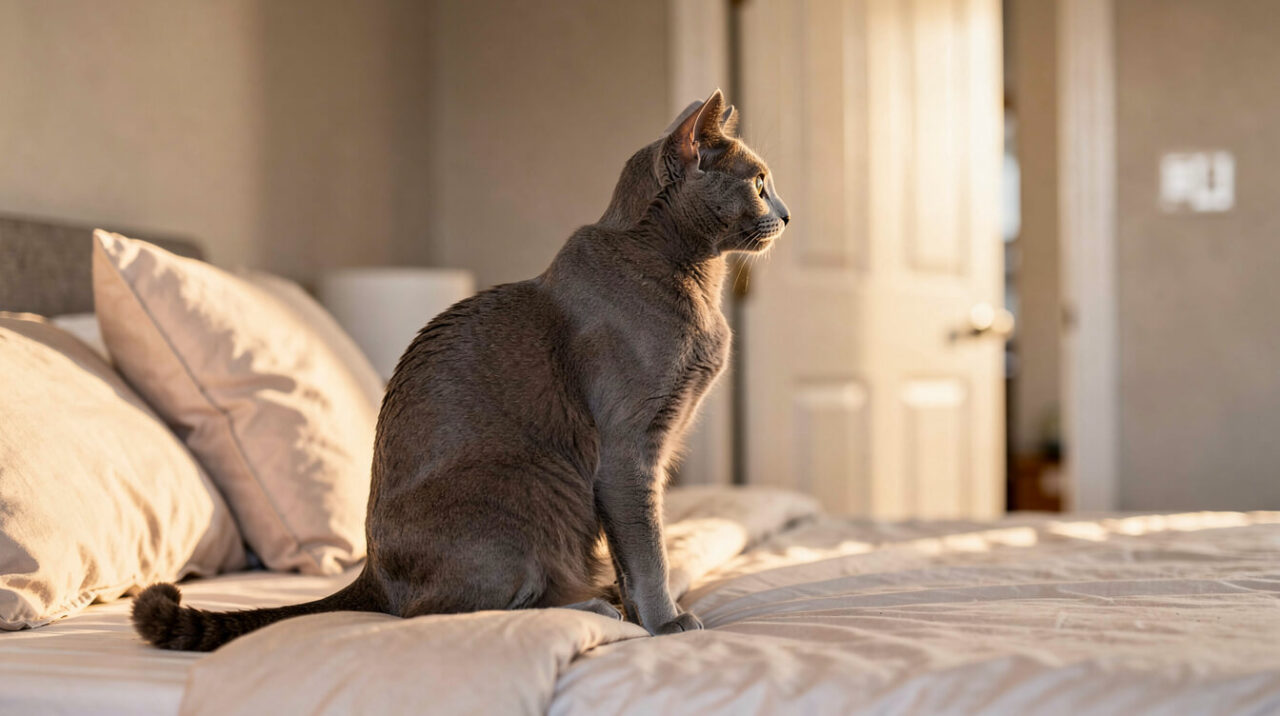
In one sentence: a cat pees on your bed because something about the litter box has become unpleasant, painful, or unsafe, and your bed is the softest, safest, most “you”-scented spot in the house.
The 2014 house-soiling guidelines from the American Association of Feline Practitioners and the International Society of Feline Medicine (AAFP/ISFM, Carney et al.) sort almost every case into four buckets:
- A medical problem: bladder stones, a urinary tract infection, kidney disease, diabetes, an overactive thyroid, arthritis, and more.
- Feline idiopathic cystitis (FIC): painful bladder inflammation with no single identifiable cause. Cornell’s Feline Health Center calls it the most common diagnosis in cats with urinary signs, and stress plays a real part in it.
- Marking: usually a small amount sprayed on a vertical surface from a standing position, although the guidelines note some cats squat and mark horizontal surfaces too.
- Environmental or social causes: the box, the litter, its location, or tension with another pet or person.
More than one bucket can apply at the same time. A cat with a painful bladder may learn to avoid the box, and that avoidance can last after the bladder heals. That’s why the order matters: see your vet first, then fix the box, then work on stress. Skipping straight to deterrents or a new cleaner treats the symptom (a wet bed) and leaves the cause in place.
And one more thing before we go on: the same guidelines are blunt that house-soiling “is not due to spite or anger towards the owner, but because the cat’s physical, social or medical needs are not being met.” You haven’t done anything unforgivable. You’re reading this, which means you’re already on the right track.
Rule out medical causes first, and know the one true emergency
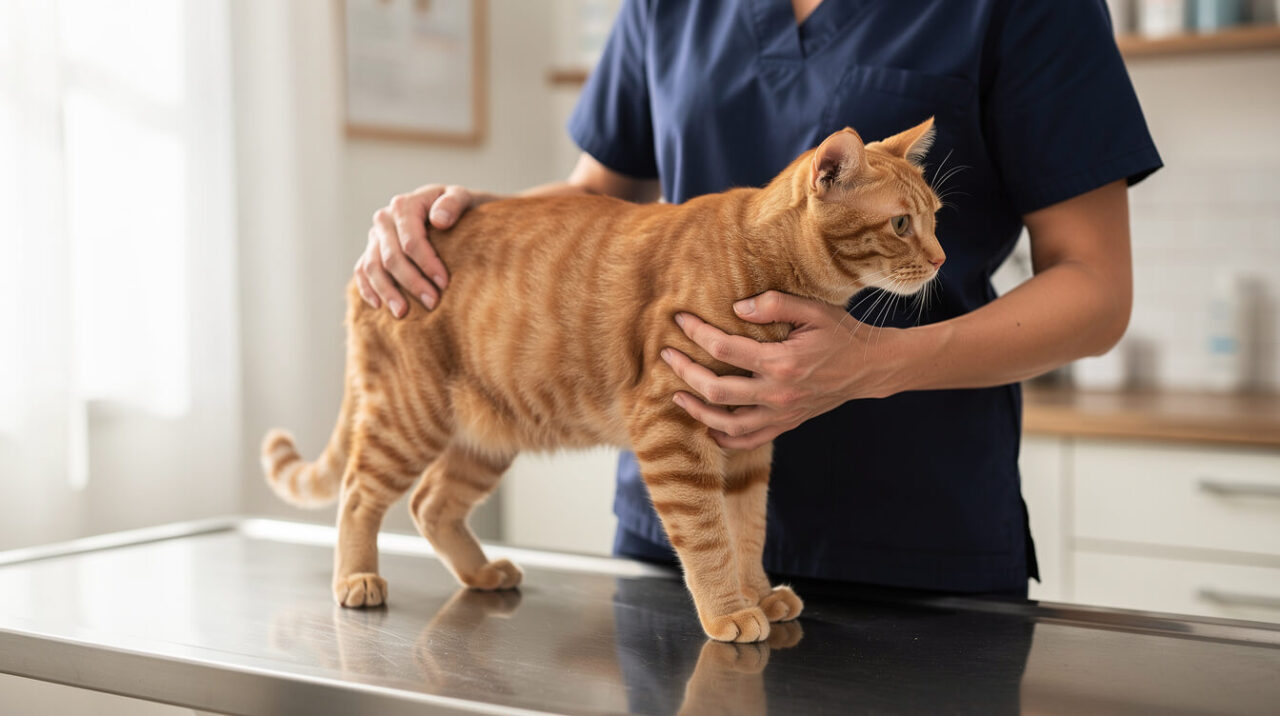
Any cat who suddenly starts peeing outside the box needs a vet visit. That isn’t a box-ticking step. Pain is one of the most common reasons a cat abandons the litter box, and a cat in pain often links the box itself with the hurt. Your vet will usually start with a physical exam and a urine test, and may suggest bloodwork or imaging depending on what they find. The AAFP guidelines even recommend a basic joint and nerve check on every house-soiling cat, because stiff joints can make climbing into a high-sided box painful.
The male-cat emergency: straining with little or no urine
This is the one situation that can’t wait until Monday. If your cat, especially a male, is straining in the box, going back again and again, passing little or no urine, crying, or seeming more and more distressed, he may have a urethral obstruction. Cornell’s Feline Health Center calls this “an absolute emergency, requiring immediate veterinary treatment,” and notes that without treatment a fully blocked cat can deteriorate fast, within roughly a day or two. Male cats are at higher risk because their urethra is narrower.
Call your vet or an emergency clinic right away. A partially blocked male may also dribble small amounts on soft surfaces, including your bed, so small, frequent wet spots in a male cat deserve a same-day call, not a wait-and-see. (We explain this sign in more detail in our guide to pumpkin for cats, because people often mistake a blocked bladder for constipation.)
Other medical clues to tell your vet
- Blood-tinged urine, or pink spots on pale bedding.
- Frequent small puddles rather than one normal-sized one.
- Licking the genital area more than usual, or crying while peeing.
- Drinking and peeing much more than usual, which can point toward kidney disease, diabetes, or hyperthyroidism, especially with unexplained weight loss.
- Stiffness, reluctance to jump, or hesitating at the edge of the box in an older cat. Arthritis is common and often missed. Our senior cat care tips cover the basics.
Write down when it started, how often it happens, and anything that changed around then. Your vet will ask, and a short timeline makes their job much easier. A photo of the spot (and of the litter box setup) helps too.
Why the bed? Reading your cat’s pattern
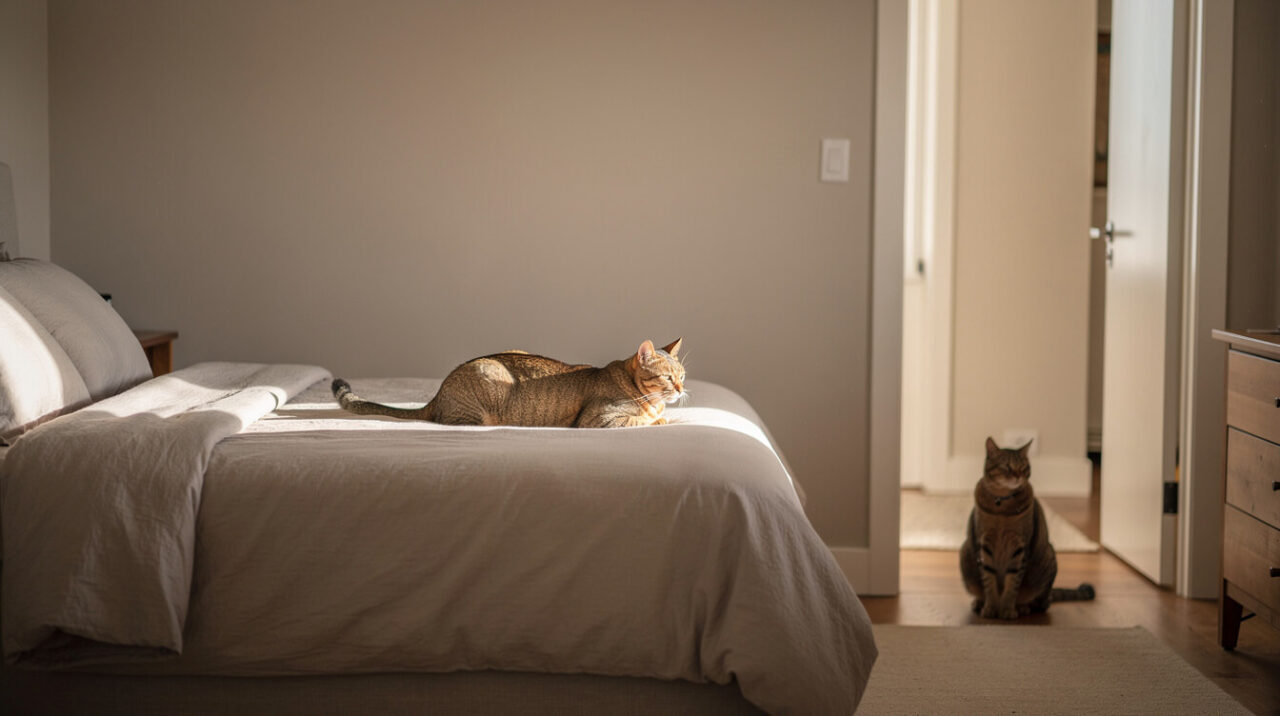
Most articles list generic reasons a cat pees outside the box. The more useful question is why your bed in particular. A bed has three things going for it, from a cat’s point of view:
- It’s soft and absorbent. To a cat whose bladder hurts, or who has started to dislike the feel or smell of the litter, a thick, soft surface can feel like a better option.
- It smells strongly of you. Your scent is comforting. A stressed cat may be drawn to the spot that smells most like their safest person.
- It’s high up and hard to ambush. The AAFP guidelines say it directly: “In some households, an insecure cat feels safest on the owner’s bed and may eliminate there instead of going to the litter box.” If another cat guards the hallway or a dog hangs around the box, the bed may simply feel like the safest place to be vulnerable.
The pattern of when and how it happens can hint at which of these is driving it. Treat this table as a set of clues to bring to your vet, not as a diagnosis:
| What you’re seeing | What it may point toward | First step |
|---|---|---|
| Small, frequent wet spots; straining; a male cat | Bladder pain, possibly a blockage | Call your vet today, or an emergency clinic if he’s producing little or no urine |
| Pees on the bed but still poops in the box | Something urine-specific: bladder discomfort, or a dislike of how the box feels when wet | Vet check with a urine test, then review litter and cleaning |
| Started after a new pet, person, move, or schedule change | Stress or social tension; FIC can be stress-linked | Vet check, then work on stress and box access |
| Older cat; box has high sides or is on another floor | Arthritis or mobility trouble | Vet check for pain; offer a low-entry box nearby |
| Multi-cat home, all boxes in one spot | One cat blocking access to the boxes | Add boxes in separate locations |
| Happens mostly while you’re away | Your scent comforts a stressed cat; possible separation stress | Close the bedroom door while you work out the cause; leave a worn T-shirt in a cat bed |
One quick note on spraying versus peeing. Spraying usually looks like a small amount of urine on a wall or furniture leg, sprayed backward while the cat stands with its tail up and twitching. A full puddle on a flat bed is more often squatting. Both deserve a vet visit, but telling your vet which one you’re seeing narrows things down.
The litter-box audit: why does my cat pee on my bed when the box is right there?
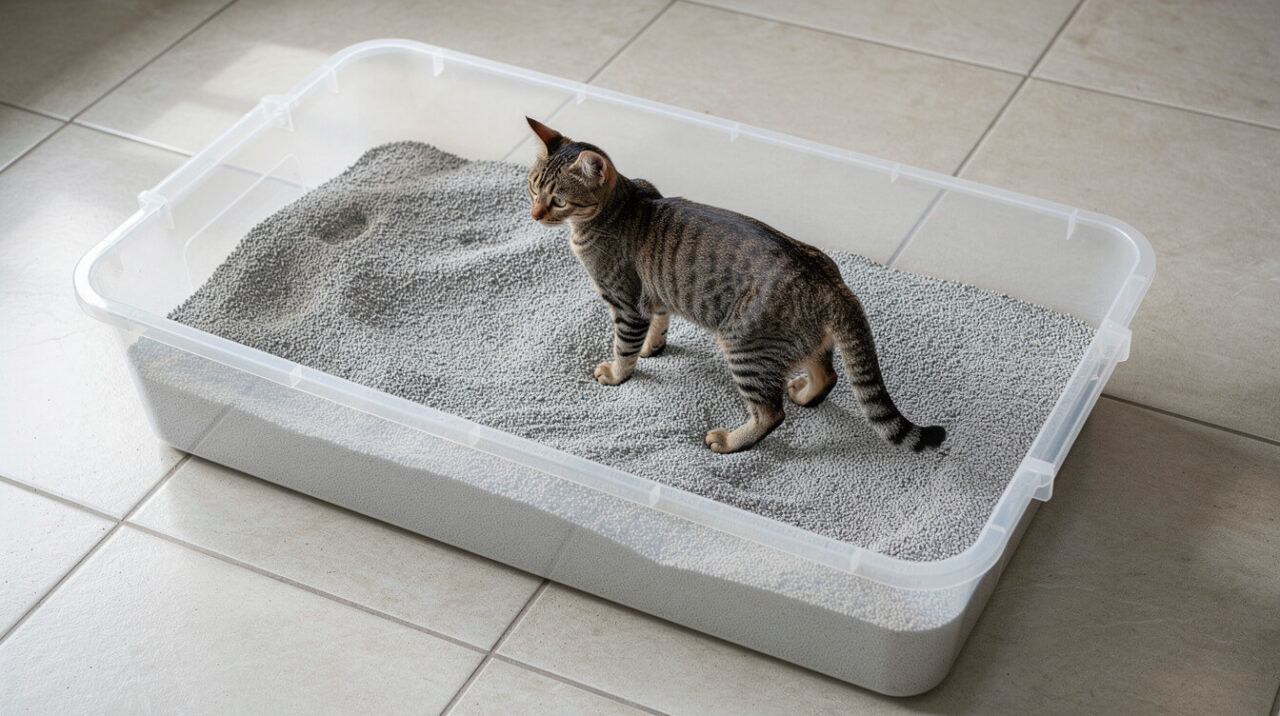
Once your vet has ruled out (or started treating) a medical cause, the box is the next suspect, even if it’s been “fine for years.” Cats’ needs change with age, weight, health, and household. Let’s go through it the way a feline behaviorist would.
Size: the number almost nobody gives you
Most advice says “get a bigger box” and stops there. The AAFP/ISFM guidelines actually give a rule: a rectangular litter box that is 1.5 times the length of your cat, measured from nose to the base of the tail. They add that in one study, adult cats preferred a box measuring 34 × 15 inches (86 × 39 cm) over a smaller one (Guy, Hopson, and Vanderstichel, 2014).
A quick note for anyone who finds a different figure online: the guidelines first printed in 2014 had different minimum dimensions. They were formally corrected in 2018, and the 34 × 15 inch figure above is the corrected one.
To use the rule, measure your cat from the tip of the nose to where the tail starts. If that’s 18 inches, you’re looking for a box at least 27 inches long. Many boxes sold as “large” fall well short of that. The guidelines suggest looking beyond the pet aisle: concrete mixing trays, sweater boxes, and under-bed storage containers all work, and you can cut down one side of a storage tote for an easy, low entry. A more recent study (Iwabuchi-Inoue et al., 2025) also found cats preferred boxes of at least 50 cm (about 20 inches), and that a larger box with clumping clay litter improved house-soiling. In fairness, the study’s first author works for a pet-litter company, but its findings line up with the vet guidelines.
Number and location
- How many: the familiar rule is one box per cat plus one. The guidelines call it a “historical rule of thumb” rather than an absolute, but they go further for single-cat homes: two boxes in two separate locations, plus at least one on each floor of a multi-level home.
- Not side by side: cats treat boxes placed next to each other as one big box. Put them in different spots.
- Quiet, with an exit: away from loud appliances, busy doorways, and food and water bowls. A cat should be able to see another animal coming and leave.
- Patience after a move: if you relocate a box and your cat starts using it, leave it there for at least two weeks before shifting it, and then move it only a few inches a day.
Litter, lids, and cleaning
- Litter: many cats find scented litters and litter deodorizers off-putting. Unscented, fine-grained clumping litter is a good place to start. If your cat perches on the rim with only one or two feet in the box, the guidelines read that as a possible dislike of the litter.
- Covered or open: research finds cats are roughly split on this, and cleanliness probably matters more than the lid. Open boxes are recommended where possible because they don’t trap smells, and you can see what’s going on.
- Cleaning: scoop at least once a day and wash the box every one to four weeks with soap and hot water. Skip strong chemicals and anything ammonia-based.
- Never a bad place: don’t give medications in the box or corner your cat in it. A cat who links the box with something unpleasant will look for somewhere else.
If you’re not sure what your cat prefers, the guidelines suggest a simple “litter box test”: set out a couple of different boxes or litters side by side and let your cat vote.
The weekly care guide
Get it right for your animal, every week
One email a week: new care guides, species deep-dives, and the safety answers keepers search for, written by our specialists. No spam. Unsubscribe anytime.
Stress, other pets, and bed-specific triggers
Stress doesn’t only make a cat anxious. It’s linked to feline idiopathic cystitis, the painful bladder condition, and Cornell lists changes in environment, routine, and the number of animals in the home as possible triggers. So stress can work on two fronts at once: it can make the box feel unsafe, and it can make peeing physically painful.
Triggers that often show up specifically as peeing on the bed include:
- A new partner, roommate, or baby, especially someone who now sleeps in “their” bed.
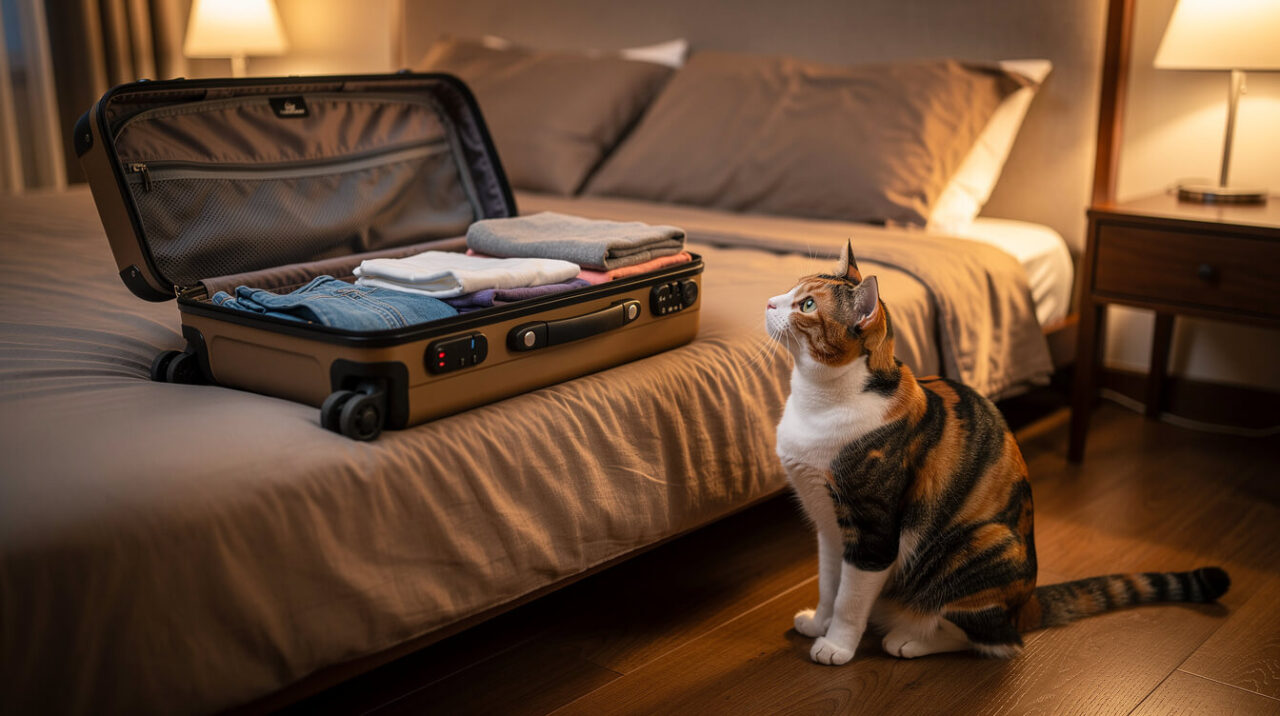
- Your travel. Suitcases, a few nights away, then a bed that smells strongly of a person who isn’t there.
- A new pet, or a dog who now sleeps on the bed or hangs around the box.
- Tension between cats. The AAFP guidelines describe a “despot” cat who controls access to the boxes, which pushes a less confident cat to go elsewhere.
- Outdoor cats seen through windows or patio doors, which can unsettle an indoor cat.
- Moving the box, changing the litter, or rearranging the room.
What helps
- Predictability: regular feeding and play times give an unsettled cat something to count on.
- More “safe resources”: extra boxes, water, perches, and hiding spots spread around the house, so no cat has to walk past a rival to get what they need.
- Play that tires them out: short daily sessions with a wand toy help burn off stress. If your cat is also getting nippy, our guide to why cats bite explains how the two can be connected.
- Blocking the view: if a neighborhood cat is the problem, frosting the lower part of a window or moving a perch can help.
About pheromone diffusers: you’ll see them recommended everywhere, and the evidence is genuinely mixed. The AAFP guidelines cite studies showing large reductions in urine spraying with synthetic pheromones. A 2010 systematic review in JAVMA, though, found most pheromone studies gave insufficient evidence, including for idiopathic cystitis. A diffuser is a reasonable add-on that some owners swear by. It isn’t a substitute for a vet check and a better box.
If stress is severe or the problem persists, ask your vet about a referral to a veterinary behaviorist, and about whether anti-anxiety medication might help alongside the other changes. Medication decisions belong with your vet. Never give a cat a human medication on your own.
Cleaning the bed so your cat doesn’t come back to it

This step matters more than it seems. If a cat can still smell old urine, even faintly, the spot can keep drawing them back. Your nose isn’t a reliable test; a cat’s is far better.
Bedding
Blot (don’t rub) as much as you can, then wash with an enzyme-based (biological) laundry detergent. Enzymes break down the proteins in urine that regular detergent can leave behind. Sniff it before it goes back on the bed, and wash again if any smell remains.
The mattress
- Blot thoroughly with clean towels, pressing down to draw urine out.
- Use an enzyme cleaner made for pet urine as the main step, not an optional extra. Some popular guides put vinegar and baking soda first and the enzyme cleaner last “if needed.” We’d reverse that emphasis. Follow the product label, saturate the soaked area (urine sinks deeper than the surface stain), and give it the contact time the label asks for. Check the label before layering other products on top, because some enzyme cleaners say not to mix.
- Let it dry completely, and keep your cat out of the room until it does.
- Avoid ammonia-based cleaners. The AAFP guidelines warn that they smell like urine to a cat, which can invite a repeat visit.
Please skip citrus essential oils and oil-based “deterrent” sprays. Citrus is a common suggestion for a smell cats dislike, but the ASPCA lists citrus essential oils as toxic to cats, and a cat lying on a treated bed will groom it off their fur.
Protecting the bed while you solve the cause
These are stopgaps, not fixes, but they protect your mattress and break the habit while the real work happens:
- Close the bedroom door for now. It’s the simplest and kindest option.
- Use a waterproof mattress protector under your sheets.
- Make the bed less inviting as a toilet: the AAFP guidelines list aluminum foil, plastic sheeting, double-sided tape, or a carpet protector turned nubby side up on the spot.
- Change what the spot means: once it’s clean and your cat is welcome on the bed again, the guidelines suggest placing toys or a little catnip there so it becomes a place for play, not a toilet.
And once your bed is finally yours again, you’ve earned a little fun. If you have a reptile keeper in your life (or you’re one yourself), our Bearded Dragon Crown Sunglasses King T-Shirt is a playful nod to the other animal obsession in a lot of multi-pet homes. We don’t have a cat design yet, but we’re working on it.

For the multi-pet household
Our crowned, sunglasses-wearing beardie, for the keeper whose home has a litter box in one room and a basking lamp in the next.
How long until it stops?
Be patient with your cat and with yourself. The AAFP guidelines remind vets to tell owners that resolving house-soiling “may take time,” especially when a medical cause and a learned box aversion overlap. Small wins count: a week without an accident, a cat who walks past the bed to the new box. If you’ve treated the medical side, upgraded the boxes, and reduced stress, and it’s still happening after a few weeks, go back to your vet. A referral to a behaviorist is a normal next step, not a failure.
Frequently asked questions
Should I punish my cat for peeing on the bed?
No. Punishment, whether that’s yelling, rubbing their nose in it, or spraying water, raises stress, and stress is part of the problem. The AAFP guidelines say punishment “only creates stress,” can lead to fear-related aggression, almost always damages the bond between cat and owner, and tends to push the behavior into less obvious places. Reward the behavior you want (using the box) and fix the reasons for the behavior you don’t.
Is my cat peeing on my bed out of spite?
No. Cats don’t pee to get back at people. It’s completely understandable to feel hurt or angry when it’s your own bed, but the more useful way to see it is that your cat is communicating discomfort or insecurity in the only way they can.
Why does my cat pee on my bed but poop in the litter box?
That split suggests the problem is specific to urination. Common possibilities are bladder discomfort, such as cystitis, crystals, or infection, or a dislike of how the box feels or smells once it’s wet. It’s a good detail to tell your vet, and a reason to ask for a urine test.
Why does my cat only pee on my bed when I’m away?
Your bed is where your scent is strongest, and a cat who feels unsettled while you’re gone may seek it out. Changes in routine, a pet sitter, or another pet’s behavior while you’re away can all play a part. Close the bedroom door when you travel, keep feeding and play times as consistent as possible, and leave a worn T-shirt in your cat’s own bed.
My senior cat suddenly started peeing on the bed. Why?
In older cats, think medical first. Kidney disease, diabetes, and hyperthyroidism can all increase urine volume, and arthritis can make climbing into a high-sided box or reaching a basement box painful. Book a vet visit, and in the meantime offer a large, low-entry box on the same floor where your cat spends most of their time.
What smells do cats hate to pee on?
Citrus is often said to put cats off, but please don’t use citrus essential oils or oil-based sprays to deter them, because they’re toxic to cats. Safer options are to clean thoroughly with an enzyme cleaner so the spot no longer smells like a toilet, cover it with foil or plastic for a while, and make it a play area once your cat is allowed back.
Does neutering or spaying help?
For urine marking, often yes. The AAFP guidelines list spaying or neutering as a way to remove sexually driven marking. If your cat is already desexed, look at the other causes in this guide.
Final thoughts on why your cat pees on your bed
If you take one thing from this guide, make it the order: vet first, then the box, then stress, then cleaning. A cat who pees on your bed isn’t being bad. They’re either hurting, unhappy with the bathroom you’ve provided, or looking for the safest-smelling spot in a home that feels a little less safe than it used to. Each of those is something you can work on.
Most cats do return to the box once the cause is found and their setup is fixed. Until then, close the door, protect the mattress, measure your cat for a properly sized box, and give it time. If you see straining with little or no urine, especially in a male cat, skip everything else and call your vet right away.
You’re doing the work of understanding your cat instead of just being frustrated with them. That’s exactly what they need from you.
Before you go
Keep learning your animal
We publish a new guide every day. The best of them land in one short weekly email, so you never miss the one about your species.

Dr. Lila Monroe is a seasoned veterinarian with a passion for feline health and behavior, boasting over 20 years of experience in the field. With her extensive knowledge of cat medicine combined with a deep understanding of the nuanced dynamics of cat behavior, Lila offers readers invaluable insights into creating a nurturing environment for their feline friends.