Can Dogs Eat Pumpkin Pie? What’s Really in a Slice, and When a Stolen Piece Needs a Call
Can dogs eat pumpkin pie? Not as a treat. There’s no reason to share it on purpose. But if your dog snatched a bite or even a whole slice of ordinary pumpkin pie, that’s rarely an emergency. The nutmeg most articles warn about is either missing from the recipe entirely or present in amounts far too small to poison a dog. The real risks are a sugar-free sweetener called xylitol, which is a call-now situation, and the sheer amount of fat and calories in a pie, which matters more the smaller your dog is and the more pie went missing.
So the useful question isn’t “is pumpkin pie toxic?” It’s “what was in this pie, and how much did my dog eat?” Below are three real recipes and a can of pie mix with the numbers, the risks ranked, and a calm checklist for the moment you find the empty pie plate. If that moment is now, jump to what to do if your dog ate pumpkin pie.
Can dogs eat pumpkin pie? The short answer
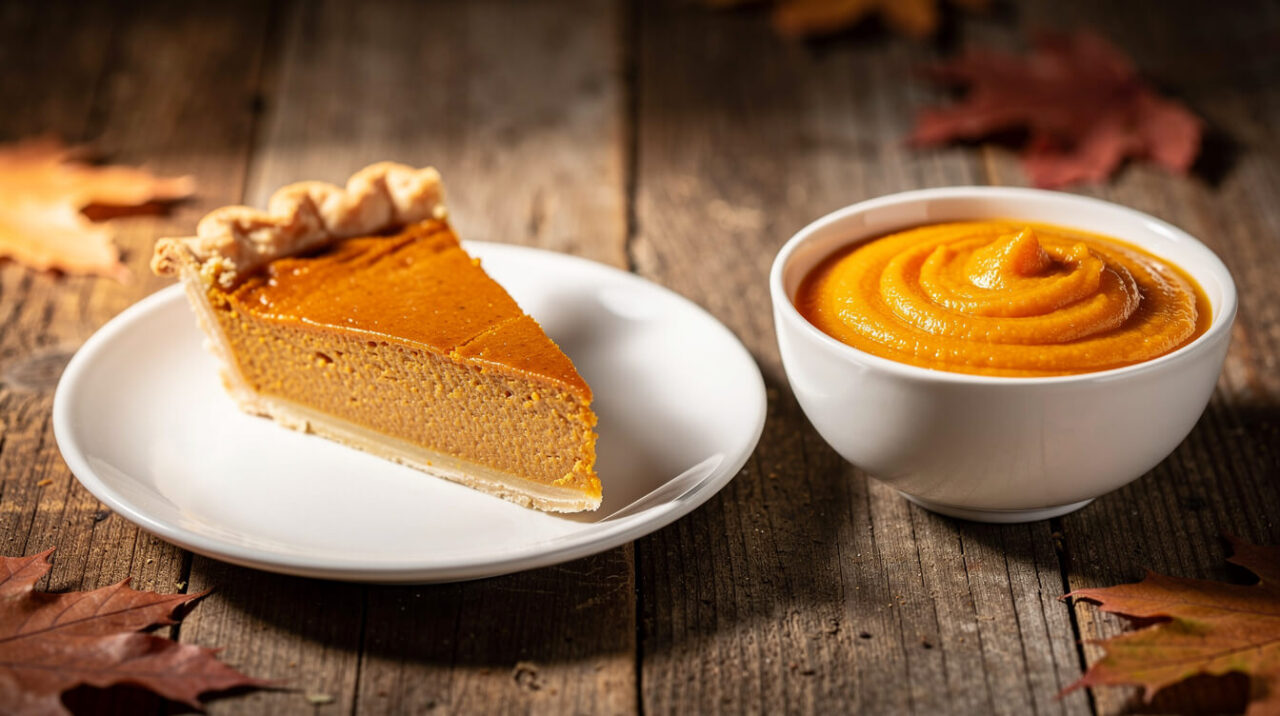
Pumpkin pie is a people dessert. It’s built from pumpkin, sugar, eggs, milk or cream, warm spices, and a buttery crust. Plain pumpkin is a reasonable dog food in small amounts. Almost everything that gets added to turn it into pie is pure downside for your dog. That’s the “no.”
Here’s the part that should lower your heart rate. An ordinary pumpkin pie, one made with real sugar and no chocolate or nut toppings, is mostly a sugar, fat, and calorie problem for a dog. For most dogs that means, at worst, an upset stomach: a bout of vomiting or loose stool that settles within about a day. Your dog’s size and the size of the haul matter a lot. A Labrador who licked a plate and a Chihuahua who ate a quarter of a pie are in very different places.
What this means in practice
- Don’t share pumpkin pie on purpose. There’s no benefit to your dog that plain pumpkin doesn’t give better.
- Don’t panic over an accident. A bite or a small slice in a healthy medium or large dog usually means watching at home, not rushing out the door.
- Do check what it was and how much. Sugar-free, a whole pie, a small dog, or a dog with a history of pancreatitis changes the answer. We’ll go through each one.
What’s actually in a pumpkin pie? Three recipes and a can, measured
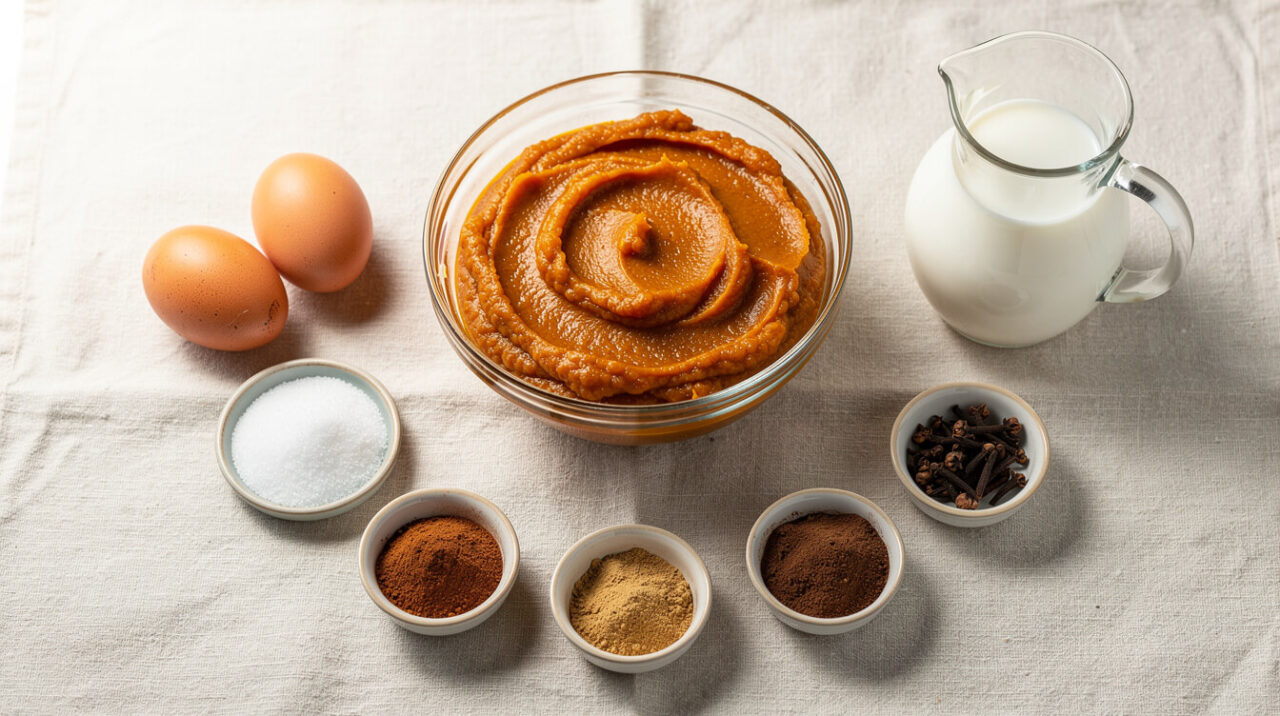
“Pumpkin pie” isn’t one recipe, so we looked at the ones people actually bake. These are rough numbers drawn from published recipes and labels, not a toxic-dose calculator, but they show where the risk really sits.
The recipe on the Libby’s can
The most-baked pumpkin pie recipe in America is probably the one printed on the label of Libby’s canned pumpkin. There are now two versions on the can. The original uses ¾ cup of sugar, a 12-ounce can of evaporated milk, two eggs, and three spices: 1 teaspoon of cinnamon, ½ teaspoon of ginger, and ¼ teaspoon of cloves. The newer “New-Fashioned” version swaps the sugar for a can of sweetened condensed milk, which adds roughly 70 grams more sugar to the pie. Neither version calls for nutmeg. So if the pie on your counter came from the back of the Libby’s can, there’s no nutmeg in it at all.
Homemade recipes that do use nutmeg
Plenty of recipes add nutmeg. Preppy Kitchen’s pumpkin pie uses ¼ teaspoon of ground nutmeg for a pie that serves 8. Sally’s Baking Addiction’s popular “Great Pumpkin Pie” also uses ¼ teaspoon in the filling, along with 1¼ cups of brown sugar and a cup of heavy cream, which makes it a richer pie than the Libby’s original. Many bakers skip the individual spices and use a pumpkin pie spice blend instead. McCormick’s lists cinnamon, ginger, nutmeg, and allspice on its label, and Preppy Kitchen suggests 1½ teaspoons of the blend in place of all four spices. Nutmeg is only one of those four, so a whole pie made that way holds a fraction of that amount.
Canned pumpkin pie mix
This is the one to watch for in the pantry. Libby’s Easy Pumpkin Pie Mix lists pumpkin, water, sugar, salt, spices, dextrose, natural flavors. Each ⅓-cup serving carries 16 grams of added sugar and 110 milligrams of sodium, and the can holds about 10 servings. It sits on the shelf right next to 100% pure pumpkin, in a can that looks nearly identical. If your dog ate pie mix straight from the can, it’s the same answer as pie filling: a sugar problem, not a poisoning, unless it’s a sugar-free product.
A store-bought slice, by the numbers
USDA FoodData Central lists a commercially prepared pumpkin pie at about 244 calories and nearly 10 grams of fat per 100 grams. A standard slice weighs 133 grams, which works out to roughly 320 calories and 13 grams of fat. A whole pie (995 grams in the USDA entry) comes to about 2,400 calories and close to 100 grams of fat. Keep those numbers in mind. They’re the reason the fat matters more than the nutmeg.
The nutmeg question, answered with real numbers
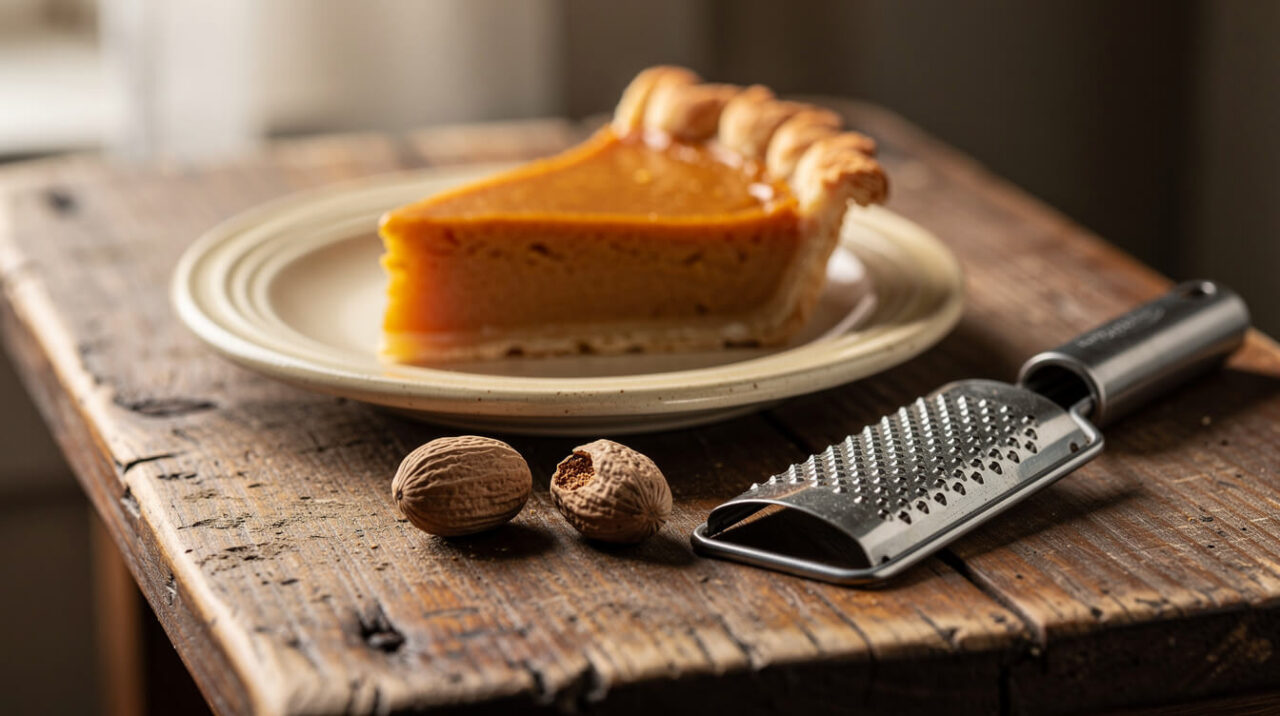
Nutmeg really does contain a toxin. It’s called myristicin, and a large dose can cause disorientation, a racing heart, high blood pressure, dry mouth, belly pain, and in severe cases seizures, with signs that can last up to 48 hours. Nobody disputes that. What matters is the dose.
Here’s what the Pet Poison Helpline, whose veterinarians field these calls every holiday season, says about it. Staff veterinarian Dr. Charlotte Flint writes that “the small amount of nutmeg used in recipes is very unlikely to cause serious toxicity, though mild stomach upset could occur,” and that “a pet would need to ingest a very large amount of nutmeg, and this is very unlikely to occur if a dog or cat ingests food with nutmeg in it.”
The slice arithmetic
USDA data puts a teaspoon of ground nutmeg at about 2.2 grams. Using the recipes above:
- A whole pie made with ¼ teaspoon of nutmeg holds about 0.55 grams of it.
- One slice of that pie, cut 8 ways, holds about 1/32 of a teaspoon, roughly 0.07 grams.
- A Libby’s-label pie holds none.
One widely shared article puts the danger point for dogs at 5 grams of nutmeg. We couldn’t trace that figure to a veterinary source, but even taken at face value it’s more than two teaspoons of ground nutmeg. That’s the nutmeg in about nine whole pies made from the recipes above. A dog that ate that much pie would be in serious trouble from the fat long before the nutmeg mattered.
So nutmeg poisoning is a spice-jar problem, or a whole-nutmeg-seed problem, not a pie problem. If your dog got into the jar itself, or chewed up whole nutmegs, call your vet or a poison line. We did the same math for cookies in our guide to whether dogs can eat gingerbread, and the pattern holds there too.
Cinnamon, ginger, cloves, and allspice
The same Pet Poison Helpline page notes that it takes more than about a teaspoon of cinnamon powder to cause problems in most pets. The Libby’s original uses 1 teaspoon across the whole pie, about ⅛ teaspoon a slice. Cloves and allspice contain eugenol, which in larger amounts can upset the stomach, and ginger in recipe amounts isn’t a concern. At pie quantities, these spices are a mild-stomach-upset issue at most.
What makes pumpkin pie risky for dogs, ranked

If your dog got into pumpkin pie, these are the things worth checking, in order of how fast you need to act.
1. Xylitol in a sugar-free or “keto” pie: call now
Xylitol is a sugar substitute that’s safe for people and dangerous for dogs. In dogs it triggers a rapid insulin release that can drop blood sugar to dangerous levels, sometimes within an hour, and some dogs go on to develop liver failure. The FDA’s veterinary center specifically warns that xylitol turns up in baked goods, including pies, often because a baker substituted it for sugar in a diabetic-friendly or low-carb recipe, and that some in-store bakeries sell baked goods made with it. On a label it can also appear as birch sugar or wood sugar.
Most pumpkin pies don’t contain xylitol. But if the pie was labeled sugar-free, low-sugar, keto, or diabetic-friendly, or a relative baked it with “a sugar substitute” and you can’t find out which, treat it as urgent. Call your vet or a poison line right away, even if your dog seems completely fine. Don’t wait for symptoms. This is the one genuinely time-critical line in this article.
2. Fat and calories: the whole-pie problem
This is the risk that applies to every pumpkin pie, including perfectly ordinary ones. A very rough guide to daily calorie needs for typical adult dogs is 300 to 400 calories for a 10-pound dog, 700 to 900 for a 30-pound dog, and 1,100 to 1,500 for a 60-pound dog. Your dog’s food label and your vet have the real number for your dog. Against those figures, one 320-calorie slice is:
- About a full day’s calories for a 10-pound dog
- Roughly a third to nearly half a day for a 30-pound dog
- About a fifth to a quarter of a day for a 60-pound dog
A whole pie is about 2,400 calories and close to 100 grams of fat, which is several days’ worth of food for most dogs, eaten in a few minutes. A sudden fat load like that is a recognized trigger for pancreatitis, a painful inflammation of the pancreas that can need hospital care. The Merck Veterinary Manual lists dietary indiscretion as a common risk factor in dogs and notes that Miniature Schnauzers are dramatically overrepresented, with Yorkshire Terriers also at higher risk. Small dogs, those breeds, and any dog who has had pancreatitis before deserve a lower bar for calling the vet. It’s the same pattern we covered in our guide to mashed potatoes for dogs: the holiday trimmings, not the base food, cause the trouble.
3. The pie plate, foil, and packaging
A dog who steals a whole pie sometimes eats some of what it came in: the disposable aluminum pie tin, foil, plastic wrap, or bits of a cardboard bakery box. Those aren’t toxic, but they can cause choking or a blockage in the gut, which is a separate problem from anything in the filling. If any of the container is missing, call your vet.
4. Toppings and the rest of the dessert table
Pumpkin pie rarely travels alone. Chocolate, macadamia nuts, and raisins are all toxic to dogs and turn up in neighboring desserts and in some pie toppings. Bourbon or rum whipped cream isn’t baked, so the alcohol is still in it, and dogs are sensitive to alcohol. If your dog cleared the whole dessert table rather than one pie, say so when you call.
5. Salt and spices: rarely the issue
One competitor warns about salt poisoning from pie mix. The numbers don’t support it. Merck reports that signs of salt toxicosis in dogs can appear after about 2 to 3 grams of salt per kilogram of body weight. A whole store-bought pie holds roughly 6 grams of salt, so even a 10-pound dog would need about two whole pies to reach that range, by which point the fat is the bigger problem. The spices, as covered above, are a minor stomach issue at pie amounts.
The weekly care guide
Get it right for your animal, every week
One email a week: new care guides, species deep-dives, and the safety answers keepers search for, written by our specialists. No spam. Unsubscribe anytime.
Pumpkin pie filling, crust, and whipped cream: quick verdicts
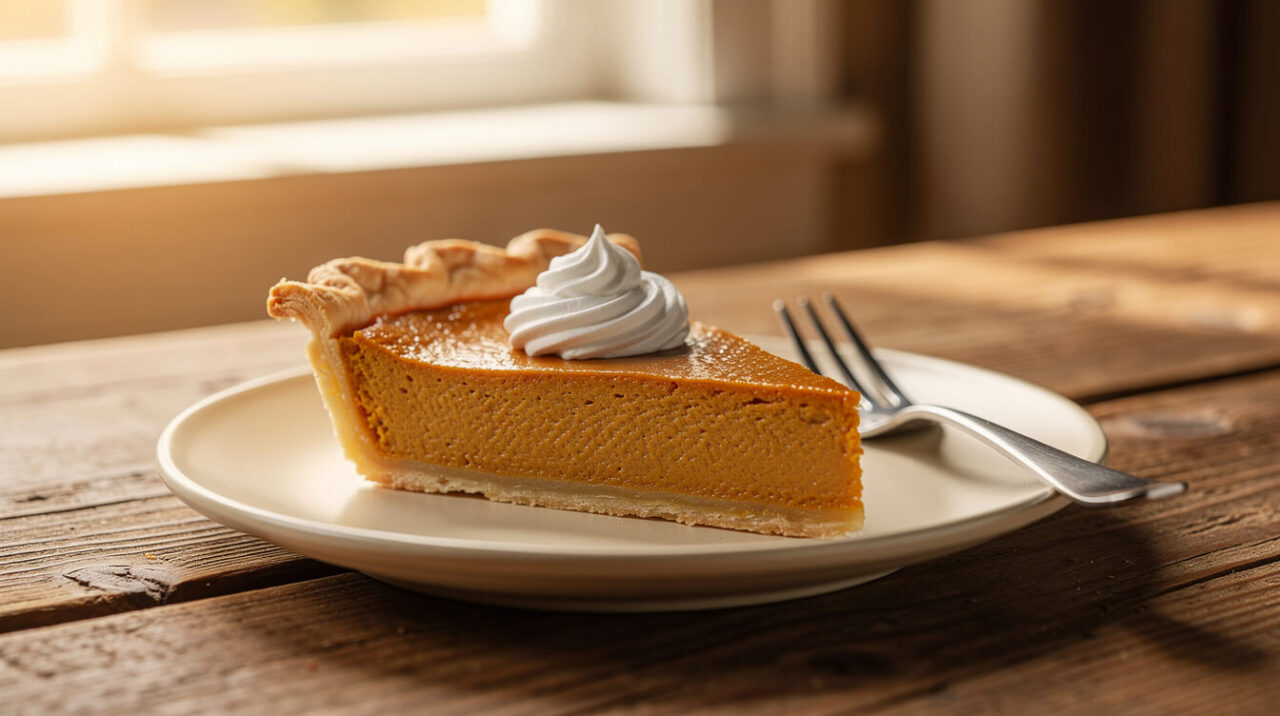
“Pumpkin pie” covers a few different foods. Here’s how each one shakes out.
Can dogs eat pumpkin pie filling?
Not on purpose. Canned pie filling or pie mix is pumpkin plus sugar, salt, and spices, so it’s the same answer as the pie, minus the crust. The real risk is mixing it up with plain pumpkin and feeding it daily. Read the ingredients: “pumpkin” should be the only word there.
Can dogs eat pumpkin pie crust?
The crust is mostly flour and butter or shortening, so it’s the fattiest part of the pie by weight. A crumb is nothing. A pile of crusts that guests left on their plates is a real fat load, especially for a small dog.
Can dogs have whipped cream on pumpkin pie?
A small lick is fine for most dogs. Pressurized whipped cream comes to about 8 calories and under a gram of fat per tablespoon, so it’s a minor addition next to the pie itself. Some dogs don’t handle dairy well and get gassy or loose afterward. Skip it entirely if the topping was spiked with alcohol or labeled sugar-free.
Can dogs eat pumpkin pie spice?
Not straight from the jar. A spilled jar or a dog who chewed open a container is the scenario where nutmeg can actually matter, so call your vet or a poison line if your dog ate a meaningful amount of the dry spice.
My dog ate pumpkin pie: a calm checklist and when to call

First, take a breath. Most pumpkin pie thefts end with a dog who has a mildly upset stomach and a very satisfied expression. Work through this list in order.
Step 1: Figure out what it was
Move whatever’s left out of reach, then look at it along with the box, label, or recipe. Ask yourself four questions:
- Was it sugar-free, low-sugar, keto, or diabetic-friendly, or does the label list xylitol or birch sugar? If yes, or you can’t tell, call now.
- Was there chocolate, macadamia nuts, or raisins on it or nearby? If yes, call, and have the type and rough amount ready.
- Did your dog eat any of the tin, foil, plastic, or box? If yes, call.
- Did your dog get into a spice jar, whole nutmegs, or an alcohol-spiked topping? If yes, call.
Step 2: Estimate how much, compared with your dog
If all four answers were no, you’re looking at a sugar, fat, and calorie exposure. Use the slice math above. A slice for a 60-pound dog is very different from a slice for a 10-pound dog. If a small dog ate a full slice or more, if any dog ate most of a pie, if your dog has had pancreatitis or has diabetes, or if you simply can’t tell how much went missing, call your vet for advice. Calling is never an overreaction.
Step 3: Don’t make your dog vomit, and don’t reach for the medicine cabinet
It’s tempting to grab hydrogen peroxide. Don’t, unless a veterinarian or poison line tells you to and explains how. Inducing vomiting isn’t right in every situation, and home methods can cause harm of their own.
The same goes for human medications. One of the top-ranking answers for this search, from an online vet chat, suggests a home antacid and names Zantac as an option. The FDA asked manufacturers to pull every ranitidine (Zantac) product off the U.S. market in April 2020. More to the point, no human medicine is a safe guess without a vet who knows your dog’s weight, history, and current medications. Ask before skipping a meal or switching to a bland diet, too. Very young puppies, toy breeds, and diabetic dogs shouldn’t simply go without food.
Step 4: Watch over the next day or two
For an ordinary pie exposure, mild signs look like one or two episodes of vomiting, some loose stool, or a quieter-than-usual dog, settling within about a day. Pancreatitis signs can take longer to show up, so keep an eye out for the next couple of days. Call your veterinarian promptly if you see any of these:
- Repeated vomiting, or vomiting that won’t stop
- Refusing food, or marked lethargy or weakness
- A painful or swollen belly, hunching, or a “praying” stance with the front end down and the rear up
- Diarrhea that continues past a day, or any blood in vomit or stool
- Wobbliness, trembling, or unusual agitation
- Seizures or collapse. This is an emergency: go to the nearest emergency vet now.
Who to call
Your own veterinarian knows your dog’s history. If they’re closed, call a 24-hour emergency clinic, or one of the two US animal poison lines, both staffed by veterinary toxicology professionals:
- ASPCA Animal Poison Control Center: (888) 426-4435
- Pet Poison Helpline: (855) 764-7661
Both charge a consultation fee. Have your dog’s weight, what was eaten, roughly how much, and when it happened ready before you dial. If you still have the box or recipe, keep it in your hand while you talk.
A dog-safe way to share the pumpkin
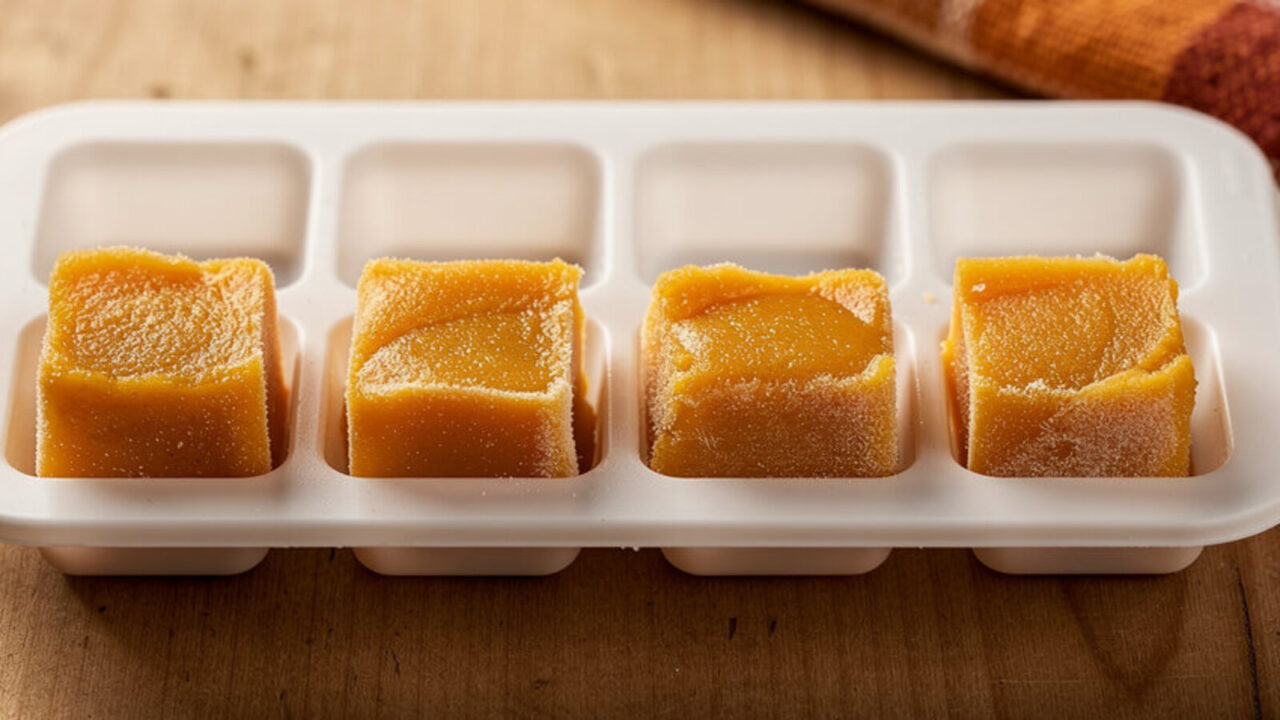
The good news is that the part of the pie your dog actually wants a piece of, the pumpkin, is the part they can have. Plain canned pumpkin, the kind with “pumpkin” as the only ingredient, is a reasonable small extra for most healthy dogs.
How much plain pumpkin
Start with about 1 teaspoon per 10 pounds of body weight per day. That’s about ½ teaspoon for a 5-pound dog, 1 tablespoon for a 30-pound dog, and 2 tablespoons for a 60-pound dog. Stir it into the regular meal. If the stool stays normal for a few days, that’s your amount. Plain canned pumpkin runs about 5 calories a tablespoon, so it fits easily inside the usual rule that treats stay under 10% of daily calories. Our full guide to whether dogs can eat pumpkin covers portions, raw pumpkin, seeds, and what pumpkin can and can’t fix for an upset stomach. If your dog is on a prescription diet or has a diagnosed condition, check with your vet first.
For a holiday twist, spoon plain pumpkin into an ice cube tray, sized to your dog’s daily portion (fill each compartment only partway for a small dog), freeze it, and hand over one cube while the table has dessert. And if the keeper in your life has a reptile sharing the house with the dog, our Bearded Dragon Crown Sunglasses King T-Shirt is a gift that’s guaranteed pie-free. Our shop is small and reptile-first for now.

For the keeper with scales and a dog bed at home
Our crowned, sunglasses-wearing beardie tee, for reptile keepers whose holiday table also has a dog underneath it. Strictly pie-free.
Prevention beats a phone call
Most pumpkin pie stories start with a pie cooling on a counter edge. Cool pies in the oven with the door shut or behind a closed door, and don’t assume the back of the counter is out of reach for a tall or determined dog. A pet gate across the kitchen doorway during dessert works well. Ask guests not to share from their plates, and use a lidded trash can for scraps and the empty tin. Our guide to pet safety during the winter has more ideas for the busy months ahead.
Can dogs eat pumpkin pie? Frequently asked questions

Is one bite of pumpkin pie going to hurt my dog?
Almost certainly not, as long as the pie wasn’t sugar-free. One bite of ordinary pumpkin pie is a small amount of sugar and fat for most dogs. Check the label or ask the baker about the sweetener, and keep an eye out for a mildly upset stomach.
My dog ate a whole pumpkin pie. What should I do?
Call your veterinarian for advice, especially if your dog is small, has had pancreatitis, or ate any of the pie tin or packaging. A whole pie is about 2,400 calories and close to 100 grams of fat. That’s a real pancreatitis risk even when nothing in it is toxic. Don’t induce vomiting or give any medication unless your vet tells you to.
Is nutmeg in pumpkin pie poisonous to dogs?
Not in pie amounts. The two popular nutmeg recipes we checked use ¼ teaspoon for the whole pie, about 1/32 of a teaspoon per slice, and the Libby’s can recipes use none. A spilled jar or whole nutmegs are a different story, so call if that’s what happened.
Can puppies eat pumpkin pie?
Skip it. Puppies have smaller bodies and more sensitive stomachs, so the same slice is a bigger dose for them. If a puppy ate pie, use the checklist above and call your vet sooner rather than later, especially for small breeds.
Final thoughts
Pumpkin pie belongs on the people side of the table, but it isn’t the villain it’s often made out to be. Nutmeg is a dose problem, and a pie doesn’t carry the dose. What deserves your attention is a sugar-free sweetener, the size of the slice compared with the size of your dog, and anything that came with the pie.
If you remember one thing, make it this: check for xylitol first, then do the size math, and call your vet whenever you’re unsure. Then stir your dog’s own spoonful of plain pumpkin into dinner and let them enjoy the holiday the safe way.
Before you go
Keep learning your animal
We publish a new guide every day. The best of them land in one short weekly email, so you never miss the one about your species.

Meet Jake Harrington, your go-to guru for all things canine. With over 15 years of professional dog training experience, Jake has transformed the lives of thousands of dogs and their owners. His journey began in the bustling streets of a major city, where he discovered his natural affinity for understanding canine behaviors and communication.