Do Hamsters Hibernate? Hamster Hibernation vs. Torpor, and What to Do If Yours Is Cold and Still
You go to say good morning, and your hamster is curled in the nest, cool to the touch, barely moving. Your stomach drops. Before anything else, here’s the short answer to the question that brought you here: pet hamsters don’t safely hibernate. What looks like hamster hibernation in a pet is almost always torpor, an emergency energy-saving shutdown that switches on when a hamster gets too cold, too short on daylight, or too short on food. A hamster in torpor is alive, often for longer than you’d expect, and it needs slow, gentle warmth plus a call to your vet, not burial.
If your hamster is cold and still right now, skip to how to tell torpor from death and then how to wake a hibernating hamster safely. Come back for the rest once they’re warm.
For everyone else, this guide covers what hamster hibernation really is, why the answer depends on whether you keep a Syrian, a winter white, a Campbell’s, or a Roborovski, why the published “danger temperatures” range from 41°F to 68°F, and how to set up a winter room so torpor never starts.
Do hamsters hibernate? Hamster hibernation vs. torpor
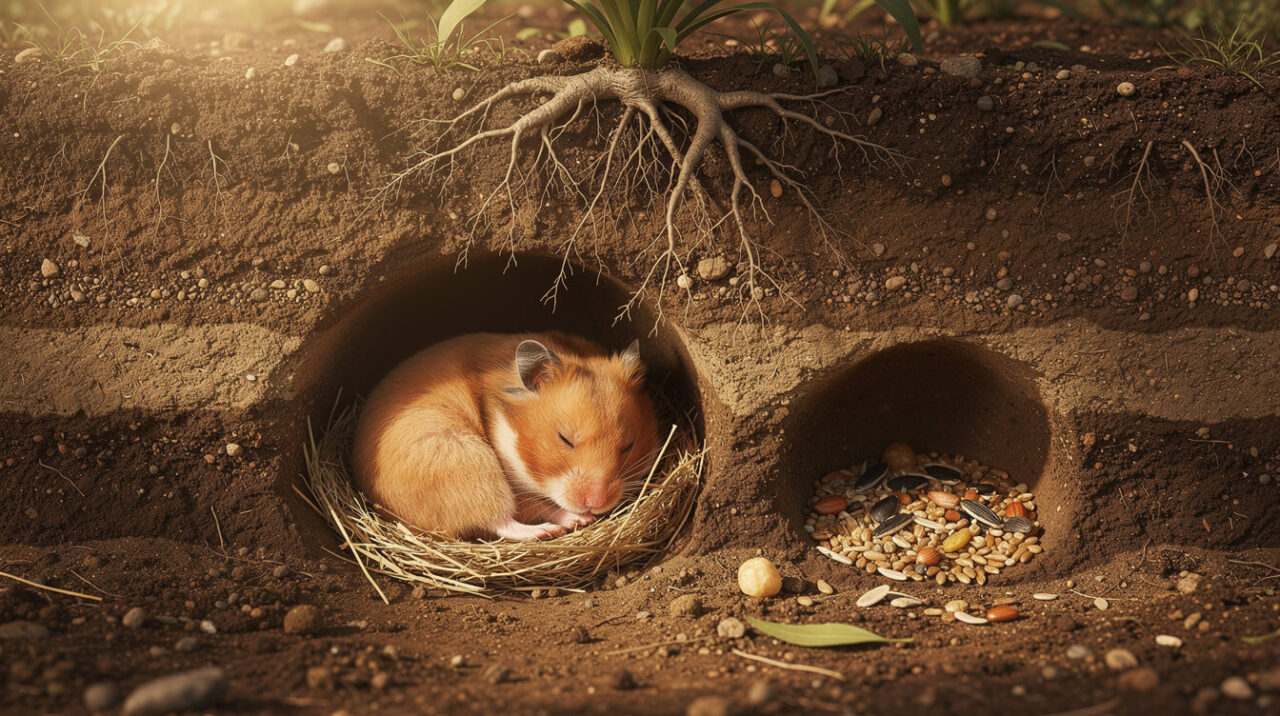
Some wild hamsters do hibernate. The European (common) hamster spends winter underground, living off a food store it hoards in autumn. The Syrian hamster, the golden hamster most of us keep, is what biologists call a facultative hibernator: it can hibernate when conditions push it there, but it doesn’t do it on a fixed calendar the way a ground squirrel does.
The word you’ll see vets use for pet hamsters is torpor, and the difference matters:
- True hibernation is a series of multi-day torpor bouts that can last up to several weeks each. Metabolic rate drops to roughly 5% of the resting rate, and body temperature falls to somewhere between just below 0°C and about 5°C (low 30s to low 40s °F), according to a 2026 review by hibernation physiologists Geiser, Bieber, and Ruf.
- Daily torpor lasts several hours, not days. Metabolism drops to about 30% of the resting rate, and body temperature typically settles around 18°C (about 64°F), per the same paper.
Pet hamsters can slide into either pattern, depending on species and conditions. Neither one is a cozy winter nap. Wild hibernators prepare for months: they hoard food, change their body condition, and retreat to a burrow that holds a stable temperature. A pet in a cage by a drafty window has done none of that. The Merck Veterinary Manual says it bluntly: hamsters “often hibernate at temperatures < 5°C (41°F),” and “Syrian hamsters do not fatten before hibernation and will starve if they do not awaken periodically to eat.”
That’s why every reputable source lands in the same place even when the details differ: hamster hibernation in a pet is a sign the environment has gone wrong. It is not a seasonal behavior to accommodate.
Why a hamster’s body can do this at all
Hamsters carry brown fat, a heat-producing tissue packed around the shoulders, neck, and armpits. During torpor the body’s thermostat is turned down on purpose. To come back out, the hamster has to burn brown fat and shiver its way back up to normal temperature. Researchers in Japan showed that brown fat drives arousal from hibernation in Syrian hamsters (Kitao and Hashimoto, 2012). That detail shapes everything in the rescue section below: your hamster does the waking up. Your job is to make it cheap and safe for them.
Which hamsters go into torpor? It depends on the species
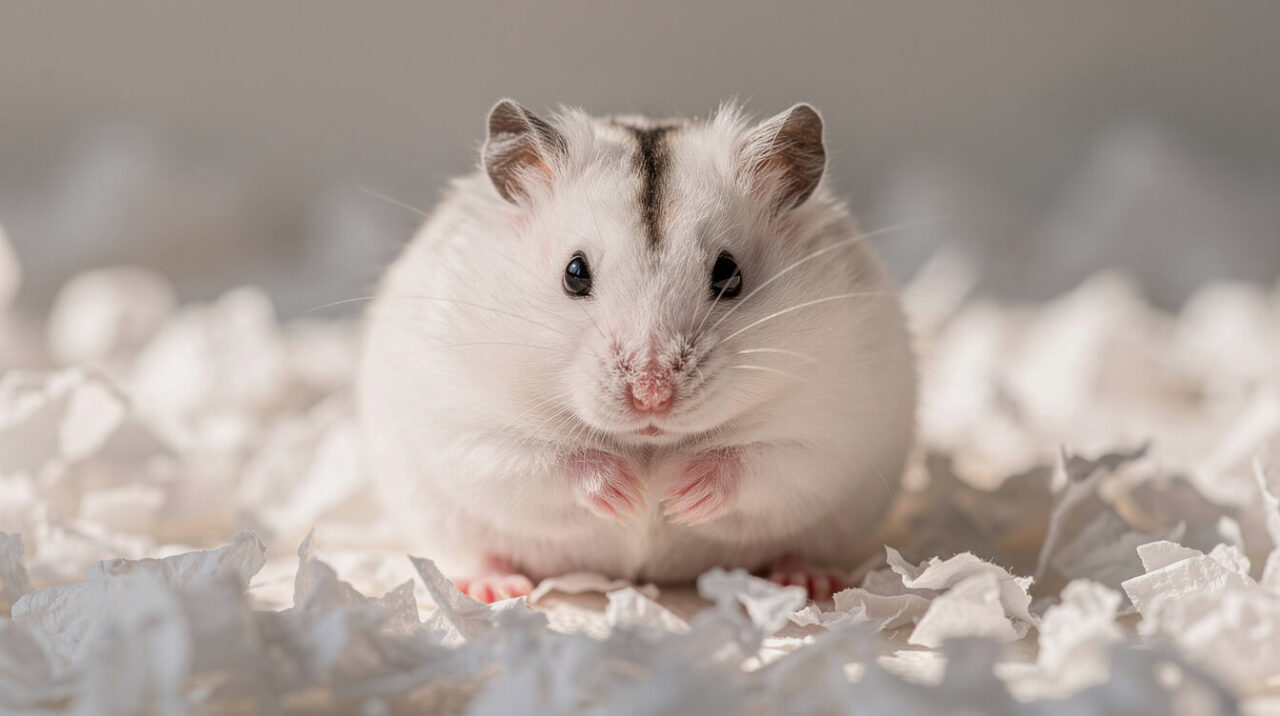
This is where the popular advice gets tangled. PetMD says Syrians “may enter hibernation in certain conditions” while dwarf hamsters “typically do not hibernate.” Chewy quotes a vet saying Syrian and Russian dwarf hamsters are “less likely to enter torpor compared to other hamster species.” Another pet-retail guide calls Syrians “the most prone” and dwarfs “more cold-tolerant.” These can’t all be right. Here’s what the lab research shows, species by species.
| Species | What the research shows | What it means at home |
|---|---|---|
| Syrian (golden) hamster Mesocricetus auratus | A true facultative hibernator. In labs it hibernates after weeks of short days plus cold, often around 5°C (41°F). In one study, the first torpor bout came about 36 days into winter conditions. | Deep, multi-day hibernation needs prolonged cold. A Syrian found cold and still after a chilly night is more likely in shallower torpor, hypothermic, or unwell, so treat it as urgent either way. |
| Winter white (Djungarian) dwarf Phodopus sungorus | The textbook daily torpor species. Once acclimated to short winter days, many use spontaneous torpor even with food available. In one study they did so on about half of all days at 9°C (48°F). Short-day animals have also shown torpor at a constant 18°C (64°F). | The species most likely to go torpid in an ordinary cool room, especially if its photoperiod tracks winter daylight. The white winter coat is your cue that its body has switched to winter mode. |
| Campbell’s dwarf Phodopus campbelli | Shows winter torpor too, but less consistently. In one study about 25% didn’t respond to short days at all, versus 14% of winter whites. | Possible, less predictable. Many pet “Russian dwarfs” are Campbell’s or hybrids, so assume torpor is possible. |
| Roborovski dwarf Phodopus roborovskii | The least torpor-prone. Long described as not using torpor, but fasted Robos show shallow daily torpor (body temperature around 29–31°C, or 84–88°F). About half of wild-caught Robos kept on short days in the cold also used it. | Least likely, not immune. Food running out is the main trigger. |
| Chinese hamster Cricetulus griseus | We found little pet-relevant data on this species itself. Its close wild relative, the striped dwarf hamster, used deeper and longer daily torpor than Robos in the same study. | Treat as torpor-capable and keep conditions warm and stable. |
Sources: Syrian hibernation in the lab from Trefna et al., 2017 and Yamauchi et al., 2026. Winter white torpor from Geiser et al., 2026 and Diedrich et al., 2015. The three-species comparison from Müller et al., 2015. Roborovski and striped hamster torpor from Chi et al., 2016 and Chi et al., 2024.
So the honest summary is that winter whites are the most likely to go torpid in a normal home, Syrians are the ones capable of the deepest and longest shutdown, and no species is safely “immune.” Day length matters as much as temperature, which is the part most care sheets leave out.
Why hamster hibernation is a warning sign in a pet
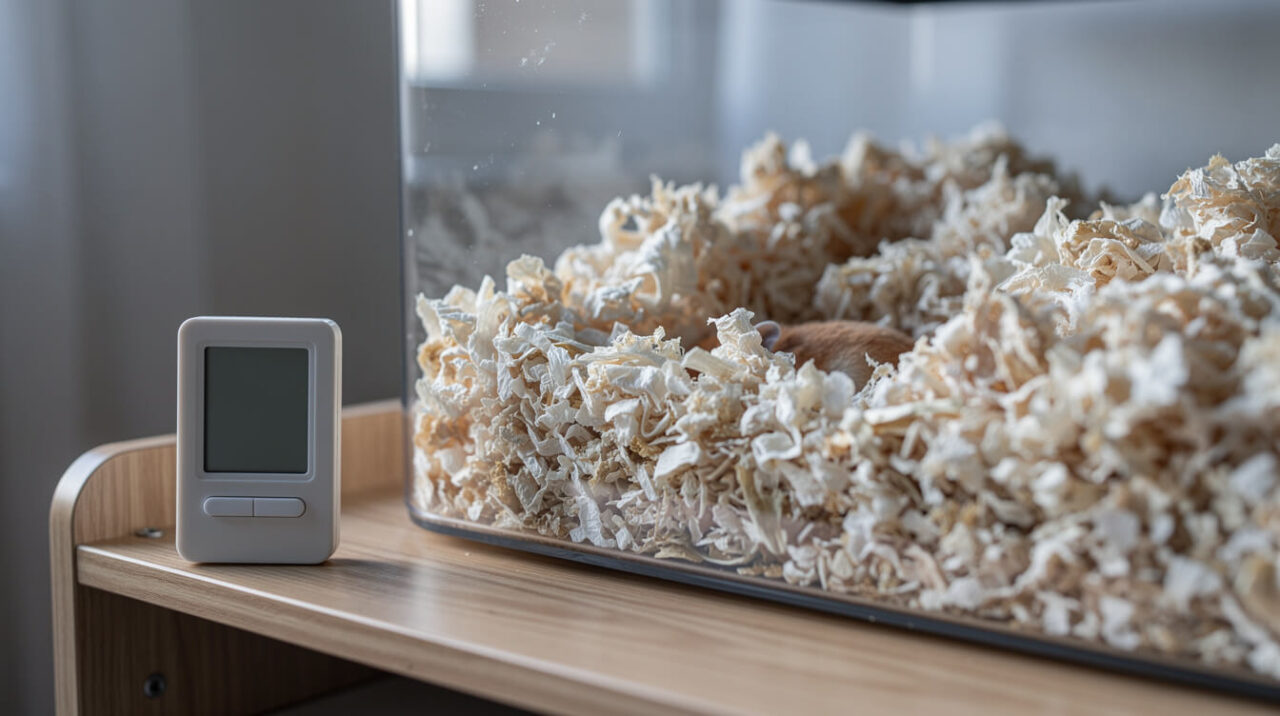
The strongest evidence that pet hamsters aren’t built to hibernate comes from a lab that tried to make them. In 2017, researchers at the University of Groningen took 60 commercially bred Syrian hamsters, shortened their days, then moved them to 5°C (41°F) in darkness for nine weeks to induce hibernation (Trefna et al., 2017). Forty percent died prematurely, including animals that never entered torpor at all. The authors suggested that long-term commercial breeding may have “selected against the hibernation trait.”
Your hamster comes from the same kind of breeding. They kept the machinery to shut down, but not the reliable ability to do it safely.
Three things go wrong in a pet that slips into torpor:
- Dehydration and starvation. Torpor isn’t fueled by stored fat the way a prepared hibernator’s winter is. Merck notes that Syrians “will starve if they do not awaken periodically to eat.”
- The heart slows dramatically. During deep torpor, a Syrian’s heart rate falls from about 400 beats per minute to 5–10 (Groningen group, 2018). Coming back out is metabolically expensive, and a thin, old, or sick hamster may not have the reserves.
- Hypothermia that isn’t torpor. A hamster that is simply chilled, or one that’s ill (old age, heart disease, digestive illness), can look exactly like a torpid one. PetMD notes that underlying illness can make a hamster appear to be hibernating. That’s why “it’s just hibernating” should never end the conversation.
Why the “danger temperature” ranges from 41°F to 68°F
If you’ve read a few pages, you’ve probably noticed that nobody agrees on the number. They’re answering different questions:
- 41°F (5°C) comes from Merck and the hibernation labs. It’s the temperature where hamsters often hibernate, the deep multi-day kind. It’s a lab induction number, not a safe floor.
- 65°F (18°C) is the threshold Chewy’s veterinary source gives for torpor risk. It also matches the bottom of the 65–75°F comfort range PetMD recommends.
- 68°F (20°C) and above, with 12 hours of light is the UK veterinary group Vets4Pets’ standard for preventing torpor. The rescue charity Woodgreen suggests 18–21°C (about 64–70°F) year-round.
Read together, the lesson is that there isn’t one cliff edge. Torpor risk rises as the room gets cooler, the days get shorter, and food gets scarcer, and those factors stack. A winter white on short days showed torpor at 64°F in the lab. A Syrian at 64°F with lights on in the evening and a full hoard is at far lower risk. Aim for the middle of the overlap, a steady 65–75°F, and lean toward the upper end for dwarf hamsters in winter.
Is my hamster dead or hibernating? How to tell
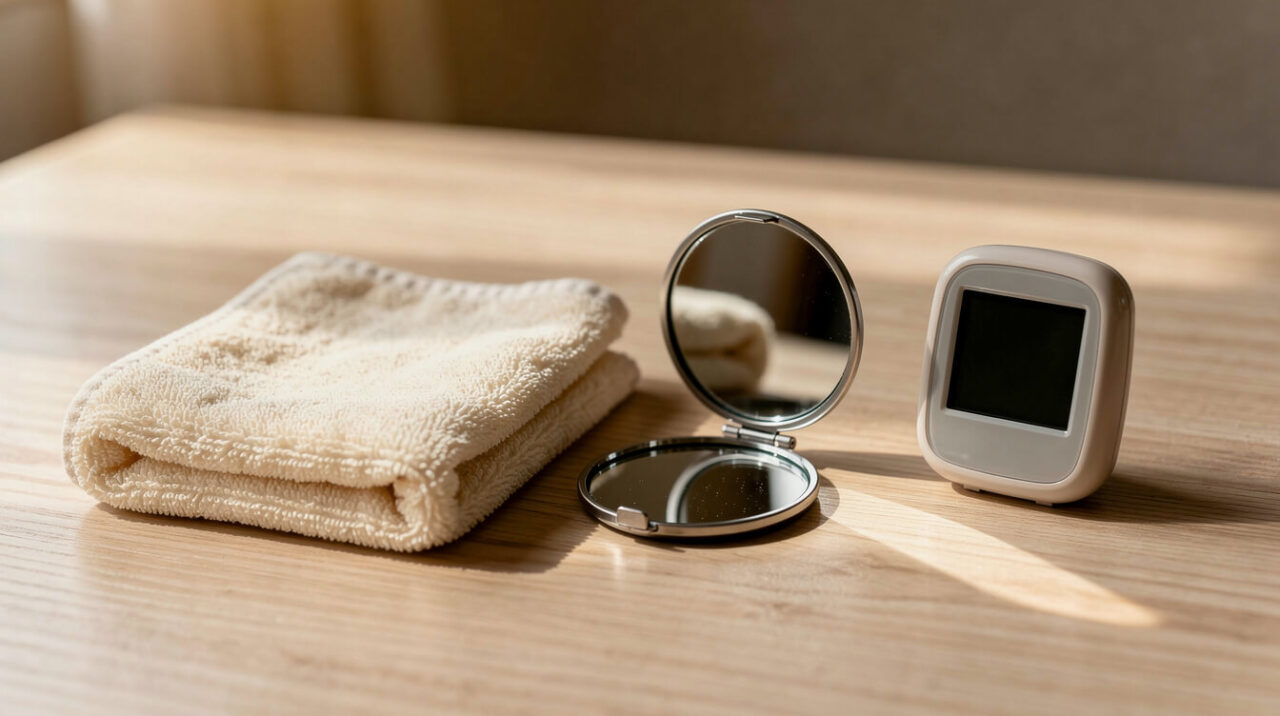
This is the question people are often typing with shaking hands. Take a breath. A torpid hamster can look very convincingly gone. Work through these checks calmly, and if you’re unsure, assume they’re alive and start warming them.
1. Think about the room
Was the room cold overnight? Was the cage near a window, an outside wall, a door, or in a garage or unheated spare room? Was there a power cut? If the room has stayed warm, above about 68°F (20°C) per Vets4Pets, torpor is less likely, and a cold, unresponsive hamster is more worrying. Call your vet right away.
2. Watch for breathing, for longer than feels necessary
In torpor, breathing can slow until there are long gaps between breaths. Vets4Pets notes a breath may come only every couple of minutes. Watch the flank for at least two to three minutes, timed, not guessed. Holding a small cold mirror or spoon just in front of the nose can show faint fogging.
3. Look for tiny responses
Very gently stroke the whiskers or the edge of an ear and watch for a twitch. Gently straighten one back foot and see whether it draws back or stretches. Merck notes that hibernating hamsters “remain sensitive to external stimuli and are usually aroused if handled,” so a small flicker is a good sign. Be gentle, and don’t shake or poke them.
4. Feel the body: limp or rigid?
A hamster in torpor usually feels loose and floppy, even though it’s cool. Rigor mortis makes a body stiff. Be careful here, though: a very cold body can feel stiffer than it is. Stiffness in a warm room is a far stronger sign of death than stiffness in a cold one.
5. Check the eyes
Speaking to Chewy, an exotics vet describes a hamster that has died as “unresponsive, stiff, and cold,” with eyelids that stay open or tented and eyes that may look sunken and cloudy. A torpid hamster’s eyes are usually closed.
| Sign | More like torpor | More like death |
|---|---|---|
| Room | Cold, drafty, dark | Stayed warm |
| Body | Cool, loose, curled | Stiff, especially in a warm room |
| Breathing | Slow, with long gaps | None after several timed minutes |
| Response | Whisker or ear twitch, foot drawn back | No response at all |
| Eyes | Closed | Open or tented, sunken, cloudy |
One caution about a tip you’ll see elsewhere. PetMD suggests a non-contact thermometer to “evaluate the core body temperature.” An infrared thermometer reads the surface it’s pointed at, which on a hamster is fur. It can’t tell you core temperature, so don’t let a low reading on one decide anything. Some owners also try to feel a heartbeat between thumb and finger behind the elbows. The heart is tiny, and in torpor it may beat only a few times a minute, so not feeling it doesn’t prove anything. Never press hard on the chest.
If there’s any doubt at all, warm first and decide later. Vets4Pets notes a hamster in torpor may take several hours to a day or two to wake. Nothing is lost by giving warmth a fair chance and calling your vet while you do.
The weekly care guide
Get it right for your animal, every week
One email a week: new care guides, species deep-dives, and the safety answers keepers search for, written by our specialists. No spam. Unsubscribe anytime.
How to wake a hibernating hamster safely
The aim is slow, gentle, steady warmth. Remember the brown fat: your hamster rewarms itself from the inside. Warmth from you makes that cheaper and safer. A 2016 study of winter white hamsters found that radiant warmth cut the energy cost of rewarming from torpor by more than half. But warmth on its own, without the hamster’s own effort, didn’t do much while it was still torpid (Geiser et al., 2016). You’re supporting the hamster’s own effort, not speeding it up, so patience is part of the treatment.
- Call your vet now, ideally an exotics or small-mammal vet, and tell them what you found. They can tell you whether to come straight in. If it’s out of hours, ask for the emergency line.
- Move your hamster to a warm room, around 70–75°F, away from drafts, along with some of their own bedding.
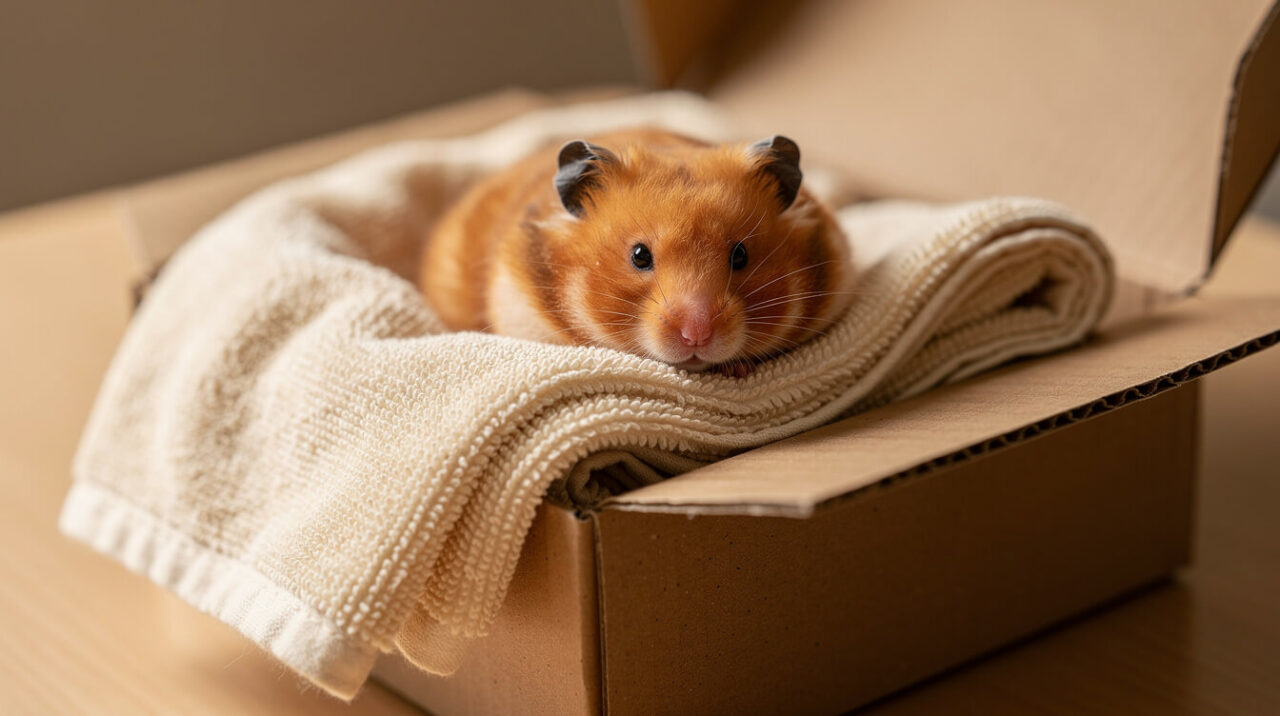
- Use your own body heat first. Cup them gently in your hands against your body, or hold them loosely wrapped in a soft towel. Light, slow stroking can help. This is the method Vets4Pets, PetMD, and Woodgreen all agree on.
- Then make a warm nest. A small box lined with soft towels and a little of their bedding works well. Keep the room warm.
- Be careful with added heat. Here the sources split. Vets4Pets says to avoid heat pads and anything warmer than your own body, because warming too fast causes problems and a hamster that can’t move away can be burned. Chewy and Woodgreen suggest a heat pad or wrapped hot-water bottle. We side with the cautious view. If you do use one, wrap a hot-water bottle filled with warm (not hot) water in a towel and put it under half of the box only. It should feel only comfortably warm on the inside of your wrist. Stay with them, and remove it as soon as they’re moving.
- Never use a hair dryer, an oven, a radiator, a microwave-heated pad straight from the microwave, or a warm-water bath. Chewy specifically warns against putting a hamster in water because of the drowning risk.
- Don’t drip water or food into their mouth. A drowsy hamster can’t swallow safely. Put a shallow dish of water and their usual food right beside the nest so they can reach it once they’re moving.
- Expect it to be gradual. Shivering, wobbliness, and slow movements are a normal part of waking. Let them rest, and keep the room warm for the following days.
See your vet the same day if your hamster doesn’t respond after a few hours of gentle warmth, may have been torpid for more than a day, is breathing with effort, has diarrhea or a wet tail area, isn’t eating or drinking once awake, or goes torpid a second time. Vets4Pets recommends a vet check for any hamster that has been in torpor for more than a day, because it may be dehydrated and low on energy. A vet can give fluids and nutritional support safely, which you can’t do at home.
How to prevent hamster hibernation this winter
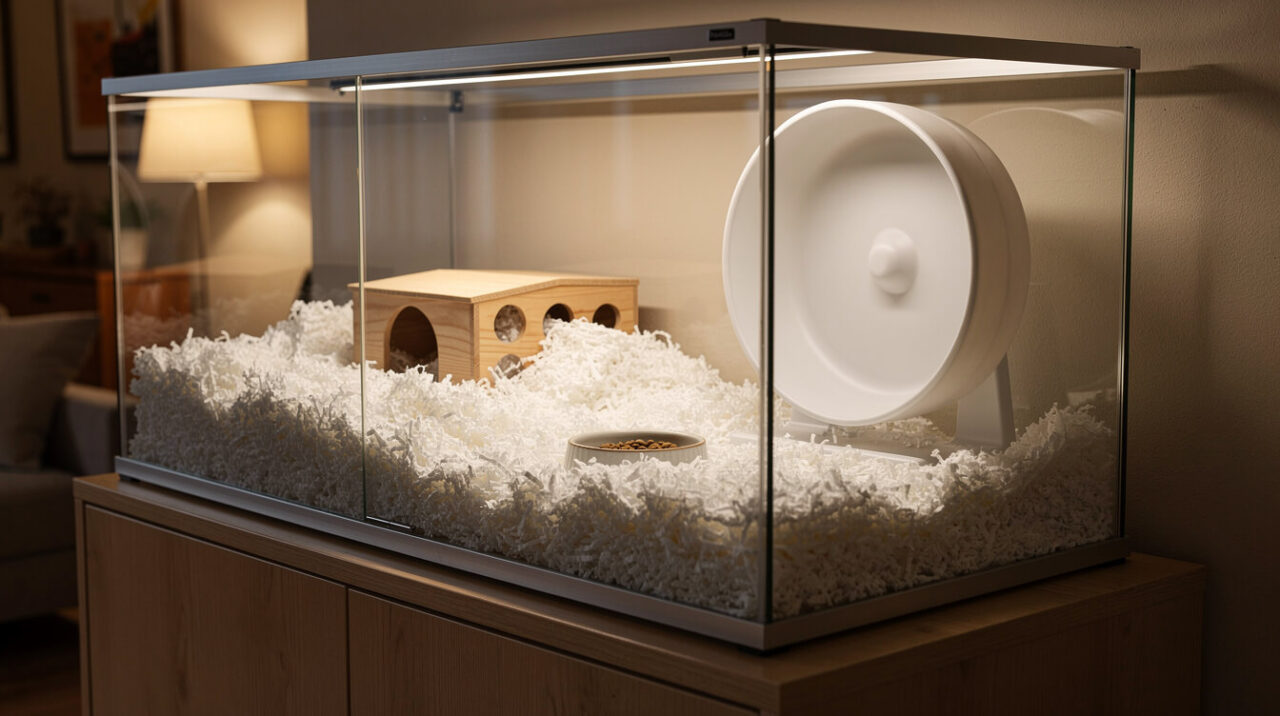
The good news is that hamster hibernation is very preventable, and the fixes are simple. Think of the three triggers, cold, short days, and scarce food, and remove each one.
Keep the room steady, not just warm on average
- Keep the hamster’s room at a steady 65–75°F (18–24°C), and toward the upper half for dwarf hamsters over winter. Put a cheap digital thermometer at cage level. The thermostat in your hallway doesn’t tell you what’s happening by a cold outside wall at 4 a.m.
- Keep the enclosure away from windows, exterior doors, outside walls, and drafty floors. Never house a hamster in a garage, shed, porch, or unheated spare room over winter.
- Watch for overnight setbacks. If your heating drops at night, the hamster’s room may fall much further than the rooms you’re in.
- If you need extra heat, warm the room rather than the cage floor. A thermostat-controlled room heater kept safely away from the enclosure is the gentler option. It’s the same logic we use for tarantulas in winter and in our chinchilla heater guide. Don’t overshoot: hamsters overheat too, so stay out of the high 70s and above.
Give them a normal day length
This is the overlooked trigger. Winter whites switch into torpor-prone winter mode in response to short days, and the lab protocols that induce Syrian hibernation pair cold with short days or darkness. A hamster tucked in a spare room that only gets dim window light in December is living a miniature version of those protocols. Keep the enclosure in a room people use, with normal lights on in the evening, roughly 12 hours of light, as Vets4Pets recommends. Hamsters are mostly active at night, though wild Syrians are more daytime-active than you’d think, as our wild golden hamster piece explains. So keep the dark phase reasonably dark and quiet as well.
Deep bedding, and let them keep their hoard
- Provide deep bedding they can burrow into, plus plenty of plain, unscented paper nesting material. Skip fluffy “cotton” bedding, which can tangle limbs or block the gut if swallowed.
- Make sure food and fresh water are always available, and check twice a day that the water bottle or bowl actually works in cold weather.
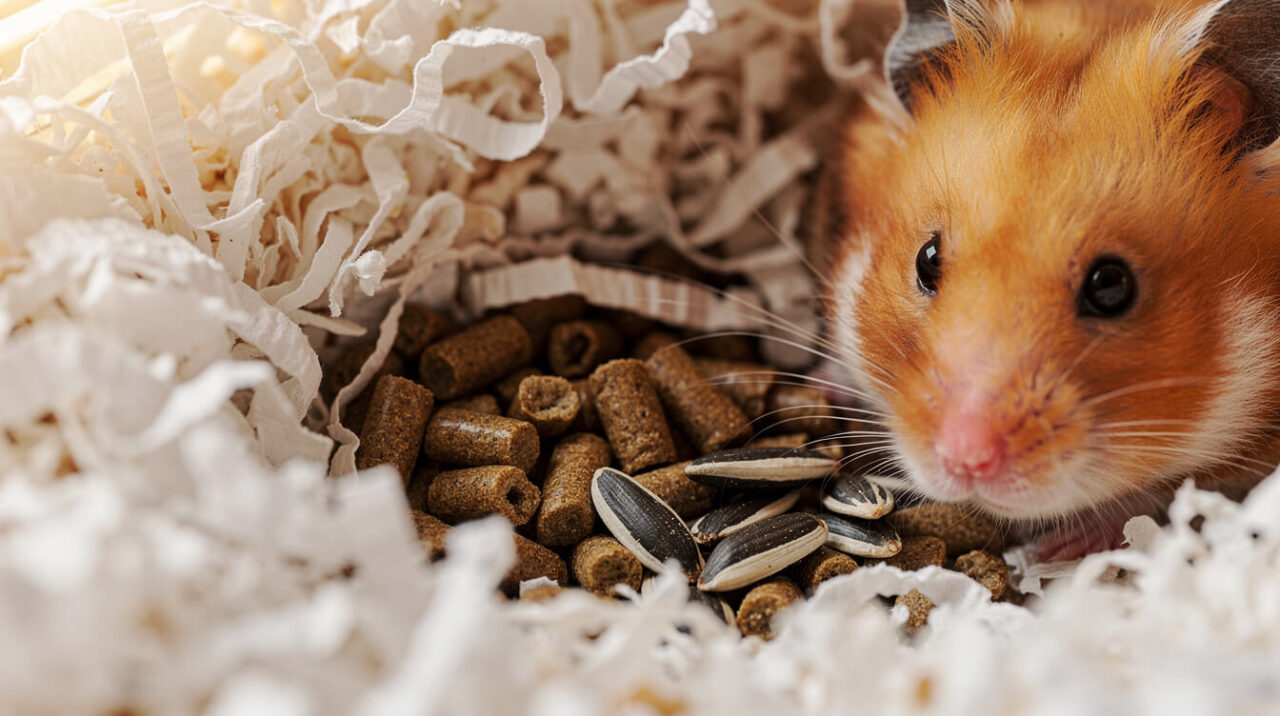
- Leave the dry-food hoard alone when you spot-clean, and only remove fresh food that can spoil. Hoarding is a hamster’s own winter insurance. In a study of common (European) hamsters, almost all the animals without food stores hibernated, while fewer than half of those with access to stores entered deep torpor (Siutz and Millesi, 2017). That’s a different species, but the principle carries over: a hamster that senses food is scarce is a hamster closer to shutting down.
Know your hamster’s normal
Check on your hamster every day, even if it’s only to see the hoard shrink and the wheel get used. Weigh them weekly on a kitchen scale if they’ll tolerate it. In the lab, Syrian hamsters lost body mass before they started hibernating (Chayama et al., 2016), and steady weight loss is worth a vet visit anyway. Older hamsters and those with health problems have less in reserve, so be extra careful with them. Merck puts the Syrian lifespan at about 2 to 3 years, so a hamster of 18 months is already well into later life.
If you love small mammals the way we do, our The Ferret Father Godfather Parody T-Shirt is our small-mammal keeper design, made for anyone whose evenings revolve around a tiny night-shift pet.

For the small-mammal devoted
The Ferret Father: a soft Comfort Colors tee for keepers who check the thermometer before they check their own coffee.
Torpor is about more than temperature, which is why it shows up in very different animals. Hedgehogs can go torpid in a cool room too (see our hedgehog care guide), while reptiles have their own seasonal slowdown, brumation, which works quite differently (see bearded dragon brumation). Every species has its own rules. For hamsters, the rule is simple: warm, steady, and well fed.
Hamster hibernation FAQs
Do Syrian hamsters hibernate?
They can. Syrians are facultative hibernators, and in labs they hibernate after weeks of short days and cold around 41°F (5°C). Commercially bred Syrians handle it badly, though: 40% died in one induction study. A pet Syrian should never be allowed to get that cold.
Do dwarf hamsters hibernate?
Dwarf hamsters mostly use daily torpor (hours, not days) rather than true hibernation. Winter whites are the most prone, Campbell’s are less consistent, and Roborovskis are least likely but can still do it, especially if food runs short.
How long do hamsters hibernate?
Daily torpor lasts several hours. True hibernation bouts in hibernating species can last days to weeks, broken by periodic arousals. For a pet, the answer is that any torpor episode needs warming the moment you find it. Don’t wait for it to end on its own.
At what temperature do hamsters hibernate?
Deep hibernation is usually linked to around 41°F (5°C) or below. Torpor risk starts much higher, and veterinary sources put the line between about 64°F and 68°F, especially on short winter days. Keep your hamster’s room at a steady 65–75°F.
Is it OK to let my hamster hibernate?
No. Pet hamsters haven’t prepared for it, can’t count on waking up in time to eat and drink, and can die from dehydration, starvation, or hypothermia. Gently wake them, fix the room, and talk to your vet.
My hamster woke up. Do they still need a vet?
If they were torpid for more than a day, aren’t eating and drinking normally within a few hours, seem weak or wobbly beyond the first stretch of waking, or it happens again, yes. Even a quick recovery is worth a phone call to your vet, especially for an older hamster.
Can hamsters eat treats to help them warm up?
Let them eat their normal diet once they’re awake and alert. Don’t force sugary drinks or food into a drowsy hamster. If you want an occasional fruit treat later, see our guide to whether hamsters can eat blueberries, including the smaller portions for diabetes-prone dwarf species.
Final thoughts: warm, steady, and a little bit watchful
Hamster hibernation sounds like a quirky winter fact, but for a pet it’s an emergency switch, not a season. The species differences are real. Winter whites slip into daily torpor readily, Syrians can shut down deeply, and Robos are the hardiest but not immune. The fix is the same for all of them: a steady room temperature in the mid-60s to mid-70s, a normal light-dark day, deep bedding, and a hoard you leave alone.
And if you ever do find your hamster cold and still, remember the order: warm first, call your vet, decide later. A torpid hamster can look lost and still wake up in a pair of cupped hands. If you’re here reading this before winter sets in, your hamster is lucky to have you. Like their cousins the Mongolian gerbils, hamsters are small animals with very particular needs, and understanding those needs is how you keep them well.
Before you go
Keep learning your animal
We publish a new guide every day. The best of them land in one short weekly email, so you never miss the one about your species.

Oliver Grant is your go-to expert for all things related to small mammals. With 15 years of hands-on experience raising and caring for rabbits, guinea pigs, hamsters, and ferrets, Oliver brings a wealth of knowledge to his readers.