Bearded Dragon Brumation: Lights On or Off? How to Tell Sleep From Sickness
Every fall, the same message turns up in bearded dragon groups: “She’s stopped eating, she’s hiding all day, and she barely opens her eyes. Is this brumation, or is something wrong?” If that’s why you’re here, take a breath. Bearded dragon brumation is a real, natural seasonal slowdown, and plenty of healthy adult dragons go through it every year, even in a warm living room. But brumation and illness start out looking almost the same, and the advice online splits three ways on what you should do about it.
This guide does what most brumation pages don’t: it puts those three schools of thought side by side, explains why they disagree, and gives you a clear decision path for your own dragon. You’ll learn how to tell a sleepy dragon from a sick one, what to do before, during, and after brumation, and the handful of signs that mean it’s time to call a reptile vet instead of waiting.
What bearded dragon brumation is, and why indoor dragons still do it
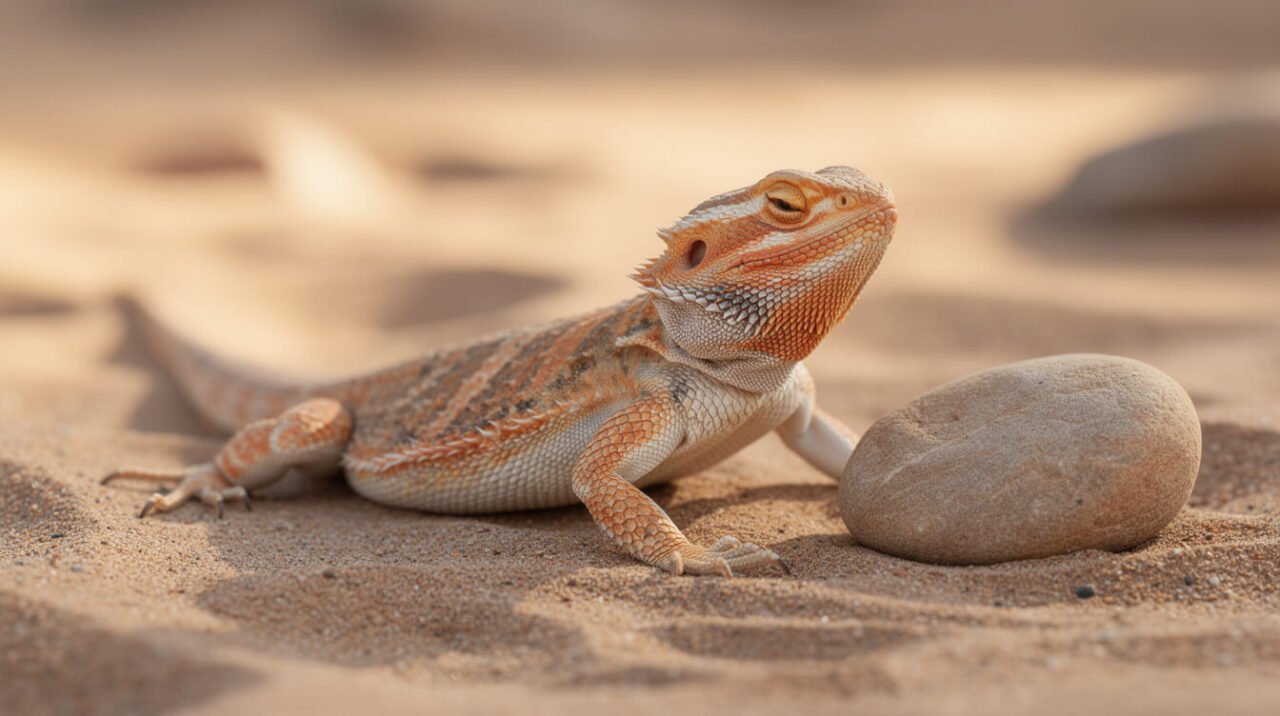
Brumation is a reptile’s version of a winter slowdown. Metabolism drops, appetite fades or disappears, and the dragon spends long stretches resting somewhere dark and cool. It’s often compared to hibernation, but the two aren’t the same. As VCA Animal Hospitals’ reptile vet Dr. Gregory Rich puts it, brumation “is not true hibernation because reptiles retain some activity during brumation and may even seek water to drink.” A brumating dragon may wake, shift position, sip water, or bask for a few minutes before settling back down.
Where it comes from
Central bearded dragons (Pogona vitticeps) come from inland Australia, where winter falls roughly between May and August. VCA describes daytime temperatures there in the high 60s to low 70s °F and nights dropping into the 40s °F. Insects get scarce and basking gets harder, so slowing down is how a dragon gets through the season without burning its fat reserves.
Researchers at UNSW Sydney who profiled gene activity in bearded dragons during late hibernation found protective pathways switched on across brain, heart, and muscle, including what they call “atrophy protective pathways” in muscle (Capraro et al., BMC Genomics, 2019). In plain terms, bearded dragon brumation is a built-in biological program for getting through a long rest without wasting away, not a dragon simply giving up.
Why your indoor dragon does it anyway
This is the part that surprises new keepers. You keep the basking spot hot, the UVB on a schedule, and the house warm, and your dragon still slows down every autumn. Beardeddragon.org explains that brumation “is not triggered by temperature alone.” Internal rhythms, the changing light coming through your windows, and inherited seasonal timing all play a part. In the Northern Hemisphere, most captive dragons that brumate do it somewhere between mid-autumn and late winter.
Not every dragon brumates. Some do it every year, some skip years, and some never do at all, and all three patterns can be normal. What matters is who is slowing down. Most sources put the lower age limit at around ten months to a year, so a juvenile that suddenly stops eating isn’t brumating. That’s a vet visit.
Brumation or illness? A side-by-side check
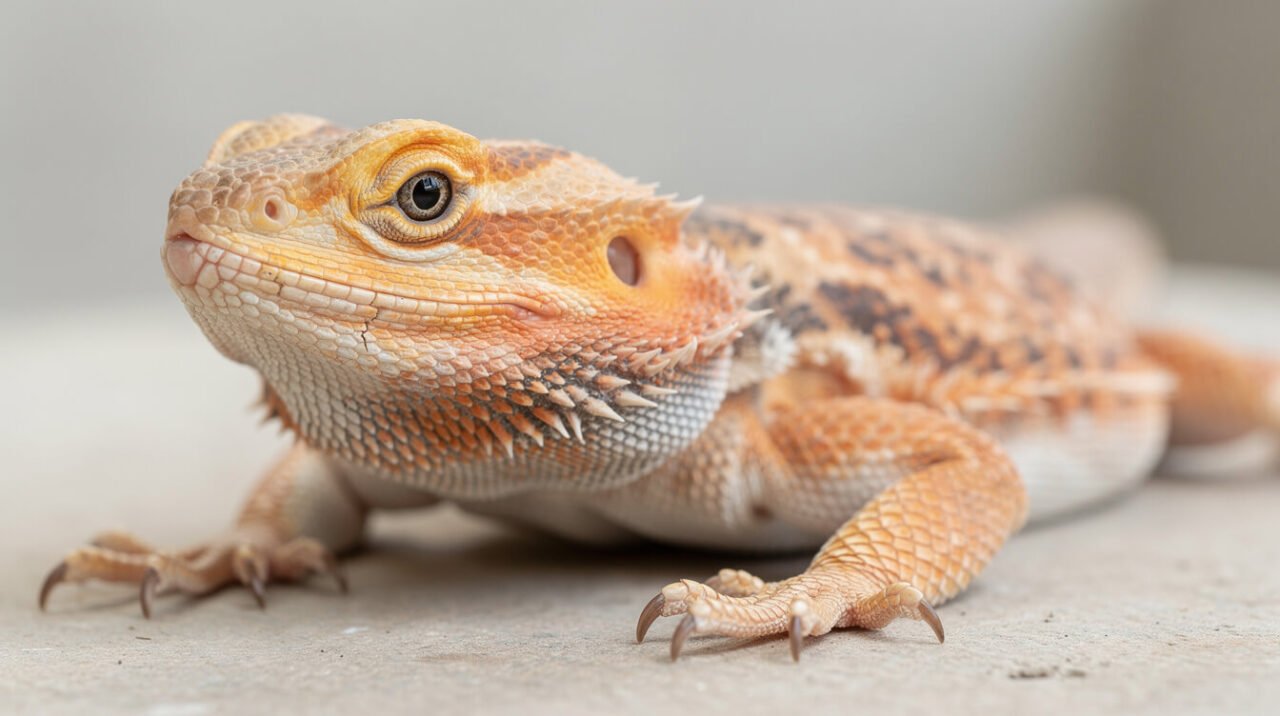
Here’s the honest difficulty: appetite loss, lethargy, and hiding are the classic signs of brumation and the classic early signs of illness. Parasites, a failing UVB bulb, temperatures that are off, a respiratory infection, or impaction can all start the same way. No checklist can diagnose your dragon at home. What it can do is tell you whether the picture still fits healthy brumation or has stopped fitting it.
Signs that fit healthy brumation
- A gradual slowdown. Appetite tapers over days or weeks rather than stopping overnight.
- Adult age. The dragon is more than about a year old.
- Stable body condition. The tail base stays rounded, the fat pads on top of the head don’t look sunken, and the hips don’t stick out.
- Clear, bright eyes when awake, and quiet, normal breathing.
- Calm and responsive when you gently pick them up, even if they’re sleepy.
- Fewer droppings, which is expected when they’re barely eating, and the droppings they do pass look normal.
Red flags that mean a vet visit, not a wait
- Weight loss you can see or measure, especially over a short period
- Sunken fat pads, a bony tail base, or prominent hip bones
- Wheezing, clicking, mucus, bubbles at the nose or mouth, or repeated open-mouth breathing while resting
- Discharge from the eyes, nose, or mouth
- Swelling of the belly or limbs
- Twitching, tremors, wobbling, or weakness
- Runny, bloody, or very foul droppings, or no droppings with a swollen belly
- A beard that stays dark or black when nothing is provoking a display. Beardeddragon.org lists this as a red flag, so don’t read a dark beard as a normal brumation sign.
- Any dragon under about 12 months old that becomes deeply lethargic
One distinction helps a lot: brumation is a pattern of behavior with a healthy body underneath it. Illness usually brings physical signs along with the behavior. If you’re seeing only behavior changes (sleeping more, eating less, hiding) and the body looks and weighs the same, the picture fits brumation. Once something physical shows up, stop assuming brumation and call a vet.
Being unsure is a perfectly good reason to book a visit. A reptile vet would much rather see a healthy, sleepy dragon than a sick one whose owner waited a month to be sure.
Lights on, lights off, or vet first? The three schools of bearded dragon brumation care
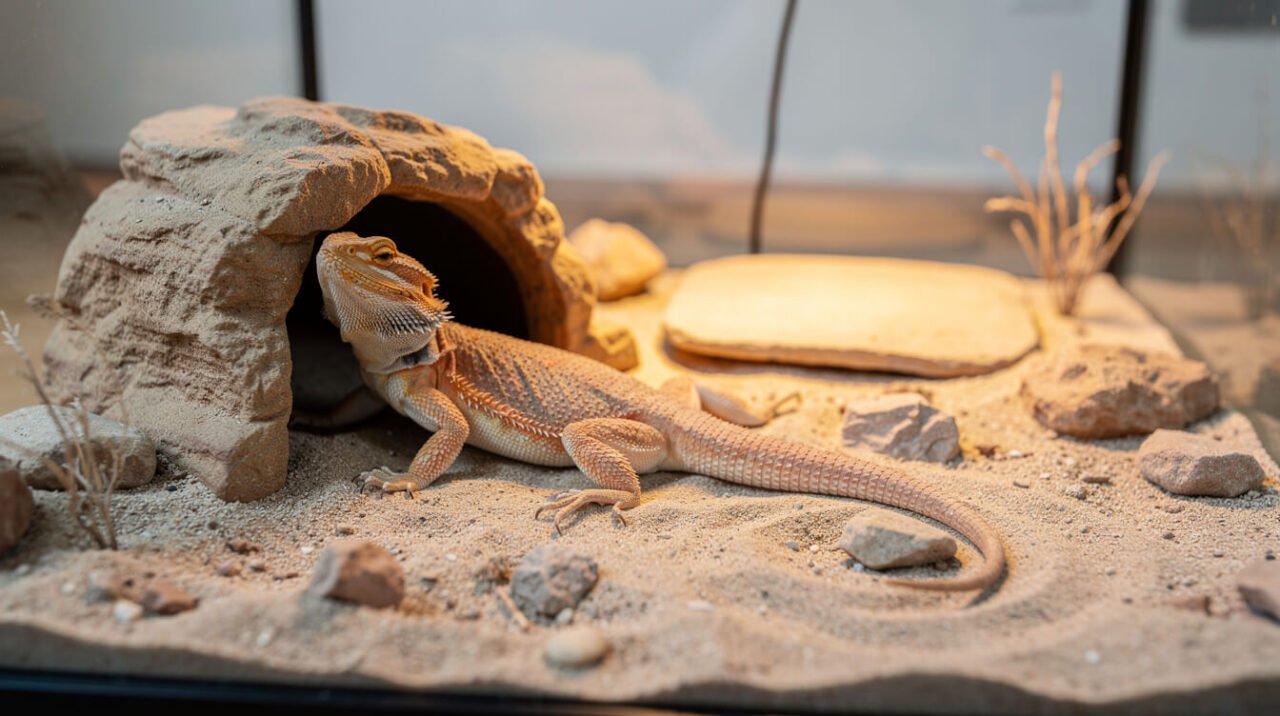
If you’ve read more than one brumation guide, you’ve probably noticed they contradict each other, sometimes flatly. You’re not imagining it. There are three distinct schools of advice out there, and each one is answering a different question.
School 1: Leave it alone and keep the lights on
Beardeddragon.org’s position is clear: “Do not drastically reduce basking temperatures in an attempt to ‘encourage’ brumation… Leave the basking light and UVB available during normal daytime hours.” Their reasoning is that a brumating dragon still wakes now and then, and when it does it should find the heat and UVB it needs. “Brumation is a period of reduced activity, not a period of environmental deprivation.” The UK retailer Reptile Centre takes a similar line. It suggests easing back on basking hours but never switching the heat off completely, and says temperatures should never fall below 16°C (about 61°F).
School 2: Induce it, with heat and lights off
Other respected keeper resources describe something very different. ReptiFiles lays out a full schedule: stop feeding two weeks ahead, turn off heat a week ahead, then turn “all lights and heat sources” off, with temperatures down to 55°F described as fine and a brumation lasting two to four months. Swell Reptiles also describes reducing light and heat “until you completely turn it off.”
Read closely, though, and Swell says something important: deliberately pushing a dragon into brumation “should only be done if you are considering breeding them.” A cool, dark, scheduled brumation is mainly a breeder’s protocol, used to bring healthy adults into reproductive condition.
School 3: Assume nothing, and rule out illness first
Then there’s the veterinary view. VCA’s reptile vet writes that if your house is a normal 60–70°F, “your pet may not be brumating – it may be sick,” and advises: “Rather than assume your bearded dragon is undergoing brumation, have your pet seen by a veterinarian knowledgeable in reptile medicine.” VCA also warns that dragons on a poor diet or carrying intestinal parasites “may wake up from brumation and become critically ill.”
Notice that this sits in tension with School 1, which says healthy dragons brumate even in stable indoor conditions. Both can be true. Plenty of indoor dragons do brumate on their own, and plenty of indoor dragons that look like they’re brumating are actually unwell. From the outside, you can’t always tell which you have. That’s exactly why the vet’s caution exists.
Putting the three together: a decision path for a pet dragon
Once you see what question each school is answering, the conflict mostly goes away. Here’s how we’d put it together for a typical pet dragon:
- Is your dragon under about 12 months old? Then this isn’t brumation. Book a reptile vet visit.
- Do you see any red flag from the list above? Then don’t assume brumation. See a vet.
- Has your adult dragon slowed down on its own, gradually, with a stable body? Then the pet-keeper default is School 1. Don’t force anything, and keep the normal light schedule and basking spot available for when they wake. If they haven’t had a check-up and fecal test in the last year, or this is their first slowdown with you, get that done (School 3) rather than guessing.
- Are you planning to breed? That’s the only situation where a deliberate, cooled brumation (School 2) makes sense, and it should be planned with a reptile vet’s health check first.
One more claim you’ll run into: that skipping brumation shortens a bearded dragon’s life. ReptiFiles says “current evidence suggests” it does, and a retailer’s page says “studies have shown” it. We looked, and we couldn’t find a published study on captive bearded dragon lifespan and brumation. The research we did find is on what happens inside a brumating dragon’s cells, not on how long dragons live with or without brumation. So treat that idea as an open question rather than a reason to force your dragon into a cold, dark winter. A healthy dragon that never brumates isn’t one you’ve failed.
Before it starts: the vet check, the fecal, and a baseline weight
The best brumation prep happens before your dragon starts slowing down, ideally in late summer or early fall. VCA’s warning about parasites is the reason. A dragon carrying a heavy parasite load, or one that’s underweight going in, has less reserve to draw on through weeks of not eating, and problems can surface when it wakes.
The pre-brumation vet visit
If your dragon hasn’t had a check-up recently, an autumn visit to a reptile-experienced vet is worth it. Ask about:
- A fecal exam to check for intestinal parasites
- Body condition and weight, so you have a professional opinion on whether they’re at a healthy weight going in
- Your husbandry: basking temperature, UVB type and age, and diet. Brumation is a good moment to fix anything that’s been slightly off.
If you don’t have a reptile vet yet, the Association of Reptile and Amphibian Veterinarians has a find-a-vet directory. It’s worth finding one before you need one. The middle of a worrying week is a hard time to start searching.
Take a baseline weight, in grams
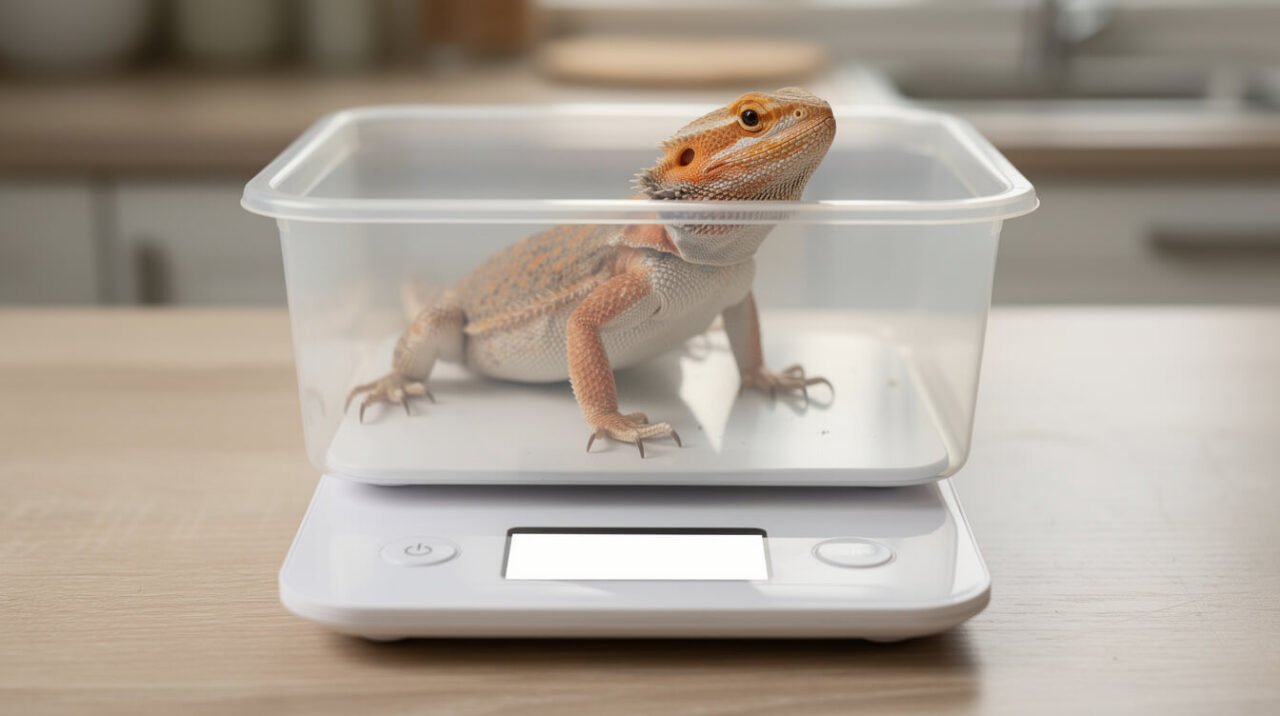
This is the most useful thing you can do, and most guides skip it. A digital kitchen scale that reads in grams is all you need. Set a small box or container on it, tare it to zero, and gently place your dragon inside. Weigh at the same time of day, ideally before a meal, and write the number down with the date. Do this a few times over the weeks before brumation so you know your dragon’s normal range, because a single reading can be thrown off by a full stomach or a recent poop.
“Is she losing weight?” is the most important question during brumation, and you can’t answer it without a starting number. A scale catches a slow decline weeks before your eyes do.
Let the gut empty
Food sitting in a cool, slowed-down gut is a concern several sources raise. Follow your dragon’s lead as they taper off, keep the basking spot running so anything they eat gets digested, and look for normal droppings before they settle into long sleeps. A swollen belly or a long gap with nothing passed is a question for your vet.
The weekly care guide
Get it right for your animal, every week
One email a week: new care guides, species deep-dives, and the safety answers keepers search for, written by our specialists. No spam. Unsubscribe anytime.
During brumation: water, light, food, and the weekly weigh-in
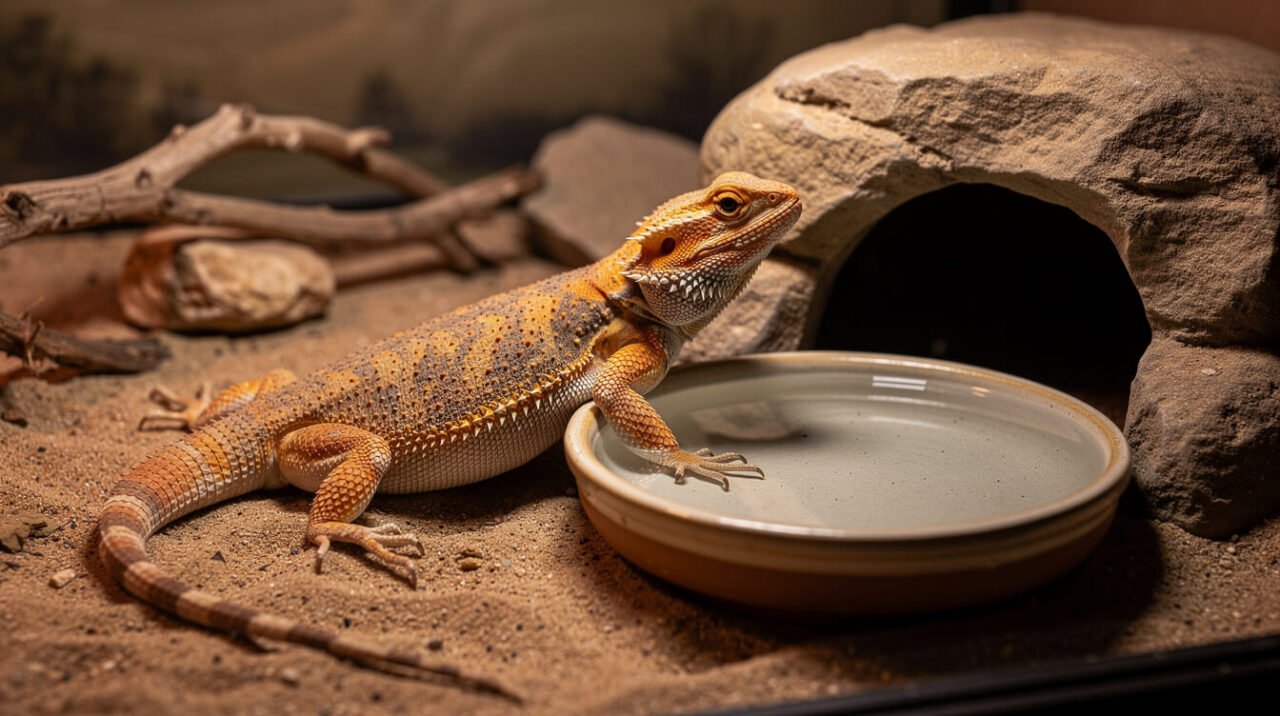
Once your healthy adult has clearly settled in with no red flags, your job during bearded dragon brumation is to keep things steady and keep watching. Good brumation care is mostly restraint.
Water
Keep fresh water available at all times. Some dragons wake briefly just to drink. Beardeddragon.org notes that routine soaking isn’t required for every brumating dragon. A short, supervised soak can make sense if your vet recommends it or if you see signs of dehydration, such as sunken eyes, skin that stays tented when gently pinched, or wrinkly, thinning skin. Don’t use soaks as the main way to hydrate a dragon that’s otherwise fine. Any soak should be shallow, lukewarm, and supervised, and the dragon goes straight back to a warm enclosure afterward.
Light and heat
For a pet dragon brumating on its own, keep the normal day-night schedule running with the basking spot and UVB available during the day, as described in School 1. Your dragon will choose where to sleep, usually the cool end or a hide. If they wake and come up to bask, the heat is there. If you’ve ever wondered why the gradient matters so much, our bearded dragon tank setup guide covers heat and UVB in detail.
Food
Never force-feed a brumating dragon. If they wake, bask, and show interest, offer a small amount of food, such as some greens or a few insects. Make sure they can stay warm afterward so they can digest it. If food is ignored, remove it, and don’t leave live insects in the enclosure with a sleeping dragon. Repeatedly waking a dragon to offer meals tends to cause stress without doing any good.
The weekly weigh-in
Weigh once a week, same scale, same time of day, and compare to your baseline. Sources agree on the direction even if they don’t agree on a number. Swell says a healthy dragon “should not drastically lose weight,” and beardeddragon.org says “a stable weight trend is reassuring. Progressive weight loss is not.”
Only one source we found puts a number on it. ReptiFiles draws its line at more than 10% of starting weight, at which point it says to end brumation and get to a vet. That’s a keeper resource’s rule of thumb, not a veterinary standard, and we’d treat it as an upper limit, not a target. A steady downward trend week after week deserves a call to your vet well before it reaches 10%. For a 450-gram dragon, 10% is 45 grams, which is why a gram scale matters.
Beyond that, keep handling to the weekly weigh-in and a quick look over, keep the room quiet, and resist the urge to check on them every hour.
Waking up from bearded dragon brumation
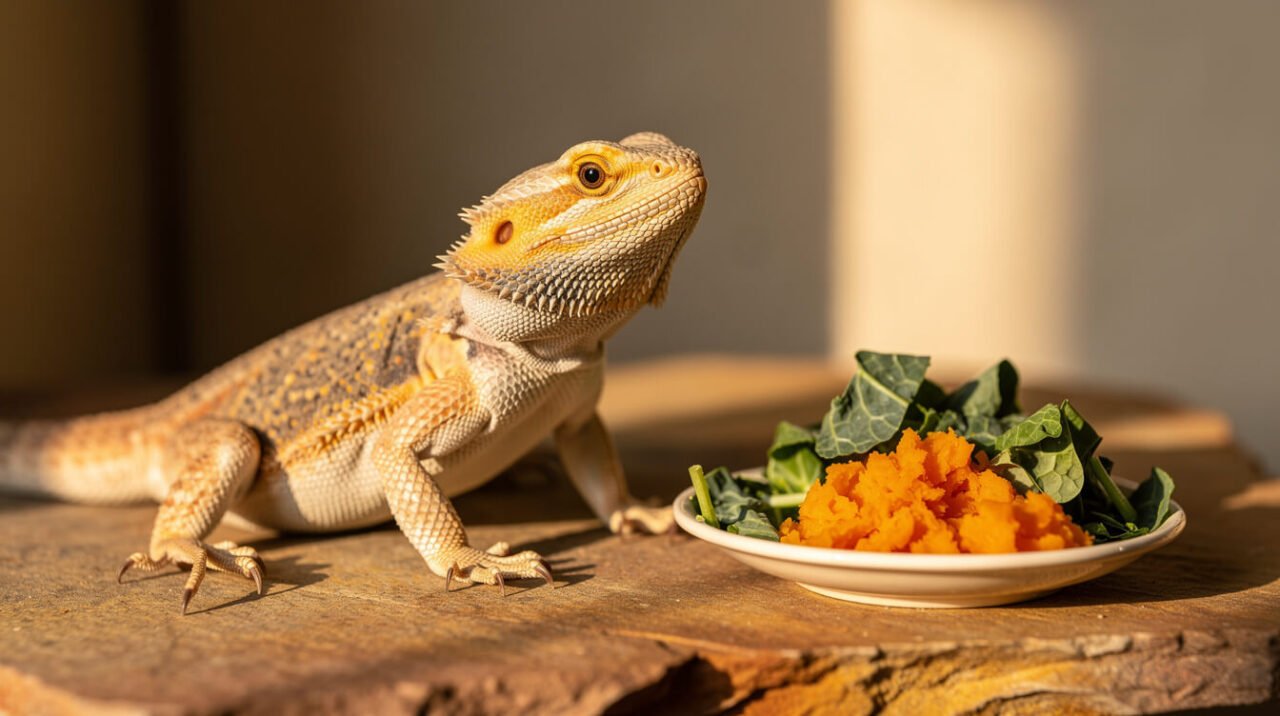
Brumation has an end, and for most dragons it’s a gradual one. Beardeddragon.org describes dragons slowing down for anything from a few weeks to two or three months, and waking in stages: a little more basking one day, a short wander the next. Appetite often comes back slowly rather than all at once.
Easing back into food
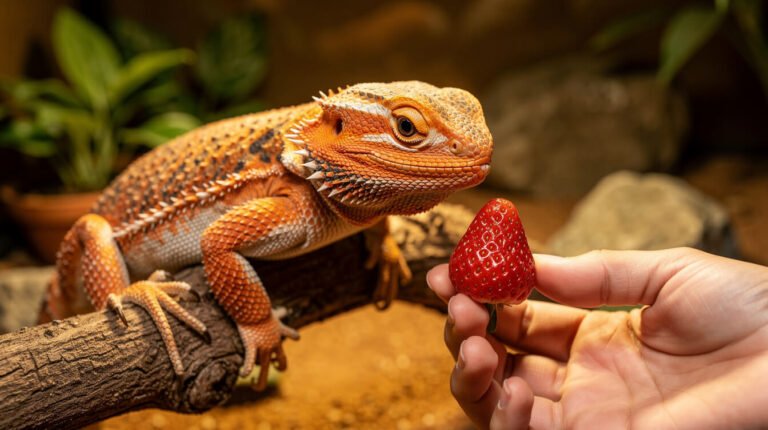
Offer small, easily digested meals once your dragon is basking regularly again, and let appetite build over a week or two. Greens first is a sensible start. Once they’re eating normally, you can bring treats back in moderation. Our guide to whether bearded dragons can eat strawberries covers how to do that safely. Weigh them again a couple of weeks after waking to make sure the number is heading back toward their baseline.
The post-brumation “spring fever”
Here’s one that alarms a lot of owners. In the weeks after brumation, many adult males go into full breeding mode, with lots of head-bobbing, pacing, glass-surfing, and a beard so dark it’s nearly black. ReptiFiles describes it vividly: “expect your male to head bob his head off, with the blackest beard you’ve ever seen!” Beardeddragon.org agrees that this is “associated with seasonal reproductive cycling rather than illness.” Females may be restless too, and a female can lay eggs even without a male, so a restless, digging female is worth a vet conversation.
Context matters here. A black beard during a long sleep, with nothing provoking it, is a red flag. A black beard after waking, alongside bobbing, strutting, and a good appetite, is usually hormones. It’s a reminder that your dragon is more complicated, and more interesting, than any checklist. If you love that side of them, our Bearded Dragon Crown Sunglasses King T-Shirt was made for keepers who know exactly how much personality fits in one lizard.

For the keeper who knows their dragon’s moods
Sleepy all winter, strutting all spring. The Bearded Dragon Crown Sunglasses King T-Shirt is for anyone whose beardie runs the household, whatever the season.
When “not waking up” means a vet
Call your reptile vet if your dragon:
- Wakes but still won’t eat after a week or two of basking normally
- Looks weak, wobbly, or thin after waking
- Has lost weight steadily through brumation
- Develops any of the red flags from earlier
- Has been down far longer than the few-weeks-to-a-few-months range keeper resources describe, especially if they’re also losing weight
VCA’s warning applies most here: a dragon that went into brumation carrying parasites or poorly nourished is the one that can become seriously ill on waking. Don’t wait it out.
Bearded dragon brumation FAQ
Is my bearded dragon brumating or dead?
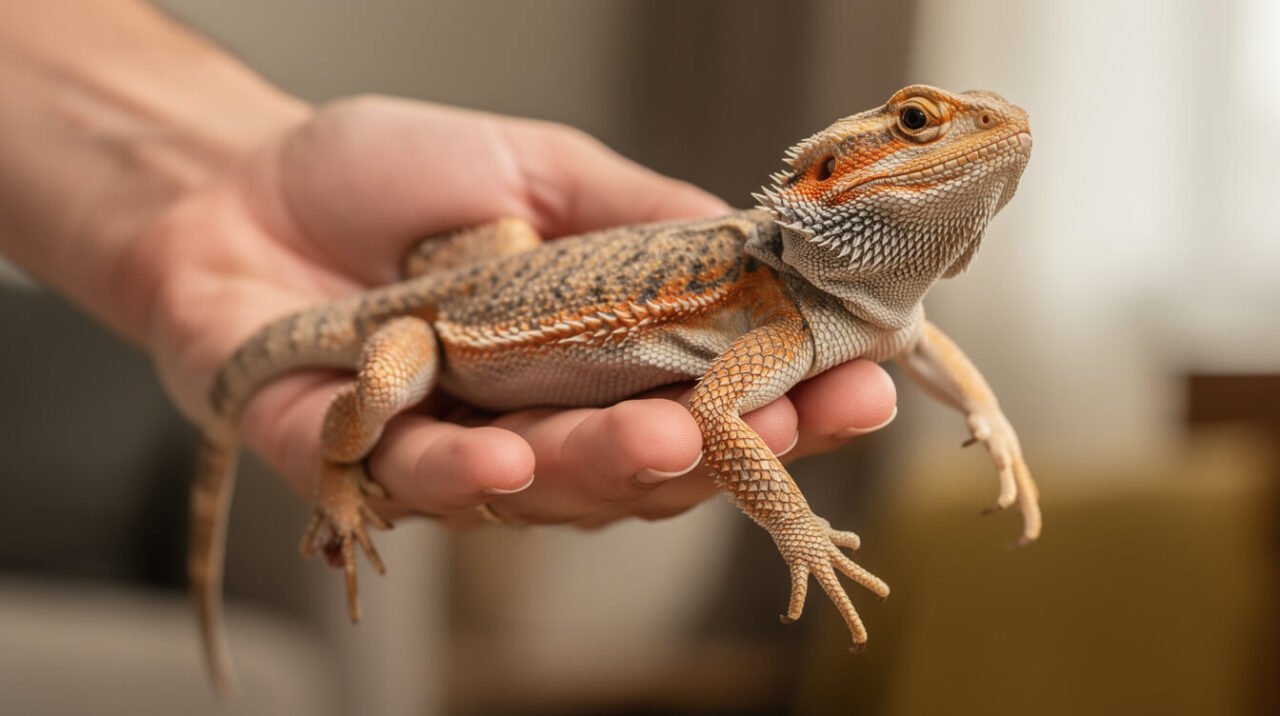
This is a frightening question, and a common one, so here is a gentle way through it. A brumating dragon is deeply asleep, not gone. Watch the sides of the body and the throat closely for slow breathing movements, which can be very subtle. Gently lift them: a brumating dragon usually has some muscle tone, may open an eye, shift, or slowly move a leg. Don’t be alarmed that they feel cool to the touch. They’re ectotherms, so a dragon resting at the cool end will feel cool even when perfectly healthy. If you can’t see any breathing, get no response at all, or the body is completely limp, call a reptile vet or emergency exotic clinic right away and let them guide you.
Can baby bearded dragons brumate?
Brumation is uncommon in dragons under about a year old. Young dragons are growing fast and don’t have the fat reserves to go weeks without eating. A juvenile that suddenly becomes lethargic or stops eating should be seen by a vet, not left to “brumate.”
Why is my bearded dragon brumating in summer?
Some dragons slow down at unexpected times, and the calendar alone doesn’t tell you much. But an off-season slowdown is also a good reason to double-check husbandry, especially basking temperature and the age of your UVB bulb, and to rule out illness with a vet, particularly if it’s the first time.
Should I wake my bearded dragon up?
Not routinely. If they’re an adult, their weight is stable, and there are no red flags, let them rest. Repeated disturbance adds stress without helping. The exception is any sign that the picture has changed, which is a vet call rather than a wake-up call.
How long does bearded dragon brumation last?
It varies a lot. Keeper resources describe anything from a few weeks to around four months, with two to three months being common. Duration matters less than condition. A dragon holding steady weight can rest safely for a long stretch, while one that’s steadily losing weight needs attention whatever the date.
What’s the difference between brumation and hibernation?
Hibernation is the deep winter dormancy of warm-blooded mammals. Brumation is the reptile version, and it’s lighter: brumating reptiles still wake occasionally, drink, and shift around. Tortoises brumate too, though their needs are very different. Our guide to tortoise brumation covers that side of the reptile world, and leopard geckos can show their own winter slowdown, covered in our leopard gecko care guide.
Final thoughts: a quiet season, watched closely
Bearded dragon brumation can be one of the most unsettling things a new keeper goes through, and one of the most reassuring once you’ve seen it done well. The short version: adults only, healthy going in, weighed before and during, lights and water left available, and a vet called the moment the picture stops fitting. The three schools of advice stop conflicting once you see which question each one is answering. For a pet dragon, the answer is usually to let them lead, keep watching, and check with a vet whenever you’re unsure.
If you want the whole picture of keeping a dragon healthy all year, from enclosure to diet to the health signs worth knowing, start with our complete bearded dragon care guide, and our reptile care guide covers the basics that carry across species. You’re already doing the most important thing a keeper can do: paying close attention. Your dragon is in good hands.
Before you go
Keep learning your animal
We publish a new guide every day. The best of them land in one short weekly email, so you never miss the one about your species.
Dr. Zoe Santos is a distinguished herpetologist and a revered expert in the care, conservation, and study of reptiles and amphibians. With a PhD in herpetology and over 18 years of field and academic experience, Zoe brings a depth of knowledge to her readers that is both rare and invaluable.