When Is a Cat Considered a Senior? The Age Vets Use, and Why Charts Say 7, 10, or 11
When is a cat considered a senior? The veterinary answer is over 10 years old. That’s the line drawn by the 2021 AAHA/AAFP Feline Life Stage Guidelines, the document most vets work from today. But if you’ve looked this up before, you’ve also seen 7, 11, and 15, sometimes all on the same page. None of those numbers is a typo. They come from two different life-stage systems that are both still in circulation, plus a habit of starting “senior-style” checkups early.
Below, we untangle where each number comes from, check the “cat years” charts against each other (they don’t agree), and look at what the lifespan data says about a cat who has just turned 10. Then we get to the part that matters most: what actually changes for your cat, and which changes are a reason to call your vet rather than chalk it up to age.
When is a cat considered a senior? The short answer
The 2021 AAHA/AAFP Feline Life Stage Guidelines, written by a task force of feline specialists for the American Animal Hospital Association and the American Association of Feline Practitioners, divide a cat’s life into four age-based stages:
- Kitten: birth up to 1 year
- Young adult: 1 through 6 years
- Mature adult: 7 to 10 years
- Senior: over 10 years
There’s also a fifth stage, end of life, which the guidelines note “can occur at any age.” AAHA’s 2023 Senior Care Guidelines for Dogs and Cats confirm the cat definition directly: the feline guidelines “define senior as cats greater than 10 yr of age.” In everyday terms, your cat is a senior somewhere around their 10th to 11th birthday.
Two caveats come straight from the guideline writers, and they’re worth holding onto:
- The line is soft on purpose. The 2021 guidelines call any age grouping “inevitably arbitrary demarcations along a spectrum and not absolutes,” and say a fit cat over 10 “would be best treated as a mature adult at the veterinarian’s discretion.”
- Some cats get there sooner. The 2021 AAFP Feline Senior Care Guidelines say some cats “may be more appropriately referred to as senior as early as 8 years of age, possibly sooner for some breeds or those with genetic predispositions.”
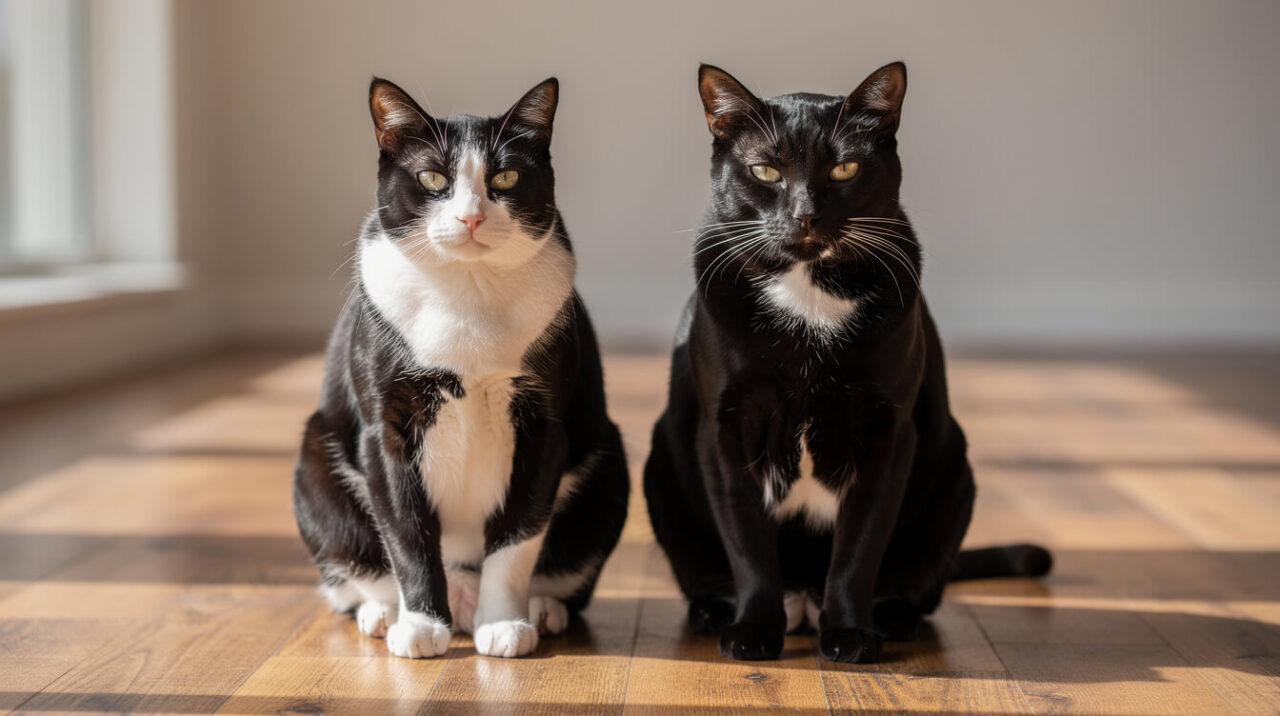
That’s why the two cats in the photo above can look nearly identical while one of them is years older. You often can’t see senior status from across the room. It shows up in bloodwork, blood pressure, muscle, and small changes in routine long before it shows up in the mirror.
And one thing worth saying early: “senior” isn’t a diagnosis. It’s a planning label. It tells you and your vet when to look more closely, because so many of the problems that become common after 10 are much easier to manage when you catch them early.
Why you’ll see 7, 10, 11, and 15

Search “when is a cat considered a senior” and here’s what the top-ranking pages say (all checked November 2026):
| Source | Senior starts at | Older stage |
|---|---|---|
| PetMD | 10 (senior care “often begins at age 7”) | None given |
| Hill’s | Older than 10 | None given |
| Chewy | 10 | “Super senior” at 14 |
| A vet-clinic article syndicated across many clinic sites | About 11 | “Super-senior” beyond 15 |
| PAWS Chicago | 11 to 14 | Geriatric at 15+ |
| International Cat Care | 11 to 14 | Super senior at 15+ |
Every one of these is defensible, because there are two official systems in play.
The 2010 system: six stages, senior at 11
The earlier AAFP–AAHA Feline Life Stage Guidelines, published in 2010, used six stages: kitten (0–6 months), junior (7 months–2 years), adult (3–6 years), mature (7–10 years), senior (11–14 years), and geriatric (15 years and up). International Cat Care still teaches this six-stage scheme today, calling the last stage “super senior: 15 years+”, and many clinic and shelter pages copied it years ago. If a page says “11” or mentions a stage after senior, it’s almost always using this system.
The 2021 system: four stages, senior over 10
In 2021 the task force cut the stages from six to four, plus end of life. They wrote that the physiology behind six stages “remains valid,” but a simpler grouping is easier for clinics to use and easier for owners to follow. The 2021 text has no stage after senior. The companion Senior Care Guidelines also took the age out of “geriatric,” describing it as “more a statement of health status” with “no specifically associated age.”
That’s worth knowing if you read Chewy’s chart closely. It cites the 2021 guidelines for a “Super Senior: 14 years or older” row, but no such stage appears in the 2021 text. It seems to be a blend of the two systems.
Where “7” comes from
Seven is the start of the mature adult stage in both systems, and it’s when many vets begin acting early. The AAFP senior care guidelines suggest baseline lab work “at least annually, starting at age 7–10 years, with frequency increasing with age.” So “senior care starts at 7” and “senior starts at 10” aren’t in conflict. Seven is when the watching starts. Ten (or 11, depending on the system) is when the label changes.
How old is a senior cat in human years?
You’ve probably heard that one cat year equals seven human years. It doesn’t. Cats grow up very fast in their first two years and then age more steadily. But the charts that replace the 1:7 rule don’t agree with each other either.
- The AAHA / International Cat Care chart (adapted from the 2010 guidelines): a 1-year-old cat is about 15 in human years, a 2-year-old is 24, and each year after that adds 4.
- Cornell Feline Health Center: a 1-year-old is “physiologically similar to a 16-year-old human,” a 2-year-old is like 21, and each year after that adds about 4.
- Chewy’s chart: ranges by stage, with a senior cat (10 and up) equal to 61–74.
| Cat’s age | AAHA / iCatCare chart | Cornell formula |
|---|---|---|
| 7 years | 44 | 41 |
| 10 years | 56 | 53 |
| 11 years | 60 | 57 |
| 12 years | 64 | 61 |
| 14 years | 72 | 69 |
| 15 years | 76 | 73 |
| 18 years | 88 | 85 |
| 20 years | 96 | 93 |
The two main charts land about three years apart at every age, and Chewy puts a new senior higher still. That’s not a scandal. These are teaching tools, and none of these pages shows a dataset behind its numbers. Use them to get a feel for the stage of life, not to get an exact figure. Either way, a cat over 10 is in late middle age by human standards, and a cat of 15 is in their seventies.
What the lifespan data says about a 10-year-old cat
“Human years” is a fun conversion, but once you know when a cat is considered a senior, the more useful question for a keeper is: how much life does a cat who has reached senior age usually have left? Real data can answer that.
A 2024 study from the Royal Veterinary College’s VetCompass program (Teng and colleagues, Journal of Feline Medicine and Surgery) built the first life tables for UK pet cats from 7,936 cats that died under veterinary care in 2019. Average life expectancy at birth was 11.74 years. That figure is pulled down by cats who die young, from accidents and early illness. For cats that made it further, the picture looks different:
- About 65% of the cats in the study lived to their 10th birthday.
- A cat who reached 10 had, on average, about 5.5 more years ahead.
- A cat who reached 15 had, on average, about 2.7 more years.
That fits an earlier VetCompass study of more than 4,000 cats, which found a median age at death of 14.0 years, with a quarter of cats reaching 17 or older. In US data from more than 2.3 million cats seen at Banfield hospitals, life expectancy at birth was 11.18 years, with females outliving males in both countries.
Put plainly, a cat who turns 10 is roughly two-thirds of the way through a typical life, and often has many good years left. That’s exactly why the senior label exists: it marks the stretch where good care can make the biggest difference.
Breed matters too. Burmese and Birmans had the longest life expectancy in the UK tables (about 14.4 years at birth), and Sphynx the shortest (about 6.7). Those breed numbers rest on small groups of cats, though, so treat them as a reason to ask your vet whether your cat’s breed shifts the senior line earlier, not as a forecast.
What changes when your cat becomes a senior
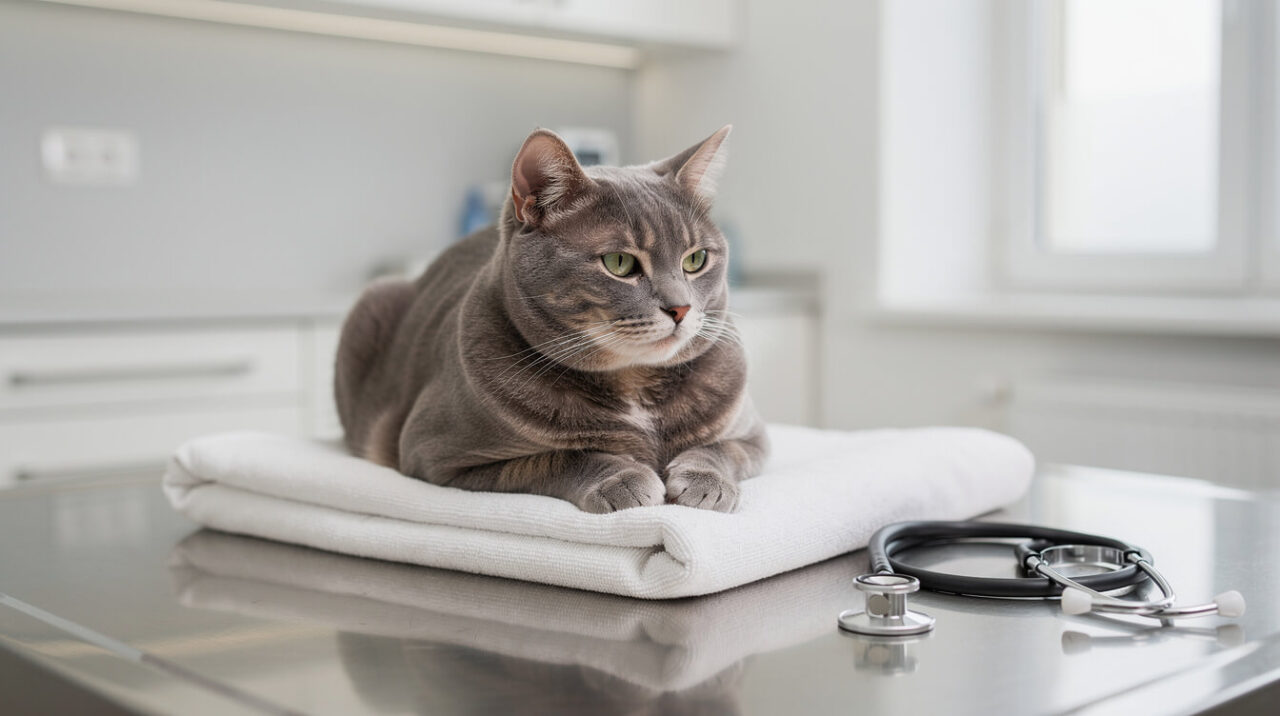
The label matters because the care plan changes with it. Here’s what the feline guidelines recommend, in plain terms.
Checkups every six months
The 2021 Life Stage Guidelines recommend at least one exam a year for every cat, and say senior cats “should be seen at least every 6 months,” more often for cats with ongoing conditions. Twice a year can sound like a lot for a cat who seems fine. But cats are experts at hiding illness, and six months is a long time in a 13-year-old cat’s life. The guidelines also point out that cats go to the vet far less than dogs do. In one survey it was 1.1 visits a year for cats, versus 2.3 for dogs.
Blood pressure and baseline labs
For cats over 10, the AAFP senior care guidelines recommend checking blood pressure at every exam. High blood pressure is most often found in cats 10 and older, and if it’s missed it can damage the eyes, heart, brain, and kidneys, sometimes for good. Expect your vet to suggest regular bloodwork and a urine test too. These baseline numbers are most useful when there’s a trend to compare against, which is why it pays to start them before anything is wrong.
Weight: the direction often flips
Here’s a point many care pages get backwards. You’ll often read that senior cats need fewer calories. That’s true for part of the senior stretch, but not all of it. According to the AAFP senior care guidelines, cats aged roughly 7 to 11 tend to need fewer calories, while cats 12 and older have higher daily energy needs, partly because their digestion becomes less efficient. The same guidelines note that with advancing age, weight loss becomes more common than weight gain, and that being too thin or very heavy are both linked to shorter survival.
In practice:
- Weigh your senior cat at home once a month and write it down. A small, steady drop is easy to miss by eye and easy to spot on paper.
- Don’t cut food just because your cat had a birthday. Adjust with your vet based on weight and body condition, not age alone.
- Don’t assume “senior” means low protein. The Life Stage Guidelines say healthy mature and senior cats “should not be protein restricted.” Cats with diagnosed kidney disease are a different case, and that’s a decision for your vet.
- The word “senior” on a bag isn’t a standard. AAHA notes that the Association of American Feed Control Officials “does not currently have guidelines for senior nutrition.” Choose with your vet, not by the label. Our guide to choosing the best cat food covers the basics of reading a label.
If your cat is losing weight without trying, don’t wait for the next scheduled visit. Our article on why a cat might be losing weight walks through the common causes.
The weekly care guide
Get it right for your animal, every week
One email a week: new care guides, species deep-dives, and the safety answers keepers search for, written by our specialists. No spam. Unsubscribe anytime.
Normal aging vs. signs to see your vet
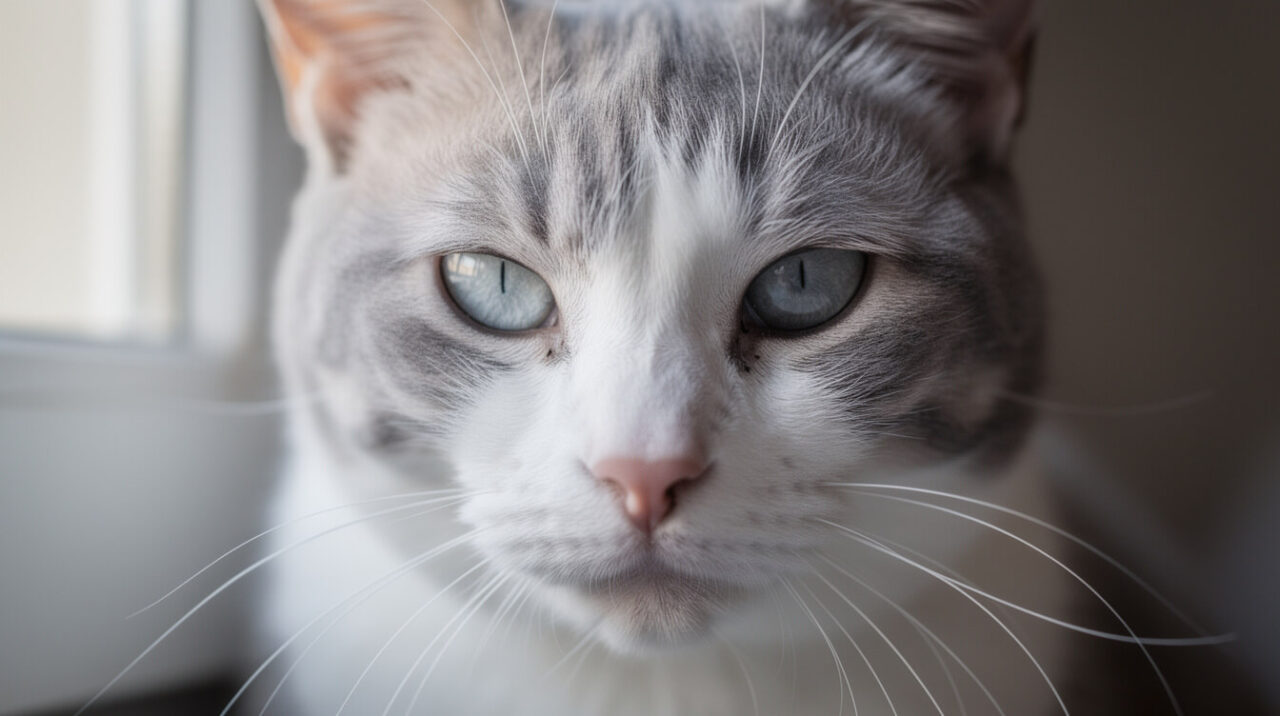
Vets have a saying: old age is not a disease. Cornell’s Feline Health Center puts it even more firmly: “Never assume that changes you see in your older cat are simply due to old age, and are therefore untreatable.” Some changes really are just the years. Many others have a cause that can be treated or eased.
Usually normal aging (still mention them at the next checkup)
- A faint bluish-gray haze in the eyes. This is usually lenticular (nuclear) sclerosis, a normal hardening of the lens, and it affects vision far less than a cataract does.
- A slightly lacy look to the iris, the colored part of the eye. Cornell notes that neither this nor the haze seems to reduce vision much.
- More napping, as long as your cat is still alert, interested, and eating well when awake.
- A coat that’s a little less sleek, especially along the back and hips where grooming gets harder.
Worth a vet visit soon
- Jumping less, or “not getting on the counters as much.” That exact phrase appears in the Life Stage Guidelines as a typical owner report of joint pain. Degenerative joint disease affects up to 74% of cats 12 and older, according to the AAFP senior care guidelines, and cats rarely limp. They just quietly stop jumping.
- Drinking more, or bigger clumps in the litter box. These can be early signs of kidney disease, diabetes, or hyperthyroidism.
- Eating more but losing weight, or a sudden burst of restless energy. Hyperthyroidism affects about 10% of cats over 10, according to the same guidelines, and it’s treatable.
- Yowling at night, wandering, or seeming confused. Pain, high blood pressure, hyperthyroidism, and hearing or vision loss can all cause this. Cognitive decline can too: in Gunn-Moore’s research, 28% of cats aged 11 to 14 developed at least one age-related behavior problem, rising to over 50% at 15 and older. (You may see “80% at 15” online. We couldn’t trace that figure to a source.) Cognitive dysfunction is diagnosed only after medical causes are ruled out.
- Accidents outside the litter box. In a senior, think medical first: urinary disease, constipation, diabetes, or joints that make climbing into a tall box hurt. Our guide to why a cat pees outside the box covers the medical checks.
- Dropping food, chewing on one side, or bad breath. Dental disease is common and painful in older cats.
- New grumpiness when touched. A cat who suddenly swats when you stroke their back or hips may be sore. There’s more on reading that in our piece on why cats bite.
Call your vet the same day
- Your cat stops eating, or eats very little for a day.
- Your cat is straining in the litter box with little or no urine. In a male cat especially, treat this as an emergency.
- Your cat suddenly seems blind, has very large pupils, or bumps into things that weren’t a problem yesterday.
- Your cat is breathing with an open mouth, breathing hard at rest, or collapses.
None of this is a reason to worry about every nap. It’s a reason to know your cat’s normal, so you notice when it shifts.
Small changes that make a senior cat’s home easier
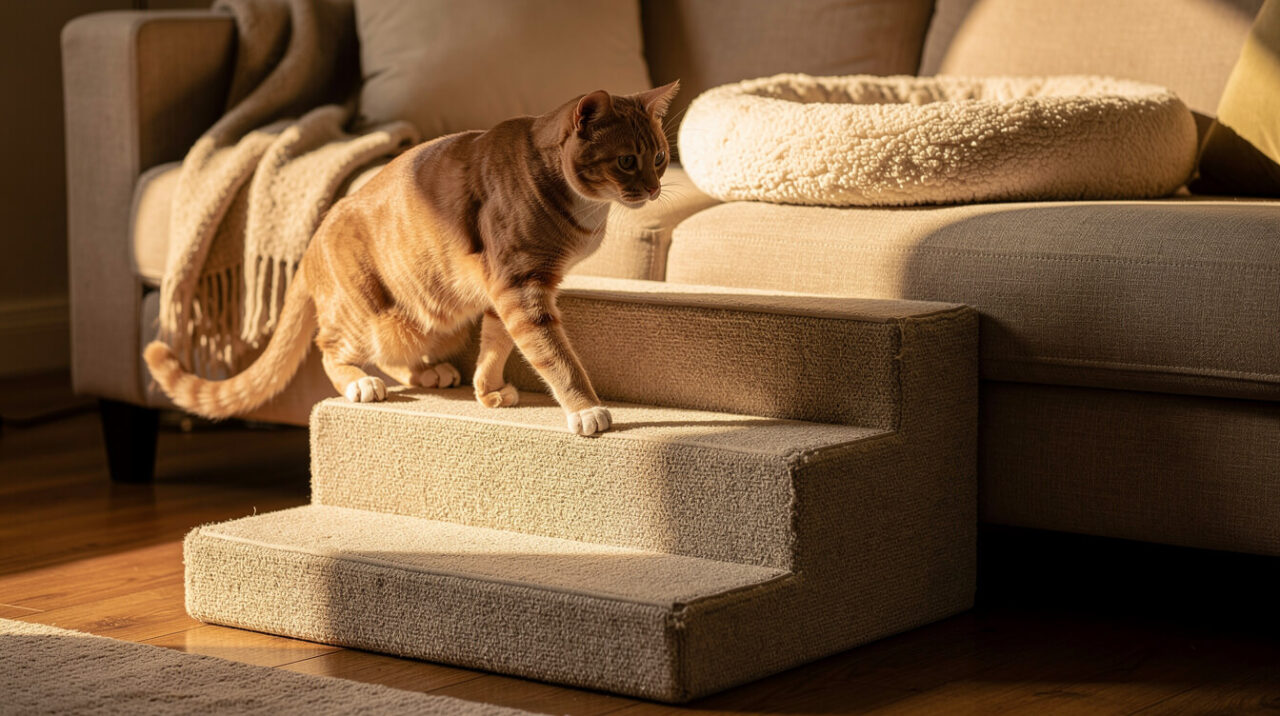
This is the hopeful part: most senior care happens at home, and a lot of it is simple. The Life Stage Guidelines point out that senior cats often benefit from “comfortable and warm resting locations” and that it helps to reduce the distance they have to travel to reach food, water, or a litter box.
- Put essentials on every floor. A bowl, water, and a litter box on each level saves stiff joints from stairs.
- Lower the litter box entry. A large box with a low side (or one side cut down) is kinder to sore hips than a tall or top-entry box.
- Add steps or a ramp to favorite spots, like the bed, the sofa, or the sunny windowsill. Cats with arthritis often keep wanting the high places long after jumping up starts to hurt.
- Offer warm, padded beds. Older cats with less muscle often seek out heat. Our guide to how cold is too cold for cats covers safe warmth for winter.
- Help with grooming. A gentle brush along the back and hips, and checking claws, which can thicken and overgrow in older cats.

Wear the obsession
The Bearded Dragon Crown Sunglasses King T-Shirt: a crown, shades, and the unbothered calm of an animal that has claimed the warmest spot in the house. Any senior cat will recognize the attitude.
- Keep playing, just shorter. The Life Stage Guidelines note that declining play makes weight gain more likely. Two or three gentle wand-toy sessions a day, at floor level, keep muscles and minds working.
- Keep routines steady. Older cats can find change harder. A new kitten, for example, can be a lot for a senior who has little patience left for being pounced on. If you’re adding a pet, go slowly and give the older cat a retreat of their own.
- Never punish. A senior who misses the box or yowls at 3 a.m. is telling you something. Punishment only adds fear. Take the change to your vet instead.
Plenty of senior-cat households are multi-species, and an old cat and a basking lizard have a lot in common when it comes to finding the warmest spot in the house. If that’s your home, our Bearded Dragon Crown Sunglasses King T-Shirt is a nod to everyone in the house who takes their naps seriously. For a short checklist of senior-cat basics, see our tips for caring for senior cats.
Frequently asked questions

Is a 7-year-old cat a senior?
Not by the current guidelines. A 7-year-old is a mature adult. But 7 is when many vets start baseline bloodwork and pay closer attention, so it’s a good age to start thinking like a senior-cat keeper.
Is a 10-year-old cat old?
Ten is the edge of senior. Under the 2021 guidelines, a cat becomes a senior once they’re over 10. In human terms, that’s somewhere in the low-to-mid fifties, depending on which chart you use. In UK life-table data, a cat who reached 10 had about 5.5 years ahead on average, and many live much longer.
What age is a “super senior” or geriatric cat?
Under the older six-stage system, 15 and up. International Cat Care calls this stage “super senior,” and the 2010 guidelines called it “geriatric.” The 2021 guidelines dropped the extra stage, and the current senior care guidelines treat “geriatric” as a description of health rather than an age.
How old is my cat in human years?
By the widely used AAHA and International Cat Care chart, count 24 for the first two years, then add 4 for each year after. A 12-year-old cat works out to about 64. Cornell’s formula gives about 61. Both are rough guides, not measurements.
My cat is a rescue and I don’t know their age. How can I tell?
Your vet can estimate age from teeth, eyes, coat, muscle, and overall condition. It’s an educated guess, especially in adult cats. If your cat’s estimated age is close to 10, it’s reasonable to start senior-style checkups early. Extra attention does no harm.
Should I switch my cat to senior food at 7?
Not automatically. There’s no official senior nutrient standard, and calorie needs can rise again after about 12. Ask your vet to choose a food based on your cat’s weight, muscle, and lab results.
Do indoor cats age more slowly?
The senior age is the same. The life-stage guidelines draw the line by age, not lifestyle. But some risks of outdoor life, like traffic, mean an indoor cat may have better odds of reaching their senior years. In the 2015 VetCompass study, trauma was the most common cause of death across all ages.
How is a senior cat different from a senior dog?
Cats get a simpler rule. For dogs, the guidelines define senior as the last 25% of expected lifespan, so the age depends on size and breed. For cats, it’s a single age line, over 10. See our companion guide, when is a dog considered a senior, for the dog-side math.
When is a cat considered a senior? Think of 10 as a starting line
So when is a cat considered a senior? By today’s veterinary guidelines, once they’re over 10. You’ll still see 11 and 15 from the older six-stage system, and 7 as the point where closer monitoring starts. All of these numbers point to the same truth: somewhere in the second half of your cat’s first decade, how you care for them should start to change.
The birthday itself matters less than what you do with it. Book the twice-yearly checkups, weigh your cat each month, watch the jumping, the drinking, and the litter box, and make the home a little easier to get around. A cat who turns 10 often has years of good life left, and the attention you give now is what makes those years comfortable.
Your cat may be slowing down, but they’re still the same cat. Understanding what’s changing is how you keep their senior years good ones.
Before you go
Keep learning your animal
We publish a new guide every day. The best of them land in one short weekly email, so you never miss the one about your species.
Dr. Lila Monroe is a seasoned veterinarian with a passion for feline health and behavior, boasting over 20 years of experience in the field. With her extensive knowledge of cat medicine combined with a deep understanding of the nuanced dynamics of cat behavior, Lila offers readers invaluable insights into creating a nurturing environment for their feline friends.