
Can Dogs Eat Cinnamon Rolls? What 195 Store Labels Show, and the Raw Dough That Needs a Call
Can dogs eat cinnamon rolls? No. A cinnamon roll isn’t a food to share with your dog. But a stolen bite of an ordinary baked roll is rarely an emergency. The cinnamon most articles worry about is a small part of the story. What decides how worried you should be is a short list of other questions: was the roll baked or still raw dough, did it have raisins, how big was it, and how big is your dog?
To answer those with numbers instead of guesses, I went through 195 cinnamon roll ingredient labels in the USDA’s branded food database. They covered 121 baked rolls from bakeries and grocery shelves, plus 74 refrigerated and frozen doughs. I also checked a published home recipe for its cinnamon and read Cinnabon’s own nutrition guide. A few findings surprised me, including which raw doughs carry the yeast that makes raw dough an emergency. If your dog already ate one and you need to know what to do right now, jump to the calm checklist.
Can dogs eat cinnamon rolls? The short answer
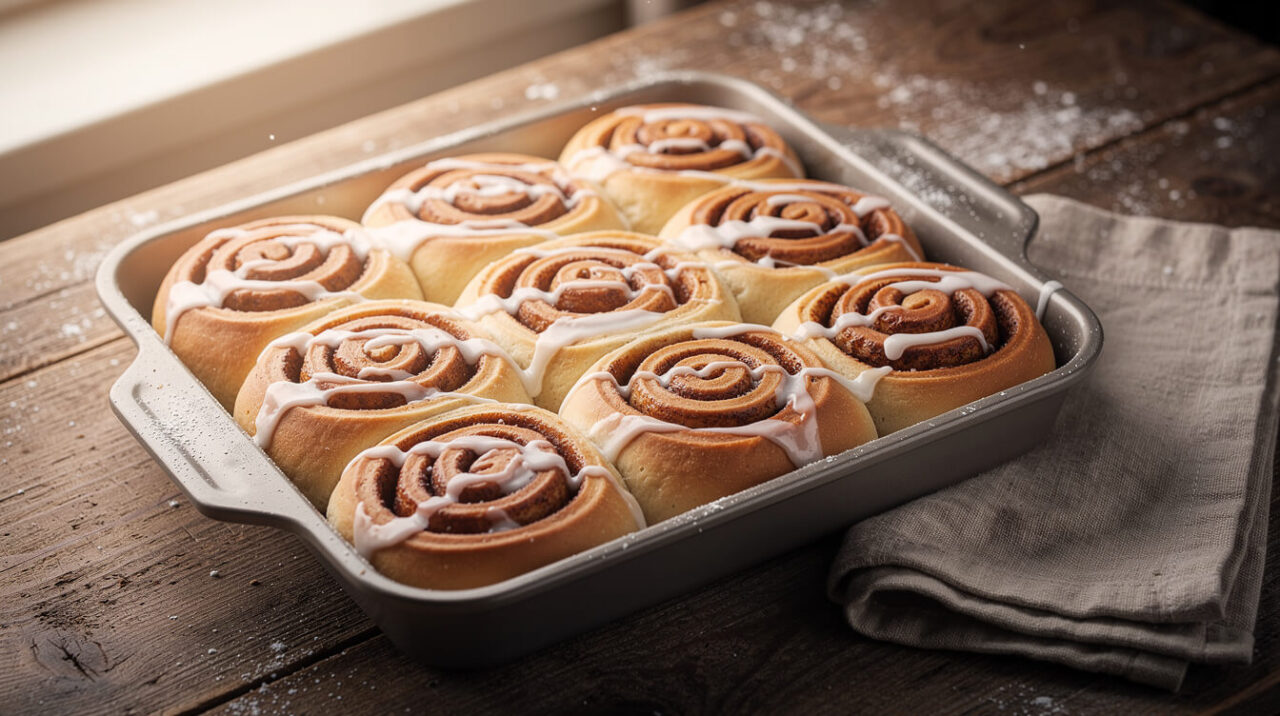
A cinnamon roll is enriched dough (flour, butter, sugar, milk, egg) rolled around a filling of more butter, brown sugar, and cinnamon, then usually topped with icing or cream cheese frosting. Nothing in that list helps your dog, and the sugar and fat are pure downside. That’s the “no.”
Here’s the part that should lower your shoulders a little. A plain baked cinnamon roll, with no raisins and no sugar-free sweetener, is mostly a calorie, sugar, and fat problem, not a poisoning problem. For most dogs who grab a bite, the worst outcome is an upset stomach, some vomiting or loose stool that settles within a day or so. Veterinary toxicology sources agree that fully baked bread isn’t the dangerous kind. The ASPCA’s professional site puts it plainly: “Fully-baked bread is safe for pets as an occasional treat, so long as it’s not raisin bread.”
What changes the answer:
- Raw dough. Unbaked dough made with yeast is a genuine emergency. As you’ll see below, it matters a lot which kind of raw dough it was.
- Raisins or currants. If the rolls had either, call your vet or a poison line now, whatever the amount. Our gingerbread guide explains why even a few matter.
- Size, compared with your dog. One bite in a Labrador and one whole roll in a Yorkie are very different events. The next section puts real numbers on that.
- Your dog’s health history. Dogs who have had pancreatitis, dogs with diabetes, and dogs on a prescription diet should have a lower bar for calling.
So the useful question isn’t “is a cinnamon roll toxic?” It’s “what kind of roll was it, and how much of it went missing?”
What’s really in a cinnamon roll, by the numbers

“A cinnamon roll” can mean almost anything, from a bite-sized grocery roll to a frosted bakery roll the size of a softball. Here’s what the labels and nutrition guides show:
- Refrigerated tube rolls (the kind that pops out of a cardboard can): across 60 labels listing a one-roll serving, the median was about 155 calories and 6 grams of fat per roll with icing. The “jumbo” and “Grands”-style versions run about twice that.
- Packaged and grocery-bakery rolls: across 60 labels with a one-roll serving, the median was about 260 calories, with the middle half falling between roughly 190 and 350.
- Cinnabon: the company’s 2026 nutrition guide lists the Classic Roll at 880 calories and 37 grams of fat. The Minibon is 350 calories, and the Caramel Pecanbon reaches 1,090 calories and 51 grams of fat.
How much of your dog’s day is one roll?
To make those numbers mean something, here’s each roll as a share of a typical adult dog’s daily calories. I estimated daily needs with the standard veterinary formula (resting energy requirement × 1.6, a common starting point for a neutered adult pet). Every dog is different, and a less active dog needs less, so treat these as rough guides. For a couch-potato dog the real percentages are higher.
| Dog’s weight | Approx. daily calories | Tube roll (~150 kcal) | Jumbo tube or bakery roll (~300 kcal) | Cinnabon Minibon (350) | Cinnabon Classic (880) |
|---|---|---|---|---|---|
| 10 lb | ~350 | 43% | 86% | 100% | 250% |
| 20 lb | ~585 | 26% | 51% | 60% | 150% |
| 40 lb | ~985 | 15% | 30% | 36% | 89% |
| 70 lb | ~1,500 | 10% | 20% | 23% | 59% |
A common guideline is that treats should stay under about 10% of a dog’s daily calories. For a 10-pound dog, that’s around 35 calories. A single small tube roll is four times that budget, and a Cinnabon Classic is two and a half days of food.
Those numbers matter because of where the calories come from. A sudden, rich, fatty meal is exactly the kind of “dietary indiscretion” that the Merck Veterinary Manual names as a common risk factor for pancreatitis in dogs, a painful inflammation of the pancreas that can need hospital care. Merck notes that Miniature Schnauzers are “dramatically overrepresented,” with higher rates also reported in Yorkshire Terriers, Cocker Spaniels, Dachshunds, and Poodles. Not every dog who raids a pan of rolls gets pancreatitis. Most don’t. But this is why “it was only cinnamon rolls” can still deserve a phone call.
One online vet Q&A in today’s search results told the owner of a 13-pound dog who’d eaten eight baked rolls that nothing needed to be done. Eight tube-sized rolls come to roughly 1,200 calories, about three days of food for a dog that size. The toxicity reasoning in that answer was right, since baked rolls won’t rise. Even so, we’d call the vet about a load that size, especially for a small dog.
Raw cinnamon roll dough: tube, frozen, or homemade?
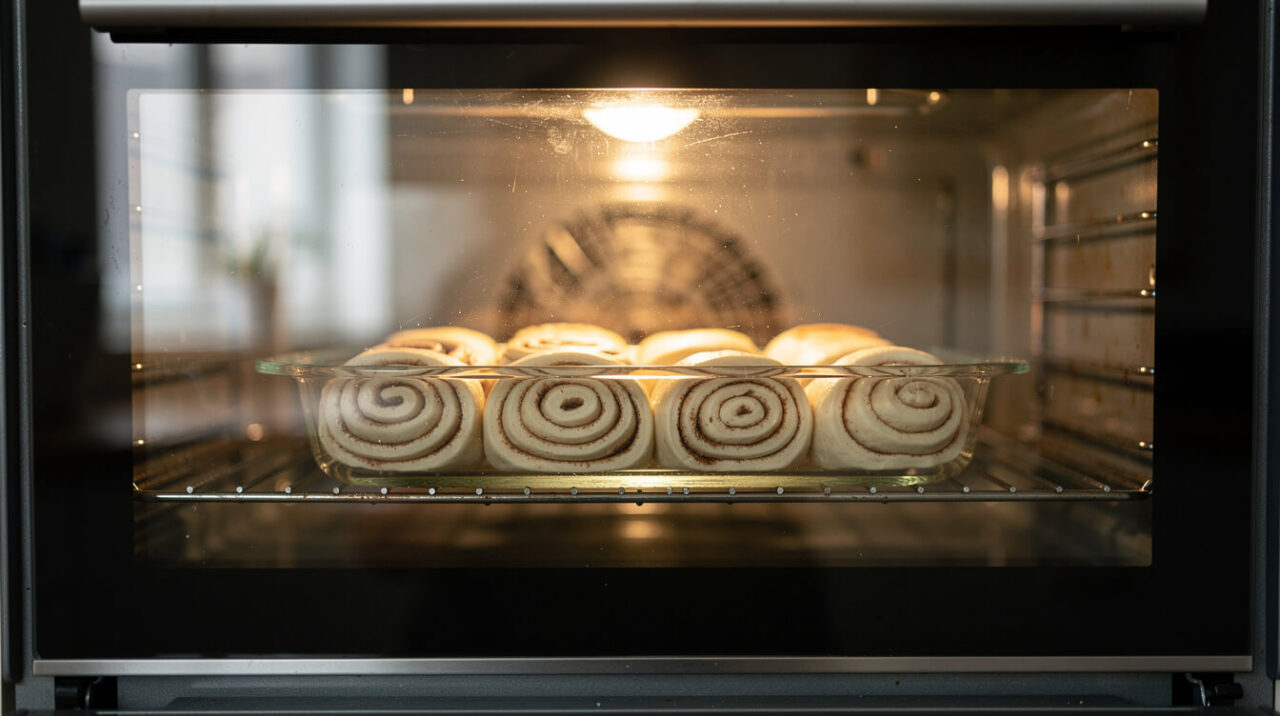
This is the section that matters most if your dog got into rolls that hadn’t been baked yet.
Why raw yeast dough is an emergency
The Merck Veterinary Manual describes bread dough toxicosis as a problem of “raw, yeast-based bread dough.” A dog’s stomach is warm and moist, which makes it, in Merck’s words, “an efficient incubator for yeast replication.” The dough keeps rising, stretching the stomach, and the yeast keeps fermenting sugar into ethanol, which is absorbed into the bloodstream. Merck notes that death “is usually due to metabolic effects of ethanol rather than to gastric distention,” though the swelling can also trigger bloat (gastric dilatation-volvulus) in susceptible breeds.
Signs to know, from Merck and Veterinary Partner: unproductive retching, a swollen belly, and lethargy early on. Signs of alcohol poisoning usually show up two or more hours after eating: wobbliness, disorientation, a dog who feels cold, sometimes an alcohol smell on the breath. If your dog ate raw yeast dough, call your vet or an emergency clinic now, even if your dog seems fine.
The label finding: most tube dough has no yeast
Most articles treat every raw cinnamon roll the same. At least one ranking article answers “Can dogs eat Pillsbury dough?” with the risks of yeast dough but never says whether tube dough contains yeast. The labels tell a more useful story:
- Refrigerated tube rolls: of 62 labels, 58 list no yeast at all. They rise in the oven from baking soda and a leavening acid such as sodium aluminum phosphate. Only 4 listed yeast.
- Frozen unbaked rolls (the kind you thaw and let rise overnight): 10 of 12 list yeast.
- Homemade cinnamon rolls are almost always yeast doughs. Most classic recipes, from Sally’s Baking Addiction to King Arthur, rise with yeast.
Veterinary Partner, the pet-owner library of the Veterinary Information Network, says that “doughs that do not contain yeast are less of a concern, but can still cause gastrointestinal problems.” That gives you a practical first step: find the can or the bag and read the ingredient list for the word “yeast.” (Ignore “yeast extract” and “autolyzed yeast.” Those are flavorings, not live yeast.) Then call your vet and read them what you found. A yeast-free tube dough is still a large, raw, fatty meal, and raw flour and raw egg carry their own food-safety risks, so your vet may still want to see your dog. Let them make that call with the label in hand.
With homemade dough, assume yeast unless you know otherwise. That includes dough that’s been shaped and is rising on the counter overnight, which a tall dog may find more tempting than the baked rolls.
Cinnamon, icing, raisins, and the other add-ins, ranked

If the roll was baked, here’s what’s worth checking, in order of how fast you need to act.
1. Raisins or currants: call now
Some cinnamon rolls and sticky buns are made with raisins. In the label set, 4 of 121 baked rolls listed raisins, about 1 in 30. That’s uncommon at the store and more common in homemade and bakery rolls. Grapes, raisins, and Zante currants can cause kidney injury in dogs, and no one can predict which dog will react or to how much. If raisins or currants were in the roll, call your vet or a poison line right away, even if your dog seems fine.
2. Sugar-free or “keto” rolls: check for xylitol
Here’s some good news from the labels: none of the 195 lists xylitol. A handful of baked rolls used other sweeteners: allulose in four Pillsbury Mini Cinnis products, sorbitol in two, and maltitol in one. The UK’s Veterinary Poisons Information Service lists sorbitol and maltitol as not hazardous to pets, though large amounts can loosen stools. Homemade low-carb rolls are the exception to watch for, because some sugar-free sweetener blends, icings, and syrups contain xylitol (sometimes listed as “birch sugar”). Xylitol can drop a dog’s blood sugar dangerously fast, so if a homemade sugar-free roll is involved and you can’t confirm the sweetener, call.
3. Chocolate: know the type
About 1 in 6 baked rolls (21 of 121) listed chocolate or cocoa, usually as a filling or drizzle. If your dog ate chocolate-filled or chocolate-topped rolls, call your vet or a poison line with the product name and your dog’s weight. They can work out whether the dose needs treatment.
4. Icing and cream cheese frosting: more of the same
Icing is mostly sugar. Cream cheese frosting adds dairy fat on top. A side of Cinnabon’s cream cheese frosting alone is 220 calories. Neither is toxic, but both push the roll further into “rich meal” territory, and some dogs don’t digest dairy well. A dog who licked a frosting bowl clean is in the same category as a dog who ate a whole roll.
5. Cinnamon: the ingredient everyone asks about
Cinnamon itself isn’t toxic to dogs. Pet Poison Helpline’s Dr. Catherine Angle writes that “it takes a larger amount of ingested cinnamon powder to cause problems in our pets (greater than 1 teaspoon of powder for most pets).” Sally’s Baking Addiction’s popular cinnamon roll recipe uses 1 tablespoon of ground cinnamon for 10 to 12 rolls, about ¼ teaspoon per roll. By that measure, it takes roughly four homemade rolls to reach a teaspoon.
To be honest about the disagreement: one veterinarian-written article ranking for this search says that 1/8 to 1/4 teaspoon “can be harmful” for small dogs, which would put a single homemade roll at that line for a toy breed. Neither source gives a study-based toxic dose for dogs, and I won’t invent one. In practice the disagreement rarely changes what you do. A small dog who ate a whole roll is already past the point where calling your vet makes sense, because of the calories and fat. Real cinnamon trouble usually comes from the spice jar itself, a chewed cinnamon stick, or cinnamon essential oil, which is far more concentrated. If any of those were involved, call.
6. Nutmeg, nuts, and the rest
Some recipes add nutmeg, and you’ll see it called “toxic” on page one. The Pet Poison Helpline’s position is that “the small amount of nutmeg used in recipes is very unlikely to cause serious toxicity.” We walked through that math in our gingerbread guide. None of the 195 labels names nutmeg (some just say “spices”). One ranking article also warns about macadamia nuts in cinnamon rolls. No label in the set listed them, though three listed pecans or walnuts. Pecan-topped sticky buns are mainly an even bigger fat load. Cinnabon’s Caramel Pecanbon carries 51 grams of fat.
The weekly care guide
Get it right for your animal, every week
One email a week: new care guides, species deep-dives, and the safety answers keepers search for, written by our specialists. No spam. Unsubscribe anytime.
My dog ate a cinnamon roll: a calm checklist

First, take a breath. Most cinnamon roll thefts end with a dog who has a gurgly stomach and a guilty face. Work through this in order.
Step 1: Figure out what it was
- Was it raw dough? Find the package and look for “yeast,” or assume yeast if it was homemade. Raw yeast dough means call now.
- Were there raisins or currants? Call now.
- Was it sugar-free or homemade “keto”? Check for xylitol or birch sugar. If it’s there or you can’t tell, call now.
- Was there chocolate? Call, with the product and amount ready.
- Did your dog eat the packaging? Foil-lined cardboard tubes, the metal can ends, plastic trays, and parchment can cause choking or blockage. That’s a separate reason to call.
Step 2: Estimate how much, compared with your dog
If everything above was a “no,” you’re looking at a calorie, sugar, and fat exposure. Use the table above as a rough guide. As a general rule, call your vet for advice if a small dog ate a whole roll or more, if any dog ate several rolls or a large bakery roll, if your dog has a history of pancreatitis, or if you honestly can’t tell how much is missing. Calling is never an overreaction.
Step 3: Don’t start home remedies on your own
The search results for this topic include owners giving hydrogen peroxide, and in one case filling a dog with snow after raw dough. Please don’t improvise. Whether vomiting is the right move depends on what was eaten, how long ago, and how your dog is doing right now. For dough, ASPCA guidance to veterinarians says not to induce vomiting once a pet is already showing signs. Cold water does have a role with yeast dough, but Merck describes it as a step for when vomiting hasn’t worked, with body temperature monitored for hypothermia. Let a veterinarian or poison line tell you what to do and how.
Step 4: Watch for the next 24 to 72 hours
For a baked-roll exposure, mild signs look like a vomit or two, some loose stool, or a quieter-than-usual dog that settles within about a day. Call your veterinarian promptly if you see:
- Repeated vomiting, or retching with nothing coming up
- A swollen, tight, or painful belly, hunching, or a “praying” stance with the front end down
- Refusing food or water, or marked lethargy
- Wobbliness, disorientation, or an alcohol smell on the breath (after raw dough)
- Collapse, seizures, or trouble breathing. These are emergencies: go to the nearest emergency vet now.
Who to call
Your own veterinarian knows your dog’s history. If they’re closed, call a 24-hour emergency clinic or one of the two US animal poison lines, both staffed by veterinary toxicology professionals:
- ASPCA Animal Poison Control Center: (888) 426-4435
- Pet Poison Helpline: (855) 764-7661
Both charge a consultation fee. Have your dog’s weight, the product (or recipe), roughly how much is missing, and when it happened ready before you dial.
What your dog can have instead this baking season

Cinnamon roll mornings are some of the best smells of the year, and it’s natural to want your dog in on the fun. The good news is that your dog cares far more about being included than about the specific food. Here are easier wins than sharing your roll:
- Dog treats with cinnamon. Several commercial dog biscuits are made with cinnamon, apple, or pumpkin, without the butter-and-sugar load. Keep them within your dog’s normal treat budget.
- A spoonful of plain pumpkin. Plain canned pumpkin (not pie filling, which is spiced and sweetened) is a seasonal favorite. Our guide to pumpkin for dogs covers the right amount for your dog’s size.
- A stuffed chew toy or a frozen lick mat while you bake, so your dog has something to do besides station themselves under the counter.
- Their own kibble, handed out like a treat. A few pieces delivered with ceremony during frosting time are just as exciting to most dogs.
For a 10-pound dog, the whole day’s treat allowance is roughly 35 calories, so these really are small amounts. If several family members are slipping “just a bite” under the table, agree on one treat-giver for the morning.
And if there’s a reptile keeper on your holiday list, our Bearded Dragon Crown Sunglasses King T-Shirt is a gift with zero calories and nothing for the dog to steal. We don’t have a dog design yet, but in a home with a dog bed and a basking lamp, it fits right in.

A holiday gift for the keeper in your life
The Bearded Dragon Crown Sunglasses King T-Shirt: a crown, shades, and the calm confidence of a reptile who already claimed the warmest spot in the house. No icing, no yeast, and nothing for the dog to steal off the counter.
A cinnamon-roll-safe kitchen
Prevention is easier than triage, and most of it comes down to height and habit:
- Let dough rise somewhere your dog can’t reach. Veterinary Partner suggests a high spot, or inside a closed oven or microwave (turned off, with a note on the door so nobody preheats it).
- Cool baked rolls up high. Counter-surfers can reach the back of a standard counter. The top of the fridge or a closed oven works better.
- Bin the packaging right away. Tube cans, foil, and frosting cups smell like breakfast for hours.
- Tell your guests. Visitors who don’t live with a dog rarely know about raw dough or raisins, and holiday brunches are when dogs get the most “just one bite” offers.
Cinnamon rolls aren’t the only December hazard. Our guides to candy canes, poinsettias and holiday plants, and how cold is too cold for dogs cover the rest of the season.
Can dogs eat cinnamon rolls? Your other questions, answered

Can a dog have one bite of a cinnamon roll?
It isn’t recommended, but one bite of a plain baked roll, with no raisins and no xylitol, is very unlikely to cause more than a mild upset stomach in a healthy dog. Watch for vomiting or loose stool over the next day. Skip it entirely for dogs with a pancreatitis history, diabetes, or a prescription diet.
My dog ate a whole pan of cinnamon rolls. What now?
First check whether the rolls were baked or raw, and whether there were raisins, chocolate, or sugar-free sweeteners. Then call your vet, even if everything was plain and baked. A whole pan is several days’ worth of calories and a large fat load for almost any dog, and your vet can weigh the pancreatitis risk against your dog’s size and history.
Can dogs eat Pillsbury cinnamon roll dough?
Not on purpose. The labels show that most refrigerated tube cinnamon rolls are leavened with baking soda rather than yeast, which makes them less dangerous raw than yeast dough. They are still raw, rich, and not food for dogs. If your dog ate some, check that specific package for “yeast,” then call your vet with what you found.
Can dogs eat cinnamon bread or cinnamon toast?
The same logic applies. Baked cinnamon bread without raisins is a sugar-and-fat issue, not a poisoning issue, though cinnamon-raisin bread is a call-now situation. Cinnamon toast adds butter and sugar on top. A dropped corner of plain cinnamon toast isn’t an emergency.
Is cinnamon roll icing bad for dogs?
Ordinary icing and cream cheese frosting aren’t toxic. They’re concentrated sugar and fat, so a dog who licked the frosting bowl clean should be watched like a dog who ate a roll. Read the label on sugar-free frostings for xylitol.
Are puppies and small dogs at higher risk?
Yes, simply because the same roll is a much bigger dose for a smaller body. A single small tube roll is over 40% of a 10-pound dog’s daily calories. Puppies also tend to eat packaging along with the food. Use a lower bar for calling your vet with puppies, toy breeds, seniors, and dogs with diabetes or a history of pancreatitis.
What about cats?
Cats are less likely to raid a pan of rolls, but the same raw-yeast-dough warning applies to them. If your cat ate raw dough, call your vet.
The bottom line on dogs and cinnamon rolls
Can dogs eat cinnamon rolls? Not as a treat. But the worry is often aimed at the wrong ingredient. The cinnamon in a baked roll is very unlikely to poison your dog. What actually matters is whether the dough was raw (and whether it had yeast), whether there were raisins or xylitol, and how much roll ended up in how small a dog.
If your dog got into some, check what it was, compare the amount with your dog’s size, and call your vet or a poison line whenever raw yeast dough, raisins, xylitol, chocolate, packaging, or a large amount is involved. Then do what experienced dog people do every December: let the dough rise in the oven, cool the pan on top of the fridge, and hand your dog something of their own. You’re already doing the most important part by reading up before guessing.
This article is for general information and is not a substitute for veterinary care. If you think your dog has eaten something harmful, contact your veterinarian, an emergency clinic, or an animal poison control service right away.
Before you go
Keep learning your animal
We publish a new guide every day. The best of them land in one short weekly email, so you never miss the one about your species.

Meet Jake Harrington, your go-to guru for all things canine. With over 15 years of professional dog training experience, Jake has transformed the lives of thousands of dogs and their owners. His journey began in the bustling streets of a major city, where he discovered his natural affinity for understanding canine behaviors and communication.