How to Keep Chickens Warm in Winter: How Cold Is Too Cold, the Heat-Lamp Question, and What Actually Works
If you’re standing at the back door at 10 p.m., watching the thermometer drop and wondering whether your hens are okay out there, here’s the reassuring part first: a healthy, fully feathered adult chicken is built for cold. Learning how to keep chickens warm in winter is mostly about helping them do what their feathers already do well. Keep them dry, keep the wind off them while they sleep, and keep their food and water going. Heat is rarely where the real wins are.
Below: how cold is too cold for chickens, the coop setup that matters most, the heat-lamp question (where even the extension services disagree), feed and water, and frostbite. A few popular tips don’t survive the arithmetic, and we’ll show you which.
How cold is too cold for chickens?
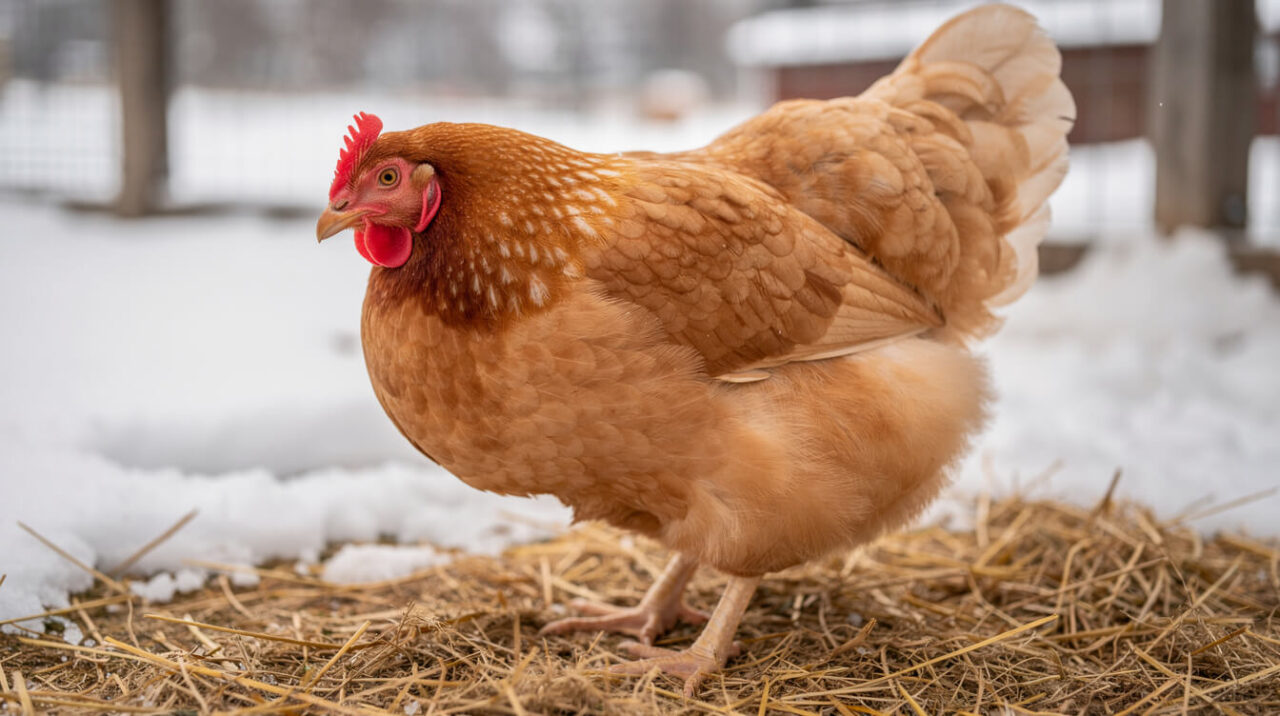
The honest answer is that there’s no single magic number. Where the sources agree is the comfort zone. UMN Extension puts the range where poultry hold their body temperature without extra effort at 60–75°F. The Merck Veterinary Manual calls 65–75°F ideal, and says birds change their behavior to stay within a 55–75°F thermoneutral zone. Below that range, a hen isn’t in danger. She’s working: fluffing her feathers, tucking a foot, and eating more to make heat. Her normal body temperature runs around 106°F.
How far below that she can safely go depends much more on wet, wind, and the individual bird than on the thermometer. Dr. Jacquie Jacob of the University of Kentucky, writing for the extension poultry network, notes that frostbite becomes a problem in “single digits and below,” mostly at night in a cold, poorly ventilated coop with damp bedding. She also writes that flocks “can do well at sub-zero temperatures” with deep litter and unfrozen water, “with no external heat required.”
Hens also adjust to the season. In a 1979 study of laying hens, an 18°F (10°C) drop in average outdoor temperature lowered the birds’ lower critical temperature, the point where they must start burning extra energy to stay warm, by about 15°F (8.5°C). A hen who has lived outdoors through fall is better prepared for January than one moved out of a warm garage.
You’ll see single cutoffs quoted online, such as “0°F” or “−20°F.” We couldn’t trace any of them to research or extension guidance. A more useful rule: a dry, acclimated, fully feathered hen roosting out of the wind can handle cold that would be dangerous for a wet, half-molted bantam in a draft. Treat these as act-now conditions at any temperature below freezing:
- Birds that are wet, or a coop with damp bedding
- Wind blowing across the roost
- Birds missing feathers (late molt, bullying, or ex-commercial hens)
- Water that has frozen solid
Signs a chicken is cold
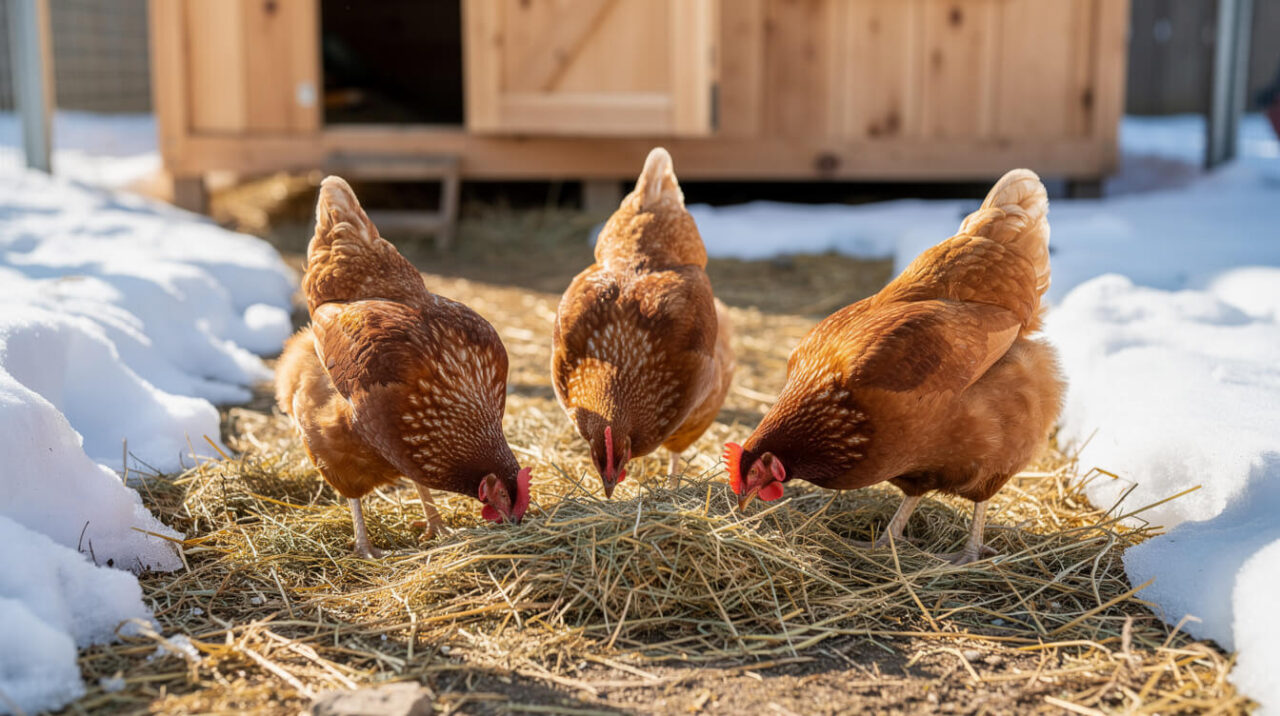
The University of Minnesota Extension lists the classic signs: huddling together, holding one foot up against the breast, and puffing the feathers out. Some of that is just normal winter behavior. A fluffed-up hen sunning herself on straw is doing exactly what she should. What you’re watching for is a change from her normal: a bird that stays hunched and fluffed all day, stops eating, stands apart from the flock, or seems sluggish when the others are scratching around.
A hen who looks miserable in the cold may be sick, not just chilly. If she’s off her food, breathing with her mouth open, or doesn’t perk up once she’s out of the wind, bring her somewhere sheltered and call a veterinarian who sees poultry.
The birds who need extra help
- Bantams and small, light breeds. A small body loses heat faster.
- Silkies and frizzles. Silkie feathers don’t lock together the way normal feathers do, and frizzled feathers curl outward. Both trap less warm air, and many keepers find Silkies soak through quickly in wet weather.
- Big single combs and long wattles. Leghorns and many roosters carry a lot of bare, blood-rich tissue that’s prone to frostbite.
- Late molters. A hen still growing feathers in December has gaps in her coat.
- Older, underweight, or sick birds, and young birds that have only just feathered out.
UMN names Plymouth Rocks, Wyandottes, Ameraucanas, and Orpingtons as breeds that overwinter well. In a mixed flock, watch who gets pushed off the feeder and the best roost spots; UMN suggests separating birds by size or dominance if the smaller ones can’t hold their own.
How to keep chickens warm in winter: dry beats hot
Ask experienced keepers what goes wrong in winter and you’ll hear the same answer: moisture. Chickens breathe out a surprising amount of water vapor overnight, and UMN notes their manure is about 70% water. Close a coop up tight to “keep the heat in” and that moisture has nowhere to go. It condenses on the walls and ceiling, the bedding gets damp, ammonia builds, and damp, cold air is what drives frostbite on combs and toes.
So the goal is ventilation without drafts:
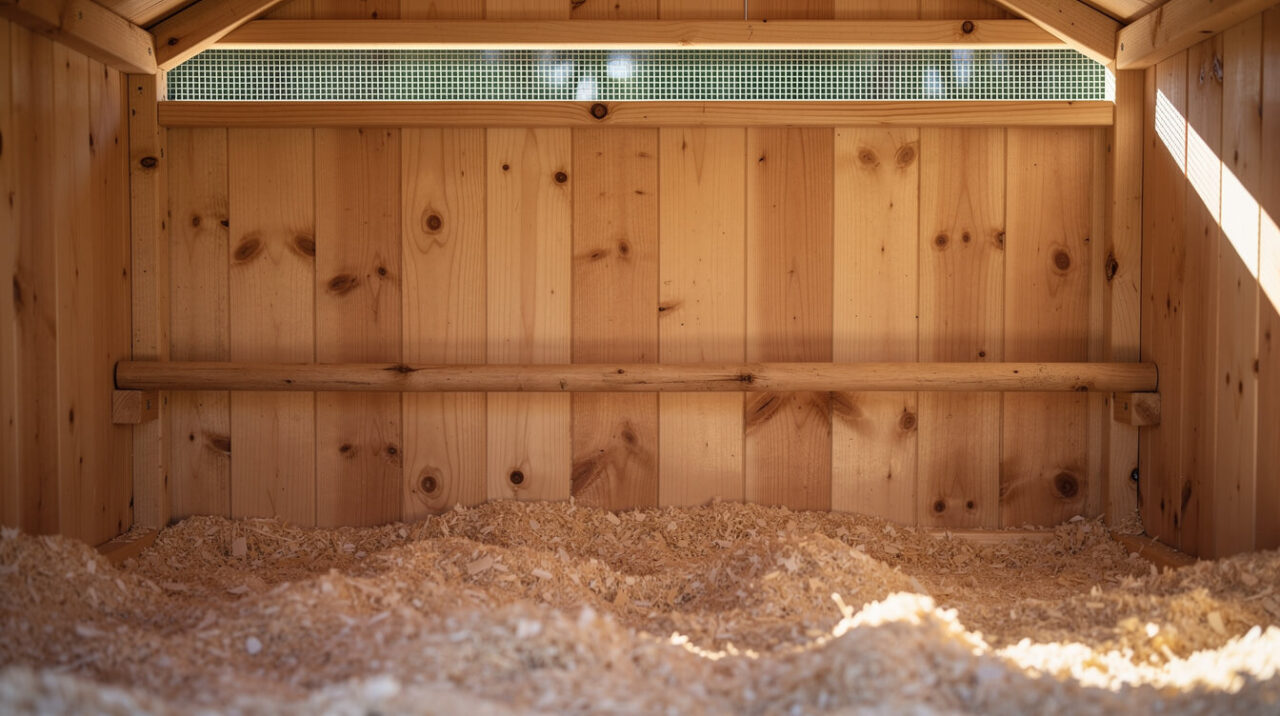
- Ventilation is air leaving the coop high up, through vents under the roof eaves or near the peak, well above the birds’ heads when they roost.
- A draft is wind blowing across the birds at roost height. That’s what you want to stop.
How much vent area do you need? You’ll see “1 square foot per 10 birds” repeated all over the internet, but we couldn’t trace it to an extension source. The University of Kentucky’s coop guide (AEN-161) gives a minimum of 6 square inches of inlet per 25 square feet of floor and recommends adjustable vents rather than fixed openings. Treat that as a floor, and let the coop tell you whether you need more.
Two quick checks tell you whether the balance is right. If you smell ammonia when you open the coop, or see condensation or frost on the inside walls, windows, or ceiling on a cold morning, moisture is building up. UMN’s fix for either is the same: more ventilation and less manure.
One thing not to do is drape the coop in plastic sheeting or seal every vent “just for the cold snap.” It feels protective, but it usually trades a dry, cold coop for a damp, cold one.
Winter coop setup: roosts, drafts, and bedding
Roosts that let them sit on their feet
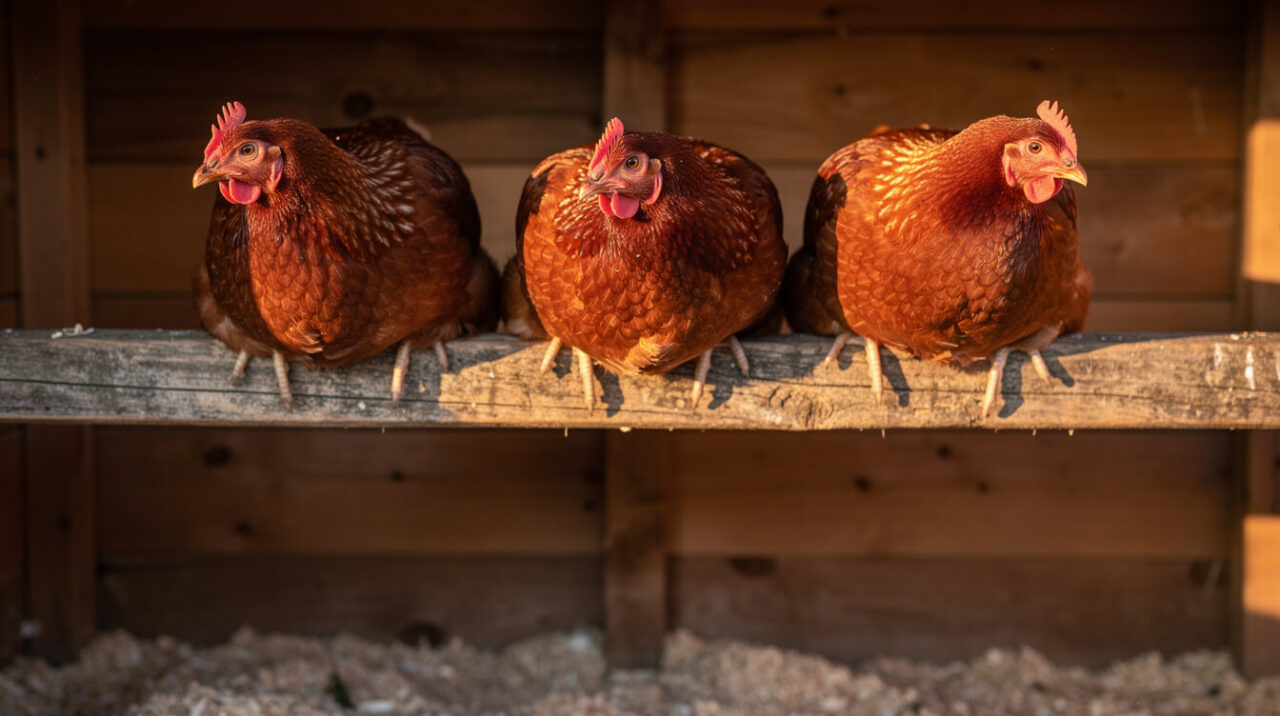
Chickens warm their own feet at night by settling down over them on the roost. That only works if the roost is wide and flat enough. UMN recommends roosts that start at least 12 inches off the floor with about 9 inches of space per bird, built from wood (2×4 or 2×2 boards) rather than metal or plastic, which hold the cold. On width, the advice splits. Many cold-climate keepers turn a 2×4 wide side up (about 3½ inches) for winter so a hen can cover her toes completely. UNH Extension prefers a roost about 1–2 inches wide so birds can wrap their toes around it, warning that one “too wide and flat” gives them nothing to grip. A 2×4 on edge (about 1½ inches) meets UNH’s range. Let your birds settle it: if they perch steadily and sink down over their feet at night, the roost is working.
Seal the drafts at bird level
Walk around the coop on a windy day, at the height your birds sleep. Gaps around doors, windows, and floorboards that blow air across the roost are worth sealing (that also keeps rodents out). Leave the high vents open. If you add insulation to an unfinished coop, UMN’s caution is to cover it so the birds can’t peck at it. Chickens will happily eat foam and fiberglass.
If the coop is much bigger than the flock, some cold-climate keepers close off part of it for winter with a plywood divider, which shrinks the air space without sealing the vents.
Bedding: deep and dry
A thick layer of dry straw or pine shavings insulates the floor and gives the birds somewhere other than frozen ground to stand. UMN describes two approaches: clean out soiled bedding routinely through the winter, or use deep bedding of 4 to 6 inches that you stir and top up through the season, then clean out completely in spring. UMN says the decomposing manure gives off “some natural heat.” We couldn’t find anyone who has measured how much, so think of deep litter as a dry, insulating floor, not a heater. It only works if it stays fairly dry. University of Vermont Extension’s rule of thumb: “Smelly coop? It’s time to add more bedding.”
Outside, many hens refuse to walk on snow. UMN suggests laying a little hay in the run to coax them out to scratch.
Should you heat a chicken coop? Where the experts disagree
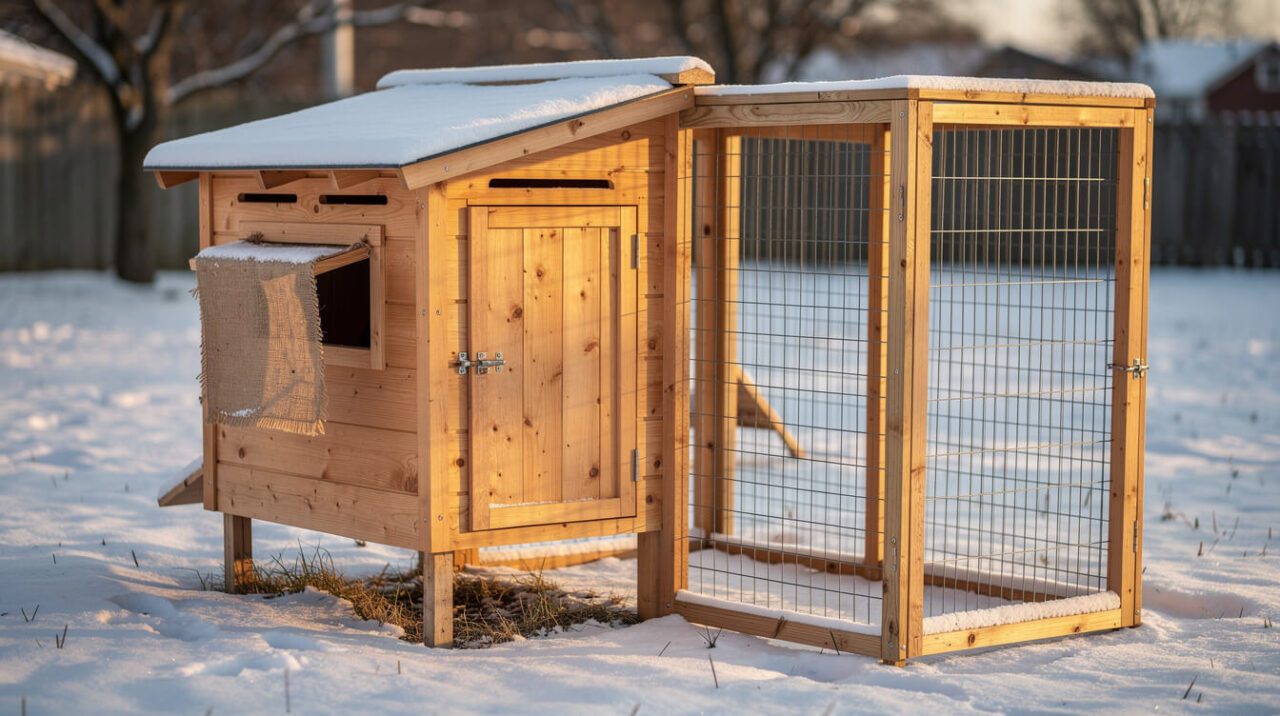
This is the most argued-about question in winter chicken keeping, and you deserve the honest version: credible sources disagree.
The case for some heat
UMN Extension advises supplemental heat when coop temperatures fall below 35°F, placed at the height of the nest boxes or lower roost, with a thermometer at each height so you know what the birds actually feel. University of Wisconsin–Madison Extension points out that a large flock warms a coop with its own body heat, but “a smaller flock is not able to do this,” and without some heat it expects lower egg production, higher feed use, and more frostbite.
The case against
University of New Hampshire Extension (2024) takes the opposite line: “In most circumstances, we advise against adding supplemental heat to your chicken coop. The risk of a heat source causing a fire is too high with combustible bedding materials present and given the tendency of chickens to knock things over.” UNH makes an exception for smaller breeds such as bantams. Kentucky’s AEN-161 agrees that a properly built house shouldn’t need heat, but notes it depends on the house, the breed, nutrition, bedding, and drafts.
What everyone agrees on: the fire risk is real
Rutgers’ farm fire-safety fact sheet states that heating equipment is the leading cause of barn fires, “with heat lamps as the leading heating equipment involved.” Jacob writes that “each year, chicken coops (and some attached houses) have been lost to fires caused by heat lamps.” A coop full of dry wood, bedding, and dust, with birds flapping around, is a hard place to run a hot bulb safely.
How we’d decide
For a healthy, acclimated flock of standard-size birds in a dry, draft-free coop, start without heat, and put your effort into ventilation, roosts, bedding, and water. Consider gentle heat when you have:
- A very small flock in a large coop
- Bantams, Silkies, or frizzles
- Molting or feather-bare birds (the UK welfare code singles out hens with feather loss as needing protection from drafts)
- Old, recovering, or underweight birds
- A long stretch well below zero
The British Hen Welfare Trust’s phrasing is the right goal: don’t make the coop warm, “just lessen the chill.”
If you do add heat
- Choose radiant panels or heaters made for coops and livestock, ideally with a thermostat. UMN notes that radiant heaters warm the birds rather than the air, and says to pick a product “approved for use around chickens and livestock.”
- If you use a heat lamp anyway, never hang it by its cord. Use a caged lamp, and secure it so it can’t fall into the bedding even if the clamp fails.
- No extension cords as permanent coop power. Have an electrician run power to the coop, and keep every cord away from birds, water, and litter.
- Leave the birds room to move away from the heat source, and keep heat off at least part of the coop.
- We’d keep anything with an open flame or a fuel tank out of a closed coop entirely.
You’ll also read that heated hens “go into shock” if the power fails. We couldn’t find an extension or research source that tested this. The acclimation research above suggests a gentler version that’s still useful: if you heat, heat just enough to take the edge off, so your birds stay adjusted to the cold if the power goes out.
The weekly care guide
Get it right for your animal, every week
One email a week: new care guides, species deep-dives, and the safety answers keepers search for, written by our specialists. No spam. Unsubscribe anytime.
Feeding and watering chickens in winter
Feed: more of the same, not a different diet
Staying warm costs calories, and a flock eats more in the cold. UMN says feed intake can rise by up to 25% in cold weather, so top feeders up more often and keep extra feed on hand. Keep feeding the same complete layer ration. It’s balanced for feathers and eggs, and treats should never replace it.
Grit matters more in winter, too. When snow covers the ground, hens can’t pick up the small stones they use to grind whole grains, so UMN recommends offering poultry grit free-choice. (That’s a chicken thing, by the way. If you also keep a budgie, pet birds that hull their seeds don’t need grit.)
The “corn at bedtime” tip, and what it really does
A handful of scratch grain in the late afternoon is classic winter advice. UMN endorses it and says digestion of scratch “also produces heat.” That’s true of any meal. But the popular version, that corn is a special “furnace” food because it’s carbohydrate, gets the nutrition backwards. In poultry research, protein has a higher caloric increment (the heat released by digesting and processing food) than carbohydrates and fat, as a 2022 review in Poultry Science puts it.
What a pre-roost snack really does is add calories to burn on a long night, and that’s fine in small amounts. UMN’s limit is no more than a handful per 10 birds. Jacob at Kentucky says to offer it after the birds have eaten their complete feed, and only as much as they finish in 15 to 20 minutes, because scratch “dilute[s] the nutrition levels” of the balanced ration. The real winter fuel is full, all-day access to that complete feed. In one calorimetry study of laying hens, energy intake rose about 1% for every 1°C drop in temperature between roughly 52°F and 70°F.

For the keeper on the 6 a.m. water run
The Bearded Dragon Crown Sunglasses King T-Shirt is for the keeper who reads extension bulletins for fun and checks combs at lockup, feathers or scales. A soft everyday tee for the household’s resident animal nerd.
Water: the harder winter job
Water is the winter task that catches people out. UMN’s point is blunt: without water, chickens stop eating, and a hen that stops eating can’t fuel her own heat. Plan for water that stays liquid:
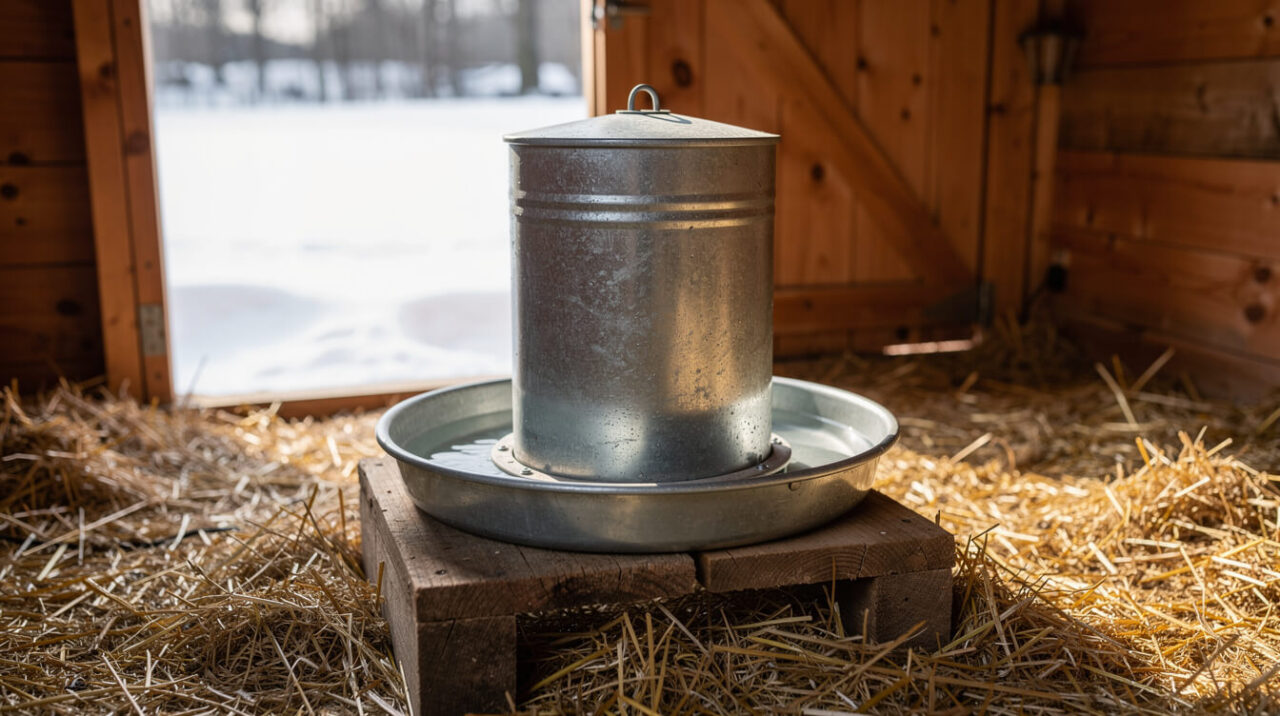
- A heated base under a metal fount, or a plastic heated waterer made for poultry.
- Set it on a block or stand so bedding doesn’t get kicked in and the heating element stays away from the litter.
- Keep a second waterer so you can swap a frozen one for a fresh one, and thaw the first indoors.
- No power at the coop? Bring founts in at night and refill them with lukewarm (not hot) water in the morning, then check again at midday.
Treat the electrical side with real care. UMN says to keep cords away from birds, water, and litter, to use extension cords only as a short-term fix rather than a permanent power line to the coop, and to have an electrician run power if you need it.
And if you’re the one doing 6 a.m. water swaps by headlamp, you’re exactly who our Bearded Dragon Crown Sunglasses King T-Shirt was made for: the household’s resident animal nerd, whether the animals in question have scales or feathers.
The glycerin trick doesn’t add up
One popular tip says a few drops of food-grade glycerin will stop a drinker from freezing. The chemistry says otherwise. In the Glycerine Producers’ Association’s reference tables, a solution that is 10% glycerin by weight still freezes at about 28°F, and you need about 20% glycerin to hold out to roughly 22°F. For a 1.5-gallon (6-liter) drinker, 10% is about 600 grams of glycerin, well over a pound. A few drops, a fraction of a gram, lowers the freezing point by about a thousandth of a degree. And a drinker that’s one-tenth to one-fifth glycerin isn’t really water anymore. Skip it, and put the effort into a heated base or a twice-daily swap.
Frostbite on combs, wattles, and feet
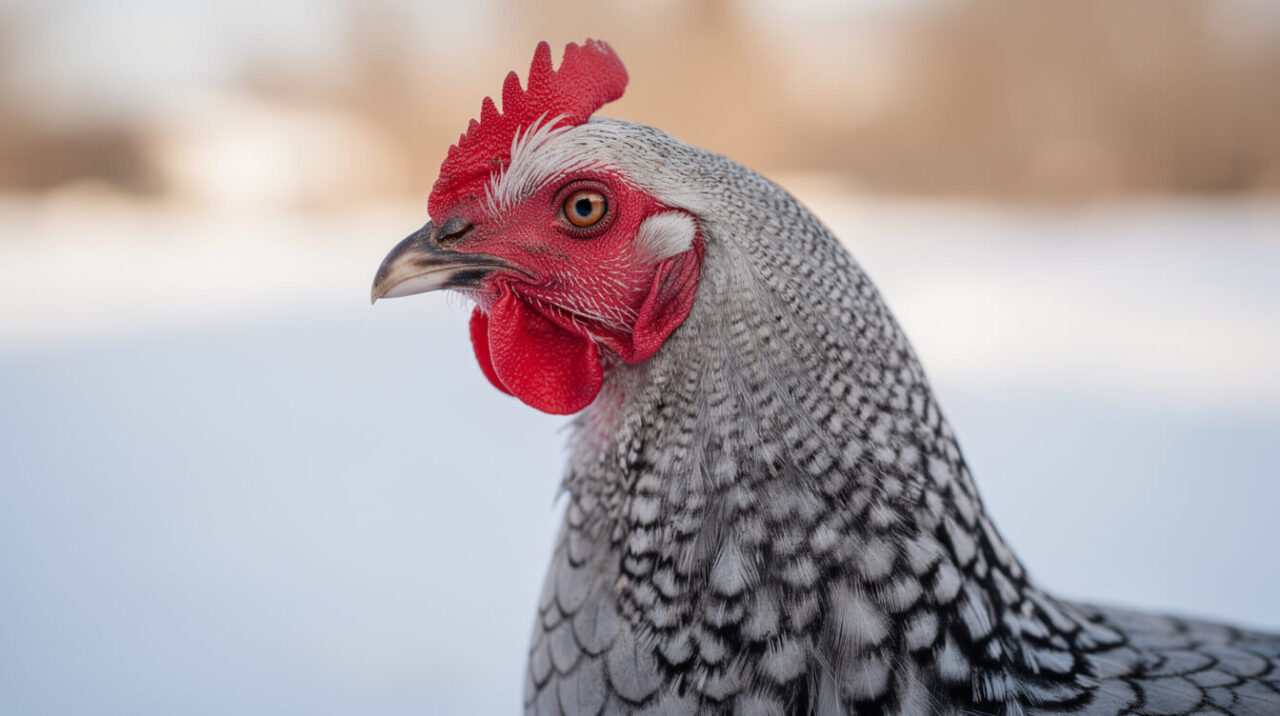
Frostbite happens when the fluid in tissue freezes. Jacob notes it’s most common in roosters and in hens with large combs, like Leghorns. Small pea and strawberry combs are “much less” affected. It’s most likely at night in a cold, poorly ventilated coop with damp bedding, which is why the ventilation section above does more for combs than any product you can buy.
What it looks like
UMN describes affected combs, wattles, and toes turning black or gray and feeling brittle. Look for tips that go pale and then darken over a day or two, swollen toes, limping, or a bird sitting more than usual. Check combs and feet at the evening lockup after any very cold night.
Prevention
- Dry air and dry bedding come first.
- Wooden roosts that hens can settle down over, so their toes stay covered.
- Make sure birds can’t stand or wade in water. UMN says a heated dog dish used as a waterer should be partly covered so birds can’t step into it.
- For large-combed birds on bitter nights, many keepers add petroleum jelly. Read the next section first.
Petroleum jelly: another honest disagreement
UMN, UNH, and Jacob all say a coating of petroleum jelly on combs and wattles can help. Jacob’s version is the most measured: “For mild freezing, petroleum jelly helps, but coop management is the real key.” UMN adds: “Petroleum jelly does not treat frostbite.” Many keepers push back, arguing it holds moisture against the skin.
The only controlled evidence we found is in people, not chickens. In Finnish studies of young conscripts, emollients gave “minimal” insulation in lab tests, and using them in the cold was linked to more facial frostbite (an odds ratio of 4.5 for the ears). Nobody has tested whether that carries over to a comb. Our take: a thin layer on a big-combed rooster on a bitter night is a reasonable extra, but it never substitutes for a dry, well-ventilated coop.
If you find frostbite
Frostbite needs a veterinarian’s eyes, especially on feet or if the area swells, oozes, or smells. While you arrange that, here’s what extension guidance says not to do:
- Don’t use direct heat such as a hair dryer or heat lamp, and don’t rub or massage the area. Warm the bird gradually in a sheltered spot.
- Don’t trim blackened tissue. Jacob explains that it “actually protect[s] the remaining comb.”
- Don’t let it thaw and refreeze. Keep the bird out of the cold while it heals.
- Never give human pain medication. Jacob warns that “some are lethal to chickens.”
- Separate the bird if flockmates peck at the injury, as UMN advises.
Healing can take four to six weeks.
How to keep chickens warm in winter: your questions answered
Do chickens stop laying in winter?
Many do, or slow down a lot. Egg laying is driven by day length, and short winter days tell many hens to take a break, often right after the fall molt. You can add light to keep hens laying. UMN suggests about 14 hours a day, added in the morning before sunrise so hens can find the roost at dusk. Penn State Extension adds three cautions: change the schedule by no more than an hour a week, use warm bulbs (never heat lamps), and keep a real dark period. “They need sleep, too!” Merck notes that continuous lighting tends to make birds “more stressed and irritable.” A winter break is natural, and letting your hens take one is a perfectly good choice.
Can chickens stay outside in the snow?
Yes, if they want to. Make sure they can always get back into a dry coop, clear a patch near the door, and keep them out of standing water and slush. Wet feet in freezing temperatures are a frostbite risk.
Should I bring my chickens inside when it’s really cold?
For a healthy flock, usually not. They’re better off in a dry, ventilated coop they know. Moving birds in and out of a warm house repeatedly also keeps them from acclimating. A single bird that’s sick, injured, recovering from frostbite, or missing feathers is different. A quiet crate in a cool garage or porch, out of the wind, is often the right call while you talk to your vet.
Final thoughts
When it comes to how to keep chickens warm in winter, the checklist is shorter than the worry: dry bedding, high ventilation, no drafts at roost height, wide wooden roosts, full feeders, liquid water, and a daily look at combs, toes, and behavior. Get those right and most flocks come through even hard winters in good shape. Our guides to how cold is too cold for dogs and how cold is too cold for cats cover the rest of the household, and if your hens deserve a treat on a mild day, here’s our guide to whether chickens can eat watermelon.
Before you go
Keep learning your animal
We publish a new guide every day. The best of them land in one short weekly email, so you never miss the one about your species.
Emily Chen is a passionate avian specialist with over a decade of experience in nurturing and training birds of all feathers. From the melodious canaries to the intelligent parrots, Emily’s expertise spans a wide range of avian care, including diet, habitat setup, and behavioral training.