How to Take Care of a Leopard Gecko: The Complete Care Guide
If you’re searching for how to take care of a leopard gecko, you’re already doing the most important thing a new keeper can do: reading up before you bring one home. Good news — leopard geckos are one of the most beginner-friendly reptiles you can keep, but “beginner-friendly” doesn’t mean “low-effort.” Get the setup right, and you’ll have a calm, curious companion for 15 to 20 years. Get it wrong, and small mistakes in heat, substrate, or diet compound into real health problems.
This guide walks through everything: the basics before you buy, enclosure setup, heat and lighting, feeding, handling and hygiene, and the health signs worth watching for. Let’s get your leo’s care right from day one.
How to take care of a leopard gecko: the basics before you buy
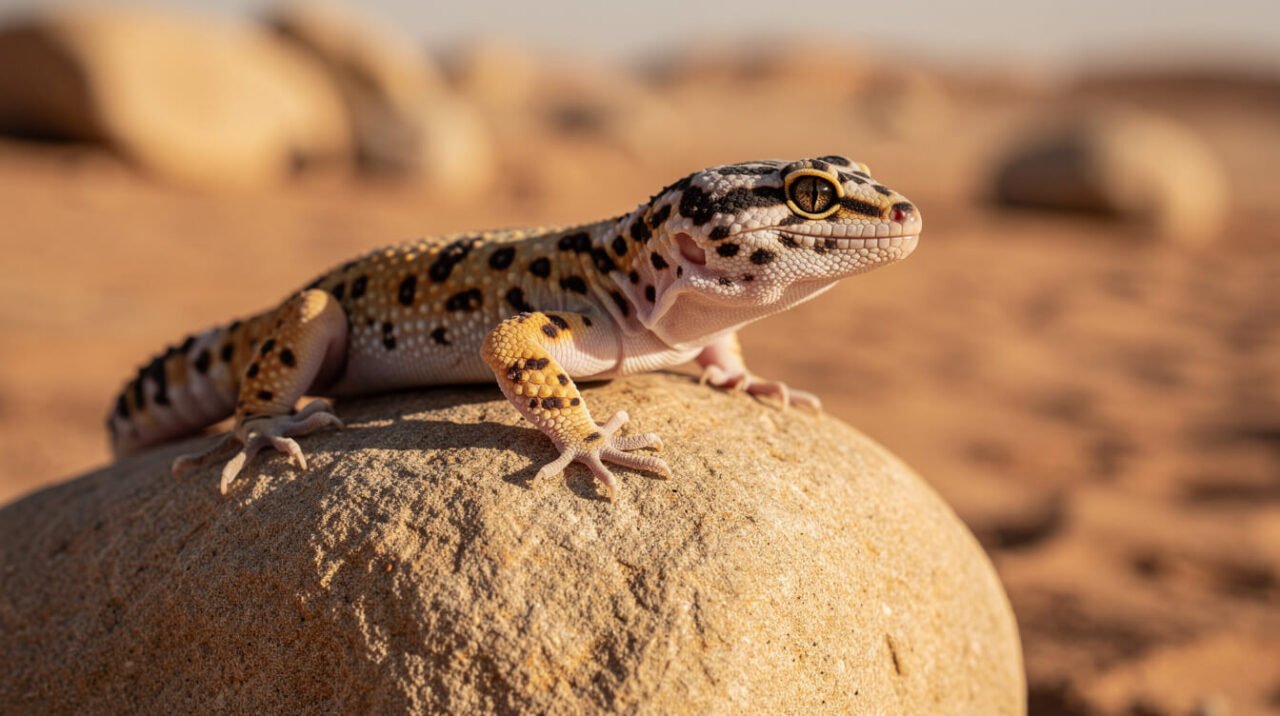
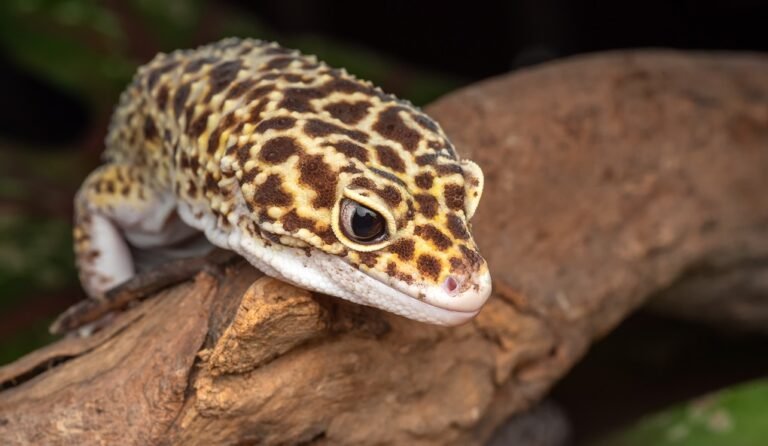
Leopard geckos (Eublepharis macularius) are native to the rocky, semi-arid regions of Afghanistan, Iran, Pakistan, and northwest India. That origin story explains almost everything about how to set them up: they come from a landscape with warm days, cool nights, and rocky hides — not a rainforest, and not a bone-dry sandpit either.
A few things worth knowing before day one:
- Lifespan: 15–20 years is typical with good care, sometimes longer. This is a genuine long-term commitment, not an impulse buy.
- Size: Adults reach roughly 8–10 inches nose to tail.
- Activity pattern: Leos are crepuscular — most active at dawn and dusk, and tucked into a hide during the heat of the day. Don’t mistake daytime hiding for illness; it’s normal behavior.
- Diet type: Strict insectivores. They won’t eat vegetables or fruit, so don’t offer them.
- Tail biology: Leos store fat reserves in their tails and can drop the tail if grabbed or badly stressed (a defense called autotomy). It regrows, but the process is taxing on the animal — never pick up a leopard gecko by the tail.
- Unique anatomy: Unlike most geckos, leos have eyelids and no sticky toe pads, so they can’t climb glass the way a crested gecko can.
If you’re curious how this compares to other geckos people keep as pets, our guide to crested gecko morphs is a good look at a very different care profile — arboreal, climbing, and humidity-loving where leos are ground-dwelling and dry.
What to look for when choosing a gecko
Whether you’re buying from a breeder or a pet store, a healthy leopard gecko should have clear, bright eyes, a plump (not pinched) tail — the tail is a fat-storage organ, so a thin or shriveled one is a red flag for poor body condition — and skin free of retained shed, sores, or discoloration. Watch it move: it should walk with its belly off the ground and put weight evenly on all four legs. A gecko that drags its hindquarters or seems lethargic during its active hours is worth a pass, however tempting.
The honest cost picture
The gecko itself is often the cheapest part. Between the enclosure, heating equipment, thermometer/hygrometer, hides, substrate, and a starter supply of feeder insects and supplements, expect to spend more on setup than on the animal. That’s not a reason to skip corners on heating or substrate to save money — those are exactly the corners that lead to costly vet visits later. Budget for the full setup before you bring a gecko home, not after.
Setting up the enclosure
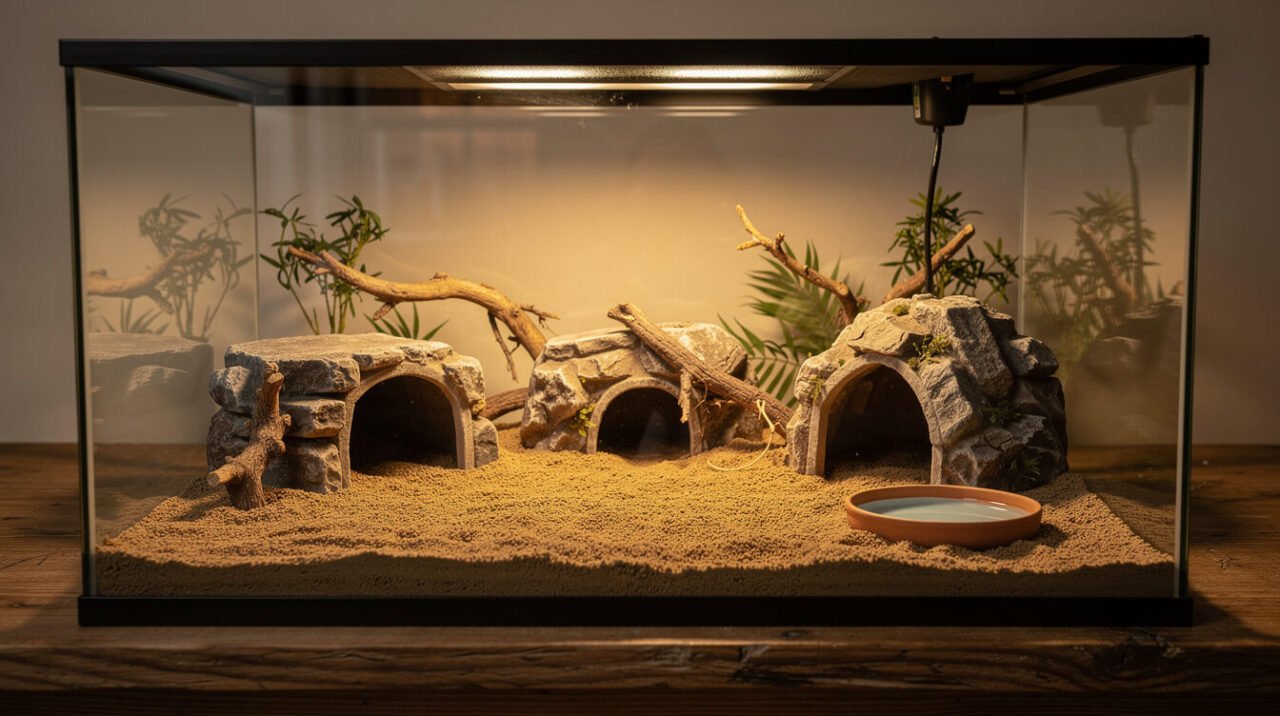
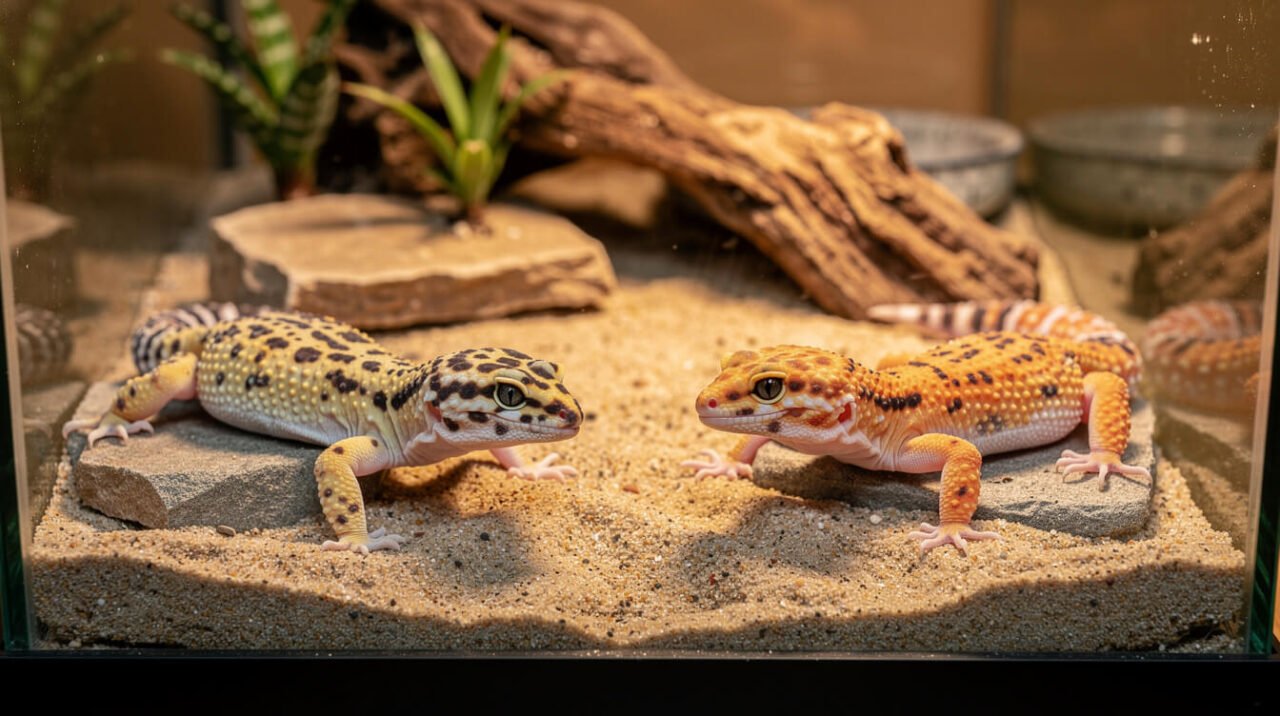
A 20-gallon long tank is a solid minimum for one adult leopard gecko, with more space always welcome — bigger is never a welfare problem, cramped is. The enclosure should be well-ventilated with a secure screen lid, since leos are surprisingly determined escape artists.
Substrate
This is the single most common setup mistake. Loose sand looks natural in photos, but it’s a real impaction risk, especially for juveniles, if swallowed along with food. Reptile carpet, paper towels, or textured tile are the safer, vet-recommended choices. If you do use a calcium-based sand with an adult gecko, feed in a separate container so there’s no risk of ingesting substrate along with prey.
Hides — you need at least three
Leos need somewhere to retreat on both the warm and cool ends of the tank, plus a dedicated humid hide (a enclosed box with damp sphagnum moss) on the warm side to support healthy shedding. Skipping the humid hide is a common cause of shedding problems, which we’ll cover below.
Water
A shallow, stable water dish should always be available — shallow enough that a hatchling can climb out easily. Keep it away from the humid hide so the substrate elsewhere in the tank stays dry.
Enrichment: more than a bare box
A leopard gecko enclosure isn’t just a heated container — it’s the animal’s entire world, and a bit of thought here pays off in a visibly more active, curious gecko. Add climbing-safe rocks and sturdy branches (leos aren’t strong climbers, but they do explore), a mix of hide styles so your gecko can choose its preferred cover, and non-toxic live or artificial plants for visual security. Rearranging décor occasionally gives an otherwise static enclosure some novelty — reptiles do respond to environmental change, even if it’s subtle compared to a dog or parrot.
For the full breakdown of tank sizing, exact substrate depth, and a cost comparison of setups, our dedicated leopard gecko tank setup guide goes deeper than we have room for here.
Heat and lighting: getting the gradient right
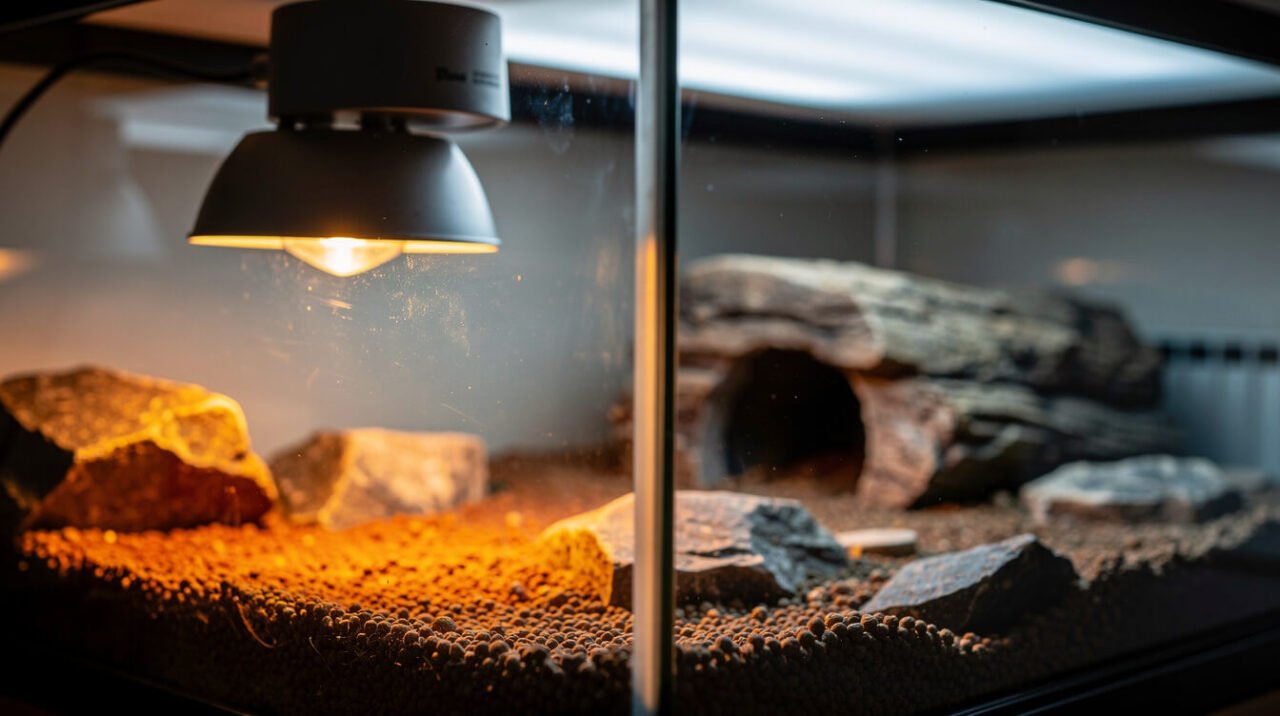
Reptiles can’t regulate their own body temperature the way mammals do — they rely entirely on the environment, which means the temperature gradient in the tank is the habitat. Heat one end with an under-tank heater or an overhead ceramic/basking bulb, and leave the other end cooler, so your gecko can move between the two to self-regulate.
As a general starting point that vets commonly cite: a warm side in the low-to-mid 80s°F, a cooler side in the low-to-mid 70s°F, and a slightly warmer humid hide/basking spot in the high 80s°F. Treat these as a starting range, not gospel — always verify both ends of your specific enclosure with a digital thermometer or infrared thermometer, since tank size, room temperature, and heater wattage all shift the real numbers. If you’re ever unsure your setup is holding a safe gradient, a reptile-experienced vet or your bulb manufacturer’s guidance is a better final word than any single article, this one included.
Never use a heat rock — they run dangerously hot in spots and are a well-documented cause of burns.
UVB lighting isn’t strictly required for leopard geckos the way it is for many diurnal lizards, but it’s increasingly recommended by reptile vets: it supports natural vitamin D3 synthesis and calcium metabolism, and low-output UVB (look for bulbs designed for nocturnal/crepuscular species) is considered a safe, low-risk addition. If you use one, run it on a 12-hour timer and replace it on the schedule the manufacturer lists — UVB output fades well before the bulb “looks” dead.
A thermostat is not optional
Any heat source strong enough to warm one end of the tank is also strong enough to burn a gecko or overheat the enclosure if left unregulated. A basic reptile thermostat, wired between the heater and the outlet, keeps the warm side inside a safe range automatically instead of relying on you to catch a heat wave or an equipment glitch. Pair it with a digital thermometer with a probe on each end of the tank so you’re reading the actual surface temperature where your gecko rests, not just the ambient room air.
Ambient room temperature matters too — if the room the enclosure lives in regularly drops below the mid-60s°F overnight, the cool side of the tank may end up colder than is comfortable even with a working heat source on the warm end. Keepers in colder climates sometimes need a secondary low-wattage heat source to keep the whole tank, not just the basking spot, within a livable range.
What to feed a leopard gecko
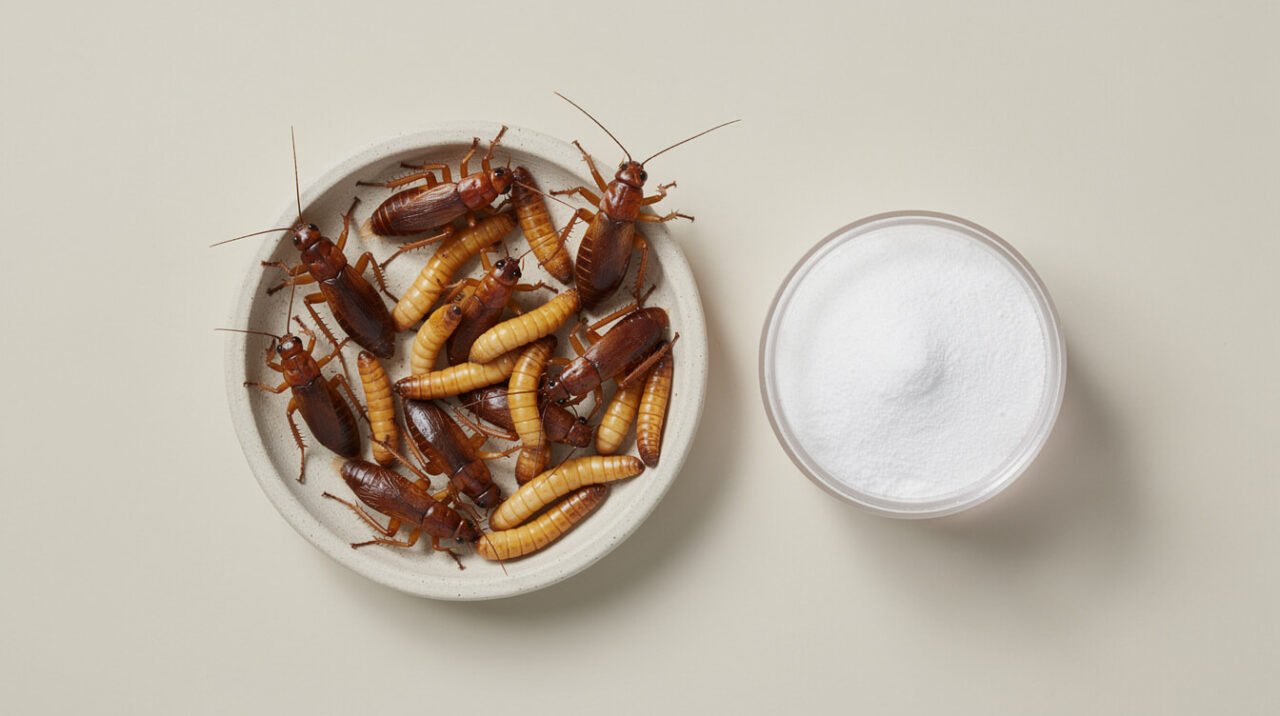
Leopard geckos are obligate insectivores — crickets, mealworms, and dubia roaches form the staple diet, with occasional waxworms or superworms as a treat (they’re fattier, so keep those occasional). A simple rule of thumb: no feeder insect should be bigger than the space between your gecko’s eyes.
Gut-loading and supplements
Feeder insects are only as nutritious as what they’ve eaten — “gut-loading” means feeding your crickets or worms a nutrient-rich diet for a day before offering them to your gecko. Dust feeder insects with a calcium supplement two to three times a week, and a reptile multivitamin about once a week. If your setup includes a UVB bulb, use a calcium supplement without added vitamin D3, since the gecko is already synthesizing it — too much D3 from a supplement on top of UVB can throw off calcium balance.
Feeding schedule
Juveniles are growing fast and benefit from daily feeding; adults typically do well on three to four feedings a week. Remove any uneaten crickets after 10–15 minutes so they don’t nibble on your sleeping gecko overnight — live mealworms are less of a concern and can be left longer.
What not to feed
Never offer wild-caught insects — they can carry pesticides or parasites. Skip anything that’s been in contact with insecticides, herbicides, or mold, and never feed dead or spoiled feeder insects. Leopard geckos are not equipped to digest fruits or vegetables, so there’s no need (and no benefit) to offering produce, however many other reptile species eat one. A shallow, always-available water dish handles hydration; misting isn’t necessary for a species from a dry, rocky climate the way it is for a tropical species.
Handling, hygiene, and daily care
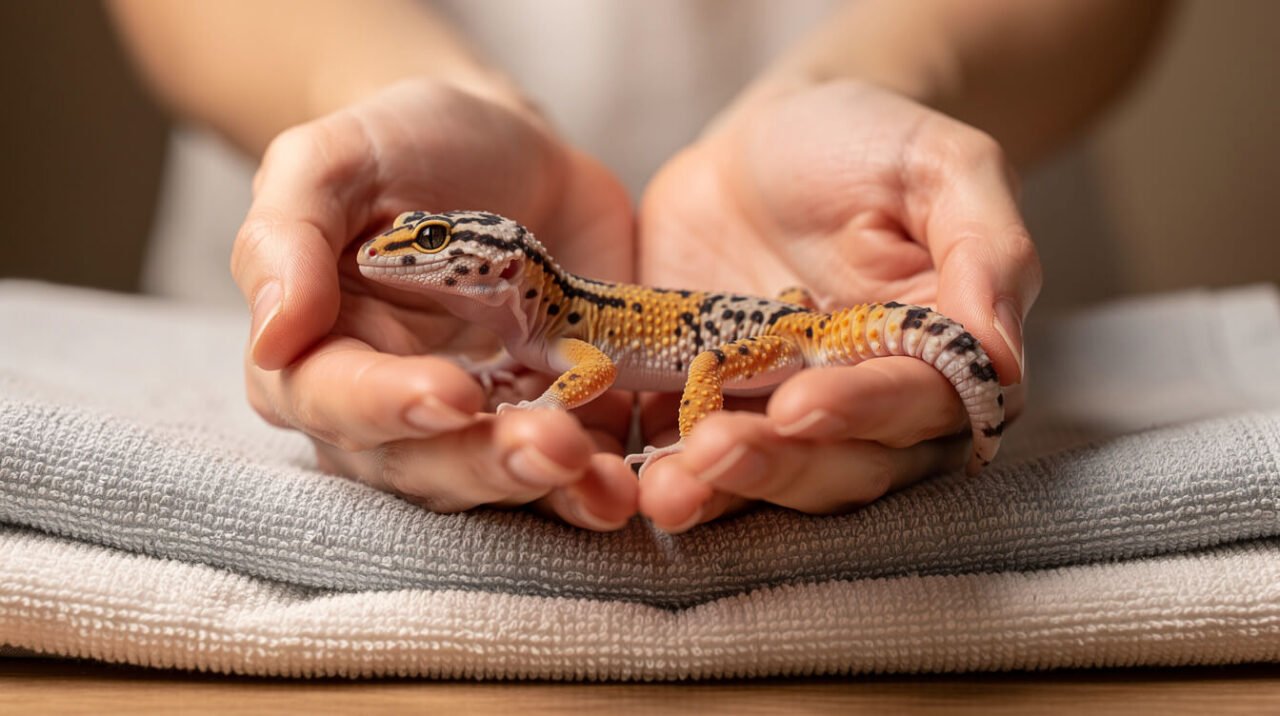
Leopard geckos are generally tolerant of gentle handling once settled, but they’re not a species that wants to be held constantly. Let a new gecko acclimate to its enclosure for a week or two before attempting to handle it, and keep early sessions short. Always support the body fully — and never, ever grab or hold by the tail.
One hygiene note every keeper should take seriously: like most reptiles, leopard geckos can carry salmonella without showing any signs of illness themselves. Wash your hands before and after handling your gecko or anything in its enclosure, and if there are young children, elderly people, or anyone immunocompromised in the household, take the extra hand-washing step seriously rather than skipping it.
Cleaning routine: spot-clean waste daily, and do a full substrate and décor clean roughly every two weeks using a reptile-safe disinfectant — rinse thoroughly and let everything dry before your gecko goes back in.
Reading stress signals
A leopard gecko that’s uncomfortable during handling will often tail-wave (a quick, twitchy tail movement), chirp or bark, or try to bolt toward a hide. None of these are aggressive per se, but they’re a clear signal to end the session and let your gecko settle. Over time, most well-handled geckos become noticeably calmer, but pushing through stress signals to get “more handling time” works against building that trust, not toward it.
Shedding, brumation, and health signs to watch
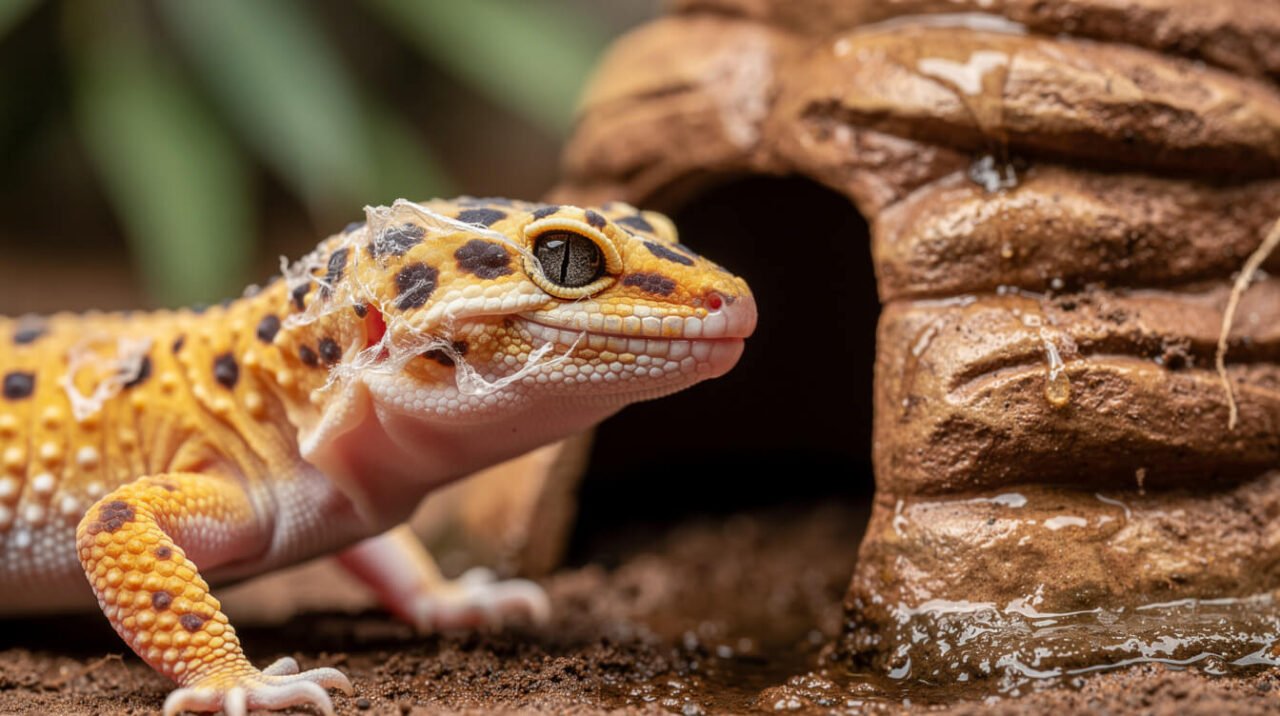
Healthy leos shed every few weeks, retreating to the humid hide to soften the old skin before pulling it off (and usually eating it — a totally normal way to recover lost nutrients). If you notice dry, stuck patches around the toes, tail tip, or eyes — a condition called dysecdysis — that’s usually a sign the humid hide isn’t humid enough. Don’t peel stuck shed off yourself; increase humidity and let your gecko finish the job, or check with a reptile vet if it’s not resolving, since retained shed on the toes can cut off circulation.
Come cooler months, some geckos slow down, eat less, and sleep more in a natural process called brumation — similar to hibernation. A gecko that’s brumating shouldn’t be losing noticeable weight; if it is, that’s worth a vet visit rather than an assumption.
A few signs that call for a real veterinarian, not a forum post:
- Weight loss, especially with reduced appetite that isn’t explained by brumation
- Swollen or wobbly limbs, or a soft jaw — possible signs of metabolic bone disease, most often linked to inadequate calcium or UVB
- A visibly swollen belly in a female (which can mean egg-binding — a real emergency if she can’t pass the eggs)
- Persistent retained shed, especially around the eyes
- Any lesion, discoloration, or open sore anywhere on the body
We’re not vets, and we won’t guess at a diagnosis over the internet — any of the signs above deserve a call to a reptile-experienced veterinarian. For a wider look at reptile health fundamentals across species, our complete reptile care guide covers the same watch-and-wait principles that apply well beyond leos.
Frequently asked questions about how to take care of a leopard gecko
Are leopard geckos good for beginners?
Yes — they’re one of the most commonly recommended starter reptiles, thanks to a manageable size, simple insectivore diet, and relatively low humidity needs compared to many other reptiles. “Beginner-friendly” still means real daily and weekly responsibilities, though — not “no effort.”
Do leopard geckos need UVB lighting?
Not strictly, but most reptile vets now recommend a low-output UVB bulb as good practice for long-term bone health. If you skip it, calcium and D3 supplementation becomes more important, not less.
Can two leopard geckos live together?
Females of similar size can sometimes cohabitate, but males are territorial and will fight if housed together. Mixing species in one enclosure is never a good idea. If you’re considering cohabitation, plan for a larger enclosure and be ready to separate geckos immediately if you see stress or aggression.
How often do leopard geckos shed?
Roughly every four to eight weeks for adults, more often for fast-growing juveniles.
Do leopard geckos bite?
They can, but it’s uncommon with a calm, well-acclimated gecko and gentle handling. A bite is usually a startle response rather than aggression, and it rarely breaks skin.
What’s the difference between a leopard gecko and an albino leopard gecko?
Albino leos are a color morph of the same species, bred for reduced pigmentation — the care requirements are identical. If you’re drawn to that striking pale look, our albino leopard gecko care guide covers the morph-specific details.
How much does it cost to set up a leopard gecko enclosure?
Costs vary a lot by region and how much you buy new versus secondhand, but plan for the enclosure, heating and thermostat, thermometer/hygrometer, hides, substrate, and initial feeder-insect supplies all being one-time or ongoing costs on top of the animal itself. Cutting the budget on heating equipment specifically is the false economy that leads to the most health problems down the line.
Can a leopard gecko be left alone for a weekend?
Generally yes, for a short trip, as long as the heating and lighting are on reliable timers and thermostats and there’s fresh water available. For anything longer than a few days, it’s worth having someone check in, refresh water, and confirm the heat source is still working correctly.
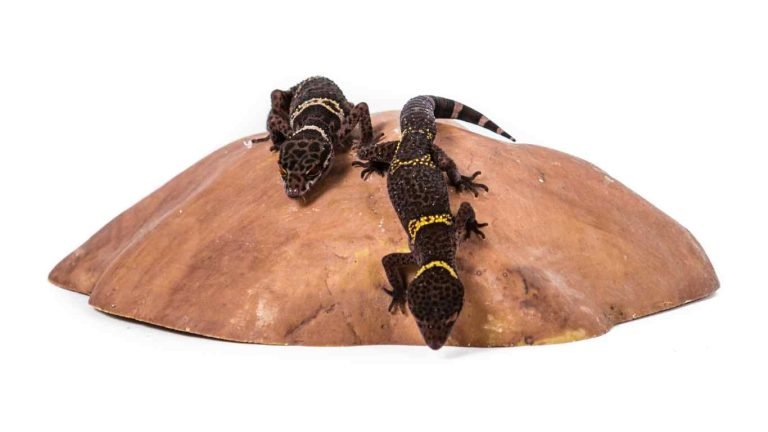
Curious how leos stack up lifespan-wise against other reptile pets? Our leopard gecko lifespan guide breaks down what actually shapes a long, healthy life for this species — and if you’re browsing other small, low-maintenance reptiles, our Chinese cave gecko profile is worth a look too.
Learning how to take care of a leopard gecko really comes down to a handful of fundamentals done consistently: the right gradient, the right substrate, a genuinely balanced diet, and paying attention when something’s off. Get those right, and you’ve got a low-drama, long-lived companion that rewards a bit of upfront research with two decades of company. That’s a pretty good trade.
Dr. Zoe Santos is a distinguished herpetologist and a revered expert in the care, conservation, and study of reptiles and amphibians. With a PhD in herpetology and over 18 years of field and academic experience, Zoe brings a depth of knowledge to her readers that is both rare and invaluable.