Are Poinsettias Poisonous to Dogs? What Toxic Really Means for This Holiday Plant
Are poinsettias poisonous to dogs? Mildly, yes, and much less than their reputation suggests. The milky sap irritates a dog’s mouth and stomach, so a dog who chews a leaf may drool, lick their lips, or vomit once or twice. Serious poisoning is rare. The ASPCA does list the poinsettia as toxic to dogs, but the same entry calls it “generally over-rated in toxicity.” The Pet Poison Helpline rates it mild for dogs.
That gap between “toxic” and “rarely serious” is why so many holiday searches end in confusion. Below, I’ll walk through what the sap actually does, where the “deadly poinsettia” story came from (with the numbers behind it), exactly what to do if your dog has already taken a bite, and which holiday plants are worth more of your attention. If you’re reading this with a half-chewed leaf on the floor, jump to what to do right now.
Are poinsettias poisonous to dogs? What “toxic” means here
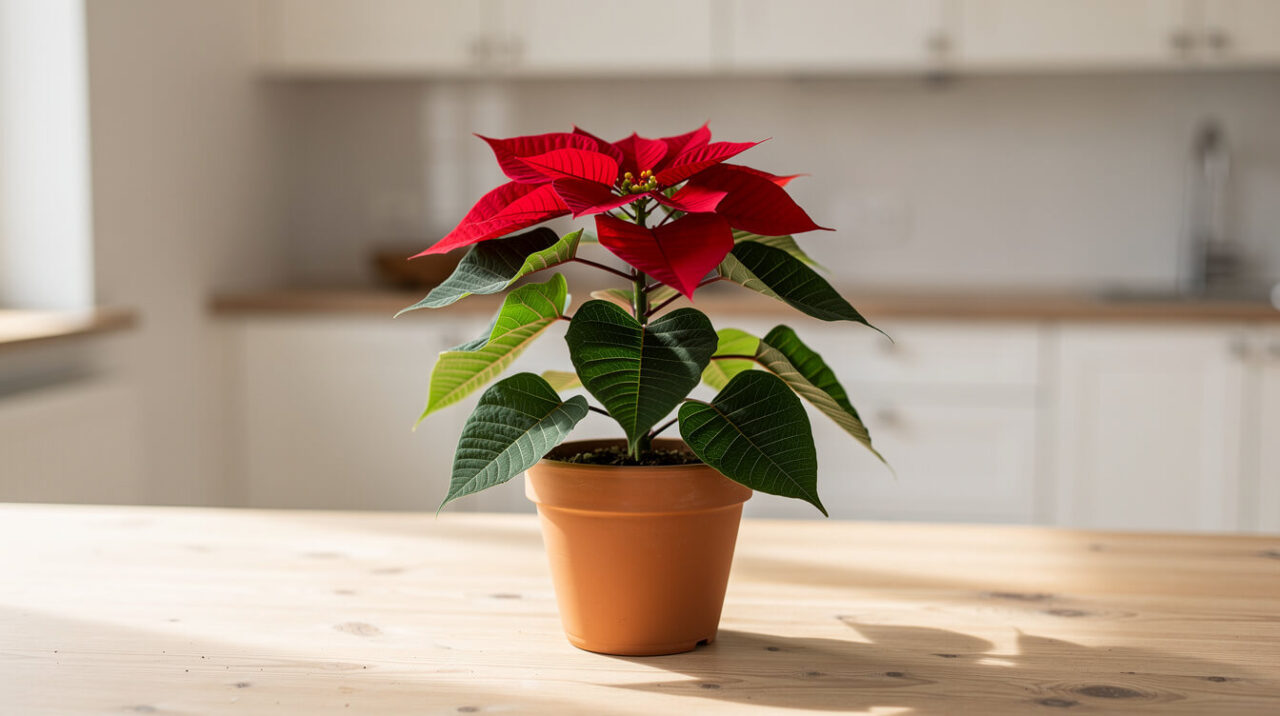
The confusion starts with the word itself. When the ASPCA Animal Poison Control Center labels a plant “toxic to dogs,” it means the plant can cause clinical signs. It does not mean the plant is dangerous in the amount a dog is likely to eat. Those lists put a plant that causes a sore mouth in the same column as one that can shut down a cat’s kidneys. The detail sits in the clinical-signs line, and for the poinsettia that line reads: “Irritating to the mouth and stomach, sometimes causing vomiting, but generally over-rated in toxicity.”
The Pet Poison Helpline, the other big US animal toxicology service, gives the poinsettia its lowest severity rating, mild, for both dogs and cats. It describes poinsettia poisoning as “greatly exaggerated.” The Australian Animal Poisons Helpline says the same thing in nearly the same words: exposures “are rarely severe.”
So both statements are true at once:
- Yes, it’s on the toxic list. The sap is a genuine irritant, and your dog can have an unpleasant afternoon.
- No, it’s not a holiday emergency plant. The services that take these calls every December rate it among the mildest plant exposures they see.
There’s also a built-in brake. The sap tastes bad and stings, so most dogs stop after a bite or two. UK emergency vets at Vets Now put it this way: it’s “unlikely your dog would eat enough to cause serious harm because of the taste and irritation.” Size still matters, as it does with almost any exposure. A Chihuahua who shreds a whole plant is a different situation from a Labrador who mouthed one leaf, and we’ll get to where that line sits.
What’s in poinsettia sap, and what it does to a dog
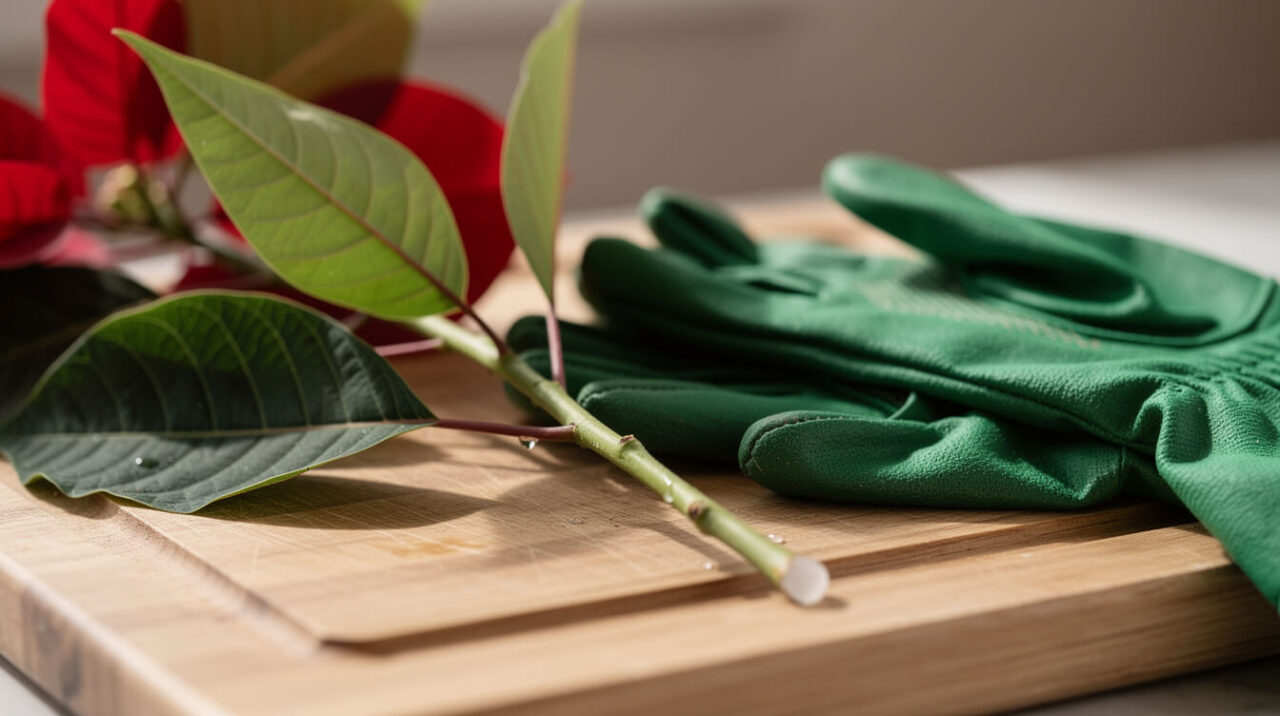
Snap a poinsettia stem or tear a leaf and a white, milky latex beads up at the break. That sap is the whole story. The poinsettia (Euphorbia pulcherrima) belongs to the spurge family, a large plant group known for irritating latex.
The Pet Poison Helpline says the sap contains diterpenoid euphorbol esters and saponin-like detergents. Both irritate the soft tissue they touch. One honest wrinkle: a 2012 review in the Western Journal of Emergency Medicine (Evens and Stellpflug) argues that this particular species doesn’t carry the potent irritant diterpenes its Euphorbia relatives are known for. The two sources disagree about the chemistry, but they agree completely on the outcome. Whatever is in the sap, what it does to a dog is local irritation, not systemic poisoning.
The signs you’re likely to see
According to the Pet Poison Helpline, the signs of poinsettia exposure in dogs are:
- Drooling
- Licking the lips, pawing at the mouth
- Vomiting, usually once or a few times
- Diarrhea (less common)
- Skin irritation where sap touched: redness, swelling, itchiness
- Eye irritation if sap got into an eye
These signs tend to show up soon after chewing, because the sap acts on contact. They usually settle on their own as the irritation fades. What you shouldn’t see from poinsettia alone are things like collapse, trouble breathing, tremors, or a dog who seems deeply unwell. If you see any of those, assume something else is going on and call your vet. That “something else” might be another plant, the pot’s contents, or an unrelated illness.
Where the “deadly poinsettia” myth came from
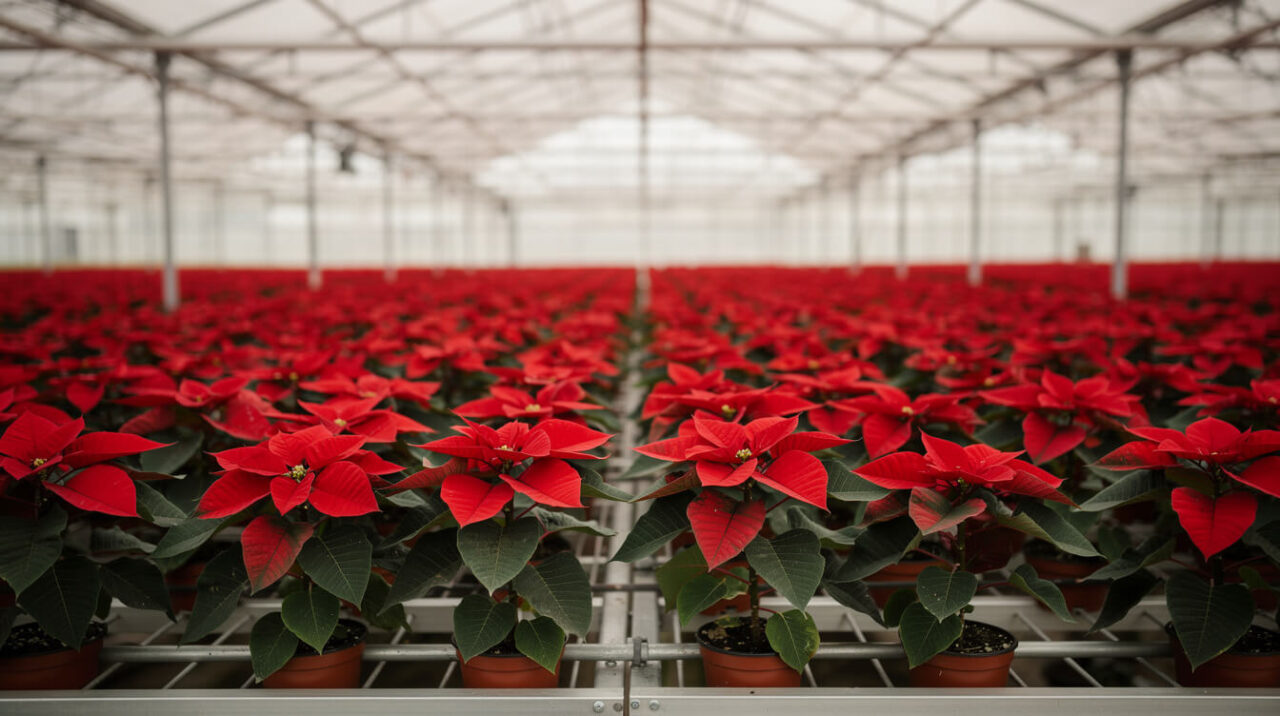
If poinsettias are this mild, why does almost everyone “know” they’re deadly? The story traces back to one event. According to the 2012 Western Journal of Emergency Medicine review, the plant’s toxic reputation “stems from a single unconfirmed death of a 2-year-old in Hawaii in 1919.” The child was found near a poinsettia, the plant got the blame, and the story outlived the evidence by a century. America’s Poison Control (poison.org) tells the same history and adds that nothing like it has happened since.
Then researchers went looking for the danger, and couldn’t find it.
The evidence, labeled honestly
Two studies anchor the evidence. Neither is dog data, and I’ll say so up front. They’re still the reason the toxicologists who rate dog exposures call this plant over-rated.
- 22,793 human exposures, zero deaths. In 1996, Krenzelok and colleagues at the Pittsburgh Poison Center analyzed 849,575 plant exposures reported to US poison control centers (1985–1992). Poinsettias accounted for 22,793 of them, almost all accidental and mostly involving small children. There were no fatalities. In 92.4% of cases there was no toxicity at all, and 96.1% of people were never treated at a healthcare facility. The paper’s title says it plainly: “Poinsettia exposures have good outcomes… just as we thought.”
- Rats, enormous doses, no lethal dose found. In 1978, Winek and colleagues fed poinsettia to laboratory rats. They couldn’t reach a lethal dose: the oral LD50 was above 25 grams of plant per kilogram of body weight for every plant part tested. Even 125 g/kg spread over five days caused no visible or microscopic damage.
A note on what those numbers don’t mean. They don’t give you a “safe amount” of poinsettia for your dog. Dogs aren’t small humans or large rats, and no study has worked out a dog dose. Please don’t scale those figures to your dog’s weight. What the numbers do explain is why the people who field animal-poison calls every December rate this plant mild. The best-studied poinsettia exposures, by a very wide margin, turned out fine.
The honest summary: poinsettias deserve a high shelf, not a panic. The irritation is real. The danger was a rumor.
My dog ate a poinsettia leaf: what to do, and when to call

First, take a breath. For most dogs who’ve chewed a poinsettia leaf, the right response is calm and simple. Here’s a proportional plan.
Right now (the first few minutes)
- Move the dog and the plant apart. Pick up the plant, and pick up any torn leaves or bracts from the floor.
- Clear the mouth gently. If you can do it safely, remove leaf pieces from your dog’s mouth, then wipe their lips and gums with a soft, damp cloth to take off sap.
- Offer fresh water to rinse the mouth. Don’t force it.
- Wash any sap off skin or fur with lukewarm water and a mild soap, and wash your own hands too.
- Don’t try to make your dog vomit unless a veterinarian or poison line tells you to. Home remedies like hydrogen peroxide or salt carry their own real risks, and for a mild irritant like this they’re very unlikely to be what your vet recommends.
Over the next several hours: watch
Expect a little drooling and lip-licking, and possibly a vomit. For the rest of the day, keep an eye on your dog’s energy, appetite, and stools.
Call your vet or an animal poison line if:
- Vomiting or diarrhea is repeated or keeps going (more than a couple of episodes, or past 24 hours)
- Your dog is lethargic, refuses food, or seems painful
- Your dog is small, very young, elderly, or has health problems and ate a substantial amount (more than a nibble)
- Your dog ate the foil wrap, plastic sleeve, or potting soil as well as the plant (more on that below)
- You’re not sure it was a poinsettia, or the arrangement also held holly, mistletoe, amaryllis, or something you can’t identify
- Sap got in an eye and the eye is still red, squinting, or watering after rinsing
- You see anything beyond mild stomach upset: weakness, collapse, trouble breathing, tremors
Your regular vet or the nearest emergency clinic is always the right call. Two US animal poison lines are open 24/7: the ASPCA Animal Poison Control Center at (888) 426-4435 and the Pet Poison Helpline at (855) 764-7661. Both charge a consultation fee. It’s worth knowing that before you’re on hold, and worth paying when you’re genuinely unsure. Have the plant (or its tag) in hand when you call.
If sap got in your dog’s eye
Gently flush the eye with plenty of clean, lukewarm water or sterile saline. If redness, squinting, pawing at the eye, or watering lasts after rinsing, call your vet that day. This is the one exposure where sources diverge in a way that matters. A 1978 rabbit study found that poinsettia latex didn’t damage the eye. The Australian Animal Poisons Helpline, which handles real pet cases, warns that eye exposure “may cause significant irritation and potentially ulceration.” Corneal ulcers need a vet, and they’re easy to check for. Don’t bet your dog’s eye on a decades-old rabbit study.
The weekly care guide
Get it right for your animal, every week
One email a week: new care guides, species deep-dives, and the safety answers keepers search for, written by our specialists. No spam. Unsubscribe anytime.
More worrying than the poinsettia: mistletoe, holly, and what’s in the pot
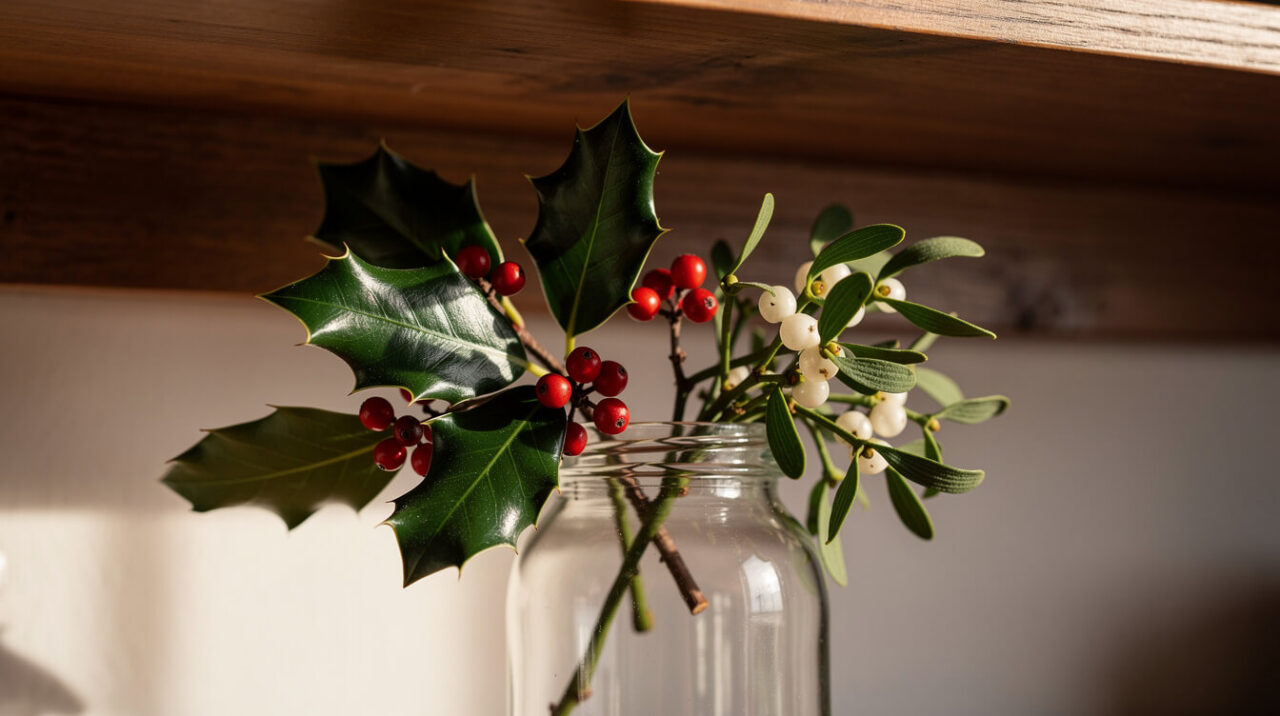
Here’s the slightly ironic part. The poinsettia gets the scary reputation, but it’s often the least concerning thing in a holiday arrangement. These deserve more of your attention.
Mistletoe
Mistletoe is the plant I’d take most seriously. The ASPCA lists American mistletoe as toxic to dogs, with clinical signs including vomiting, diarrhea, difficulty breathing, a low heart rate, and (rarely) low blood pressure. Vets Now goes further and calls it highly toxic, capable of cardiovascular collapse. Human poison-center data is calmer: one review of 1,754 exposures found no deaths, and the review notes that European mistletoe is more toxic than the American species. But “usually fine in people” isn’t a reason to wait it out with a dog. If your dog eats mistletoe, call your vet or a poison line rather than watching at home. Real mistletoe belongs well out of reach. Artificial sprigs are an easy swap.
Holly
The ASPCA lists holly as toxic to dogs because of its saponins, with vomiting, diarrhea, and lethargy as the signs. It also notes that the leaves and berries are “low toxicity.” Some sources warn of more severe vomiting and diarrhea, and in humans the berries are the concern, not the leaves. Holly sits roughly in poinsettia territory, with one difference: dropped berries roll and get found. Keep holly up high, and sweep up fallen berries.
The pot, not the plant
- Foil wraps and plastic sleeves. Shiny, crinkly, and plant-scented, they’re more tempting than the leaves. A swallowed wad of foil or plastic can upset the stomach, and a large piece can lodge in the gut, a problem only a vet can rule out. If your dog ate one, call your vet. The simplest prevention is to take the wrap off before the plant goes on display.
- Soil, fertilizer, and treatments. Some nursery plants are grown with fertilizers or pesticide treatments. Check the plant tag. If your dog dug into the pot and you can’t tell what’s in the soil, call a poison line with the tag in hand.
- Amaryllis and mixed arrangements. Amaryllis is often sold alongside poinsettias, and the ASPCA lists it as toxic to dogs (vomiting, drooling, diarrhea, abdominal pain, tremors). For any arrangement, check each plant against the ASPCA toxic and non-toxic plant list before it goes somewhere your dog can reach.
For other plants you might bring indoors, we’ve covered orchids, irises, and gladiolus in their own guides.
Keeping a poinsettia in a house with a dog

Good news: you don’t have to give up the poinsettia. The Animal Poisons Helpline says outright that it isn’t necessary to remove the plant from the home. You just need to arrange things so your dog doesn’t make a habit of it.
- Go high, and think about tails and paws. Use a shelf or mantel your dog can’t reach standing on its hind legs. Avoid coffee tables, low windowsills, and table edges where a wagging tail can knock the pot down.
- Know your dog. A puppy, a confirmed plant-chewer, or a counter-surfer needs more distance than a senior who ignores houseplants. If you’re puppy-proofing this year, treat every plant as off-limits until you’ve seen how your pup behaves.
- Clean up drops. Poinsettias shed bracts and leaves as they age. A fallen leaf on the floor is a dog’s easiest snack.
- Give the chewing somewhere to go. Holiday weeks are busy and dogs get bored. A sturdy chew toy, a frozen plain-pumpkin lick mat, or an extra sniff-walk takes the edge off the curiosity that sends a nose toward the decorations.
- Tell your guests. Visitors set plants down at dog height and slip dogs table scraps. A quick heads-up helps with both, and our guide to holiday mashed potatoes covers the scraps.
One for the humans in the house: the poinsettia shares allergen proteins with natural rubber latex. A 2006 case report in the Southern Medical Journal described a woman with a latex allergy who developed a rash from a gifted poinsettia. If anyone in your home has a latex allergy, wear gloves to handle the plant, or choose an artificial one.
And if your house runs on equal parts dog hair and reptile lamps, our small keeper-merch shop has a Bearded Dragon Crown Sunglasses King T-Shirt. We don’t have a dog design yet, but if there’s a beardie in your house too, it’s a good gift.
Wear the obsession: the Bearded Dragon King tee
Our crowned, sunglasses-wearing beardie, made for the keepers whose homes have room for scales and a dog bed. A good pick for the reptile person on your holiday list.
Real or artificial?
A good silk or fabric poinsettia avoids the sap question entirely, and it lasts for years. Artificial plants can still be chewed, though. Wire stems and small plastic berries are a swallowing problem of their own, so treat them like any other decoration and keep them out of reach. If you love the real thing, keep it. A high shelf and a tidy floor cover nearly everything.
Holiday prep usually means more than plants. For the bigger picture, see our older but still useful winter pet safety guide.
Are poinsettias poisonous to dogs? Your other questions, answered
Are poinsettias poisonous to dogs if they only lick the leaves?
Licking an intact leaf releases very little sap, so you’ll most likely see nothing at all, or a little drool. Chewing or tearing the plant releases more. Use the same watch-and-call guide either way.
How much poinsettia is dangerous for a dog?
No one has established a toxic dose for dogs, and I won’t invent one. The toxicology services rate it mild, and the sap’s taste usually stops a dog early. Your dog’s size and how much they ate both matter. If a small dog ate a large part of a plant, or you aren’t sure how much went missing, call your vet or a poison line.
Are white or pink poinsettias safer than red ones?
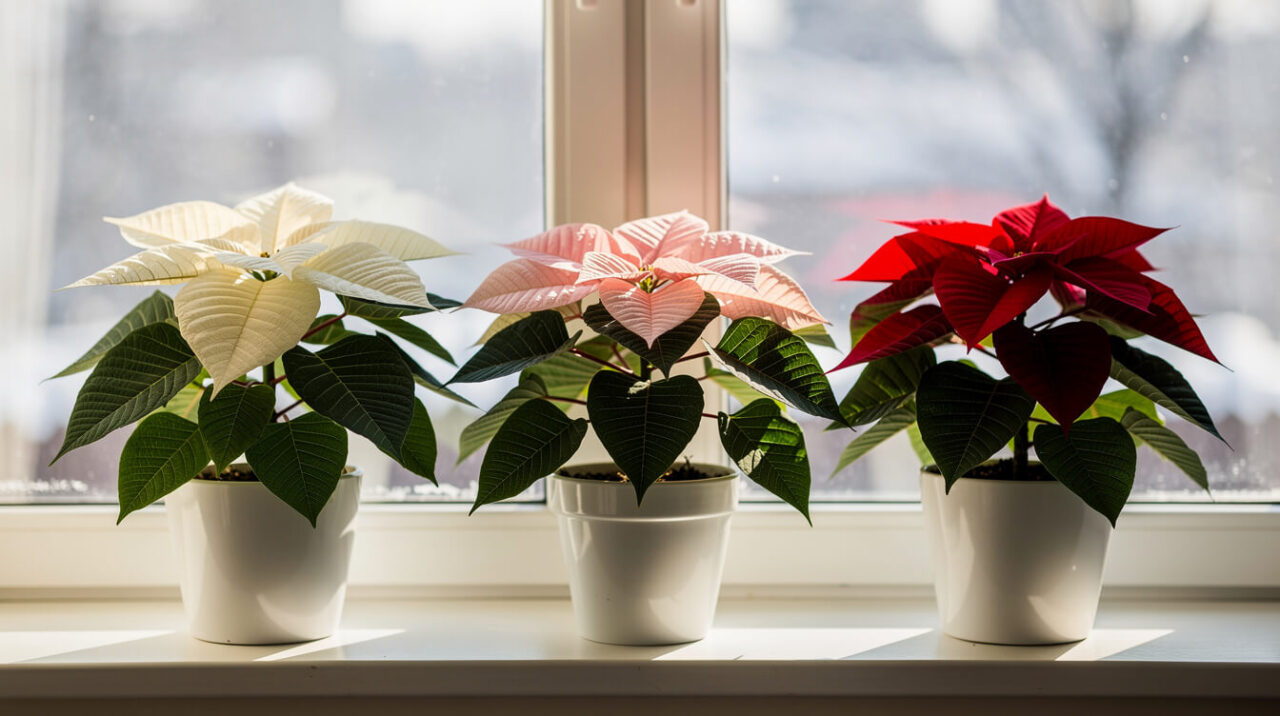
No. White, pink, marbled, and red poinsettias are all varieties of the same species, Euphorbia pulcherrima. None of the toxicology sources rate any color differently. Same sap, same high shelf.
Are poinsettias poisonous to cats too?
Also mild. The Pet Poison Helpline rates poinsettias mild for cats as well as dogs, with the same mouth and stomach irritation. The same keep-it-high advice applies. Cats can reach far more places than dogs, so think about where your cat climbs, not just where your dog stands.
My dog ate a poinsettia yesterday and seems fine. Do I need to do anything?
If your dog is eating, drinking, acting normally, and passing normal stools, you’re very likely through it. If a sleeve, foil wrap, or other non-food part might also have gone down, keep watching for vomiting, a sore belly, or straining, and call your vet if they appear.
Is it safe to keep a poinsettia at all if I have a dog?
Yes, for nearly every household. Put it up high, keep fallen leaves off the floor, and know the call-your-vet signs. That’s a reasonable, caring way to enjoy the plant. The exception is a dog that relentlessly eats plants. In that case an artificial poinsettia is the low-stress choice for both of you.
The bottom line on poinsettias and dogs
Poinsettias are mildly toxic to dogs. The sap can make a mouth sore and a stomach unhappy, and that’s usually where it ends. The “deadly” reputation goes back to a single unconfirmed story from 1919. A study of 22,793 poison-center cases found no deaths, and toxicologists who handle pet exposures rate the plant mild. Keep it high, sweep up fallen leaves, and save the real vigilance for mistletoe, swallowed pot wraps, and the holiday food table. If something doesn’t look right, especially repeated vomiting, lethargy, an irritated eye, or a small dog who ate a lot, your vet and the animal poison lines are there for exactly that call.
Enjoy the red leaves. Your dog will mostly enjoy the rug underneath them.
Before you go
Keep learning your animal
We publish a new guide every day. The best of them land in one short weekly email, so you never miss the one about your species.

Meet Jake Harrington, your go-to guru for all things canine. With over 15 years of professional dog training experience, Jake has transformed the lives of thousands of dogs and their owners. His journey began in the bustling streets of a major city, where he discovered his natural affinity for understanding canine behaviors and communication.