Are Wallflowers Safe for Cats? What’s in the Refill, Licked Oil vs. Scented Air, and a Safer Setup
Short version, because you may be standing next to the outlet right now: are Wallflowers safe for cats? A Wallflower plugged in high enough that your cat can’t touch it, in a room with some fresh air and a door your cat can walk out of, is a low risk for most healthy cats. The real danger is the oil itself. A cat who licks a leaking refill, knocks one out of the wall, or gets oil on their fur is a different situation, and so is a cat with asthma or a cough.
Most answers online are Reddit threads and Facebook posts saying either “totally fine in my house” or “toxic, throw them all out.” So I went to the primary sources: Bath & Body Works’ own Safety Data Sheets, the veterinary toxicology references, and the one vet study that measured indoor air in cats’ homes. Here’s what they say, where they disagree, and how to keep your favorite scent and your cat.
If your cat has already licked a refill or has oil on their fur, skip straight to what to do now.
Are Wallflowers safe for cats? The short answer
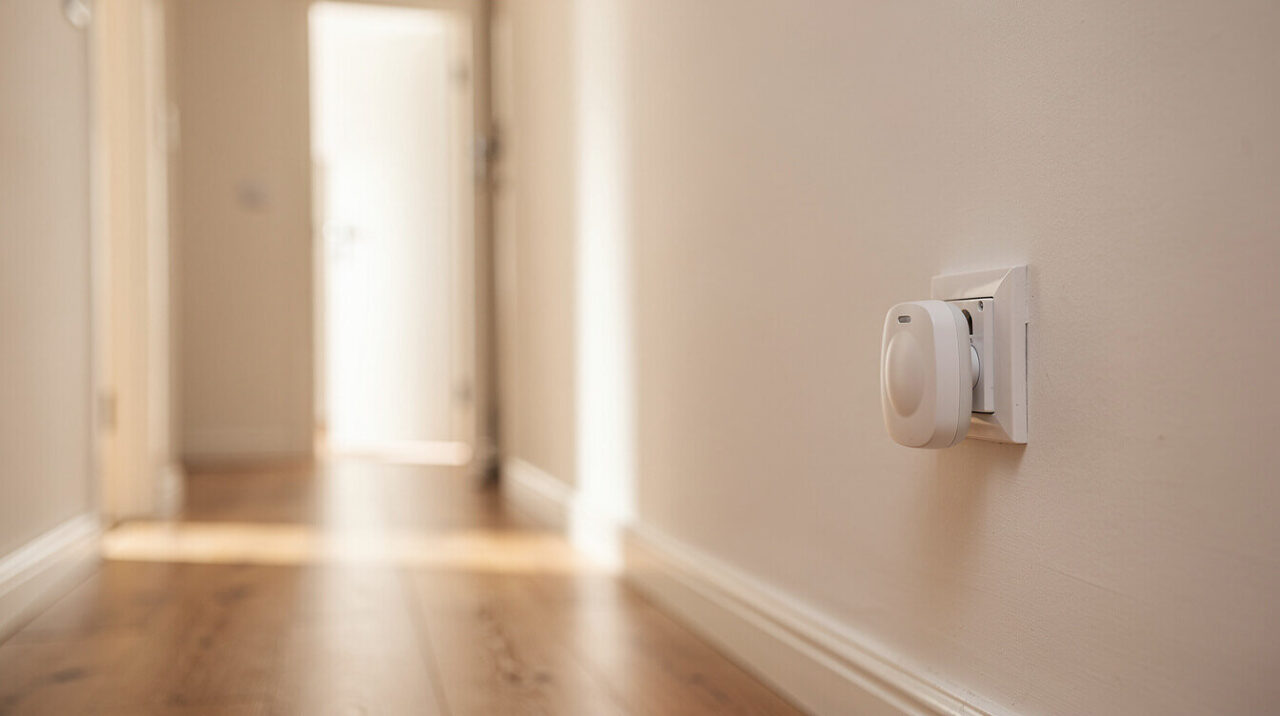
Here’s how the veterinary sources sort it out. Wallflowers are what toxicologists call a passive diffuser: a small heater warms the scented oil and the fragrance evaporates into the room. Pet Poison Helpline lists “heat diffusers like plug-in/electric oil diffusers” in exactly that group. It says that unless the oil “gets onto a cat’s skin or is ingested in some way,” the main hazard from a passive diffuser is “respiratory irritation.” The Merck Veterinary Manual makes the same split. Passive diffusers “do not emit actual droplets of oil, so unless the diffuser is tipped over, the main hazard to animals is respiratory irritation.”
So the question “are Wallflowers safe for cats?” really has three answers, depending on what your cat is doing:
- Breathing scented air in a normal, ventilated room: usually low risk for a healthy adult cat. Some cats find strong scents irritating, and you’ll often see it in their behavior first (more on that below).
- Breathing it with asthma, chronic bronchitis, or a cough: higher risk. The ASPCA, Pet Poison Helpline, and Merck all single out cats with breathing problems, and the simplest protection is not using it.
- Touching or licking the oil: this is where real poisonings come from. Cats groom anything off their fur, and cats process many fragrance and essential-oil compounds poorly.
You won’t find “studies show plug-ins are toxic to cats” anywhere in this guide. No such study exists, and I’ll show you what does exist instead. You also won’t find “completely safe,” because nobody has tested that either.
If your cat licked a Wallflower refill (or got oil on their fur)
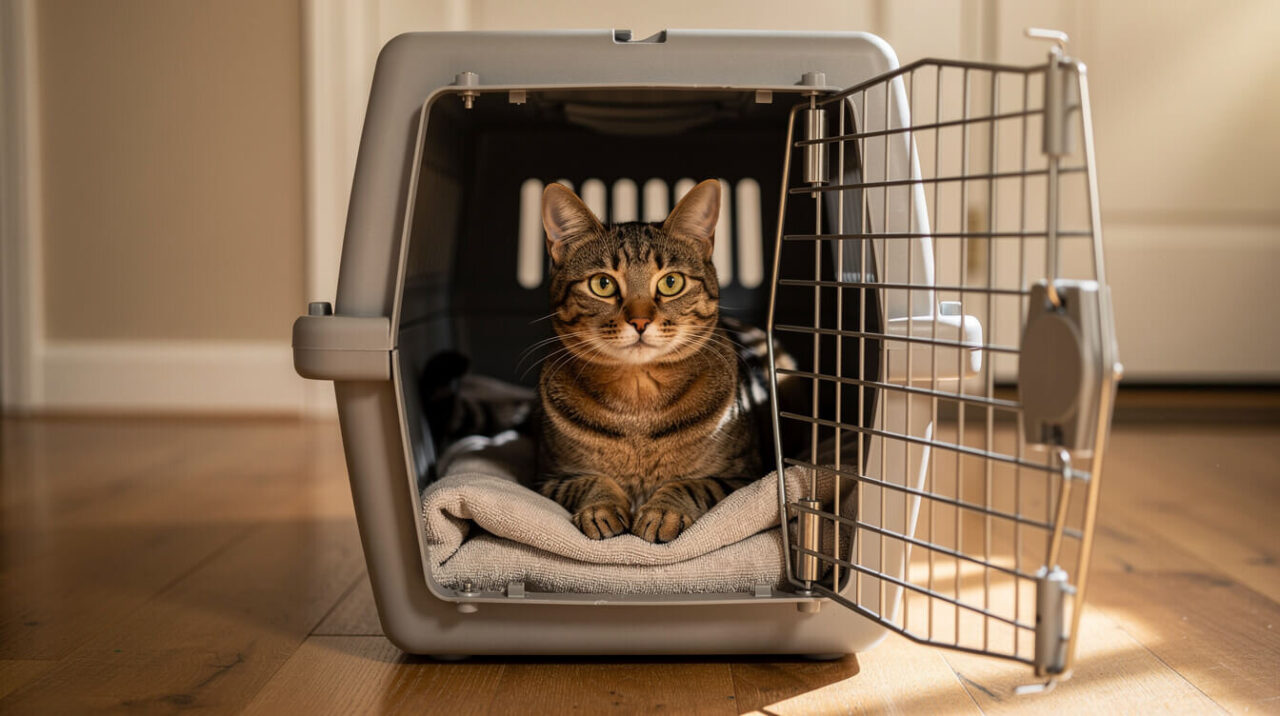
This is the time-sensitive part, so it comes first. Licked or spilled oil is the exposure the toxicology references worry about. VCA’s toxicology page, written with Pet Poison Helpline’s toxicologists, says “only a few licks or a small amount on the skin could be harmful, depending on the ingredients.” It also says “rapid diagnosis and treatment are critical.”
- Unplug the Wallflower and move your cat to another room with fresh air. Pet Poison Helpline’s guidance for cats reacting to strong fragrance is to move them “immediately into fresh air.”
- Call your veterinarian or an animal poison control line now, before symptoms show up. ASPCA Animal Poison Control: (888) 426-4435. Pet Poison Helpline: 855-764-7661. Both answer 24/7 and charge a consultation fee. (Some older pages still print an outdated 800 number for Pet Poison Helpline. The 855 number is the one on its own website.)
- Keep the refill. The scent name on the bottom matters, because Bath & Body Works publishes a separate Safety Data Sheet for each scent and the ingredients differ (see the next section). VCA says to bring the product packaging with you to the clinic in a sealed container.
- Don’t try to make your cat vomit, and don’t give anything by mouth unless the vet or poison line tells you to. VCA says plainly that inducing vomiting or giving activated charcoal at home “may worsen your cat’s condition.”
- Let them talk you through the fur. If oil is on the coat, your cat will keep licking it off. Ask the person on the phone how to wash it off safely for your cat’s size and the amount involved.
Signs to report (from VCA and Merck): drooling, vomiting, pawing at the mouth, red or sore-looking lips or gums, a fragrance smell on the breath or coat, wobbliness, tremors, lethargy, and trouble breathing. Merck notes signs can begin “within minutes to hours.” A cat who seems fine right now still needs the call.
One thing I noticed while researching: in a widely read online Q&A about a cat who licked Wallflower liquid, the ingredient list used for reassurance starts with soybean wax and paraffin. That looks like a candle’s list, not a liquid refill’s. The vet was right that it depends on what’s in the bottle. Just make sure it’s the right bottle.
What’s actually in a Wallflower refill
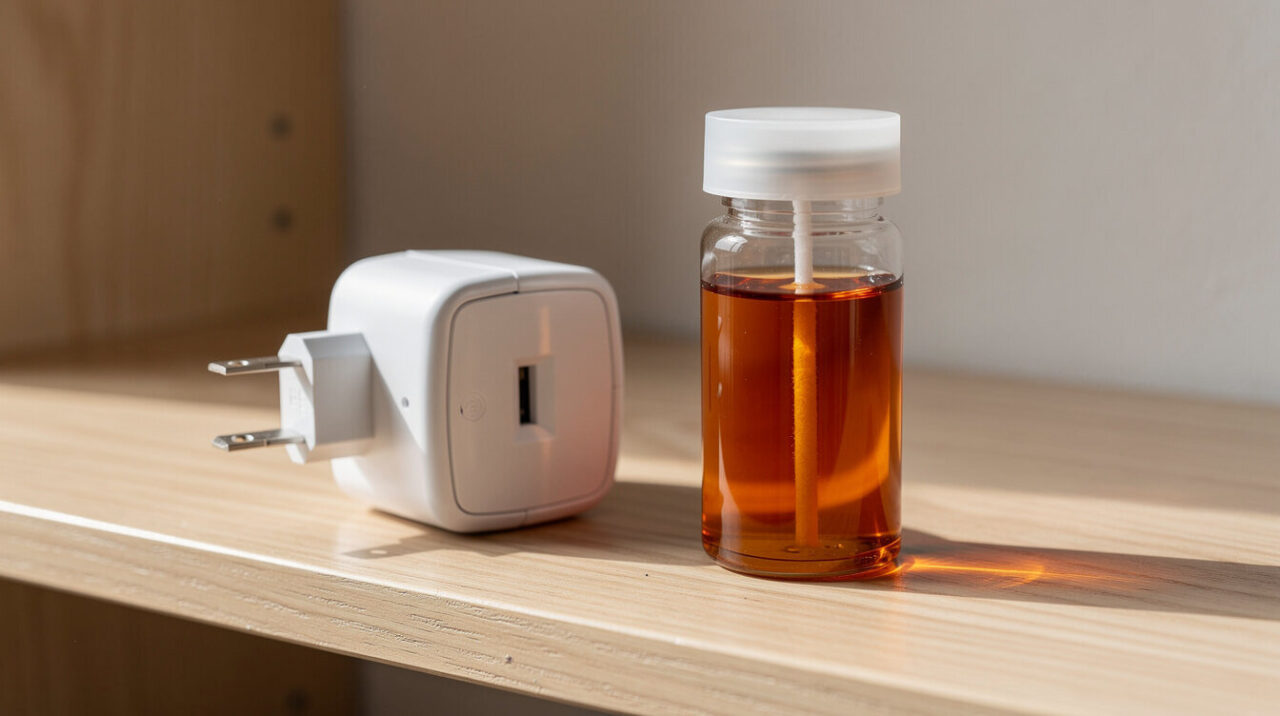
Bath & Body Works says each refill “is made with essential oils” and calls it a “highly concentrated blend” made from fruit, flower, and tree essences (from the brand’s Wallflowers FAQ). That’s marketing language. The more useful document is the one most owners never see: the Safety Data Sheet (SDS) the company publishes for individual scents. I read four of them. Here’s what they show.
The base is mostly solvent and synthetic aroma chemicals
In the Apple Weather refill SDS, the largest listed ingredient is a solvent, Dowanol DPMA, at 30–60%. Glade’s PlugIns Scented Oil refills list a similar glycol-ether solvent, dipropylene glycol, first on SC Johnson’s ingredient page. The rest is mostly synthetic fragrance molecules at 1–10% each.
The plant-derived “essential oil” compounds are there, at small percentages
The compounds people usually mean by “essential oils” do show up on these sheets. The Frosted Cranberry SDS lists linalool and d-limonene (the main compound in citrus oil) at under 1%. The Vanilla Balsam sheet lists cineole, the main compound in eucalyptus oil, at 1–5%. Pet Poison Helpline names citrus oil (d-limonene) and eucalyptus oil among the essential oils known to poison cats. So the honest answer to “does my refill contain the oils on the cat list?” is: it depends on the scent, and the SDS for your scent is where you find out.
The hazard labels differ by scent, too
Apple Weather is labeled “Harmful if swallowed,” a skin and serious eye irritant, and a possible skin allergen. Frosted Cranberry is labeled only as a possible skin allergen. A generic Wallflowers refill sheet says the classification criteria “are not met” for most health hazards. Those labels are written for people, not cats, but one product line ranges from “harmful if swallowed” to no health classification at all. No single verdict covers every scent.
Three caveats:
- An SDS isn’t a full recipe. It lists the classified ingredients, so the rest of the bottle can stay undisclosed.
- The sheets I read are dated 2019, and formulas change. Look up the current one for your scent.
- The company itself says the oil is harsh on surfaces. Bath & Body Works’ usage tips say refills “contain fragrance oils that may damage finished surfaces and some plastics,” and ask for a 12-inch clearance above the plug. If it can mark a painted shelf, you don’t want it on a tongue.
Why cats are more sensitive than dogs or people
Three things set cats apart.
The liver
Cats are poor at glucuronidation, the chemical step most mammals use to package certain compounds for removal. In 2000, Tufts researchers found the reason: the cat gene for the key enzyme, UGT1A6, is a non-working pseudogene. The paper calls it “a significantly lower capacity to glucuronidate planar phenolic xenobiotics compared with most other mammalian species.” Merck connects this directly to essential oils. Because of the enzyme deficiency, cats are “very sensitive to phenol and phenolic compounds, which some oils contain.” It’s the same reason acetaminophen is so dangerous for cats.
The grooming
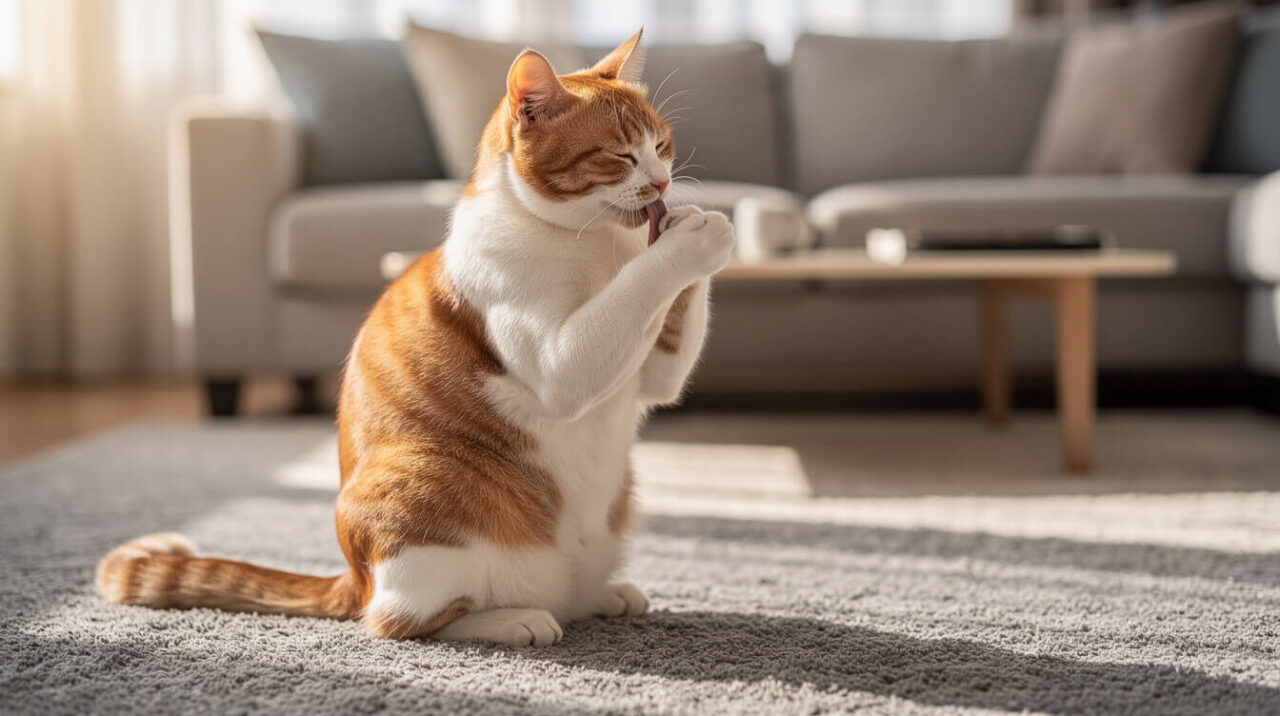
Merck again: “Cats’ natural grooming behavior places them at additional risk from both dermal and oral exposures.” A drop of oil on a dog’s coat might wipe off on the carpet. A drop on a cat’s coat ends up swallowed, because grooming is how cats keep clean. That’s why the licked-oil route matters so much more than the airborne one.
The size
The clearest data on how badly a concentrated oil can affect cats comes from tea tree oil. The ASPCA Animal Poison Control Center reviewed 443 dogs and cats exposed to 100% tea tree oil over ten years. Signs began within 2 to 12 hours and lasted up to 72 hours. “Younger cats and those with lighter body weight were at greater risk of developing major illness.” That’s full-strength oil, not a diluted refill, but it shows kittens and small cats need the most margin.
Pet Poison Helpline’s list of essential oils known to poison cats is worth knowing by name, because many holiday scents are built around them: wintergreen, sweet birch, citrus (d-limonene), pine, ylang ylang, peppermint, cinnamon, pennyroyal, clove, eucalyptus, and tea tree. If your seasonal refills lean pine, cinnamon, clove, or peppermint, those are the ones to look up first. (Rosemary is a separate story. We sorted the plant from the oil in our rosemary guide.)
The weekly care guide
Get it right for your animal, every week
One email a week: new care guides, species deep-dives, and the safety answers keepers search for, written by our specialists. No spam. Unsubscribe anytime.
Licked oil vs. scented air: two different risks
Most of the confusion online comes from blurring these two.
Licked or touched oil: a poisoning risk
This is everything in the section above: drooling, vomiting, mouth irritation, and, depending on the oil and amount, wobbliness, tremors, or liver injury. It happens when a cat licks a leaking refill, chews a spent one out of the trash, walks through a spill, or knocks a unit out of a low outlet. Prevention here is mostly about where the device sits and where old refills go.
Scented air: an irritation risk, not a proven poisoning
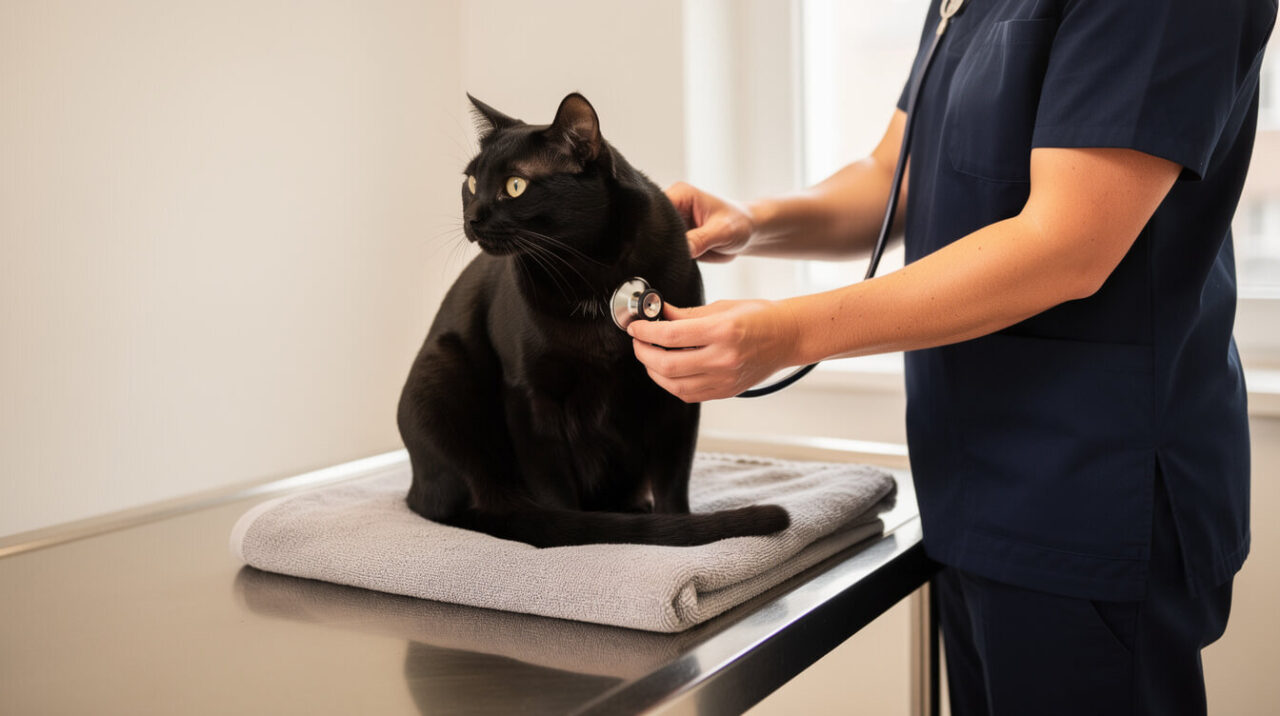
Pet Poison Helpline describes what strong fragrance can do to a sensitive cat: “a watery nose or eyes, a burning sensation in the nose/throat, nausea leading to drooling and/or vomiting, and difficulty breathing.” Its advice is to move the cat to fresh air and get emergency care if signs don’t quickly resolve. That’s irritation, and in a cat with airway disease it can tip into a real breathing crisis.
The evidence gap nobody mentions
Here’s what I could, and couldn’t, find:
- No study has tested plug-in air fresheners in cats. One vet-written guide on the first page says so honestly, while another popular page says “studies have shown” plug-ins are toxic to cats and cites none.
- The closest cat study measured overall indoor air, not fresheners. A 2018 Journal of Veterinary Internal Medicine study from National Taiwan University measured fine particles (PM2.5) in 118 cats’ homes. Cats in homes above 35 µg/m³ were about four times as likely to have respiratory disease (odds ratio 4.13). The questionnaire asked about smoke, cooking fumes, incense, and household chemicals, but not air fresheners. It tells us cats’ lungs respond to indoor air quality. It doesn’t tell us a Wallflower is the culprit.
- The rest is human and lab data. In a national U.S. survey, 41% of adults with asthma reported health problems from air fresheners or deodorizers. A 2021 French study measured 15 air fresheners in a test house and found no concern at average use, but possible exceedances of health standards under “reasonable worst-case” use. That’s human data, so treat it as a reason for moderation, not a verdict on your cat.
Where the vets genuinely disagree
The sources don’t agree, so here are both sides:
- The ASPCA’s poison control center is relatively relaxed about diffusers. Using a diffuser “for a short time period in a secured area—one that your dog or cat cannot access—is not likely to be an issue.” Its caution is reserved for pets with breathing problems.
- VCA is stricter: “Inhaling diffused oils is harmful to both dogs and cats,” and “it’s best to avoid diffusing scented oils altogether.”
There’s a third view too. In a dvm360 article for vets about liquid potpourri, a Pet Poison Helpline toxicologist suggested that for clients who insist on scenting their homes, “safer options include reed diffusers, plug-in air fresheners or scented candles.” That’s “safer than simmering potpourri,” not “safe.” All three views are reasonable. They’re weighing an unstudied risk differently. If your cat is healthy and the device is placed well, you’re in the ASPCA’s territory. If your cat has any airway history, or you’d simply rather not take the unstudied risk, VCA’s line is the safer one.
Cats with asthma or a cough: where the answer changes
This is the one group where I’d unplug, full stop, and talk to your vet before using any scented product. The ASPCA says if a pet “has a history of breathing problems, it may be best to avoid using one altogether.” Pet Poison Helpline says cats with “asthma, airborne allergies, or cats exposed to second hand smoke” are “at greater risk for developing severe respiratory irritation.”
Know what a cough looks like, because it’s easy to miss. Pet Poison Helpline points out that cat coughing “can be mistaken by owners for the cat trying to vomit up a hairball.” The cat crouches low to the ground, there’s little belly movement, and no hairball appears. Pet Poison Helpline lists labored breathing, fast breathing, panting, coughing, and wheezing, and says “NONE of these signs are normal in cats.” That’s a same-day vet call. If it’s severe, go to an emergency clinic.
Are plug-in air fresheners safe for cats? Glade, Air Wick, and the rest
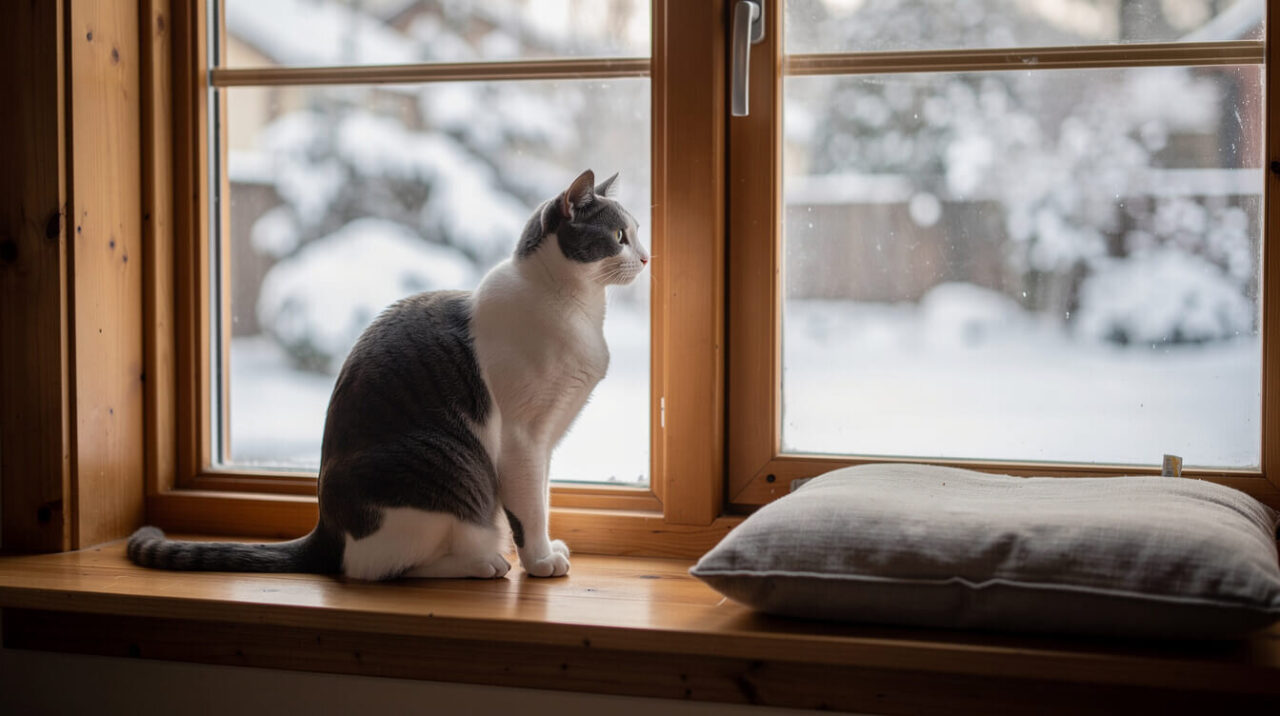
Everything above applies to plug-ins in general, not just Bath & Body Works. Glade PlugIns, Air Wick plug-ins, and store-brand warmers work the same way: warmed oil, evaporating scent. The questions are the same, too: can your cat touch the oil, does your cat have airway disease, and which scent is in the bottle? SC Johnson posts an ingredient list for each Glade scent online, which is more than most. Its Clean Linen refill list includes orange and lemon peel oils, and the Glade PlugIns safety sheet says “KEEP OUT OF REACH OF CHILDREN AND PETS.”
Where the device type does change the answer:
- Anything that puffs a visible mist (ultrasonic or nebulizing diffusers, timed essential-oil mist units) is an active diffuser. Merck says these “emit microdroplets or particles of oil into the air” that “can collect on hair or feathers.” A cat then grooms them off. That’s a bigger step up in risk than switching scents.
- Liquid potpourri simmered on a warmer is its own category. Pet Poison Helpline warns that ingesting it “can cause chemical burns to lips, tongue, gums and throat,” and that cats are “particularly sensitive” to the corrosive chemicals in some products. It’s an open dish of hot, sweet-smelling liquid at cat height. Skip it in cat homes.
- Sprays settle on floors and furniture where paws go. In the French test-house study, the highest short-term fine-particle levels came “typically” from sprays.
Winter raises the stakes a little: windows stay shut and holiday scents come out all at once. If you’ve sealed up the house for the cold (see how cold is too cold for cats), one scent at a time is plenty.
If you also keep birds, the answer is different and stricter. The ASPCA says it’s best to avoid diffusers entirely in homes with birds, because birds’ respiratory tracts are so sensitive. Our note on kitchen fumes and pet birds explains why.
A cat-safer setup if you keep your Wallflowers
If that’s you, here’s how to stay on the ASPCA’s side of the line, where the device sits somewhere your cat can’t get at it.
Placement
- Pick an outlet your cat can’t reach or knock. Low outlets behind a couch or next to a cat tree are the worst spots. A cat can bat the unit, tip the refill, or rub against warm oil. Bath & Body Works itself asks for 12 inches of clearance above the plug and says to keep it upright.
- Keep it out of the rooms your cat lives in most. That means away from the litter box, food and water bowls, favorite sleeping spots, and the small room you shut your cat into at night. A bathroom or entryway your cat passes through is better than the bedroom they sleep in.
- Always leave an exit. The ASPCA advice assumes your cat can walk away from the scent. Don’t run one in a closed room with a cat inside.
- Use one, on the lowest setting. Scent-control plugs that turn down are worth it. Your cat’s nose is far more sensitive than yours, so if the scent is obvious to you, it’s very strong to them.
Refills and spills
- Store refills in a closed cabinet, not on an open shelf or in a basket on the floor.
- Bag spent refills and take them to the outside bin. A used refill still has oil in the wick, and a kitchen trash can is easy to raid.
- Wipe spills right away with soapy water, then rinse, before paws find them. Bath & Body Works also says to clean spills “immediately.”
Watch your cat, not the calendar
Watch for leaving a room they used to like, squinting, sneezing, watery eyes, more face-pawing, or new litter-box avoidance near a scented spot. Any of these means switch it off and see whether the behavior settles. If you’re the type who reads every label before anything new comes home, you’re exactly who we make the Bearded Dragon Crown Sunglasses King T-Shirt for (yes, even if your animals are furred instead of scaled).

For the keeper who reads the safety sheet
The Bearded Dragon Crown Sunglasses King T-Shirt is for the person in every household who looks things up before they come home, whether the animals are furred or scaled. A soft everyday tee for the resident animal nerd.
Fix the smell at the source
Most of us plug in a Wallflower for the same reason: the litter box. A freshener only covers the smell, and a cat who finds the box area smelly or perfumed may start going somewhere else. Scoop at least daily, wash the box regularly with mild unscented soap, and use enough boxes for the number of cats. If your cat has started going outside the box, start with our guide to cat peeing on the bed, which covers the medical checks and the litter-box math. For holiday decorating with cats, see our Christmas tree guide and the Christmas cactus guide.
Are Wallflowers safe for cats? Quick answers to common questions
Are any Wallflowers scents “cat-safe”?
Not officially. None of the Bath & Body Works pages or safety sheets we checked calls any scent pet-safe, and we found no test of any scent in cats. Scents built around pine, citrus, cinnamon, clove, peppermint, or eucalyptus overlap most with Pet Poison Helpline’s cat list, so check those SDS sheets first. A “pet-safe” claim on any air freshener is marketing unless the company shows you a study.
Is it safe to leave a Wallflower plugged in all the time with cats?
“Always on” means always in the air. For a healthy cat with a well-placed unit and a way out of the room, the sources don’t describe a specific danger. But compare it with Merck’s prevention advice for diffusers: “Keep pets out of a room while using a diffuser, and ventilate the room afterward,” and “Run diffusers for only short periods (< 30 minutes).” That advice is written for essential-oil diffusers, and a 24/7 plug-in is the opposite pattern. Less is the simple way to stay on the cautious side. Use a lower setting or a timer, keep it out of sleeping areas, and give the house scent-free hours.
My cat sniffed the plug-in. Is that a problem?
A sniff isn’t a lick. Make sure the unit isn’t leaking and there’s no oil on the nose or whiskers, then move it somewhere higher. If you see drooling, pawing at the mouth, or oil on the face, call your vet or poison control.
Are kittens more at risk?
Yes. VCA says “very young cats and kittens, and cats with liver disease, are more sensitive.” In the ASPCA tea tree oil case series, younger and lighter cats got sicker. Be extra strict about placement with kittens.
What about Bath & Body Works candles or wax melts?
Different products, different main risks. With candles, think flame, wax, and soot. With wax melts, think hot wax on a warmer at paw height. Both still release fragrance, so the asthma advice above applies. Candles deserve their own guide, and one is on our list.
Do I need to throw my Wallflowers away?
Not if your cat is healthy and you place and use them carefully, according to the ASPCA’s poison control guidance. Throw them out (or at least unplug them) if your cat has asthma, chronic bronchitis, or a cough, if you have birds, or if your cat clearly avoids the scented room. You’re asking the question, which already puts your cat in good hands. Pick an outlet your cat can’t reach or knock, leave the door open, and keep those refills in a cabinet.
Before you go
Keep learning your animal
We publish a new guide every day. The best of them land in one short weekly email, so you never miss the one about your species.
Dr. Lila Monroe is a seasoned veterinarian with a passion for feline health and behavior, boasting over 20 years of experience in the field. With her extensive knowledge of cat medicine combined with a deep understanding of the nuanced dynamics of cat behavior, Lila offers readers invaluable insights into creating a nurturing environment for their feline friends.