Is Christmas Cactus Poisonous to Cats? What the ASPCA Actually Lists, and the Lookalikes That Aren’t Safe
Is Christmas cactus poisonous to cats? No. The ASPCA’s poison-control database lists Christmas cactus as non-toxic to cats, and to dogs and horses too. If your cat has taken a bite out of the plant on your windowsill, the most likely outcome is nothing at all, or a single vomit and a slightly sheepish cat. That’s the reassuring part. The useful part is the rest of this guide, because “non-toxic” has limits, and the holiday aisle sells a lookalike that really is toxic.
Below, we’ll explain why some sites still call this plant “technically poisonous,” how to tell which holiday cactus you actually have, the two lookalikes worth knowing, what to watch for if your cat ate some, and how to keep both the cat and the cactus happy through the season. If you’re reading this with a chewed stem in one hand and your phone in the other, take a breath. You’re in a good spot.
Is Christmas cactus poisonous to cats? The short answer
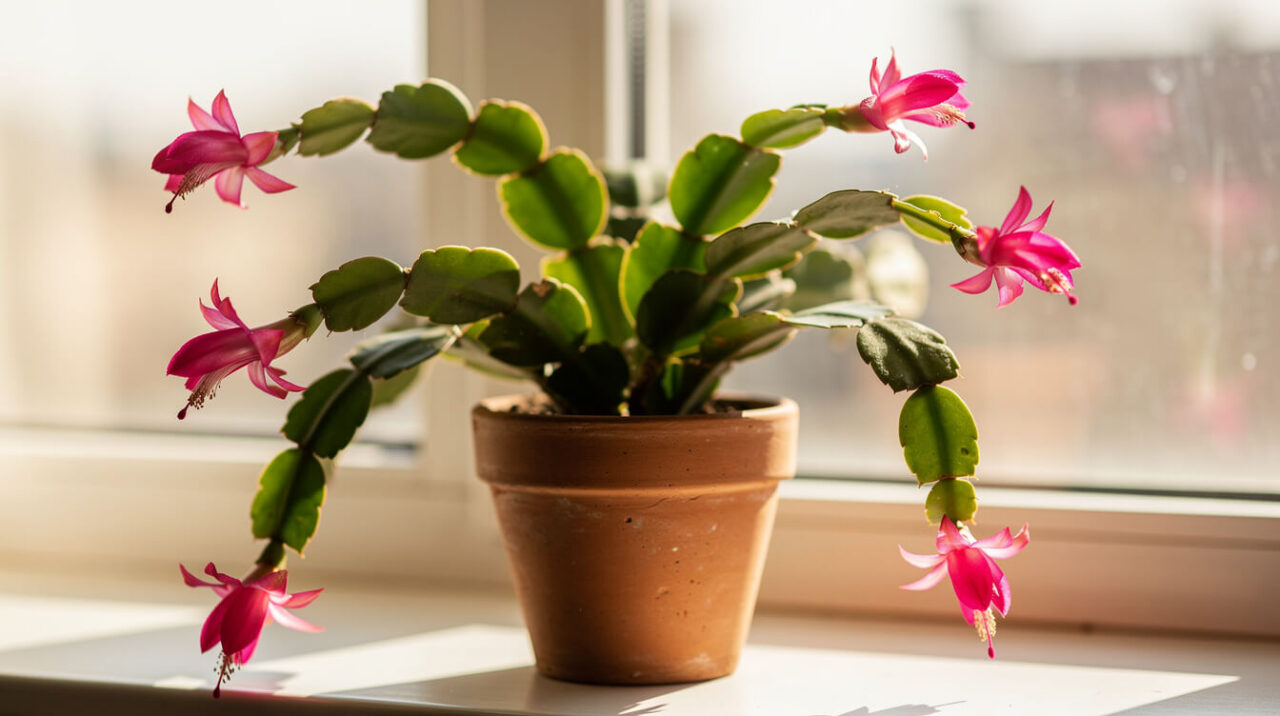
The ASPCA’s entry for Christmas cactus is about as clear as poison-control listings get. It lists the plant as Schlumbergera bridgesii, family Cactaceae, with “Easter Cactus” as an additional common name, and marks it non-toxic to dogs, non-toxic to cats, and non-toxic to horses. Unlike the entries for genuinely toxic plants, it names no toxic principle and no clinical signs. There’s simply no known poison in it.
So what does “non-toxic” mean in practice? It means the plant contains nothing known to damage your cat’s organs, heart, or nervous system. It does not mean the plant is food. Cats are obligate carnivores, and their digestive tracts aren’t built to handle a pile of plant material. A cat who chews a few stem segments may drool a little, throw up, or have a soft stool. Those signs come from the plant being plant, not from a toxin, and they usually pass on their own.
Here’s the honest scale, from most to least likely:
- A nibble or two: usually nothing, or one vomit.
- A good chew session: mild stomach upset (vomiting, diarrhea, a skipped meal) that typically settles within a day.
- A lot of plant, eaten fast: the uncommon case worth a call, because a big wad of fibrous material can irritate the gut or, rarely, cause a blockage.
One more piece of context. Christmas cactus turns up often in poison-center data, but that’s because it’s common, not because it’s dangerous. A review of U.S. poison-center calls found it among the twelve plants people call about most. Those were human calls, mostly about toddlers, and they reflect how many homes have one on the windowsill.
Why some sites say “technically poisonous”
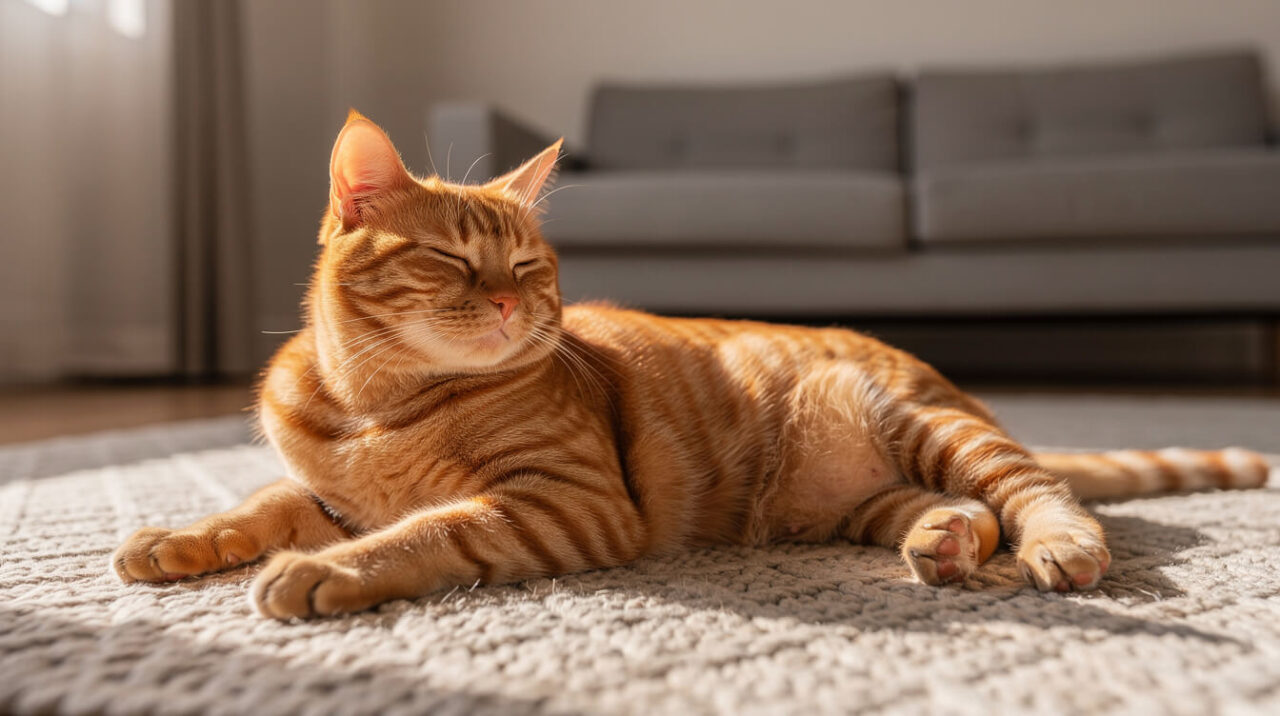
If you’ve searched this question, you’ve probably seen two answers that seem to contradict each other: the ASPCA says non-toxic, and some well-known pet sites say the plant is “technically poisonous” to cats. Both are describing the same thing from different angles, and neither is lying to you.
The “technically poisonous” framing comes from the stomach-upset side. PetMD’s article explains that the fibrous plant material can irritate a cat’s mouth, throat, and stomach lining, causing vomiting, diarrhea, reduced appetite, and lethargy, and that severity depends on how much was eaten. That’s accurate, and it’s useful. What it calls “poisonous,” though, is really irritation and bulk, not a toxin. The ASPCA uses “toxic” for plants with a chemical that harms animals, and by that standard Christmas cactus doesn’t qualify.
The distinction matters because it changes what you do next:
- With a true toxin, the dose and timing matter, and calling quickly can change the outcome even before signs appear.
- With irritation and bulk, you’re mostly watching for signs, and you call if the stomach upset doesn’t settle or if your cat ate a large amount.
Two small corrections while we’re here, because accuracy is the whole point. First, you’ll read that Christmas cactus “isn’t a true cactus.” It is one. It belongs to the cactus family, Cactaceae, and genetic work on its group describes it as one of the epiphytic forest cacti: plants that grow on tree branches in humid Brazilian forests, with spineless areoles instead of desert spines. What’s true is that it isn’t a desert cactus, which is why there’s nothing sharp to worry about. Second, if you’re copying the Pet Poison Helpline number from another website, double-check it. The correct number is (855) 764-7661, and at least one widely read article on this exact question prints it with one digit wrong.
Which holiday cactus do you have? Christmas, Thanksgiving, or Easter
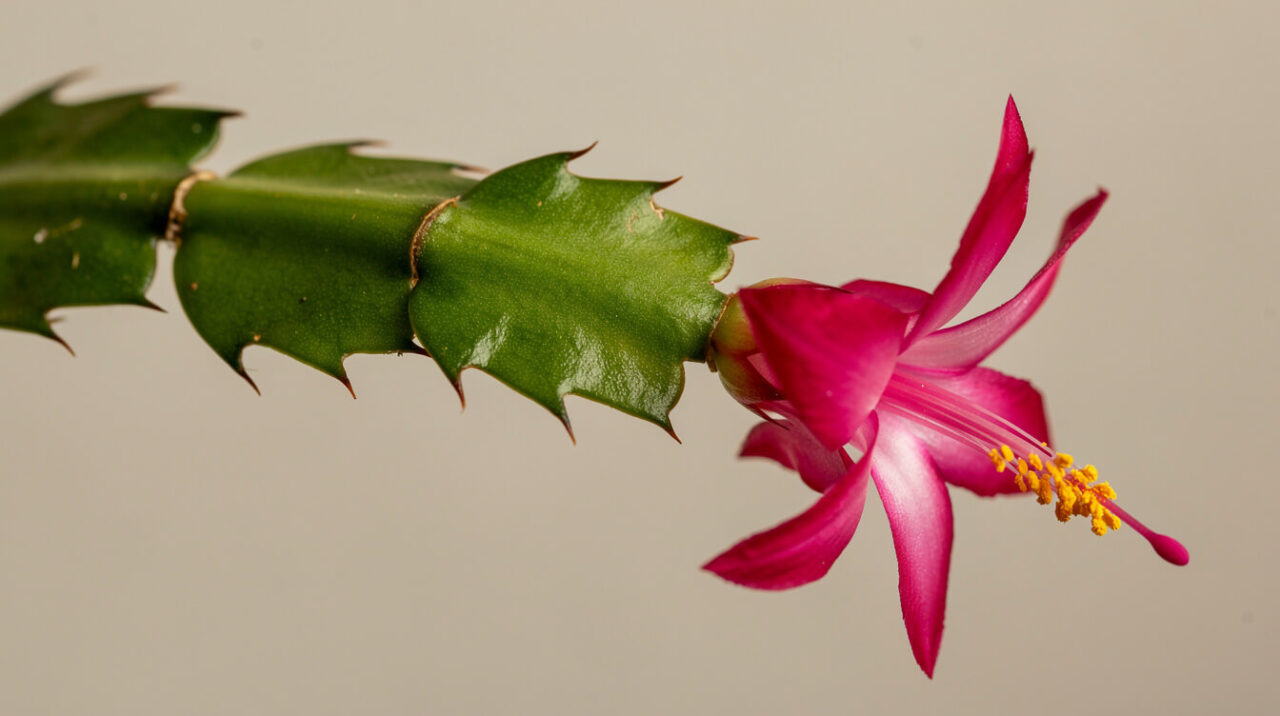
Here’s a fun twist: the plant on your windowsill may not be a Christmas cactus at all. According to Iowa State University Extension, most plants sold as “Christmas cactus” are actually Thanksgiving cactus or hybrids, and UMass Extension’s commercial growing guide says the same of most commercial cultivars. To tell them apart, look at the flat, leaf-like stem segments.
Thanksgiving cactus (Schlumbergera truncata)
Each segment has 2 to 4 pointed, upward-pointing teeth along its edges, a bit like a crab claw. The flowers have yellow pollen-bearing anthers, and the plant typically blooms from mid-November to late December.
Christmas cactus (Schlumbergera × buckleyi)
Segments have rounded, scalloped edges with no pointed teeth. The anthers are purplish-brown, and the plant blooms a little later, from late November into early February. The ASPCA entry uses an older name for this plant, Schlumbergera bridgesii, so don’t let the different label throw you.
Easter cactus (Schlumbergera gaertneri)
Segments are smoother, with slight ripples and small brownish bristles at the tips, and it blooms in spring. A 2011 genetic study moved it into the same genus as the other two.
What the ASPCA entry covers
The ASPCA has one entry: Christmas cactus, which lists “Easter cactus” as another common name. There are no separate pages for Thanksgiving or Easter cactus. All three are close relatives in the same genus, and none has a known toxin, so we’d treat them the same way: a mild-upset plant, not a poison plant. We just won’t tell you a Thanksgiving cactus is “listed” when, strictly speaking, it isn’t. If the segments on your plant look nothing like any of these three, with thick, fleshy paddles or pencil-like sticks instead, keep reading.
The lookalikes that aren’t safe: kalanchoe and pencil cactus
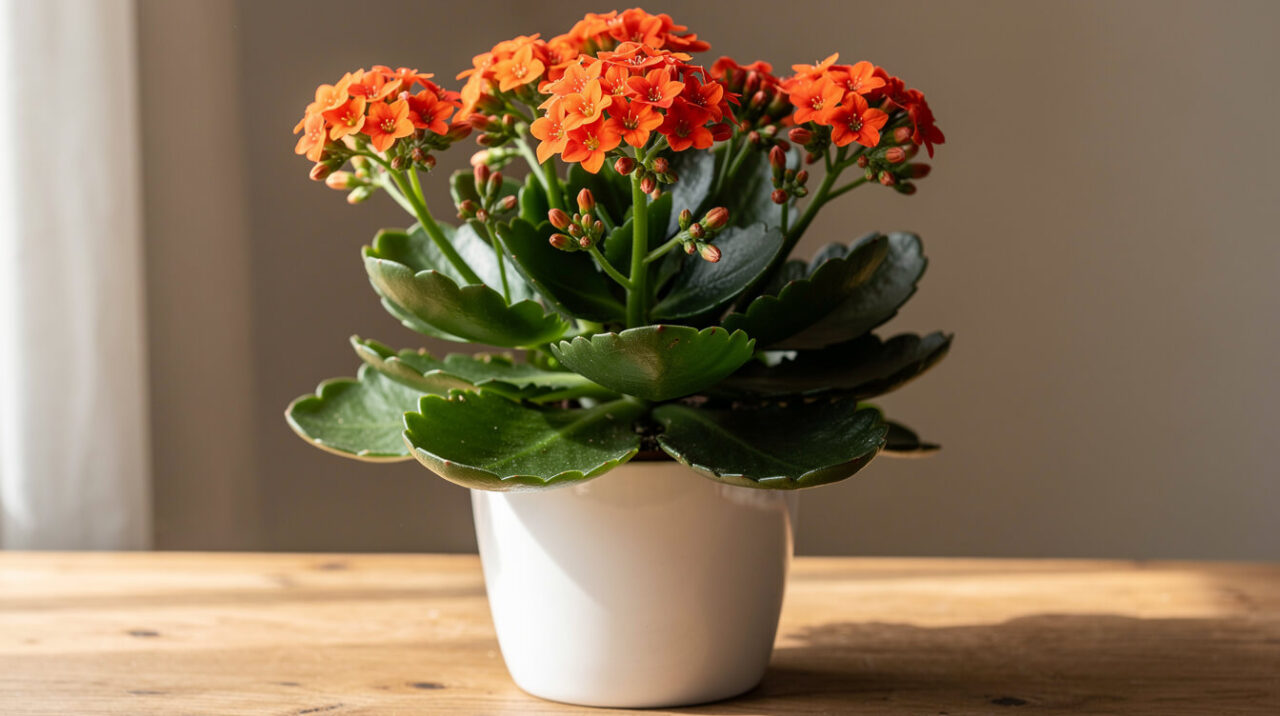
This is the section we most want cat owners to read, because almost nobody covers it. The plant that worries us this time of year isn’t the holiday cactus. It’s the gift plant that gets mistaken for one.
Kalanchoe: the one to take seriously
Florist’s kalanchoe (Kalanchoe blossfeldiana) is a succulent with thick, glossy, scallop-edged leaves and dense clusters of small, bright flowers in red, orange, yellow, pink, or white. According to a veterinary toxicology brief from NC State, it’s popular with florists because it can be forced to bloom at any time of year, including the holidays. So it ends up in the same gift baskets and on the same windowsills as holiday cacti, and a “holiday succulent with bright flowers” from a well-meaning neighbor could be either.
The difference matters. The ASPCA lists kalanchoe as toxic to cats. Its toxins are bufadienolides, a type of cardiac glycoside chemically similar to the heart drug digitalis. The listed signs are vomiting, diarrhea, and, rarely, an abnormal heart rhythm. The same toxicology brief adds three points worth knowing:
- The flowers carry more of the toxin than the leaves, stems, or roots.
- The toxic dose for cats and dogs is unknown, and published cases in pets are rare.
- Signs usually start a few hours after eating, beginning with drooling and stomach upset.
Pet Poison Helpline adds that most pets who eat kalanchoe end up with stomach upset only, so this isn’t a reason to panic. But because the toxin is real and the dose is unknown, a cat who has chewed kalanchoe, especially the flowers, is a “call now” situation rather than a “wait and see” one.
Pencil cactus: irritating, but often overstated
Pencil cactus (Euphorbia tirucalli), sometimes called sticks of fire, has bundles of thin, green, pencil-like stems. Despite the name, it isn’t a cactus at all. The ASPCA lists it as toxic to cats because of its irritant milky sap, which can irritate the mouth and stomach and sometimes cause vomiting. The ASPCA also describes its toxicity as “generally over-rated.” That calls for caution, not alarm: keep it out of reach, and call if your cat chewed it and is drooling, pawing at the mouth, or vomiting.
Quick ID rule: a holiday cactus is a chain of flat, linked segments that arch or hang. Kalanchoe is an upright plant with thick, separate, paddle-shaped leaves. Pencil cactus is a bundle of round green sticks. If you can’t tell which one your cat got into, treat it as the riskier plant and call.
The weekly care guide
Get it right for your animal, every week
One email a week: new care guides, species deep-dives, and the safety answers keepers search for, written by our specialists. No spam. Unsubscribe anytime.
My cat ate Christmas cactus: what to watch for and when to call

First, find out what was eaten and roughly how much. Check the plant for chewed segments and look around for pieces on the floor. If you aren’t sure it’s a holiday cactus, compare it with the descriptions above. Then watch your cat for the next day or so.
Common, usually mild signs
- Drooling or lip-licking shortly after chewing
- One or two vomits, often with bits of green plant
- Soft stool
- Eating a little less for a meal or two
PetMD notes these signs can appear within a few hours, and that after a small piece they often resolve on their own. Offer water as usual and let your cat rest somewhere quiet.
Call your vet or a pet poison line if
- Your cat keeps vomiting, or vomits and won’t eat
- Your cat seems lethargic, hides, or has a tender belly
- Your cat is straining in the litter box or hasn’t passed stool, especially after eating a lot of plant
- Your cat is a kitten, a senior, or has an ongoing health condition such as kidney disease, diabetes, or heart disease
- You aren’t sure of the plant, or your cat could have reached a kalanchoe or pencil cactus
- Your cat ate potting soil, fertilizer spikes or granules, or anything from a plant-care product
Two numbers to save: the ASPCA Animal Poison Control Center at (888) 426-4435 and Pet Poison Helpline at (855) 764-7661. Both are staffed around the clock, and both may charge a consultation fee. Have the plant (or a photo of it) and your cat’s approximate weight ready.
Please don’t try to make your cat vomit at home. Home methods that people use on dogs aren’t safe for cats, and for a non-toxic plant there’s nothing to gain. If your vet decides your cat needs treatment, that’s their call to make.
We can’t diagnose your cat from here. If something feels off to you, even if it doesn’t fit any list above, trust that instinct and call. Nobody at a vet clinic minds hearing “my cat chewed a plant, is this OK?”
How to cat-proof a Christmas cactus
The good news is that keeping a holiday cactus and a cat in the same home is very doable. You aren’t protecting your cat from a poison. You’re protecting a fragile plant from a curious cat, and sparing your rug some cleanup.
Use the plant’s natural habit
In the wild, holiday cacti grow hanging from tree branches and rocky cliffs, as UW–Madison Extension describes. That makes a hanging planter a good fit for the plant and an easy fix for the cat problem. Hang it away from furniture, shelves, and cat trees your cat could launch from, and check the hook will hold a watered pot.
Move it before buds form, not during bloom
Here’s the keeper detail most pet articles miss. Holiday cacti tend to drop their buds if they’re moved once buds have formed, and Iowa State advises waiting until the first flowers open before moving the plant. So give the cactus its cat-safe spot early in the fall. If it’s already budding, a temporary barrier works better than a relocation.
Give your cat something better to chew
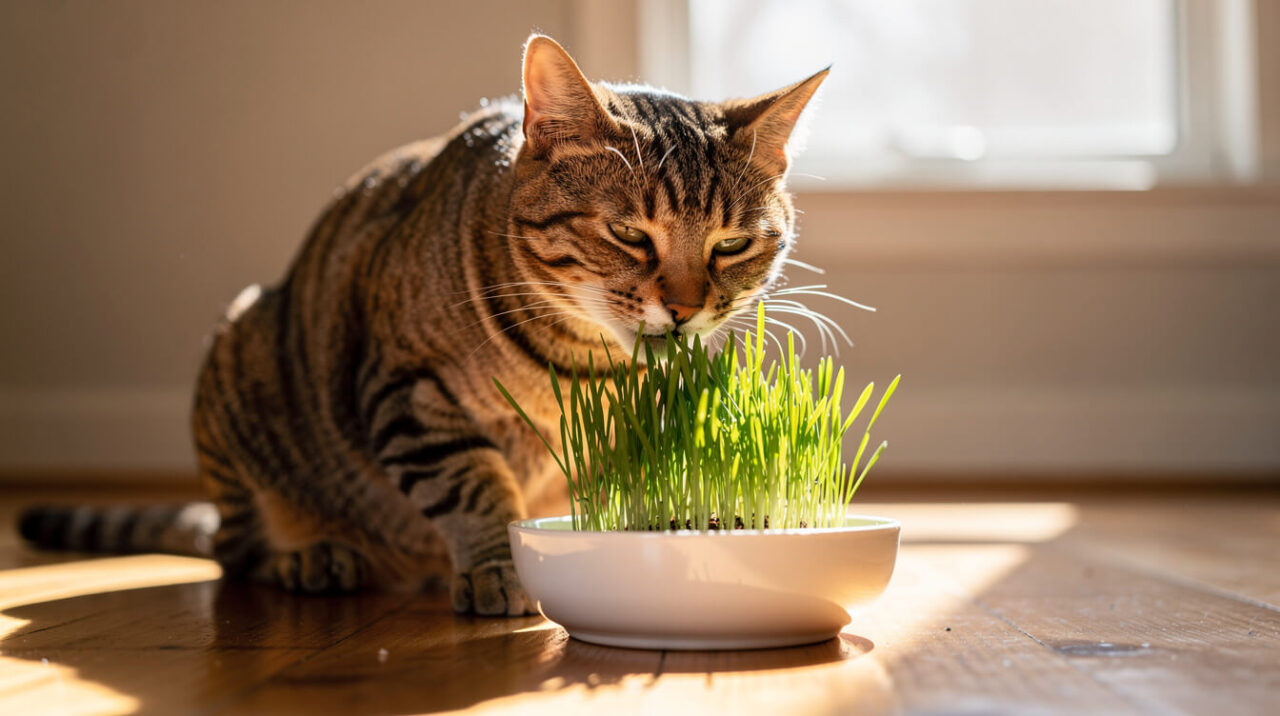
Many cats chew plants because they like the texture. A pot of cat grass (usually wheat, oat, or barley grass) kept at floor level gives them a “yes” plant to go with the “no” plant. Place it somewhere your cat already likes to hang out, and keep it fresh.
A cat who loves to explore the windowsill is a cat who’s engaged with their world, and you’re making that world safer. If you’re shopping for a fellow animal lover this season, our Bearded Dragon Crown Sunglasses King T-Shirt makes a fun gift for the reptile keeper in your life. We don’t have a cat design yet, but plenty of homes have both a sunny cat perch and a basking lamp.

A gift for the reptile keeper on your list
Our crowned, sunglasses-wearing beardie, for the friend whose windowsill holds a holiday cactus and whose living room holds a basking lamp.
Skip the citrus spray
Some plant sellers suggest spritzing diluted lemon juice around the pot, since many cats dislike the smell. We’d skip it. The ASPCA lists lemon as toxic to cats, with essential oils and psoralens as the toxic principles, and anything sprayed near a plant tends to end up on the fur your cat grooms. We made the same case about citrus deterrents in our guide to keeping a Christmas tree safe for cats. Placement, a hanging planter, and a better chewing option do the job without adding anything to your cat’s coat.
Mind the soil, the fertilizer, and the tag
The plant may be harmless, but what’s in the pot isn’t always. Store-bought holiday cacti are commercially grown, and growers treat them for pests like fungus gnats and thrips. Read any plant tag, keep fertilizer spikes and plant-care products sealed and stored away, and if your cat has dug up and eaten a lot of soil, call your vet. A layer of large, smooth pebbles over the soil discourages digging.
If your cat broke a piece off
Here’s a happy ending: broken segments can grow into new plants. UW–Madison Extension suggests letting cuttings dry in a shady spot for 2 to 3 days, then planting them in perlite or a well-drained potting mix. Holiday cacti are often passed down for generations, and a cat-pruned stem is as good a start as any.
Is Christmas cactus poisonous to cats? Quick answers
Is Thanksgiving cactus poisonous to cats?
There’s no separate ASPCA entry for it, but it’s a close relative of Christmas cactus in the same genus, and none of the holiday cacti has a known toxin. Treat it the same way: a mild stomach-upset risk, not a poison.
Is Christmas cactus poisonous to dogs?
No. The ASPCA lists it as non-toxic to dogs as well. The same caveat applies: a big mouthful of plant can still cause vomiting or diarrhea. For a holiday plant that is toxic to dogs, see our guide to whether poinsettias are poisonous to dogs, which also explains what “toxic” really means on these lists.
Can the flowers hurt my cat?
The ASPCA lists the whole plant as non-toxic, and that includes the flowers. If your “holiday cactus” has thick paddle-shaped leaves and clusters of small flowers, though, it may be a kalanchoe, and with kalanchoe the flowers are the most toxic part. When in doubt, call.
My cat ate a whole segment. Is that a lot?
One or two segments is a small amount for most adult cats and usually causes nothing more than a vomit. A cat who has stripped a large part of the plant, or a small kitten who ate several segments, is worth a call to your vet, mainly because of the bulk.
Why does my cat keep chewing my cactus?
Usually texture, boredom, or curiosity about something new in the house. Cat grass, more play, and a hanging planter usually solve it. If your cat suddenly starts eating plants, fabric, or other non-food items when they never did before, mention it to your vet, since a change in appetite or behavior can have a medical cause.
What other plants should I check?
Search the plant’s name on the ASPCA’s toxic and non-toxic plant list for cats before it comes home. That includes gift plants, which are easy to accept without thinking. If your cat also likes to sample your plate this time of year, our guides to which vegetables cats can eat and sweet potatoes for cats cover the holiday table.
Final thoughts
A Christmas cactus is one of the kindest holiday plants you can bring into a home with a cat. It’s listed as non-toxic, it lives for decades, and the worst a curious cat is likely to get from it is an upset stomach. Save your caution for the real lookalike, kalanchoe, and for the soil and fertilizer in the pot. Hang the cactus or put it out of reach, give your cat a pot of grass of their own, and keep both poison-line numbers in your phone.
You looked this up because you care about getting it right, and that’s exactly the instinct that keeps cats safe. Enjoy the blooms.
Before you go
Keep learning your animal
We publish a new guide every day. The best of them land in one short weekly email, so you never miss the one about your species.

Dr. Lila Monroe is a seasoned veterinarian with a passion for feline health and behavior, boasting over 20 years of experience in the field. With her extensive knowledge of cat medicine combined with a deep understanding of the nuanced dynamics of cat behavior, Lila offers readers invaluable insights into creating a nurturing environment for their feline friends.