Is Rosemary Safe for Cats? The Plant, the Extract in Cat Food, and the Oil Aren’t the Same Answer
If there’s a turkey roasting with rosemary in your kitchen today and a cat supervising from the counter stool, you’ve probably wondered the same thing: is rosemary safe for cats? The honest answer depends on which rosemary you mean. The plant on your windowsill, the “rosemary extract” printed on your cat’s food bag, and the little bottle of rosemary essential oil are three different things, and they get three different answers.
Here’s the short version. The plant is listed as non-toxic to cats. The extract in cat food is a regulated antioxidant used in tiny amounts. The essential oil is the one to keep away from your cat. Below, we’ll walk through why, including something no other guide we found mentions: European regulators have already done the cat-versus-dog math on rosemary, and their cat limits are noticeably tighter. We’ll also cover the potted rosemary “Christmas trees” that show up in stores every December.
Is rosemary safe for cats? The short answer, form by form
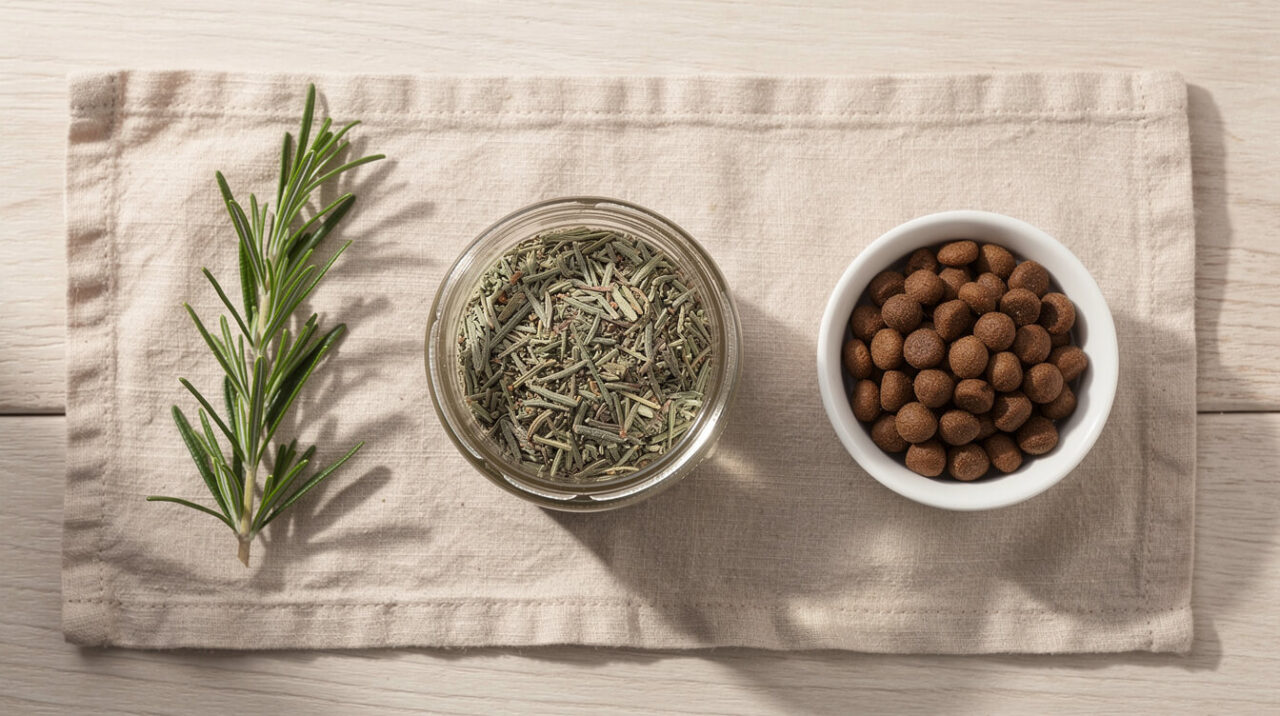
Start with the source almost every article cites. The ASPCA’s plant database lists rosemary (Rosmarinus officinalis, family Lamiaceae) as “Non-Toxic to Dogs, Non-Toxic to Cats, Non-Toxic to Horses.” That’s the entire entry. It’s about the plant. It doesn’t mention extracts or essential oils at all, so it can’t be stretched to cover them, even though some pages do exactly that.
| Form | Verdict for cats | Why |
|---|---|---|
| Fresh or dried rosemary plant | Safe to sniff, bat at, or nibble | ASPCA lists the plant as non-toxic. A big munch might cause a bout of vomiting, as many plants can. |
| Rosemary extract in cat food or treats | Fine at regulated levels | It’s a natural antioxidant used to keep fats from going rancid, in very small amounts. Regulators have assessed it for cats specifically. |
| Rosemary essential oil (drops, diffusers, sprays) | Keep it away from your cat | Concentrated oil, and cats clear these compounds poorly. Europe’s feed-safety limit for the oil is tighter for cats than for any other species it named. |
One more twist worth knowing: botanists have moved rosemary into the sage genus, so you’ll now see it called Salvia rosmarinus in newer scientific papers. It’s the same plant. The new name doesn’t change its safety listing.
Why cats are different: the liver enzyme cats don’t have
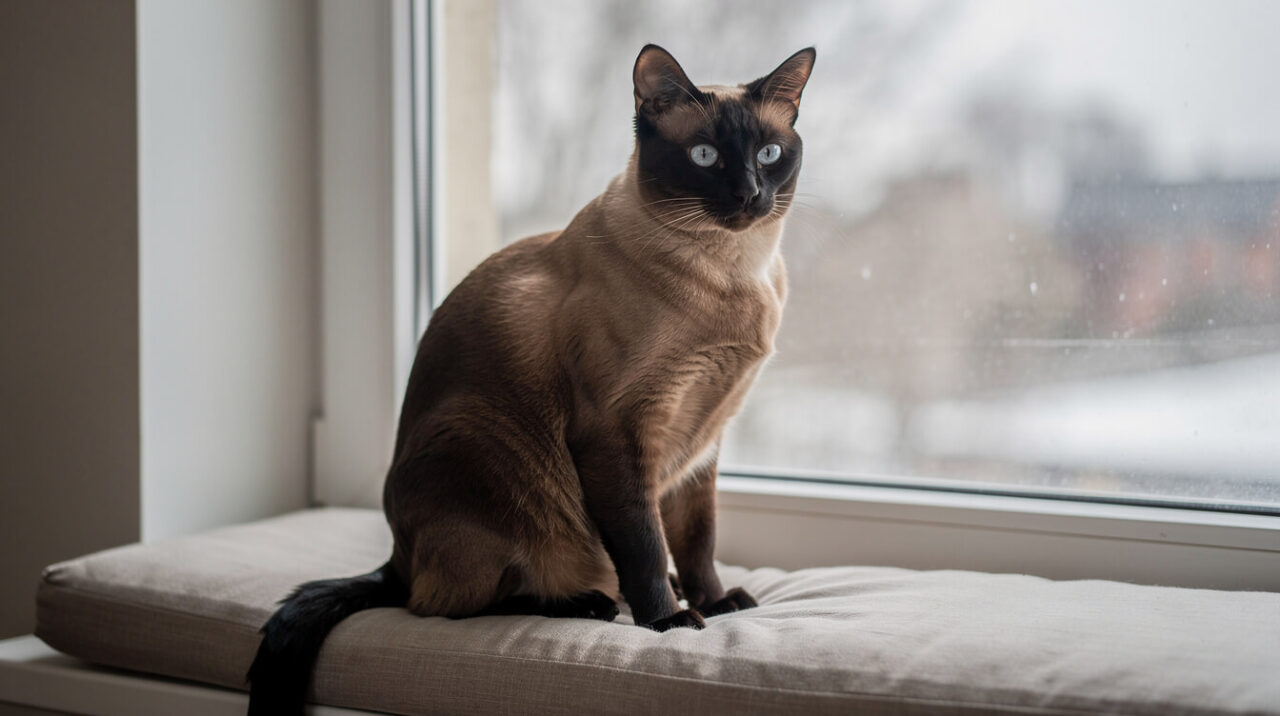
If you’ve ever been told “essential oils are worse for cats than for dogs,” this is the reason, and it’s real biology rather than internet folklore.
Most mammals clear many plant compounds with a liver process called glucuronidation. It attaches a sugar-acid tag to the compound so the body can flush it out. Cats are notoriously bad at this. A 2000 genetics study found that the gene for one of the key enzymes in that pathway, UGT1A6, “is a pseudogene in the domestic cat,” meaning it’s broken and doesn’t produce a working enzyme. The Merck Veterinary Manual says the same thing in clinical terms: cats are more sensitive to essential oils “because they are deficient in the enzyme glucuronyl transferase.” The Pet Poison Helpline puts it simply: “Cats lack an essential enzyme in their liver and as such have difficulty metabolizing and eliminating certain toxins like essential oils.”
What the regulators did with that fact
Here’s the part nobody else covers. The European Food Safety Authority (EFSA) assesses every additive allowed in EU animal feed, and it has assessed rosemary for pets more than once. The two most recent opinions:
- Rosemary extract (2022 opinion): EFSA concluded the maximum safe concentrations “were 300 and 50 mg/kg feed, for dogs and cats, respectively.” That’s a cat limit six times tighter than the dog limit. EFSA’s stated reason: an extra safety factor of 5 for cats “due to the unusually low capacity for glucuronidation in cats.”
- Rosemary essential oil (2025 opinion): safe in complete feed at 20.8 mg/kg for dogs and 14.1 mg/kg for cats. That’s about 1.5 times tighter for cats, and it’s the lowest limit EFSA set for any species it named, chickens included. For cats, EFSA required a safety margin of 500 instead of the usual 100, again because cats have “an unusually low capacity for glucuronidation, particularly for aromatic compounds.”
So depending on the product, the cat limit runs 1.5 to 6 times tighter than the dog limit.
Keep this in perspective. These are precautionary ceilings, not measured toxic doses. EFSA noted that “no tolerance studies in dogs or cats have been provided,” so it built the numbers from a 90-day rat study and then stacked safety margins on top. Exceeding one of these limits doesn’t mean a cat gets sick. It means the cushion regulators wanted is gone. They are a careful regulator’s way of saying “cats need a bigger buffer,” which is exactly the right instinct.
Rosemary extract in cat food and treats
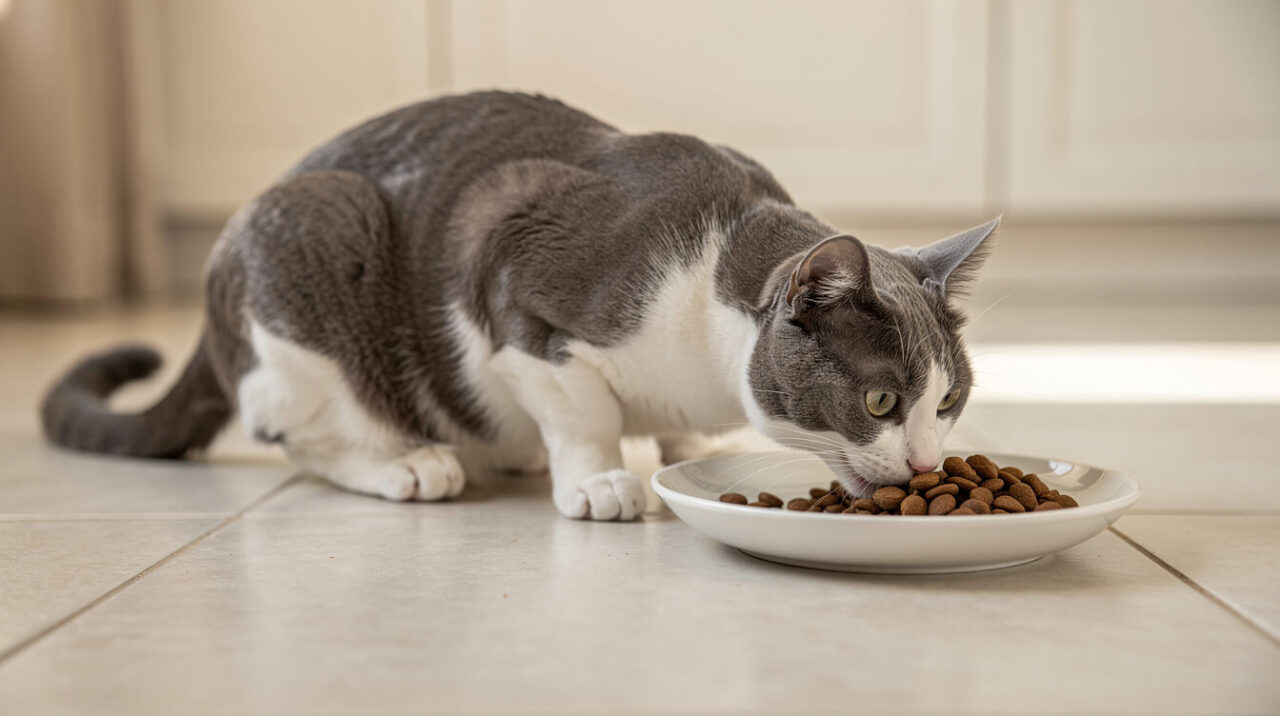
Turn over a bag of premium kibble and there’s a good chance you’ll find “rosemary extract” near the end of the ingredient list. It’s there as a preservative, not a flavor or a supplement. Its antioxidant compounds (mainly carnosic acid and carnosol) slow down the fats in the food going rancid. It is not the same thing as the essential oil, and it’s used in very small amounts.
What about camphor, the compound people worry about in rosemary? EFSA checked. The extracts it assessed are specified to contain less than 150 mg of camphor per kg of extract. At the cat use level, that works out to camphor concentrations in the food about 40 times lower than the safety threshold for that class of compound, and EFSA called it “not of concern.”
Clearing up two common mix-ups
- “The FDA says 50 mg/kg is safe for cats.” You’ll see this on Q&A sites. The 50 mg/kg cat figure is EFSA’s, word for word, from the European assessment above. We couldn’t find a US cat-specific limit for rosemary extract.
- “Rosemary is GRAS, so it’s safe for pets.” US feed rules (21 CFR 582.20) do list rosemary among the essential oils and extractives “generally recognized as safe” for their intended use in animal feed. But the same list also includes peppermint, lavender, clove, cinnamon, and thyme oils, and the Pet Poison Helpline names peppermint, cinnamon, and clove oils among those known to poison cats. GRAS covers flavoring-level use in feed. It doesn’t mean “safe in a diffuser.”
What about cats with epilepsy or diabetes?
You may have read that rosemary causes seizures. We traced that claim. The human evidence is real: a 1999 neurology report listed rosemary among 11 plant oils considered convulsants in people, because of their camphor and cineole content. But a PubMed search for rosemary and seizures in cats or dogs returns zero records, and rosemary isn’t on Merck’s list of essential oils that can cause seizures in animals. We found no published case of a cat harmed by rosemary extract in food, and no feeding trial in cats either. Nobody has studied it in epileptic cats, so nobody can call it proven safe for them, or proven risky.
If your cat has epilepsy, diabetes, or liver disease and you’re worried about an ingredient, bring the bag to your vet rather than switching foods in a panic. A sudden diet change can cause its own problems, and your vet knows your cat’s history.
Rosemary essential oil, diffusers, and candles: is rosemary oil safe for cats?
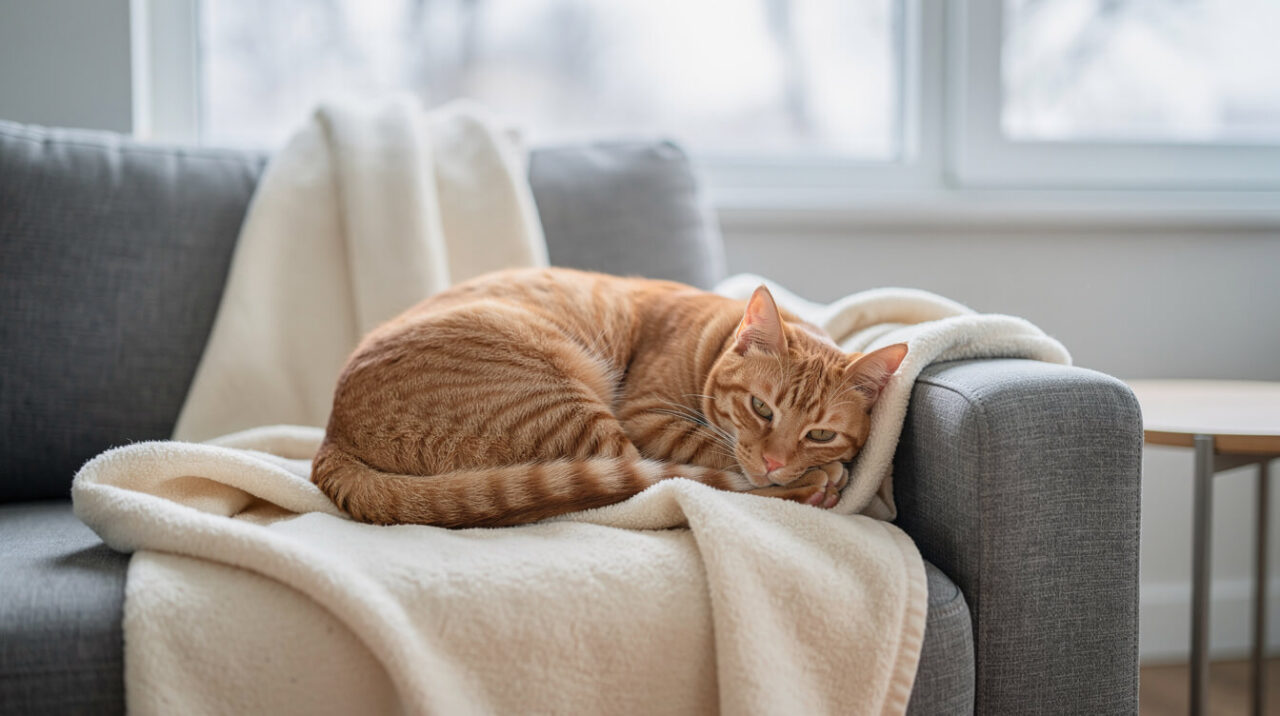
This is where “rosemary is safe for cats” stops being true. Essential oils are concentrated, and cats absorb them through the gut, the skin, and the lungs. They also groom constantly, so anything on their fur ends up in their mouth.
The math, for a 10-pound cat
To show why a single drop matters, here’s EFSA’s cat ceiling turned into something you can picture:
- EFSA assumes a cat eats 20 g of dry matter per kg of body weight a day. A 10-lb cat (4.54 kg) eats about 91 g of dry matter, or roughly 103 g of complete food a day.
- At 14.1 mg of rosemary oil per kg of food, that cat’s daily ceiling is about 1.5 mg of oil.
- One drop of essential oil is roughly 0.03 to 0.05 mL, and rosemary oil weighs a little under 1 g per mL, so one drop is about 25 to 45 mg.
- That single drop is roughly 20 to 30 times the cat’s daily feed ceiling.
Two caveats. Drop sizes vary between bottles, and EFSA’s figure is for oil mixed into food, while real-life exposures usually come through fur, skin, and the air. So treat this as a sense of scale, not a dose. The scale is the point: a drop that seems like nothing to us is a big amount for a cat. For the same reason, we don’t give dilution advice for cats. Skip putting rosemary oil on your cat, its bedding, or its toys, full stop.
Diffusers, candles, and “rosemary-scented” products
- Active diffusers (ultrasonic and nebulizing) send out actual oil microdroplets. Merck notes these can collect on fur in the same room, then get absorbed through the skin or swallowed during grooming.
- Passive diffusers (reed diffusers, candles, plug-in warmers) don’t emit droplets. Unless one tips over, the main risk is breathing irritation. The Pet Poison Helpline says cats with asthma, airborne allergies, or exposure to secondhand smoke are at greater risk.
- “Rosemary-scented” on a candle or spray doesn’t always mean rosemary. It may be a synthetic fragrance blend, so the label tells you less than you’d think.
If you love the scent, enjoy it in a room your cat can leave and that you can air out, and keep active diffusers out of shared spaces. Merck also advises keeping pets out of a room while a diffuser runs, running it for short periods only, and ventilating afterward. If your cat has asthma or any breathing condition, ask your vet before using any scented product at home. The same oil-versus-plant split applies to dogs, as we covered in our guide to peppermint and peppermint oil.
If your cat gets into rosemary oil
Signs Merck lists after ingestion or skin contact include vomiting, drooling, lethargy, wobbliness, and not eating. After breathing it in, watch for watery eyes, coughing, or wheezing. Move your cat to fresh air and call your veterinarian, the Pet Poison Helpline at (855) 764-7661, or the ASPCA Animal Poison Control Center at (888) 426-4435 (both may charge a consultation fee). Don’t try home remedies or wash the oil off with anything until a professional tells you how.
The weekly care guide
Get it right for your animal, every week
One email a week: new care guides, species deep-dives, and the safety answers keepers search for, written by our specialists. No spam. Unsubscribe anytime.
Your potted rosemary “Christmas tree”: a cat-safe setup

Every December, garden centers and grocery stores fill up with little rosemary plants sheared into cone-shaped “Christmas trees.” Good news first: a plain live rosemary topiary is the same plant the ASPCA lists as non-toxic, so it’s one of the friendlier holiday plants you can bring home with a cat. What deserves a second look is everything that comes with the plant.
- Is it live or artificial? Some “rosemary trees” are plastic. Those aren’t covered by the ASPCA entry at all, and chewed plastic needles are a swallowing and blockage concern, not a rosemary one.
- Glitter, flocking, or paint. Some store trees are glittered or spray-painted for the season. We couldn’t find any safety data on these coatings for cats. They aren’t food, so choose a plain green tree or skip the decorated one.
- Foil and pot sleeves. Take them off. Crinkly foil is very tempting to chew and bat, and it traps water around the roots, which isn’t good for the plant either.
- The potting mix. Store plants often get fertilizer, and the Pet Poison Helpline notes fertilizers “may also contain herbicides, pesticides, and fungicides.” A small taste usually means mild stomach upset at most, but covering the soil with a layer of large pebbles or a fitted pot cover keeps curious paws out.
- Skip the “refresher” sprays. Rosemary-oil sprays sold to boost the scent bring the oil problem right back. The live plant smells lovely on its own.
- Ornaments and tipping. Tiny ornaments and tinsel on a tabletop tree end up exactly at cat height. A top-heavy cone in a narrow pot also tips easily, so give it a heavy, wide pot or a high, stable shelf.

For the keeper who checks every label
The Bearded Dragon Crown Sunglasses King T-Shirt is for anyone who researches every plant, product, and ingredient before it comes home to their animals, whether they’re furred or scaled. A soft everyday tee for the household’s resident animal nerd.
If you’re setting up a full-size tree as well, our guide to whether a Christmas tree is safe for cats covers tree water, tinsel, and a cat-proof layout. And if a Christmas cactus is on your list, here’s what the ASPCA actually lists for Christmas cactus and its lookalikes.
Can cats eat rosemary? Sniffs, nibbles, and why we skip the daily topper
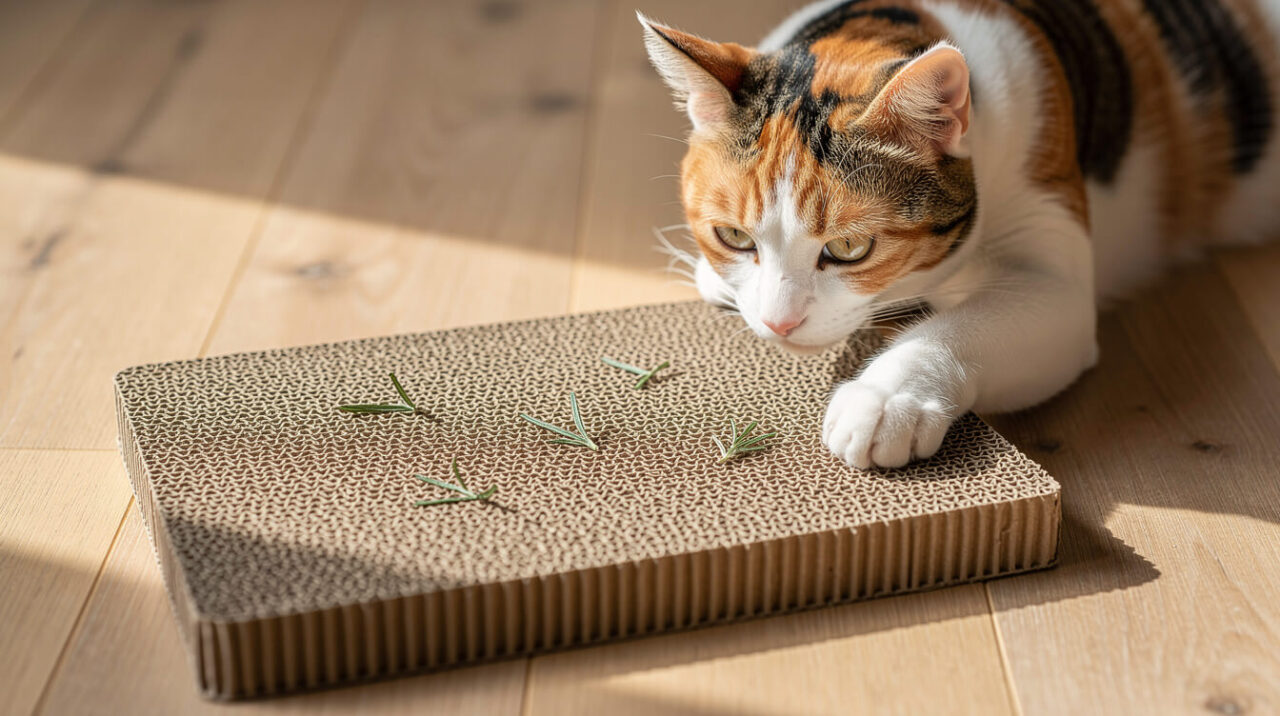
Yes, a cat can safely nibble the plant. A few chewed needles or a curious lick of a sprig is nothing to worry about. Some cats love rosemary. Others find the smell off-putting, which is why it shows up in some cat-deterrent sprays. Both reactions are normal.
Where we part ways with some guides is the advice to stir rosemary into your cat’s food every day. One popular article suggests mixing ¼ teaspoon of dried rosemary into each meal and calls it nutritious. We ran the numbers using USDA FoodData Central (1 teaspoon of dried rosemary weighs 1.2 g), so ¼ teaspoon is about 0.3 g. Here’s what that delivers:
- Calories: about 1 kcal, or 0.4% of the roughly 260 kcal a 10-lb cat needs in a day
- Calcium: about 3.8 mg, compared with the 500-plus mg a day a complete cat food supplies to a 10-lb cat
- Iron: about 0.09 mg
- Vitamin C: about 0.2 mg, and cats make their own vitamin C anyway
- Vitamin A: about 0.5 µg, from plant carotenoids that cats use far less efficiently than the preformed vitamin A in meat (we explain that in our sweet potato guide)
In other words, nutritionally it’s a rounding error. Your cat’s complete food already covers everything. (The same goes for most plant foods; our guide to vegetables for cats walks through the ones worth offering.) There’s no harm in a pinch now and then, but there’s no nutritional reason to make it a daily habit either. (Rosemary leaves also carry a little of their own natural oil, a few milligrams in that ¼ teaspoon, which is one more reason we’d keep it to an occasional treat rather than a daily topper.)
Cat-friendly ways to share rosemary
- A single fresh sprig to sniff or bat around on the floor, then pick it up when playtime’s over
- A few dried needles scattered on a cardboard scratcher for scent enrichment, the same way you might use catnip
- A pot of rosemary on a sunny windowsill that your cat can investigate, kept clear of fertilizer residue
One Thanksgiving-specific caution: rosemary itself is fine, but rosemary dishes usually aren’t. Roast turkey, stuffing, and potatoes made with rosemary often also contain garlic, onion, butter, and salt, and garlic and onion are toxic to cats. If you’d like to share the turkey, our guide to the safe Thanksgiving bites for cats shows how to do it with plain meat.
If your cat does eat a lot of a rosemary plant, a single episode of vomiting or soft stool is the most likely result. Keep an eye on them, offer fresh water, and call your vet if the vomiting continues, if they stop eating, or if they seem unusually lethargic. You noticed and you looked it up, which is exactly what a good keeper does.
And if your household’s resident animal obsession happens to have scales instead of fur, our Bearded Dragon Crown Sunglasses King T-Shirt is the one holiday item in this guide with no rosemary at all.
Is rosemary safe for cats? Frequently asked questions
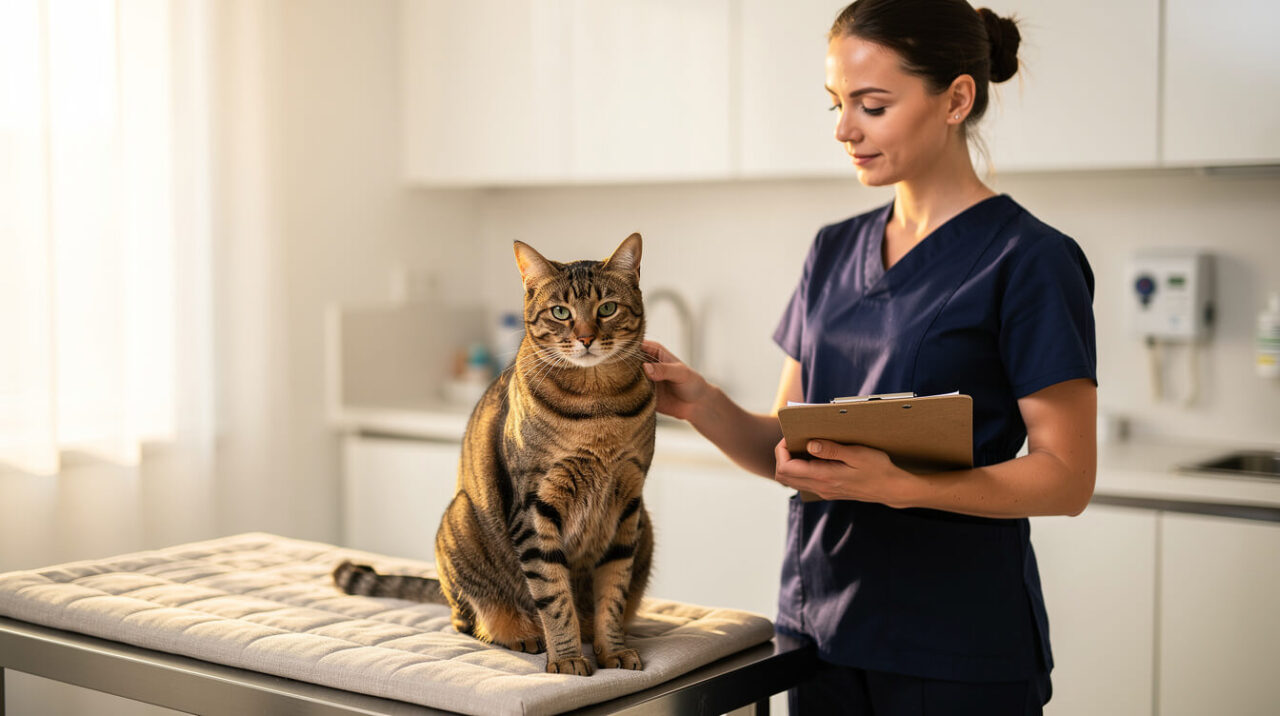
Is rosemary oil safe for cats?
No. Keep rosemary essential oil off your cat, its bedding, and its toys, and out of shared rooms in active diffusers. Cats process these compounds poorly, which is why EFSA’s rosemary-oil limit for cats is the tightest of any species it assessed.
Can I diffuse rosemary around my cat?
We’d skip it in any room your cat uses. Active diffusers leave oil droplets on fur, and even passive ones can irritate a cat’s airways, especially in cats with asthma. If you diffuse at all, do it briefly, in a room your cat can’t enter, and air it out afterward.
Is rosemary extract in cat food safe?
Yes, at the small amounts used as a preservative. It’s a different product from the essential oil, and European regulators have assessed it specifically for cats. If your cat has a medical condition and you’re concerned, talk it over with your vet before changing foods.
Can rosemary cause seizures in cats?
There’s no published report of it. The seizure concern comes from human case reports involving the concentrated oil, and Merck’s list of seizure-causing essential oils in animals doesn’t include rosemary. That’s still one more reason to keep the oil away.
Is a rosemary Christmas tree safe for cats?
A plain, live rosemary topiary is non-toxic. Remove the foil, cover the soil, skip glittered or painted versions and scent sprays, and use a stable pot.
Do cats like the smell of rosemary?
It varies. Some cats rub on it happily, and others walk away. It’s used in some cat-deterrent sprays for that reason.
Is rosemary the same as catnip?
No, though they’re in the same mint family (Lamiaceae). Interestingly, the ASPCA lists catnip as “Toxic to Cats” because large amounts can cause vomiting and diarrhea, while rosemary, sage, basil, and thyme are listed non-toxic. Mint, oregano, marjoram, and lavender are listed toxic for the same kind of stomach upset. In the ASPCA’s database, “toxic” often means “may upset the stomach in large amounts” rather than “dangerous in a nibble.”
My cat licked rosemary oil. What do I do?
Call your vet, the Pet Poison Helpline at (855) 764-7661, or the ASPCA Animal Poison Control Center at (888) 426-4435 right away, and follow their instructions. Don’t induce vomiting or apply anything to your cat’s fur unless a professional tells you to.
The bottom line
So, is rosemary safe for cats? The plant, yes. Let them sniff it, bat a sprig around, and enjoy that little rosemary tree, once the foil is off. The extract in their food, yes, at the levels it’s used. The essential oil, no. Cats really are built differently, and the regulators who did the math agree. You’re already doing the important part: asking before you share. Your cat is lucky to have you.
Before you go
Keep learning your animal
We publish a new guide every day. The best of them land in one short weekly email, so you never miss the one about your species.
Dr. Lila Monroe is a seasoned veterinarian with a passion for feline health and behavior, boasting over 20 years of experience in the field. With her extensive knowledge of cat medicine combined with a deep understanding of the nuanced dynamics of cat behavior, Lila offers readers invaluable insights into creating a nurturing environment for their feline friends.