Can Dogs Eat Chestnuts? Sweet vs. Horse Chestnut, the Fat Myth, and How Much to Share
The roasting pan comes out, the kitchen smells like a street-corner vendor in December, and a nose appears at your knee. So, can dogs eat chestnuts? Yes, if they’re the right chestnuts. Plain sweet chestnuts, cooked and peeled and broken into small pieces, are a safe occasional treat for most dogs. Horse chestnuts and buckeyes are a different tree entirely, and they’re toxic. Most of the risk with chestnuts comes from mixing up those two, not from the roasted ones in your kitchen.
This guide covers how to tell the two apart and why the warning that chestnuts are “high in fat” is wrong (USDA numbers below). It also gives a sensible portion for your dog’s size, how to prepare them, the holiday chestnut foods to skip, and what to do if your dog picked up a conker on a walk.
Can dogs eat chestnuts? The short answer
Yes, sweet chestnuts (the genus Castanea) are not toxic to dogs. The ASPCA lists the American chestnut as non-toxic to dogs, cats, and horses. The European, Chinese, and Japanese chestnuts sold in stores and roasted at holiday markets are close relatives from the same genus. What makes them safe or unsafe for your dog is how they’re served:
- Fine as an occasional treat: plain chestnuts, cooked until soft, with the hard shell and the thin papery inner skin removed, then crumbled or chopped.
- Skip: whole chestnuts still in the shell, the spiky burrs they grow in, moldy nuts from the ground, and anything salted, sugared, candied, or cooked into a dish with onion or garlic.
- Never: horse chestnuts (conkers) and buckeyes (Aesculus). They’re a different plant family and contain aesculin and other saponins. If your dog ate one, call your vet. There’s more on that below.
Chestnuts don’t offer your dog anything a complete diet doesn’t already cover. You’ll see “antioxidants, fiber, and potassium” pitched as benefits, and chestnuts do contain all three, but a few crumbs a week won’t change your dog’s nutrition. The real reason to share is that your dog enjoys it. That’s a perfectly good reason, as long as the portion stays small.
Sweet chestnut, horse chestnut, or buckeye: how to tell what your dog found
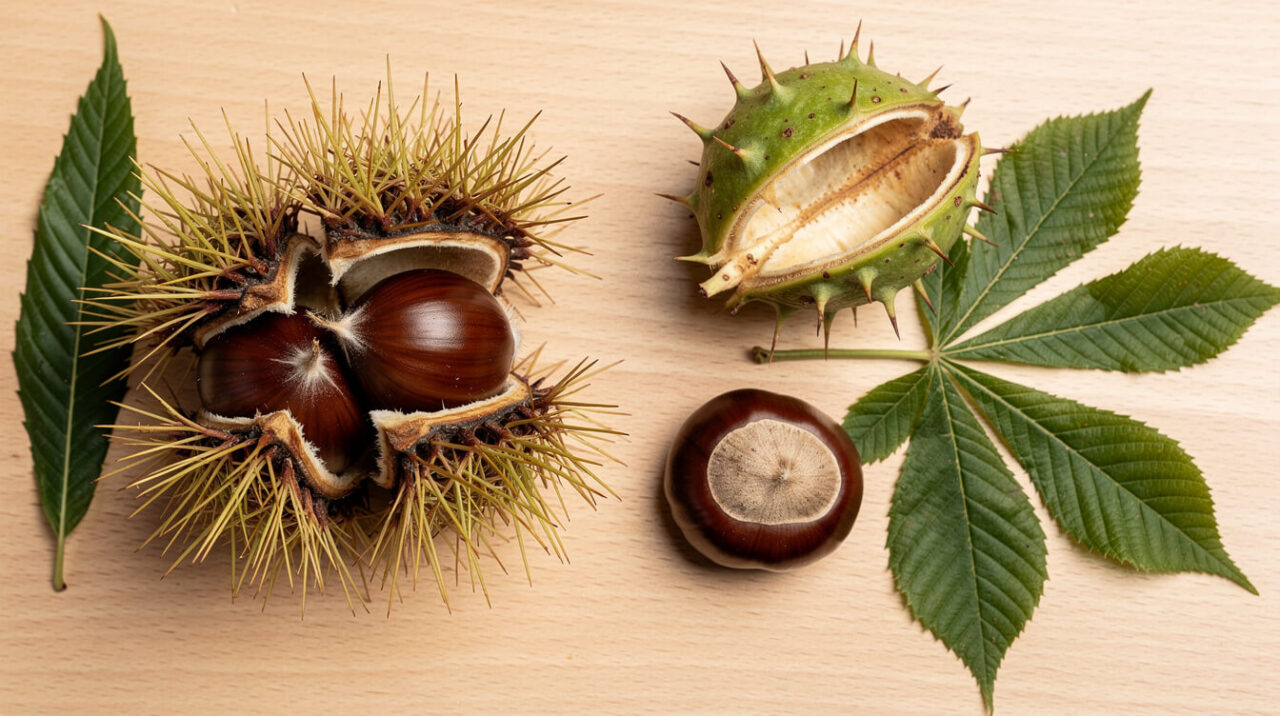
Chestnuts bought at a store are always the edible kind. The trouble starts outdoors. Horse chestnuts are common street and park trees, and in the US their native cousins, the buckeyes, grow across a wide range. Pet Poison Helpline places them from the Midwest east to the Appalachians and south to Texas, and names the red buckeye (Aesculus pavia) as the most toxic species. The ASPCA’s own “horse chestnut” entry is actually filed under the Ohio buckeye, Aesculus glabra, which tells you how loosely these names get used.
People confuse them too. A 22-year review from the poison control center in Marseille, France, found horse chestnut in 2.5% of 2,197 cases where someone ate a toxic plant they’d mistaken for an edible one (Torrents et al., 2024). If adults foraging for dinner get it wrong, a shiny nut on the sidewalk isn’t something to guess about.
| Feature | Sweet chestnut (Castanea), the edible kind | Horse chestnut or buckeye (Aesculus), toxic |
|---|---|---|
| Husk | A burr covered in dense, sharp, needle-like spines, like a sea urchin | Leathery; smooth, warty, or set with a few short, stout spikes |
| Nuts per husk | Often 2–3, flattened where they press together | Usually one large, round, glossy seed (sometimes 2–3) |
| The nut itself | Ends in a pointed tip with a small tuft | No point; a large pale circular scar like a “deer’s eye” |
| Leaves | Single long leaves with saw-toothed edges | Palm-shaped compound leaves, usually 5–7 leaflets from one point |
Those traits come from The American Chestnut Foundation’s look-alike guide and Allegheny County Parks’ buckeye notes. The leaf is the fastest check: if the tree overhead has hand-shaped leaves, treat anything under it as off-limits. Even so, don’t rely on a quick look on a walk. For your dog, the safest rule is simple: outdoor nuts are never treats. The chestnuts your dog eats should come from a store package or your own oven.
One more outdoor note. The American Chestnut Foundation says more than 80% of the leaves people send in for identification come from Chinese chestnuts or Chinese-American hybrids. So if you have a “chestnut tree” in your yard, it’s likely an edible kind. That still doesn’t make the windfall safe. Spiny burrs can lodge in paws and lips. Whole nuts in their shells are a choking and blockage risk. Nuts that sit in wet leaves can mold, and chestnuts are a known host for the aflatoxin-producing mold Aspergillus flavus (Prencipe et al., 2018). Rake the yard during the drop, the same advice we give for backyard persimmon trees.
Are chestnuts high in fat? What the USDA numbers actually say
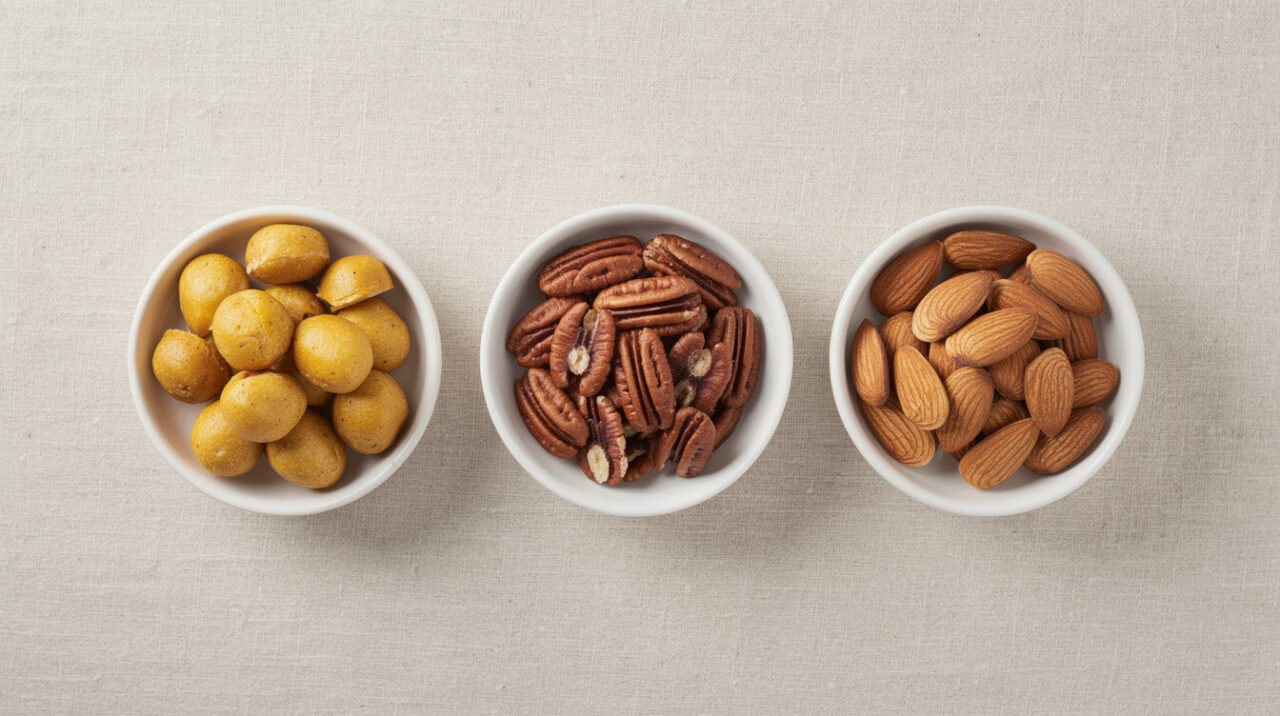
Almost every page that answers this question warns that chestnuts are “high in fat” and can trigger pancreatitis. That’s a reasonable guess if you lump chestnuts in with other nuts. But chestnuts aren’t like other nuts. Nutritionally they behave more like a starchy vegetable than an almond:
| Per 100 g (USDA FoodData Central) | Calories | Fat | Share of calories from fat |
|---|---|---|---|
| European chestnuts, roasted | 245 kcal | 2.2 g | ~8% |
| Chinese chestnuts, roasted | 239 kcal | 1.2 g | ~4.5% |
| Almonds | 579 kcal | 49.9 g | ~78% |
| Pecans | 691 kcal | 72.0 g | ~94% |
| Macadamia nuts | 718 kcal | 75.8 g | ~95% |
Sources: USDA FDC 170190 (roasted European chestnuts), 170573, 170567, 170182, and 170178. Share of calories from fat = grams of fat × 9 ÷ total calories.
Here’s what that means in practice. Say a 20-pound dog gets its whole daily treat allowance as roasted chestnuts. That’s about 0.5–0.6 g of fat. The same calories as pecans would carry about 5–7 g, roughly eleven times as much. On a dry-matter basis, roasted chestnuts are about 3.7% fat. That’s below the 5.5% minimum the AAFCO nutrient profile sets for adult dog food. A chestnut is leaner than your dog’s own dinner.
So why does the pancreatitis warning keep showing up? Our best guess is that it’s copied from general advice about nuts, which really are fatty. The real fat risk with chestnuts is the company they keep: chestnut stuffing made with butter and sausage, or leftovers scraped off a rich holiday plate. A plain roasted chestnut isn’t what makes a dog’s December plate risky. If your dog has a history of pancreatitis or is on a prescribed diet, check with your vet before adding any new food, chestnuts included.
Chestnuts are mostly starch, and that’s the real reason to keep portions small. A big helping of an unfamiliar starchy food can mean gas, loose stools, or an upset stomach. That’s the limit you’ll reach first, long before fat or calories.
How many chestnuts can dogs eat? The calorie math, and a smaller starting point
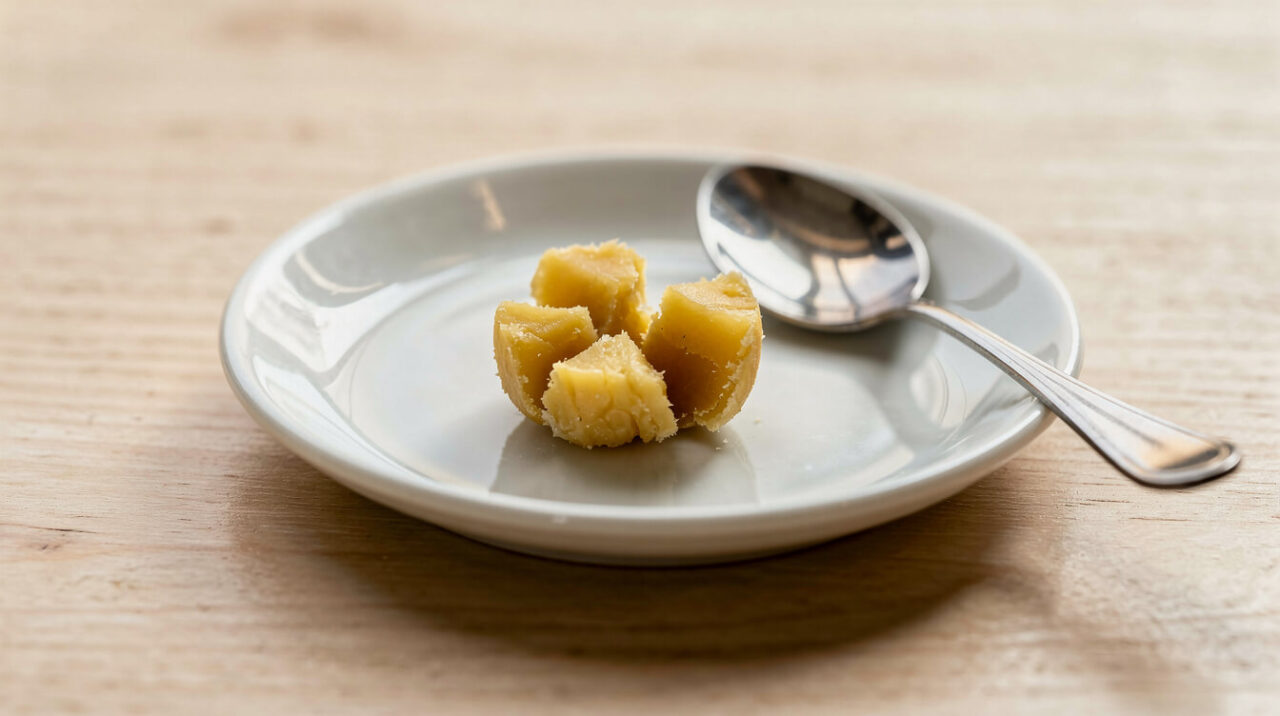
The usual rule for treats is that they shouldn’t make up more than about 10% of a dog’s daily calories. USDA lists 10 roasted European chestnut kernels at 84 g, so one kernel is about 8.4 g and roughly 21 kcal. Here’s what the 10% rule allows. We used the standard resting-energy formula (70 × body weight in kg0.75) and a typical adult maintenance range of 1.4 to 1.8 times that:
| Dog’s weight | 10% treat budget | Roasted chestnut that “fits” | About how many kernels | Where we’d actually start |
|---|---|---|---|---|
| 5 lb | 18–23 kcal | 7–10 g | ~1 | A few crumbs |
| 10 lb | 30–39 kcal | 12–16 g | ~1½–2 | About ¼ of a chestnut |
| 20 lb | 51–66 kcal | 21–27 g | ~2½–3 | About ½ a chestnut |
| 40 lb | 86–111 kcal | 35–45 g | ~4–5 | 1 chestnut |
| 60 lb | 117–150 kcal | 48–61 g | ~5½–7 | 1 chestnut |
| 80 lb | 145–186 kcal | 59–76 g | ~7–9 | 1–2 chestnuts |
Kernel = one peeled roasted European chestnut, about 8.4 g (USDA). Big Italian “marroni” and some Chinese chestnuts run larger, so go by weight or break them in half. The 10% budget is for all treats combined, not chestnuts alone.
Why is the right-hand column so much smaller than the calorie math? Calories aren’t the limit here. Chestnuts are dense and starchy, and most dogs have never had one, so the first serving should test your dog’s stomach, not use up the treat budget. No study sets a “safe number of chestnuts” for dogs. The last column is our cautious starting point, not a tested threshold. If the first piece goes down without gas or soft stools over the next day, a chestnut or two now and then is reasonable for a medium or large dog. Keep it occasional rather than daily, and remember the rest of the day’s treats count too.
Small dogs need the most care, both because the calorie budget is tiny and because a whole chestnut is a mouthful for them. Always serve chestnut in pieces, never whole, whatever your dog’s size. Fast eaters gulp anything round and firm.
The weekly care guide
Get it right for your animal, every week
One email a week: new care guides, species deep-dives, and the safety answers keepers search for, written by our specialists. No spam. Unsubscribe anytime.
How to prepare chestnuts for your dog (and the raw-chestnut myth)
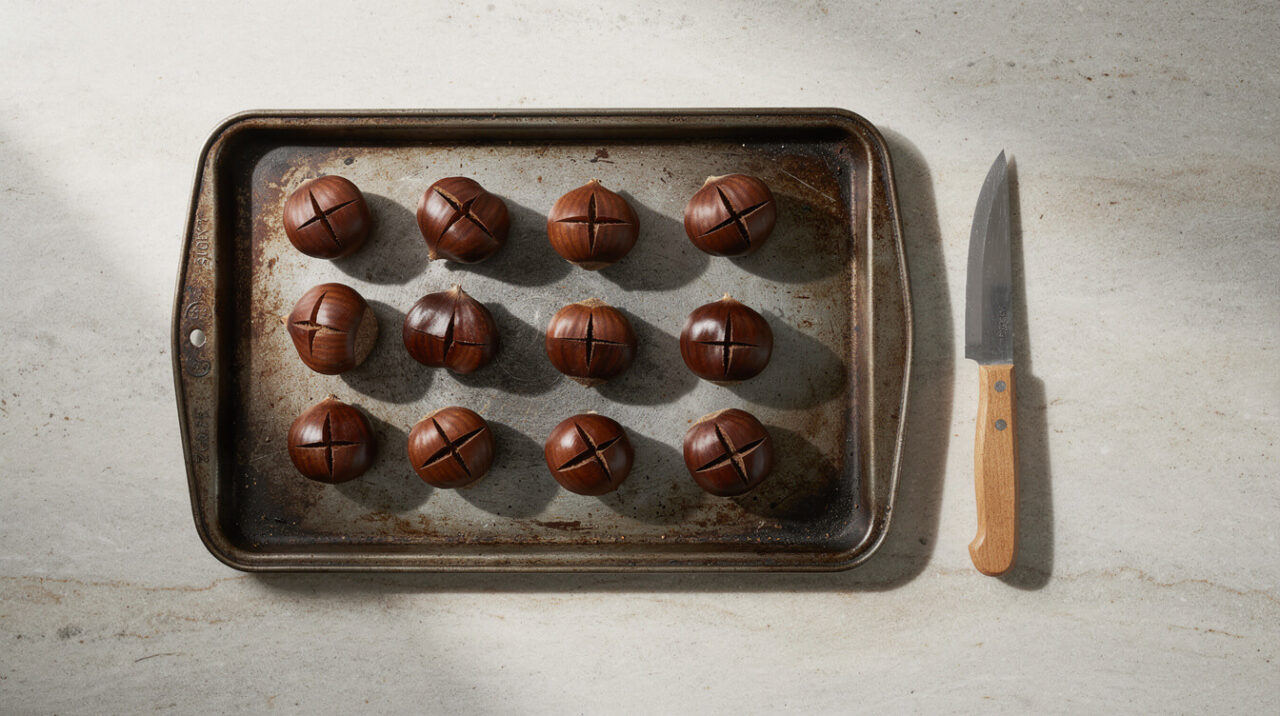
If you’re already roasting chestnuts for yourself, setting aside a dog-safe piece takes about a minute:
- Start with chestnuts sold for eating. Fresh, vacuum-packed, or jarred all work. In USDA’s branded-foods database, 27 of the 29 ready-to-eat whole chestnut products we checked list nothing but chestnuts. The two exceptions add salt, and one of those (a salt-and-pepper style) carries 350 mg of sodium per 100 g. Read the label, especially on flavored packs.
- Score and cook. Cut an X through the shell so steam can escape, then roast or boil until the flesh is soft all the way through. No butter, salt, sugar, or spice on your dog’s piece.
- Peel both layers. Remove the hard outer shell and the thin brown inner skin. The shell is the part that can splinter or lodge in the gut.
- Cool and crumble. Let it cool completely, then break it into small, soft pieces or mash it over your dog’s regular food.
Plenty of pages say raw chestnuts are “toxic” because of tannic acid. That overstates it. We couldn’t find a veterinary report of a dog poisoned by raw sweet chestnuts. Chestnut tannins are concentrated in the parts you peel off. When researchers measured raw European chestnuts, the inner skin held about six times the total phenolic content of the nut itself (Mustafa et al., 2021), and roasting has been reported to lower total tannins further. The honest reasons to cook are practical ones. Raw chestnuts are hard, astringent, and harder to digest, and a cooked chestnut crumbles into safe pieces where a raw one doesn’t. So cook it, and peel off the inner skin.
Holiday prep is a good time to give your dog a job of their own: a sniff-and-find game with a few kibble pieces, or a stuffed chew in a quiet corner while the pan is hot. Lots of households have more than one kind of animal, and the dog waiting by the oven may share the house with a lizard basking under a lamp. If that sounds like your place, our Bearded Dragon Crown Sunglasses King T-Shirt is a nod to the resident who’d rather nap through the whole thing.

Wear the obsession
The Bearded Dragon Crown Sunglasses King T-Shirt: a crown, shades, and the calm confidence of an animal that has never once begged at the oven door. For keepers whose household runs on more than one species.
One last prep tip: give the chestnut piece away from the table, in your dog’s own bowl. Dogs who learn that chestnuts arrive at the dinner table also learn to watch the dinner table, and a lot of holiday food is much riskier than a chestnut.
Chestnut foods to keep off your dog’s plate, plus good news about water chestnuts
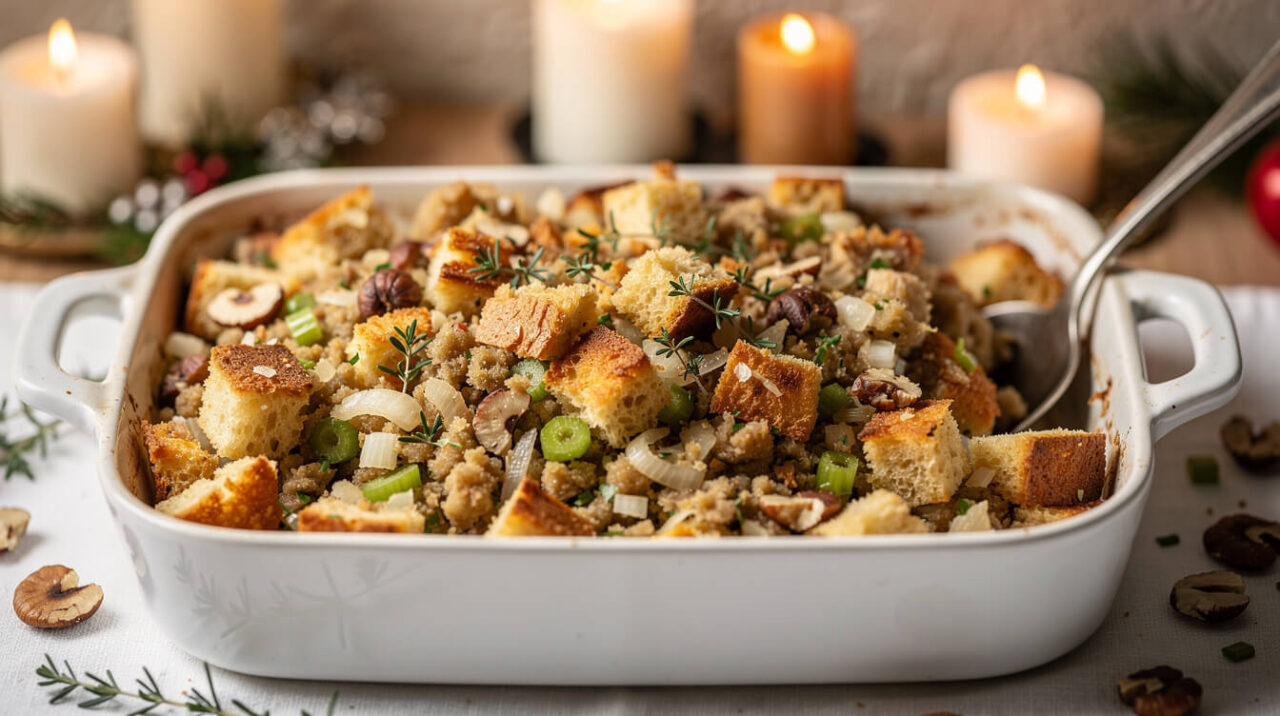
The plain nut is fine. The trouble comes from what chestnuts get cooked into in November and December:
- Chestnut stuffing. The usual base is onion, often garlic, butter, and sometimes sausage. One store-bought chestnut stuffing in the USDA database lists celery and onions as its first two ingredients. Onion and garlic in every form, including powders, can damage a dog’s red blood cells. Our guide to dogs and stuffing works out how much onion a typical serving actually holds.
- Chestnut cream, purée, and spreads. Unsweetened purée (just chestnuts and water) is fine in a tiny amount. Sweetened chestnut cream is another story: one Italian brand lists 56 g of sugar per 100 g. And one chestnut spread is sweetened with grape and date juice concentrates. Grapes and grape products are on every vet’s do-not-feed list, so read the label before you share a lick.
- Marrons glacés and candied chestnuts. These are chestnuts preserved in sugar syrup. Skip them.
- Salted, seasoned, or chocolate-coated chestnuts. Check flavored snack packs for salt, garlic, or onion powder. Chocolate-coated anything is a firm no.
- Baked goods with chestnut flour. The flour itself isn’t the issue. The sugar, butter, and spices in the recipe are. If it’s a spiced holiday bake, see what we found about nutmeg and gingerbread.
Water chestnuts are a different plant, and they’re fine
Water chestnuts aren’t nuts at all. They’re the crisp underwater corms of a sedge (Eleocharis dulcis), and they have nothing to do with horse chestnuts. Plain water chestnuts, sliced small, are fine for most dogs as a crunchy, low-calorie bite. Some guides warn that canned water chestnuts are “high in salt.” The labels say otherwise. We checked the 65 packaged (canned) water chestnut products in USDA’s branded database that list water chestnuts first and report sodium. They contain water chestnuts, water, and sometimes citric acid, with a median of 0 mg sodium per 100 g and a maximum of 36 mg. The salt comes from the stir-fry sauce, not the can. Rinse them, cut them into small pieces, and serve plain.
What to do if your dog ate a conker, buckeye, or whole chestnut
If you think your dog ate a horse chestnut or buckeye, call your veterinarian now, or call ASPCA Animal Poison Control at (888) 426-4435 or Pet Poison Helpline at (855) 764-7661 (both may charge a consultation fee). Don’t try to make your dog vomit at home. A hard nut can do damage coming back up, and inducing vomiting is a decision for your vet or the poison line, not something to try from a search result. If you can, bring along or photograph the nut, its husk, and a leaf from the tree. Note roughly how many your dog ate and whether they were chewed or swallowed whole.
Here’s what the poison specialists report, so you know what you’re dealing with. The UK’s Veterinary Poisons Information Service, which takes calls from vets, reports that about a third of dogs that eat conkers never show signs. When signs do appear, they’re mostly gastrointestinal, with vomiting the most common. VPIS says severe poisoning is “very uncommon, despite what you may read on the Internet,” and the outcome is generally good. The bigger concern is obstruction, where the outlook is more guarded. Vets Now notes that signs usually start one to six hours after eating but can be delayed up to two days, that there’s no antidote, and that blockages are more likely in smaller dogs. Pet Poison Helpline adds that large amounts of buckeye can cause neurologic signs, ranging from mild to severe.
Signs to watch for, and to report to your vet:
- Vomiting or diarrhea
- Belly pain, restlessness, or lethargy
- Wobbliness, tremors, or dilated pupils
- Repeated vomiting, refusing food, or straining with little or no stool, which can point to a blockage
A whole sweet chestnut swallowed in its shell isn’t a poisoning, but it can still cause a blockage, especially in a small dog. The same goes for a mouthful of spiny burr. Call your vet for advice, and go in promptly if any of the blockage signs above appear. If a spine is stuck in a paw or lip and doesn’t come out easily, let your vet remove it.
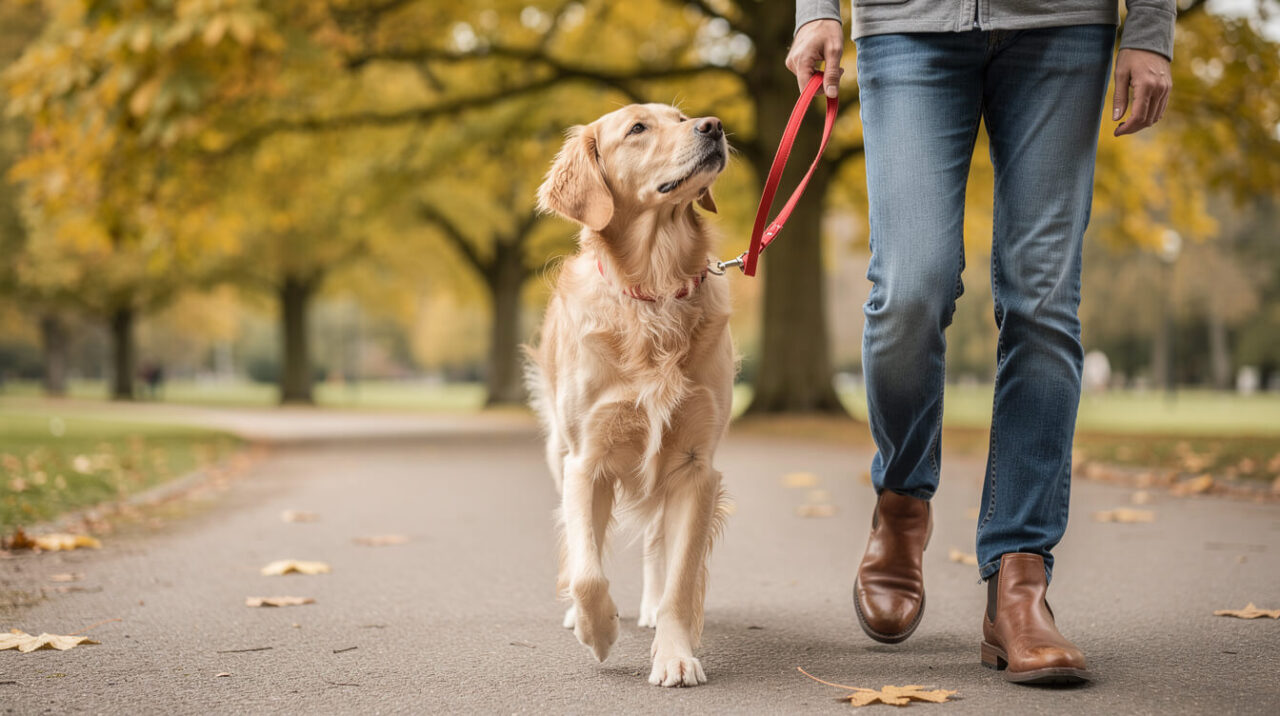
Prevention is mostly a matter of leash and habit. Walk on a shorter lead under horse chestnut and buckeye trees in the fall, bring a toy so there’s something better to carry, and practice “leave it” and “drop it” before the season starts. And never throw a conker for your dog to fetch, however tempting.
Can dogs eat chestnuts? Frequently asked questions

Can dogs eat roasted chestnuts?
Yes, as long as they’re plain, fully peeled (shell and inner skin), cooled, and broken into pieces. Start with a crumb or two for small dogs, and about half to one chestnut for medium and large dogs.
Can dogs eat raw chestnuts?
Cooked is better. Raw sweet chestnuts aren’t the poison some sites claim, but they’re hard, astringent, and tougher to digest, and they don’t break into safe pieces the way cooked ones do.
Are chestnuts good for dogs?
They’re a safe, lean treat, not a supplement. The fiber, potassium, and antioxidants are real, but the amounts in a treat-sized portion won’t change anything for a dog on a complete diet.
Can puppies eat chestnuts?
There’s no special chestnut risk for puppies, but their stomachs are often more sensitive and their calorie needs should go to puppy food. If you share, keep it to a crumb, and wait until your puppy is settled on its regular diet.
Can dogs eat water chestnuts?
Yes. They’re a different plant, and plain canned ones carry almost no sodium. Rinse, slice small, and skip any that come in a sauce.
Is a buckeye the same as a horse chestnut?
Close enough to treat them the same way. Both belong to the Aesculus genus. “Horse chestnut” usually means the European tree planted in parks and along streets, and “buckeye” means the native American species. All of them are toxic to dogs.
My dog ate a chestnut we dropped on the floor. Should I worry?
If it was a peeled, plain, cooked chestnut from your kitchen, most dogs will be fine. Watch for an upset stomach over the next day. If it was whole in its shell, came from outside, or you’re not sure what it was, call your vet.
The bottom line on dogs and chestnuts
The roasted chestnut in your hand is one of the gentler holiday foods to share. It’s low in fat, plain, and easy to portion, as long as it’s peeled, cooled, and crumbled. The real risks are the look-alike from the park and the stuffing on the table. Learn the leaf and the burr, keep outdoor nuts out of your dog’s mouth, and keep the onion dishes on your plate. If you’re putting together a full holiday plan, our guides to poinsettias and dogs and cranberry sauce cover two more seasonal questions. And when in doubt about anything your dog ate, call your vet. Asking first is never the wrong move.
Before you go
Keep learning your animal
We publish a new guide every day. The best of them land in one short weekly email, so you never miss the one about your species.

Meet Jake Harrington, your go-to guru for all things canine. With over 15 years of professional dog training experience, Jake has transformed the lives of thousands of dogs and their owners. His journey began in the bustling streets of a major city, where he discovered his natural affinity for understanding canine behaviors and communication.