
Can Dogs Eat Tamales? The Husk, the Raisin Math, and What 157 Store Labels Show
Can dogs eat tamales? No. A tamale isn’t a food to share with your dog, but most stolen tamales turn out to be a stomach problem, not a poisoning. The answer depends on three things more than on the tamale itself: whether the husk went down too, whether it was a sweet tamale with raisins, and how many disappeared compared with the size of your dog.
Tamale season is also counter-surfing season, so I put real numbers behind the usual warnings. I went through 157 packaged tamale ingredient labels in the USDA’s branded food database, three family recipes for sweet tamales, two for red chile pork, and the Merck Veterinary Manual chapters on onion, raisins, salt, and gut blockages.
If your dog just ate one, skip ahead to the calm checklist. If you’re planning a tamalada and want to keep your dog out of it, read on.
Can dogs eat tamales? The short answer
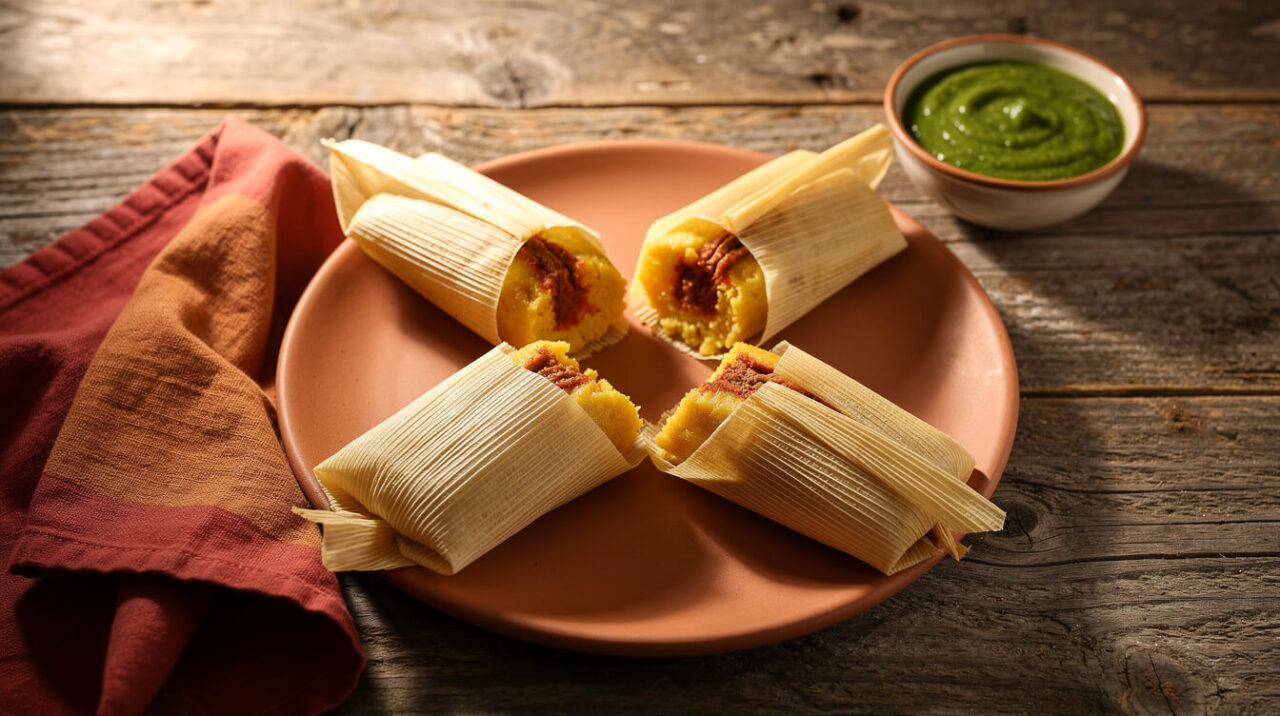
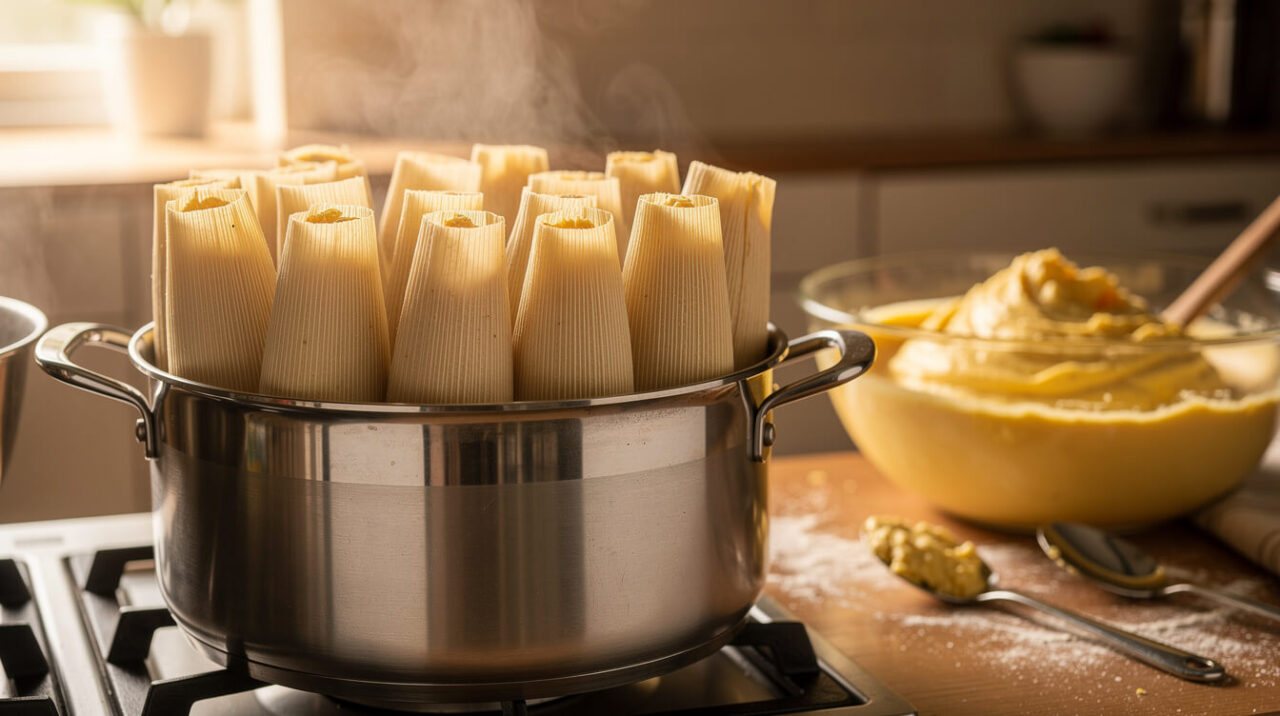
A tamale is masa (corn dough, usually beaten with lard or oil and seasoned broth) spread on a corn husk or banana leaf, filled, folded, and steamed. Nothing about it is made for a dog. The masa is rich, the filling is seasoned, and the wrapper isn’t food for anyone.
Here’s what should lower your shoulders a little. If your dog ate a savory tamale with the husk already off, the main problem for most dogs is calories and fat. The usual worst case is an upset stomach, some vomiting, or loose stool. Small dogs, dogs who ate several, and dogs with a history of pancreatitis are the exceptions, and the rest of this guide shows why.
What changes the answer:
- The husk or leaf went down too. A wrapper is a foreign body, not fiber. Call your vet now, even if your dog seems fine.
- It was a sweet tamale with raisins. Call your vet or a pet poison line now, whatever the size of your dog. The raisin math below explains why one tamale is enough.
- Size, compared with your dog. One tamale is a quarter of a 40-pound dog’s daily calories and three-quarters of a 10-pound dog’s.
- Your dog’s health history. Dogs who’ve had pancreatitis, dogs with heart or kidney disease on a low-sodium diet, and dogs on a prescription diet should get a lower bar for calling.
So the useful question isn’t “are tamales toxic?” It’s “which tamale was it, and what came with it?”
My dog ate a tamale: a calm checklist

Take a breath. Most dogs who steal a tamale are fine, and these steps will tell you quickly whether yours needs a call tonight.
- Check breathing first. Gagging, pawing at the mouth, struggling to breathe, or pale or blue gums means a husk may be stuck. That’s an emergency, so go to the nearest emergency vet.
- Move everything else out of reach, including the steamer pot, the platter, and the trash, so there’s no second helping and no second dog.
- Count what’s missing. How many tamales? Were they still in their husks? Look for torn husk pieces on the floor and work out how much is unaccounted for. Also check for anything that was tied or tucked in: string, strips of husk used as ties, foil, or toothpicks.
- Identify the kind. Pork, chicken, beef, cheese and chile, or sweet? If sweet, were there raisins? If they came from a package, keep the label. If a relative made them, ask what went into the filling and the sauce.
- Call now if any of these are true: your dog swallowed any husk, banana leaf, string, foil, or toothpick; the tamales had raisins; your dog is small and ate more than one; your dog has had pancreatitis; or your dog is already vomiting, retching without bringing anything up, or acting painful or unusually quiet.
- Don’t make your dog vomit at home. No hydrogen peroxide, no salt, no fingers down the throat. A husk that comes back up can get stuck on the way, and whether vomiting is even the right move is your vet’s call.
- If none of those apply, keep fresh water available, skip the next meal or two only if your vet suggests it, and watch your dog closely over the next day or two.
Who to call: your own vet first. If they’re closed, call an emergency clinic, the ASPCA Animal Poison Control Center at (888) 426-4435, or the Pet Poison Helpline at (855) 764-7661. Both poison lines charge a consultation fee. Have your dog’s weight, the number of tamales, the kind, and the time ready.
Signs that mean “go in now,” even if you were told to watch at home: repeated vomiting, retching that produces nothing, a swollen or tender belly, refusing food, straining without passing stool, weakness, or collapse. Onion and garlic signs come later. Merck notes that the red-blood-cell damage typically shows 3 to 5 days after exposure, so watch for pale or yellowish gums, weakness, or collapse later in the week.
Can dogs eat tamale corn husks? Why the wrapper is the main worry
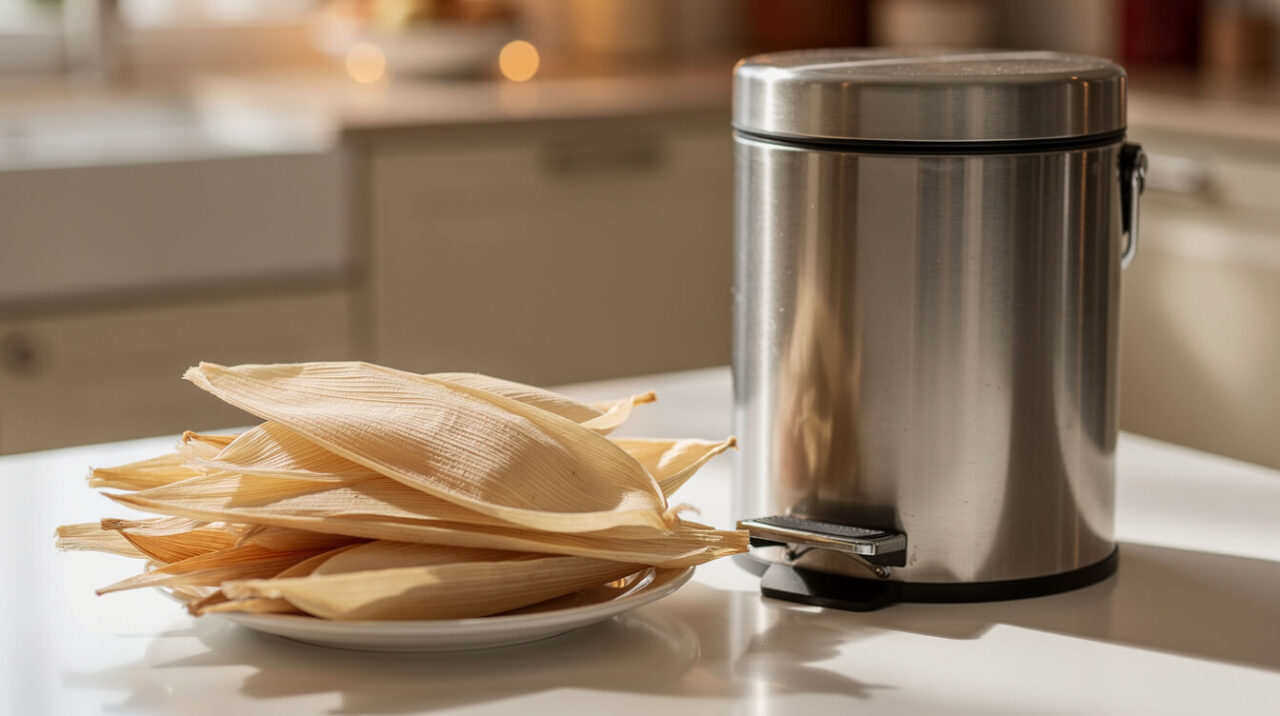
No. Corn husks are dried, papery leaves built to survive hours of steaming without falling apart, and a dog’s stomach doesn’t do much better. Banana leaves, used for Oaxacan and many Central American tamales, are the same story.
The Merck Veterinary Manual describes the foreign bodies that cause blockages in dogs as objects that “cannot be digested,” are slowly digested, or are “too large to pass through the GI tract.” A husk that a dog gulps folded or half-chewed can tick more than one of those boxes. Merck also notes that young, large-breed dogs are more likely to develop foreign-body obstructions, which describes a lot of the dogs tall enough to reach a stovetop.
Do dogs usually pass tamale husks?
Often, yes, and that’s worth saying plainly so nobody panics. In one vet Q&A thread that ranks for this question, a veterinary technician said husks are “a very common occurrence and in most cases they do pass especially in a larger dog,” then added that in some cases “they do cause a blockage.”
What I couldn’t find was a published veterinary study that counts how often tamale husks pass. So nobody can give you a percentage, and a small dog, a dog who swallowed several husks, or a dog who gulped a husk whole is a different situation from a Lab who shredded one. That’s why “call your vet” comes before “wait and see.” Your vet may well say to monitor at home, but that’s their call to make.
What a blockage looks like
Merck lists the signs of a gut obstruction as loss of appetite, regurgitation, vomiting, diarrhea, lethargy, or shock, depending on where the blockage is and how long it’s been there. It also notes that vomiting may be less common when the blockage is further down the small intestine, so a dog who isn’t vomiting isn’t automatically in the clear. Signs don’t always show up the same night. One owner in a vet Q&A thread reported their dog vomiting up corn husk four days after eating it.
The encouraging part: Merck says the outcome for dogs with a foreign-body obstruction “is good if the condition is recognized and treated quickly.” Calling early is how you get the “quickly” part.
If you’ve dealt with something similar before, our guide to persimmons and the real blockage risk covers how vets think about food that forms a lump in the gut.
Sweet tamales and raisins: the risk most guides miss

Every ranking article I read for this question warned about onion, garlic, fat, and husks. None of them mentioned raisins. One even suggested a fruit-filled tamale as the “relatively healthy” option. That’s a real gap, because tamales de dulce, the sweet, often pink tamales many families make for Christmas and New Year’s, very often have raisins mixed right into the masa.
How many raisins are in one sweet tamale?
I checked three published family recipes and converted their raisins to counts. USDA’s food database puts 50 raisins at 26 grams, and a cup at 145 grams, so about 280 raisins per cup.
- Isabel Eats: 1½ cups of raisins for 25 to 35 tamales, or roughly 12 to 17 raisins per tamale.
- Muy Bueno: 1¼ cups for 24 to 30 tamales, or roughly 12 to 15 per tamale.
- Mama Maggie’s Kitchen: ½ cup for 20 tamales (along with pineapple, coconut, and peanuts), or roughly 7 per tamale.
Why that number matters
Raisins and grapes can cause sudden kidney failure in some dogs. Nobody can predict which dogs, and there’s no established safe amount. The Merck Veterinary Manual gives one rough marker: “more than one grape or raisin per 4.5 kg (10 pounds) of body weight may contain enough tartaric acid to pose a risk for renal effects in dogs.”
Put the two together. A sweet tamale with 7 raisins crosses that line for a dog up to about 70 pounds. One with 15 crosses it for a dog up to 150 pounds. In practice, one sweet raisin tamale is a reason to call for nearly any dog. Merck also explains why the call is urgent rather than “wait and see”: it recommends prompt decontamination for dogs who still look normal, and most affected dogs develop vomiting or diarrhea within 6 to 12 hours.
Our gingerbread guide and cinnamon roll guide go deeper on raisins in holiday baking, if you want the longer version.
Store-bought sweet tamales are a different story
The packaged aisle looks very different. Of the 157 packaged tamales in the USDA database, only five were sweet. Most were sweet corn tamales, and just one label, a pumpkin tamale, listed raisins. So the raisin risk lives mostly in homemade, bakery, and family-party tamales, which is exactly where nobody hands you an ingredient list. If you don’t know, ask the cook, or treat it as raisin-containing and call.
Sweet tamales can carry other add-ins too: pecans, walnuts, or peanuts (more fat), and raisins soaked in rum (one recipe suggests it as a variation). Each of those is worth mentioning when you call.
The weekly care guide
Get it right for your animal, every week
One email a week: new care guides, species deep-dives, and the safety answers keepers search for, written by our specialists. No spam. Unsubscribe anytime.
What’s in a savory tamale, by the numbers
Most tamales a dog steals are the savory kind: red chile pork, chicken in green salsa, beef, or cheese and green chile. Here’s what the 152 savory packaged tamales in the USDA database showed:
- 134 of 152 (88%) list onion, garlic, or both by name. That includes 63 labels with a powdered or dehydrated form, which Merck says are the forms most often tied to poisoning in dogs and cats.
- 45 of 157 list lard or pork fat. Others use oil or shortening. Either way the masa is rich.
- Across 86 labels that list one tamale as the serving, the median tamale weighed about 142 grams (5 ounces) and carried 260 calories, 13 grams of fat, and 550 milligrams of sodium. The middle half ran from 200 to 300 calories and 420 to 650 milligrams of sodium.
So can dogs eat tamales from the freezer aisle more safely than homemade? Not really. Homemade tamales vary, but they’re not lighter. The Food Network’s red chile pork tamale recipe lists 563 mg of sodium per tamale, almost exactly the label median.
How much of your dog’s day is one tamale?
To make those numbers mean something, here’s one and two median tamales as a share of a typical adult dog’s daily calories. I estimated daily needs with the standard veterinary formula (resting energy requirement × 1.6, a common starting point for a neutered adult). Your dog’s real needs could be higher or lower, so treat these as ballpark figures.
| Dog’s weight | Approx. daily calories | One tamale (~260 kcal) | Two tamales (~520 kcal) |
|---|---|---|---|
| 10 lb | ~350 | 74% | 149% |
| 20 lb | ~585 | 44% | 89% |
| 40 lb | ~985 | 26% | 53% |
| 70 lb | ~1,500 | 17% | 35% |
A common guideline is that treats should stay under about 10% of a dog’s daily calories. For a 10-pound dog that’s about 35 calories, so one tamale is more than seven times the budget. Even for a 70-pound dog it’s well over the line.
The fat matters more than the calories. A sudden rich, fatty meal is what the Merck Veterinary Manual calls “dietary indiscretion,” which it names as a common risk factor for pancreatitis in dogs. Pancreatitis is a painful inflammation of the pancreas that can need hospital care. Not every dog who eats a tamale gets it, but if your dog has had pancreatitis before, call your vet sooner rather than later.
The onion and garlic math
This is the part most articles get either too scary or too vague. Merck reports that in dogs, “ingestion of 15–30 g/kg of raw onion has resulted in clinical signs,” and that garlic is 3 to 5 times more toxic than onion.
Labels don’t say how much onion is in a tamale, so I worked it out from two published recipes. I used USDA’s typical weights of about 110 grams for a medium onion and 3 grams for a garlic clove:
- Food Network’s red chile pork: 1 onion and 6 garlic cloves for 32 tamales, or about 3.5 g onion and 0.6 g garlic per tamale.
- Carne and Papas’s pork tamales (from the book Tamales 101): 5 onions and 11 garlic cloves for 4 to 5 dozen, or about 9 to 12 g onion and 0.6 to 0.7 g garlic per tamale.
Counting the garlic at the full 5× strength, that’s roughly 6 to 15 grams of “onion-equivalent” per tamale. For a 10-pound dog, the low end of Merck’s range is about 68 grams, or roughly 5 to 11 tamales. For a 40-pound dog it’s several times that.
That explains why a dog specialist answering one ranking Q&A called onion “a minor risk” for a single stolen tamale. It also explains why it isn’t zero. Merck’s numbers mark where signs have been reported, not a safe line. Garlic-heavy fillings, salsa spooned on top, and powdered seasoning all push the real number up, and a small dog who cleared a plate is in a different place from a big dog who grabbed one. If onion or garlic was involved and you’re unsure, call. Our stuffing guide runs the same math for holiday dishes with much more onion.
What about the salt?
Some articles warn about salt poisoning from tamales. The numbers don’t support that as the main worry. A median tamale’s 550 mg of sodium is about 1.4 grams of salt. Merck says clinical signs of salt toxicosis in dogs can appear after 2 to 3 grams of salt per kilogram, and that salt toxicosis is “unlikely to occur as long as sodium-regulating mechanisms are intact and fresh drinking water is available.” For a 10-pound dog, that’s around 9 grams of salt, or six or seven tamales, which is more food than a 10-pound dog can physically eat in one go.
So keep fresh water out, and save the sodium worry for dogs with heart or kidney disease on a low-sodium diet. For them, call your vet about any salty food. Our crab guide walks through sodium by dog size for another salty holiday food.
What your dog can have instead at the tamalada

So if the answer to “can dogs eat tamales” is no, what can they have? At a tamalada (a tamale-making party), your dog doesn’t need a tamale to feel included. They need their own good thing and a little structure.
A safe taste from the same pot
If you’d like your dog to share something, the safest option is plain cooked meat set aside before the seasoning goes in. Many pork recipes simmer the meat with onion and garlic from the start, so cook a small separate piece of lean pork or chicken in plain water, or pull some aside before the aromatics go in. Trim the fat, skip the chile sauce, and check for bones.
Keep it inside the 10% treat budget. Plain cooked chicken breast has about 165 calories per 100 grams, so roughly 20 grams for a 10-pound dog, 35 grams for a 20-pound dog, and 60 grams for a 40-pound dog. A kitchen scale makes this easy. If your dog is on a prescription diet or has had pancreatitis, check with your vet first.
Something to do instead of something to steal
A busy dog is a dog not staring at the steamer. Give your dog a stuffed food toy made from part of their regular meal, a long-lasting rubber chew sized well for their jaw, or a quiet room with a bed and the door closed during peak assembly. A stuffed toy frozen the night before buys a lot of time.
And if your tamalada crowd includes a reptile keeper, our Bearded Dragon Crown Sunglasses King T-Shirt makes a gift with no husk, no raisins, and nothing for the dog to steal. We don’t have a dog design yet, but it fits right in at a house with a dog bed and a basking lamp.

A holiday gift for the keeper in your life
The Bearded Dragon Crown Sunglasses King T-Shirt: a crown, shades, and the calm confidence of a reptile who already claimed the warmest spot in the house. Wrap it in paper, not corn husks.
A tamale-safe kitchen
Prevention is easier than triage, and most of it comes down to height and habit:
- Cool the steamer pot somewhere your dog can’t reach. A big dog can reach the back burner. A closed oven (turned off) or a high shelf works better.
- Count husks as they come off. Unwrapped husks go straight into a trash can with a lid, not a plate on the coffee table.
- Bin the ties and extras. String, husk strips, foil, and toothpicks are foreign bodies of their own.
- Label the sweet ones. If raisin tamales are on the table, everyone should know which tray they are.
- Tell your guests. Visitors who don’t live with a dog rarely know about husks or raisins, and holiday gatherings are when dogs get the most “just one bite” offers.
Tamales aren’t the only December hazard. Our guides to candy canes, cornbread, and poinsettias and holiday plants cover more of the season.
Can dogs eat tamales? Your other questions, answered

Can dogs eat tamale masa?
Plain masa harina is just corn treated with lime, which isn’t harmful. But tamale masa is usually beaten with lard or oil and seasoned broth, and sometimes chile. A crumb won’t hurt a healthy dog, but it isn’t a useful treat, and it shouldn’t become a habit.
Can dogs eat pork tamales?
Don’t share them. Red chile pork filling is usually fatty and cooked with onion and garlic, and the masa is often made with lard. If your dog stole one without the husk, it’s mostly a fat and calorie problem. Watch for vomiting or belly pain, and call sooner for small dogs or dogs with a pancreatitis history.
Can dogs eat chicken tamales?
Chicken doesn’t make a tamale safe. Chicken tamales are often made with salsa verde, which usually includes onion and garlic. Masa, sauce, and husk still apply. Plain, unseasoned cooked chicken set aside before the seasoning goes in is the dog-friendly version.
Can dogs eat cheese and jalapeño tamales?
Skip them. Cheese adds fat and salt, and hot chiles can irritate a dog’s mouth and stomach. Several cheese and green chile labels in the database listed no onion or garlic, so a stolen one is usually less concerning than a pork tamale. It still isn’t a treat.
My dog ate a whole tamale with the husk. Will it pass?
It might. Many husks do pass, especially in larger dogs, but some cause a blockage and nobody can tell you which from home. Call your vet now with your dog’s weight and how many husks are missing, and don’t make your dog vomit. Watch for vomiting, refusing food, belly pain, or straining over the next several days, and go in if you see any of them.
How long after eating a tamale would my dog get sick?
Fat-related stomach upset usually shows within a day. Raisin poisoning usually starts with vomiting or diarrhea within 6 to 12 hours, but that’s why you call before signs. Onion and garlic damage can take 3 to 5 days to show. A blockage can show anywhere from hours to several days later.
Is a tamale wrapped in a banana leaf any safer?
No. A banana leaf is just as indigestible as a corn husk and can be larger. Treat a swallowed leaf the same way: call your vet.
The bottom line on dogs and tamales
Can dogs eat tamales? Not as a treat. But if yours stole one, sort it out calmly:
- Savory tamale, husk off, a big dog: usually an upset-stomach problem. Watch closely and call if anything seems off.
- Husk or banana leaf swallowed: call your vet now, even if your dog looks fine.
- Sweet tamale with raisins: call your vet or a poison line now. One tamale can carry enough raisins for nearly any dog.
- A small dog who ate several, or a dog with a pancreatitis history: call now. The fat and the onion add up faster for them.
The best tamale season for a dog is one with a cool, high spot for the steamer, a lidded trash can for the husks, a frozen food toy, and a family that knows which tray has the raisins. A little planning, and your dog stays right where they belong: at your feet while you spread masa.
Before you go
Keep learning your animal
We publish a new guide every day. The best of them land in one short weekly email, so you never miss the one about your species.

Meet Jake Harrington, your go-to guru for all things canine. With over 15 years of professional dog training experience, Jake has transformed the lives of thousands of dogs and their owners. His journey began in the bustling streets of a major city, where he discovered his natural affinity for understanding canine behaviors and communication.